Few things have such a contradictory reputation as painting. Tell most people you are an artist, and they assume you mean ‘painter’. Meanwhile, the art world itself ricochets between praising and devaluing the medium — so often that the phrase ‘painting is dead’ has become a dead cliché.
In a depressed art market, paintings are a safe sell. But traipse around the younger London galleries, in East or South, and I’m sometimes hard-pressed to find paintings at all. Increasingly you see bleach, dye and transfer processes in lieu of painterly pigment — maybe it’s just oil on canvas that we’re saying is dead, allegedly? This is not to diminish mixed media or expanded painting, which has long existed. But these galleries resist the market, and by extension, often resist putting on paint-heavy shows. There is a sense that showing painting in an ultra-contemporary space ought to be somehow justified.
In one of his poems, Frank O’Hara reflects on going to an exhibition without his lover: “And the portrait show seems to have no faces in at all / just paint / you suddenly wonder why anyone ever did them.” I’m pretty sure O’Hara, who was not only a poet, but a curator at MoMA during the height of abstract expressionism, didn’t mean this. But what to him was tongue-in-cheek romanticism is hard-line thinking for others. It’s a common thought: That paint is some kind of extrinsic, secondary quality to a ‘picture’. An incidental material, rather than something chosen for its properties.
Rather than getting lost in a debate on aesthetics, I spoke to ten artists working in London today, one of most seemingly simple, yet core questions — why do you paint now? What is it about ‘just paint’, rather than your wider practice, that you gravitate towards?
BUNNY HENNESSEY
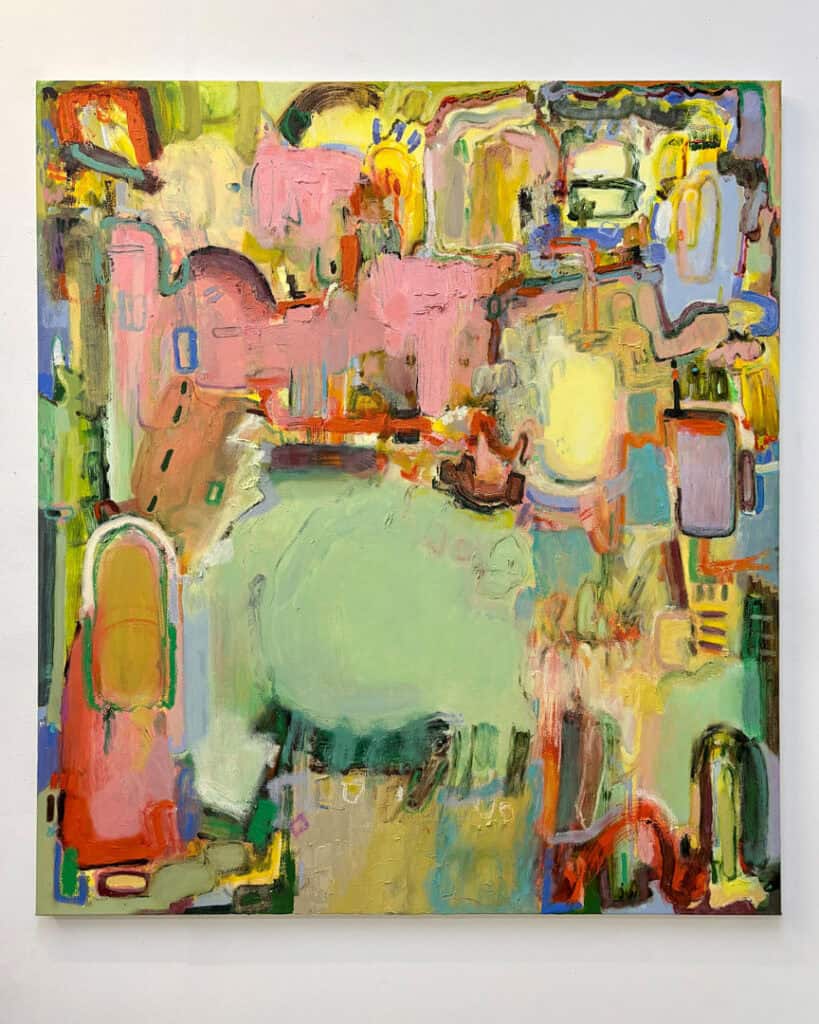
Bunny Hennessey: “I often wonder if the process of painting is a bid to confine what our leaky, fleshy bodies cannot. When I work on a large scale, I feel as though I can expand my body into a larger frame — I like to think I’m making physical space for myself for new sensations by filling up the work with paint. Confronted with its impermeable surface, we feel the swirling, unstable inner world boxed safely away. The canvas edge becomes a kind of barrier, hinting at visceral realities it never fully releases. Containment and permanence merge here: unlike the body, which evades control, the painted image grants a fantasy of mastery. The frame arrests ephemerality, storing memories, desires, and fears the porous body must continually spill. I know a painting is finished when it no longer physically resonates with me. Painting mirrors an internal state, as if the mind were a material substance — fluid, mutable, and momentarily held.”
CONOR QUINN
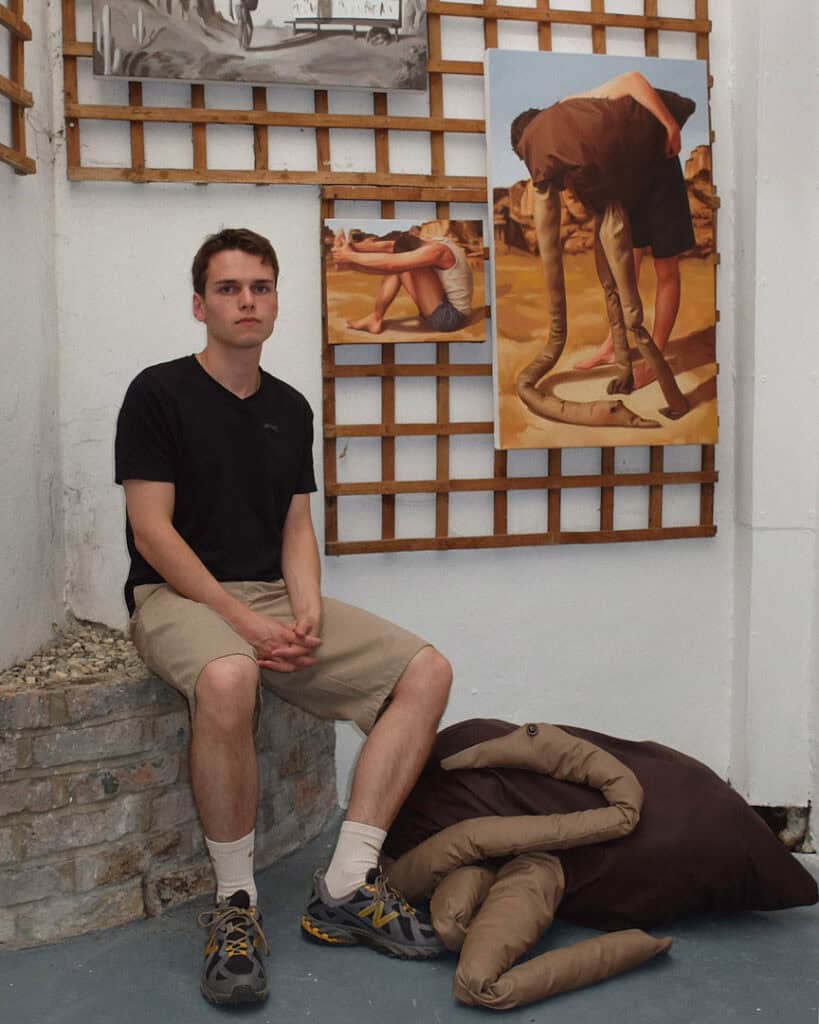
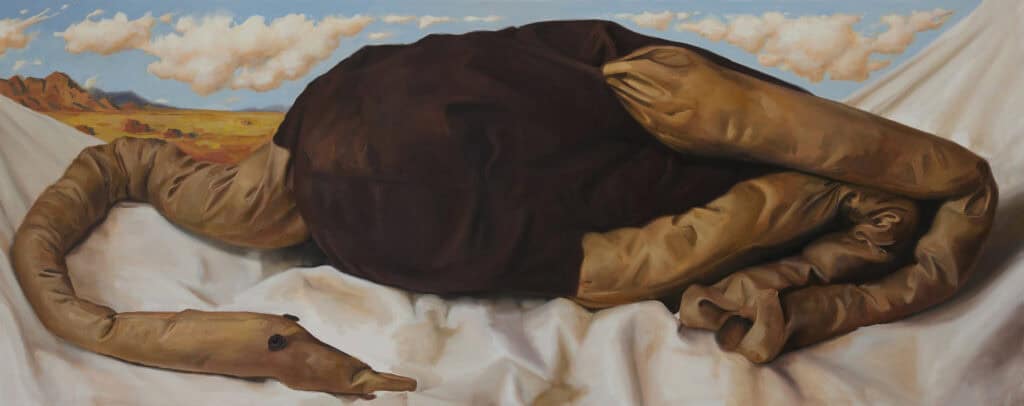
Conor Quinn: “As a painter with a background in soft sculpture, the painting process starts long before I pick up a brush. In soft-sculpting my subject matter, I have control of the concept through to execution. What would have been an observation of my environment is instead an internalised conversation between fabric and paint. Painting for me is a perspective. My sculptures can be seen from all angles: lit and sit in any way, but my paintings fix these variables. When I puppeteer, my painting will mimic much like a marionette. The painted translation of folding, bulging and pinching is tactile and sculptural too, blurring the line between the cotton stretched across the canvas and that which is sewn and stuffed.”
CHARLIE BOOTHRIGHT
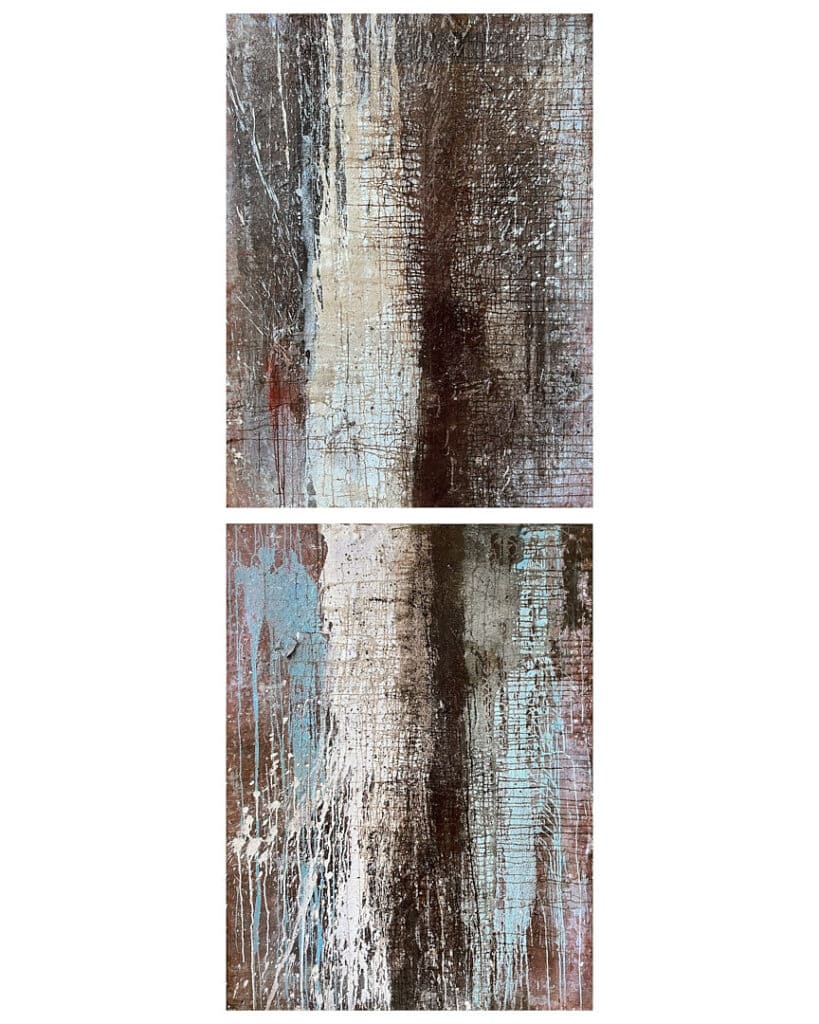
Charlie Boothright: “The painting process means everything to me — it is the work. I love time spent in the studio with dripping paint, just thinking, tuning into the dialogue between yourself and the materials. I often combine natural materials with paint which lend it a richer presence. It forms grittier areas that mimic both nature and the body: a scarred rock face, or an open wound. This exploration of organic, raw emotion and landscape is really important to me. My paintings spend a lot of time on the floor, picking up leftover debris. I also hold the paintings up, or press canvases against each other under my body weight: I like referencing higher forces at play like nature and gravity. For my paint, I work with raw pigment, throwing it on just about everything and adding linseed oil. I use my hands and the work will interact with itself: I’m simply the force binding it together.”
PRESLAV KOSTOV
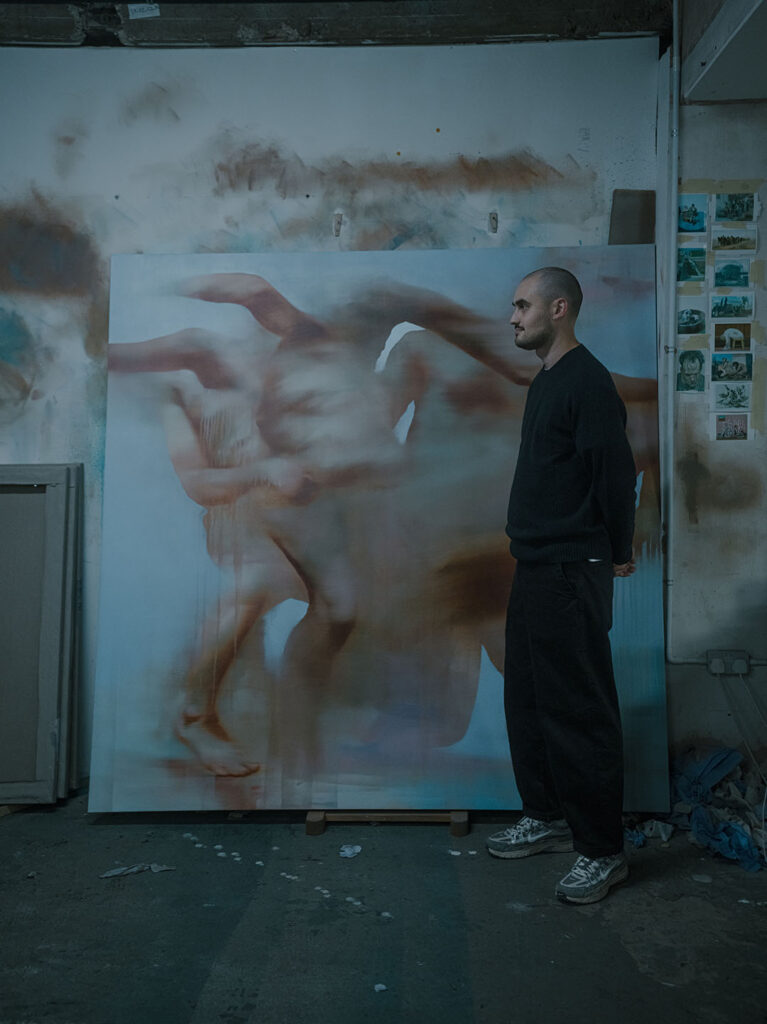
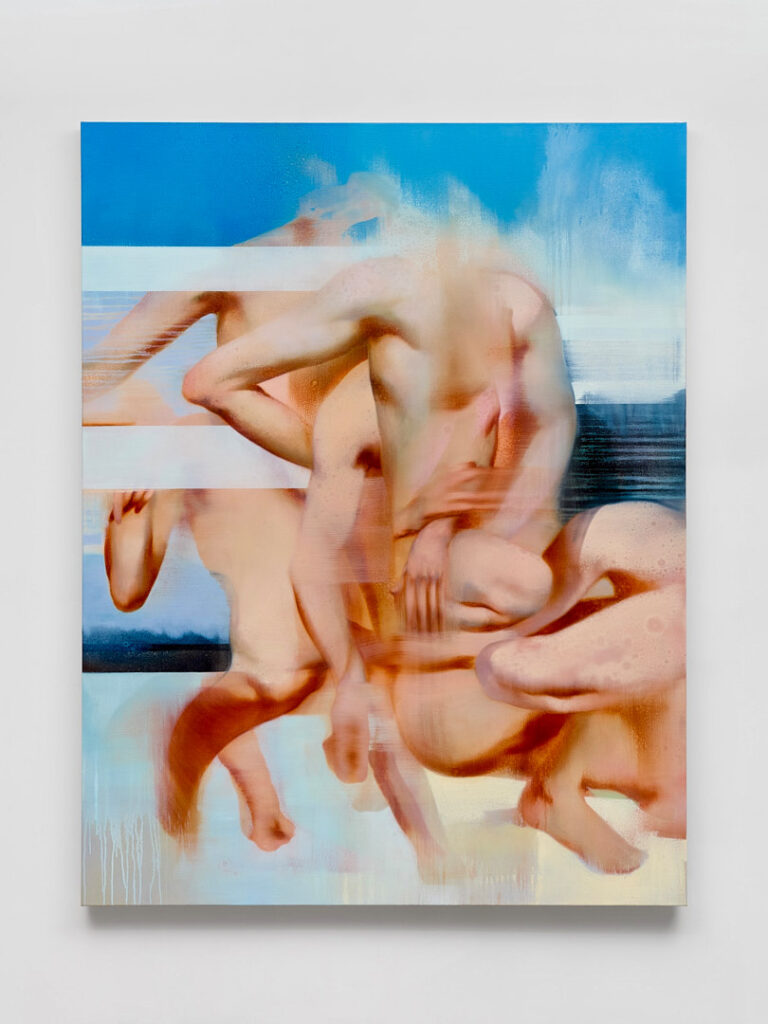
Preslav Kostov: “I choose painting from a very utilitarian perspective. Oil just naturally suited the way I think: it allows me to work with specific detail, while being malleable enough to redact even once something has been laid onto the surface. I see the surface as infinite potential and possibility — I don’t design, sketch, or anticipate any of the fragments within my work.
“Drying times can be natural pauses, instrumental in helping me play with fragmentation and exploring the intricacies of interpretation and narrative. As layers build up, the painting traps a kind of palimpsest of thoughts and actions. Even when ideas that feel better placed veil what came before, those earlier gestures still linger beneath the surface as small indicators of presence. I’ve tried several times to move away from oil, but always end up missing certain qualities. With mixed media, I find there’s often a pressure to anticipate outcomes, to aim for certain effects or tricks. I don’t enjoy working under that kind of expectation. Maybe there’s a kind of honesty that can be encapsulated in what, at first glance, might seem like a deceptively resolved final object.”
ALFIE ROUY
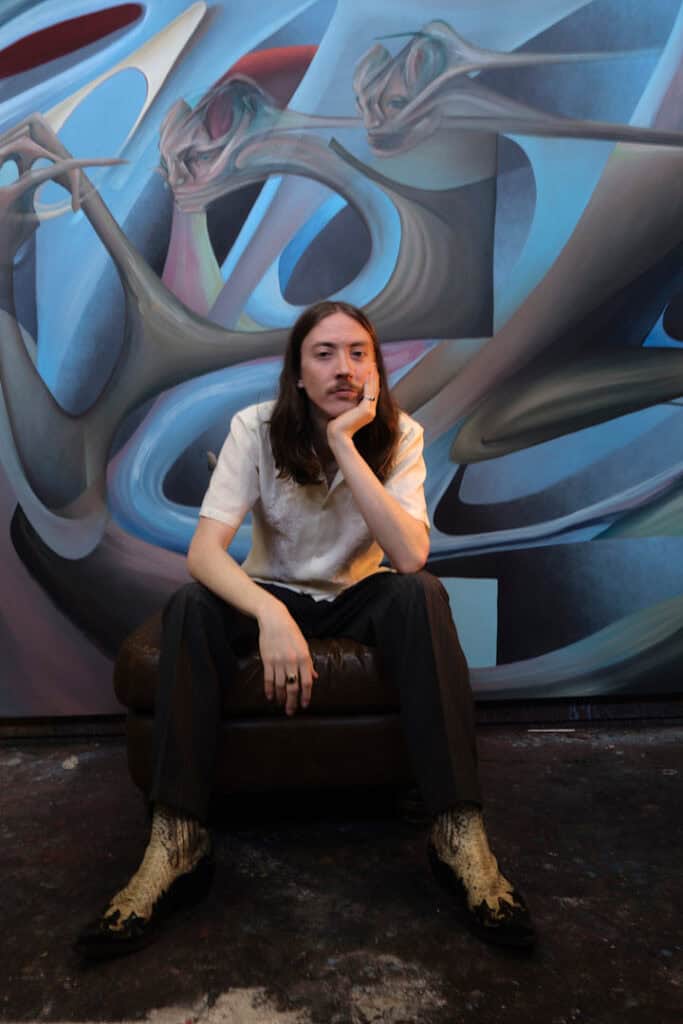
Alfie Rouy: “I love making the most of technology, but it’s once I start to paint that other parts of the psyche are introduced. An amalgamation of intuition of intuition, rationality, meditation and patience all come together in a tangible energy that flows into the work. When I find myself designing works digitally, reforming previous ones, I’m playing around with a hundred variations before finding what I’m after. But it’s the intuition that keeps me going: there’s endless mystery, yet a certain simplicity, that partly can only be experienced through material creation.”
ELIZABETH DIMITROFF
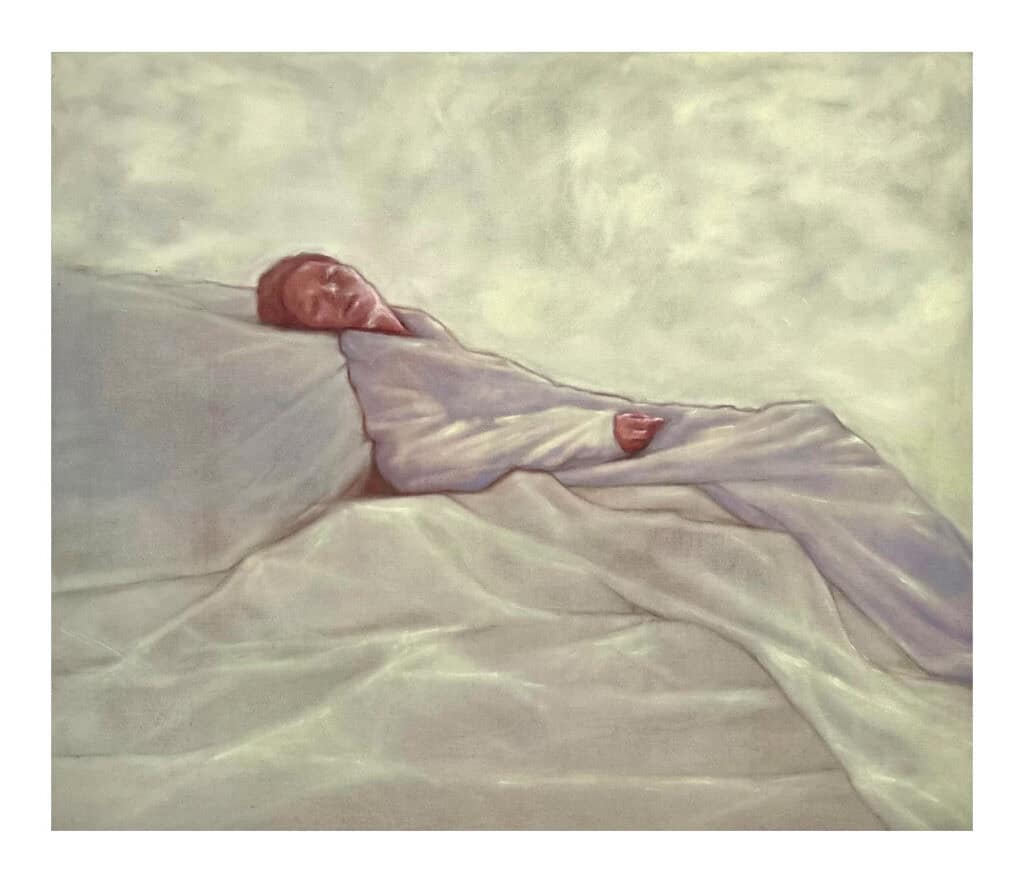
Elizabeth Dimitroff: “I wasn’t formally trained as a painter, so my learning process was initially intuitive. I chose pigments with appealing names – Yellow Lake, Viridian Green, Kings Blue – and wrestled with them until they behaved, most days they didn’t.
An artist’s palette, like a makeup bag, is an ever-evolving collection of tools and pigments that is assembled through a process of trial and error. Oil paint does not dry so much as it transforms. Over days it shifts from something slick and liquid to something slower, stickier. It is less a medium than a temperament. Like my paintings, it resists tidy conclusions.
“The durational quality of oil paint lends itself to my process, which is rarely linear and often involves circuits of adding, removing and layering. The painting is complete when it is an ambivalent, yet discernible impression of an experience or observation.”
DANI ROIBAL
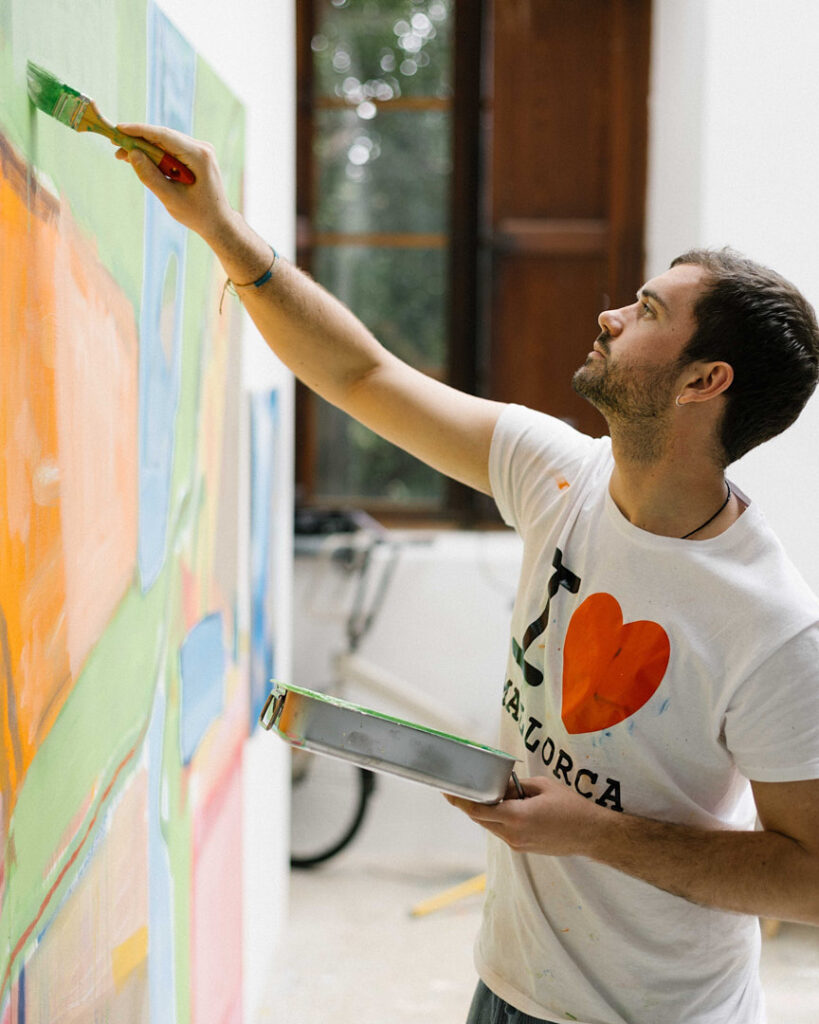
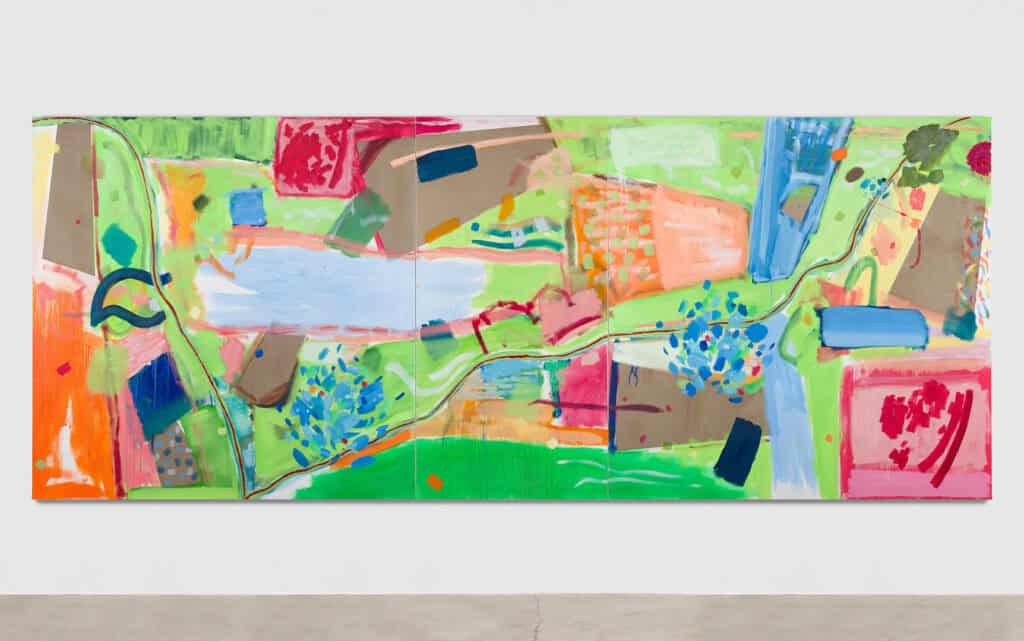
Dani Roibal: “For me the most interesting part of painting is the process itself. When you are painting properly, it feels like a conversation with the materials. Painting has its own personality: sometimes there are lines, shapes or strokes that were not premeditated and suddenly appear on the surface of the canvas. Those moments to me are when the pure act of painting happens and as a painter the best you can do is let it happen, let it flow and try to remove the frictions that lead the process to another direction. I think that is the beauty of the commonly defined abstraction: removing the frictions and definitions of the outer world and letting the paint be the protagonist of painting.”
KAROLINA ALBRICHT
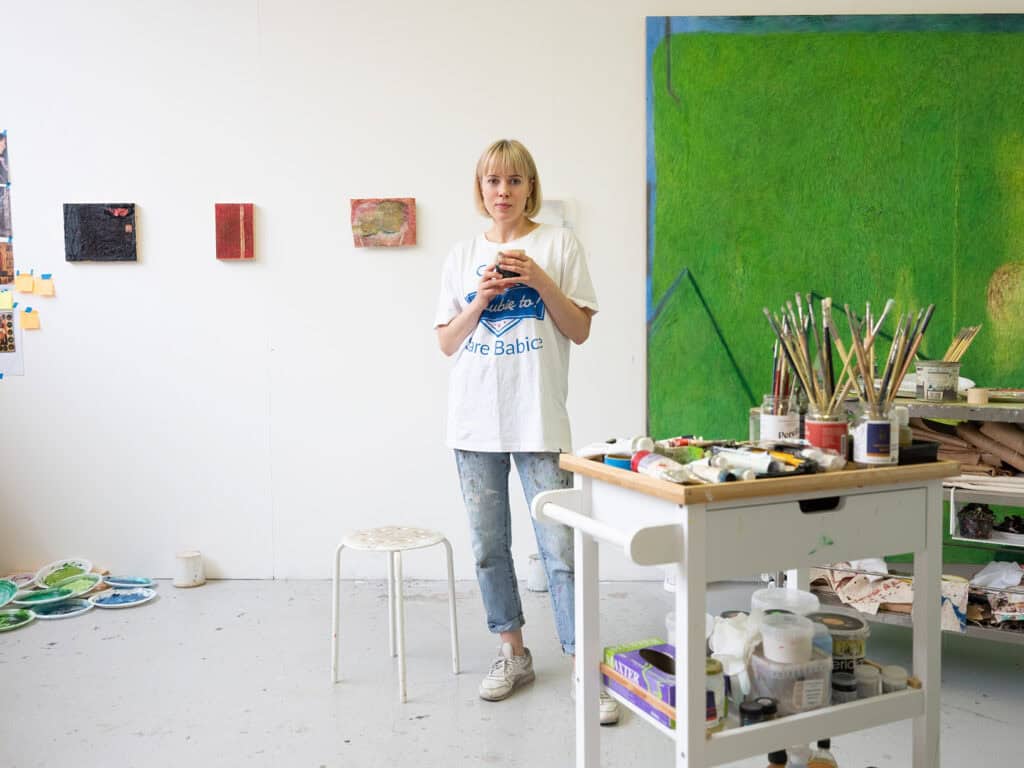
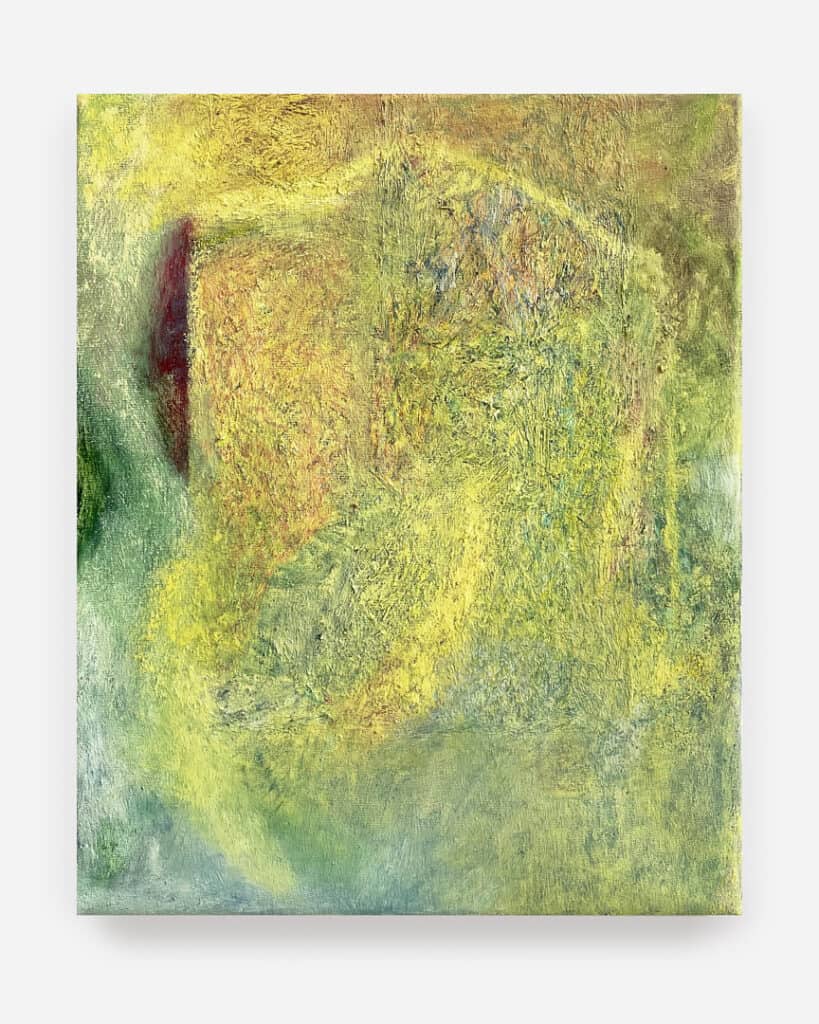
Karolina Albricht: “I think painting generally relies on modest means. The fact of it being a plain act of applying paint on a surface is analogous to that of a magician weaving a spell – but reversed; immaterial qualities are generated through a questioning of materiality. If reduced to its mechanics, the act verges on absurdity. But somehow pigment and binder become touch, time, doubt, movement, temperature. Likewise, solidified paint yields porousness of thought and feeling, of precision and blurriness, where ‘meaning’ emerges through shifting relationships of matter. To me, this transformative capacity specific to the medium of paint is as close as we can get to infinity.”
SUNYOUNG HWANG
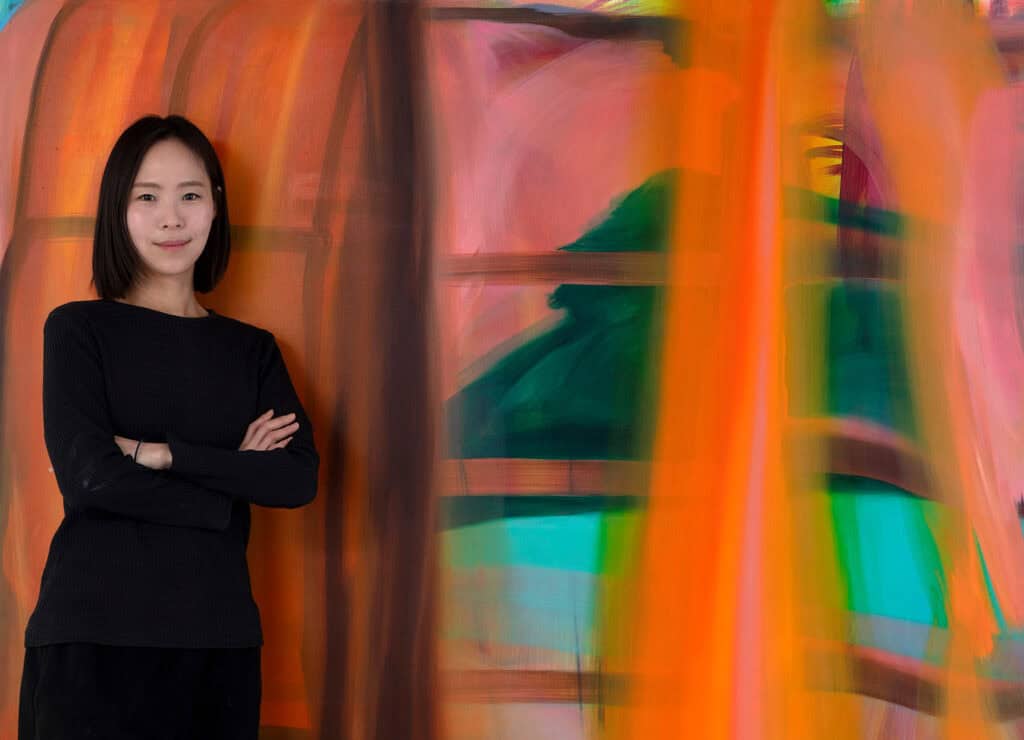
Sunyoung Hwang: “Painting feels like swimming to me. My layers of paint navigate between the opposing forces of gravity and buoyancy, moving forward, staying afloat on the surface, diving beneath, or slowly eroding into the depths. I like to watch them struggle to rise for breath, then sink, then float back up – swimming and dancing across the canvas in that liminal space. In brushstrokes that resist and absorb, you can see the body and mind merge through a repetitive, survival-driven rhythm, like waves onto the canvas.”
FUNGAI BENHURA
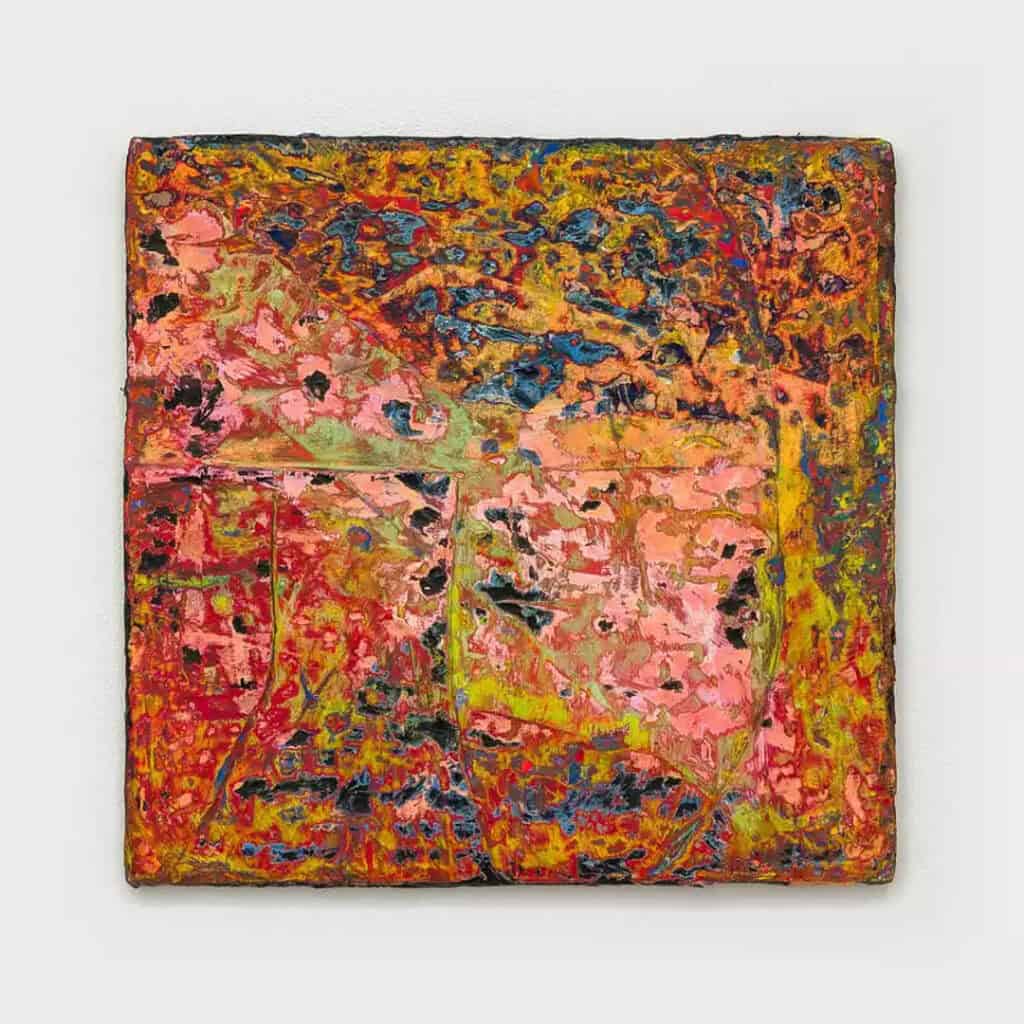
Fungai Benhura: “My paintings are made up of multiple layers of often different, and found materials. They are created through a hands-on process involving accumulation, painting and removal. As part of the process each layer of paint is important, it’s like building from the ruins, leaving traces of the materials that were used to create an image. While playing with ideas and experimenting, an image is born. The paintings have a powerful ability to associate – they suggest palimpsests, changing architecture, archeological restoration and the reconstruction of histories.”