
It’s 2025, and fashion still can’t stop looking over its shoulder. We’ve entered summer with 90s minimalism in our wardrobes, early-2000s Tumblr soft grunge on our feeds, and reissued archival collections topping wishlists. The moodboards feel haunted. Not in a bad way, just in a weirdly compulsive one. Everyone’s searching for something, and more often than not, it’s a feeling they had in 2009.
The cultural moment right now is heavy with déjà vu. Runways are riffing on ghosted silhouettes, Instagram is one big MySpace throwback, and Pinterest nostalgia edits are outpacing new trends. In the face of the climate crisis, economic unease, and digital burnout, it makes sense that the fashion crowd is craving something slower, something known. But here’s the problem: when the past is the default, innovation gets stalled.
We’re not saying fashion can’t look back – it always has. But lately, the retrospective feels more like a refusal to move. With Y2K now in its third (fourth?) revival and 2014 Tumblr aesthetics branded as fresh again, you start to wonder: are we nostalgic, or just scared?

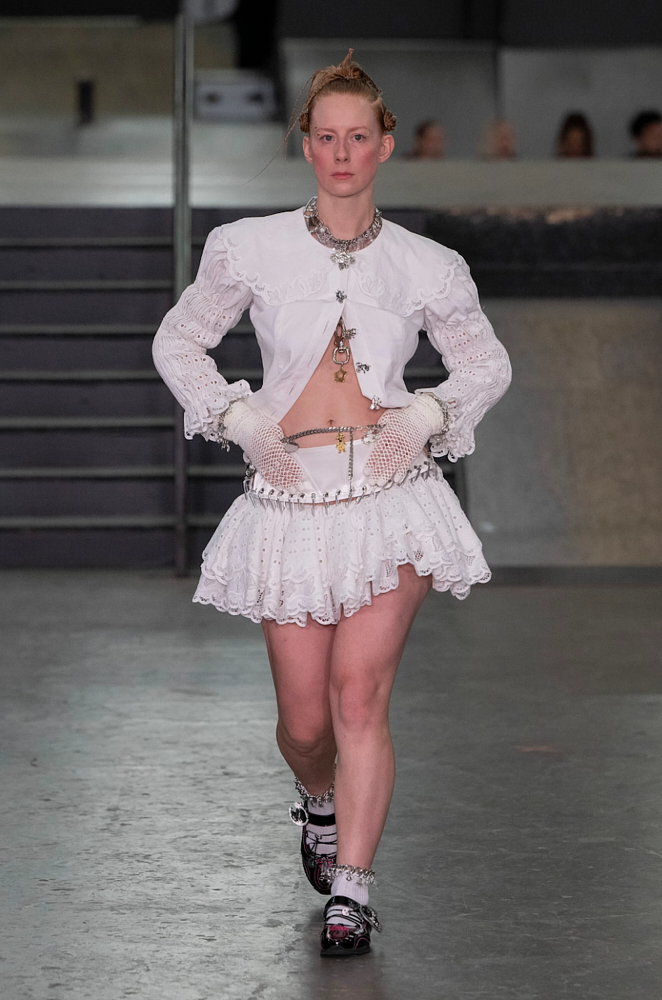
Some brands are using memory well. Miu Miu continues to reinterpret girlhood without infantilising it. Blumarine’s pivot from hyper-femme to undone romance is moody in a way that feels intentional, not regressive. Smaller labels like Paolo Carzana and Chopova Lowena are remixing memory with meaning, using heritage as material rather than theme.
But elsewhere, the fashion calendar is starting to blur. Everyone’s ‘archival’ now. Every drop comes with a backstory. And while there’s beauty in sentiment, we’re watching as the once-subversive becomes standard. Think: sheer mesh, jersey layers, exposed seams – what started as anti-fashion now reads like normcore with a Pinterest filter. It’s the Skimsification of weirdness.
That’s why it feels like fashion’s ghost era. Everything referencing something. A time when clothes are both worn and remembered. But we have to ask: what are we mourning? Is it pre-algorithmic spontaneity? A time before personal style became content? Are we longing for individuality in a world of trend cycles?

For younger creatives, nostalgia isn’t historical, it’s emotional. The current wave of memory-core is about ephemeral vibes, not material facts. It’s about how girlhood felt in 2011, not what it looked like. That’s why trends like indie sleaze or coquette don’t need accuracy to hit. They’re moodboard shorthand for yearning. For when the internet was chaotic and fun and ugly and brilliant.
But nostalgia can’t do all the work. The designers making a mark this season aren’t just recycling references – they’re reshaping them. They treat memory as material, not moodboard. Even in a summer heavy with lookbacks, there’s room for invention. Something textured. Felt. Lived-in.

Take Jonathan Anderson at Loewe. His recent collections have borrowed from Renaissance silhouettes, antique lingerie, and early 2000s surrealism – but never in a way that feels trapped in time. He distorts familiar shapes into something uncanny and new: ruched leather dresses that cling like melted wax, pixelated knitwear that mimics JPG glitches, and handbags that resemble paintbrush strokes. It’s nostalgic, yes – but abstracted, twisted, reimagined. Anderson doesn’t trade on memory for comfort. He uses it to surprise.
That’s what fashion does at its best – not mirror what came before, but respond to it. If we’re still mining the past, it has to be with a sense of purpose. Nostalgia is powerful. But only when it brings us closer to the now, not further from it.
And if everything flows, maybe this is the reminder: some things need to be let go of to move forward.