
YONZU
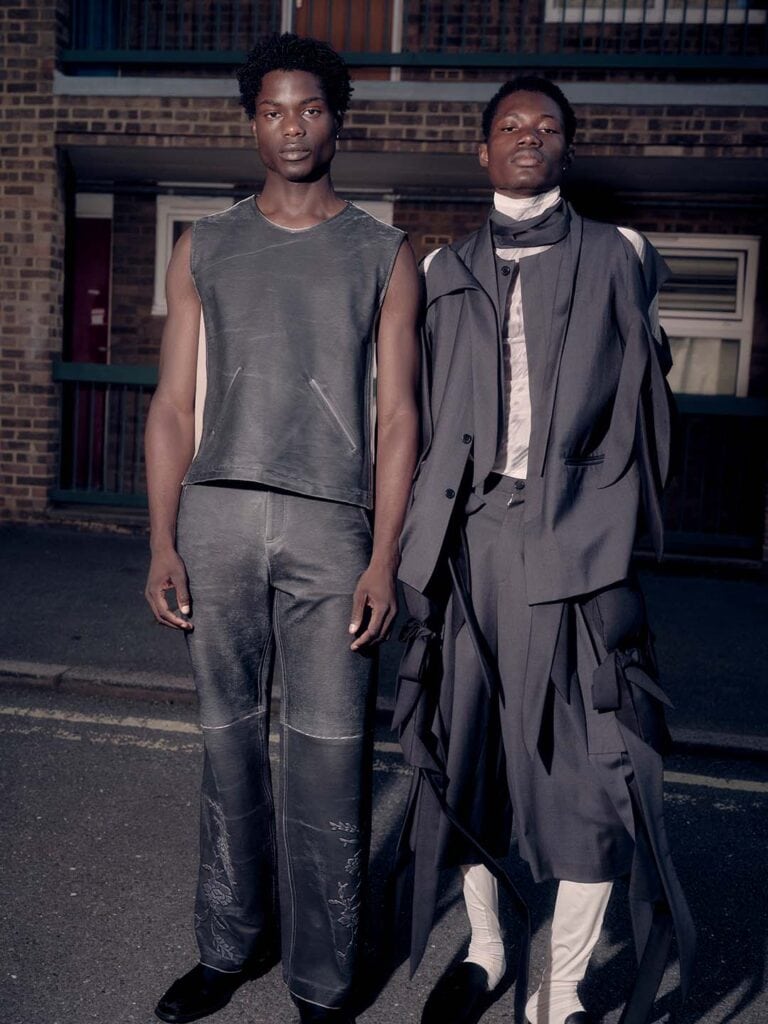
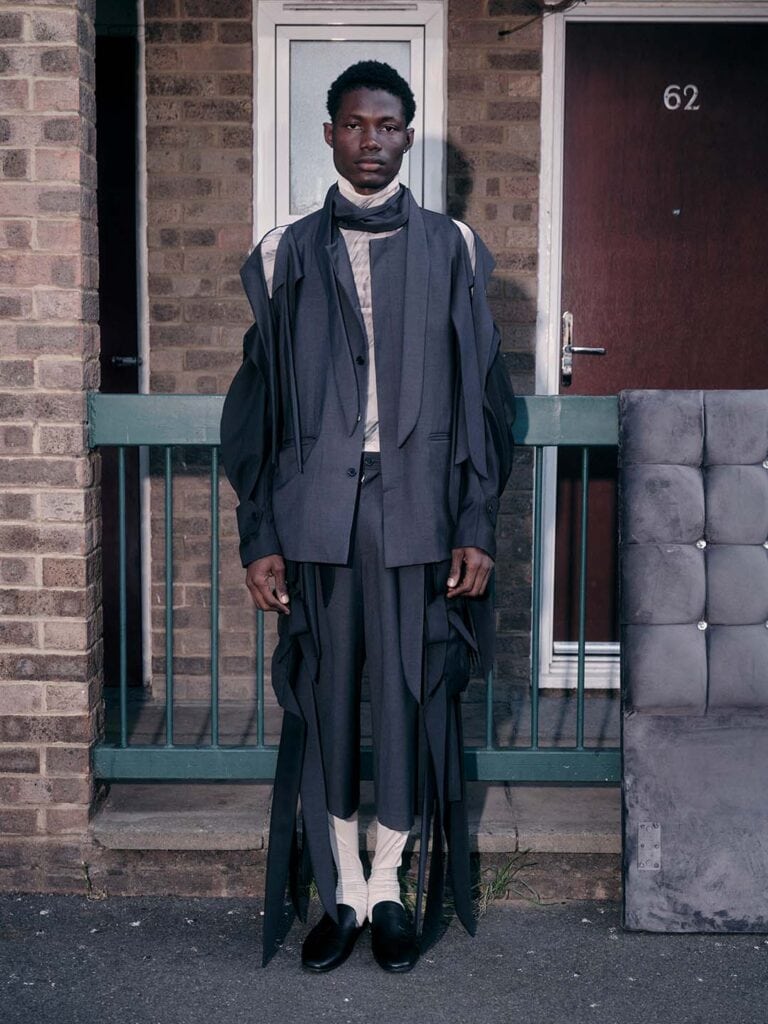
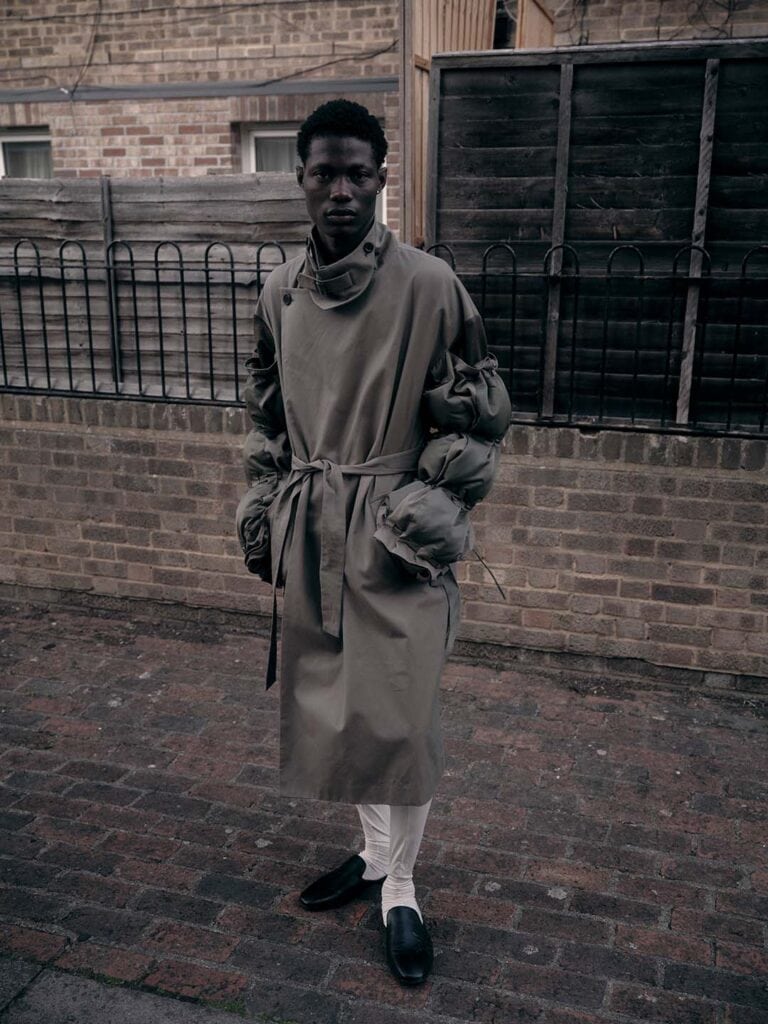
Yonzu embraces genderless forms through subtle, architectural details. Prioritizing longevity over trend, the brand uses durable, refined materials to create pieces meant to be worn, reinterpreted, and kept over time. Rooted in the designer’s academic background from the Royal College of Art, yonzu draws inspiration from shifting social boundaries—proposing new categories that exist between, rather than within, established norms.
How would you describe your brand’s identity in a few words?
YONZU is a gender-fluid, boundary-breaking label defined by sculptural elegance and a deep interest in deconstructing femininity and masculinity through structure. The brand explores conceptual tailoring with emotional softness, creating sculptural silhouettes that move with a fluid sense of identity. Feminine detail meets masculine form throughout each piece, resulting in garments that balance contrast and harmony. Rooted in longevity, craftsmanship, and boundaryless style, YONZU aims to remain not just in the wardrobe — but in the wearer’s life for years.
What’s your approach to design? Do you start from an image, a fabric, a feeling..?
My process often begins with either a historical image or an intriguing fabric. I’m drawn to cultural references that hold memory and to materials that feel unexpected or contradictory.
From there, I experiment through structure — deconstructing and rebuilding shapes to explore how feminine and masculine codes can coexist within a single garment.
What are the core values of your brand (e.g. sustainability, craftsmanship, inclusivity)?
The core values of YONZU are rooted in longevity, craftsmanship, and inclusivity through design. Rather than following cycles of trend-driven consumption, the brand is committed to creating garments that remain relevant and durable — physically and emotionally — for years.
Each piece is developed with a high level of craftsmanship, using structure, detail, and material experimentation to ensure both quality and meaning.
What does “emerging” in today’s fashion world mean to you?
To me, being “emerging” in today’s fashion world is not just about being new; it’s about challenging what already exists. It means building a voice that is distinct and uncompromising, even before the industry fully recognizes it. An emerging designer is someone who experiments, questions conventions, and proposes new ways of seeing and dressing — often with limited resources but with a strong point of view. It’s a stage defined not by scale, but by clarity of vision and the courage to pursue it.
What role do you think fashion plays today in storytelling or activism?
I believe fashion plays a powerful role in storytelling and activism because clothing is one of the most immediate ways we communicate who we are. It can reveal identity, challenge norms, and invite people to question what they see and what they assume. Fashion has the ability to hold emotion and narrative without needing explanation. When a silhouette, a material, or a contrast of codes is strong enough, it can speak for itself. Activism in fashion today isn’t only about slogans; it’s about shifting perspectives, expanding representation, and offering people new ways to exist in their bodies and identities. When design opens space for someone to feel seen, safe, or expressive, that in itself is a form of resistance.
ZIMISM
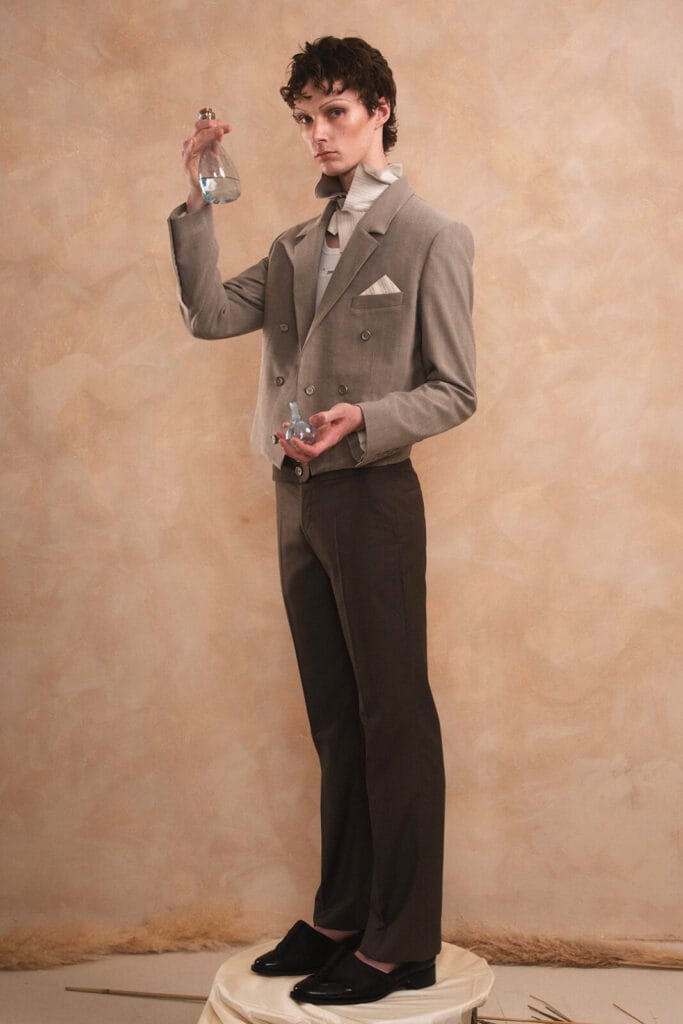
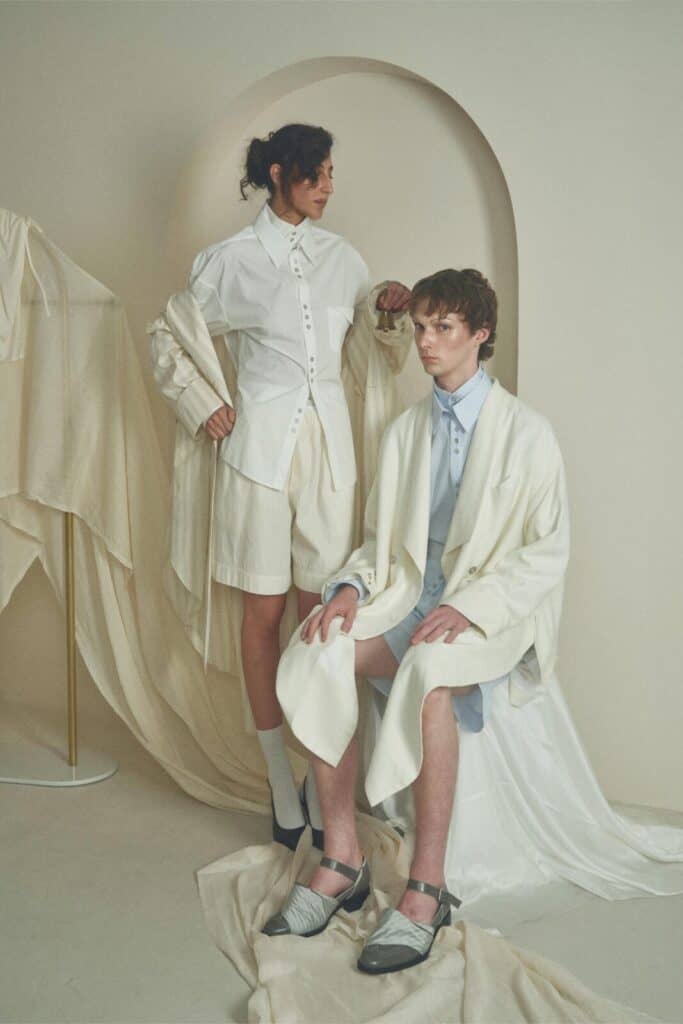
Founded in 2024 by designer Ziming Wang, ZIMISM emerged from London’s creative energy with its debut collection Beyond Binary, presented under UAL London College of Fashion Menswear Postgraduate 2024 and showcased by the British Fashion Council and SHOWstudio during London Fashion Week 2024. The collection gained recognition for its fluid tailoring and conceptual clarity.
In 2025, Lorenzo Piccoli joined ZIMISM, expanding its vision into a dialogue between East and West, expressed through contemporary tailoring that values precision, modularity, and emotion.
How would you describe your brand’s identity in a few words?
ZIMISM is a contemporary expression of form and emotion, where structure meets softness, cultures converge, and craftsmanship becomes a quiet, poetic force.
What’s your approach to design? Do you start from an image, a fabric, a feeling…?
Design at ZIMISM begins with a feeling or a moment we want to explore. This spark guides our choices in form, texture, and movement. From there, we experiment with materials, silhouettes, and modularity, allowing each piece to respond to the body and the story it carries. Our approach is iterative, letting sketches, fabrics, and wearability evolve together so every garment is expressive and adaptable.

What are the core values of your brand (e.g. sustainability, craftsmanship, inclusivity)?
Craftsmanship, versatility, adaptability, and emotional resonance define ZIMISM. We create garments that shift and evolve with the wearer, while inclusivity and cultural dialogue allow our pieces to transcend binaries. Sustainability is approached through timeless design and longevity, ensuring each piece can endure and transform alongside its wearer.
What’s your long-term dream or goal for the brand?
Our long-term goal is to make ZIMISM a space where clothing fosters dialogue between wearer and environment. We aim to design garments that evolve with the individual, supporting personal expression and adaptability. Beyond trends or scale, we want the brand to be recognised for sensitivity, narrative-driven craft, and cultural openness, showing how clothing can shape identity and emotional presence.
How do you see the future of independent fashion in the coming years?
We see independent fashion thriving through collaboration, cultural exchange, and inclusivity. Brands will create communities around design and style, inspiring new subcultures and subgenres, much like in the late 20th century. Clothing will serve as a tool for personal expression, embracing difference, adaptability, and shared creativity. By prioritising meaningful connections over mass production, independent fashion can cultivate a more open, thoughtful, and diverse industry.
MOMA HILO
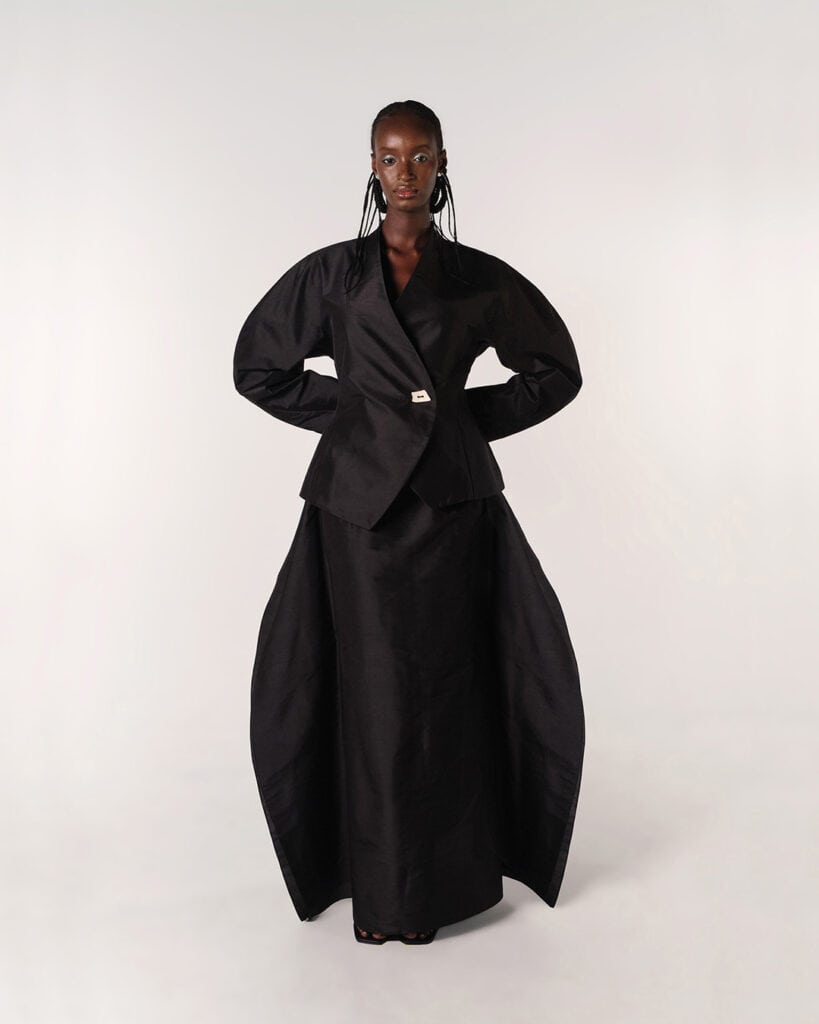
Moma Hilo, launched in March 2025, is a responsible made-to-order womenswear brand based in London. With a focus on local female-run manufacture and exclusively using deadstock materials – Moma Hilo exists to reconnect us with the clothing we wear. Taking us on a journey of manufacture with every piece that is made. The sculptural pieces are designed with longevity in mind, with adjustable features and quality materials and construction – encouraging us to treasure what we own and the stories they hold.
How would you describe your brand’s identity in a few words?
Nostalgic, Sculptural, Timeless, Craft, Transparent
What led you to start your brand / begin creating fashion?
The idea for the brand came from a suitcase of my grandma’s clothes – a woman I sadly didn’t get to know as she passed away when I was a baby. These pieces of clothing were treasured by my mum and were almost a tool for me to get to know the woman who wore them. Each piece holds so many stories and has been treasured by both my grandma and my mum throughout their lifetimes. After working in fashion for 15 years I felt like we had lost this connection to what we wear, a connection that is so important if we want to reduce the impact fashion has on the world we live in.
So, I decided to create a brand that cherishes the stories within clothing and champions the hands that make them. Each piece we make is made to order, by female-owned manufacturers local to our studio in London. We get the pleasure of taking our customers on a journey of how their pieces are made, building that connection with their pieces before they receive them.
What concept or message drives your work?
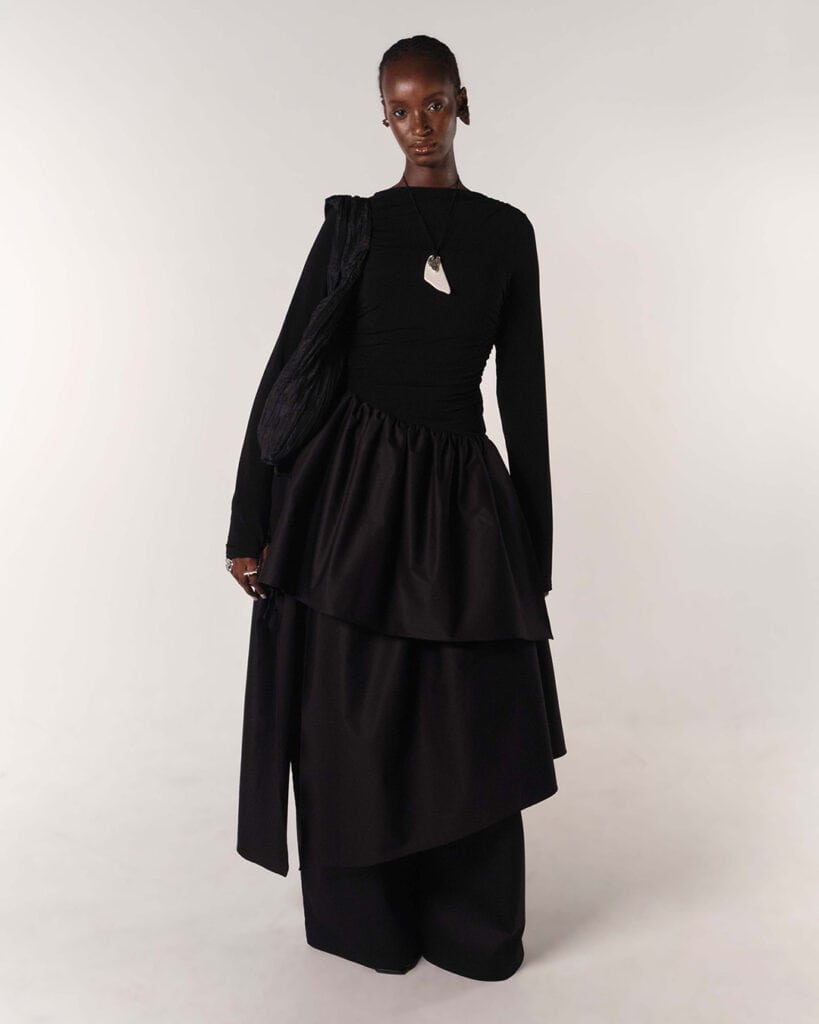
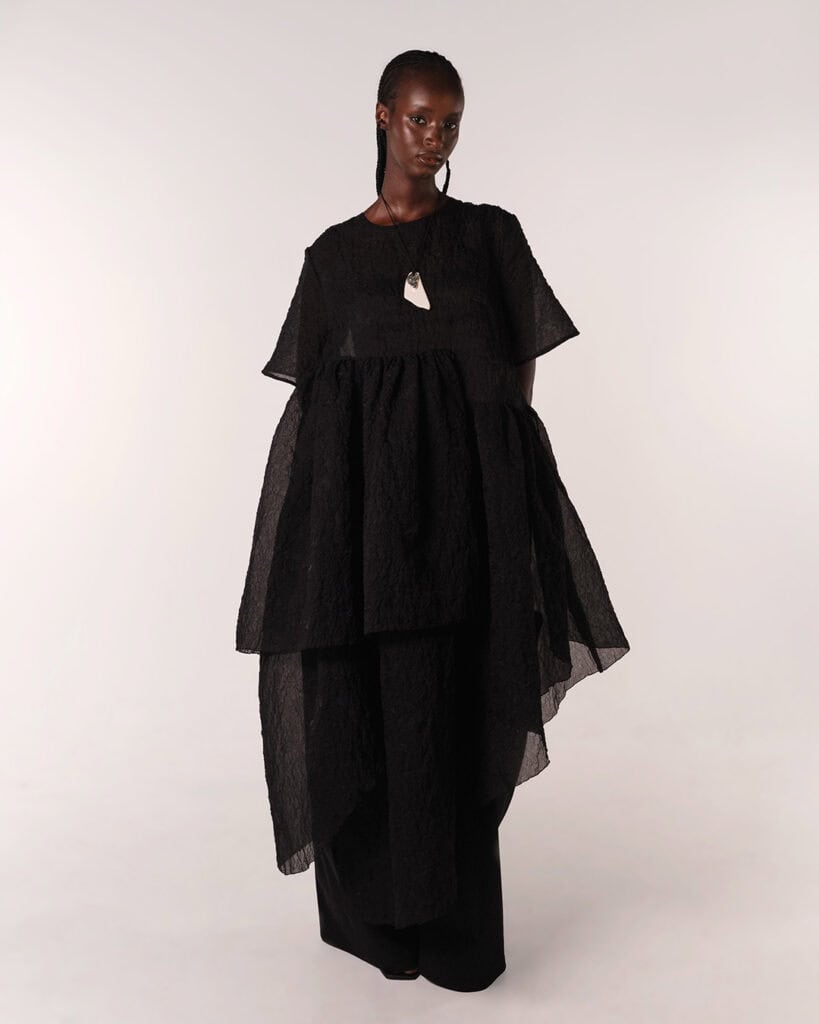
Timelessness. I want people to cherish these pieces for years to come, so I design pieces that are unique and sculptural and that can work hard in your wardrobe, one day, being passed on to someone you love so that they can continue the story. I design pieces that are adjustable wherever possible. Our bodies are designed to change and I think our clothes should be too. I only design in black, as it’s timeless and if you love black, you’ll never not love black.
How do you choose the materials or techniques you work with?
We work exclusively with deadstock fabrics, leftover from the fashion industry – as there is already way more fabric existing in the world than we need. This makes everything we make extremely limited edition, sometimes I can only find 20 metres of a fabric that I love! This really adds to the story of each piece, each item has a story of the fabric, the design itself and the hands that make the piece. Ready for our customer to go and make memories in and add to that story.
Is there a garment or collection you feel especially connected to? Why?
The Margaret Blazer is based on one of the pieces from my Grandma’s suitcase so it’s a very special piece to me and will forever be in our collection. I took some of the design details that I loved from her blazer and played with the silhouette, creating a sculptural piece that adjusts with your body. It also features a beautiful reclaimed ceramic button at the front, made from broken ceramics and carved into incredible buttons by a lady in Shropshire. Every button is unique making each blazer one-of-a-kind.
Do you have a mentor, figure, or brand that has deeply inspired you?
The women that surround me, past and present. Moma Hilo is named after four women in my family, Mollie, Margaret, Hilda and Louise – I wanted the brand to represent women that have gone before me and those that come after me, the clothes I create are intended to last for generations to come so it felt like the perfect name. I don’t look at fashion, unless it’s vintage pieces, I look at the women around me more and what they need from their clothing, how they want it to make them feel.
Any upcoming projects or collaborations in the works?
I’m spending the end of this year looking back at what has happened in 2025 – I launched the brand in March so a lot has happened! Looking back and reflecting on how it has evolved allows me to see where I want it to go moving forwards, I have an incredible network of women who have supported the brand so far, so I’m excited to build on those relationships and to keep creating clothing that resonates with them. I’m working on more in-person events in 2026 so watch this space! Follow @momahilo on instagram to stay in the loop.
ACCEPTANCE LETTER
What led you to start your brand / begin creating fashion?
The first “oh, maybe I can do this” moment came when I started making and selling COVID masks. My retail job had stalled, and like many people in the creative industry, I no longer had a stable income or gigs. I remember sitting in that chair, churning out mask after mask. That accidental taste of commercial success gave me an immediate taste of market reaction, in a miniature version. I figured if people respond to this simple object, what else can I do with fabric? I decided to give it a full go. I have always operated under the conviction that the biggest regret is the lingering question of “what if.” So starting the brand was a natural choice.
What concept or message drives your work?
My primary message is to restore agency to the consumer in the act of dressing and consumption. My vision for the future of fashion is one where wearers are empowered to take control of their clothes, rather than being controlled by the industry. That one cerulean sweater, selected for you, from a pile of stuff.. Is far from what I am aspiring to do.
What’s your approach to design? Do you start from an image, a fabric, a feeling…?
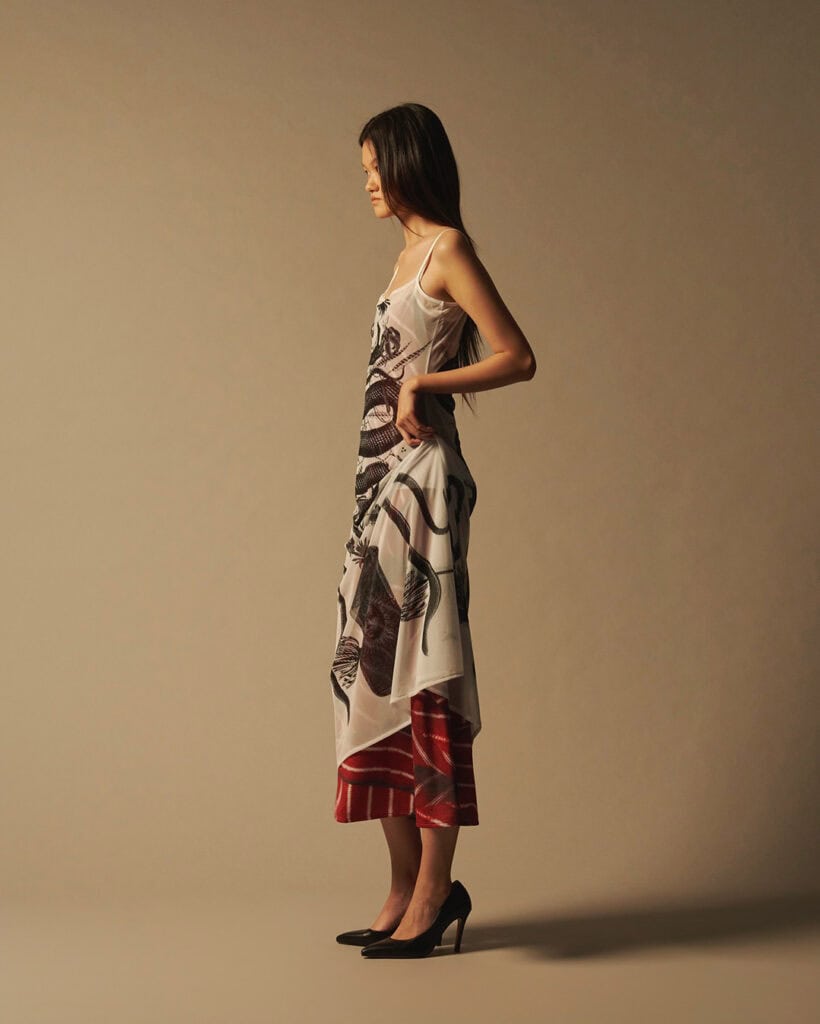
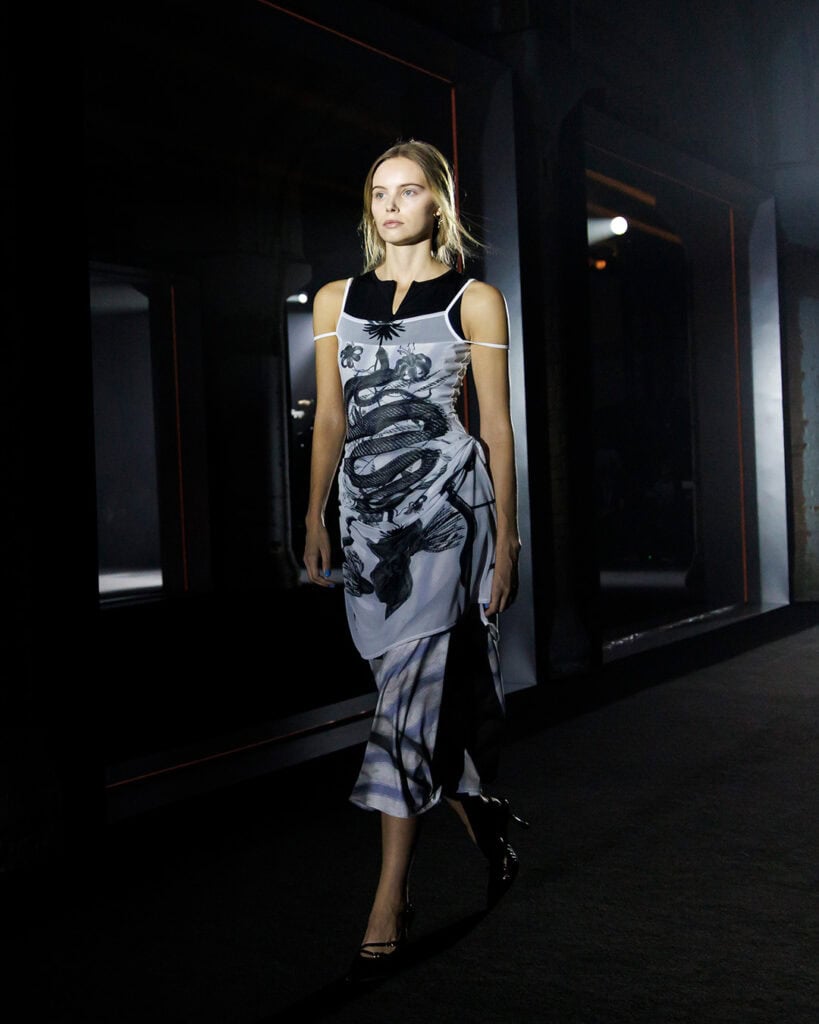
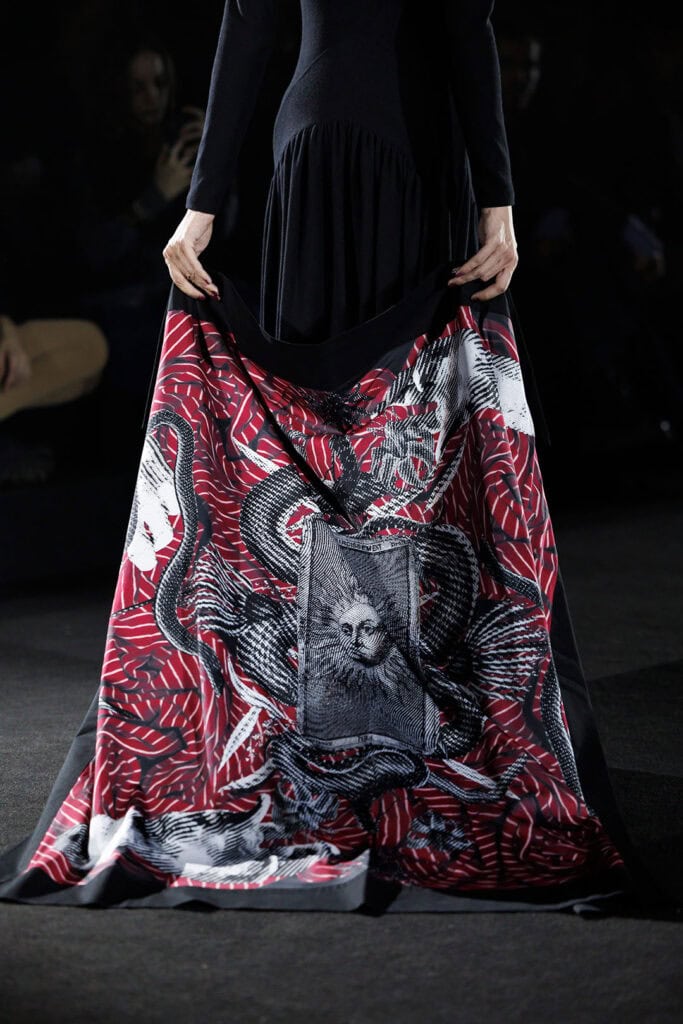
My approach is driven by a conceptual narrative. It often begins with a feeling or a memory that acts as the starting points. For example, my recent work was rooted in grief and remembrance, made visual through the fleeting light of golden hour and esoteric motifs, and structured using references to archival Balenciaga patterns.
Another example is my current project in development, The Jester’s Prayer, a fashion design-as-performance work about how clothing signals social class and how comedy becomes a tool for survival. Jesters were among the few who could openly ridicule the king, and the project asks how we can critique power in similarly violent, unstable times. Through elaborate, jester-inspired, maximalist garments, it stages a dialogue between garment, humor, and power, exploring how dress can communicate identity, resist authoritarianism, and embody defiant resilience.
How do you choose the materials or techniques you work with
The initial selection is rather visceral. Sure, I need to like the look of the textile. But the big test is tactile intimacy. I put the fabric directly on my skin, keep swatches in my pocket, and live with it for days. I do this to feel the material’s integrity and feel. Afterwards comes the technical decision of whether to apply volume or select a printing technique.
Any upcoming projects or collaborations in the works?
Yes, we are developing a knitwear drop in collaboration with BOI Knit in Berlin, alongside a leather products drop. We are looking to release sometime next March or April. I think it’s a good time to introduce leather and knit products, giving the brand more variety and depth.
MIJODA DAJOMI
Is there a personal story behind your brand ?
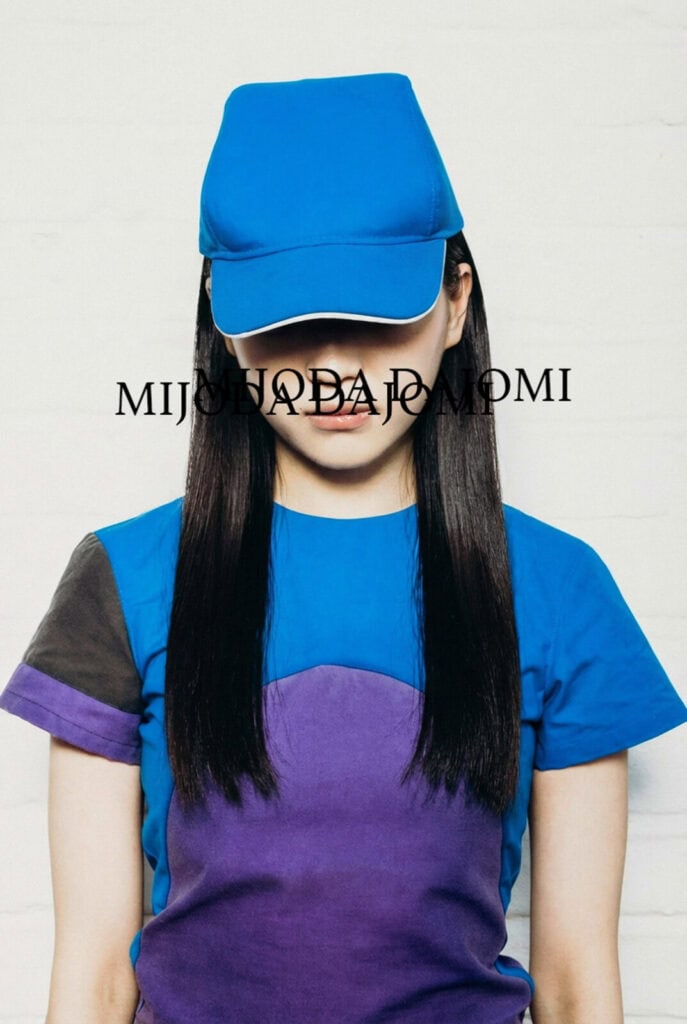
The name of my brand Mijoda Dajomi carries a very personal story. It is a shortened version of my birth and my chosen name that I gave myself at the age of 16. Mijoda became my alter ego: the version of me who could live beyond boundaries and restrictions, the part of me who was brave and bold enough to pursue what she wanted and to grow into who she dreamed of becoming. As I got older, I grew into her. Over time, Mijoda and I became one and the same.
My brand carries this spirit forward, embodying a vision of transformation and possibility. But this time, it’s not just about me. It belongs to anyone who resonates with the journey, anyone brave enough to step into their own becoming.
What’s your approach to design? Do you start from an image, a fabric, a feeling…?
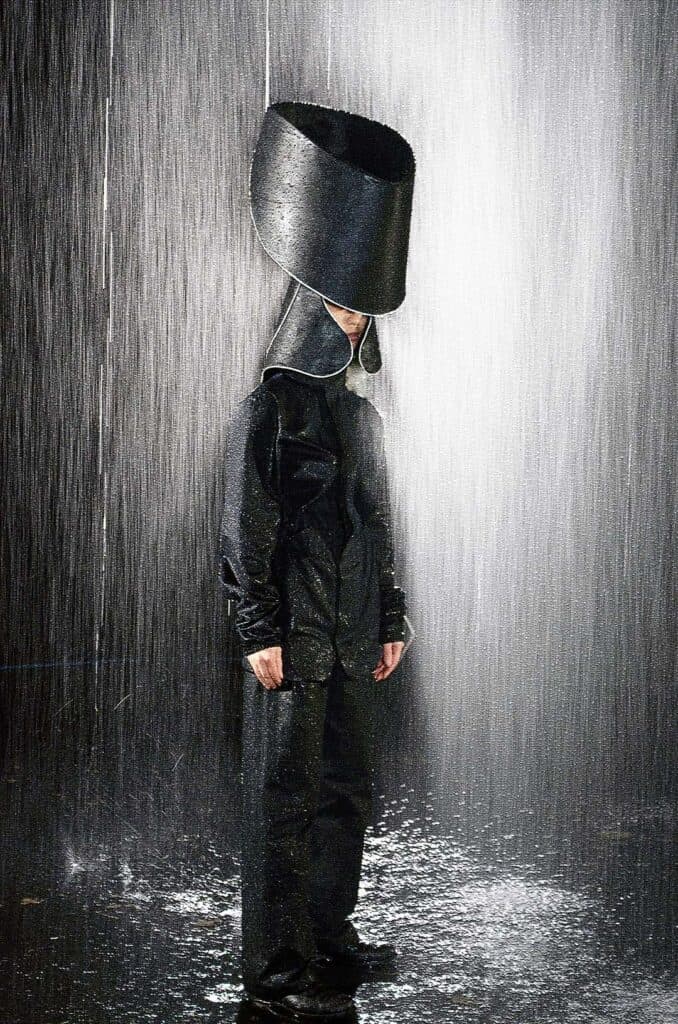
First, I do research. I particularly enjoy literature and visual research through books. From all the input and information I absorb, ideas begin to evolve in my mind. I have a very vivid imagination, and I can visualise a design or concept in my head as if it already exists. Once the design becomes clear, I create a rough sketch and then build a simple mock-up from paper or cardboard to bring the idea into physical form and support communication. I treat mock-ups like three-dimensional drawings, constantly changing, adapting, and reconstructing them until I’m satisfied with the result and ready to begin prototyping the final design. As my pieces are sculptural and three-dimensional, I prioritise the shape and pattern first, followed by materials, colors, and details.
What are the core values of your brand (e.g. sustainability, craftsmanship, inclusivity)?
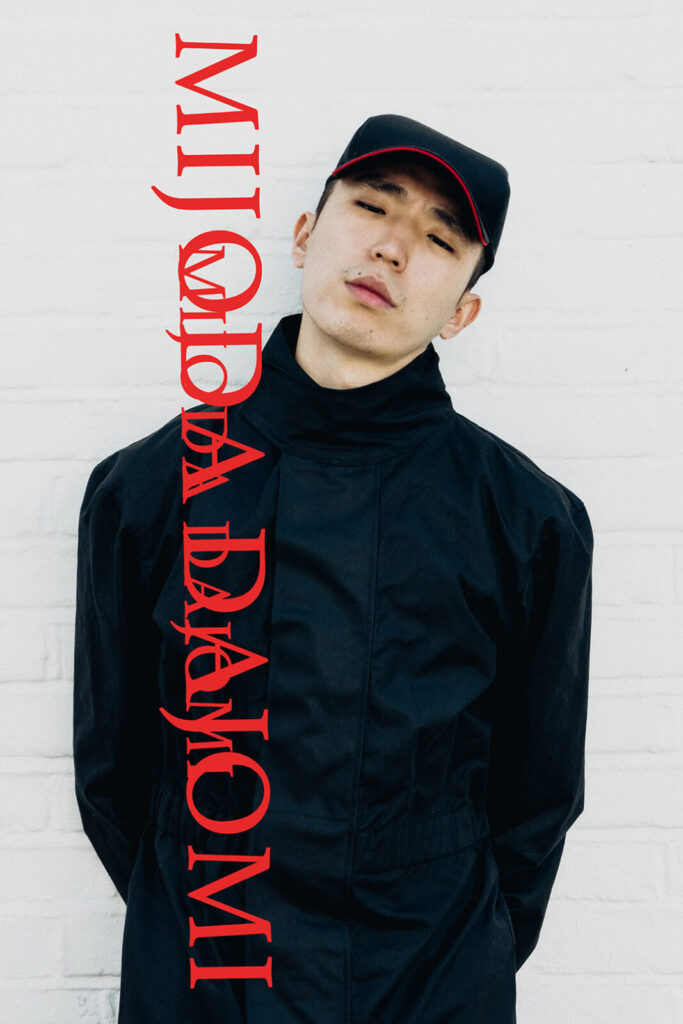
My brand specialises in waxed cotton outerwear, clothing, and headwear – it draws inspiration from the natural world, the elements, utilitarian and activewear, traditional workwear, and the imaginative realms of science fiction literature.
The core values are utility, craftsmanship and smart construction, environmental responsibility, waxed cotton.
What has been the biggest challenge in your journey so far?
The biggest challenges are definitely money and time. I currently work a full-time job to make a living while running my brand single-handedly on the side. I spend most (if not all) of my free time and leftover money on my brand. As much as I am passionate about what I do, it also restricts me in many ways. But I’m obsessed with the idea of building and growing my passion so I accept the struggle.
I graduated in 2024 and was fortunate to receive scholarships and prize money during and after my time at UAL , which helped me get started. But the funds disappeared very quickly…
Any upcoming projects or collaborations in the works?
I’m currently in the process of launching my first ready-to-wear products, including jackets and caps. Both items will be available for purchase on my website as well as at my upcoming event during London Fashion Week in February.Additionally, I am organising my first pop-up event in collaboration with Reference Point, which will take place during London Fashion Week this February,