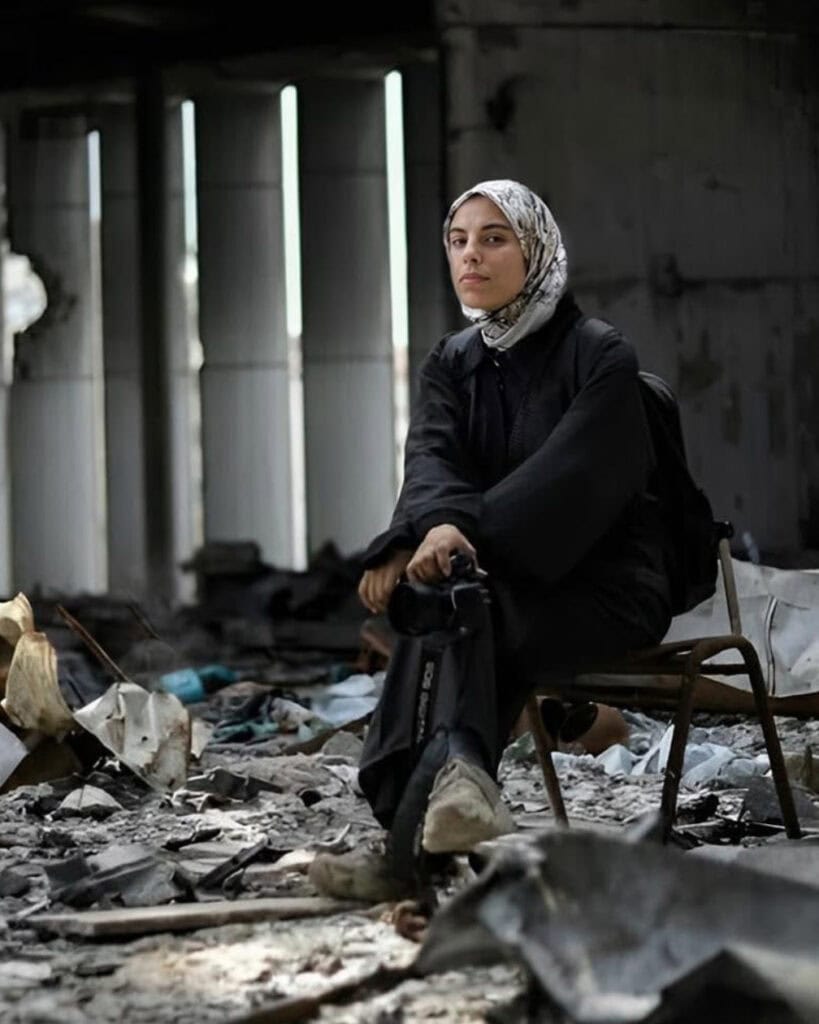
A common refrain we hear about the genocide in Gaza is the need to ‘bear witness’: to listen to the voices of the Palestinians, watch what seems unwatchable, read the obituaries of martyrs, to remember those murdered and support those still alive. To witness is, in a small way, to resist.
However, witnessing is also, in the digital age, a distant act. No longer is witnessing limited to those who are physically present: scrolling between photos of friends’ holidays, celebrity news, and funny viral trends, we catch pixelated glimpses of bombings, assassinations, starvations, mutilations. Witnesses to genocide, we are seemingly powerless as we stare through a glass wall at the horrors unfolding from afar.
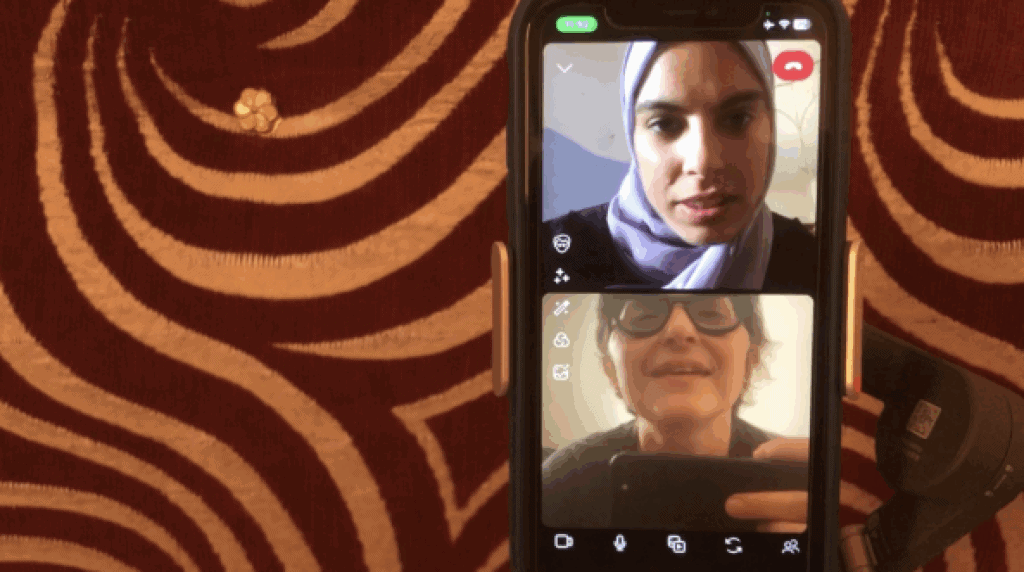
Put Your Soul on Your Hand and Walk, Sepideh Farsi’s stripped-back documentary on the genocide as experienced by photojournalist Fatima Hassona, exemplifies the tensions of witnessing in the digital age. The documentary unfolds entirely through a series of screens: the video calls between Farsi and Hassona, recorded by Farsi using another phone (as opposed to screen-recording); the photos taken by Hassona; the televisions blaring news reports 24/7. Screens fold upon screens upon screens.
The screen in Put Your Soul… serves as both window and barrier. Farsi originally intends to travel to Gaza herself, to place herself in the middle of the action and create a more traditional documentary. However, travel restrictions mean that Farsi is ultimately unable to go into Gaza. Instead, she is introduced to Hassona via a mutual acquaintance, and they begin their months-long communications via video call. Here, the screen overcomes physical borders, challenges genocidal regimes, and gives the oppressed a voice.
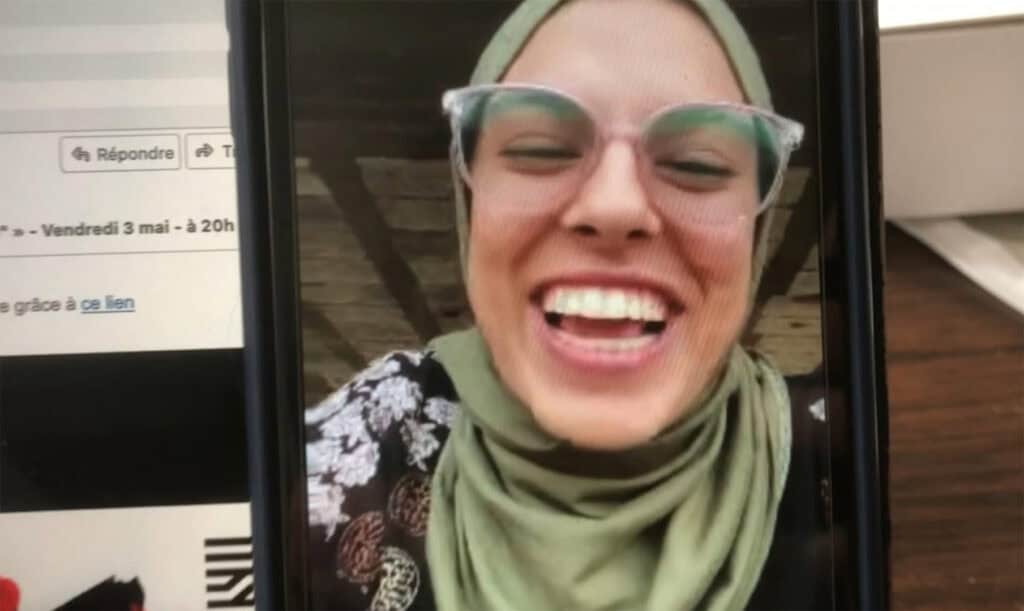
Through Farsi’s recordings of her and Hassona’s video calls, we are given incredible, terrible insight into what is happening on the ground in Gaza. The daily bombings, the snipings, the mental anguish, the starvation, all experienced and related to us first-hand by Hassona – these are the horrors many of us have witnessed on our own screens.
However, Put Your Soul… is not simply a report on the genocide at large; it is the story of Hassona herself. Indeed, the majority of the documentary is not footage of bombed buildings or martyred bodies, but a chronicle of the relationship between Farsi and Hassona. Translated from Farsi’s phone screen to our cinema screen, we feel as if we are ourselves in conversation with Hassona, on a casual FaceTime call with a newfound friend.
But a screen is still that: a screen. It’s a barrier between two people. Farsi and Hassona’s calls are faced with impediments. Gaza’s internet connection is fragmentary at best, and the documentary intentionally includes the disconnections, cracked audio, and glitchy video that frequent Farsi and Hassona’s conversations. Just like Farsi (and presumably Hassona), we groan in frustration as a conversation is impeded by delayed audio, strain to see grey clouds of missile strikes amidst pixelated videos. And, in a particularly harrowing moment, we alongside Farsi experience a moment of terror as a boom echoes in the background; Hassona says there’s been a strike near her, and the call abruptly ends.
The screen that brought together two lives now becomes a cruel, taunting presence. It is the infamous “black mirror”, promising connection only to take it away when it is needed most.
It is here that we come to the tragedy which now defines Put Your Soul on Your Hand and Walk: Fatima Hassona, the twenty-four-year-old photojournalist who dreamed of visiting Rome, wished to eat chocolate once more, and gasped with joy upon hearing that the documentary was accepted into Cannes, is dead. Murdered by an Israeli missile strike that killed multiple members of her family, a strike that Farsi is confident was a deliberate assasination (indeed, as of writing this, over 250 Palestinian journalists have been murdered by Israel in the last 22 months). What was once a touching portrait of a Gazan life has now become an obituary.
This is the cruelty of digital witnessing. We can observe, we can document, we can express our fury and anger at the atrocities unfolding, but we cannot directly act. Farsi, an Iranian and lifelong activist, clearly struggles to reconcile with digital witnessing and intangible action. She frequently expresses how helpless she feels, watching Hassona starve as the months pass, listening as Hassona shakily recounts the death of yet another friend or family member, and ultimately learning about Hassona’s own death. She feels, as many of us do, as if we are pounding on a glass window, watching an atrocity unfold, screaming for it to stop, only for it to steadily continue on.
It might be easy, then, to see Put Your Soul on Your Hand and Walk as a fatalistic documentary, proof of the futility of digital witnessing and the inability for us on the outside to protect those enduring this genocide in Gaza. However, to adopt this nihilistic stance would be to ignore Hassona herself, who, upon hearing Farsi lament her powerlessness, remarks, “It’s enough that you’re listening to me” and who, on her Instagram just a few months before her death, wrote ““If I die, I want a loud death […] a timeless image that cannot be buried by time or place.” That Israel has murdered over 250 Palestinian journalists and continues to deny international media access to Gaza speaks to Hassona’s belief in the power of the image. By witnessing the photos, the videos, the everyday lives of the very people Israel would rather were destroyed in silence, we are ensuring that these crimes cannot be forgotten. Our screens may not end the genocide alone, but at a time when many would like us to simply turn the other way, witnessing is the first chip at that glass wall, the first crack that may break the whole thing down.