Hotels are a peculiar alchemy of public space and private chambers. They are at once a stage to exhibit yourself and a sanctuary for temporary escape. Decorum, your past, truths and even your name can be left at the door. Identity is fluid, allowing for a semi-staged life-ette. The secrets are held only by the walls and the staff who move silently behind them.
For anyone reasonably well read, Oscar Wilde is likely a touchstone of their literary life — even a single page of his writing gives you the illusion that you’ve upgraded your sense of humour. A bon vivant and luminary, The Savoy was his fiefdom where he truly held court with his tongue. It was his hideout, but it was also the backdrop of his fall from grace. There, the playwright hid from his wife for his midnight trysts with Lord Alfred Douglas and gorged on banquets, “the green fairy,” and rent boys. The staff saw the soiled bedsheets and screamed blue murder, leading to him being pilloried by the press as a folk devil symbolising societal decay. The scandal ultimately landed him in jail for “gross indecency” right at the apogee of his career.
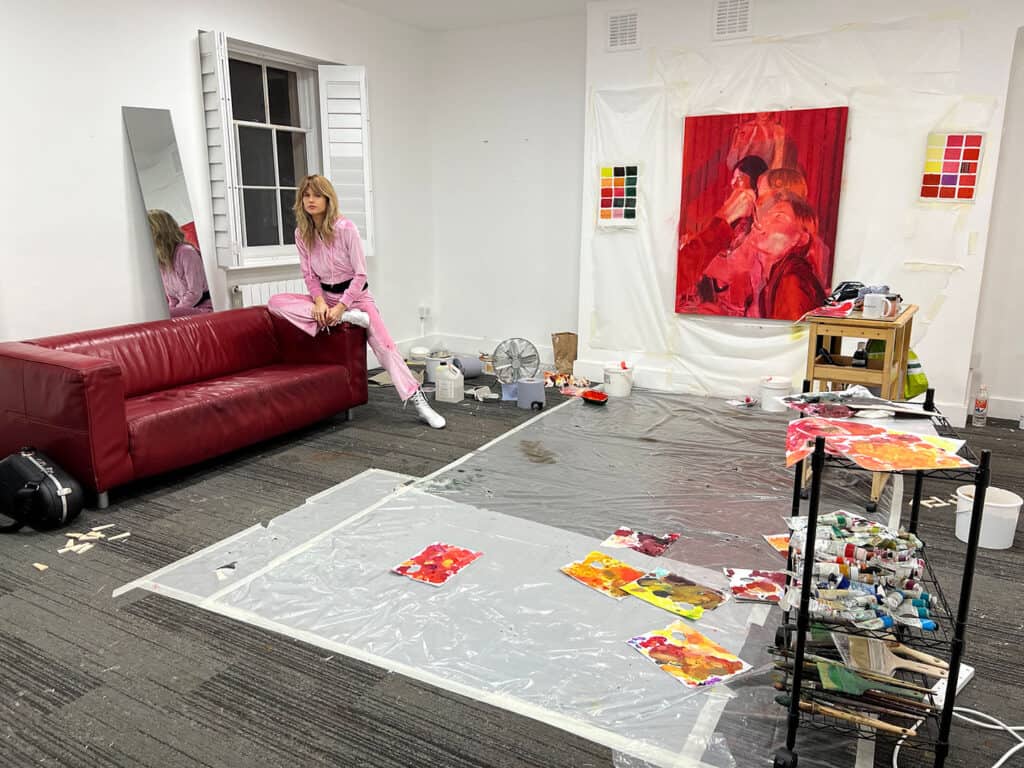
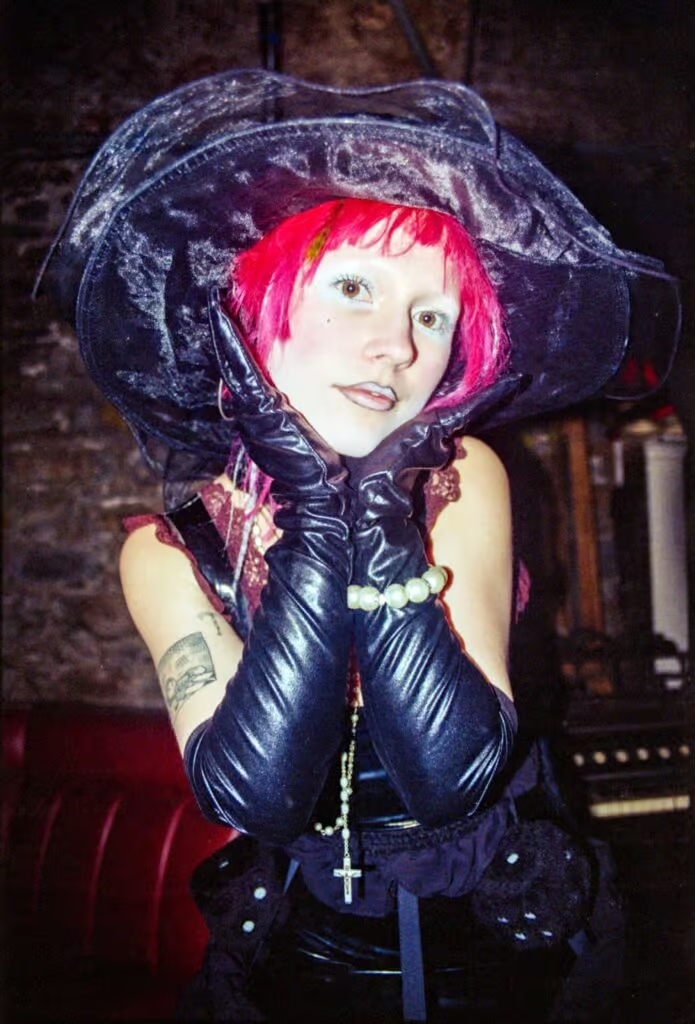
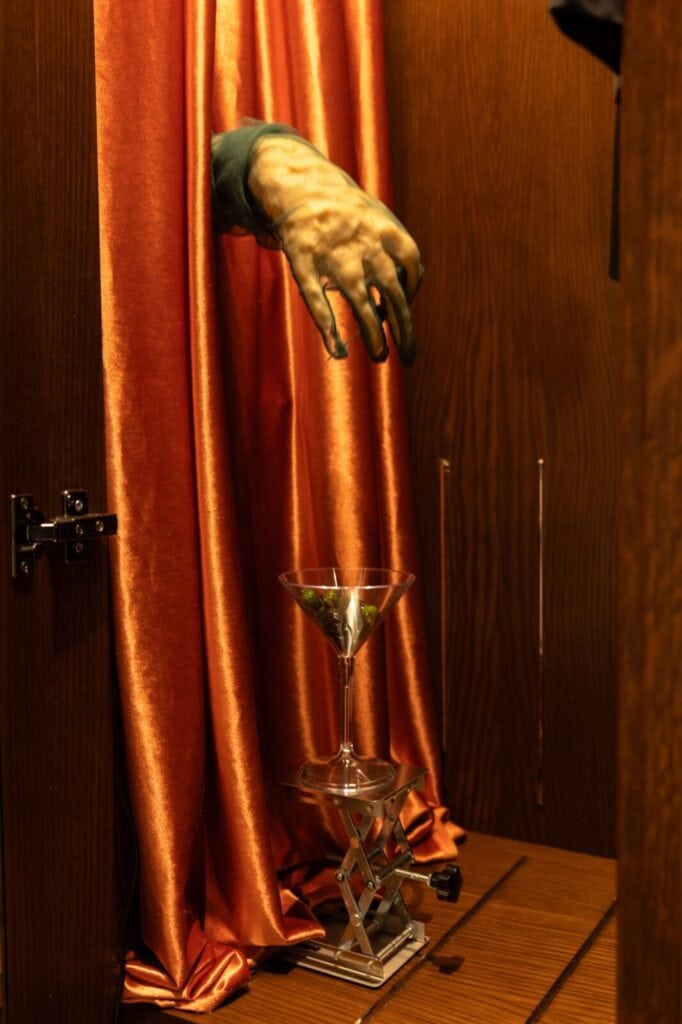
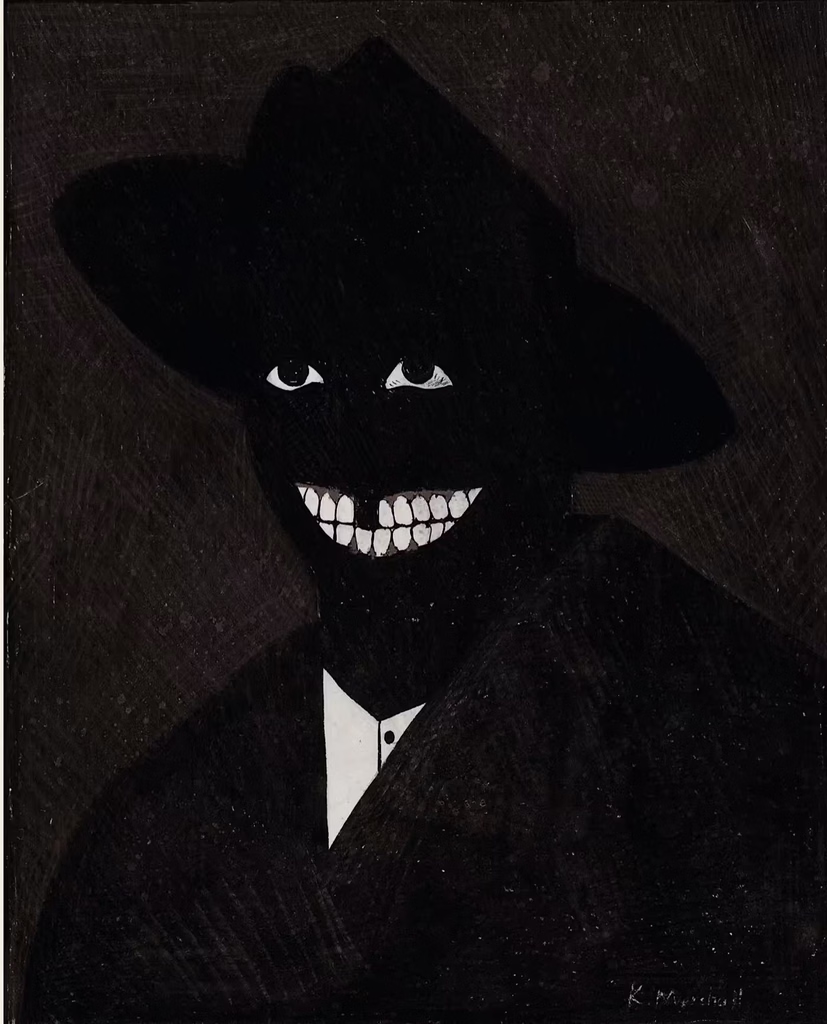
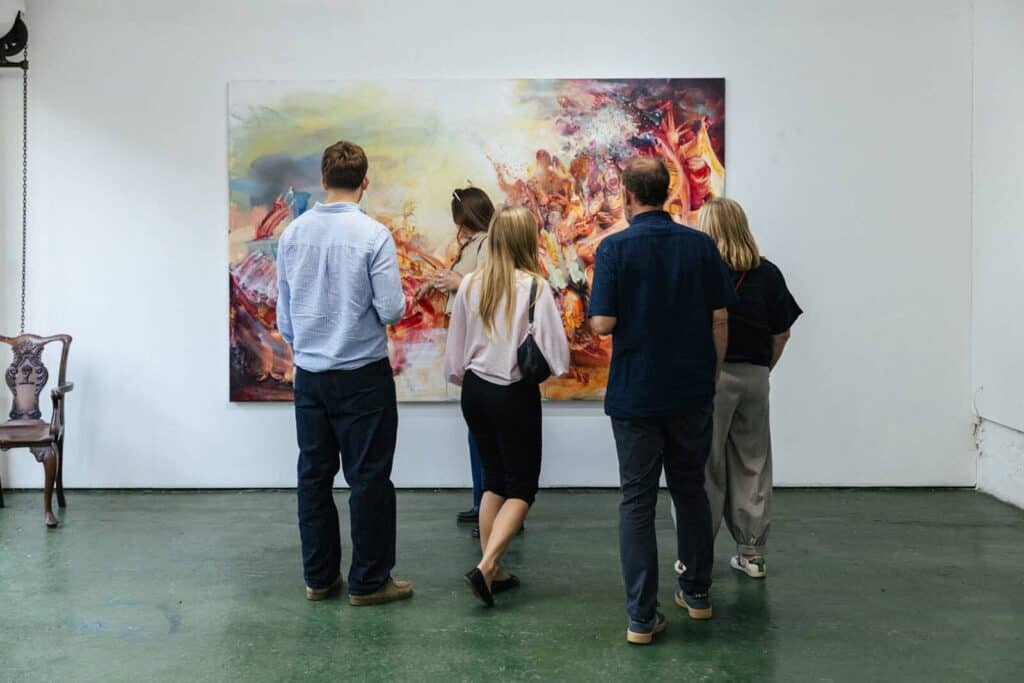
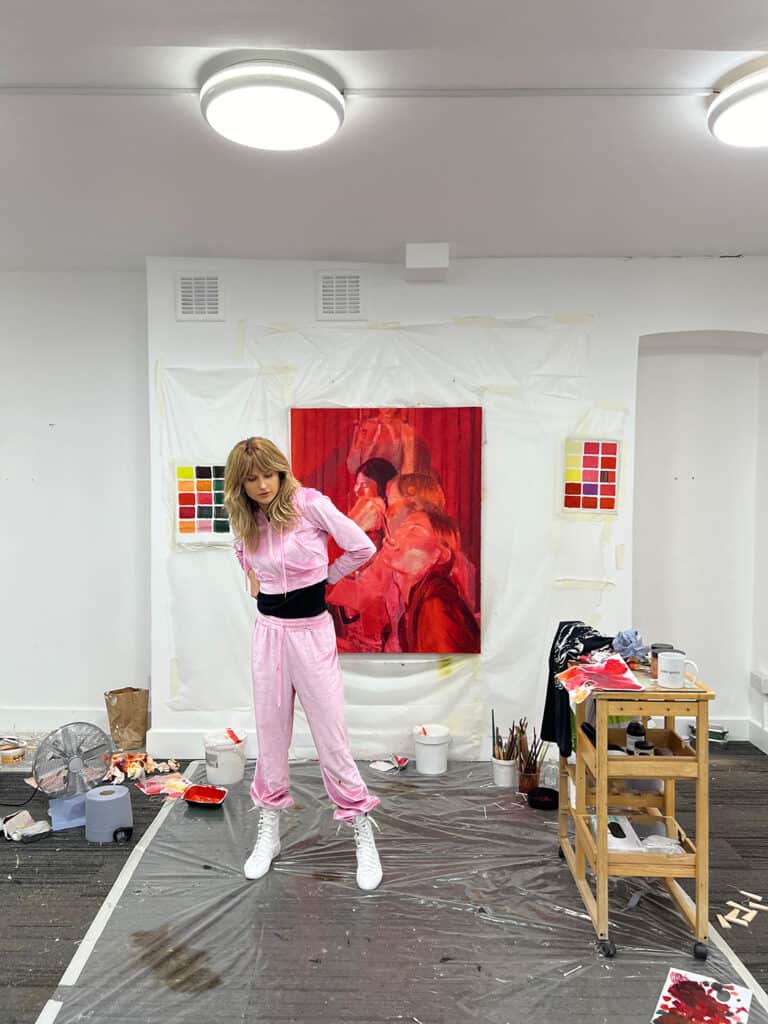
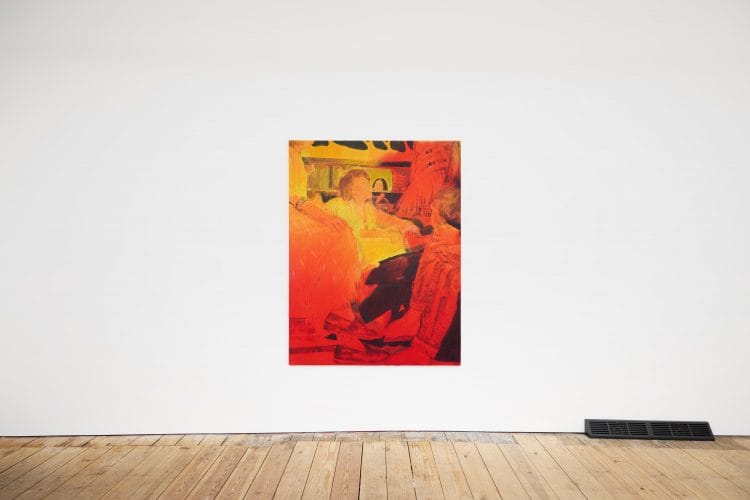
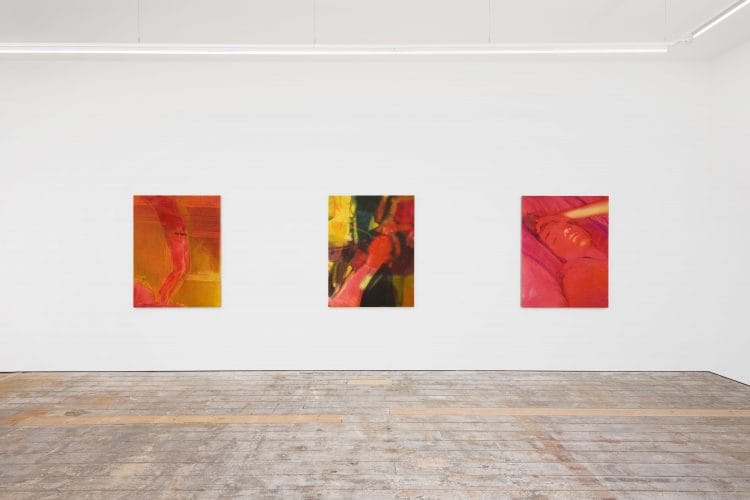
For Nothing Left to Want, Nana Wolke was granted exclusive access to two rooms at The Savoy — numbers 362 and 361. In a series of six warm-hued paintings, Wolke shares a snapshot of a night spent with a group of friends. She brings everything but a Ouija Board to channel Wilde’s spirit of conviviality and indulgence, focusing on the era before his life took a nosedive.
The actual and the artificial cannot be completely torn from one another. A conversation can flow so wittily it feels scripted, or equally a script might ring so true it threatens to bend reality. Wolke knows this, and experiments with the tension in her semi-staged situations she records on film-like sets, before painting the effect of a single prolonged moment with sound installations.
On the opening night of Nothing Left to Want, the COLD Magazine spoke with the New York-based artist about her new series, the raucous past of London’s most famous hotels, and the decadence of Oscar Wilde’s infamous nights beneath the sheets of The Savoy’s suites.
The COLD Magazine (CM): We saw hotels become fashionable haunts for London’s glitterati with the opening of The Savoy and The Ritz in the late nineteenth century. Unlike previous lodgings, they were more than a place to hit the sack. But not all hotels are as glamorous, and it’s not the first time you’ve used a hotel as the backdrop of your work. Tell me about what draws you to hotels.
Nana Wolke (NW): It’s funny, because I never set out to particularly focus on hotels, but this is in fact the second time. The short-stay hotel in King’s Cross, Princess Hotel, which became the backdrop for ‘4:28 – 5:28 am’ was very different to The Savoy — more reminiscent of an American motel. I think it’s now defunct. Hotels are an interesting mix of private and public, and depending on the type of establishment, it can be a perfect place to retreat and do something that is perhaps a bit illegal or not socially as acceptable — like sex work or drug use. That is especially true for both the most luxurious and the grittiest of hotels, just with different flavours to how the act is perceived and how well the secrets are kept behind closed doors.
The Savoy has always been ahead of the curve. Before it existed, the aristocracy in England would mostly vacation in their country homes. As the first true luxury hotel of its kind, The Savoy created a new kind of place where people of this social class were excited to be seen out in public in a chic and elevated way. The hotel’s general manager Franck Arnold generously offered me free access to two adjoining rooms formerly occupied by Oscar Wilde.
CM: The collection is titled Nothing Left to Want. What does this phrase mean to you — in the context of a room known for desire and excess, but also for Wilde’s downfall? It’s a site of passion but also tragedy and, in society’s view, moral decay. Does that need reconciling?
NW: I mainly focus on the time when Oscar Wilde was at the height of his career, and his romance with Lord Alfred Douglas. Obviously, there’s a whole aftermath that comes shortly after this period at The Savoy, when things turn sour — in fact, it was the staff from The Savoy that ended up using dirty bed sheets as evidence of his sexual adventures with male prostitutes.
When researching the trajectory of his life, I also paid a visit to the Parisian hotel that was the site of his dénouement — the decrepit place where he passed away after his time in prison. It’s now a five-star boutique called L’Hôtel. The interior today is stunning yet it’s possible to imagine its former state following Wilde’s letters from that time. The room he died in can’t even be booked now.
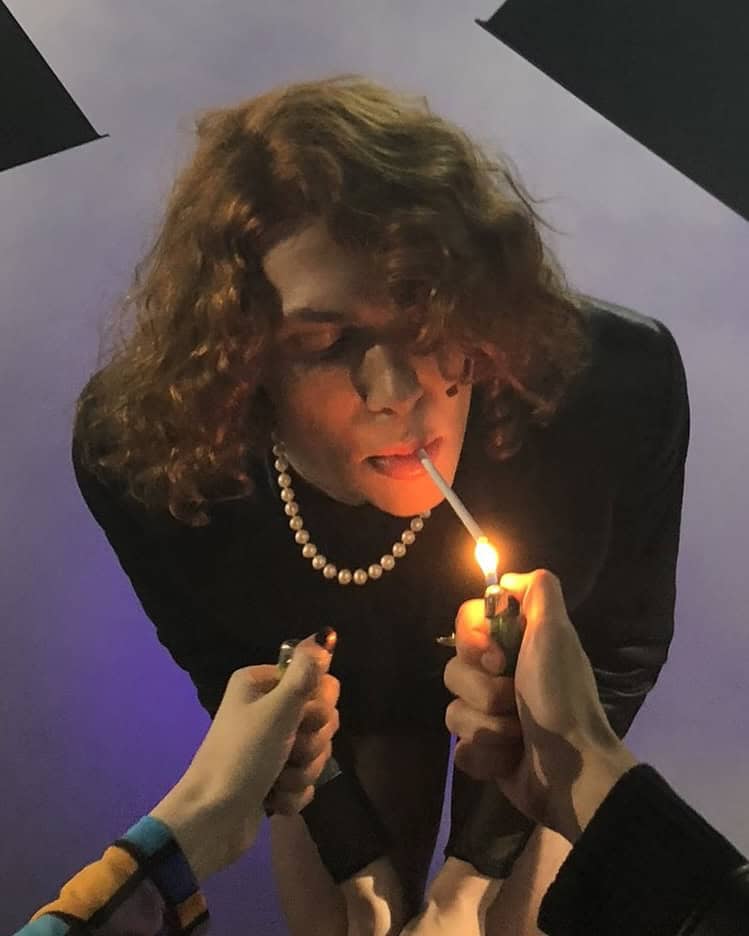
CM: Sander Priston takes centre stage in your paintings. He created the sound, too. Are you drawing a comparison to the relationship between Wilde and Lord Alfred Douglas?
I believe the core of what kept bringing Wilde and Douglas back together was the mutual relationship between artist and muse. Both were writers and poets — there was a dual inspiration. That’s something I wanted to bring into the show by collaborating with rock musician Sander Priston. I’ve worked with composers and musicians before, but Sander really had free rein to respond to my work however he wanted. The beauty of it all — and a testament to our mutual admiration and trust — was not knowing what would come out the other side.
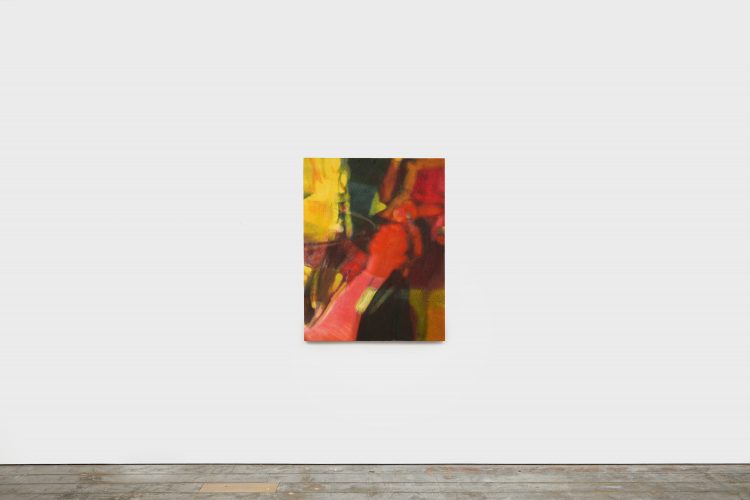
At the show, his music is coming out of the air vents. Hotels always have this kind of weird humming from the ventilation or the air conditioning. It’s really such a soundscape to a hotel experience. I wanted to capture this airy flow into the space with the music, too.
CM: Are all six paintings unified by a single perspective of the evening, or does each one capture a different chapter?
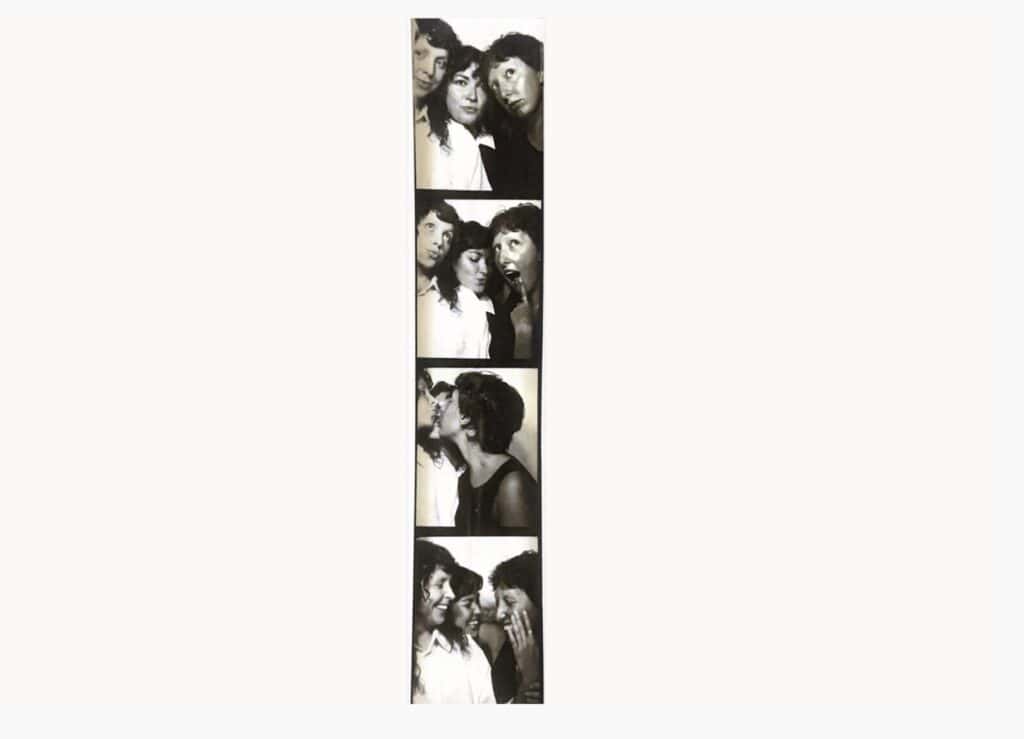
NW: It is one encapsulation of a night at The Savoy — one long moment. For the first time there was no scripted or prompted narrative. The only thing I gave to the group of nine close friends, collaborators and muses who accompanied me was the Proust questionnaire, another Victorian relic that was fashionable in bourgeois and upper-class salons. The questionnaire wasn’t actually invented by Marcel Proust, but he was known to answer it really iconically, so it took his name. Friends on set weren’t directed, but you need to create a sense of flow to the evening.The prompt I gave them was: “Come in an outfit you’d be happy to be caught dead in.”
CM: What’s next? Will you continue to explore sites with layered, dramatic histories?
I’m currently perfecting the art of doing nothing. Hopefully I don’t get any ideas too soon. The next solo show is with Management in New York, which is both my home and a place that shaped my life in crucial ways. All I can say for now is the show will inevitably reflect that.
Nothing Left to Want by Nana Wolke is on show at NıCOLETTı Contemporary Art Gallery until November 1, 2025.