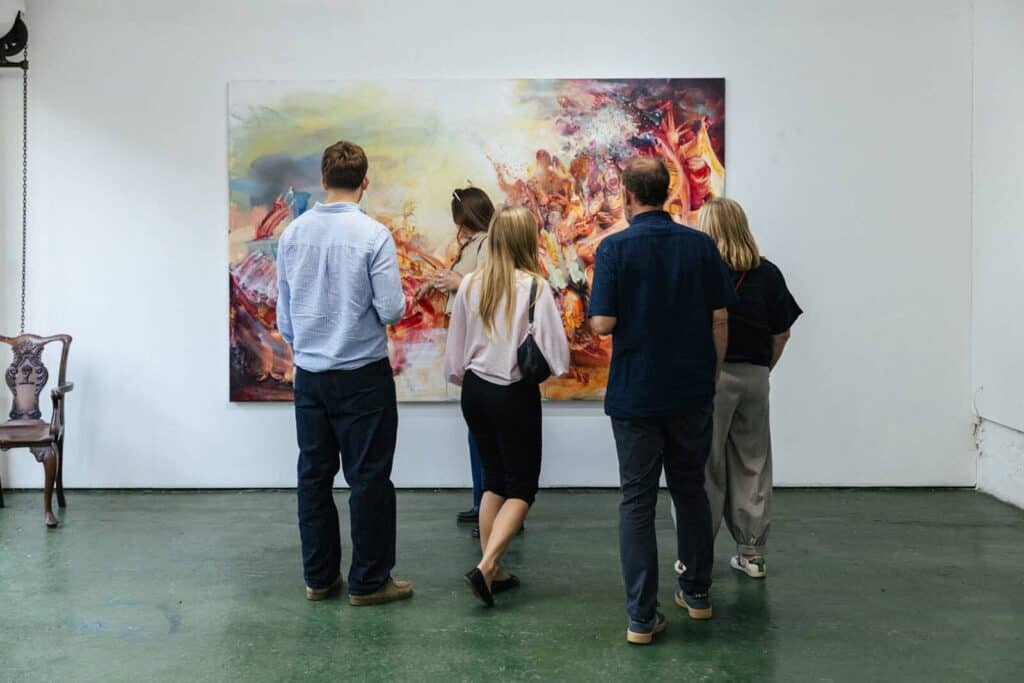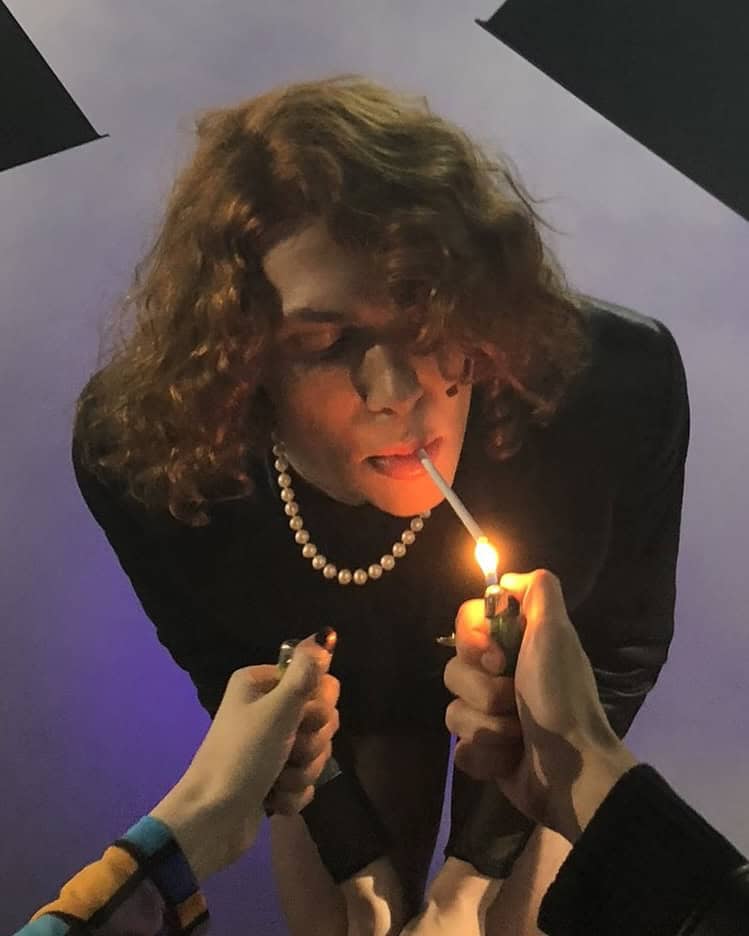
There’s something absurd about queuing in the rain to watch naked strangers hump artificial grass — but that’s exactly how my Sunday night went. Only Marina Abramović could make Manchester’s weather feel like part of the performance, and on the closing night of Balkan Erotic Epic, the city obliged: grey and soaked. I’d seen the posters for months, even heard my local barista claim he’d had a spiritual awakening after hugging Abramović herself. (“Five minutes felt like a lifetime,” he said.) And so I arrived — half sceptic, half believer — drenched but ready to be converted.
Expectation is tricky with Abramović. The “grandmother of performance art” has spent over five decades transforming the body into a site of endurance, intimacy, and confrontation. I’d studied her in film school — both warned and enchanted in equal measure. I’d watched the buzz around her latest performance ripple across my Instagram feed, even my best friend’s mother warned me it would be my “coming of age.” To this ritual, I arrived not as a polished critic, but in a hoodie and joggers — quietly thankful that the phone ban had made any performance of professionalism impossible.
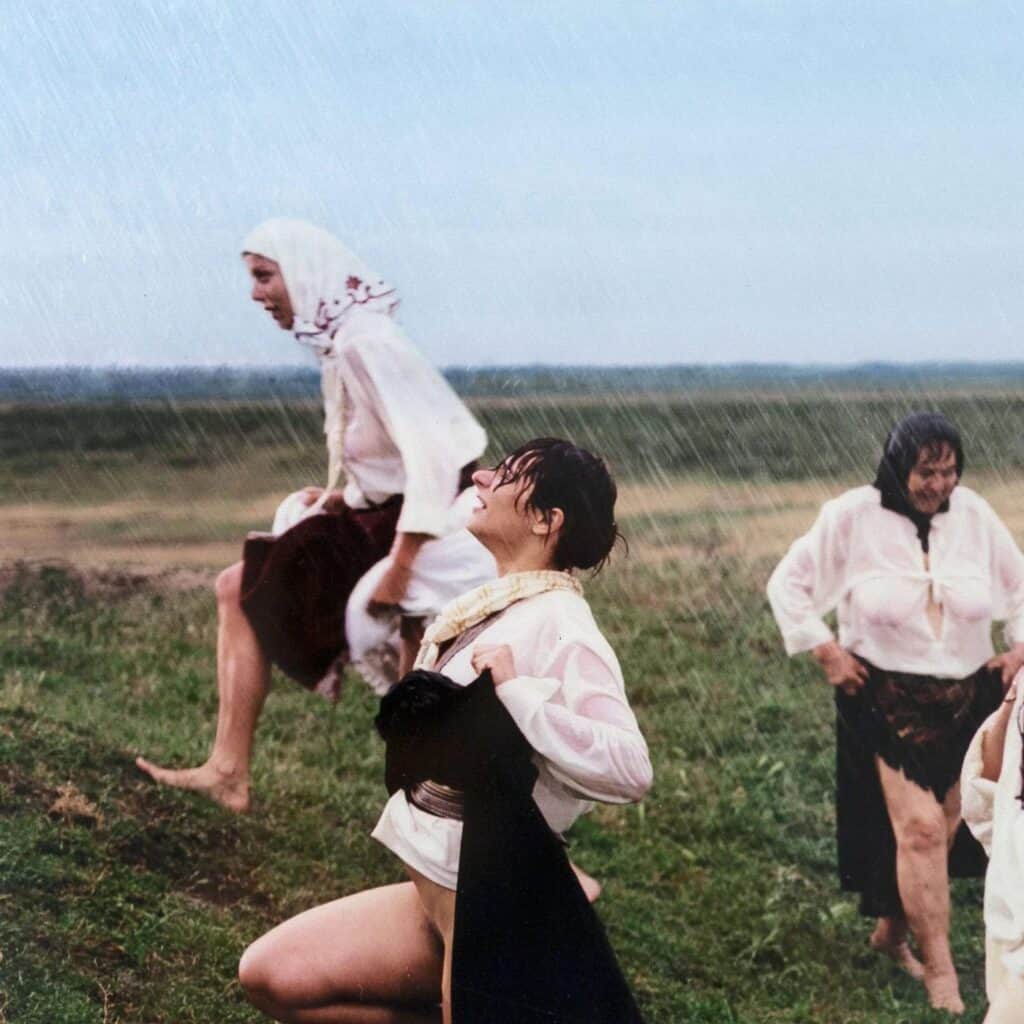
In Balkan Erotic Epic, the Serbian-born artist returns to the psychic landscape of her youth, where desire was policed, and the erotic coded as shame. She reclaims taboos through ritual and repetition, where eroticism is less about pleasure than about power — the primal energy that refuses containment, whether by communist austerity or capitalist commodification.
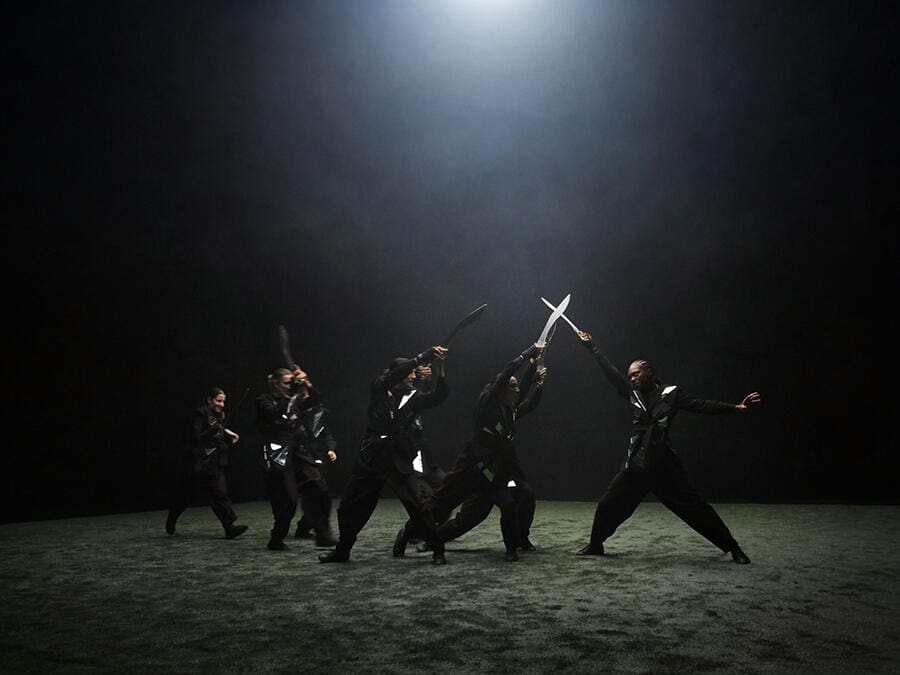
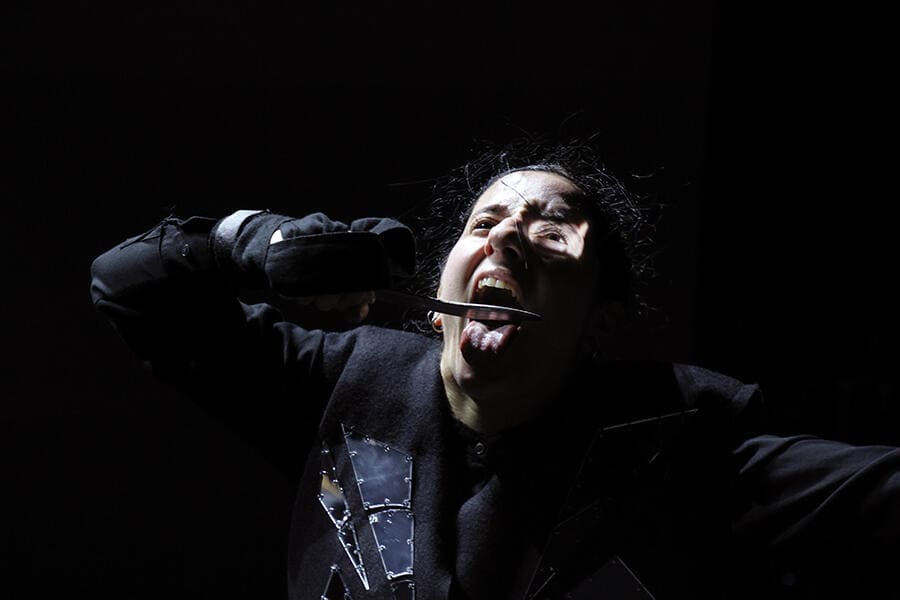
Her introduction was simple and ceremonial: “The entrance is a funeral procession.” And so the audience became one, shepherded upstairs into a maze of ritual and tenderness, each scene demanding attention as the world fell away. The funeral was for Josip Broz Tito, the late president of communist Yugoslavia, whose 1980 death marked the beginning of the country’s slow disintegration. Leading the procession was performance artist Maria Stamenković Herranz, embodying Abramović’s mother, Danica — a partisan officer and war hero who looms large over her mythology.
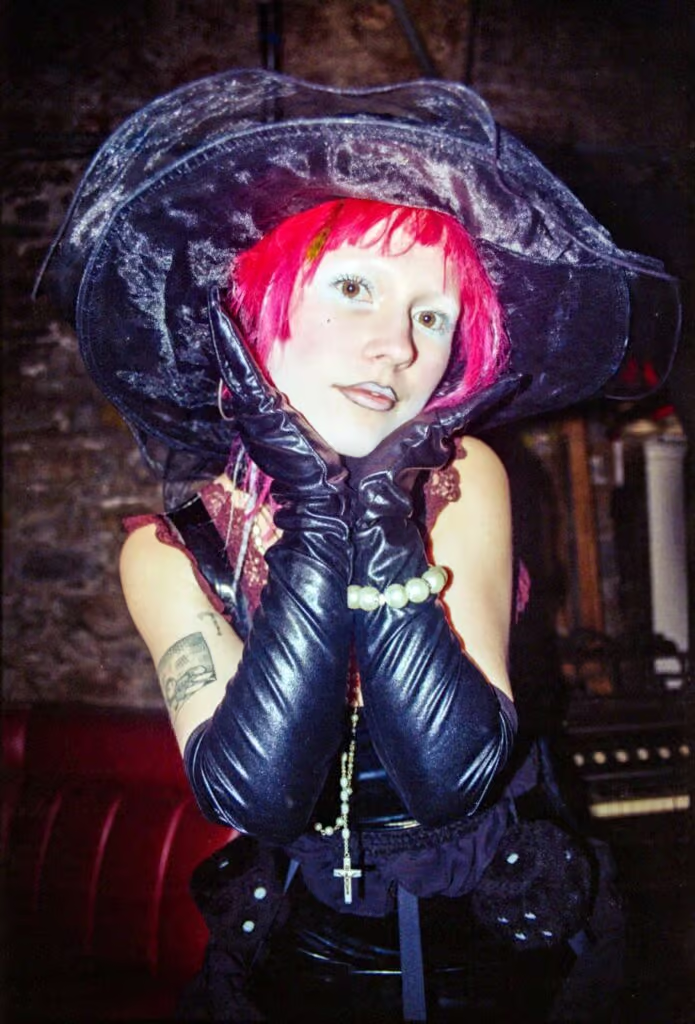
There were moments of formal beauty: a collective of dancers in white, faces obscured by tassels as if to flatten identity into cadence; a photograph of Tito draped in fairy lights, the domestic shrine given public, almost blasphemous, projection. Around that image, figures sat like attendees at some secular liturgy — pearls, dark sunglasses, black hats; a single glass of water each, a ritual minimalism of austerity and respect.
Then, the scenes that would make seasoned viewers shift: a black wedding — the symbolic union of a living woman and a dead man — unfolded beside a chapel-shaped coffin; a woman in red stood sentinel for hours. At other moments, the absurd and the sacred braided together: a pregnant woman in red in a shower; a chic pair of pink Crocs abandoned like relics; a teddy-bear robe left to gather meaning through proximity.
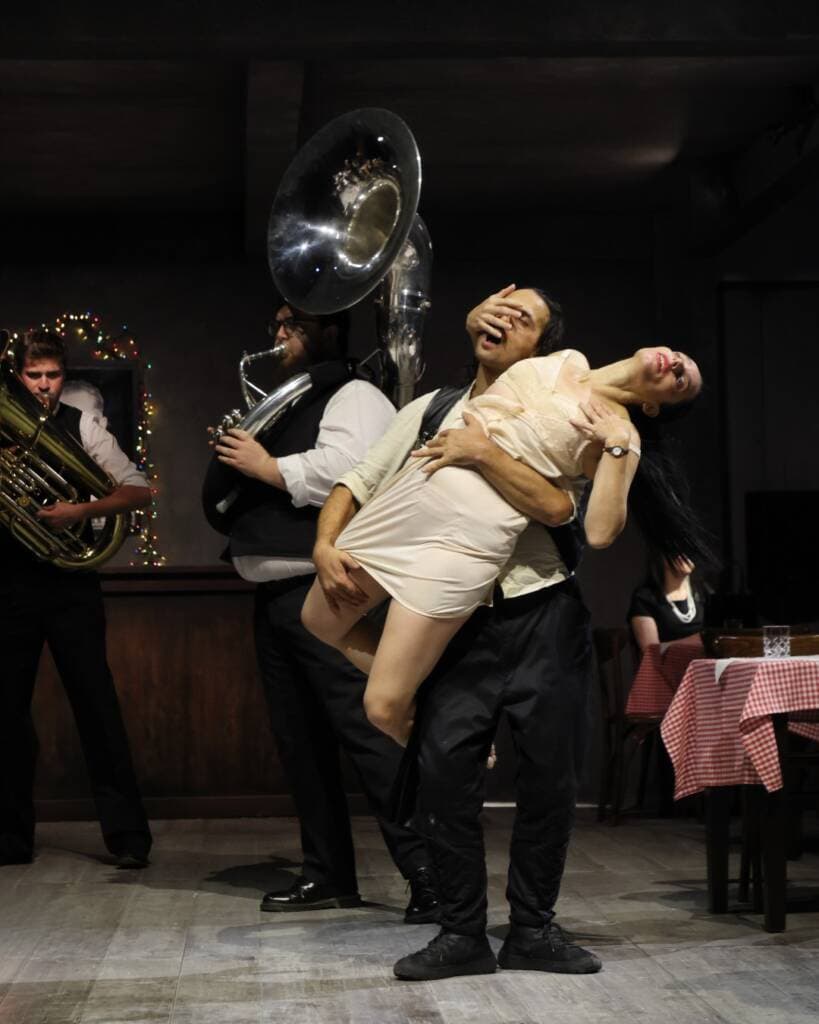
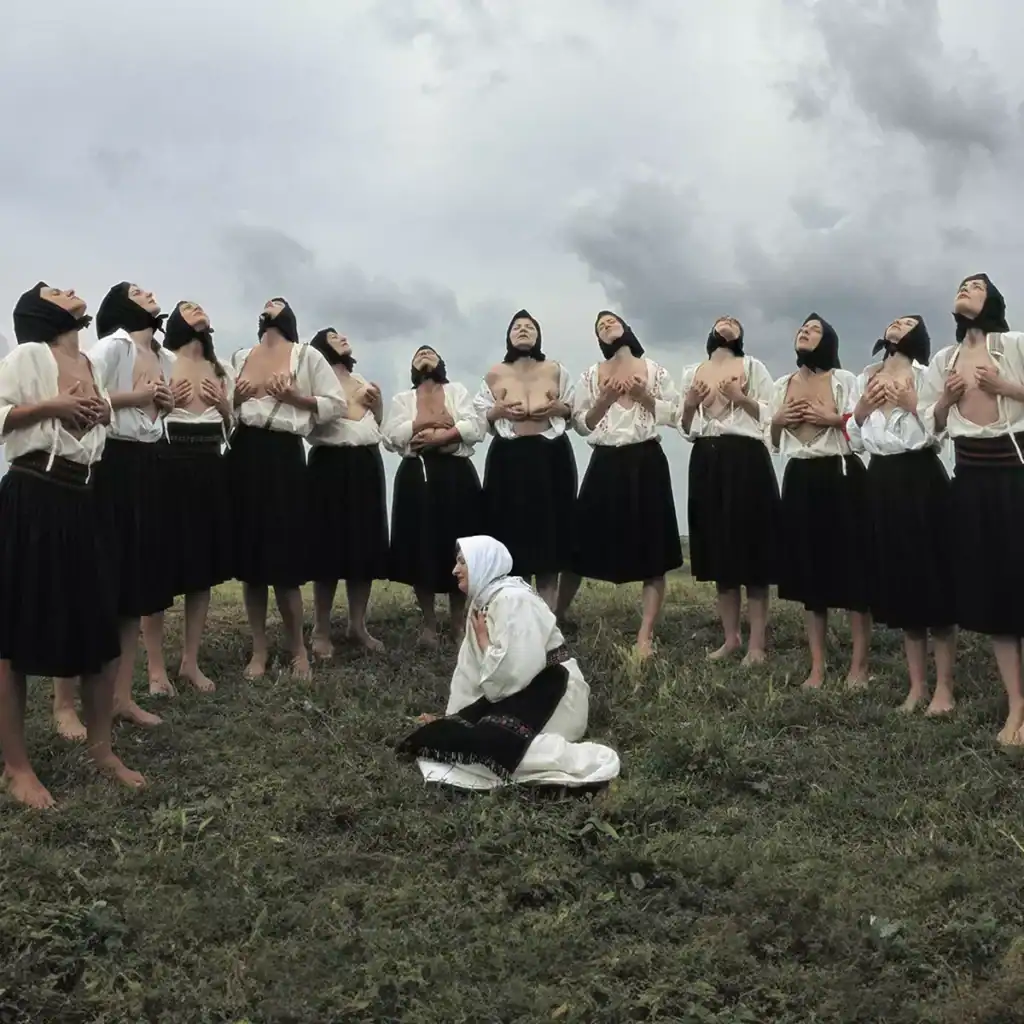
There were also more confrontational scenes. Most notably, five men face-down on a patch of fake grass, rhythmically humping it. It was apparently a ritual echo of ancient fertility rites — though it looked more like a surreal gym class gone rogue. Nearby, women of all ages exposed and presented their vulvas to the earth and sky in hypnotic rotation, like celestial sunflowers. A middle-aged woman beside me muttered to her husband, “Don’t think this is for me, love,” and the line landed like applause for the show’s audacity. I, meanwhile, found myself lying under a pedestal with a dummy corpse looming overhead, later propping my notebook against a lamp-post-sized phallus statue beside it to jot down thoughts.
What struck me most was how Abramović reframes the audience as participants. The viewer doesn’t simply choose what to watch, but where to stand, when to kneel, where to lie down. This spatial democracy — the freedom to move, to approach, to avoid — echoes Rhythm 0 (1974), when Abramović stood motionless for six hours as the audience was invited to use 72 objects on her body. Then, as now, spectators became the work, their choices revealing the fragile line between witness and participant. People I recognised — faces that had become part of my city’s memory — mirrored my confusion, amusement, and occasional embarrassment.
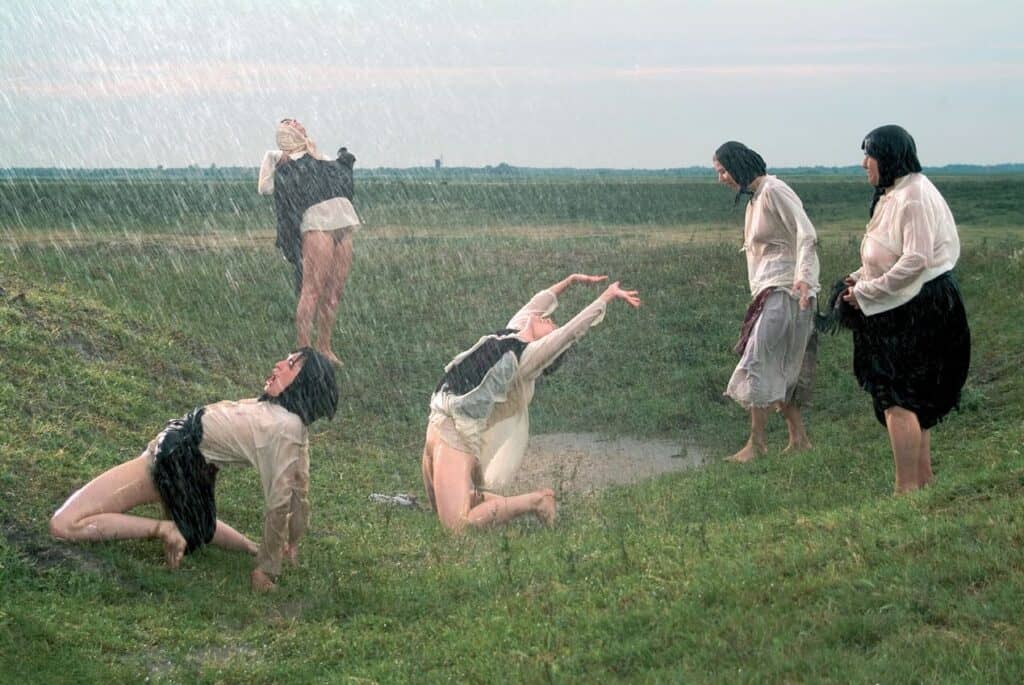
There are, of course, acts of deliberate provocation. But the show is not pornographic in intent; it is anthropological and ritualistic, pulling at historical tangles of Balkan folk practices and reframing them through a contemporary, global gaze. Abramović revisits her roots not as nostalgia but as excavation. The gestures are old, the frame is new. The result is both an anthropology lesson and a probing about the limits of taste.
So what did I learn? That ritual works. Bodies in proximity can conjure stories older than any of us, stories both clumsy and sublime. Abramović’s show is unapologetically messy: a palimpsest of reverence, shock, humour, and theatricality that resists tidy interpretation. Whether the scenes are “authentic” reconstructions of ancient rites is beside the point; the show makes you feel those rites might have mattered deeply once and could matter again if only we remembered how to be reckless with our solemnity.
I left the space dizzy, the rain outside a dizzying continuation of the performance. Viewers spilled into the street, many still processing, some laughing, others rubbing their faces as if to confirm they were real. The barista’s grin the next morning had not dimmed. (“It felt like a lifetime,” he repeated.) He was right. Abramović offered an evening that expanded time into custom, one that folded private memory into communal myth. Manchester had been invited to mourn, to laugh, to witness, and — most importantly — to be unsettled.