
“I couldn’t help but wonder, were people really rebuking physical connection, or was Big simply moving to Paris?”
This could be the opening line of a column penned by Sex and the City’s Carrie Bradshaw if she were writing on today’s dating scene. But since her time, a lot has changed. Everything is faster — images have shifted from newspapers to screens, late-night promenades with new lovers have morphed into eternal Tinder correspondences.

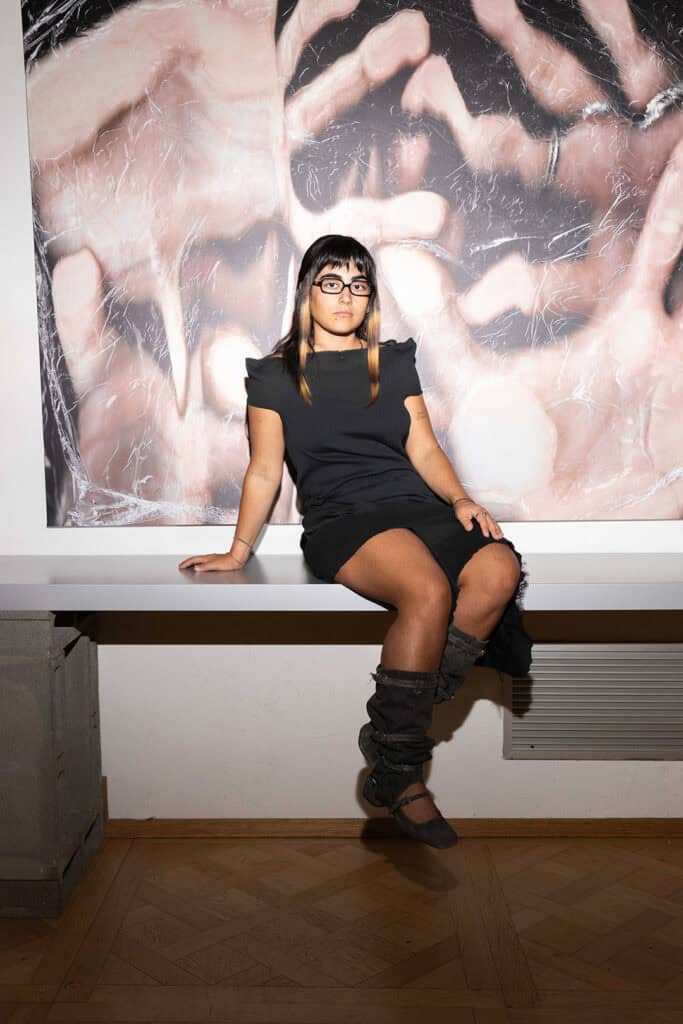
The Arctic coldness of this type of modern dating is the pivotal theme in Cate Colapietro’s ‘Breath Not Found’ at Les Garçons de la Rue in Milan. Here, photography becomes a broken mirror, reflecting the struggle to express heartfelt feelings in a digital age defined more by ‘erotic coldness’ than the warmth of in-person interaction.
In ‘Breath Not Found’, Colapietro uses a scanner to create warps, twists, and contortions across her photographs. Perhaps this process is akin to a modern-day magic mirror. Like the Evil Queen’s original, both are fitted with the power to distort all that is good and turn the viewer’s heart against the warmth of emotional intimacy. The layer of glass in her work, albeit metaphorical, becomes the membrane that separates desire from fulfillment. It is the scanner’s surface, the phone screen, the condoms — each one allowed us to look, to want, to imagine contact.
But this time, the coldness of Colapietro’s work is deeply erotic.
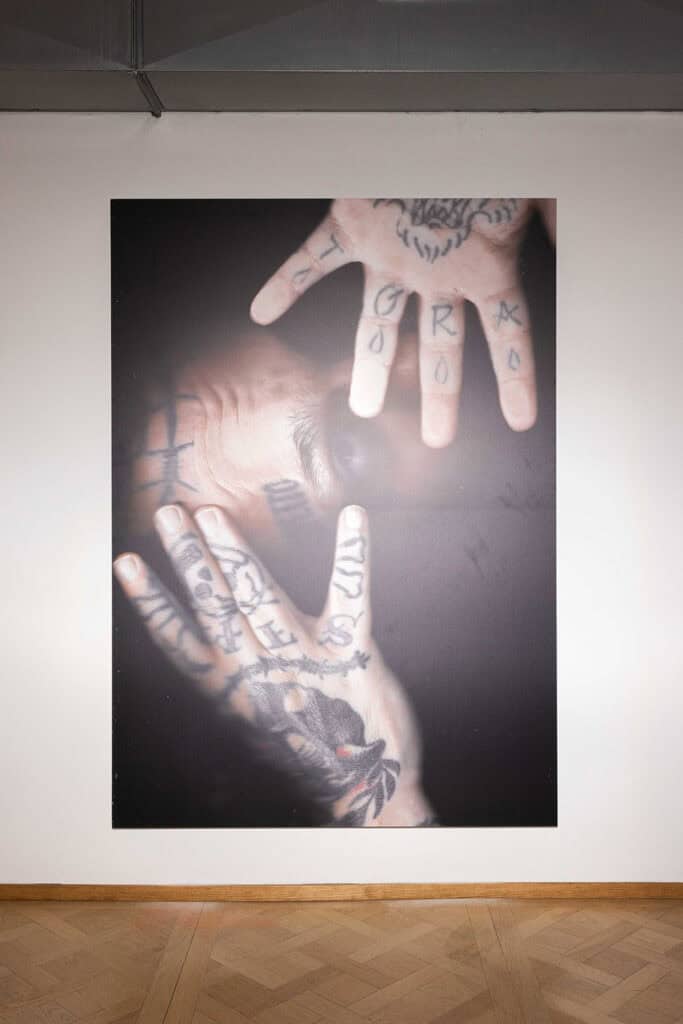
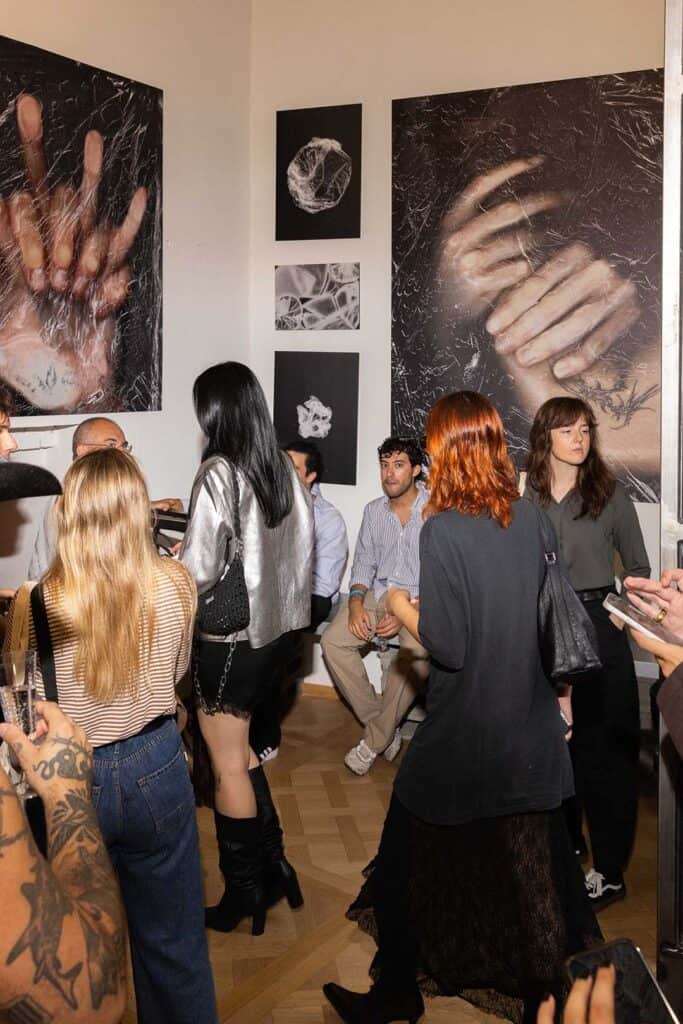
A confrontation of sex and pleasure on dating apps, the exhibition is spread over two floors. On the ground level, a harsh white light illuminates the photographs, whose shiny surfaces are covered in real condoms. As we descend underground, the air becomes heavier, and the lights turn red in a cavern where the sins of flesh can unravel. Here, the photographs depict convoluted bodies, revealed on closer inspection to be the viewers’ own. Amidst the darkness, Colapietro’s audience is confronted with their own reflections — a tête-à-tête between the artist, the self, and the modern world.
I spoke with Colapietro about her artistic process, her fascination with distortion, and how she managed to capture the emotional void of modern intimacy.
The Cold Magazine (CM): How did the concept for ‘Breath Not Found’ emerge?
Cate Colapietro (CC): I encountered this coldness for the first time when I moved to Milan, especially on dating apps. All interactions take place through a screen, people are afraid of connecting with others, both emotionally and physically. The exhibition addresses this very limitation.
CM: Why did you use a scanner instead of a traditional camera?
CC: I really enjoy working with new technologies. Last year I started doing these scans, for another project. From there, I began experimenting with the scanner.
CM: Does your work allow for glitches and distortions, or are you more methodical?
CC: I like to create distortions, to confuse people. When you confuse the viewer, they start to reflect. It’s like a chain reaction and, as a result, they start talking about that work because they don’t understand how it was actually made.
CM: And does this relate to the world of dating apps?
CC: Yes. When talking about Tinder, I realized that I wanted to focus mainly on the lack of physical touch, especially now that it’s so difficult to find someone. At least in Milan.
CM: Did you specifically choose this exhibition itinerary? It almost feels as we’re descending to an underground level, like we are descending into your psyche.
CC: That’s exactly what I wanted to do. But you always remain behind the glass, you can never fully connect with what you are looking at.
CM: It’s very difficult to combine sensuality with coldness. How did you do it?
CC: The coldness came about as a personal experience from my childhood, where I isolated myself to keep others away. It’s also a matter of insecurity that I’ve tried to exorcise through this project.


