
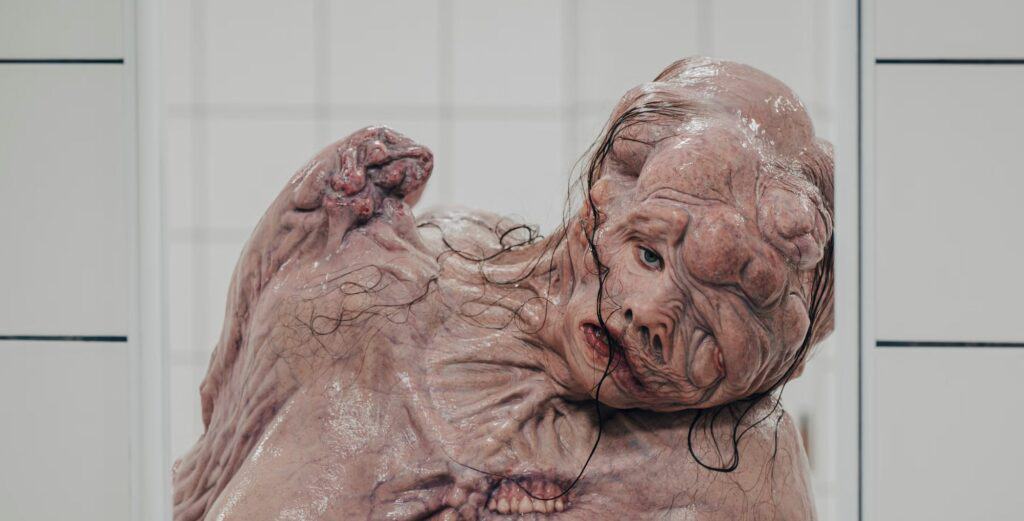
In September 2024, cinemas everywhere were left shocked after being faced with a 20 minute sequence of an exploding, Cronenberg-ified Margaret Qualley. The scene, from Coralie Fargeat’s The Substance, takes place during the film’s New Year’s Eve show, and became a short-lived internet spectacle for its intensely grotesque nature; where the audience facing Qualley’s character Sue became drenched from the excessive amount of blood spraying out of her.
It was the mind of Pierre Olivier Persin that made this gory display happen. The special effects artist opted for mostly practical techniques and prosthetics throughout the entirety of the film’s production, even using a traditional maquette to sculpt what Monstro Eliasue (the transfigured monster) would look like.Although these techniques have existed since the start of cinema itself, (in The Phantom of the Opera (1925) , actor Lon Chaney stuck a strip of fish skin to his nose to modify the shape of his skull) they’ve remained an infallible way to connect with horror lovers for over a century. Genre defining moments – like the unsettling shot of Regan MacNiel’s demonically possessed head doing a 360-degree spin in The Exorcist (1973), which the film’s makeup artist, Dick Smith, created by mounting a fibreglass mold of Linda Blair’s head on a rotating dummy – have prosthetic makeup, puppetry and pyrotechnics to thank for their sustained cultural impact.
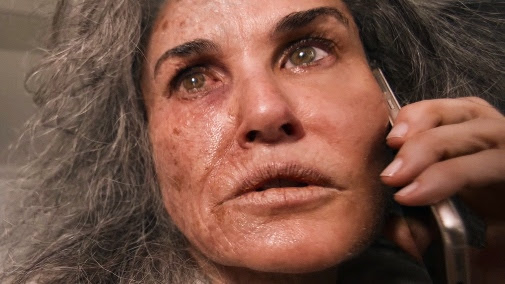
Despite facing a number of barriers over the last decade, such as the rise of CGI rendering and now the looming threat of AI, practical-prosthetics have played a large part in some of the past year’s most celebrated films. In an interview with Variety, Persin dubs 70-80% of what you see in The Substance as practical. “We did tons of designs and used everything from computer-generated sculptures to Photoshop to traditional sculptures and drawings to find the character that Coralie liked,” he said.
The designer, alongside his special effects coordinator Jean Miel, built a ‘special blood rig’ to create the inordinate splatter in the final scene. “We put that inside the suit, and it was like a fireman’s hose that would spray blood – there was blood everywhere.”
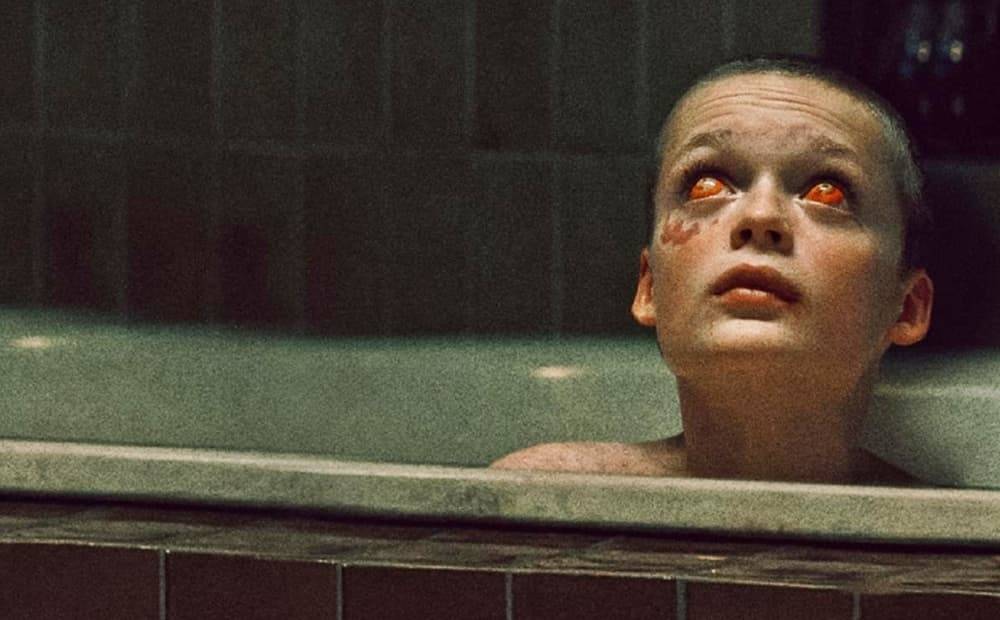
Over the past 12 months, an influx of directors appear to be favouring these analogue methods, as they bridge the gap between the imaginary and the literal. The Australian production Bring Her Back (2025), directed by Danny and Michael Philippou, is one example of this. As far as horror films go, Bring Her Back is a crash-course in perpetual unpleasantness. Much un-like its predecessor Talk to Me (2022), a hugely successful yet shockingly visceral exploration of grief, Bring Her Back is haunting in its discomfort; it’s the story of two step-siblings who find themselves being cared for by a woman practising black-magic, only to be caught up in the centre of the unsettling satanic-ritual she created.
“I always think about the audience,” says Larry Van Duynhoven, the man behind the film’s prosthetics. “What would I want to see? What’s going to upset the audience? How can I connect with them?”
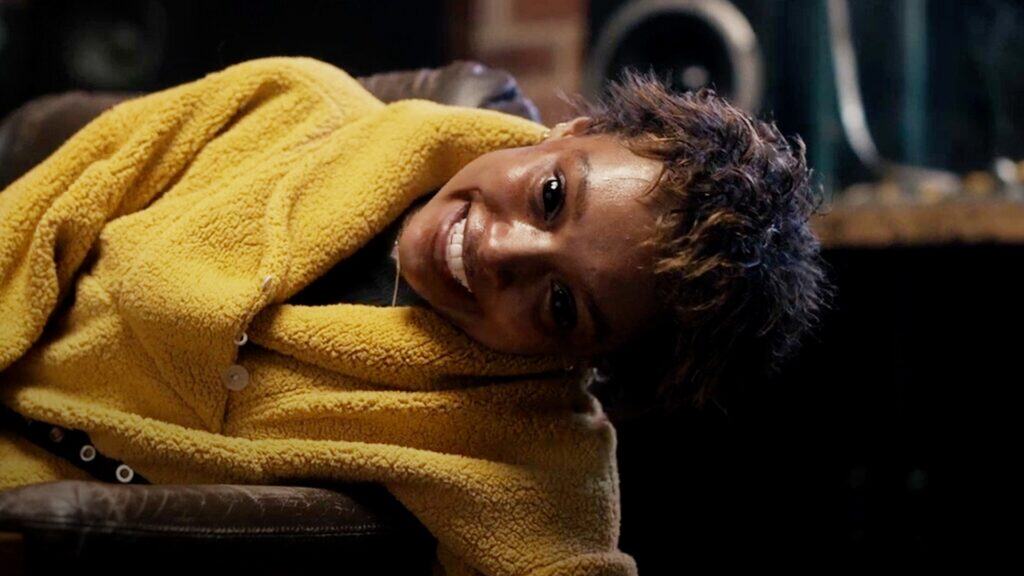
In an interview with The Cold Magazine, Larry owed the success of Bring Her Back to a reassuring change in audience trends. “I think they’ve had enough of that cheap thrill, and there’s a bit of substance to those films. Danny [Philippou] wanted practical effects because he wanted us to do as much in front of the camera as we could,” said Larry.
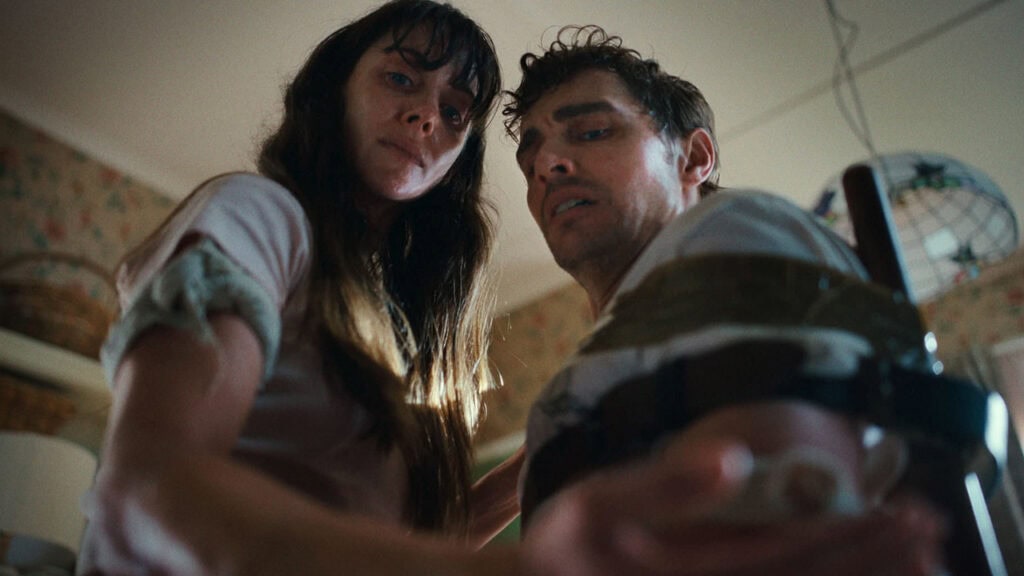
“That’s where the art is. When I was working with Mel [Gibson on Hacksaw Ridge] (Larry’s ‘big-break’, so to speak) he’s renowned for doing low budget films. It’s all about the art. So when he needed a head for a scene in the film, the makeup artist said to me: ‘Larry, you know on Apocalypto Mel just went down to the market and bought a pig’s head.’ But, the way he rolled it in the film made it look like a human head. You can’t beat it!”The body-horror Together (2025), directed by Michael Shanks, was, for Larry, a similar feat. Far from the psychological swell that is Bring her Back, Together is a comedic allegory for the intensity of long-term commitment. It sees a couple, played by Dave Franco and Alison Brie, fall victim to a squeamishly painful curse, which causes their bodies to physically merge.
“They had no money, it was really low budget,” according to Larry. “There’s a scene where [Dave Franco’s character] is walking down the hallway and his belly is rumbling and moving. I was asked what we could do, so I said we could make a silicone belly and put the compressor under it. It was just air, essentially. So, after Together when I went to work on Bring Her Back, Danny [Phillippou] wanted to do a similar type of scene. I showed him what I did with Together and he went ‘Holy Fuck’.”
Although it’s impossible to understand the exact number of films today that use rendering as opposed to practical effects, it’s no secret that the majority of the industry favours a high involvement of CGI. The effect first appeared on screens in the 1973 feature film Westworld – portraying the point-of-view of a robot’s hand – and has since become the backbone of multi-billion pound franchises.
“CGI is more expensive than practical, but the directors know they’re getting what they want,” says Larry. “The director doesn’t need to make a decision until post-production either, they can just say: ‘let’s put a green sock on’. How can you get that far down the line and not decide what you want? It’s not looking good if you have to figure it out in post.”
For Larry, and artists like him, practical effects create a relationship between the actor and their craft that CGI diminishes. A theory which was reinforced while he was working on the mini-series The Narrow Road to the Deep North (2025), which follows the story of the Australian surgeon Dorrigo Evans during World War II. “The director, Justin Kurzel, wanted it all practical. There was this one scene where Jacob Elordi [who played Evans] was doing surgery on a man to cut off his leg. Justin wanted it to be all one shot,” he explained.
“The actor was in a stretcher and – in the same type of way the magicians assistant gets into the box – we had the fake body on top of his. We built the leg from the inside out; the skin, fat, muscle, tendons, bone. It was extraordinary. But, we didn’t know how it was going to look until it was cut into. A bit like those exotic cakes, or those faces that they put into stretchy candy. It’s a thrill but it can also be devastating.”
At its core, horror exists to transgress the boundaries between fictitious storytelling and the fringes of our own psyche. It provides us with a release; a chance to explore the depths of our emotions from the safety of our couch. For those both within and outside of the industry, practical effects encompass this transgression, as they reject the sterile reality of post-production methods. “With Instagram reels and TikTok, it feels like the world has tuned out, we don’t have the attention span anymore,” says Larry. “That’s why Marvel has also destroyed films, because they’re just shit. I’m not a fan of them, I never have been.”“If the actor believes it, the audience believes it. [In The Narrow Road] Jacob got back to the makeup bus, and said it was the best day of his acting career, he said he felt like a doctor. He was beaming. He felt involved. He was the doctor at that moment.”


