
Black Friday has become fashion’s annual Hunger Games: a frantic, neon-lit dash for deals on things we mostly don’t need, from brands that mostly overproduce. The industry’s biggest weekend is a reminder that the economic engine of fashion runs on markdowns, deadstock, and a kind of institutional denial about what happens to all the stuff that doesn’t sell.
But in a small bedroom studio in Kent, where two cats named Reg and Eric provide emotional support and the occasional sabotage, one designer is staging her own soft-spoken rebellion.
Fingsbyfloss, the one-woman label helmed by 22-year-old Floss, is releasing what might be the slowest, quietest, most anti-Black-Friday capsule of the year: five one-of-a-kind pieces, dropped one per day. No doorbusters. No discount codes. No “final hours!” countdowns.

It’s a reminder that scarcity doesn’t have to be a marketing ploy – it can just be the literal output of one human sewing alone, surrounded by scraps of fabric rescued from charity shop bins.
While most brands are negotiating minimum order quantities and calculating just-how-low-can-we-go margins, Fingsbyfloss is doing the opposite: crafting clothes from recycled materials, some of them deeply personal – her grandfather’s old shirts make regular appearances. Sustainability here doesn’t mean a recycled-polyester capsule that ships overnight; it’s the kind where every garment has a past life and every order is walked to the post office by the founder herself.
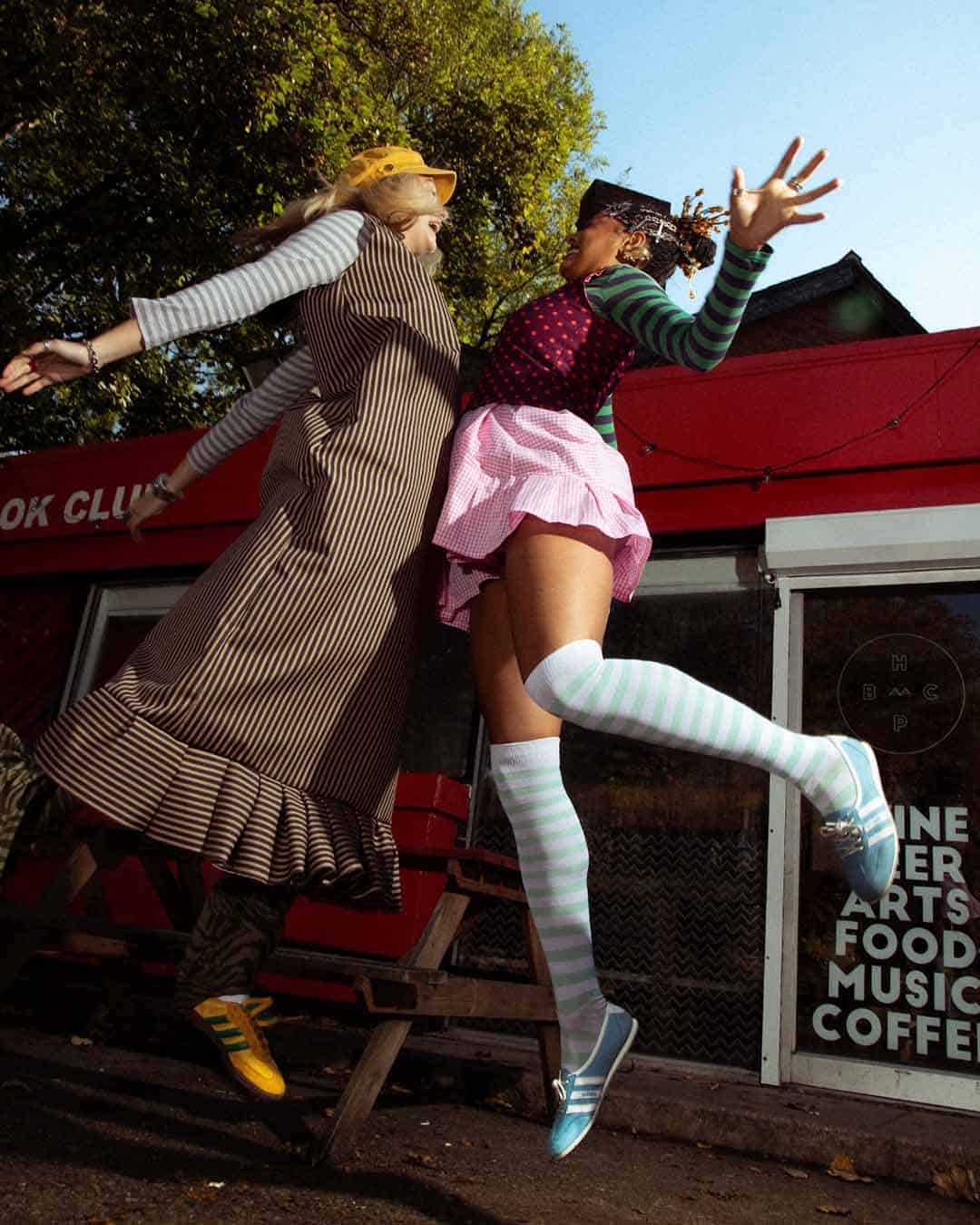
Floss’ work is loud: bulbous shapes, childlike silhouettes, trousers that look like they were designed by someone who remembers the joy of dressing up instead of the anxiety of trend cycles. These themes are apparent in the collection: featuring a polka-dot sailor cap, an iridescent ruffle-hemmed top, a fringed red handbag, a more muted skirt made from scraps her mum found in the local fabric shop, and a pair of trousers made from an old set of curtains.

Despite this playful design philosophy, her stance on Black Friday is almost monastic. “I am sickened by the overconsumption in our industry,” she says, “Black Friday represents everything that is wrong with fashion – endless waste and disposability.”
You can’t help but feel that her frustration is shared by more and more young designers who graduated into an industry where sustainability is a marketing pillar but not a practice, where “slow fashion” is an aesthetic rather than a structural shift. In that sense, Fingsbyfloss offers a counter-narrative: that one person, armed with enough scrap fabric and enough conviction, can choose to opt out of the system entirely.


Sadly, there is an inherent privilege in that decision to opt out. Many small brands rely on the boost in sales Black Friday brings to stay afloat. It is unfortunate that these kinds of flash sales have become a necessity, but their existence doesn’t need to become a catalyst for this rampant disposability to become endemic.
The “Black Friday Sucks” collection isn’t a campaign designed to shame shoppers. It’s more like a whispered reminder that the industry doesn’t have to sprint at full speed all the time – that fashion can move slowly, intentionally, maybe even joyfully.
And in a season where brands compete for attention with cheaper prices and bigger ads, Floss’ protest is refreshing: a designer betting that people will care more about meaning than markdowns.


