Nestled in an inlet of the Adriatic Sea, Rijeka is Croatia’s largest port city and its third largest city overall. But a visit today gives little hint that, a century ago, the city stood at the centre of one of Europe’s strangest political experiments.
In 1919, Italian poet and proto-fascist Gabriele D’Annunzio marched into Rijeka – then known as Fiume – declared it his own, and staged a year-long spectacle of militarised pageantry, cocaine-fuelled bravado, and self-mythologising. His bizarre insurgency would go on to inspire Mussolini, prefigure the aesthetics of fascism, and cast a long, uneasy shadow across the Adriatic.
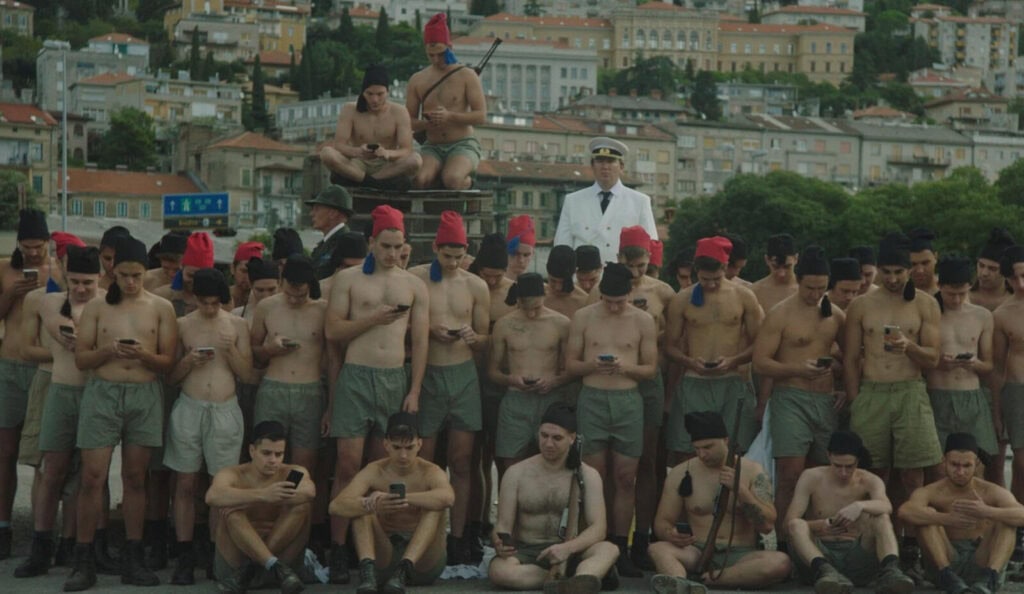
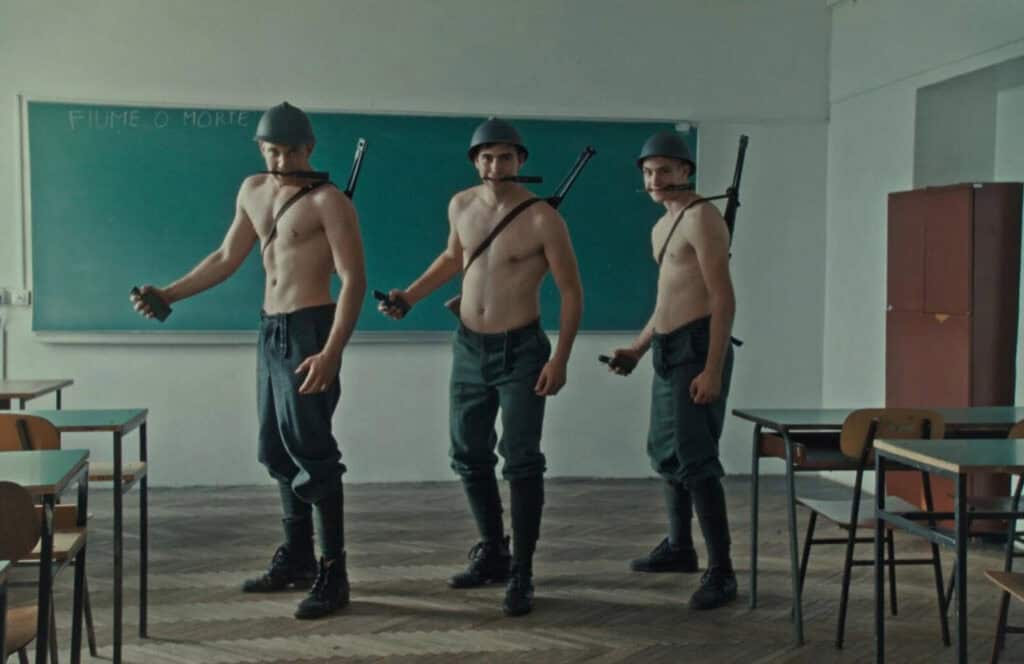
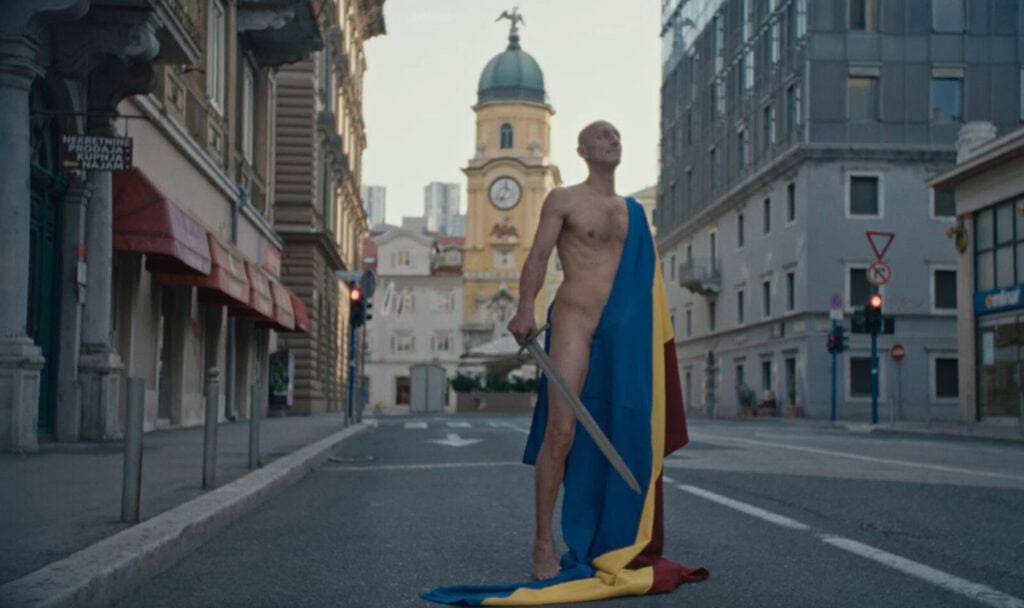
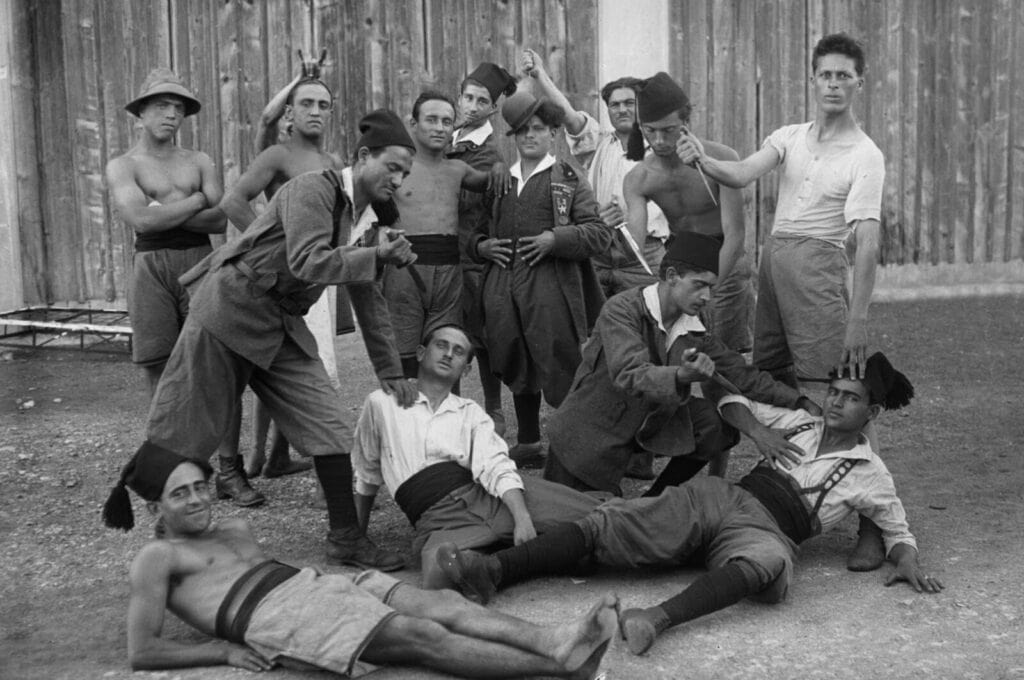
In his new film Fiume o Morte!, Croatian filmmaker Igor Bezinović turns his hometown into a living archive to reopen this strange chapter of history. Working with locals of all ages to reenact the vast trove of photographs and early film footage from D’Annunzio’s occupation, past and present collapse into an urgent, ironic experience. The result is a documentary that punctures the mythology of its subject, thereby revealing the absurdities that sustain nationalist fantasy and feel all too familiar today.
In conversation with The Cold Magazine, Bezinović spoke about the decade-long process of making this remarkable film, the archival footage he sifted through, and the ongoing global conversations surrounding D’Annunzio as his film continues to screen around the world.
The Cold Magazine (CM): What inspired you to make this film?
Igor Bezinović (IB): For me, it was important to make a film about my hometown. I’m fascinated by it, I love it, and I wanted to experience it through new eyes by making this film.
People are usually drawn to the film because they’re curious about the character of Gabriele D’Annunzio. Many have heard about him in school, especially in Italy, or know him through general culture. But my intention wasn’t to expand on the psychological aspects of D’Annunzio, which have already been extensively analysed. My idea was to place him within the perspective of my hometown today. That was the motivation that kept me going for ten years – I’ve been working on the film for that long.
CM: Did making the film change the way you see your city?
IB: Absolutely. Not only its history, but its present. Getting to know everyone who participated in the film opened my eyes to new people, places, and events I didn’t know before. It became a very specific method of getting to know your town through a creative project.
CM: I wanted to ask about your process: did you always know you would involve so many people in the filming?
IB: Not at all. When I began ten years ago, after receiving the first script-development funding, I only knew I wanted to make a film about D’Annunzio occupying my hometown. For years, I was just reading and trying to understand what had happened. I was searching for a method to tell the story in a way that wasn’t boring or overly didactic, something that would engage viewers. About four or five years in, it clicked: I should use a participatory method, using the citizens collectively to tell the story.
CM: I was really struck by how much archival footage the occupation had left behind. What was it like to go through all of that material?
IB: They say it’s one of the most photographed events of that time. Surprisingly, there’s also a large amount of film footage, not just photos. Film stock and cameras were extremely expensive then, but they still brought cinematographers because they understood the political power of images. They produced tons of propaganda photos.
Discovering new photos in various archives felt like treasure hunting: you’re not sure what the treasure is, but you know there’s more. A special part of the process was finding the exact locations where photos were taken and comparing them to today’s city, even when the surroundings had completely changed. Most photos are now archived in the Vittoriale archive at the D’Annunzio Foundation, and many are digitised. It will be exciting for future researchers.
CM: D’Annunzio seemed so theatrical and cinematic. You almost wonder what he would think watching this documentary a hundred years later.
IB: Who knows? In a way, yes, we’re reminding the world of his existence. But the film is clearly ironic and critical of him. He wanted to be remembered as a hero, and this film definitely doesn’t present him as one. In fact – and this is a small spoiler – at the end of the film he proclaims war on his own country, yet he’s still considered a patriot. I think it may be the only case in history where someone declares war on their own country and is still regarded as a patriot. He was a very strange person. I honestly don’t know how he would react to the film.
CM: While watching the film, I was reminded of a debate over depictions of Nazi villains: when they’re portrayed as competent and cunning, neo-Nazis often take pride in that representation. But when they’re shown as incompetent and absurd, they feel embarrassed. Your film seems to take the latter approach.
IB: I wanted the film to contain both emotions, positive and negative. It needed to present this crazy occupation in an entertaining way, but not only entertaining. If it were only tragic, that wouldn’t be enough either. I wanted the audience to enjoy watching it, but to leave the cinema with the clear feeling that what happened was wrong – fun for him and his soldiers perhaps, but harmful to the citizens.
I couldn’t foresee that, by the time we finished, the film would feel so timely. Ten years ago, global politics were very different; the world wasn’t as militarised as it is now. Today, states are investing more and more into their armies. D’Annunzio would be delighted, he loved war. When World War I ended, he was sad because he lost the excitement. So yes, he would be thrilled by today’s militarisation.
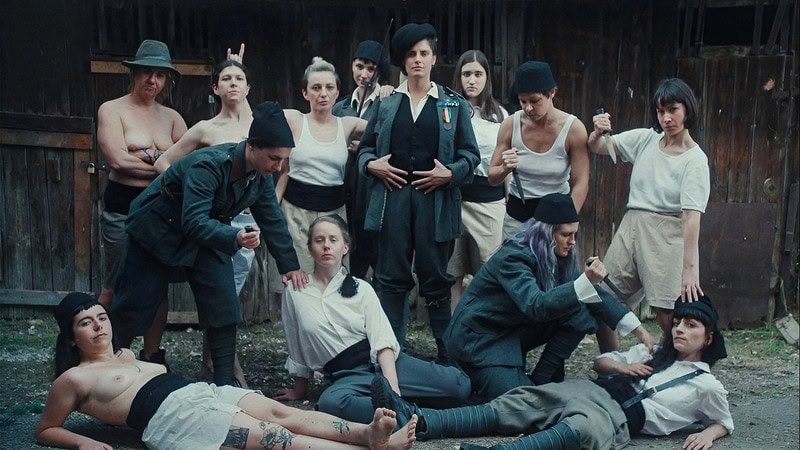
CM: The film also portrays masculinity in a fascinating way – it’ ridiculous, and also terrifying, especially the influx of young men into such a small city. How did you approach that theme?
IB: The city had about 50,000 inhabitants then, and at one point 10,000 young men arrived with D’Annunzio. Most archival photos are of young soldiers posing; there are very few of ordinary citizens or of women, and women mostly appear when they’re with soldiers.
The film reflects the dominant kind of photos and films, though I would personally love to see a film about the occupation from a female perspective. There is already a lot of researched archive material which would allow artists to approach the occupation from that angle in the future.
Because the photos were mostly of young men, we knew we needed to involve as many young men from Rijeka today as possible. I worked with a brilliant casting director, Sara Jakupec, who won an award for her work on the film. All the boys are non-professional actors, and most were willing to fool around and try stepping into the shoes of young men from 100 years ago. And honestly, I don’t think much has changed in male psychology. When you put a bunch of young guys together, they tend to act in specific ways, not always smart or pleasant.
CM: What was it like showing the film in Italy?
IB: I’ve presented it almost 20 times this year. In Italy, people often approach me afterwards, many history teachers asking how they can show it in high schools. People know D’Annunzio’s name, but they’re shocked to learn he proclaimed war on his own country and fought against democracy, yet is remembered mostly as a poet. If you look at Italian street names, almost every town has a Gabriele D’Annunzio Street.
He has a huge literary legacy in Italy but I think it’s time people also talk about him critically. Beyond being a poet, he wasn’t behaving patriotically. He had enormous debts and even escaped to Paris before World War I. He wasn’t paying taxes or contributing much to the country beyond his writing.
CM: And what about screening it in your hometown?
IB: It’s still showing there, it’s a total hit. We began in February with two screenings in one day because we wanted to invite everyone who participated. It was one of the most beautiful days of my life: people cheering, applauding, laughing. It felt more like theatre than cinema. People love it and see its success as their own.
CM: After ten years of work, what is it like to have the film finished and out in the world?
IB: It’s a wonderful feeling. I’ve been travelling with it since February – London, Cairo, Bristol, Glasgow, Mallorca, New York… It’s opening so many doors and letting me talk about this topic, which for years no one really knew enough to discuss. Now people ask about it. It can be tiring to focus on one topic so intensely, but it’s absolutely rewarding