‘Meet Me Backstage’: Erykah Badu Handpicked Paris Rabone
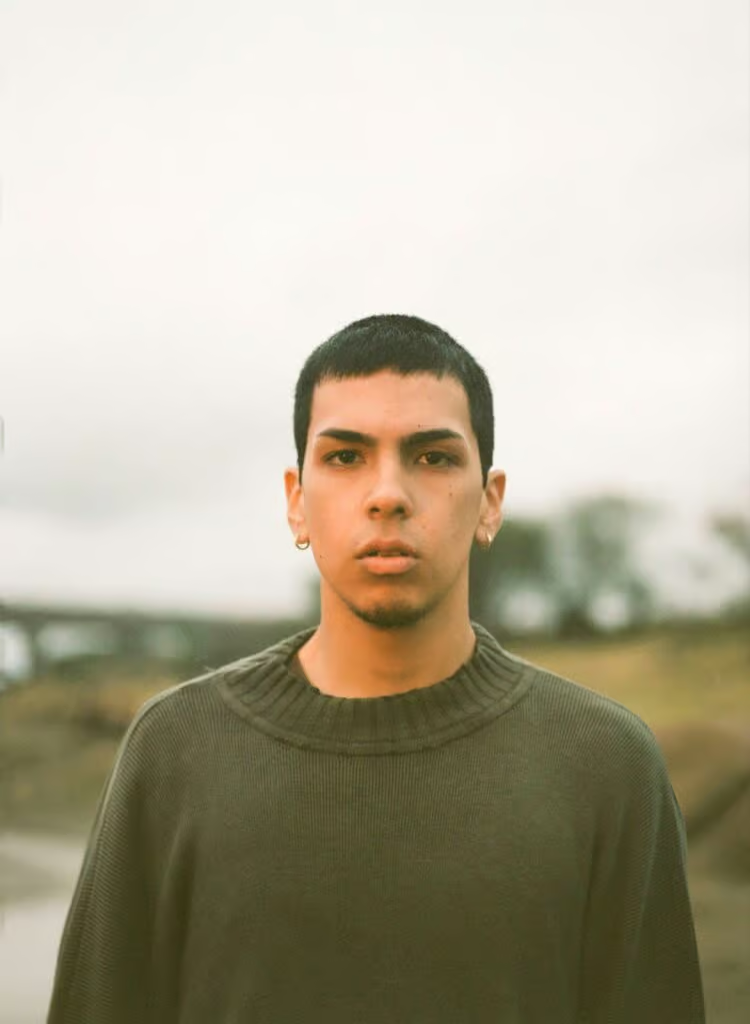
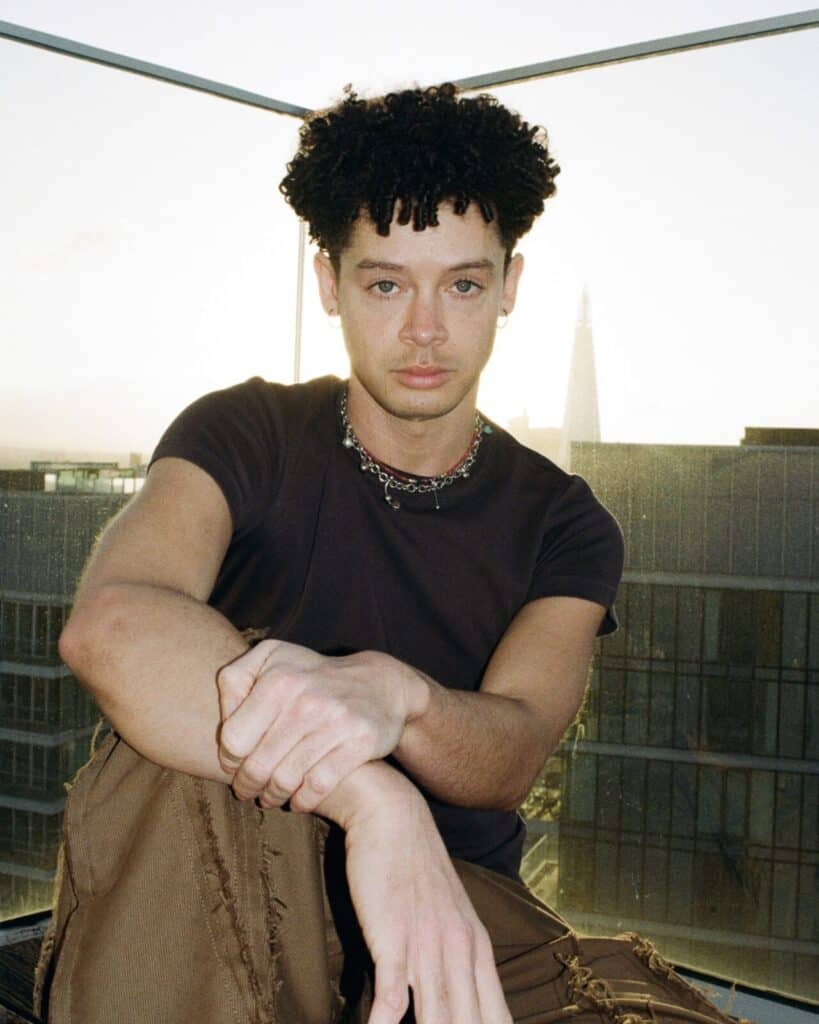
“Meet me at the back door,” Erykah Badu texted Paris Rabone the night he turned 17. “I’m gonna sneak you in and I’m gonna sing you happy birthday.” Her Wembley concert was adult only, but no artist spoke to him more growing up – he knew he had to be there.
Earlier that week, Rabone had tweeted her saying: “I’m too young to go to your show, but I need to meet you to tell you how much I love your music. Can we sort this out, please?”. Ten hours later, Rabone and Badu were hanging out backstage. Ever since then, the pair have kept in contact. But until recently Badu didn’t know that Rabone made music. In fact, few people did. “I’m private,” Rabone smiles, “but I’ve been trying to work against that.”.
Since that meeting Rabone has been working against it in a major way. He’s opened for Badu on stage, and now he’s preparing for the release of his debut single, Marrow – a soulful, introspective track that breaks traditional song structures and wears a lifetime of musical influences. Rabone’s stories are personal – weaving narratives from his recent past and present – and that rawness comes with a sense of vulnerability. Thankfully though, Marrow was written long enough ago that old wounds have healed. “The boy that it was written about, I don’t even think about now,” he laughs.

For most artists, releasing a first single is terrifying – but most artists haven’t had Badu’s seal of approval. After ten years of friendship, Rabone finally showed her his music. Badu was in London for a gig at the Southbank Centre. She’d already sorted Rabone with a ticket, but after she heard his music, she had other ideas.
“I’d just gotten out of a shower – this is two days before the show – and I had a missed call and a message from her saying: Do you want to open for me in a couple days?” he remembers.
““I’d never performed live properly, but I knew I couldn’t say no,” Rabone explains. In two days, he spun up a band of friends, organised a single rehearsal, and created a set list ready for the stage. The lead up to the gig was so frantic that nerves didn’t have time to set in – until he was backstage.
“I broke a Valium into four and took a quarter,” he laughs. But even through the fear, Rabone had a newfound voice of reassurance. “I was trying to tell myself: Erykah Badu believes in you. You have no reason to be insecure right now. This woman – that is such a fundamental part of your musical experience – she’s sharing her stage with you. It’s crazy for you to shrink yourself.”

While Rabone holds Badu as his highest influence, a lifetime of immersion in music means that she is held in good company. “I was raised just hearing good music at home. My mum has really interesting taste, her CD collection is amazing,” he recalls. In turn, his mum’s taste was shaped by her own parents – who came to the UK from St. Lucia as part of the Windrush Generation. In his kitchen, Rabone would hear Jamaican reggae, soca and calypso from Trinidad and Tobago, and zouk from Martinique. “Caribbean music is really expressive and colourful, it’s not boxed in by certain genres,” he says, “It can be formulaic at times, but it’s for a purpose – whether that’s to make you dance or something else.”
While his first memories come from home, Rabone believes his true musical education came from the record shop his parents opened when he was a child. “It was on Berwick Street in Soho which was known as the place where you went to buy music,” he says. “As soon as I’d finished school, I’d be getting a tube to the shop and I’d work there till 8 o’clock when they closed, and then I’d work there on the weekends.”

The shop specialised in Black music and had a huge collection of R&B, hip-hop, soul, and jazz records – alongside music from West Africa and the Caribbean. Inside, there was only one sound system and people working would play the things they liked, what they were feeling that week, or what they wanted to recommend to customers. “Everyone who worked there had such good taste in music, whatever was playing in the shop was always sick,” says Rabone, “I feel like that really sharpened my ear. because I was constantly finding out about new music and discovering older artists.”
As he was working in the shop, Rabone discovered some of his greatest influences – jazz musicians like John Coltrane and Miles Davis; Fela Kuti; the first albums of Jill Scott and Teedra Moses. Holding multiple, disparate influences at once has also informed Rabone’s songwriting. “I feel like the core of it is a jazz approach, which is a Black classical music approach,” he says, Treating it as an experiment, playing with strong structures – stretching them outside of their standard format.” Marrow narrates the story of Rabone’s breakup from his first big love. “Every part of the music has been an emotional expression; it’s not just the lyrics. I remember writing the chords and it being like: Oh, yeah, this is exactly how I feel.” The song is split into three sections, with no traditional chorus, that navigate the impending end of the relationship, the chaos in the wake of the split, before a light at the end of a tunnel is seen.

For Rabone, the process of writing has felt like a form of therapy – an opportunity to mine his own emotions to make sense of them more deeply – even though it can be painful. “There’s been times when I’ve written a couple of lines and been like: right, time out, I don’t want to deal with this now.” Through his creation though, Rabone hopes that he’ll be able to turn what he’s learned about himself into a point of connection for others. “Music kind of gives me a different language, music that I love helps me figure out what I’m feeling. It would be amazing if my music could give that to someone else.”