
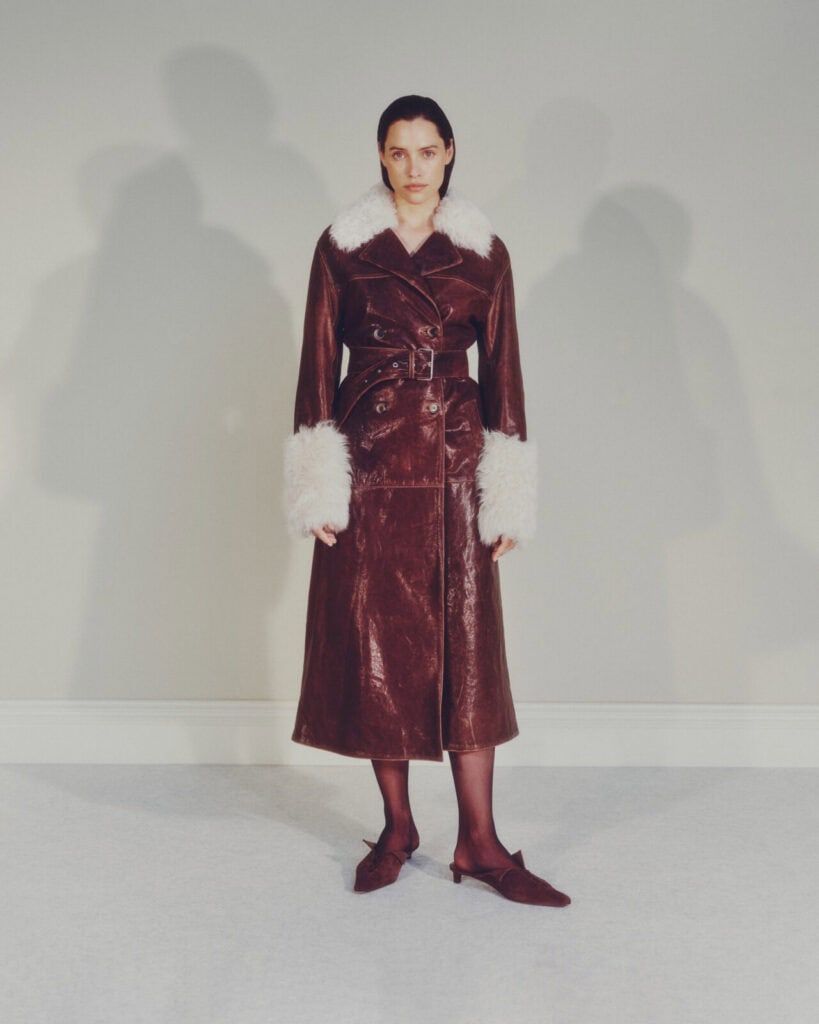
Studio Constance has long been a brand that captures attention. Not simply for their striking takes on classic outerwear or their explorations of structure and form. Their singular approach to sustainability, often creating garments from their own leftover scraps of fabric, is an embodiment of everything the Copenhagen Fashion Week’s (CPHFW) NEWTALENT scheme does well.
Although One To Watch brands aren’t held to the same stringent, industry-leading sustainability requirements as brands on the main schedule, CPHFW is committed to nurturing a new generation of designers who embed ethical processes as a core element of their design philosophy.

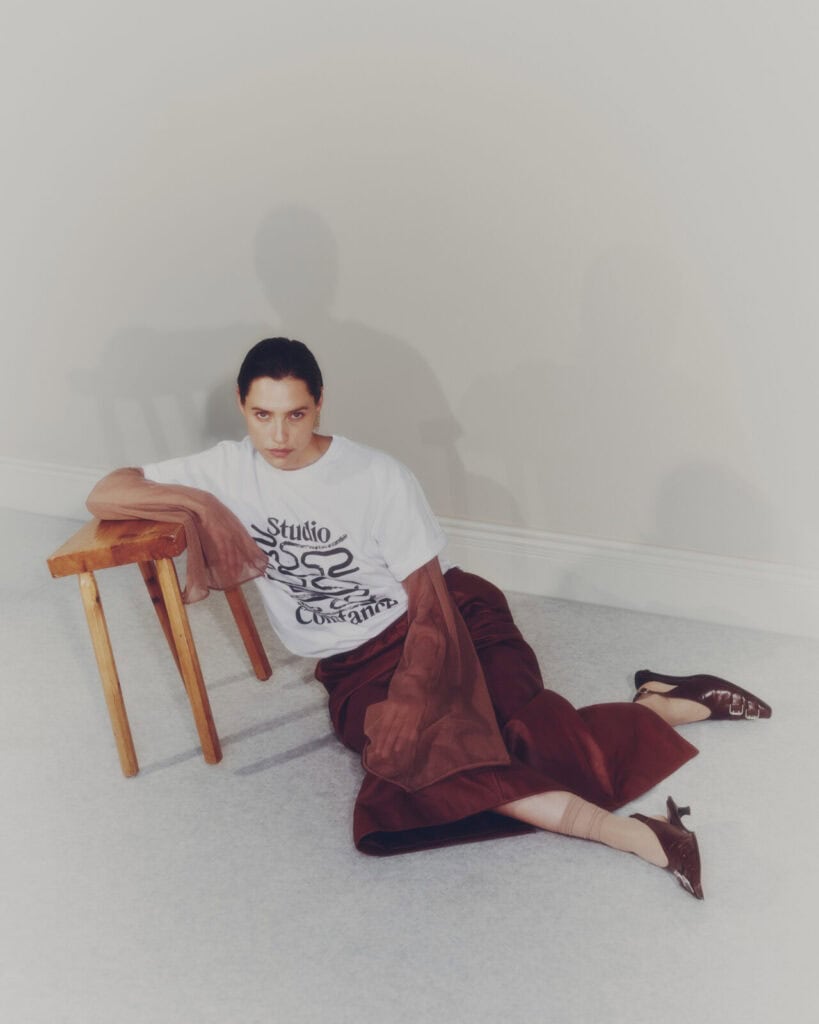
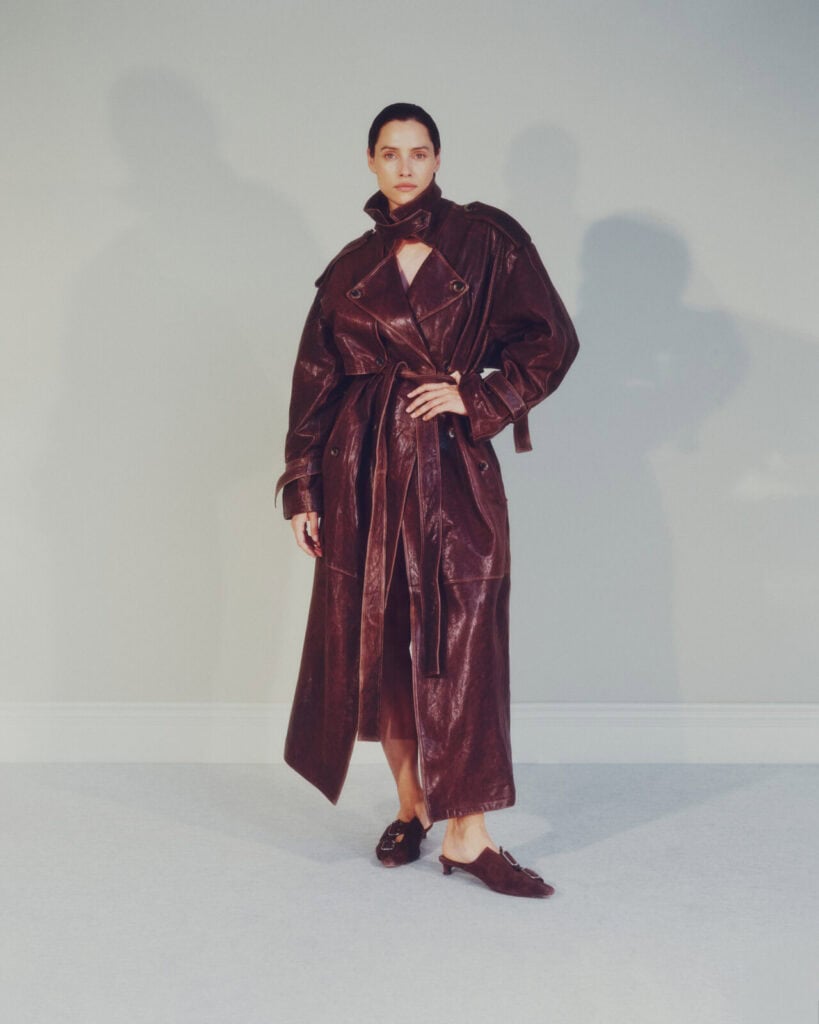
As fast fashion continues to suffocate the industry, designers like Studio Constance’s Rebecca Dovenryd-Almberg stand out that much more, remaining focused on designing sustainable collections since the brand’s founding in 2020. She proves to the industry that brands can find success responsibly.
That purpose manifests in sprawling collections that leap off the runway with powerful messages on everything from sustainability to ageism. Their most recent work, ‘Feral Mothers’, centres around the idea of ‘outgrowing perfection’ featuring women of all ages, shapes, and sizes – incredibly pertinent in an industry that fetishises youthful beauty as much as the fashion world.
After bursting onto the scene with one of the standout shows of Stockholm Fashion Week last June, Studio Constance is set to join the latest cohort under the CPHFW NEWTALENT banner at CPHFW AW27.
We caught up with Rebecca to talk about the world she hopes to build for her CPHFW debut and beyond, her rebellion against traditional luxury, and her innovative platform, the Constance Circle.
The Cold Magazine (CM): A common thread throughout your designs is the concept of ‘feral luxury’. It’s not a term that you hear very often. Why has it been important for Studio Constance to embrace this?
Rebecca Dovenryd-Almberg (RDA): For me, luxury is a concept that can feel quite traditional and I think I can relate to this on a personal level and from a brand level. When I want to describe what Studio Constance does, we do really work towards a highly qualitative and luxurious product but the concept of the whole brand is not that conservative or square or traditional as when you [just] say ‘luxury’. I think that’s how this word [feral] came about and just felt really spot on for both me as a founder in this industry and for what we’re trying to create for Studio Constance.
CM: You only use recycled and responsibly sourced materials. How does this change the design process for Studio Constance in comparison to other brands with less sustainable collections?
RDA: I am a trained knitwear designer, we always start with the material and this kind of goes back to that concept where you see what you have to work with rather than having an idea or a sketch, and then picking any material in the world to make this dress happen. It’s a little bit reversed but it’s the way I prefer working and that is my advantage.
To me, it’s a much more creative way of making something and you don’t need to be so [restricted] either because there are so many materials out there that you can use, you just need to make that extra effort to learn, to source and then be open to those restrictions. But of course if you are set that you want to create a collection in this colour, in this material, in this style, then it will be difficult and you have already set yourself up for failure, I would say.
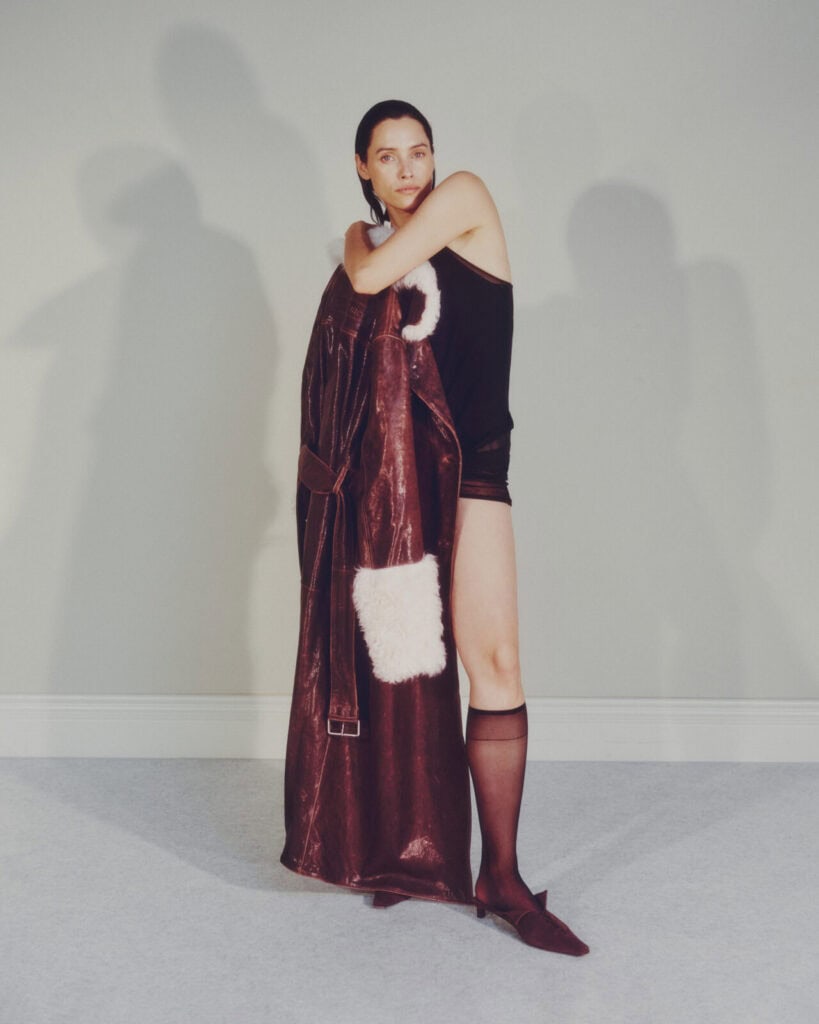
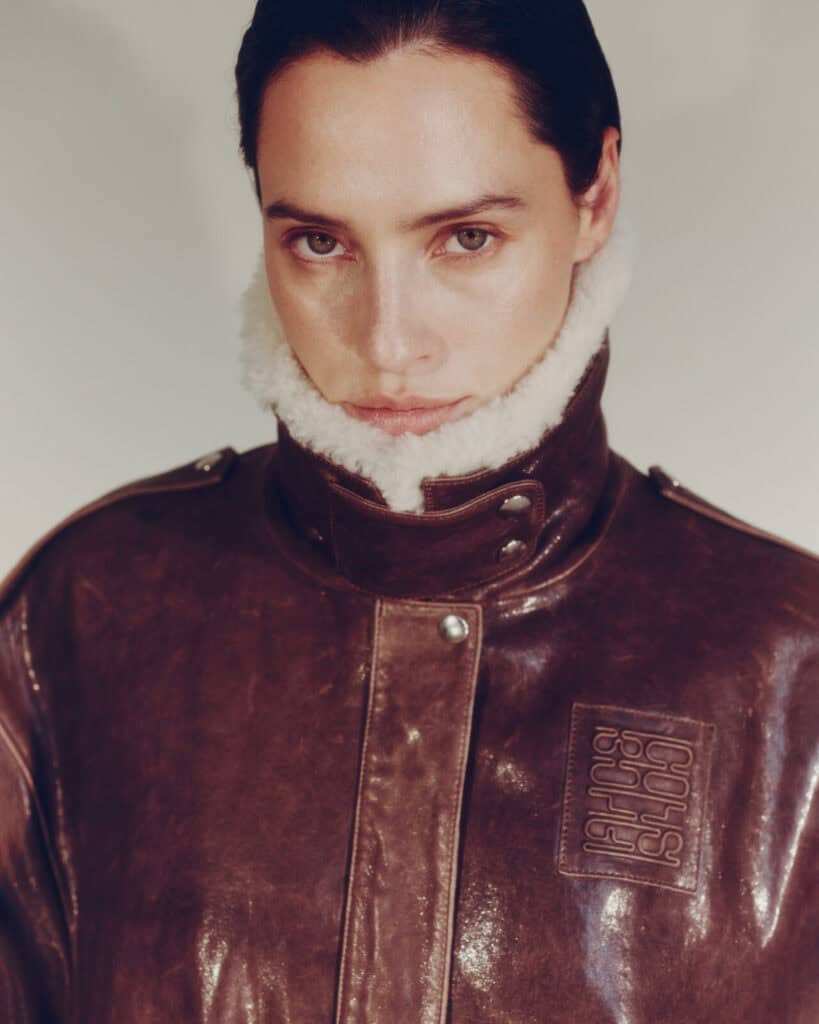
CM: Each brand has their own interpretation of sustainability and a different level of commitment towards it. What pushed you to make sustainability such a central focus of the brand?
RDA: I don’t really think that you have an option today. If you start a new fashion brand, you have to go that route otherwise I don’t think you should start another fashion brand. The whole reason that I started Studio Constance was to challenge the way that we work because I’ve been in the industry for over ten years and we work so inefficiently. I don’t blame the companies that work that way because it’s difficult to change when you already have a system in place but I saw an opportunity to do it differently from the beginning. If you just decide that that’s what you want to do, then you just keep doing it. That’s what I believe.
CM: What do you think about sustainability as a trend versus as a lifestyle?
RDA: I definitely think it’s been a trend and I don’t really like that it’s been a trend because to me, I think it should be more of an expectation and an obvious thing to do. I don’t like to say that we are a sustainable clothing brand because it’s really difficult to live up to that. It looks like the trend of sustainability is now declining slightly, but I think now is when we need governments or political leaders to set rules on what companies are allowed to do and you can’t expect the consumer to take on that responsibility.
CM: Could you tell me more about Constance Circle? Why do you think Studio Constance needed this kind of platform and service within the brand?
RDA: It’s a concept that I truly believe in. It’s a great offer to the end consumer but it’s also a great platform for us as a company because it’s a second marketplace to resell a product or reuse it, instead of having old stock just sitting around, eventually being shipped away, or even burned sometimes. My main idea when I started the company was to make sweaters that you unravel, to reuse the yarn, so all the knitwear is made out of old Studio Constance products. That is something that is going to come further down the line but all of this is super important to keep this platform going and find ways for both the consumer and for us to use it.
CM: On your website, you mention that the juxtaposition of layered textures and exaggerated silhouettes correlates to the strong, independent woman Studio Constance is inspired by. Could you elaborate on this?
RDA: Materials are the core of the brand, so we look at what material we’re using, how we can pair it, and who we are making this garment for. The silhouettes are kind of dependent on the material – it comes from the shape. It’s born through the material and I think when I work on a collection, I’m in that world already and it’s kind of shaped with that in mind.
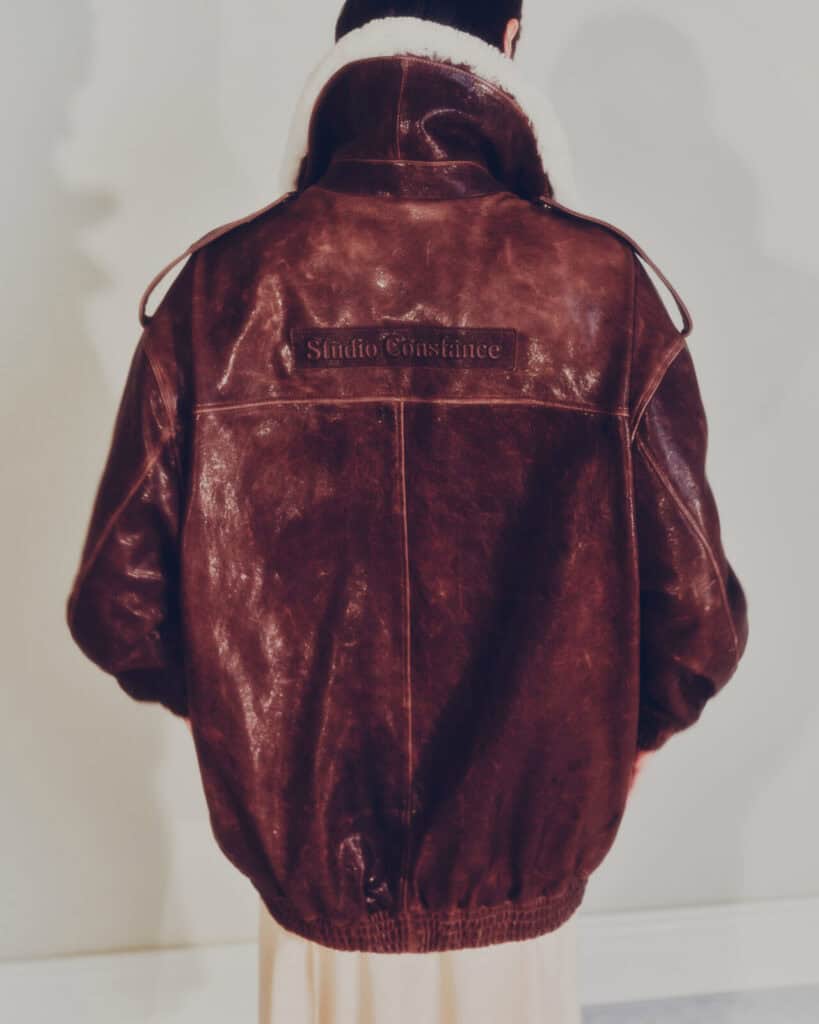
CM: What can you tell me about your debut at Copenhagen Fashion Week? Will the collection you’re presenting be different from your previous work?
RDA: It’s not going to be completely different, you’ll still see that it’s Studio Constance. It’ll still belong in the same world but it feels stronger. It feels like it has a more clear message, and will have deeper storytelling throughout. We have had the opportunity to work with great people and that’s just created such an incredible collection. I feel confident that it’s going to be great but it’s also scary. It’s the first time that we’re presenting a runway show in Copenhagen but I’m very excited to present it.
CM: As an emerging designer, what would you say are the main challenges facing emerging designers today? And how have you navigated those challenges?
RDA: I think navigating it, it’s been really tough but I’ve been really set on this goal: I’m going to build this company and it’s going to be big and successful and there’s no other way. There’s no alternative. I’ve just had to figure it out. I was working full time from the day I started it up until May [last year] and I’ve been focusing full time on Studio Constance [since]. It’s been quite a hustle. I’m still the only owner of the business and that’s been important to me because it is quite a personal company and a product. It’s definitely been tough when it comes to the financial part of that. It’s just patience and hard work.


