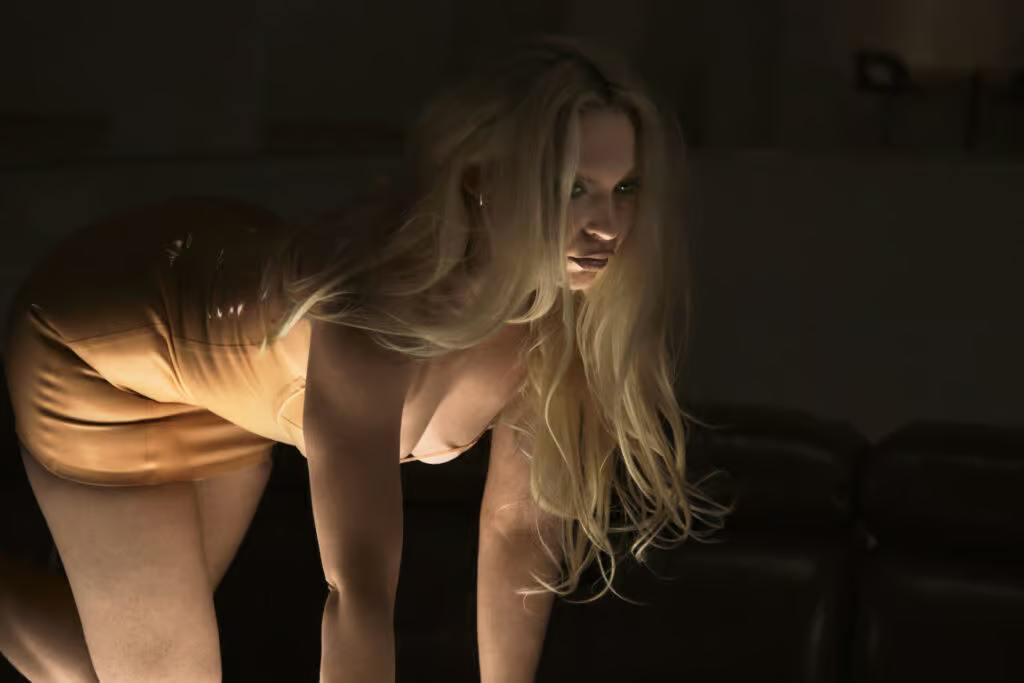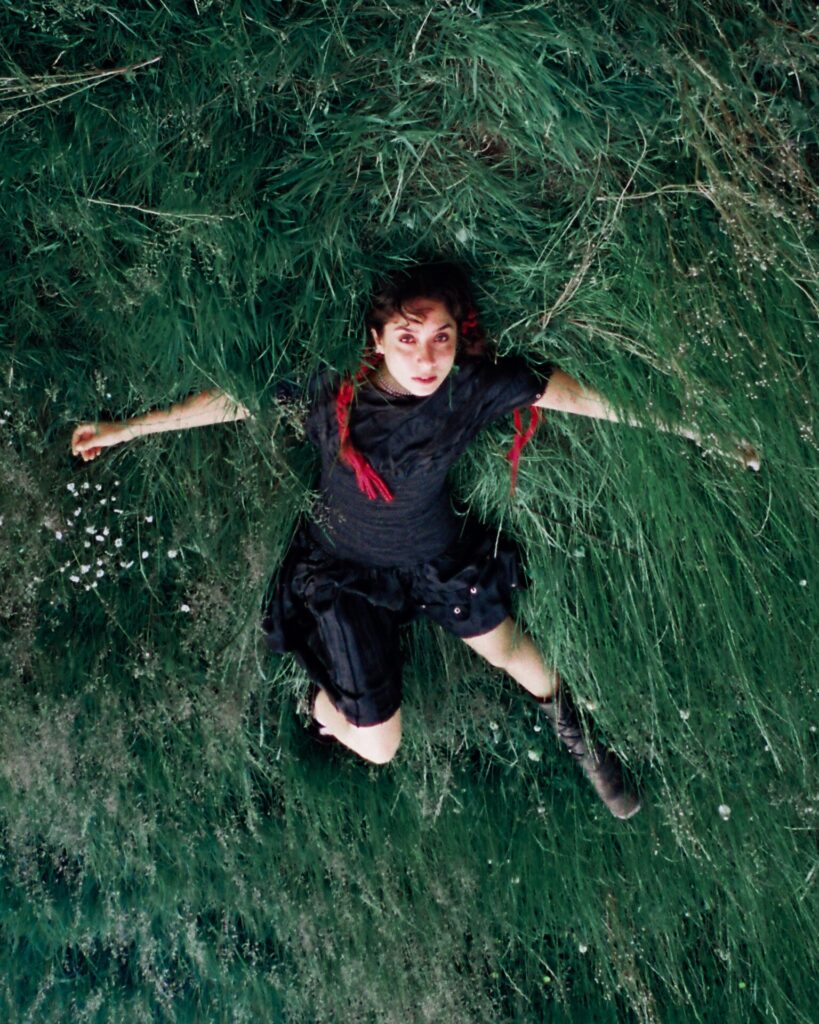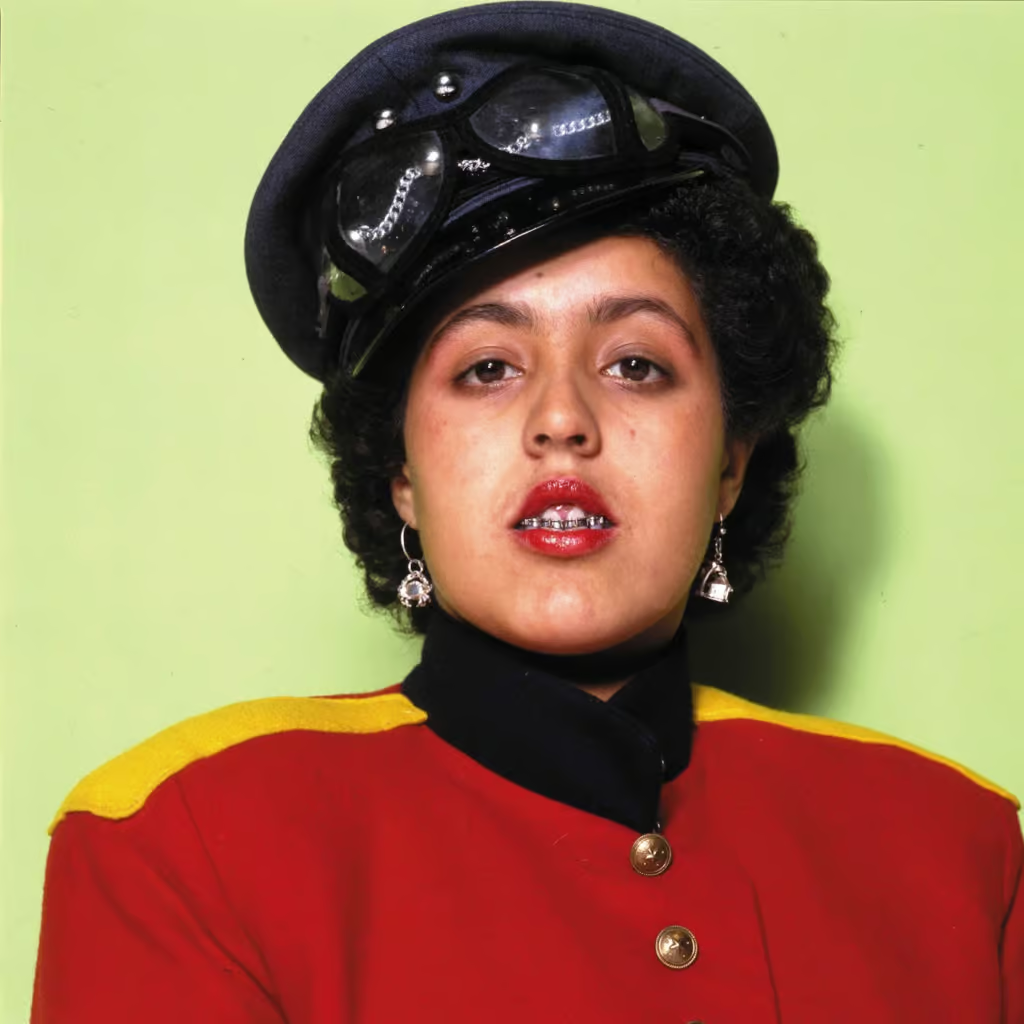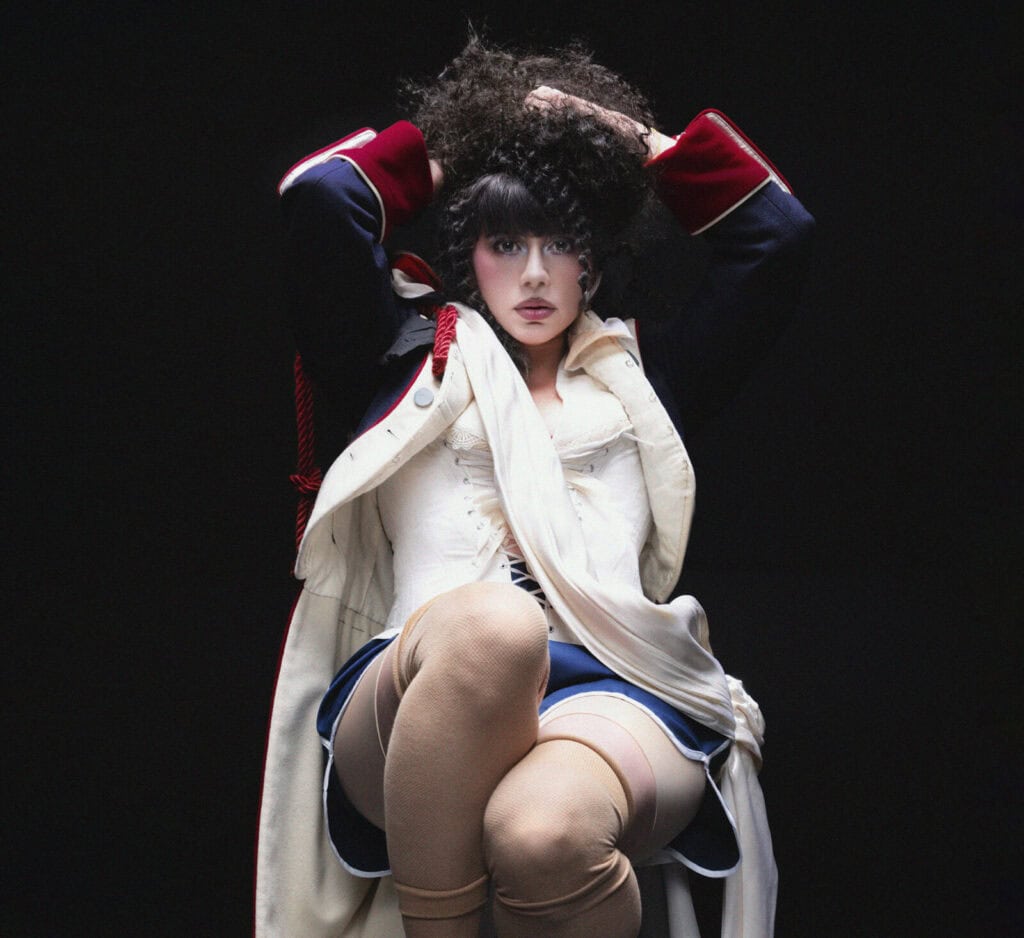
A sense of collision is embedded in KÁRYYN’s music. With a sound that pulls equally from Eastern modalities, sugary pop and the expansive tundra-sounds of Sigur Rós and Björk, the Syrian-Armenian-American musician creates beguiling hybrids. Her works of art subvert expectations and collapse distances, with a distinct knack for bringing the unfamiliar disarmingly close.
When we spoke on Zoom, she was calling in from Los Angeles. More interestingly, she was sat in a room partially illuminated by the unsteady glow of a collection of CRT televisions. Old VHS films played silently in the background, while on the wall behind them hung two posters: one showing the Buddhist wheel of life, another brandishing the word ‘vibrations’ and a few wavy lines. There was also a mixing desk, and a money plant atop a stack of books.
I wouldn’t usually begin a piece by describing a room I’ve only seen over Zoom, but something of the neatly framed collection struck me as an apt embodiment of KÁRYYN’s vibe. The setting mirrored ideas central to her lyricism: nonlinear time, memory as signal, the coexistence of ancient wisdom and futuristic technology.
These ideas find their fullest articulation on her forthcoming album, PHYSICS UNIVERSAL LOVE LANGUAGE (PULL), out 29 May on Mute. As much a personal document as a metaphysical inquiry, the album chronicles spiritual collapse through a strikingly hopeful lens.
Throughout PULL, KÁRYYN uses scientific language – terminology usually applied in quantum theory or astrophysics – to describe the deconstruction and reconfiguration of a sense of self. There is a courageous heart to this album, a willingness to surrender control and re-emerge altered, but discomforts are never disregarded. Time folds, identities blur, and understanding arrives, when it eventually does, through sensation; it is a phenomenal listen on a good sound system.
Mixed by Marta Salogni (FKA Twigs, Björk, David Byrne, Lady Gaga, the list goes on), and co-produced by KÁRYYN, Hudson Mohawke, and James Ford (Last Shadow Puppets, Simian Mobile Disco), PULL’s sonic landscape is as meticulous as it is varied. There are moments of earthy intimacy pitted against cosmic explosions of electronica. It is not a ‘band in the room’ sort of record, not even slightly.
Confronted with a work of such scope, I found myself at a loss for where to begin our interview. How philosophical a question is apt for the first, I wondered. As a rule, metaphysics doesn’t make a great conversation starter, but in this case, could it?
Naturally, we started with the TVs.
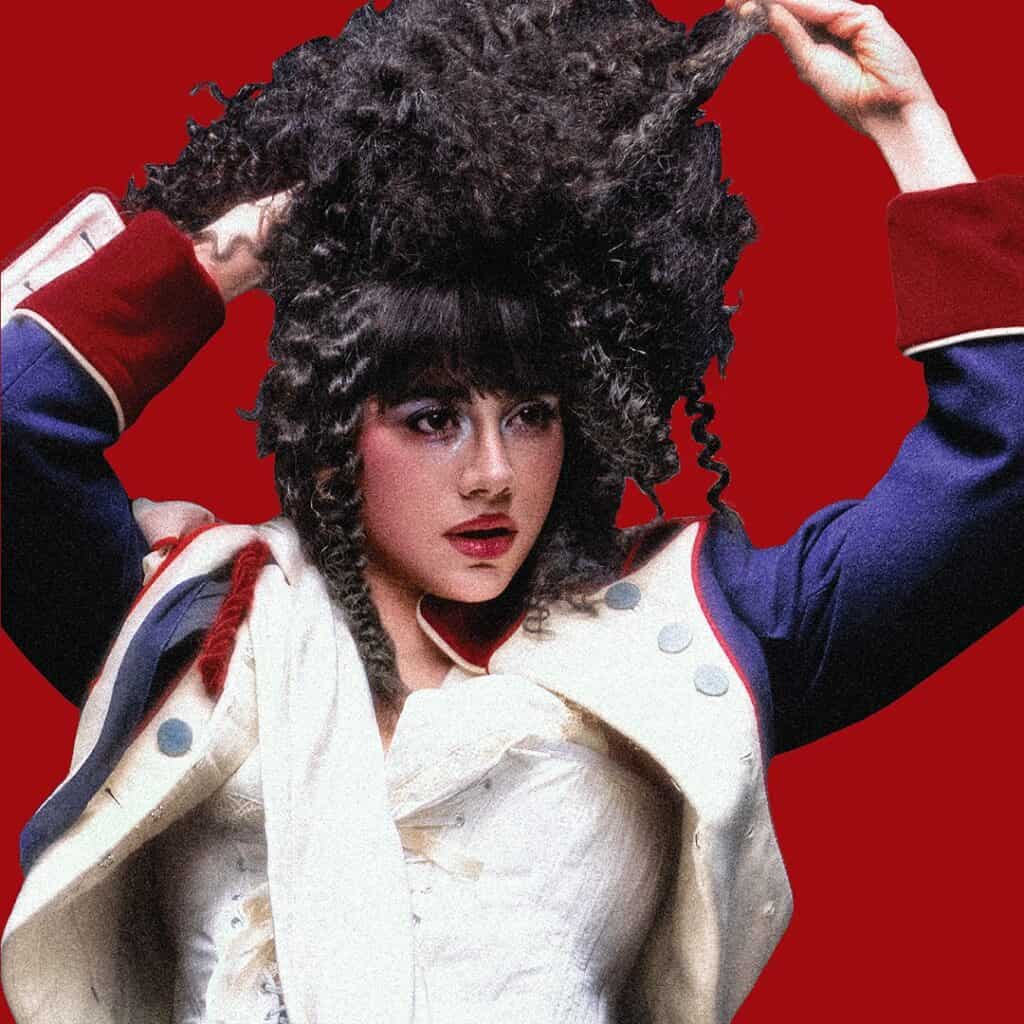
The Cold Magazine (CM): Wow, how come you’ve got all these TVs?
KÁRYYN (K): Because I just love… I don’t know! Since I was a kid, I’ve been obsessed with CRT televisions and video art and stuff. So, I’ve always got my DVD player – a little laptop DVD player that’s just over there (she gestures to behind the camera). What do I have on there? Oh, it looks like I have Legends of the Fall. Anyway, thank you for doing this with me. I appreciate you.
CM: My pleasure. I really enjoyed the album. It’s a fascinating listen, a real mix of influences. Which got me wondering, what is your musical background?
K: I come from a really musical family. On my mom’s side of the family there’s theatre, puppetry, musicians; and my dad is also a self-taught classical guitarist, so I played piano as a kid.
We had a tape player growing up too, so I would record myself playing pieces and would experiment with them. You know, I was in Indiana, in the cornfields, with nothing to do except use my imagination, and there you can do anything and everything.
CM: I was struck by the scope of PULL, there’s a very existential level to the album. What turned your mind towards those sorts of big questions?
K: I have a cousin who is a quantum physicist, and my dad is also a scientist. So, my family is mainly arts and science.
Around the time I started making music I also started meditating, and because of the influence of quantum ideas – paired with my spiritual journey into Buddhism and Eastern philosophies – I started to think about their intersection. It’s a very popular idea now, which is awesome.
I was thinking about the idea that physics is the base language of reality, and that it is so far from spirituality that it almost ends up right next to it. I realised that the laws governing time, gravity, and cohesion were the same as those governing intimacy, coherence and the self.
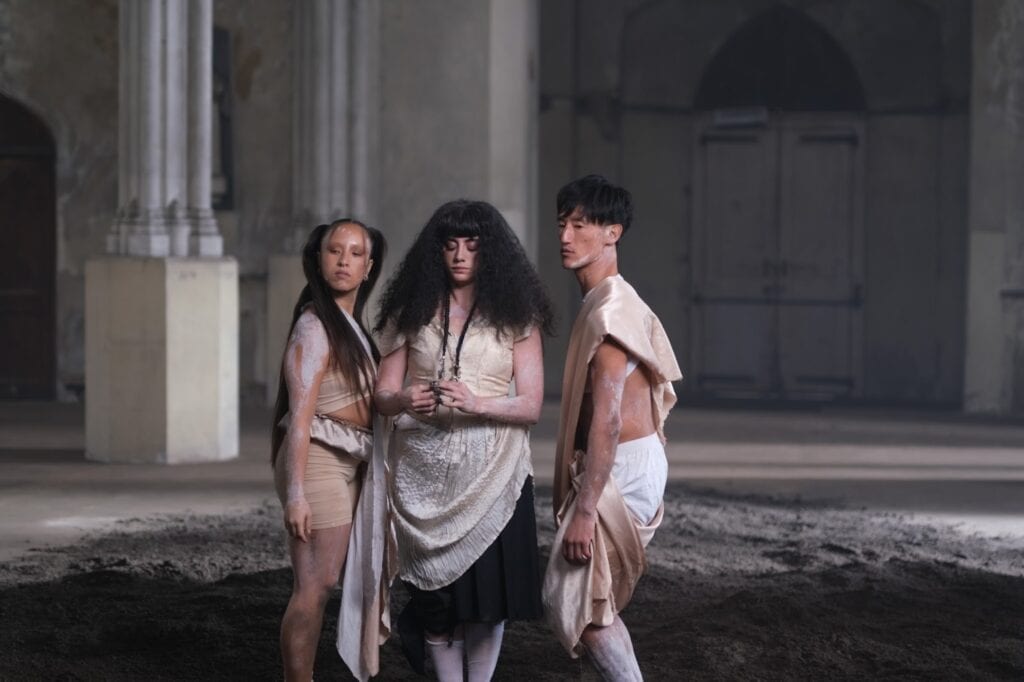
CM: It seems to me that this album is partly about self-acceptance, does that sound like a good summary to you?
K: That’s really close… Yeah, I guess. But it’s also about clarity. This album is about my human revolution, and in Buddhist terms, that’s the reorganisation of power. It’s internal. It’s about who holds authority, what governs decision making, and what is allowed to remain. You move through that in a very conscious way.
CM: Returning to your upbringing, you describe yourself as a Syrian-Armenian-American musician. How have those places influenced your music?
K: I am full Armenian, and I was raised between the US and Syria. We have a home in Syria, which is also a place of huge influence to me. I was born in Alabama and taken to Syria six months later. The distinction is that I am diasporan Armenian, so my family went through the genocide and landed in Syria. When you are Armenian, you make that distinction.
It’s not highlighted on the album, but there’s a lot of embedded rhythm, intention, and tone that comes from the Middle Eastern tradition.
All the strings that Raven [Bush, nephew of Kate Bush] and I composed together are call and response, they mimic the melodies. If you listen to the way the strings function, they behave in ways similar to those in traditional Middle Eastern music.
Raven is a great friend, and we composed those strings together in the room – me singing parts and him adding strings – it was beautiful. I had him listening to tons of Arabic music.
But I didn’t want it to be this really overt thing. For me it was just very honest for it to be in there, it wasn’t surface ornamentation, it’s really in there.
CM: So what’s next? What does the future hold?
K: Stage! Stage! All I want to do is perform. I just want to connect with people who are not my audience. I want to make everyone in the world feel potential and hope.
It starts from darkness. I really went hunting for dark matter with these existential ideas of what am I? Who am I? What is this? What does it mean? And there’s this idea of dark matter being 98 per cent of the cosmos, too…
But what I found was transcendence, potential, hope, joy, and a foundational ease that has made me quite grateful for my journey. It’s very emotional.
What’s next is to impact everyone, hopefully. You know, to make people feel things.