Designers dug into their histories, their obsessions, and even their own cities to shape this season’s biggest shows. Dior embraced psychedelic nostalgia, 424 doubled down on raw material, Willy Chavarria blended cinema with social commentary, and emerging names like Domenico Orefice and Sagaboi grounded their work in memory and heritage.
With so much unfolding this season, we narrowed in on the designers and moments pushing menswear in new directions. What emerges is a transition toward sharper silhouettes, moodier textures, crafted imperfections, and a renewed focus on identity and intent.
Here’s our edit of the AW26 looks worth knowing, highlighting a mix of established designers and rising voices shaping the direction of menswear right now.
Christian Dior
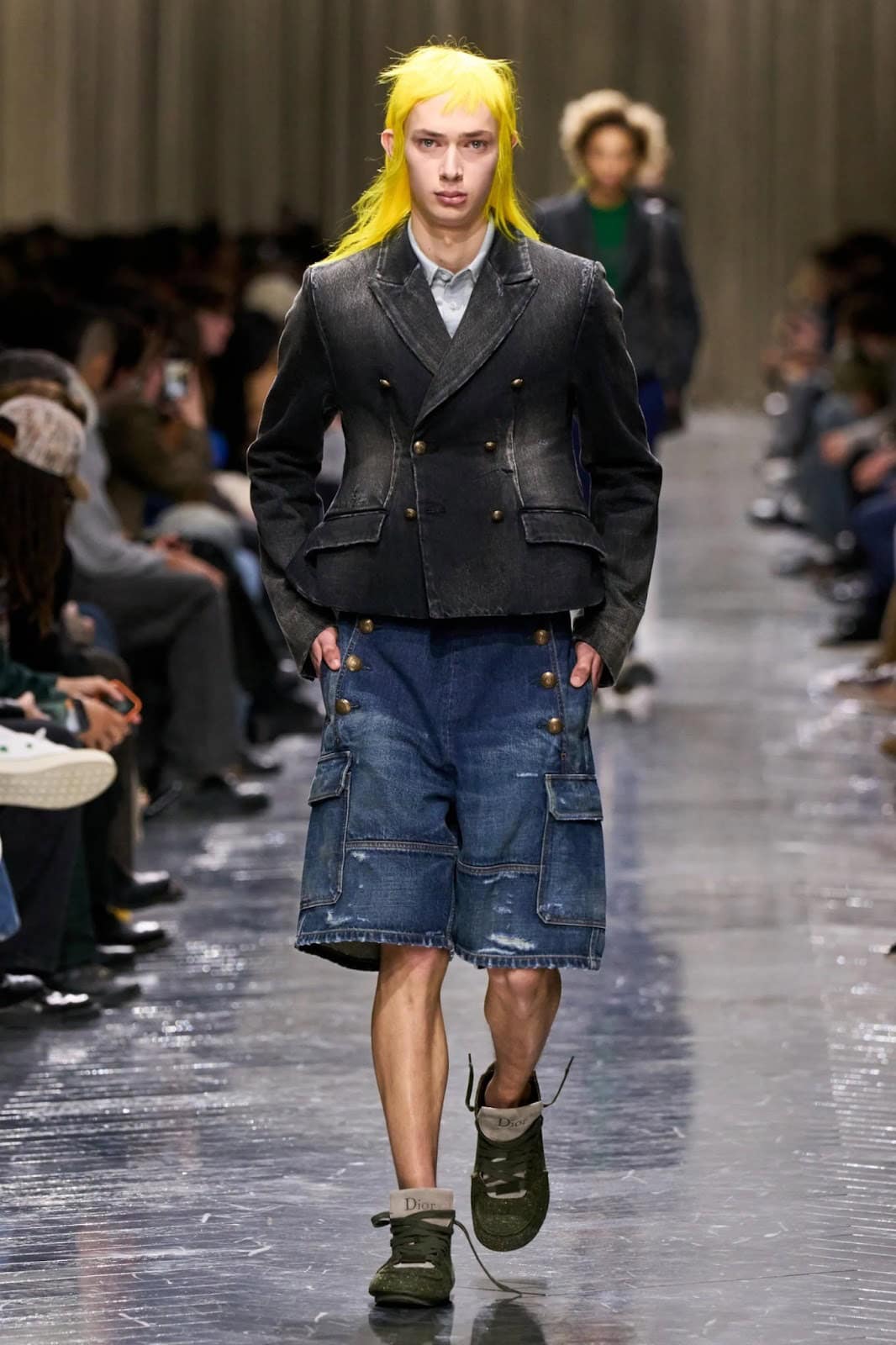
Continuing his innovative reputation, Jonathan Anderson presented a Paul Poiret-inspired collection of psychedelic vests and eccentric hair colours, sparking debate over a possible tribute to the late fashion designer Pam Hogg, known for her choppy neon do. It marked a bold shift in direction from his previous preppy collection, which was straight out of the Dior handbook. This season, Anderson showed off the punk teenage spirit that fuels his off-the-charts design responsibilities.
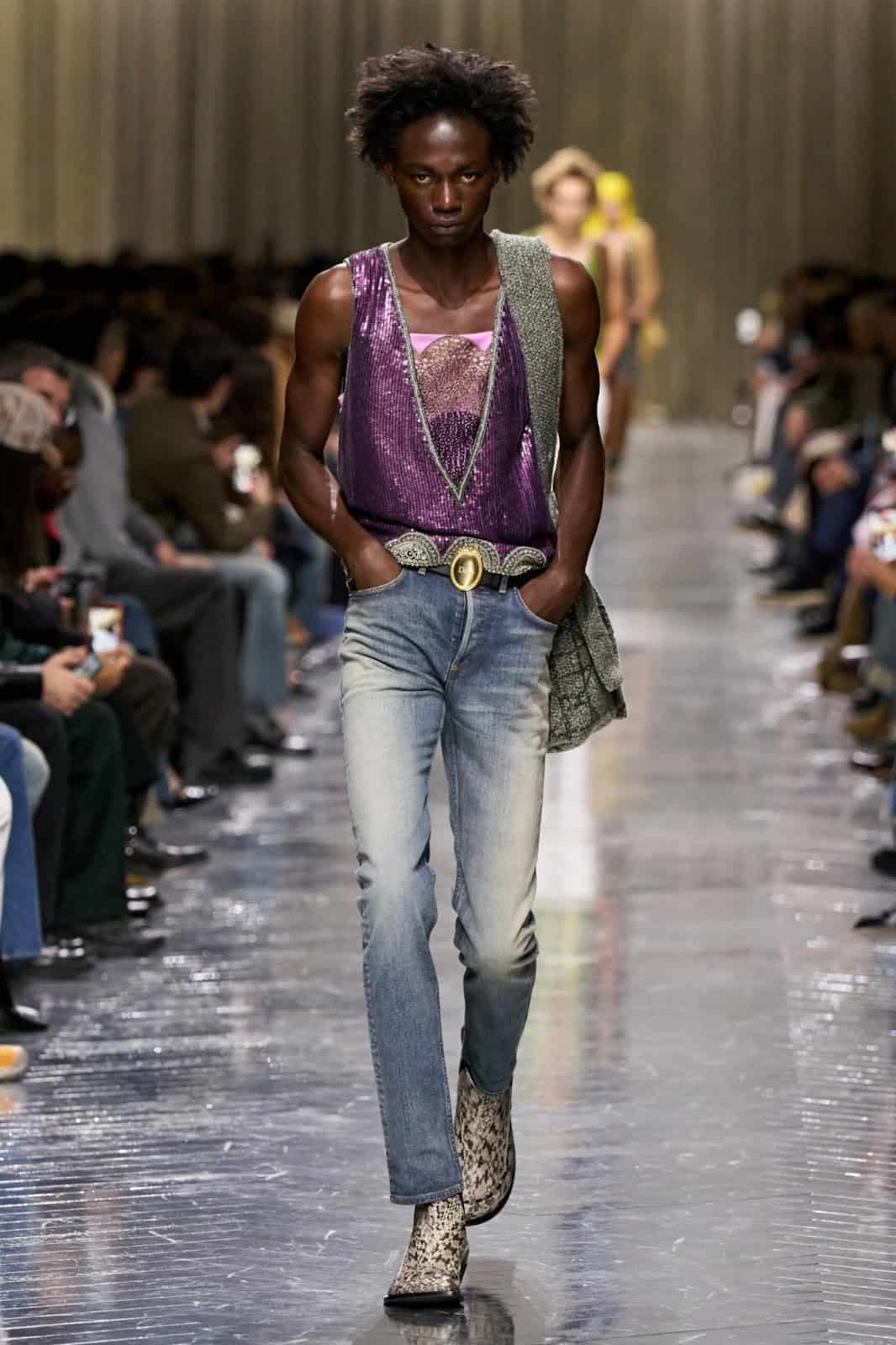
Anderson’s inspiration stemmed from his own experiences throughout the design process, reflecting his evolving creative vision. This season, he cited French couturier Paul Poiret after coming across a plaque on the pavement outside Dior’s 30 Avenue Montaigne headquarters. The first three looks were reworked from one of Poiret’s dresses from 1922. Double-breasted fringe jackets were cut to shocking lengths, further enhancing the angle of youth expressionism. Reptile-pattern D-toed Cuban-heeled boots transformed the more modern lower half of the look into artistic references inspired by singer and musician Mk.gee, who inspired Anderson to design an answer to the question of what these characters would be together as the new radical (Vogue Runway).
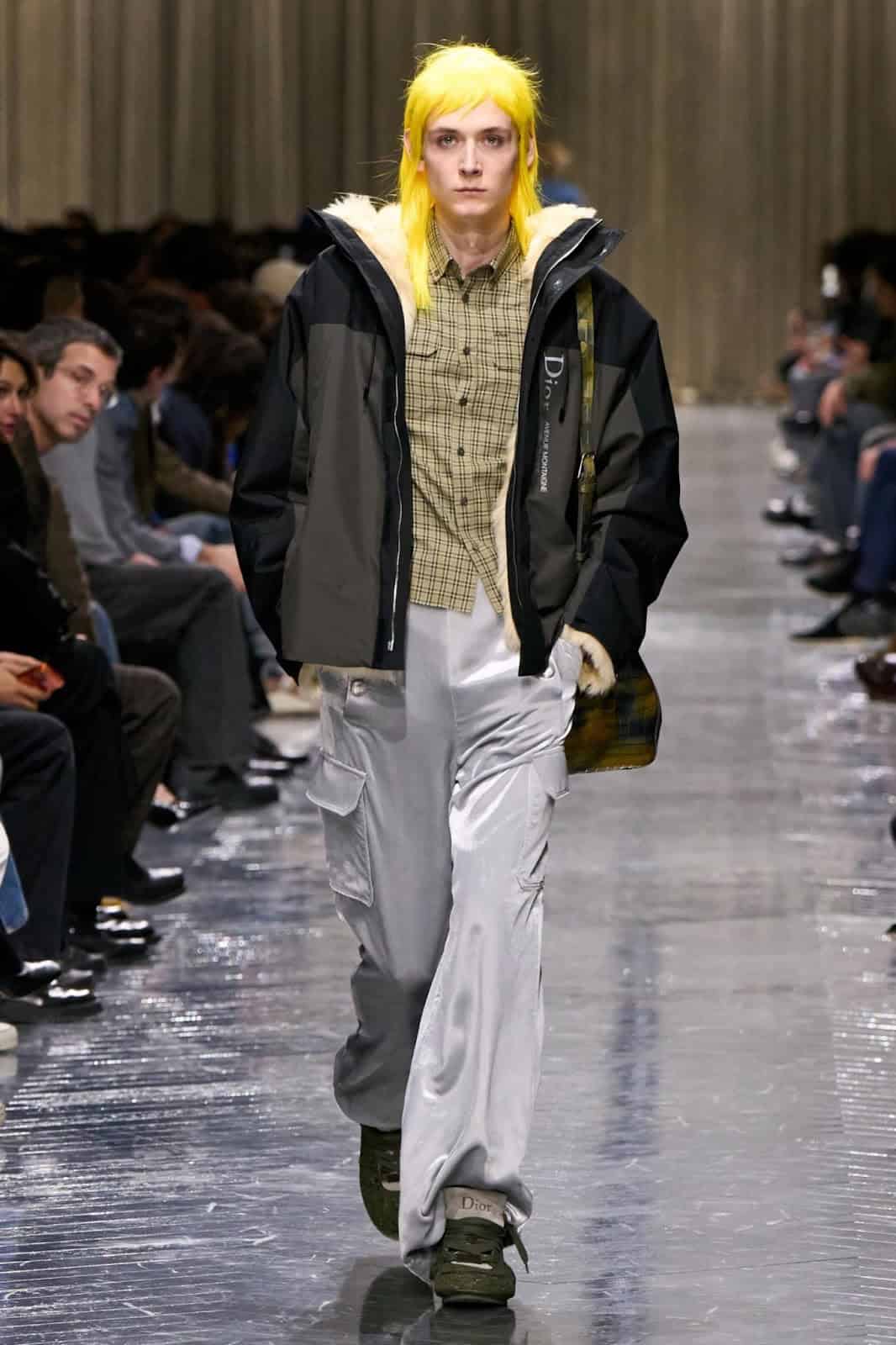
While a few of the looks featured notes of new wave expressionism, the collection remained cohesive as Anderson explored traditional tailoring moments. The ivory neck ruff doubled as the show invite and a preppy addition to a schoolboy-esque ensemble. Heavy parkas and padded bombers were paired with ornate brocade capes, mixing everyday utility fashion with modern nobility. While preppy remains the name of the game at Chez Dior, Anderson pushed the collection in an unpredictable direction this season.
424
The Los Angeles based designer Guillermo Andrade has quickly made a name for himself in the global fashion scene. His work blends traditional Americana styling with Italian craftsmanship, while maintaining street cred through punkish leather jackets and a western spin on his signature collection of rugged, utilitarian boots and leather stompers. His previous SS26 show, well known for its impressive lineup of Porsche 911s, earned him a place in Hypebeast 100.
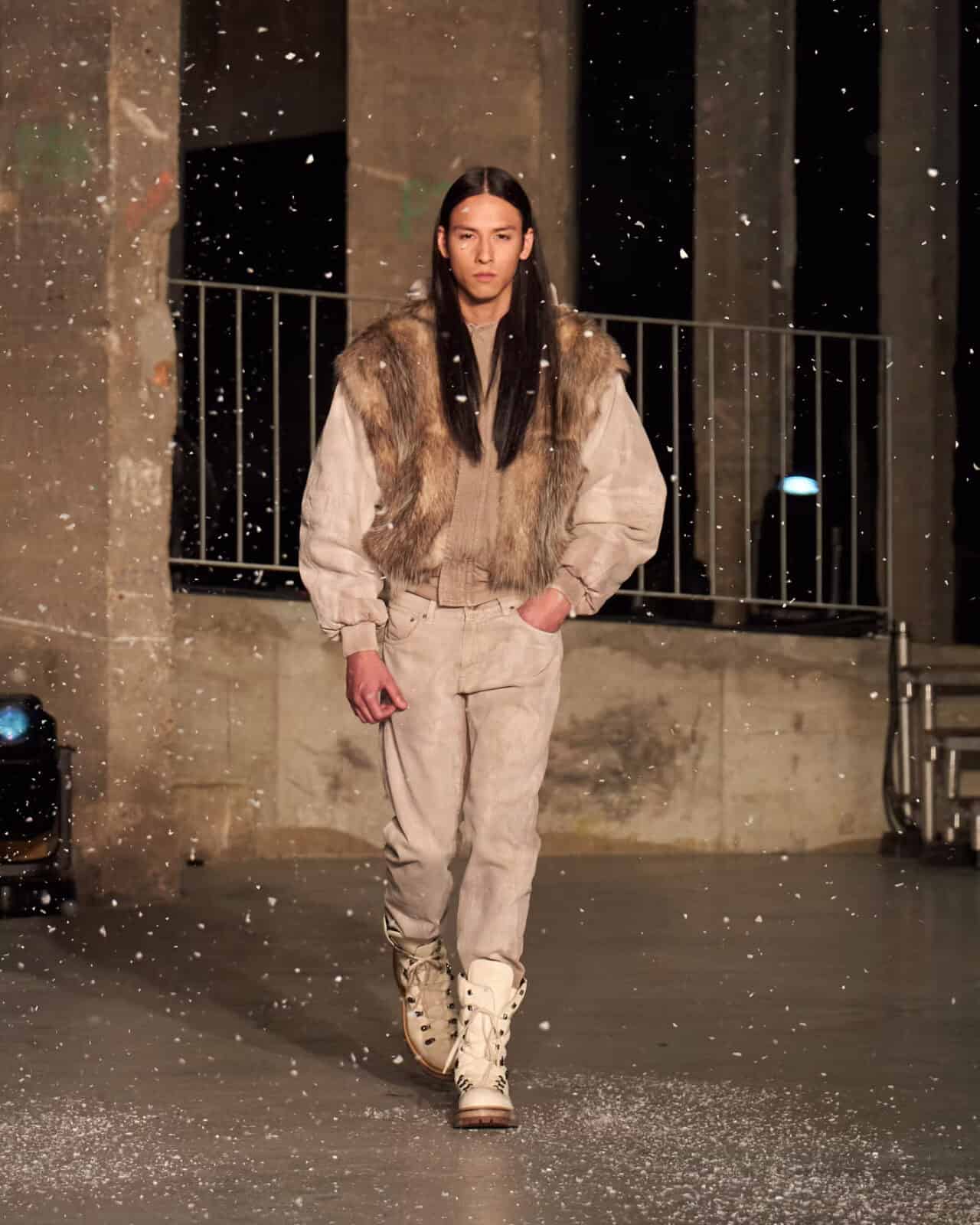
Andrade’s boundary-breaking attitude followed him to Paris for another season of reckless, unfiltered invention. The collection is grounded in the idea of artigianale (artisanal)—slow, hands-on Italian approach to making clothing. Instead of chasing industrial perfection, Andrade leaned into materials as they are; reclaimed luxury fabrics, vintage military blankets, pieces that would normally be tossed aside. Fur vests thrown over casual crews, thick-cut leather trousers and floor length trench coats mixed with Canadian tuxedos and sable scarfs – urban designs grounded in city style. Even the denim carried weight with its faded, overworked, and pieced-together silhouette.
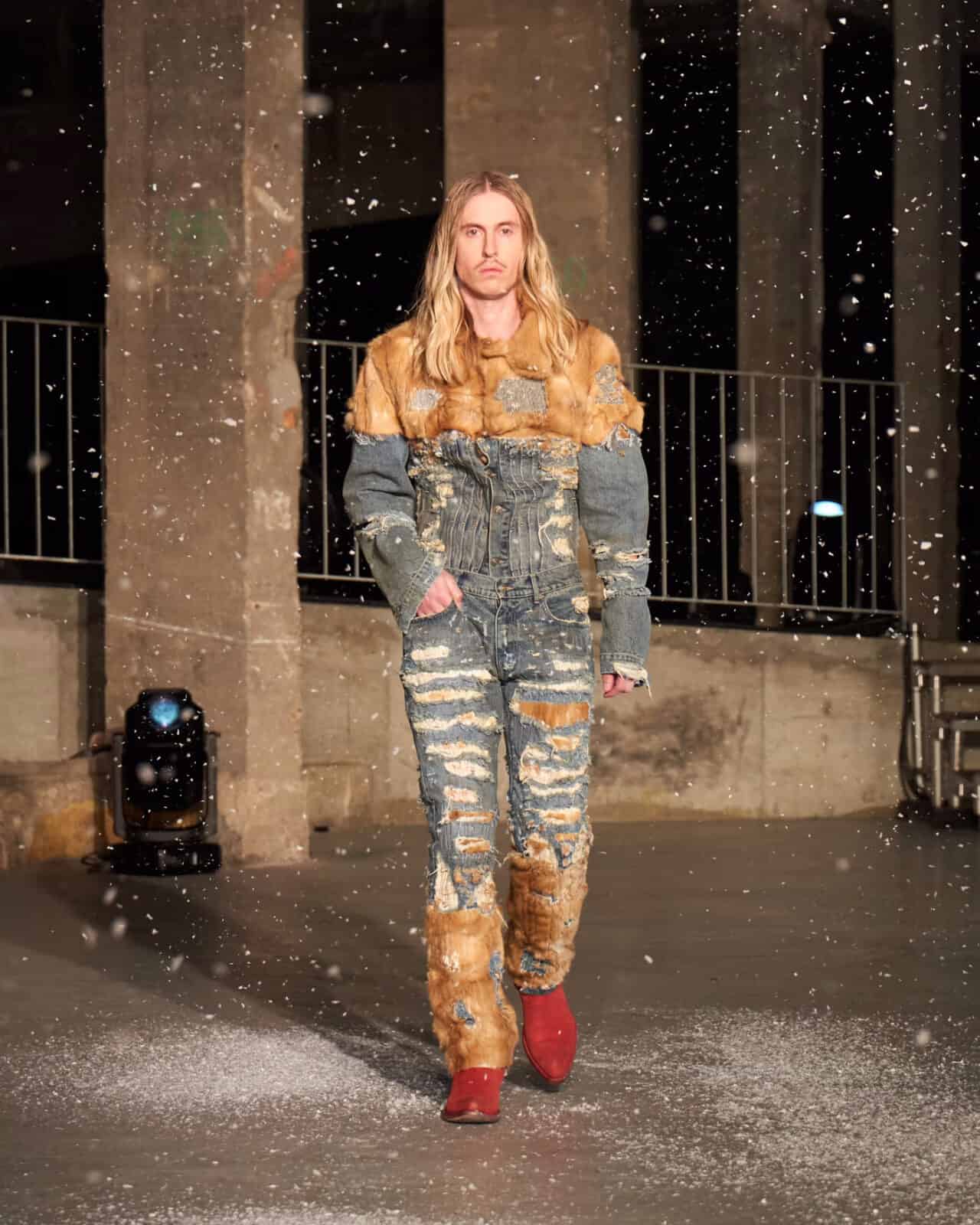
By embracing materials with history and flaws, Andrade doubled down on the gritty elegance that sets his work apart. It’s clear he’s not chasing trends or approval. He’s building a world on his own terms, one hand-worked piece at a time.
Willy Chavarria
Willy Chavarria has made it clear from the start that his mission is to use the power of design to shed light on the injustices of the world and use his voice to empower the next generation of fashion designers. In an unprecedented act of mentorship, Chavarria invited all 400 people with tickets to fashion commentator Lyas’ La Watchparty to watch the show directly from the runway. It is acts like these that set him apart from the ordinarily exclusive fashion community.
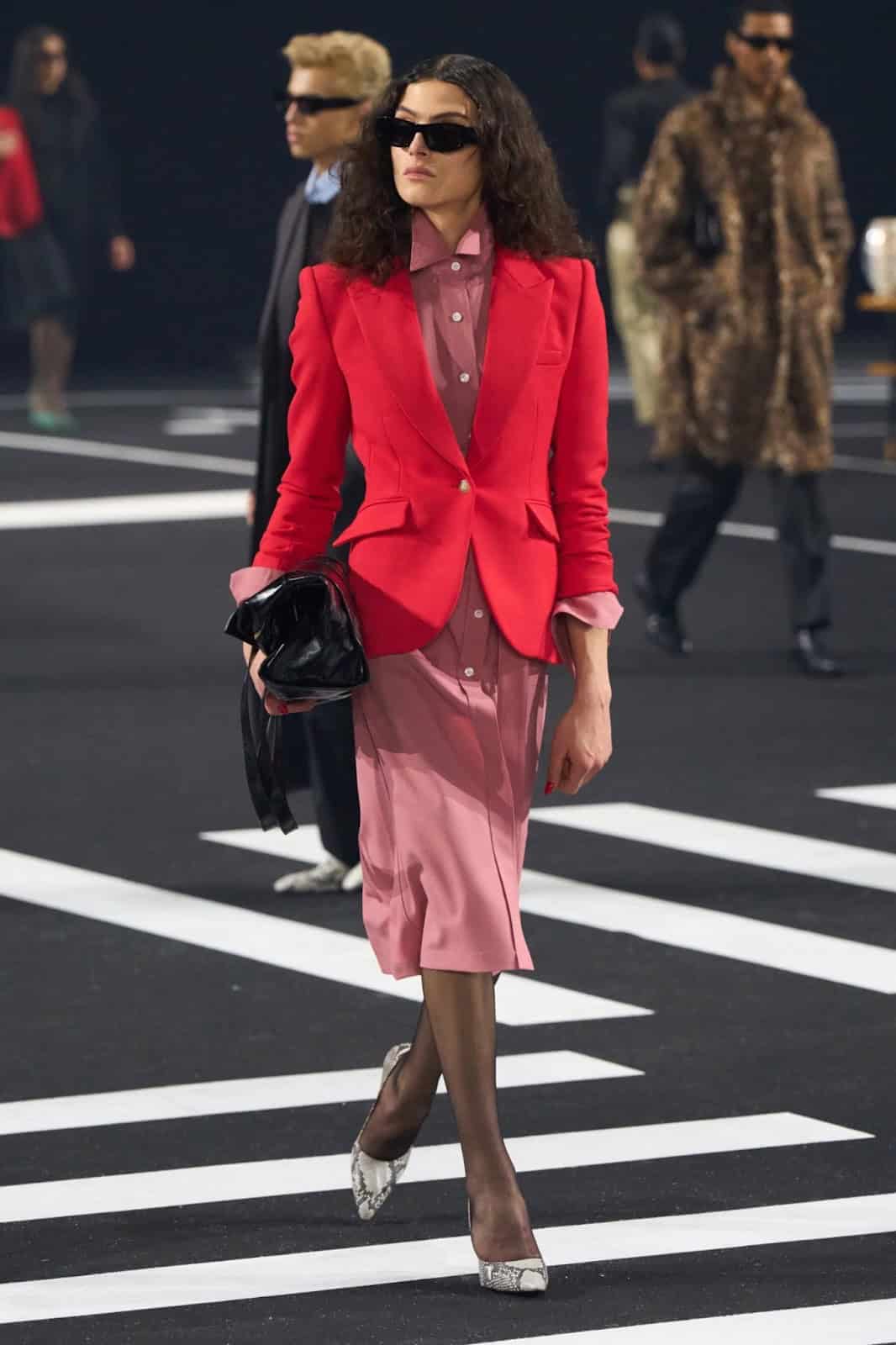
This season Chavarria went from fashion to film, staging his AW26 show Eterno, as a 30 minute three-act spectacle at Dojo de Paris. The set of his third runway show was inspired by his life in New York City. In a street-level corner apartment, the city is his living room. “I watch people fall in love. I watch them fall apart,” he confessed to Dazed. Inspiration for the collection came from the many lives you can live all in the same city, which is translated into a show composed of a concert, theatre stage and runway simultaneously.
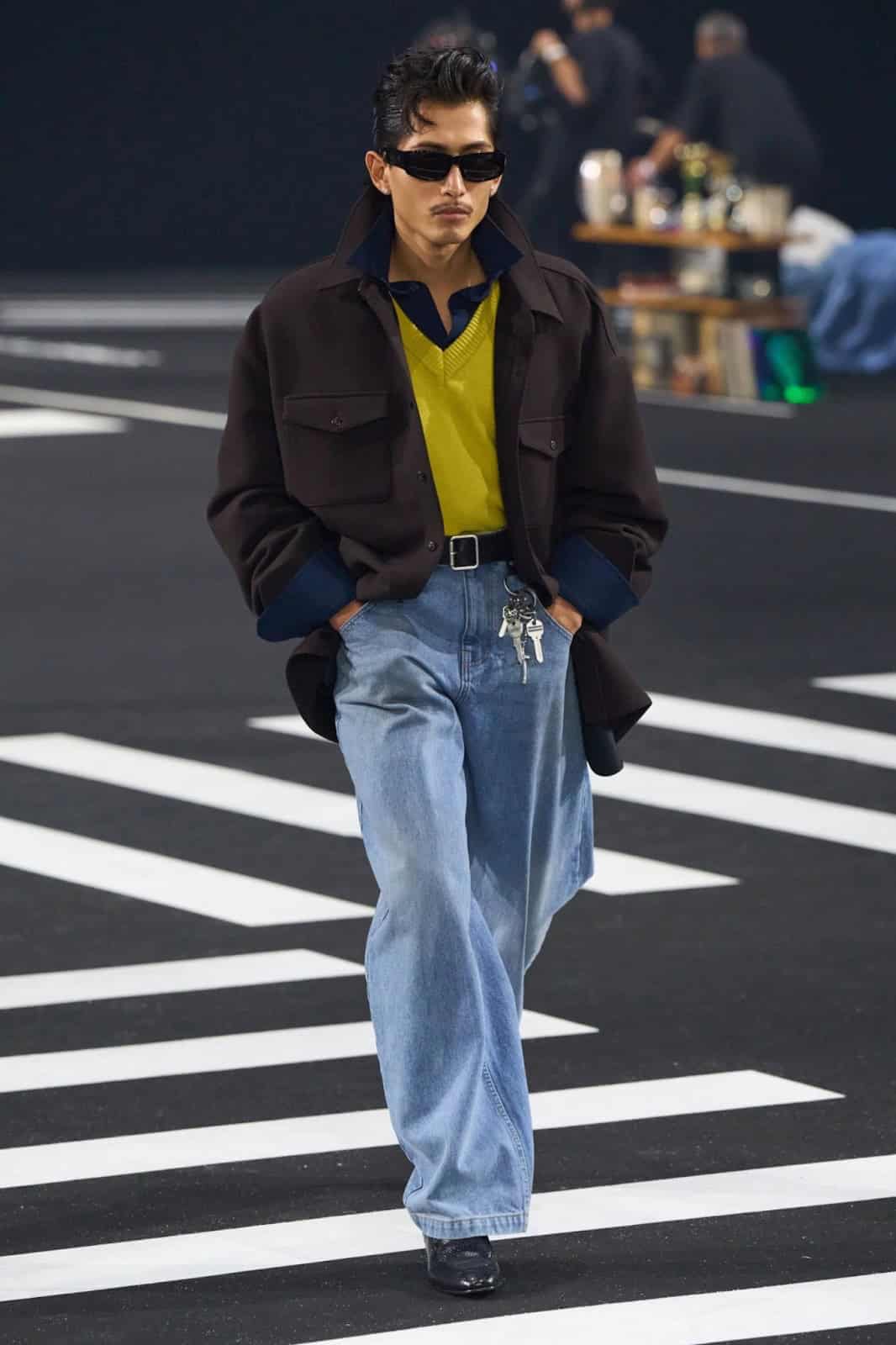
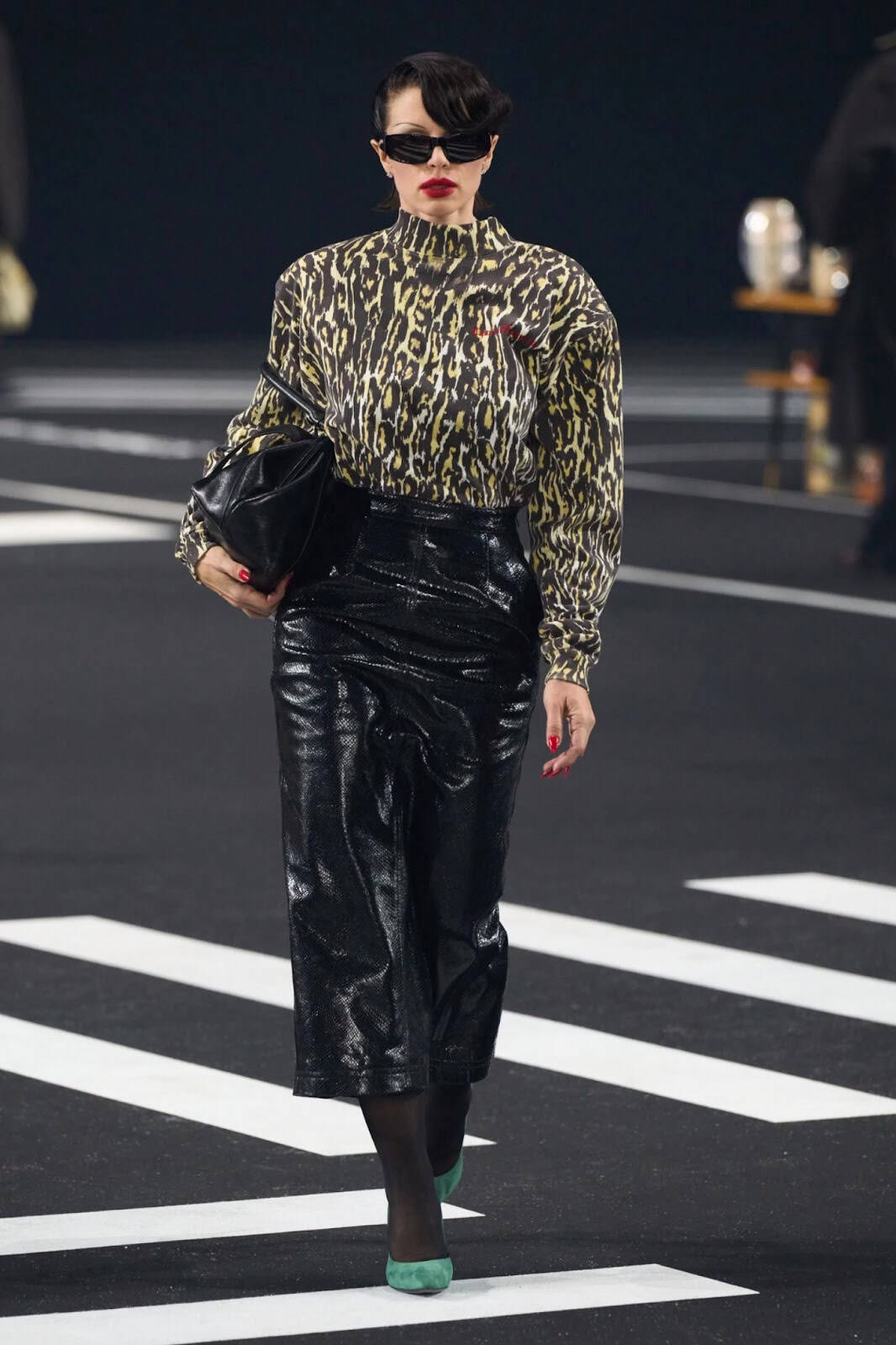
Act I opened with sharp tailoring, sweeping trousers, padded-shoulder coats and crisp white shirting. Act II shifted into nightlife sensuality with burgundy leather bombers, slinky satin shirts and oversized faux-fur leopard coats. Act III delivered the drama – ceremonial black coats, enormous biker jackets and voluminous skirts. Julia Fox, Romeo Beckham and a cast of Chavarria regulars made up the model list (even Chavarria’s Grindr hookup allegedly made the show; row three, left aisle.) Together, the clothes and performers moved between romance, grit and spectacle in one seamless, cinematic sweep.
Domenico Orefice
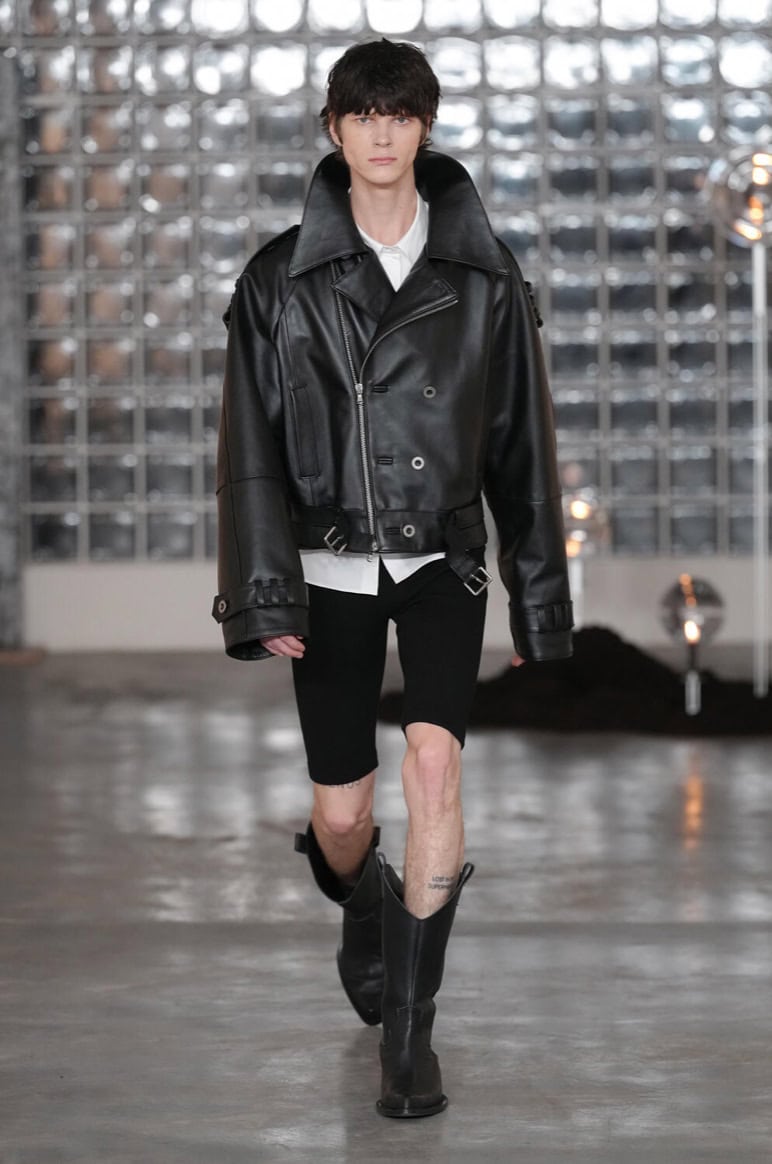
Italian fashion has a new cult favourite, and its Neapolitan designer Domenico Orefice. As a fashion design alumnus of Polimoda, Orefice spends most of his time in Tuscany learning the Italian way and has presented collections at Pitti Uomo before his debut at Milano Fashion Week. Taken with the dark nature of his clothes, clubbers and rockstars began favouring his designs before he became the name to know in fashion. Dover Street Market couldn’t help but catch onto the buzz emanating from the underground scene and began representing Orefice over a year ago, predicting his quick rise to popularity after his latest show.
imaxtree.com
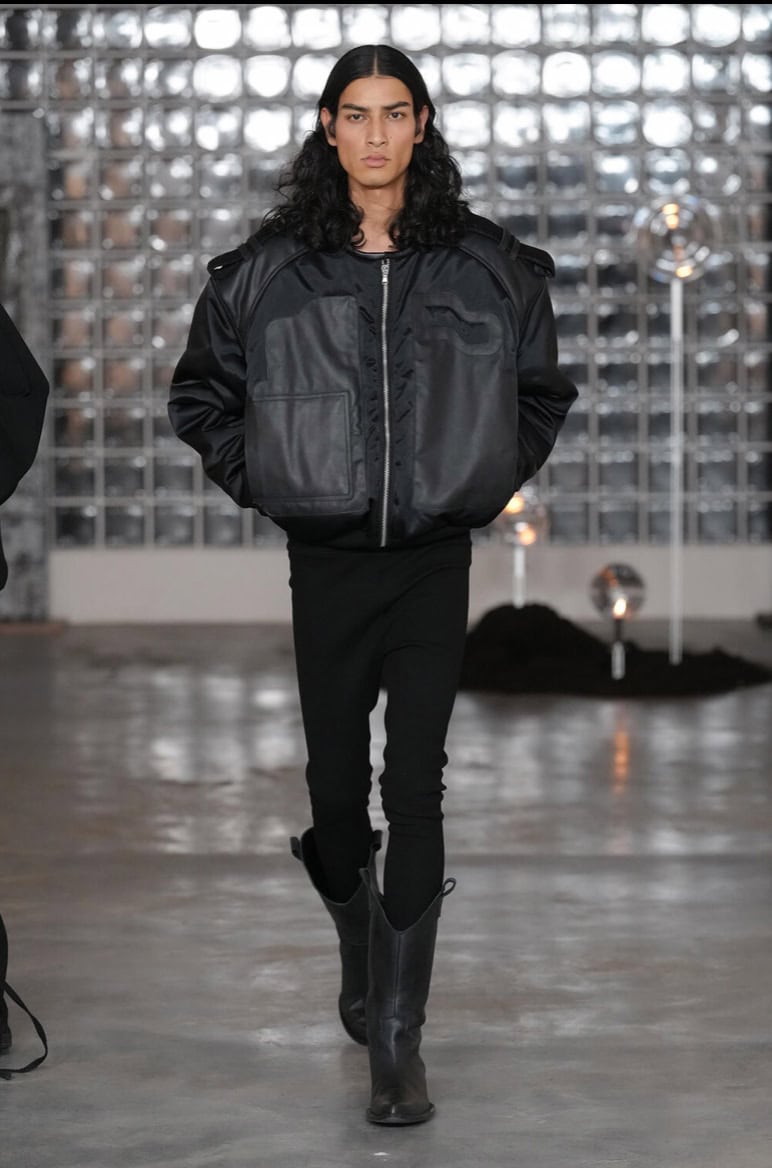
Previously, his collections were named after the various technical difficulties faced during tough climbing expeditions. His recent collection, LUMEN, represents the arrival at the summit and the feeling of accomplishment one gets after achieving a goal. The young designer speaks on his experience designing over the years and sees this collection as a beacon of light, illuminating the future direction of the brand.
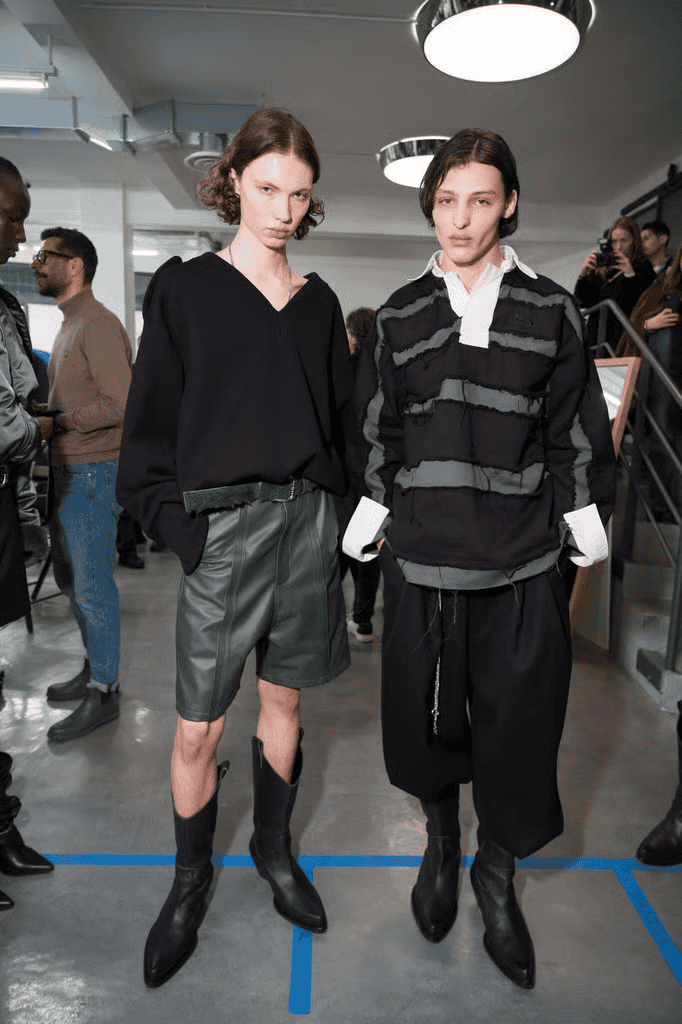
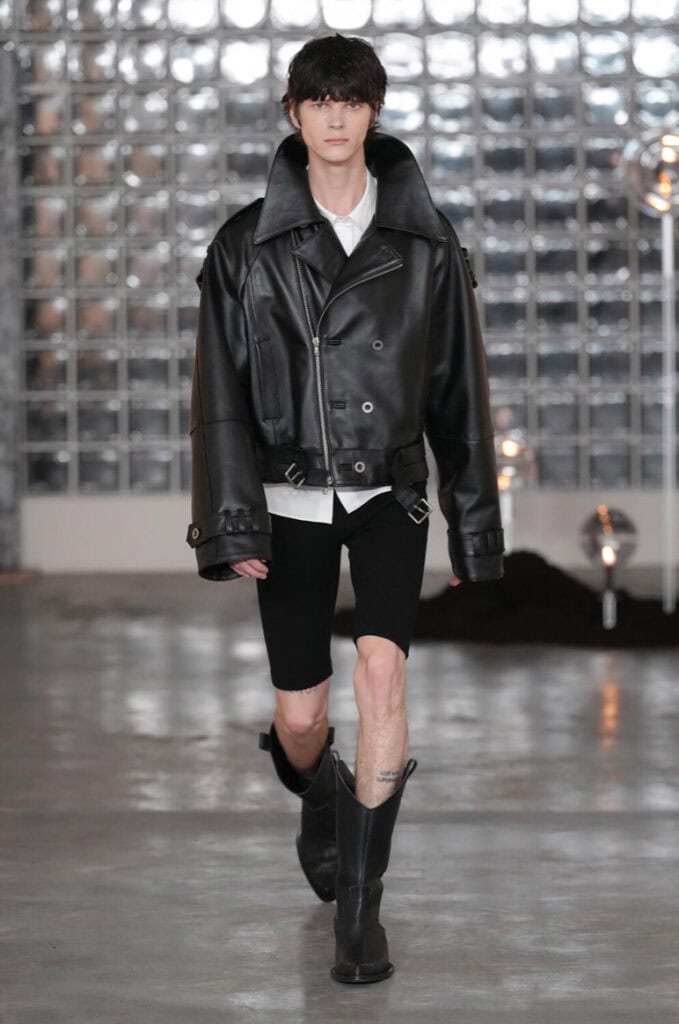
Leather belts slung across denim trousers, followed by partially undone double-buckle fleece jackets and exceptionally tight shorts paired with tall black combat boots, captivated the audience as models descended a candlelit runway. The collection pushed his signature mood even further, tightening the line between night-out chaos and disciplined construction. Orefice leaned into his darker instincts, sending out pieces that felt stolen from backstage dressing rooms and mountain ridges.
Rick Owens
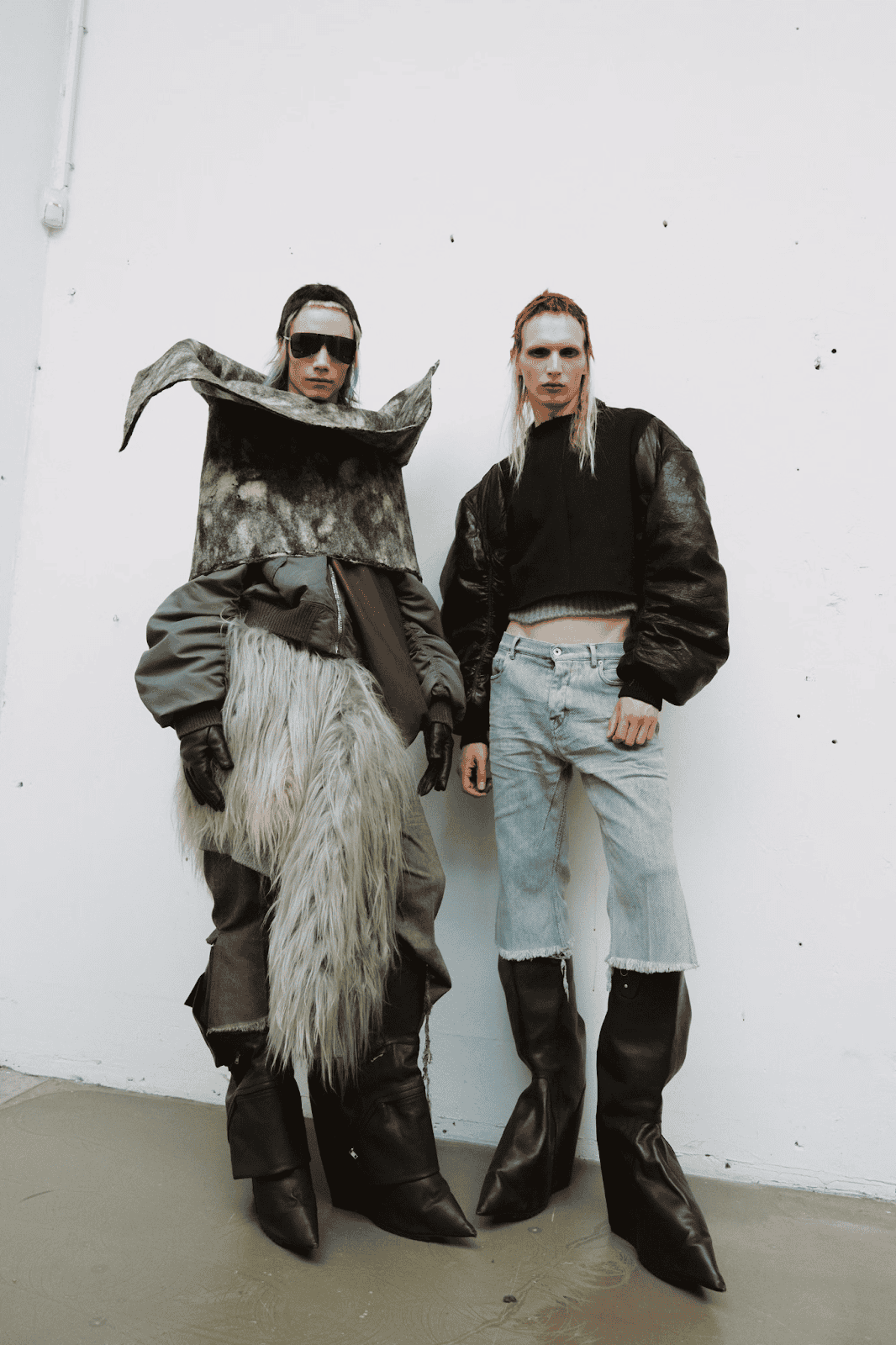
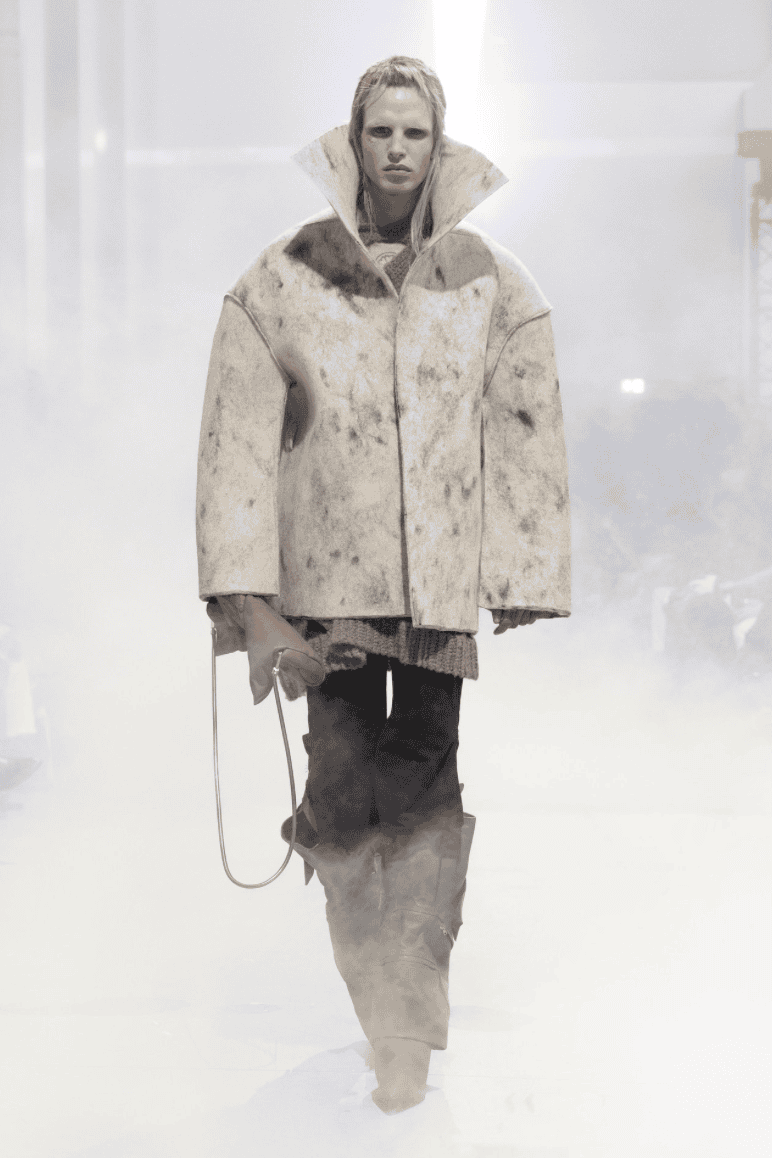
One of the more tame shows Rick Owens has put on recently, TOWER took place at the Palais de Tokyo, where models slowly emerged through a smoke-covered runway. The clothes felt tougher, more utilitarian than some of his recent myth-making seasons, but the attitude remained unmistakably Owens. The palette stayed close to his usual, featuring black, oil-slick greys, and the occasional muted bone tone, yet the textures carried most of the drama.
Photography Ana Margarita Flores
Popped collars on oversized cargo jackets merged with raw-hem cropped trousers. Some traded heavy boots for trainers, while others stayed loyal to Owens’ signature black combat style. In true Owens fashion, there was leather in every direction, veils made from hair-like yarn, faces shielded by structured outerwear and shaved heads marked with small graphic symbols resembling shooting stars.
The energy of his shows relies heavily on the models’ ability to bring his world to life. While it may appear that Owens has curated his own world of weirdos from all corners of the world, his casting process is far more intentional. As he told Dazed, the casting agent is instructed to look for “Egon Schiele crack whores”. He may be an American designer, but it sure sounds like he’s spent a fair share of time in East London. TOWER might be restrained by his standards, but it still affirms Owens as the rare designer who can turn a runway show into an entire belief system.
Sagaboi
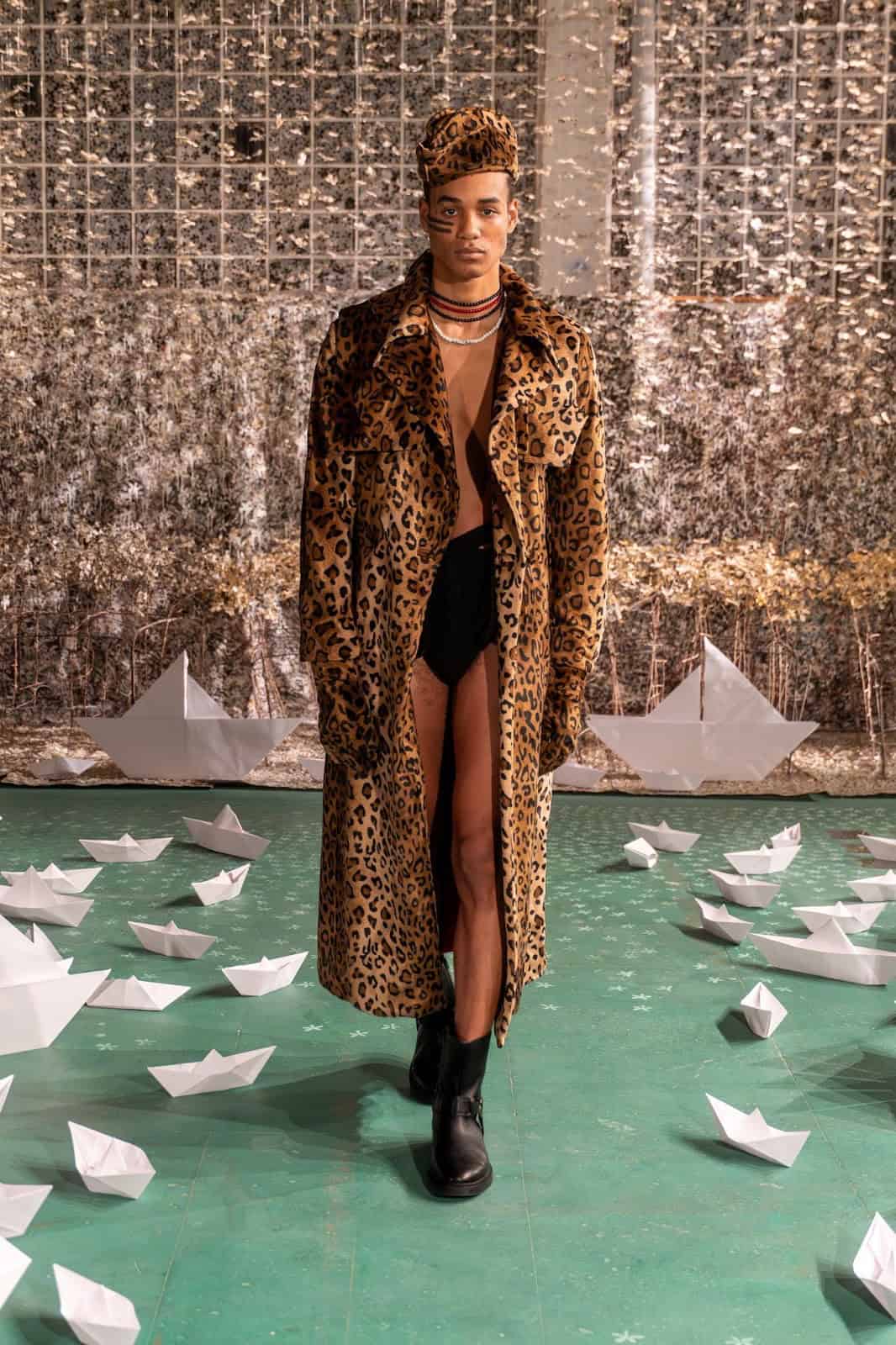
Trinidad and Tobago-based brand Sagaboi presented their debut collection, Riddimical Ambush, at the most recent Milano Fashion Week. Drawing inspiration from his roots, designer and creative director Geoff K. Cooper designed his collection around Caribbean military uniforms. The collection tells the story of cultural transition from order to daily life through traditional uniform and military dress. As a descendant of the Merikins, formerly enslaved African Americans who escaped to British lines during the War of 1812, fought as Colonial Marines, and were later settled in Trinidad as free men Cooper’s understanding of uniform is defined by experiences growing up in Trinidad.
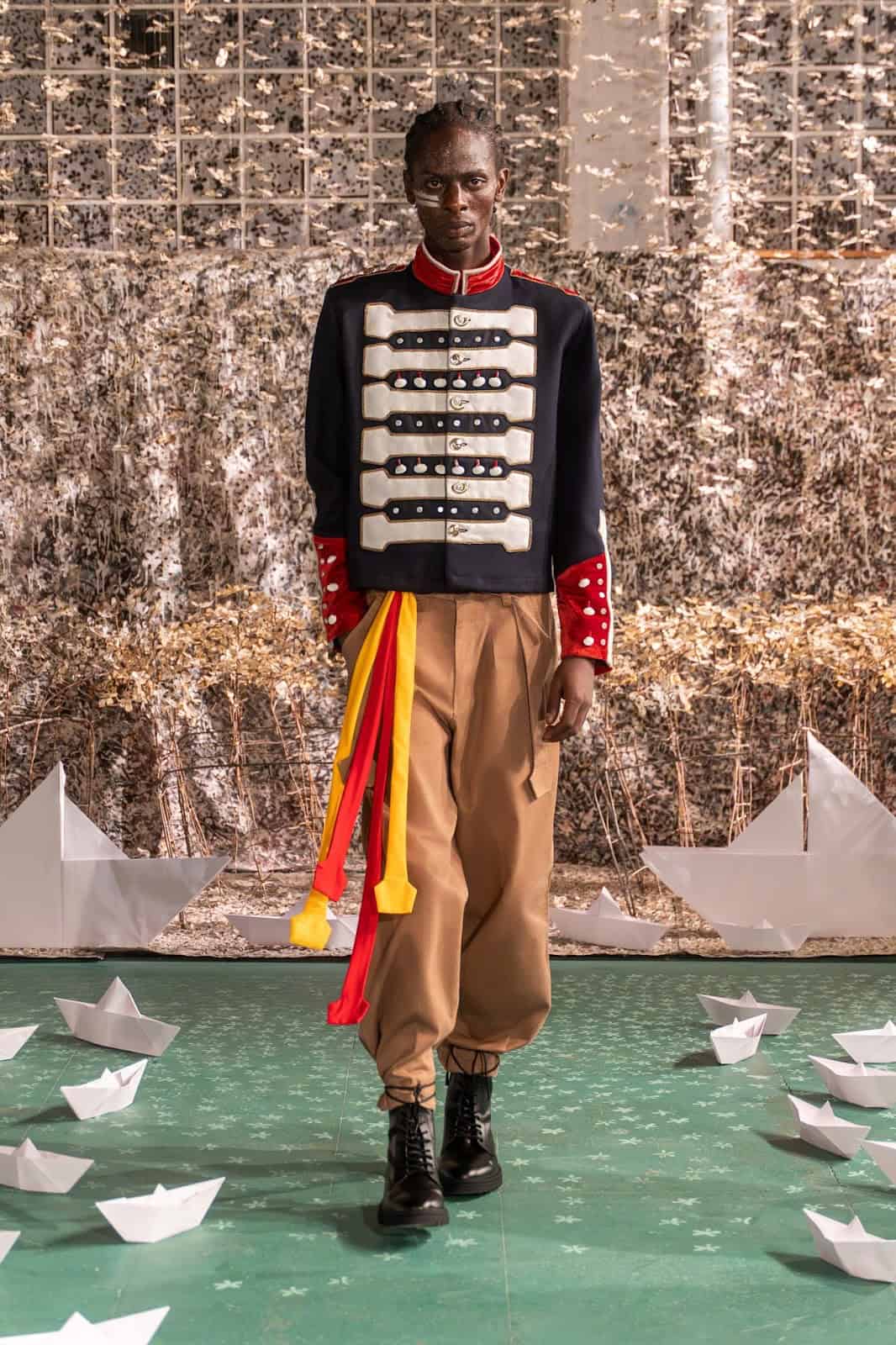
Anchored in authoritarian silhouettes and double-breasted tailoring, the looks are representative of ceremonial military dress. Tailoring appears in black, navy, tweed, autumnal stripe, red, and leopard, which acts as a nod to African and diasporic histories, where it signified leadership and spiritual power. Key pieces included Napoleon-style jackets with ornate shell and sea glass detailing, a double breasted floor-length blazer-style coat. Each look was finished off with detailed crochet accessories, hand crafted by women in Trinidad.
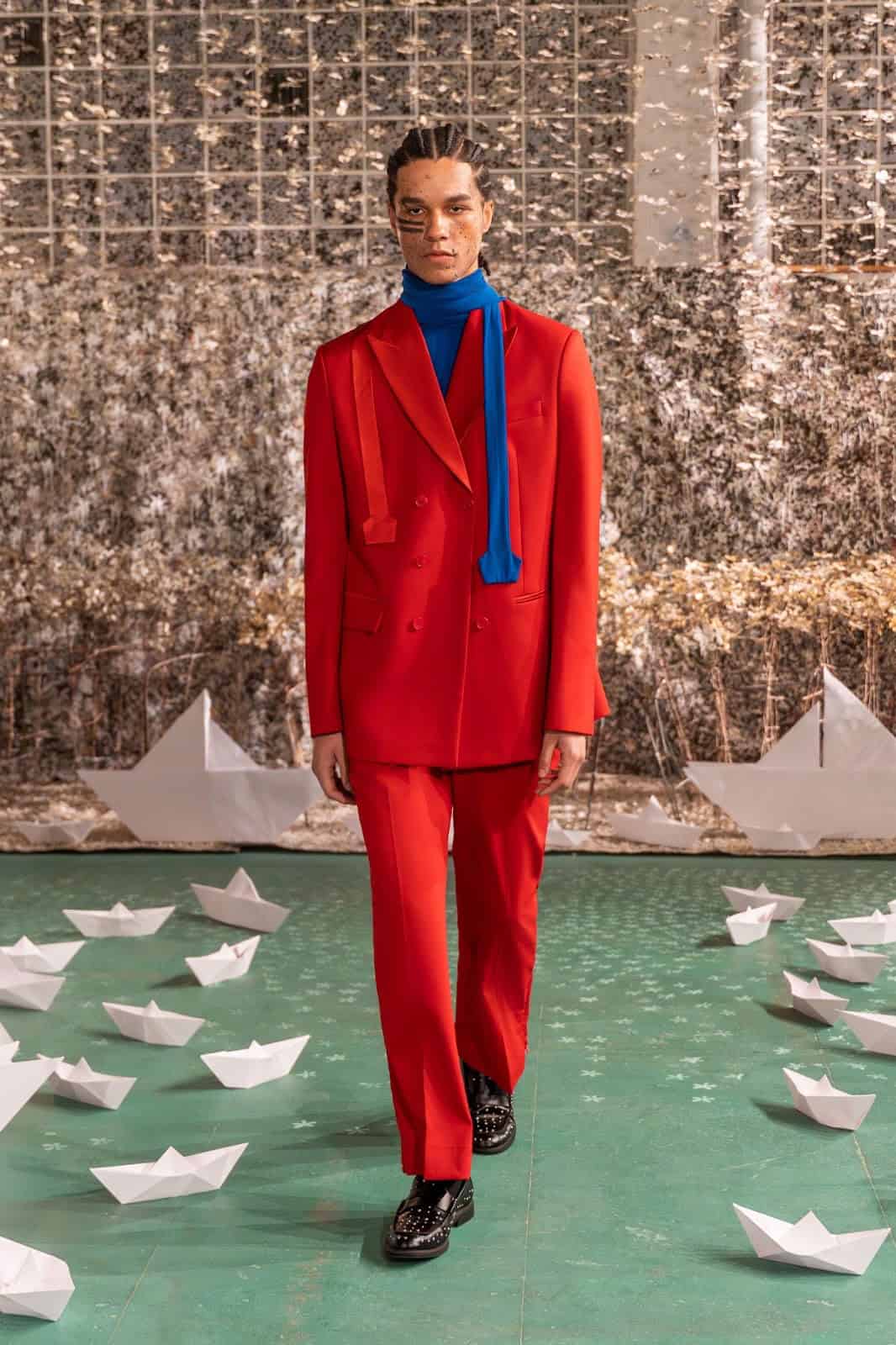
The collection was presented as a staged installation, with models positioned in deliberate formation that encouraged viewers to move slowly through the space and take in the details up close. Over one hundred paper boats were placed directly on the floor of the installation. Like the boats, the models’ arrangement reinforced the idea that movement carries consequence and intention, a recurring theme throughout Riddimical Ambush. The atmosphere was further shaped by the sounds of St Catherine’s Spiritual Baptist Church, blending steel pan notes with chants and hymns to fully immerse the audience in the world Cooper built.