
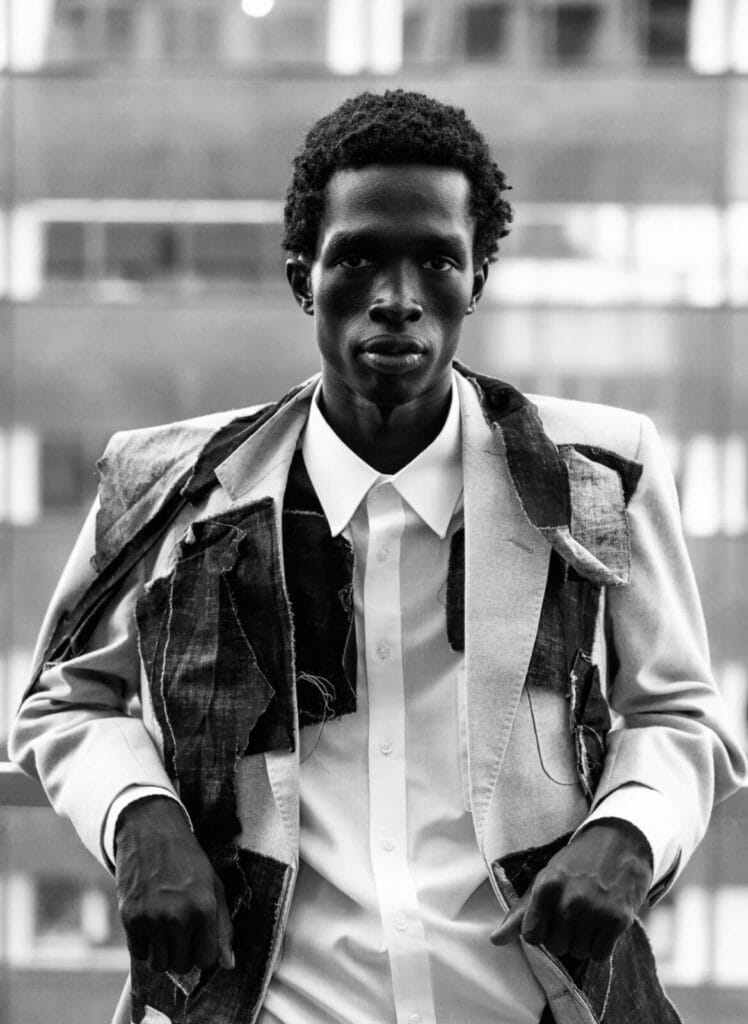
Jakarie Whitaker approaches fashion as a philosophy. “Hikari no Yami is an amalgamation of all the things I love,” he says. “It allows me to create a bridge between ideas, cultures and dualities.” That sense of contrast drives all facets of his career, from creation to showcase. Based in Flint, Michigan, Whitaker founded Hikari no Yami as a way of translating abstract thought into something physical. The name itself means “finding the darkness in the light”, reflecting how he balances opposing forces through design, storytelling and material experimentation.
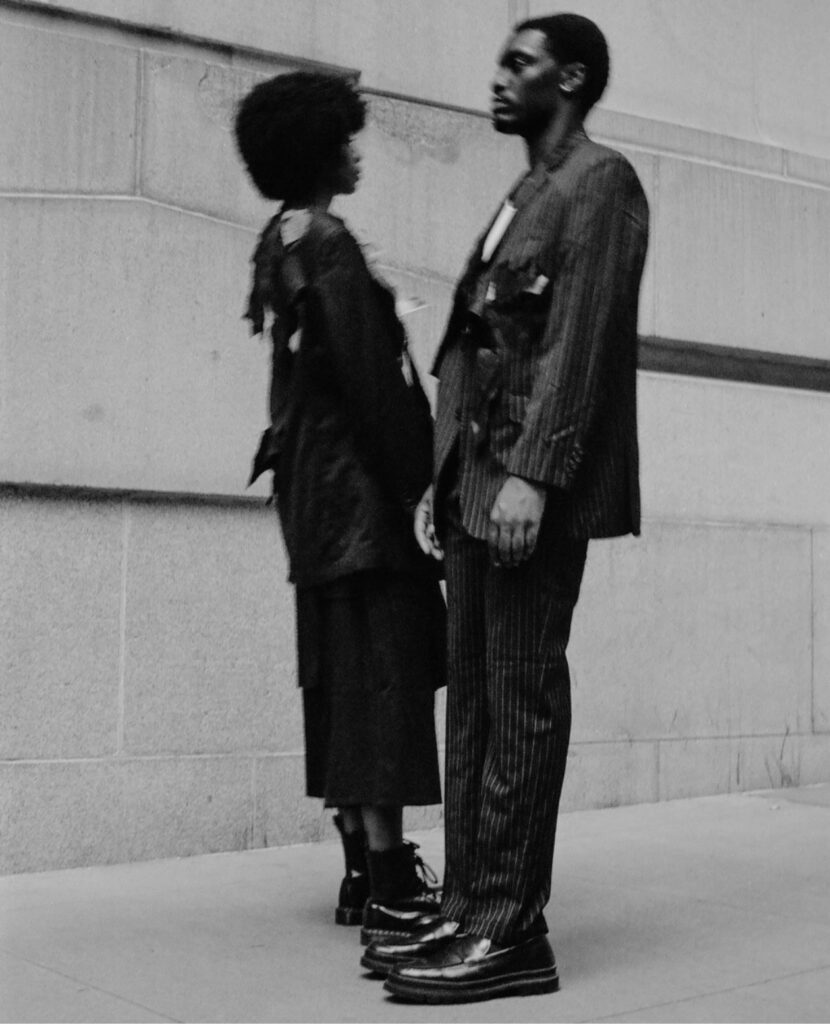
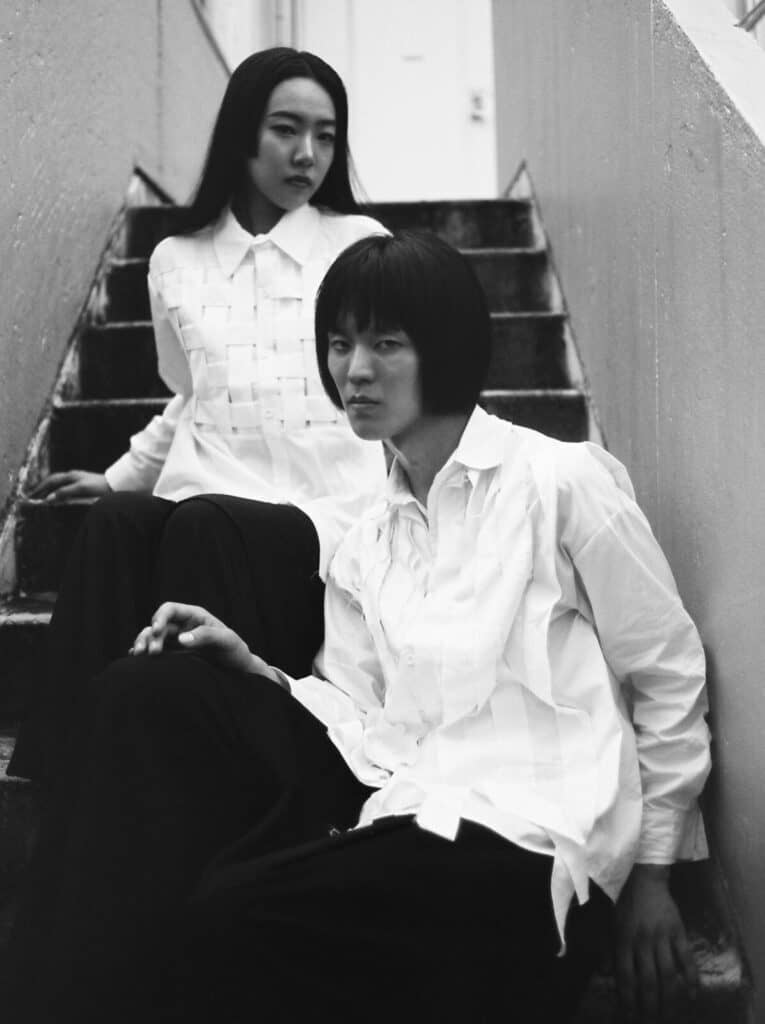
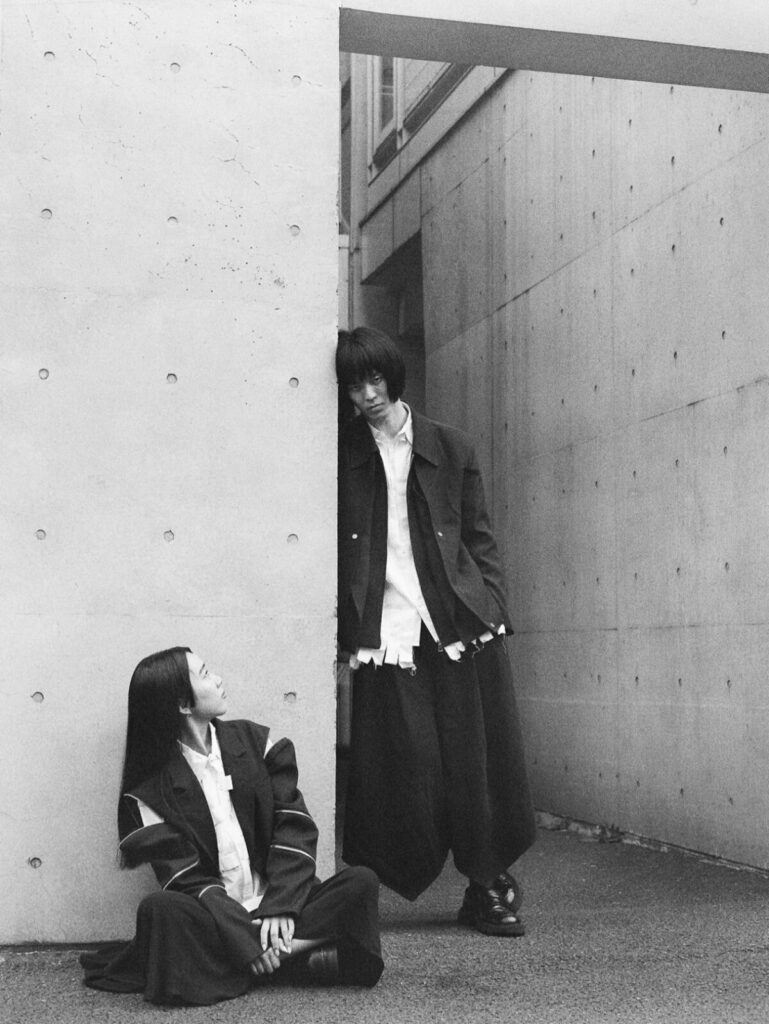
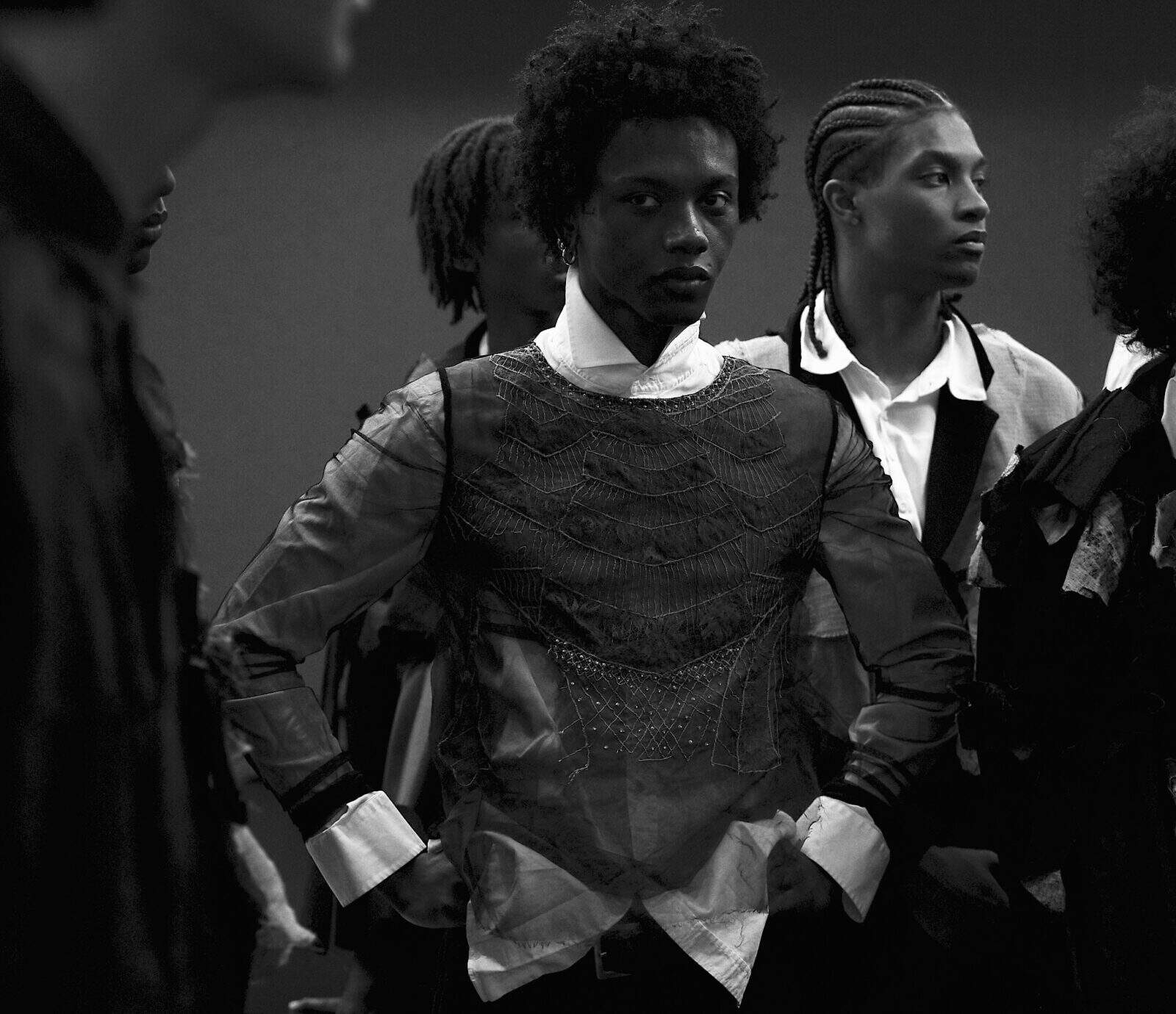
Unlike most designers, Whitaker’s path into fashion was anything but direct. “I got into fashion around 2020,” he shares. “Before that I was on a pre-med track, I wanted to be an anaesthesiologist.” A gap year during the pandemic led him to reconsider his career choices and what creativity truly meant. It was during this reflection that he discovered Virgil Abloh’s multidisciplinary approach to design, where fashion, music, and art coexisted in one space.
Whitaker’s design philosophy is rooted in intuition, preferring to avoid mood boards and sketching altogether, believing they stunt his creativity. “I don’t know what I’m going to create until the fabric and scissors are in my hands,” he says. “If I had imagery to represent the philosophy, I would start making clothes from those references rather than from the philosophy itself.” It can be hard to stay grounded in an industry filled with rife competition, but Whitaker lets his natural instincts guide him. “I prefer to focus on my work and craft, not letting the industry or expectations dictate how or what I create,” he explains. “Even on the days when you think to yourself is this the right career for me? My answer is always yes.”
Through the years Whitaker studied fashion at Clark Atlanta University and Central Saint Martin, whilst also completing internships at Kith, Yohji Yamamoto, Off-White and Fumito Ganryu. His time in Japan, particularly with Yohji Yamamoto, has largely informed his fascination with Asian culture and ideologies, whilst consistently influencing his approach to fashion as an art form.

Cold Magazine (CM): How did you land on the name Hikari no Yami?
Jakarie Whitaker (JW): I selected the brand name solely because, when I started creating the brand, I wanted it to represent this philosophy book. When it comes to clothes, I think the idea is to represent philosophy, or personify philosophy in a sense of black and white, or dark and lightness, or yin and yang. I want that ideology to be represented in everything that I create. When you look at the garments and themes, they’re very dualistic. So, having Hikari no Yami as a brand name really embodies that philosophy and shows that duality coming into play.
CM: Hikari no Yami has such a distinct visual identity. What originally inspired the world and philosophy behind the brand?
JW: Hikari no Yami is an amalgamation of all the things I love. I am heavily inspired by Japanese design sensibilities and African American cultural heritage. This allows me to create a cultural bridge between the east and the west whilst also presenting philosophical, dualistic ideals centered around sustainability, freedom, and creation without limitations.
CM: Your pieces feel very intentional visually. When designing, do you think more about the garment itself or the feeling you want someone to embody wearing it?
JW: When designing I feel like it’s more about the message and place the particular piece represents in the story. And if it looks great on the wearer that’s always a bonus!
CM: What do you think people misunderstand most about independent fashion brands and the reality of building one today?
JW: I don’t think people truly understand the depth of resolve it takes to believe in a dream as daunting as building an independent fashion label. It takes a lot of grit and a LOT of money.
CM: What do you want Hikari no Yami to become outside of being a clothing label?
JW: I want Hikari no Yami to usher in a new era of fashion. Beyond just clothes, Hikari no Yami represents going against conventional expectations and building something that is completely free from the system.
CM: What first made you fall in love with fashion as a form of expression?
JW: Rei Kawakubo’s ability to build an entire universe based on the ideas of: rebellion, individuality, and the relentless pursuit of the “new”. Of course, I was also drawn to this field by Virgil Abloh’s “The Ten” collaboration with Nike. Both designers helped me see that fashion could be more than just clothes.
CM: In a few words, how would you describe your design philosophy?
JW: Limitless creation without limitations. For me, it’s always about the freedom to tell stories that are limitless and free of constraints.
CM: Where do you tend to find inspiration outside of fashion?
JW: I would say mostly in philosophy, architecture, and film/anime.
CM: What does your creative process usually like from idea to finished piece?
JW: I’m terrible at sketching and I don’t do mood boards because I rarely want to be influenced by external forces. I tend to start with two opposing philosophical ideas and source materials. Then I build out my ideas once the garments, materials and pattern paper are in front of me.
CM: How do you balance artistic vision with the realities of running a fashion brand?
JW: Hikari no Yami is structured so that my vision never has to compromise itself to survive. The SHIRT line handles accessibility and volume. YAMI handles ready-to-wear with conceptual integrity. The Mainline is pure unfiltered expression 1-of-1s, runway, no concessions. Each tier protects the others. And for me business has always been in the front of my mind when starting the brand.
CM: Are there any designers, artists, films or musicians that have heavily influenced your aesthetic?
JW: Of course. Rei Kawakubo, Yohji Yamamoto and Virgil Abloh have inspired me deeply. I also really love the message and story telling conveyed in Makoto Shinkai’s films and the architectural prowess of Tadao Ando.
CM: When you look at the future of fashion, what excites you most right now?
JW: The ability for emerging designers to have an entry point. I like new ideas being implemented into the old system.


