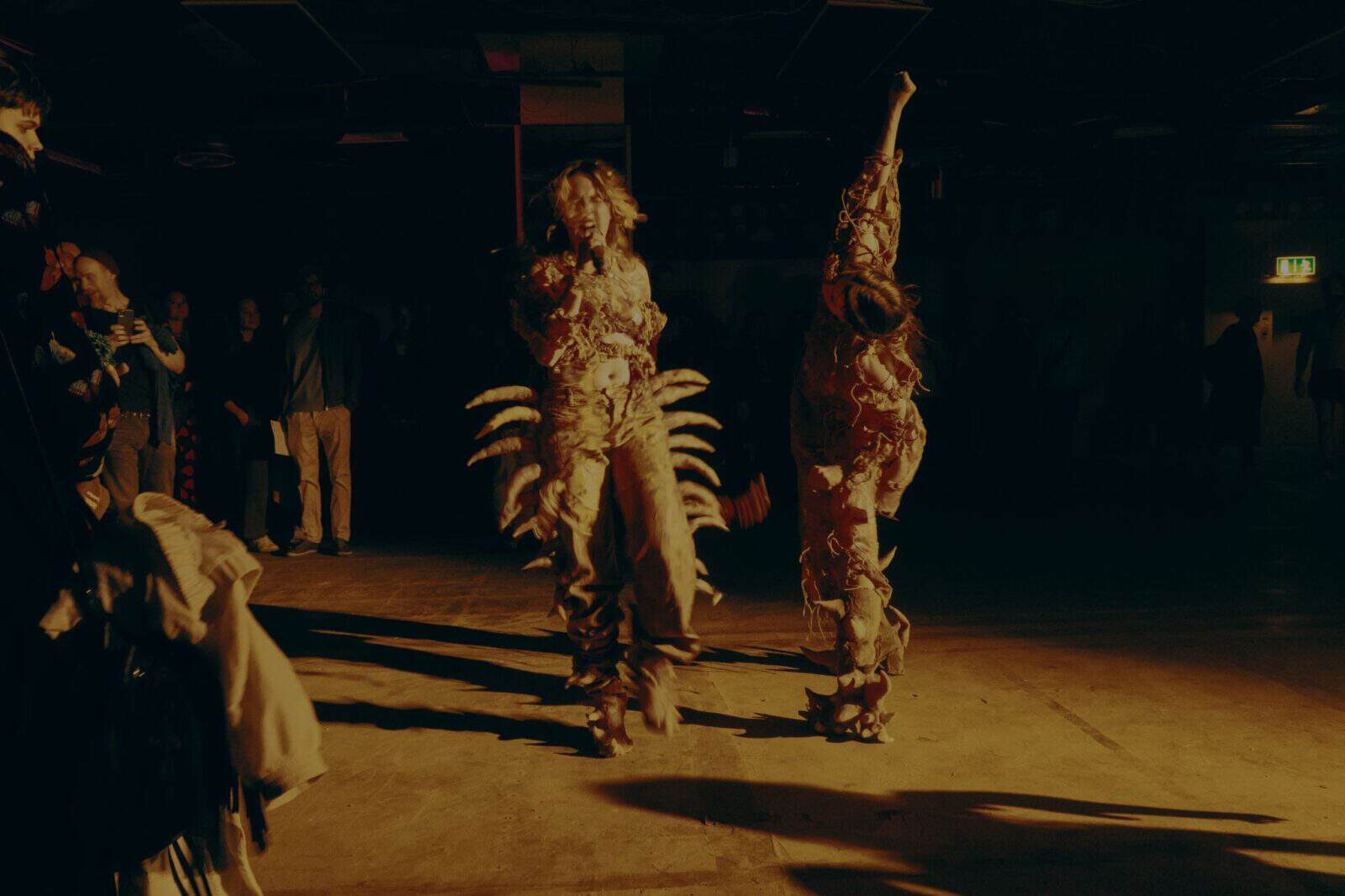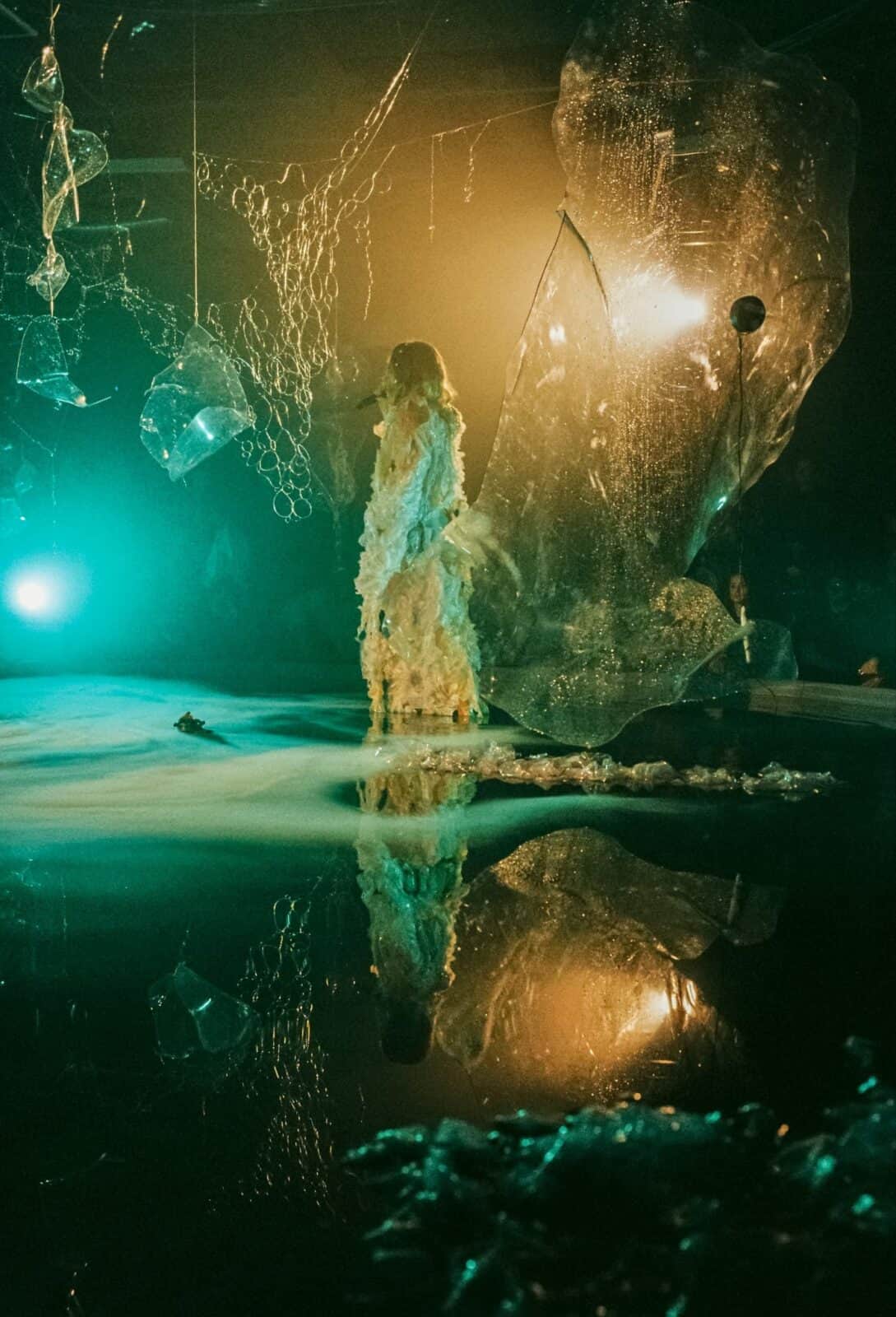
I chanced upon a former refugee shelter in the neighbourhood of Neukölln during Berlin Art Week 2024. There, I was swallowed into the Brutalist concrete building and into the artist Livia Rita’s commingling worlds of radical fantasies, mystical creatures and music.
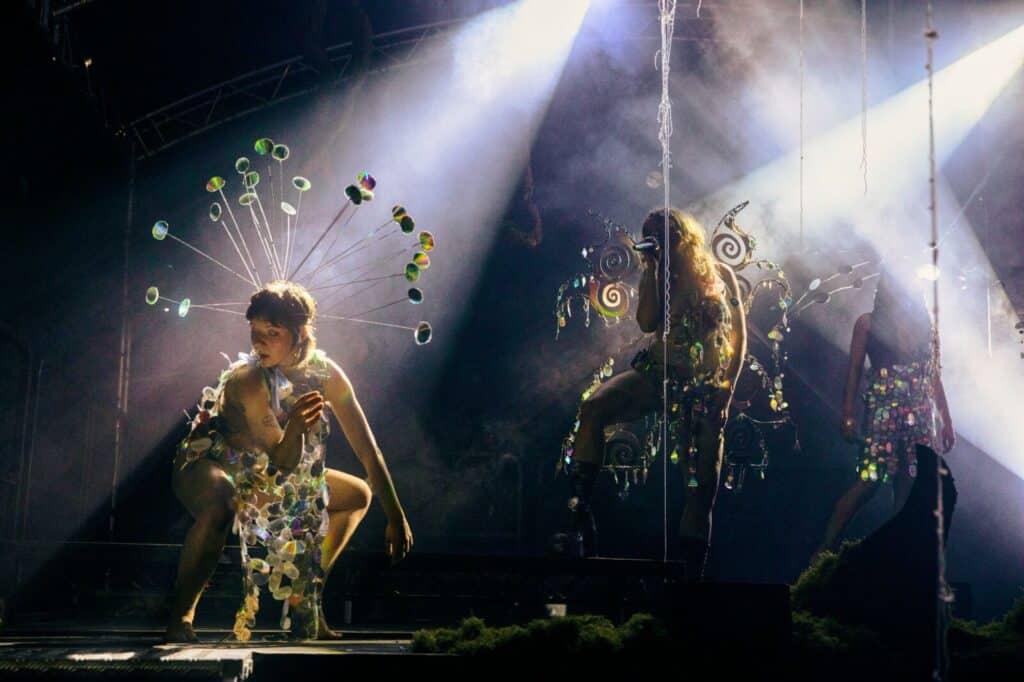
Several worlds took up the repurposed space, including a pool of misty blue water with shiny trees, and sparkling webs. Nearby, stood a huge spiky tree deity in burnt orange, with twiggy creatures scuttling around them. In yet another part of the room, a cohort of creatures, wearing holographic skirts and translucent antenna, swayed, floated and writhed to the melodies.
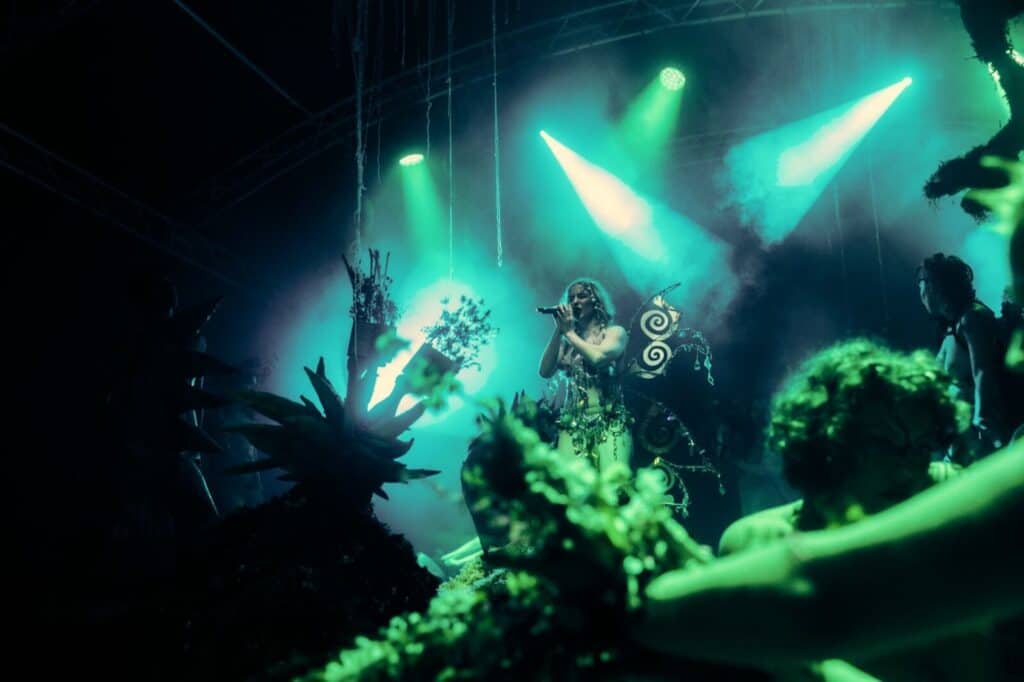
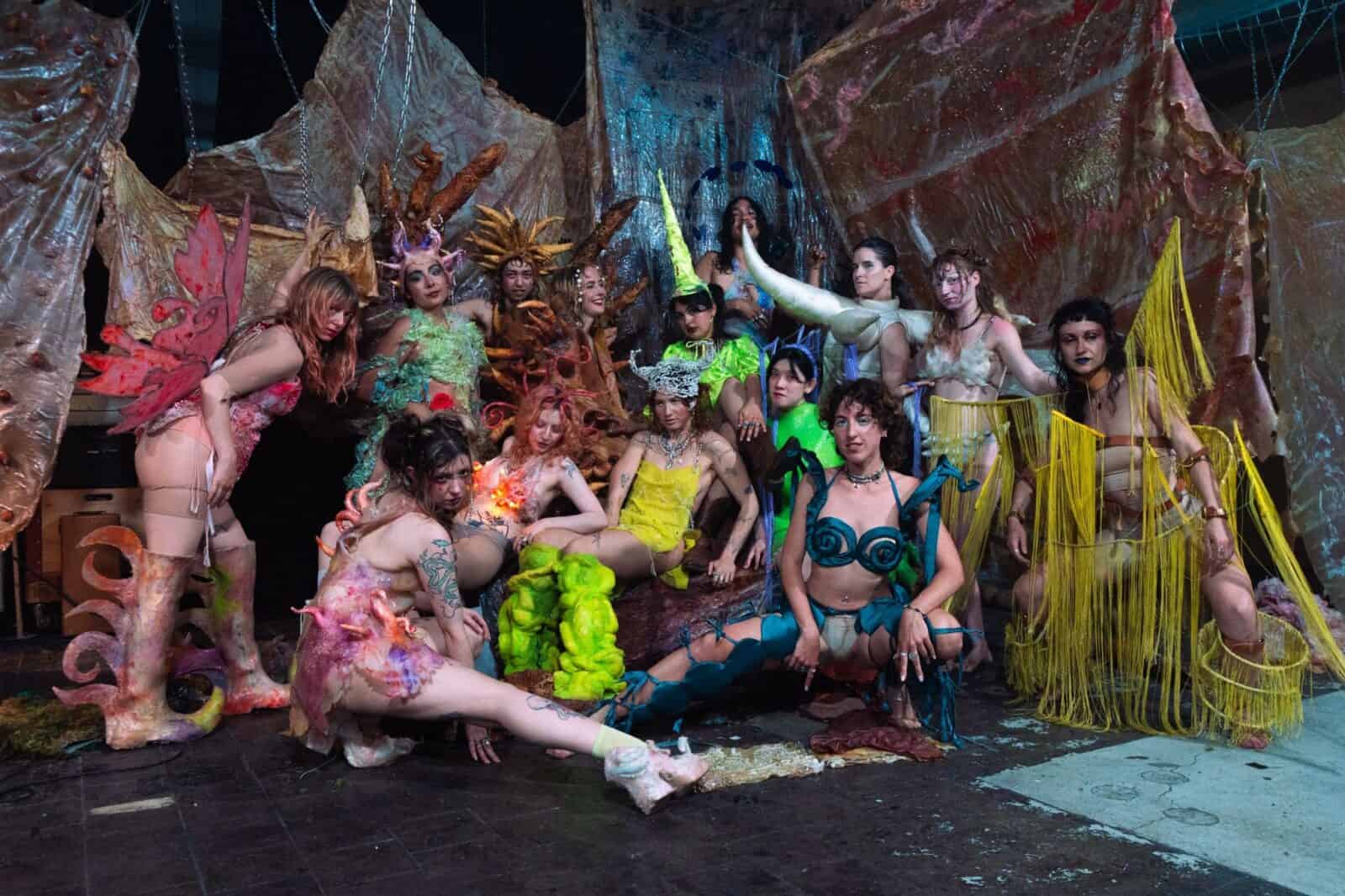
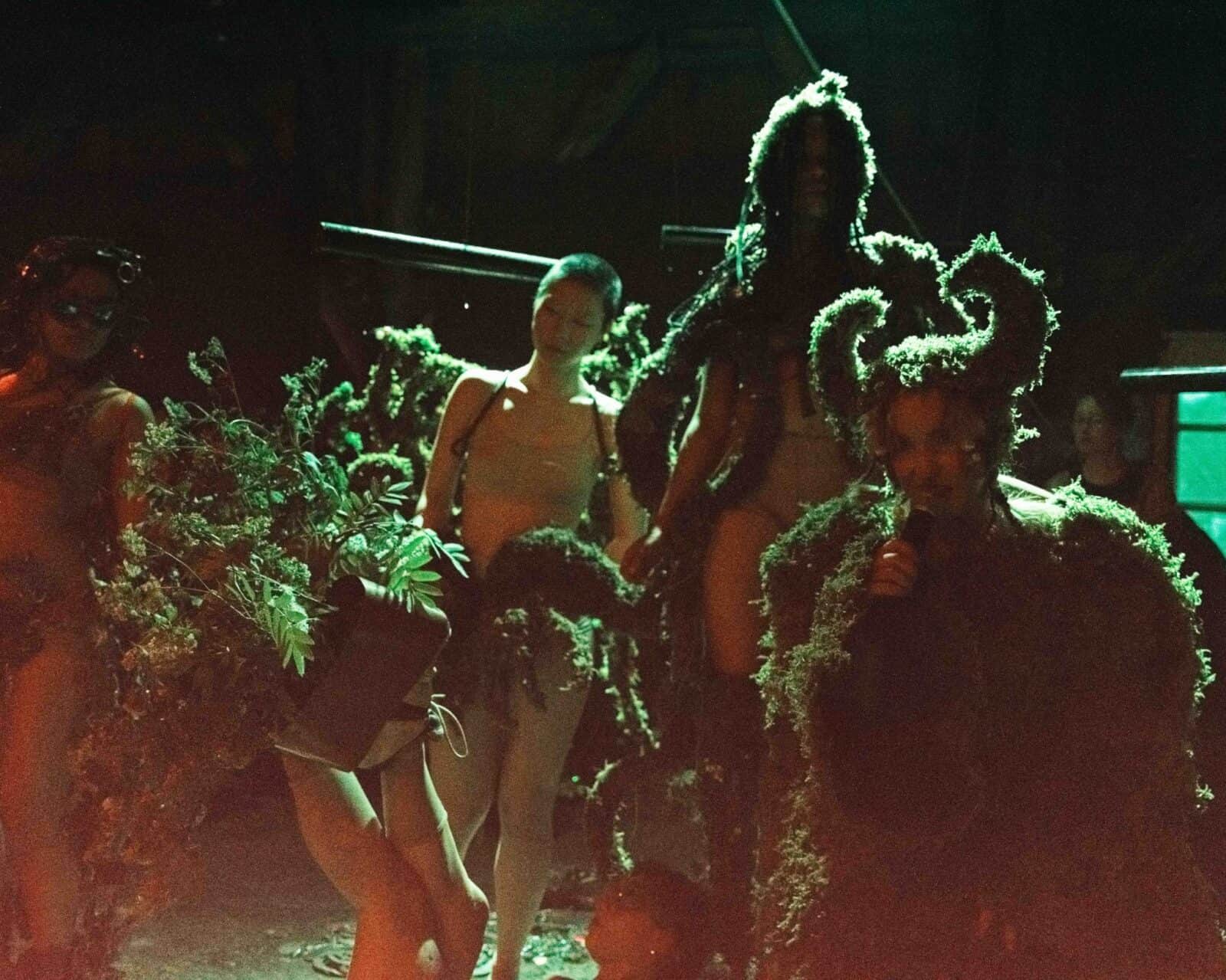
Livia’s artistry spans music and ArtFashion, a term she uses to encapsulate wearable art and accessories. Her debut album, Fuga Futura, released in 2022, was a blend of dreamscapes and eco-pop that billowed into worlds through her performances with “creatures” of the forest, of fire, of water. These fashion pieces, sewn from moss, CD shards, flower petals and latex, evoke an ecological consciousness that nestles alongside her ethereal, metamorphosing music, and often are made from what she finds while foraging on the mountain.
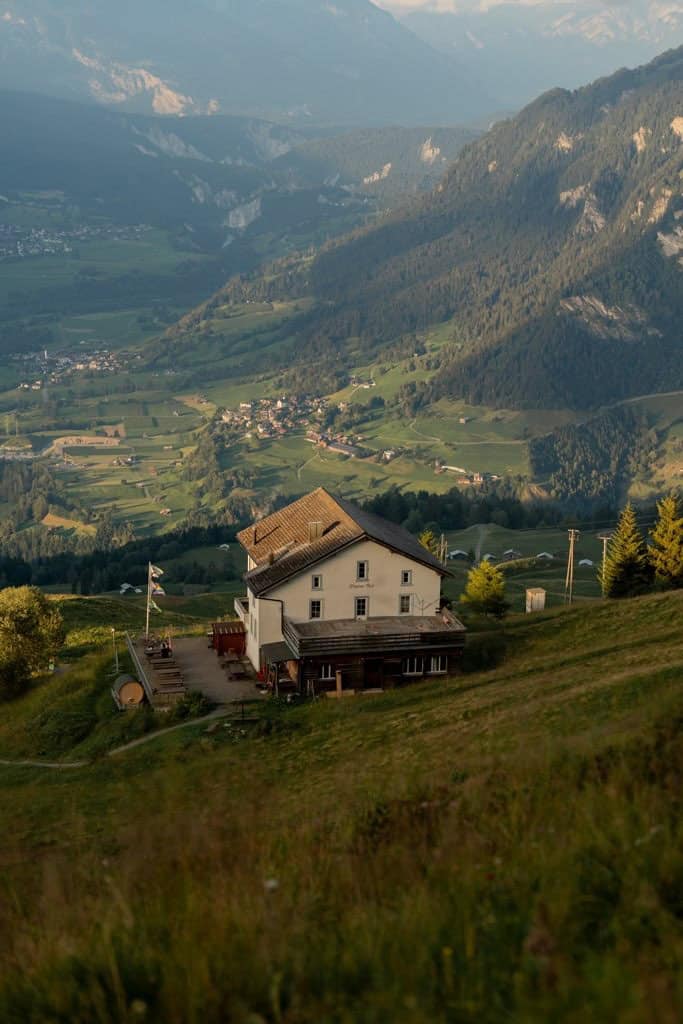
We met for a spontaneous coffee at She Said Books in Berlin later, where I learned about Bündner Rigi, the guesthouse she ran in Switzerland. This January I was lucky enough to spend three weeks there as a self-directed writing residency. The house is big and rambling, and the atelier catches the morning light as it peeks over the forest climbing up the mountain behind the house. I woke early, wrote furiously and, as the sun set over the mountain, went for long walks in the snow. I’d chat with the costume designers while they worked, or eat dinner with the musicians staying there.
“Bündner Rigi is nothing that we really planned or predicted. People started coming, and it was fun. It’s grown with its own will, and it became a nice nest for me,” Rita tells me. A few years ago, a ski lift closure nearby led to many businesses on that mountain slope losing customers overnight. Rita came across the guesthouse while searching for places to live in Switzerland that would enable her to live as an artist. It became a catalyst for a small creative community of artists and musicians.
Spending time in the organic and glittery worlds conjured by Livia was very inspiring. And this kind of spontaneous meetings and unpredictable connection is what she’s always trying to work towards. “Being able to invite people and offer something when usually I was on the other side, an artist trying to find opportunities, was great,” Livia says. “It gives me the feeling of freedom and genuineness. The score isn’t written there.”
Rita left London due to limited space. She also “never had the impulse to try to have to convince people or be loud. As a female person being socialized to fit in and please and smile and not create conflict, now I’m creating from another corner.” And in this corner, there’s plenty of opportunity for collaborations with others. Livia still loves travelling through Europe and to London. “There’s this strange feeling that I’m trying to create, where the mountain is connected to everywhere, to the places that have communities, and where I feel at home, or where I want to keep a relationship. I want to keep London feeling like home, so we’ll see how that works. I like making the travelling an inspiring thing in itself.”
Yet for all her love of movement, Bündner Rigi is also a kind of refuge away from the pressure of cities. She adds, “I charge my batteries on the mountain, which takes pressure from my own expectations. I really enjoy feeling social hunger, it means that I care about encounters, and I don’t look at those moments as habitual.”
She’s discovered more about herself, too. “I’m a way more sensitive being than I thought I was, because I was good at compensating and overriding what I sensed. It’s interesting, but also scary, because you kind of get used to an environment that is quite radical. And then you kind of lose a bit of the common ground with society as well,” she muses.
While currently finishing a remix of Fuga Futura, with musicians who’ve stayed on the mountain to get involved, Rita tells me she has another release in its process of creation, Dystopia Wetlands, that’s been maturing for three years.
“I have visions that grow quite organically: how does this song feel, what is the textural element of it, what is the movement of this song? That’s how the song becomes a creature identity. These six songs and six creatures will have their habitats, their rituals, their smells as well, their sounds, their instruments, their lyrics, which I call their spells.” What entranced me most was the scale of her creations – the creatures that build worlds, and expand her music into something tangible and fantastical. How does a song become a body?
“I always wanted to shapeshift or transform. I wanted to change how I experienced the world, become more sensitive towards it, and interact with it differently. It’s a very corporeal effort. I also want to explore how inner feelings can be on the body.” The collectivity at the heart of Bündner Rigi doesn’t stop when she leaves the mountain. “I hardly ever perform alone. I want to feel together with people. Moving with others in that physicality creates a very emotionally connected language. Maybe I struggle a bit in the social frames that society offers us.”
As Livia performs on a stage filled with sparkling creatures, large monsters and writhing bodies, the worlds of real and fantastical collapse and swirl together to create mythical and astounding odes to nature. For her what’s important is “the unknown undefined possibilities of looking and experience and seeing at nature that opens up when I’m with it, and opens up the imagination,” she replied. “It’s a different way of sensing and feeling.”
It’s a lifestyle for you, as well, I say. Your life is enmeshed with the fantastical. She’s quick to reply that “I tried making music and art another way, and I just didn’t quite fit in. I did spend a lot of time searching for a place elsewhere. I guess, in the end, I had a wish for finding beautiful ways of being together with people and finding ways of looking into the future of what we work towards, what we dream of.”