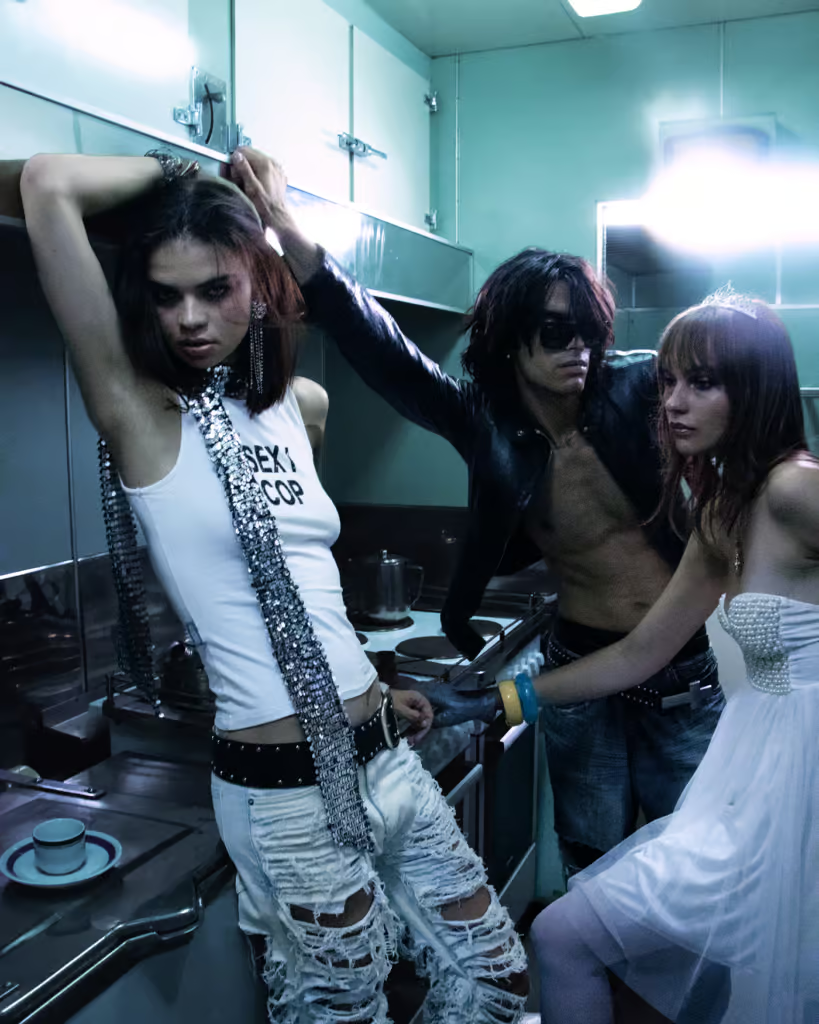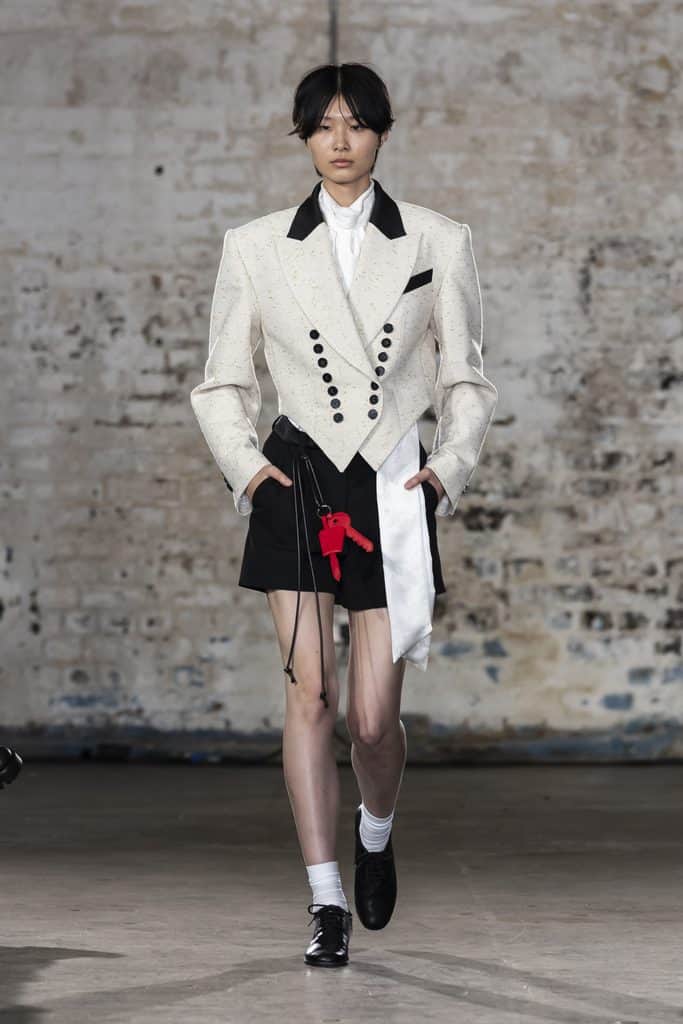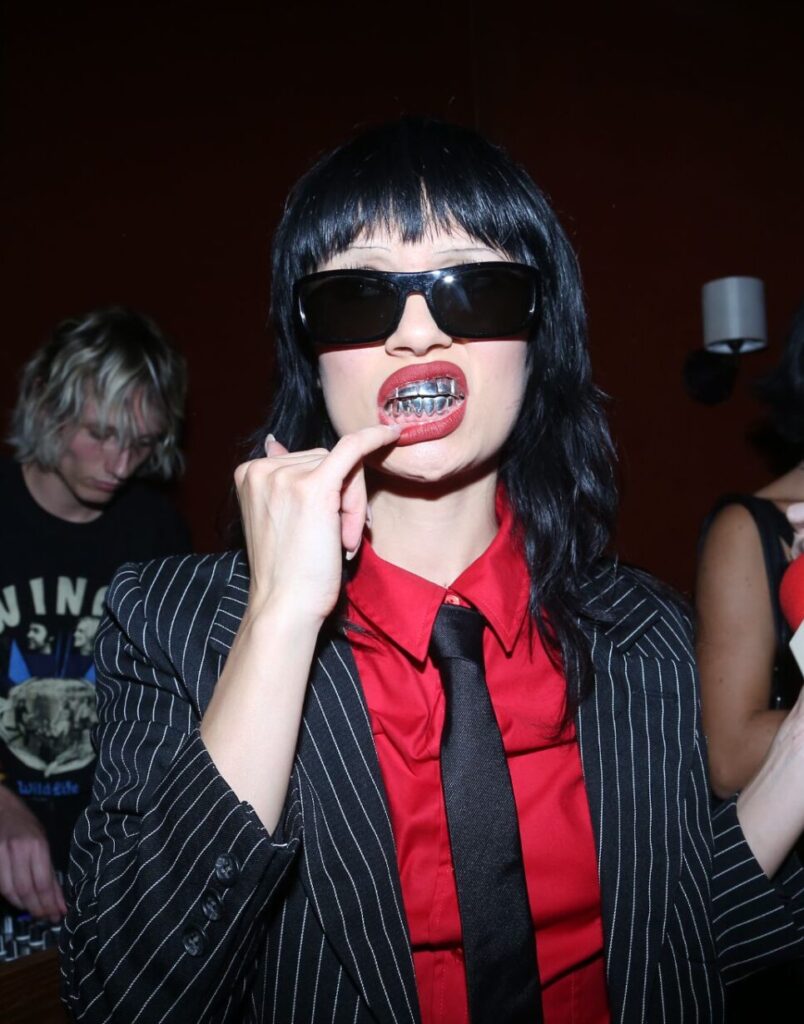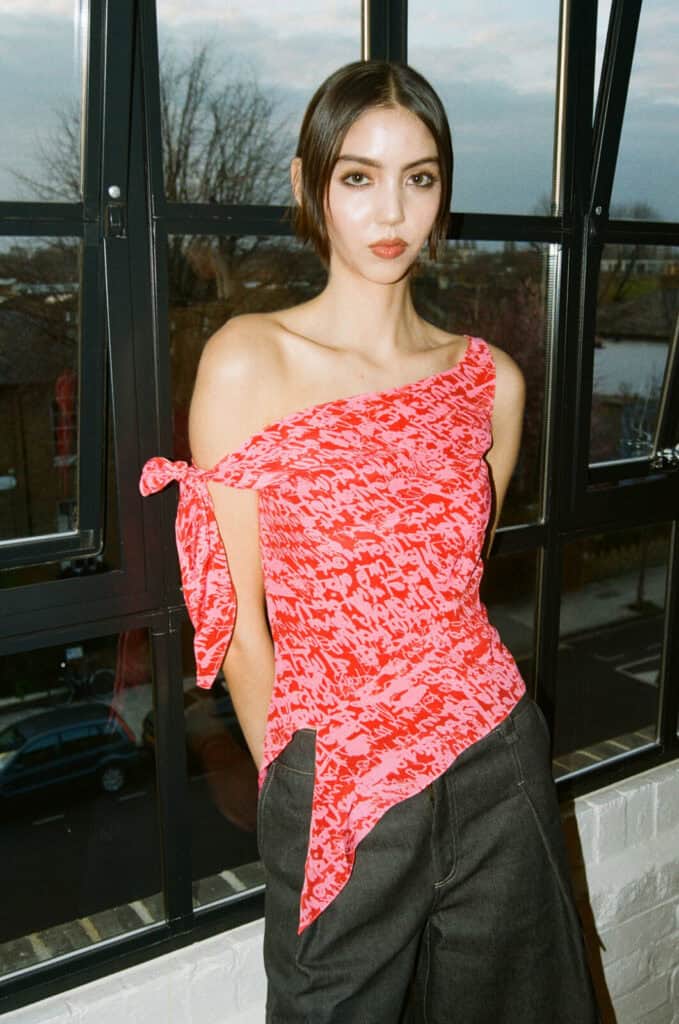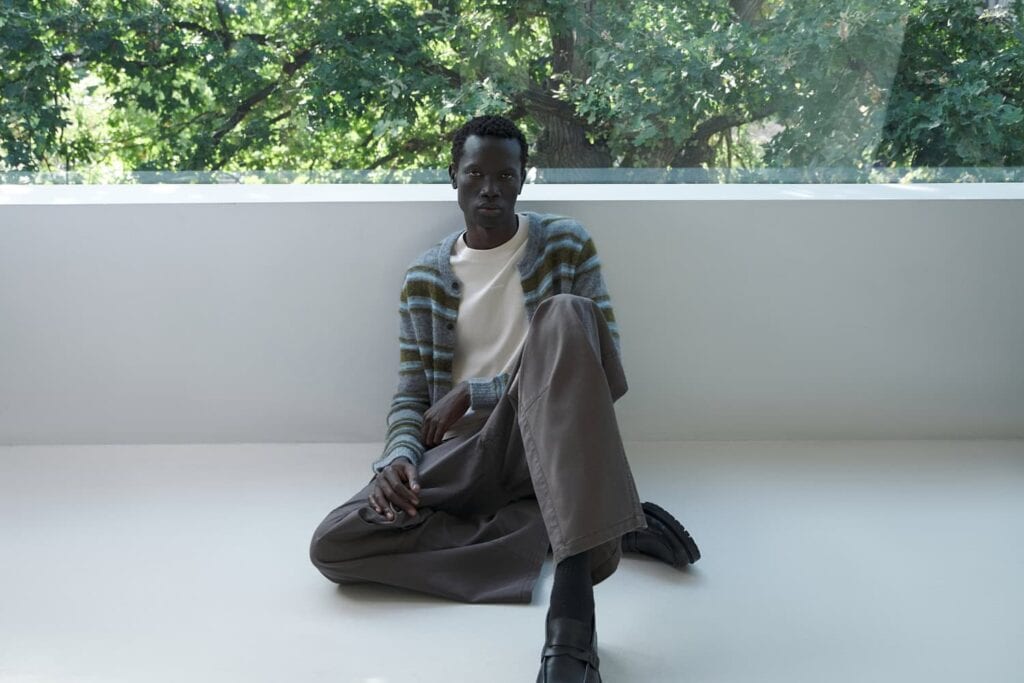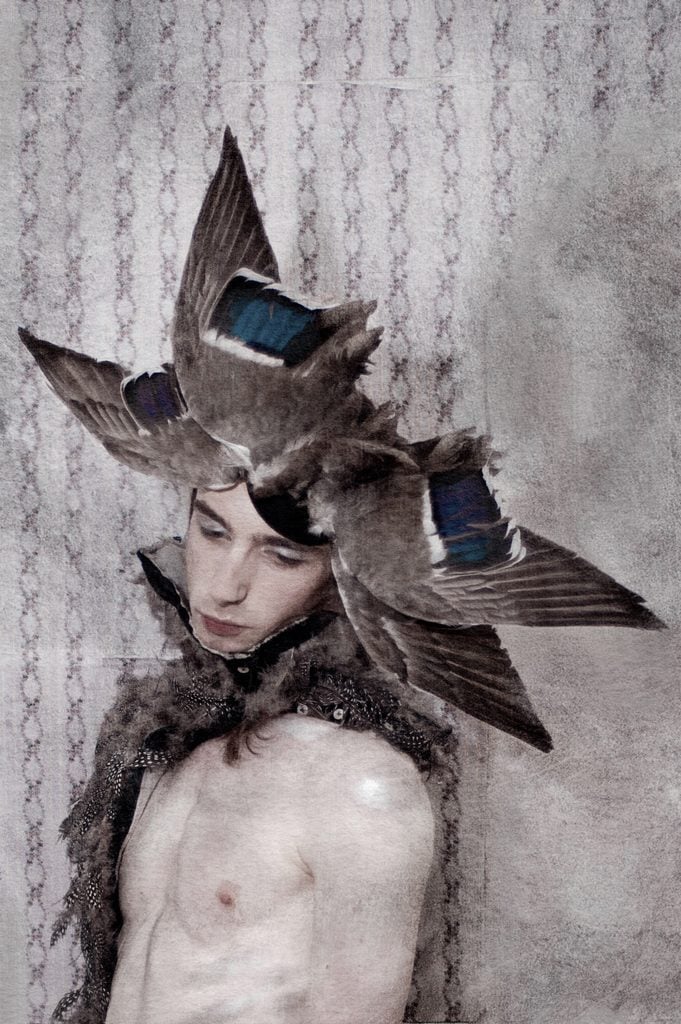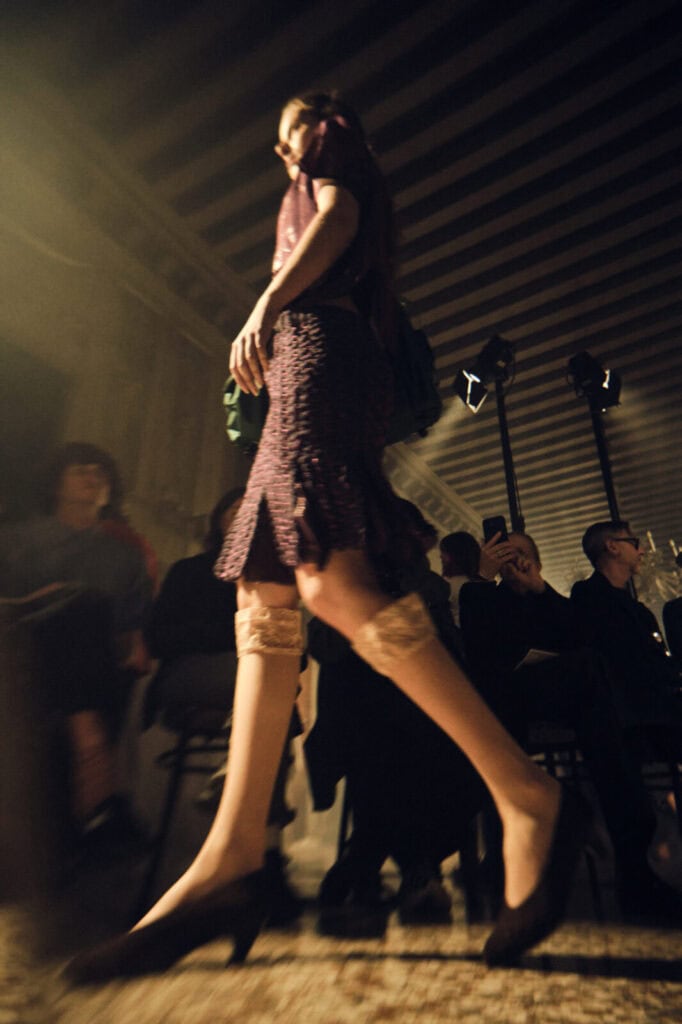
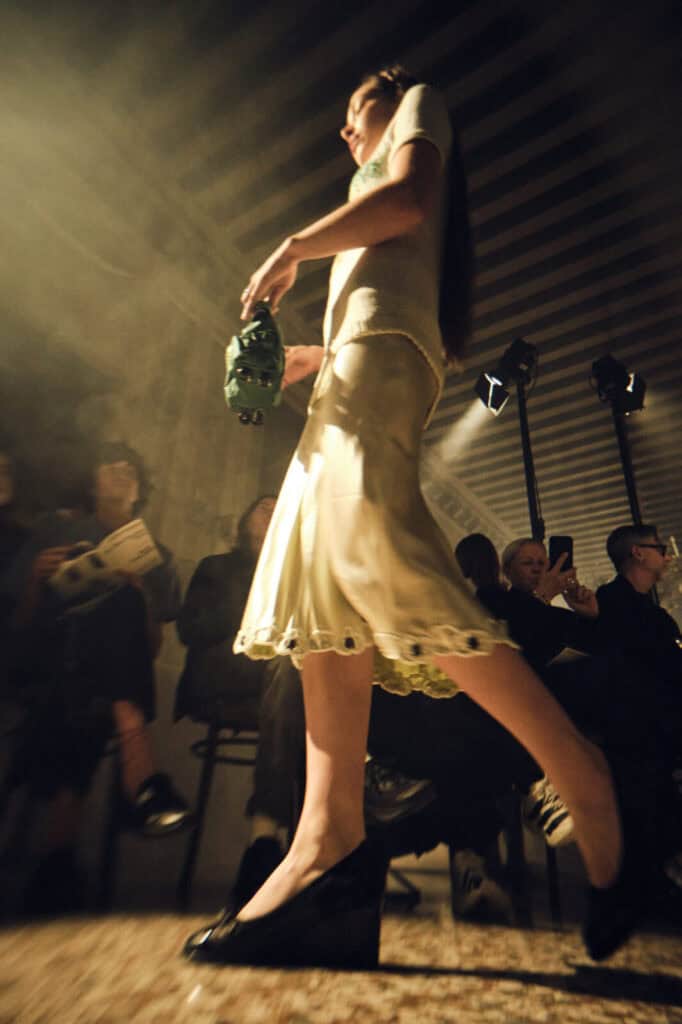
At Anna Ringstad, clothing, content and craft collapse into a continuous performance of online identity. The brand is built around the aesthetics of aspiration, and explores fashion as both commodity and commentary. Rooted in the visual language of platform culture, it examines how taste, authenticity and desire are continuously staged and negotiated. Ringstad treats lo-fi craft as both material and metaphor, using it as a visual and conceptual tool to express the tension between sincerity, irony and commerce.
Was your training formal or self-taught, and which shaped your practice more?
In addition to the skills I’ve developed over time, the sociodemographic context from where I’ve learned the different things has shaped my practice to what it is today. My training is a mix of DIY and formal education. Studying fashion design at an art academy was probably the most formative experience, since it really “set the tone” for how I perceive and define fashion. Already from naming the education “clothing and costume design” it shifts the focus away from the stereotypical understanding of fashion. This drastically changed the way I approach my work and how I think about the relation between product and process. Initially it all started from a childhood where crafts was my playground and I developed a strong relationship with knitting and crochet.
Where are you from, and how much does that place live in what you make?
I’m from a small town in the middle of Norway, literally a nobody-place. Coming from anywhere outside the cosmopolites = insider-outsider perspective on the fashion-world → really affects how I place myself in the industry and how much ownership i take of it. in a way i think it’s a great asset, because not really being aware of what unwritten rules to play with allows you to change it from the inside, sometimes intentionally and other times even without knowing. New perspectives blah blah blah,
Who would you want to collaborate with – another designer, a brand, an artist, someone completely outside fashion?
Actors, musicians, other creatives that overlap with my thematics without being directly linked to the fashion in itself.
Where do you see your brand in five years bigger, smaller or more radical?
In five years i see my brand develop more as ecosystem connecting fashion, cultural critique and performance than just expanding as a bigger brand. I see the brand more as an artistic practice at large, where i’m creating my own “playground” with my own rules. I’m convinced that its possible to combine an extended artistic practice and commercial part. somehow i think that’s what needs to be done to stay relevant today as well, they are both as important and fill each other out.
How do you navigate the tension between creative work and financial sustainability?
A big focus for me is to develop a way of working that is fun and something that excites me in the everyday routine brain fog, so i’ve developed a way for dealing with financial sustainability that almost feels like a cosplay/performance/etc part of my artistic practice at large instead of being an obligatory task that sits on the side, completely disconnected from the creative work. establishing a commercial system that mimics it as much as it brings in the finances.