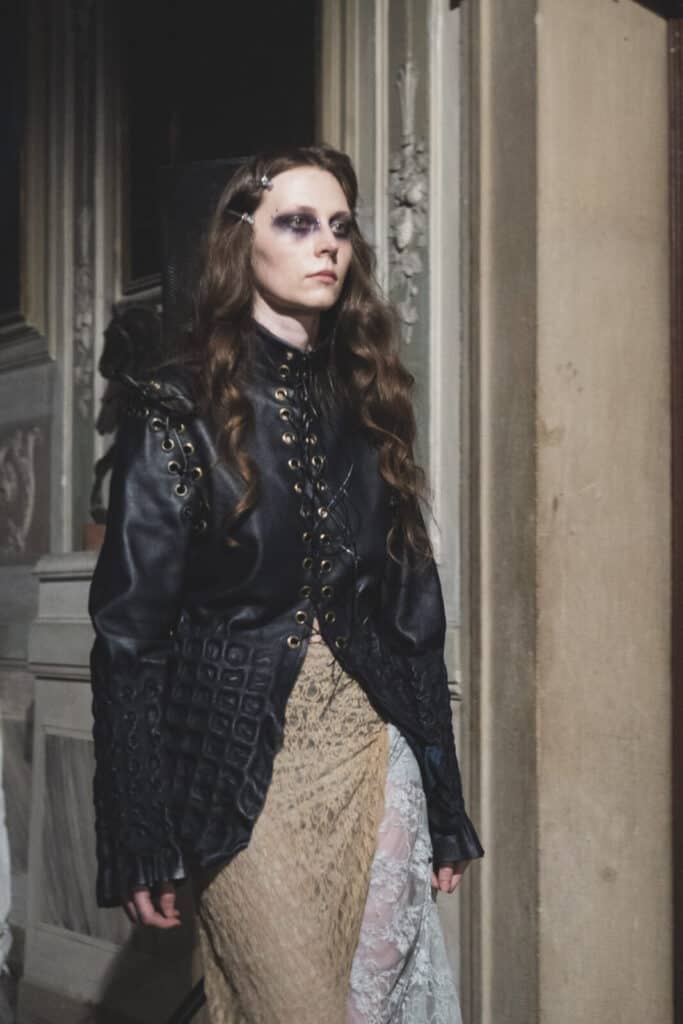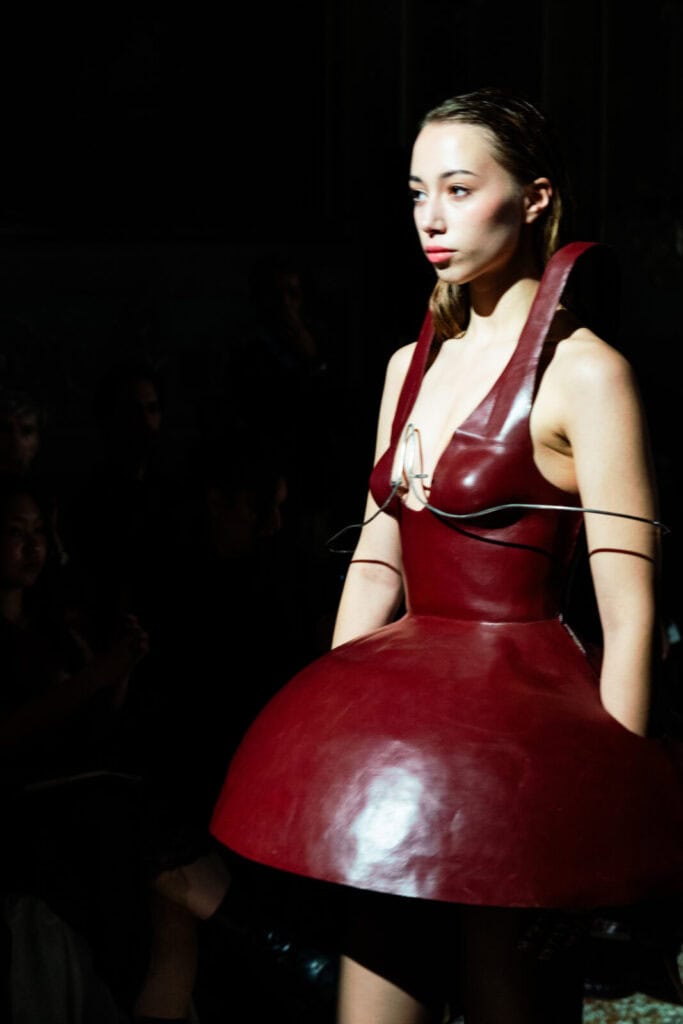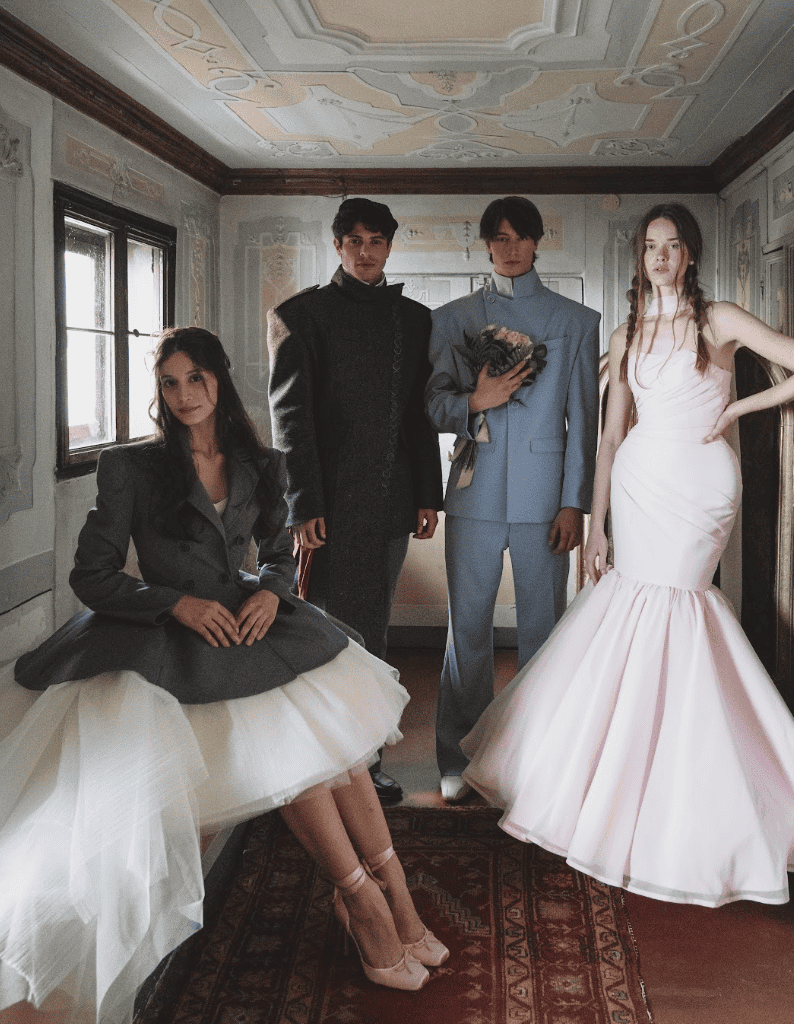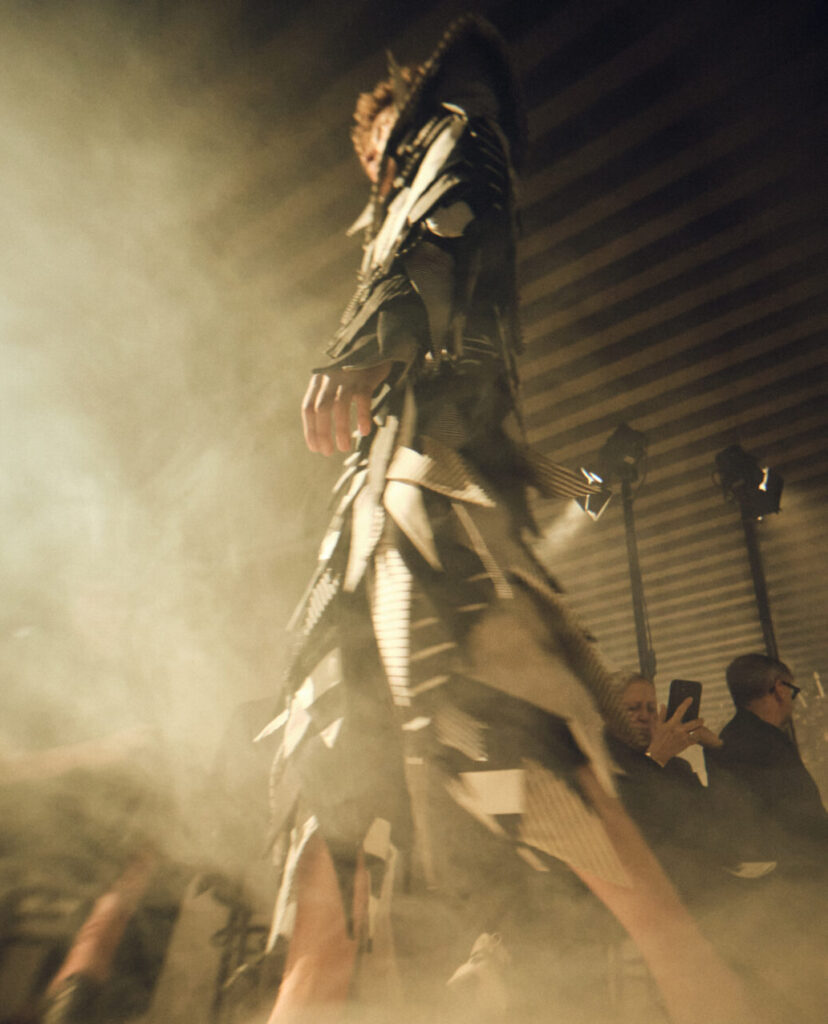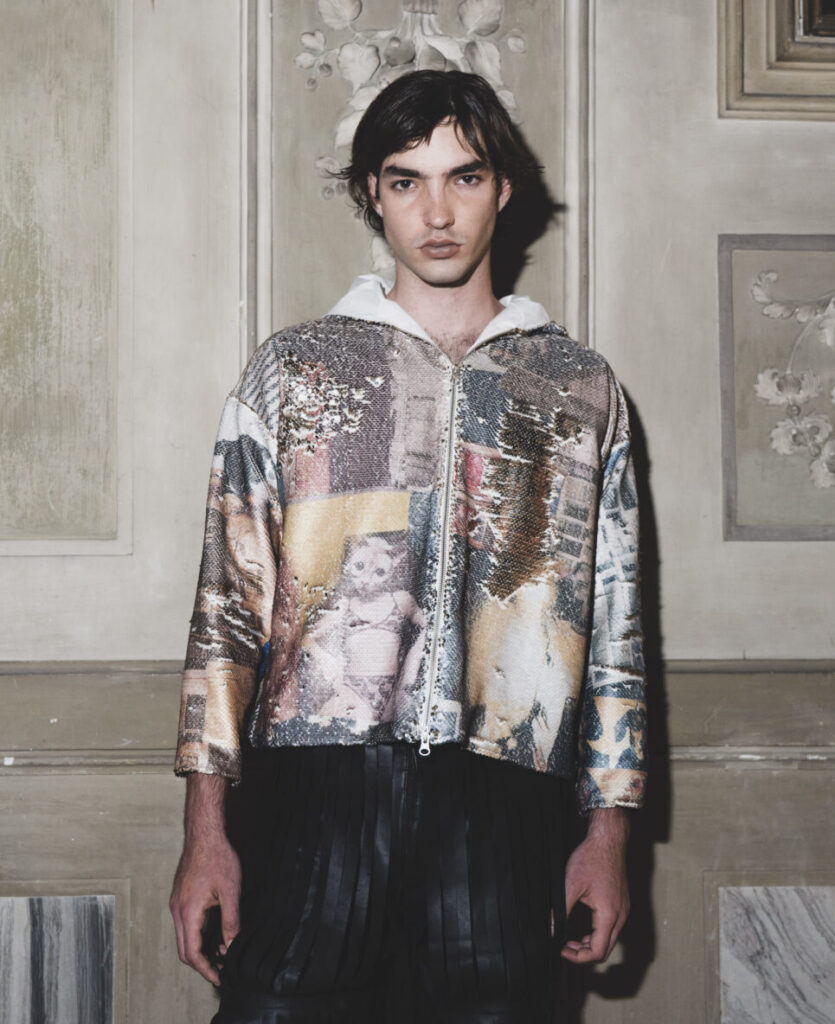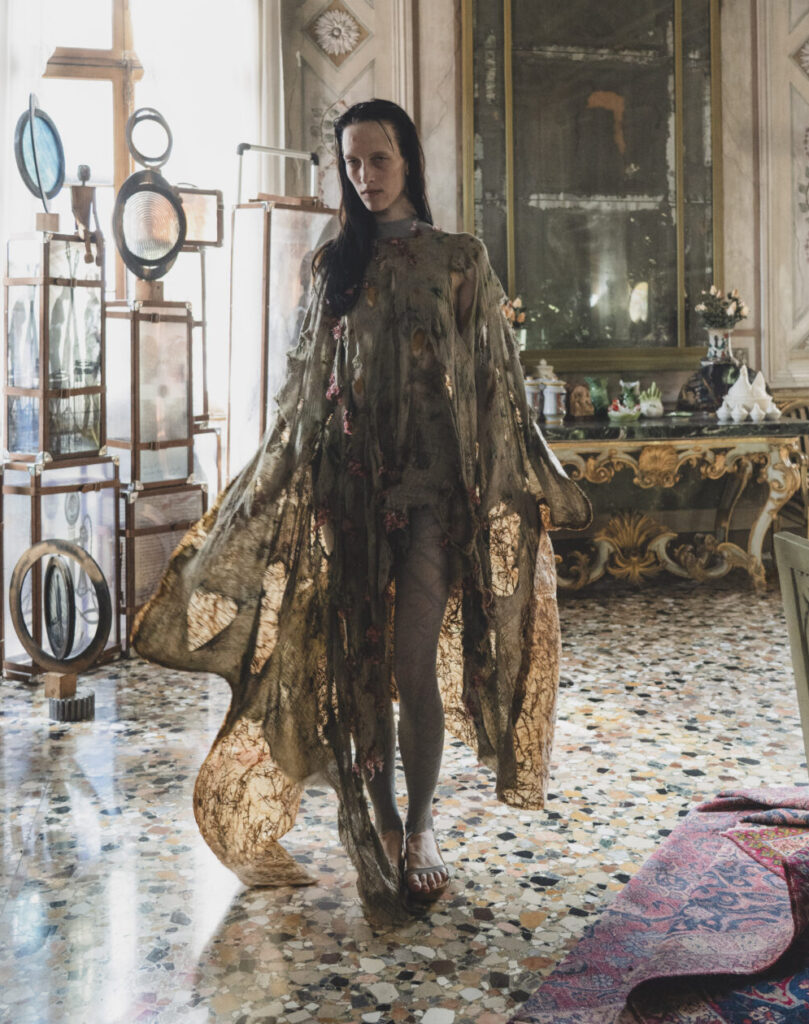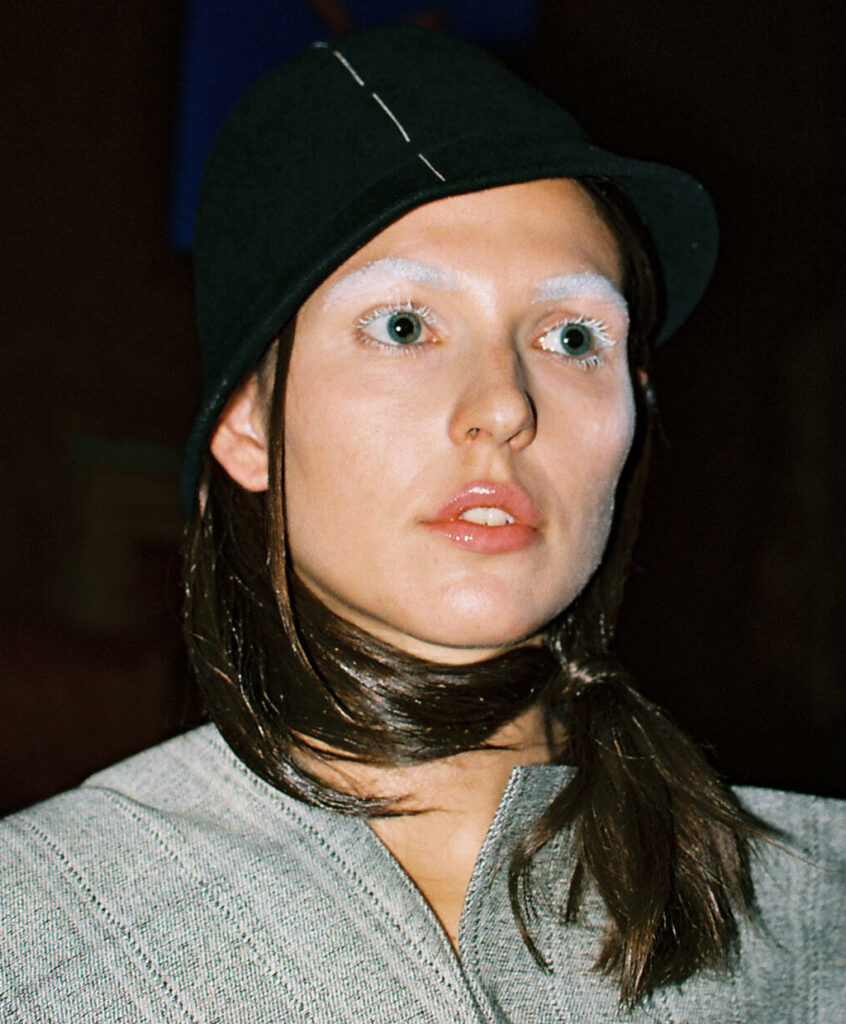
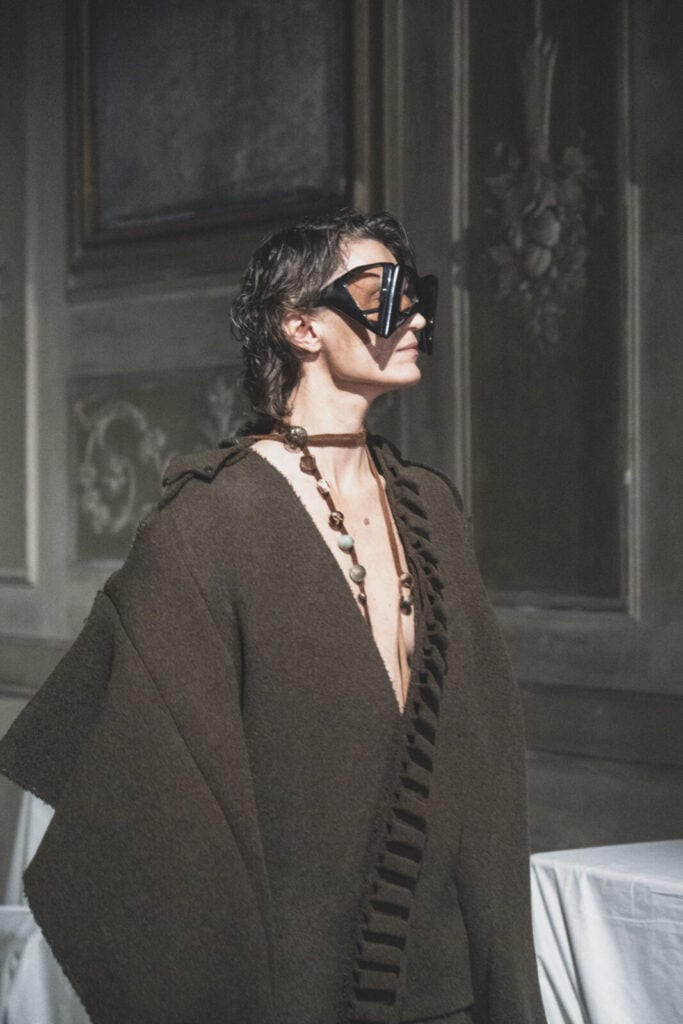
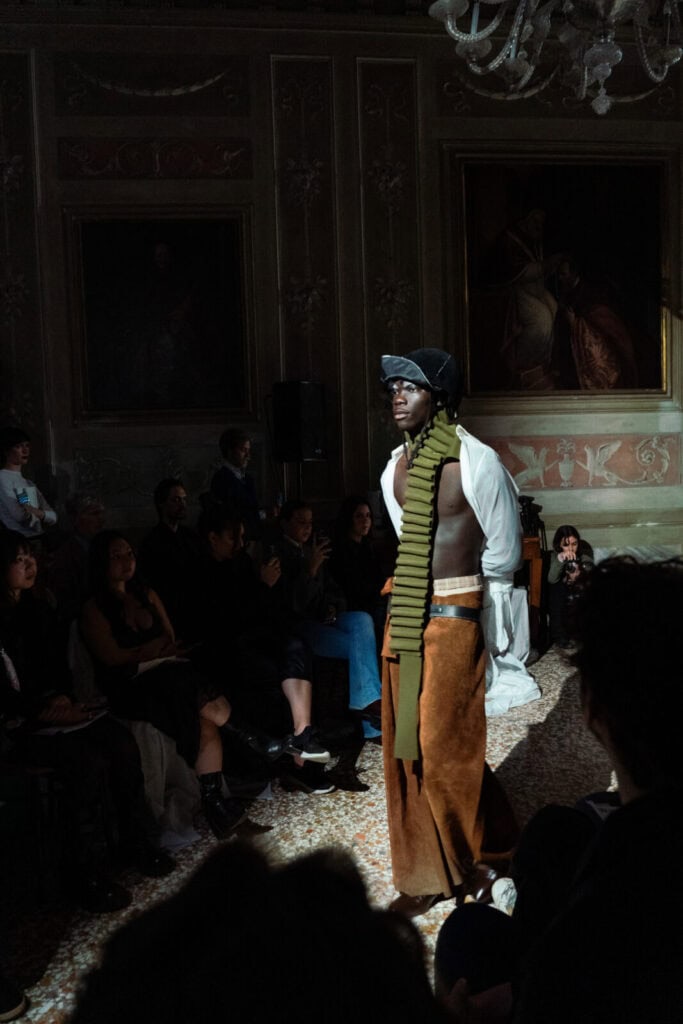
Sostanza Vergine investigates how the body engages with material and construction through the uniform as a design system. The paratrooper and the 1920s flapper are treated as opposing archetypes, reduced to essential, near-geometric forms.
The collection unfolds as a black-and-white chessboard: white expresses fluidity and permeability, black structure and resistance. Through reduction and repetition, the body does not undergo form, but generates it, preserving an open condition.
Where are you from, and how much does that place live in what you make?
I come from Calabria, a harsh and resilient land where craftsmanship means building with what is physically around you — a mentality that teaches you to value scarcity and work carefully with what you have. There, I worked in my family’s woodworking workshop, and that approach still shapes my practice today.
Material is both the starting point and the verification tool of the project. I’m interested in structural precision, process and the tension between body, movement and form.
Is there a project you are finally ready to make real?
I’m interested in questioning predefined behaviours around the human being generated by rigid cultural and aesthetic codes.
The body does not wear the form. It completes it. I want material to actively generate shape, tension and movement rather than simply follow predefined constructions.
Who would you want to collaborate with?
I’m interested in people who approach material as an active system rather than a decorative surface. I would have liked to work with Pinuccio Sciola for the way he transformed stone beyond its conventional function, treating matter as something living and reactive.
That perspective is close to my own practice: freeing fabric from outdated constructions and allowing the material itself to generate form, tension and movement.
Different artistic disciplines constantly influence my work. Music and cinematography in particular stimulate new languages and different ways of thinking and interacting, where atmosphere, structure and rhythm shape the perception of material and space.
How do you navigate the tension between creative work and financial sustainability?
I don’t think creative work should completely adapt to financial logic. Balance is essential, but it should remain connected to a real necessity for expression.
In a world shaped by overproduction and excess consumption, garments should be treated as functional objects rather than disposable products. For me, clothing needs to maintain value over time — through construction, transformation and durability — instead of being endlessly produced and consumed without meaning.
What does the fashion industry need to change urgently?
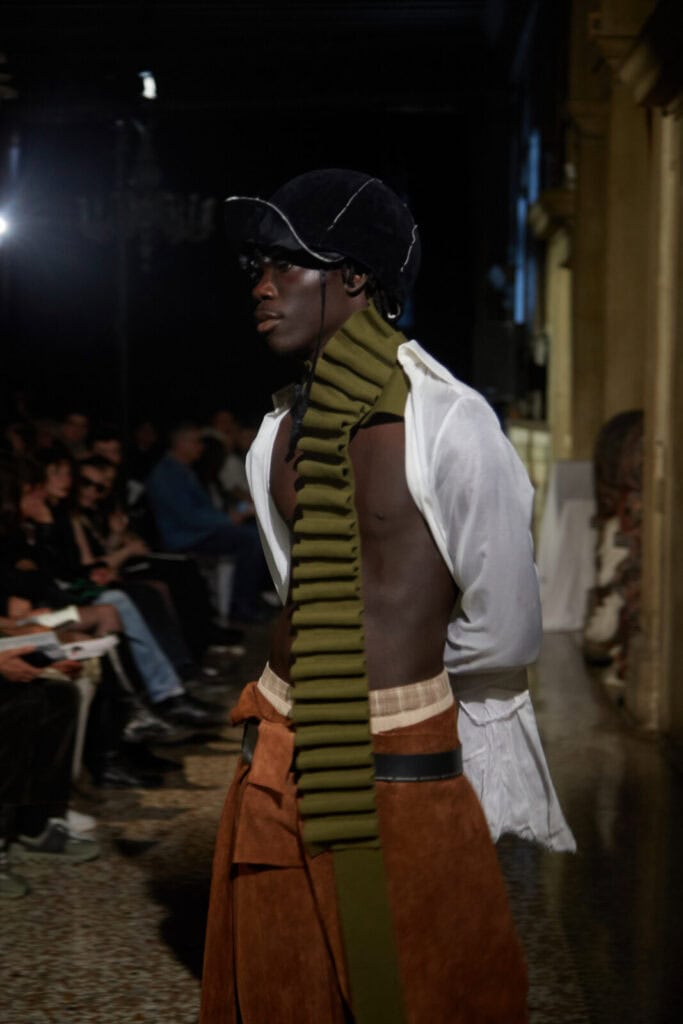
Fashion needs a reduction of excess and image-driven production. My work focuses on geometric constructions, limited cuts and near zero-waste systems. I leave the selvedge visible not as decoration, but as a trace of the material’s origin and as a possible starting point for future transformation — something understandable, adaptable and capable of being dismantled and rebuilt without losing the material itself.
I’m not interested in dressing the body. I’m interested in tailoring new behaviours around it.