
Mayfair isn’t somewhere I usually romanticise. It’s an area of London that used to signal old money and inherited grandeur. Nowadays, it feels closer to a kind of expensive kitsch, more akin to a collision between private members’ clubs and tourist-focused establishments.
Tucked away, amidst the chaos of the heaving streets, Montcalm Mayfair feels like an anomaly. It sits just far enough off the main Oxford Street drag (a three-minute walk, to be exact) to register as its own little pocket. It’s not quite a cul-de-sac, but it sort of behaves like one.
As you turn onto Wallenburg Place, the noise drops. There are no overstimulated tourists shouting outside American candy stores, no clouds of watermelon-sugar vape drifting past your face in the never-ending queue to Roxy, threatening to physically blow you into a decision you swore you wouldn’t make: going inside.
This corner of London has always been good at that: at the expensive, slightly-superficial kind of glamour that still works on you even when you think you’re immune. Lilli by Akira Back, thankfully, doesn’t do the typical Mayfair thing of making you feel like you should be grateful to be there. It’s refined but warm, and inviting where it counts. The restaurant sits inside Montcalm Mayfair, all quiet luxury and garden-inspired interiors (our waiter later tells us that their garden is the mark of the restaurant, and that each Montcalm hotel location has its own distinct mark).
Once you’re seated, the tone of the evening becomes clear. Our waiter Carlos deserves immediate credit. In a room this polished service can quickly become stiff, but he kept it lighthearted, humorous and relaxed – the kind of hosting that makes you feel instantly at ease.
The menu does the rest. Built for sharing, plates arrive steadily until the table feels busy and abundant, and you realise somewhere along the way you’ve ordered far more than initially planned.
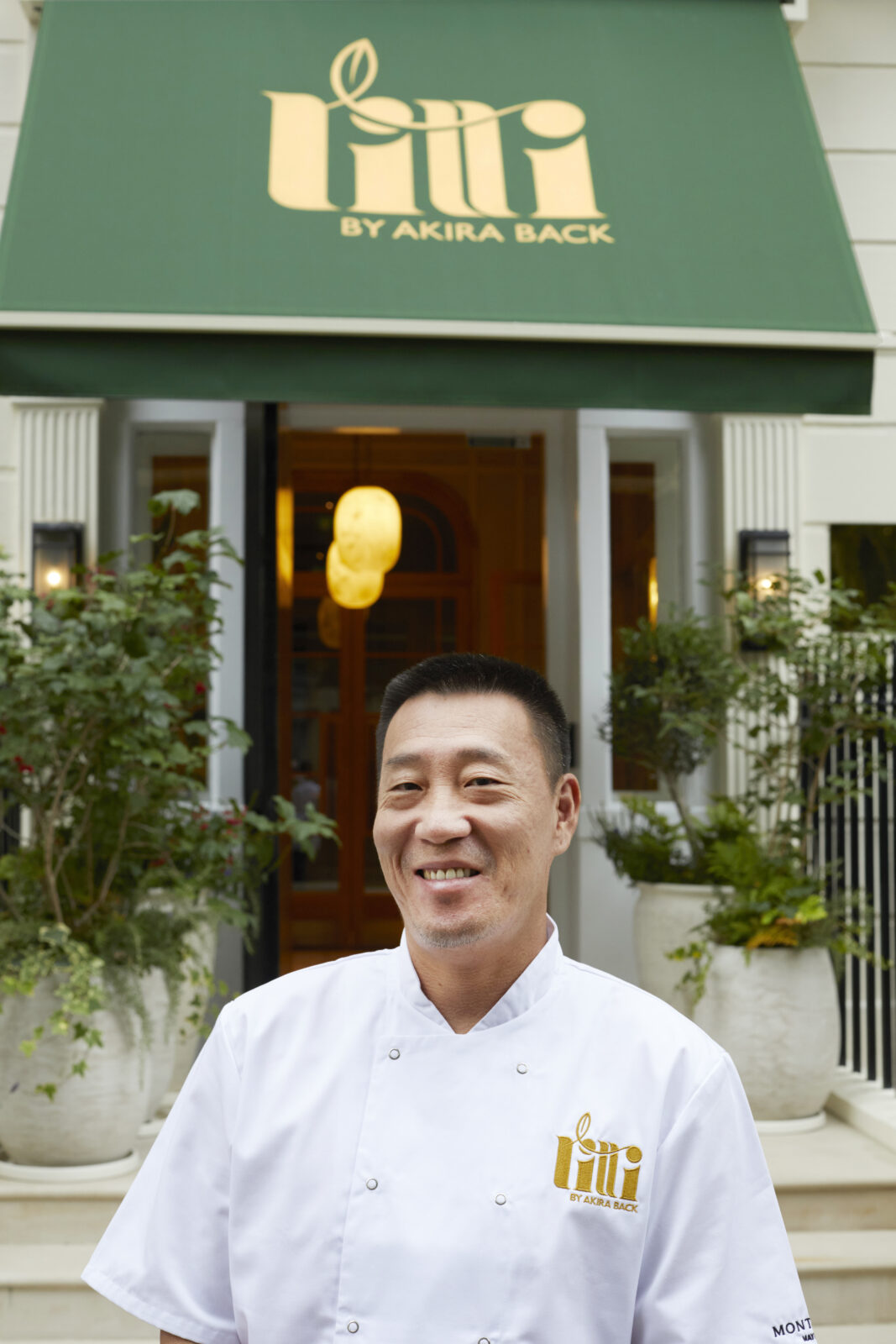
The name on the menu, of course, carries its own weight. Akira Back is now a global dining force, with more than 30 restaurants operating across cities from London and Paris to Dubai and Riyadh. Born in Seoul and raised in Aspen, Colorado, Back’s career began nowhere near a kitchen. He actually spent years on the professional snowboarding circuit, even appearing in extreme sports films, before taking a job in a Japanese restaurant to support himself.
Eventually, this adrenaline rush shifted from the mountains to the kitchen, and after seven years of competing, he trained formally at the International Culinary School at The Art Institute in Colorado.
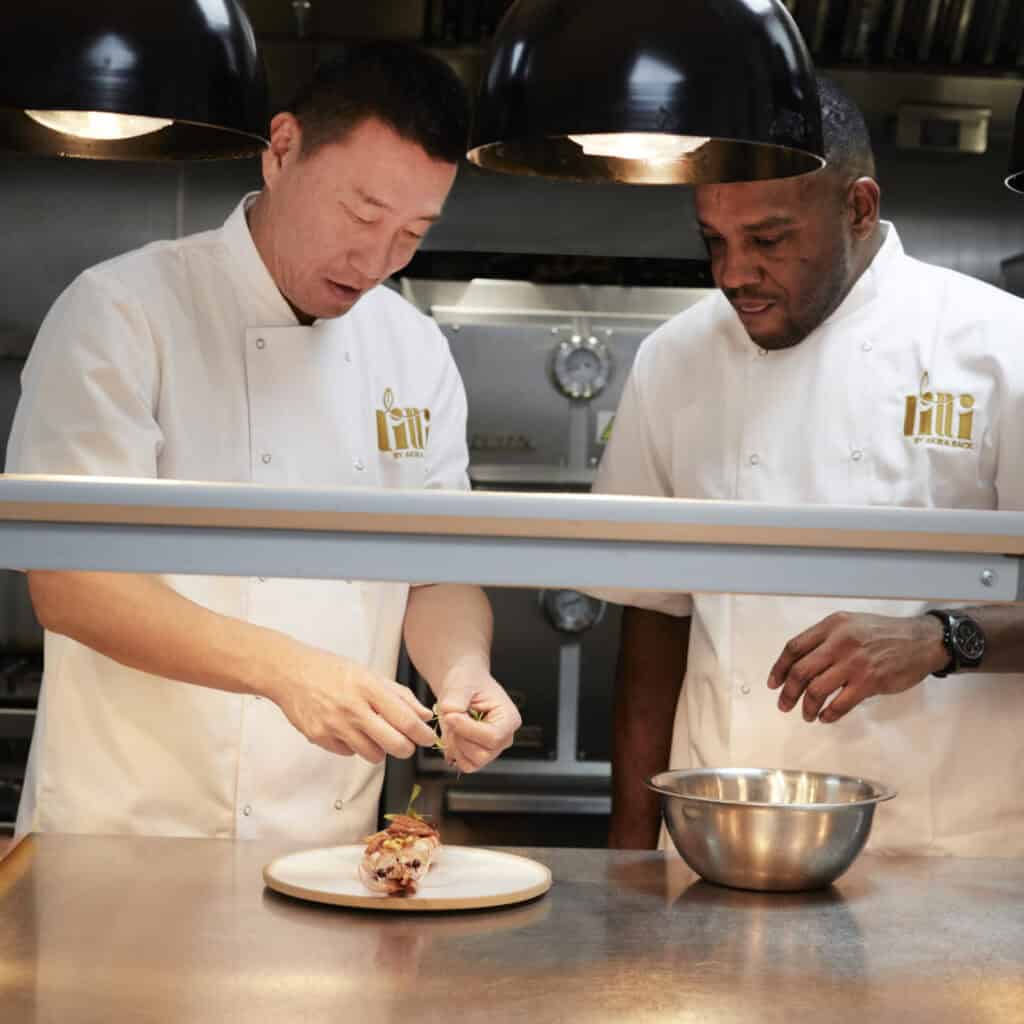
In Lilli by Akira Back’s kitchen, Back’s vision is translated day-to-day by Head Chef Roger Hutchinson, whose job is essentially to deliver ‘Akira Back’ in a London accent. As Hutchinson puts it: “My role is to cook within Chef Akira’s culinary DNA and reinterpret his vision with respect. The flavours, balance and techniques must stay true to his Korean roots and Japanese precision, while the overall experience feels intuitive for London’s diverse guests.”
Hutchinson describes the guiding principle simply: “If it tastes unmistakably like Akira Back, yet feels effortless to eat here, then we’ve got it right.”
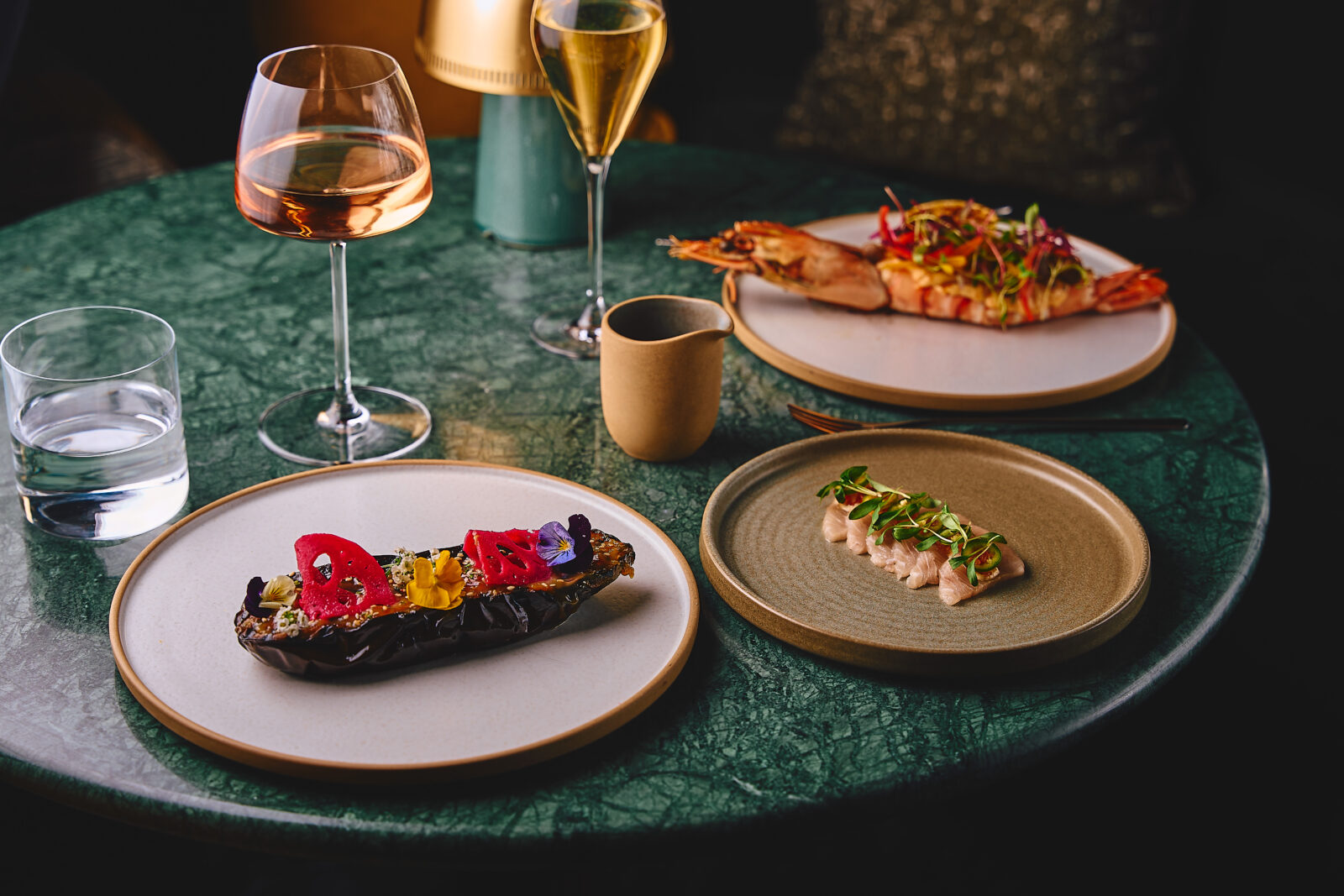
We began with one such dish: the tuna pizza. The crisp crust does half the work, providing structure and flavour without becoming dry or distracting. Meanwhile, thinly sliced tuna, umami aioli, and white truffle oil finish off a plate that feels both indulgent and fresh. It’s a difficult balance to pull off, and a far cry from the pizzas I grew up with. But it isn’t trying to be anything it’s not, and in its own way feels special and strangely homely. Alongside it, the yellowtail serrano (yuzu soy, micro coriander, tomato salsa) leant into freshness and acidity with an elegant finish.

From there, the menu expands into crunchy, saucy territory. The rock shrimp with gochujang yuzu aioli was addictive in its first bites – well-spiced, though undeniably rich. The portion is generous, and the sauce is glossy enough that it becomes a full-bodied dish rather than a mere starter.
You’ll also find calamari paired with yuzu goma sauce and burnt lime. The sauce was interesting, sitting in a similar citrusy-saucy orbit, which can feel a little repetitive if you order both. That said, either dish does what they’re intended to do: bring texture to the table.
The softer dishes really won me over. The eggplant miso (den miso, pickled lotus root, edible flower) was one of my favourites of the evening – light and delicate, cooked to perfection.
The tuna mini tacos – with crispy wonton, spicy tomato ponzu, red onion, cilantro, and jalapeño – were playful, snackable bites. The crunch of the shell, the creaminess of the topping, and the fresh flavour of the fish seamlessly balanced one another. The bread deserves a mention too, paired with gochujang butter: spicy and creamy in all the right ways. This particular combo has already made it onto my list of butter recipes to attempt (and probably fail) at recreating.
The standout quality of many of the dishes comes back to the restaurant’s approach to localisation. Menus are built around available ingredients, adjusting to what’s around the dish without erasing the dish’s identity.
“In practical terms, it’s mainly about ingredients and seasonality,” Hutchinson explains. “We respond to where we are without losing who we are. We use British produce where it makes sense and adapt dishes so they feel comfortable on the plate for a London guest, without changing the core flavour profile.”
The line between adapting and diluting is clear: “If a dish loses its identity or its edge, we don’t do it. The techniques, seasoning and overall profile must always read as Akira’s style.” That philosophy becomes most tangible once you reach what is, without question, the star of the night: the beef wellington.
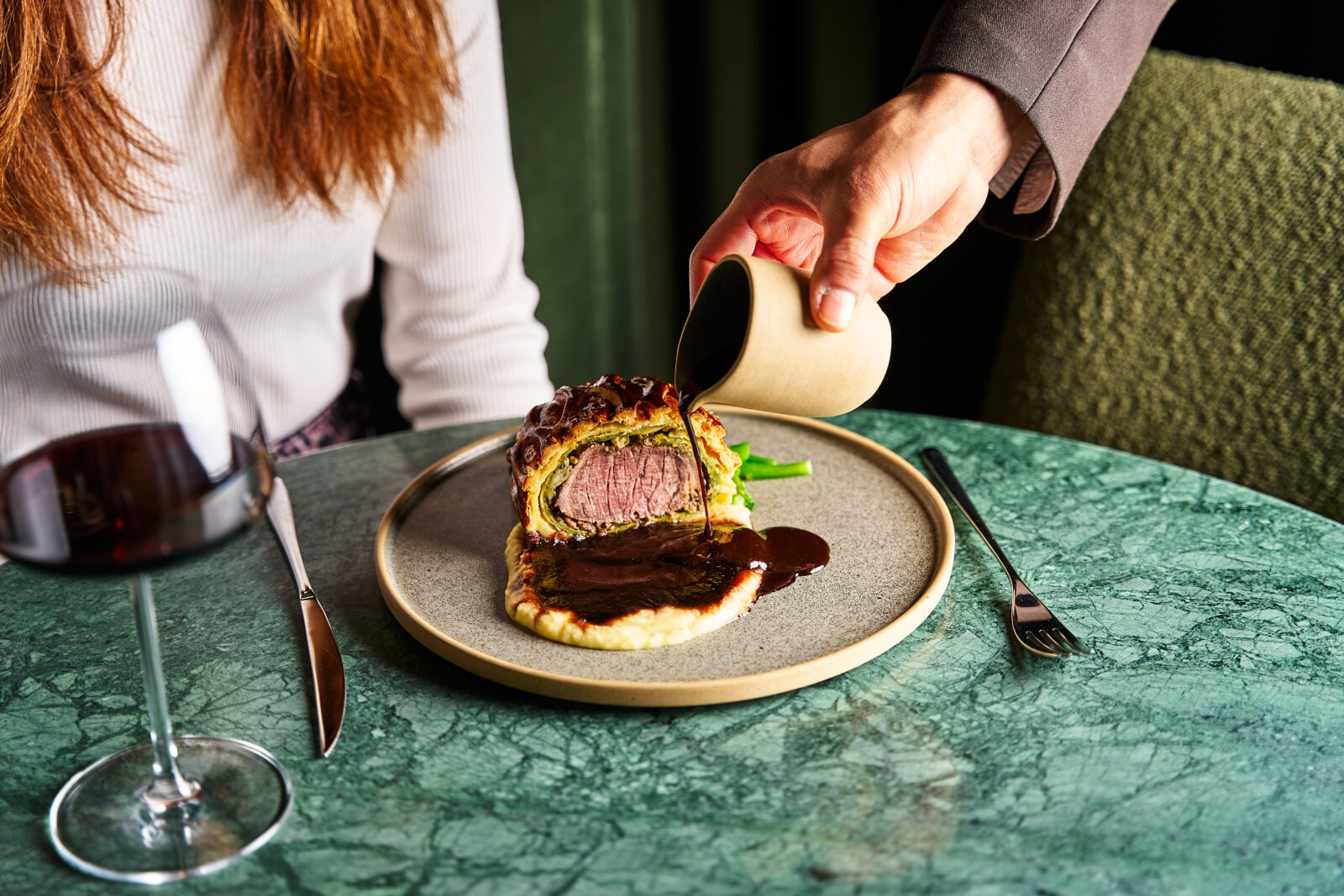
It’s genuinely excellent, impressive without being performative. The meat was perfectly cooked, tender and rich. The pastry was crisp and structured. The mash alongside it was exactly what it needed to be: soft, indulgent, and honestly one of the most satisfying features on the table. I’ll admit I’m something of a mash aficionado (my go-to side order in Paris, where they always know best), and this rendition more than held its own. It justifies the whole concept of “Mayfair dining” in one plate.
Hutchinson agrees. When asked what dish best sums up the restaurant’s identity, Hutchinson points to this one immediately: “The beef wellington with white kimchi is probably the clearest expression of what we do at Lilli by Akira Back. It takes a very traditional British dish and reframes it through [his] lens.”
The genius is in how the traditional backbone is slightly altered without ever being destroyed. “The structure is familiar,” he says, “but the white kimchi introduces fermentation, acidity and a Korean influence that completely changes the experience.” It’s bold, but not over-the-top: “confident, balanced and slightly unexpected,” as Hutchinson puts it. This reflects the kitchen’s entire logic: “It defines how we work in the kitchen: familiar formats, with Akira Back flavours at the centre.”
Wine flowed easily alongside the meal. A 2023 Sancerre blanc paired beautifully with cold starters and fish. Meanwhile, a 2020 Rioja crianza was later introduced to the table, which was perfectly paired with the wellington.
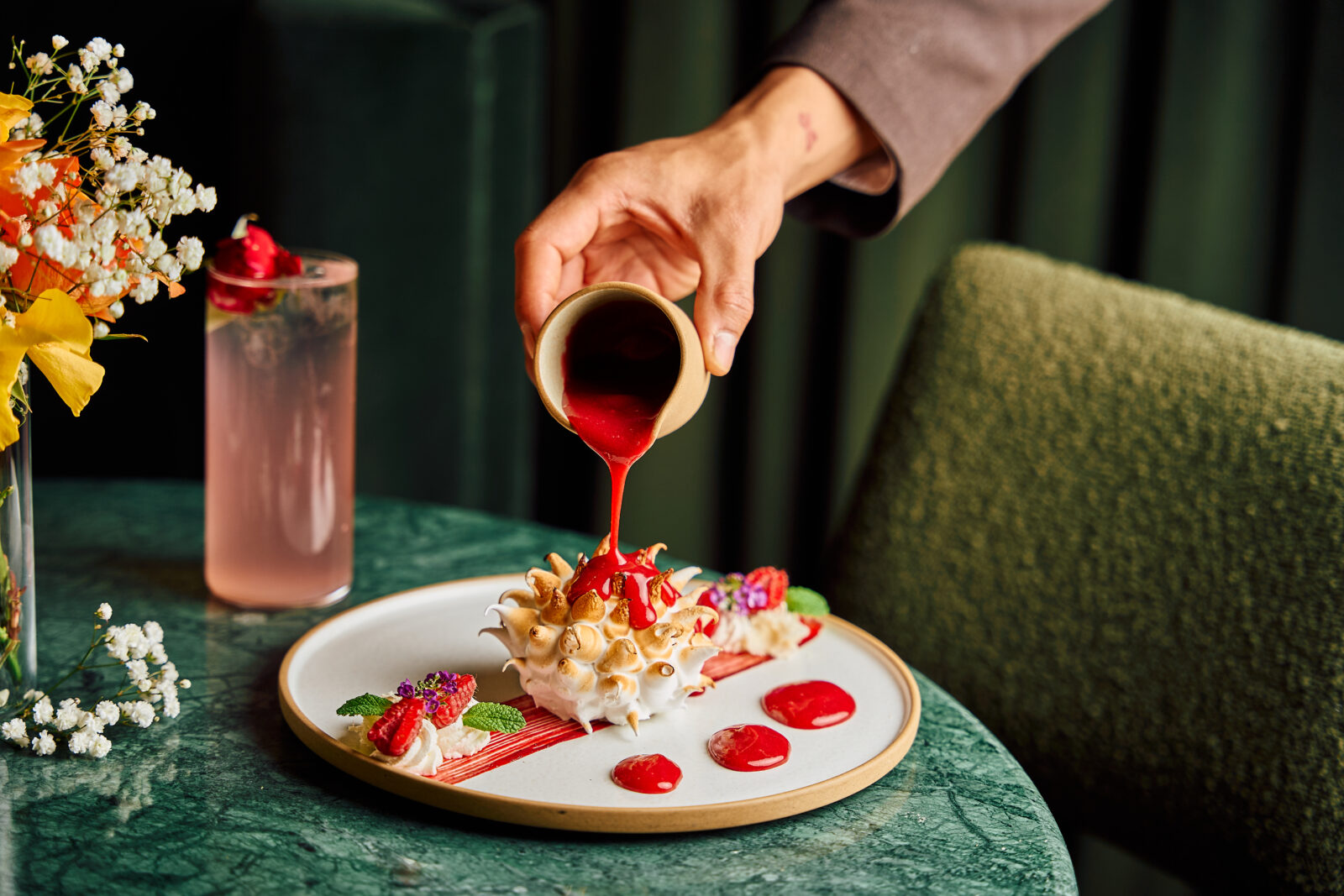
A baked Alaska finished up our meal: generously sized with raspberry cream and vanilla ice cream, very sweet and nostalgic. Though this dessert is definitely one to share, unless you’re feeling extra brave.
“We will continue to celebrate seasonality and refine the menu as our understanding deepens, of produce, of technique, and of our guests,” Hutchinson explains. “There’s real potential to push the balance between comfort and innovation even further, while staying true to Akira Back’s core philosophy.”
The ambition is for the restaurant to grow into something that sits comfortably in its location and in the wider culinary world: “Lilli by Akira Back can continue to grow into a restaurant that feels internationally relevant, while being firmly rooted in its local context.”
The goal, ultimately, is that, “guests leave feeling they’ve eaten something familiar, but in a way they haven’t experienced before.” Against my better judgement, you’ve got to hand it to the place – it works. You leave full and impressed. Which, in this part of London, feels like no small thing.