
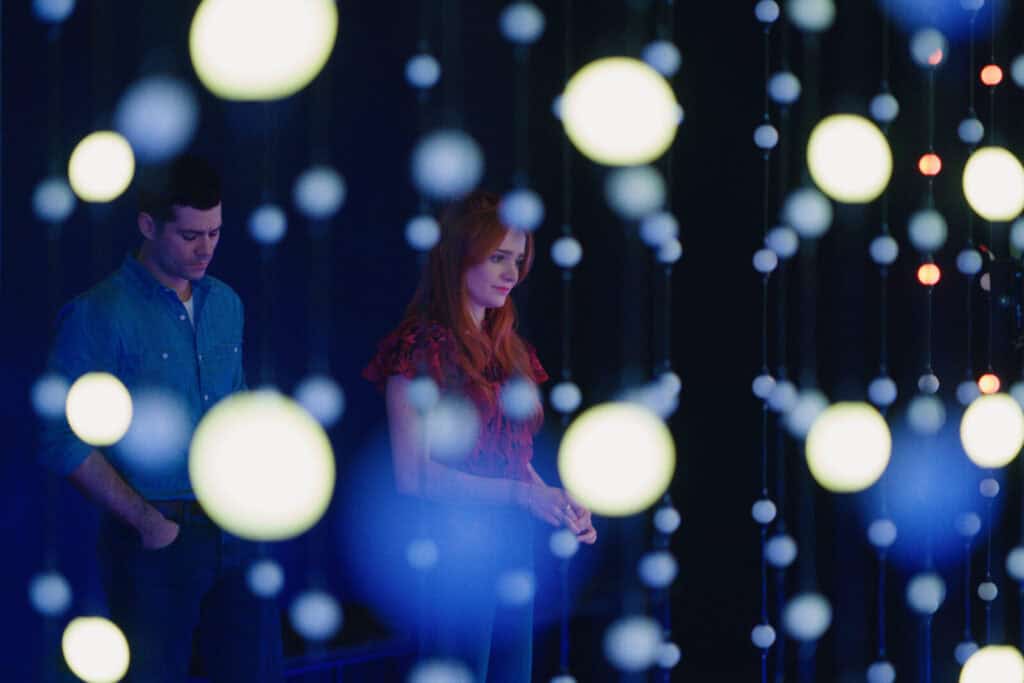
Have you ever wondered what it would be like to have a twin? For most of the population, myself included, twins are a mysterious blip in the gene code, a fun if bizarre dynamic from an outsider’s perspective, sweet and creepy and beautiful all at once. James Sweeney’s Twinless, which he writes, directs, and stars in, drops us straight into the centre of those complex feelings. The film unfolds as his character, Dennis, meets the brooding Rocky (Dylan O’Brien) at a support group for people who have suffered through the death of a twin.
Dennis quickly develops feelings for Rocky, whose grief is tangled with a sense of inferiority towards his brother, who in turn was everything Rocky wasn’t: intelligent, charming, confident and gay. He first finds solace in friendship with Dennis and, soon thereafter, with Dennis’ co-worker Marcie (Aisling Franciosi), a bright light to Dennis’ snarky sarcasm.
Sweeney somehow steers Twinless through a series of bizarre turns, balancing humour, shock and aching grief against all odds. At the heart of the film’s success in navigating these tonal shifts are the three core performances. In conversation with The Cold Magazine, Aisling Franciosi reflects on her time on set and her portrayal of sweet, beaming Marcie. Twinless arrives in cinemas on 6 February.

The Cold Magazine (CM): This is such a unique film: funny and sad and incredibly bizarre. What did you first think of the script when you came across it?
Aisling Franciosi (AF): I remember reading it and thinking that it felt very fresh, that I couldn’t easily categorise it in a single genre, and that was intriguing. As you say, it’s funny and dark and moving, and James did such a great job of balancing the tightrope of tones. It was also a very, very entertaining and funny read so I was excited at the prospect of being a part of a comedy – something I’d never really been given the chance to do.
CM: I thought one of the funniest moments in the film, out of many funny moments, was Dennis assuming that Marcie would be friendless. What was the atmosphere like on set when it came to finding the humour – was there much room for play or improvisation?
AF: I had so much fun on this job, truly. James and Dylan were so warm and generous and, because I was often in the lighter scenes, there was a lot of laughter between takes. James has such a clear and particular vision and rhythm to his writing that I didn’t indulge in much improv as what he’d written was already so good.
CM: Marcie is such a specific presence in the film. She’s joyous and bright, especially in contrast to Dennis’s meanness and Roman’s grief. How did you approach playing her within that emotional landscape?
AF: I think, in part, I was just so excited to be playing an upbeat and positive character for once that my natural excitement bubbled up and out into Marcie! Of course, James’ writing was also a great roadmap so a lot of Marcie was already on the page. She is a very sincere person so I just tried to portray that sincerity in everything she said and did, even in the slightly ludicrous moments.
I tried to really find the genuineness in what she was saying. I love that she acts as a counterpoint to Dennis’ scepticism and Roman’s grief and anger. She is a sort of beacon of light showing them the way – guiding them by showing them grace and kindness in their less than perfect moments.
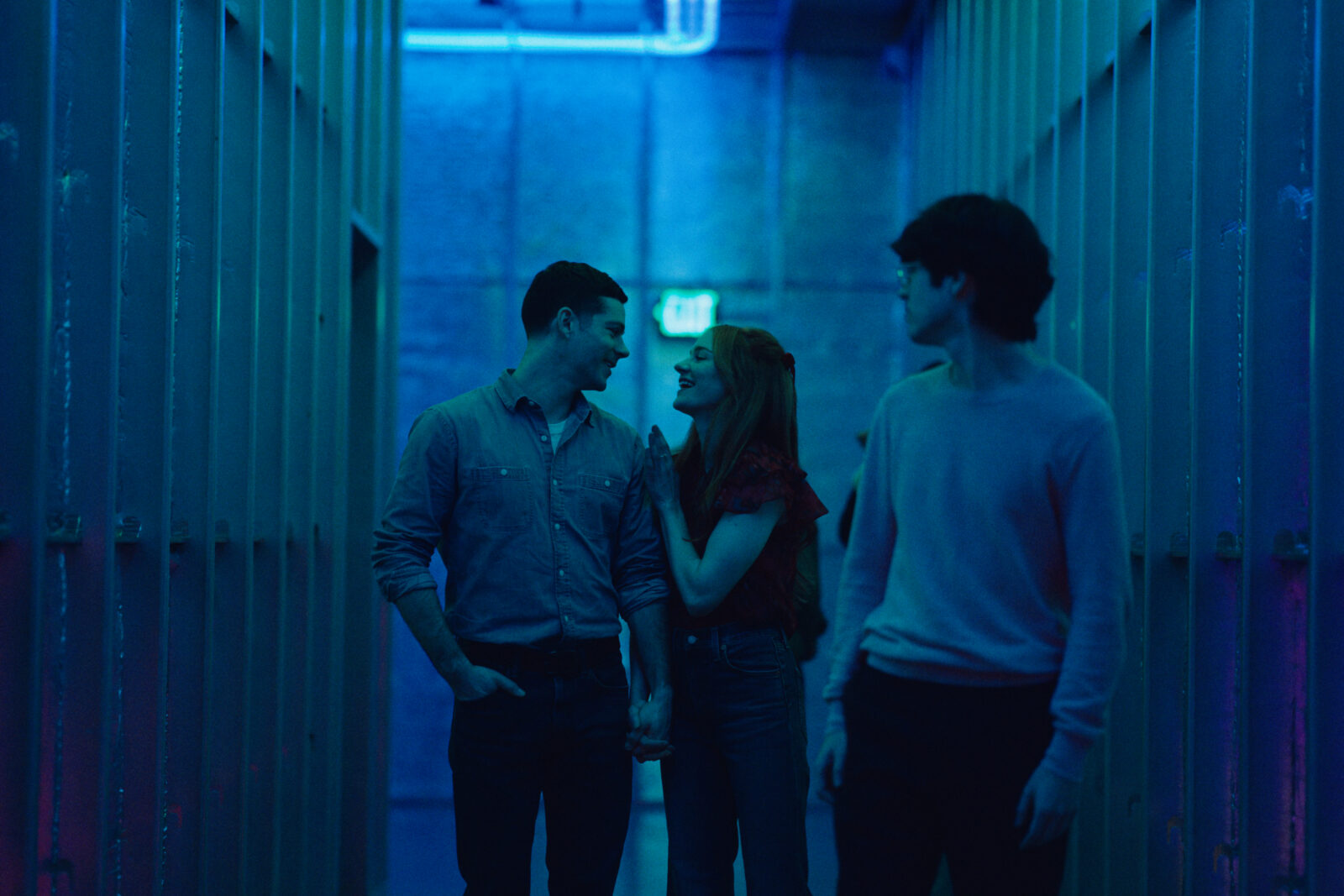
CM: I love that Marcie avoids stereotypes. She may be sweet and upbeat, but she’s also clearly very intelligent and deeply aware of her surroundings. What was it like balancing those qualities, especially in the moments where she stands her ground?
AF: I think James did a very clever thing in how the film reveals Marcie… It’s almost as though we see her initially through only his eyes. She seems a little basic, very vanilla. But as the film progresses we see that she is so much more than that. That his judgment of her has been clouded by his cynicism. I think a lot of us can judge people who choose (because it is often a choice) to be positive, to be kind and forgiving and open hearted.
Ultimately, we see that she is intelligent, has morals and can stand her ground – it’s just that she does so while trying to see the world in a positive light.
CM: Did working on this film make you think differently about twin relationships, or even sibling dynamics more generally?
AF: It honestly just made me feel so grateful for the relationship I have with my family and friends.
Dennis makes very questionable choices but his behaviour comes from a place of deep, deep loneliness and a desperate need for connection. And I think there are a lot of people feeling isolated in this way these days…

CM: It felt like Marcie was exactly who Roman needed at that moment in his life. Did you think about the gender dynamics in how she supports and complements him, particularly in a film that plays so fluidly with ideas of identity?
AF: That’s an interesting question… To be honest I didn’t really think about it from the gender dynamic (aside from the fact that she is his girlfriend in a hetero relationship). I just tried to focus on how important the grace she shows him is. He isn’t always his best self and yet she holds his hand through those moments while holding her own boundaries. She sees that he just needs some help and support in order for him to get back to the better version of himself.
CM: Looking back now, what stands out most to you about the experience of making this film?
AF: Just how lovely and unexpected an experience it was. I was offered the role on a Wednesday night and flew out to Portland on the Friday morning for about four weeks of shooting. It was all a bit of a whirlwind! I was pushed outside my comfort zone by doing comedy for the first time and it was so satisfying. It’s always fun to challenge yourself.