
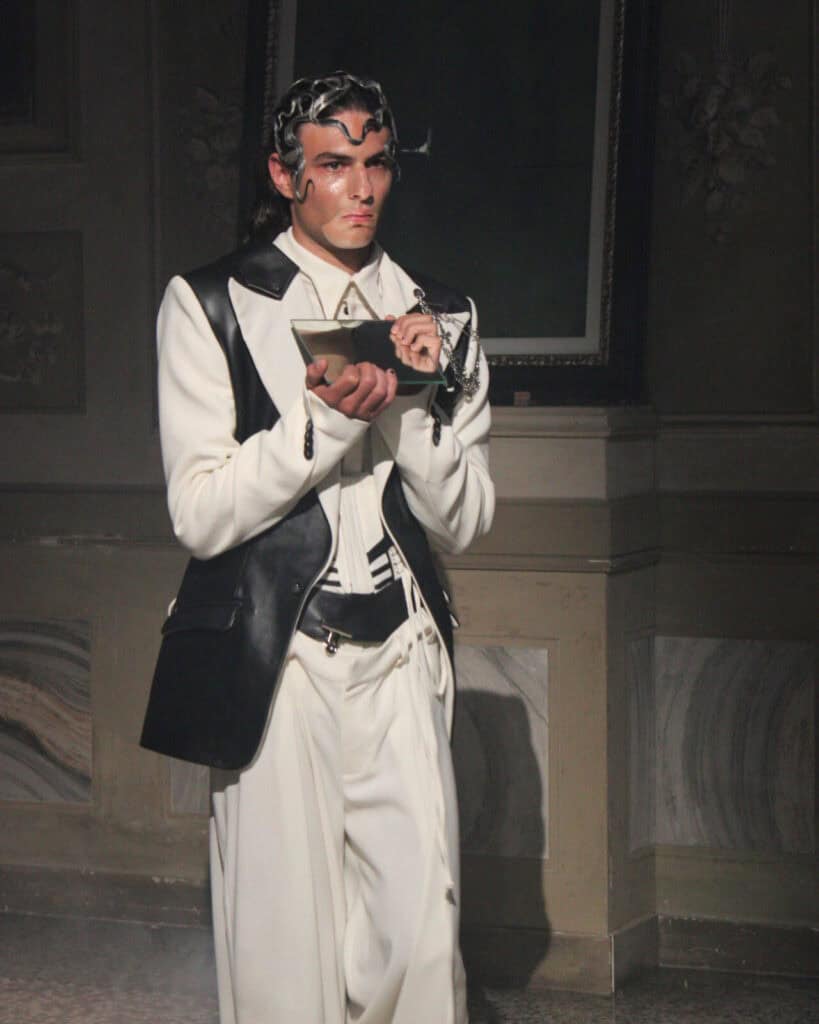
Where are you from, and how much does that place live in what you create?
I’m from Italy and currently based in Milan, a place where the relationship with beauty, materiality, and visual culture feels inevitable. It’s something you absorb almost unconsciously — in gestures, in architecture, in proportions. This background lives deeply within what I create with ALCHÈTIPO — not in a nostalgic way, but as a constant tension between tradition and transformation.
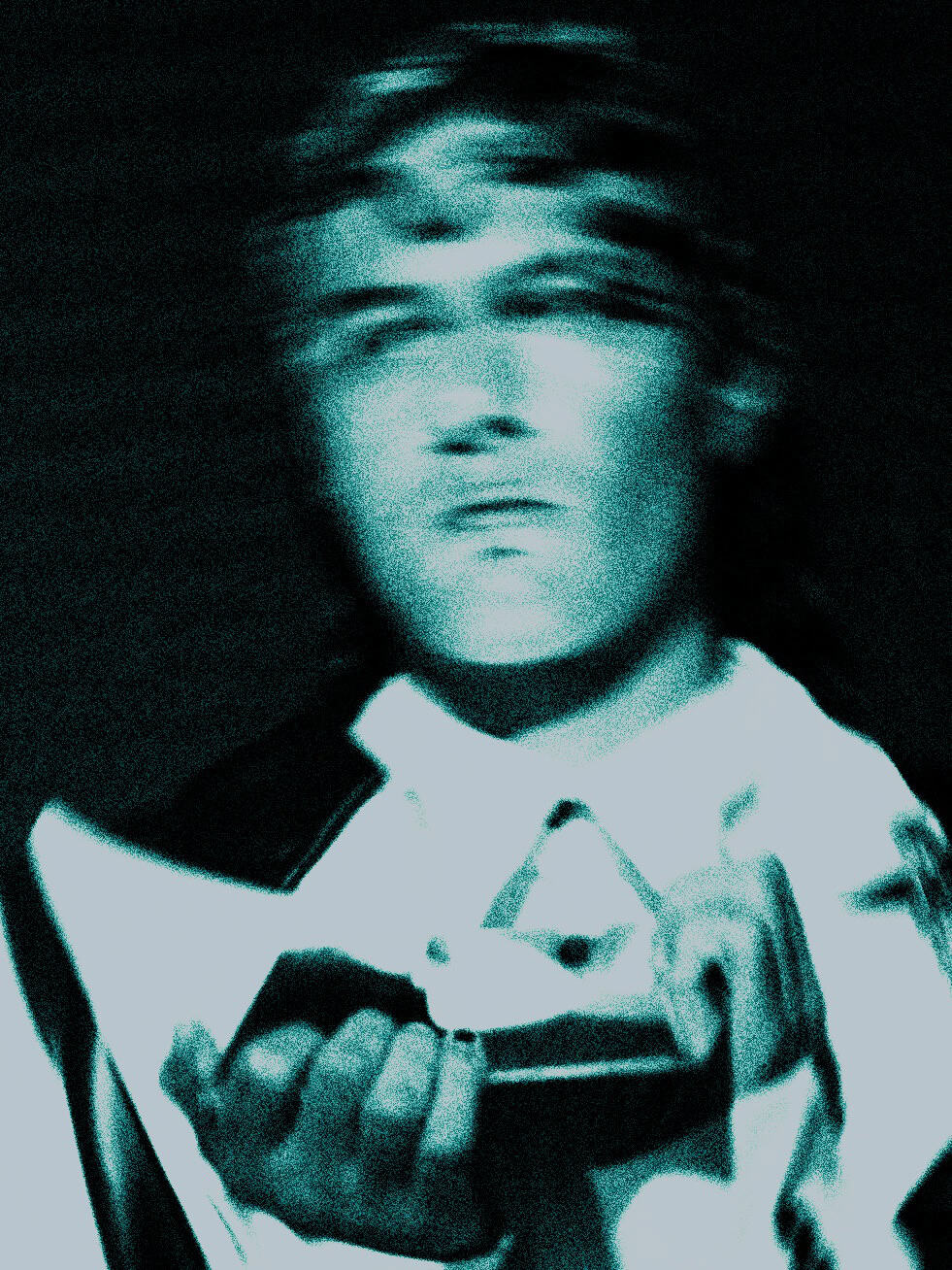
When did you realize this was what you were going to do? Was there a specific moment?
I realized quite early on that fashion would become my language. There wasn’t a single defining moment, but rather a growing awareness over time. Through studying fashion, I began to see design not just as aesthetics, but as a system of thought — a way to express identity and articulate a vision.
What is the first thing you created that you are still proud of today?
The first thing I’m still proud of isn’t a single garment, but the first project where I recognized a clear direction. It was the moment I stopped imitating and started building my own code. That is also where ALCHÈTIPO originates: as a space for research, transformation, and synthesis between what we are and what we can become.
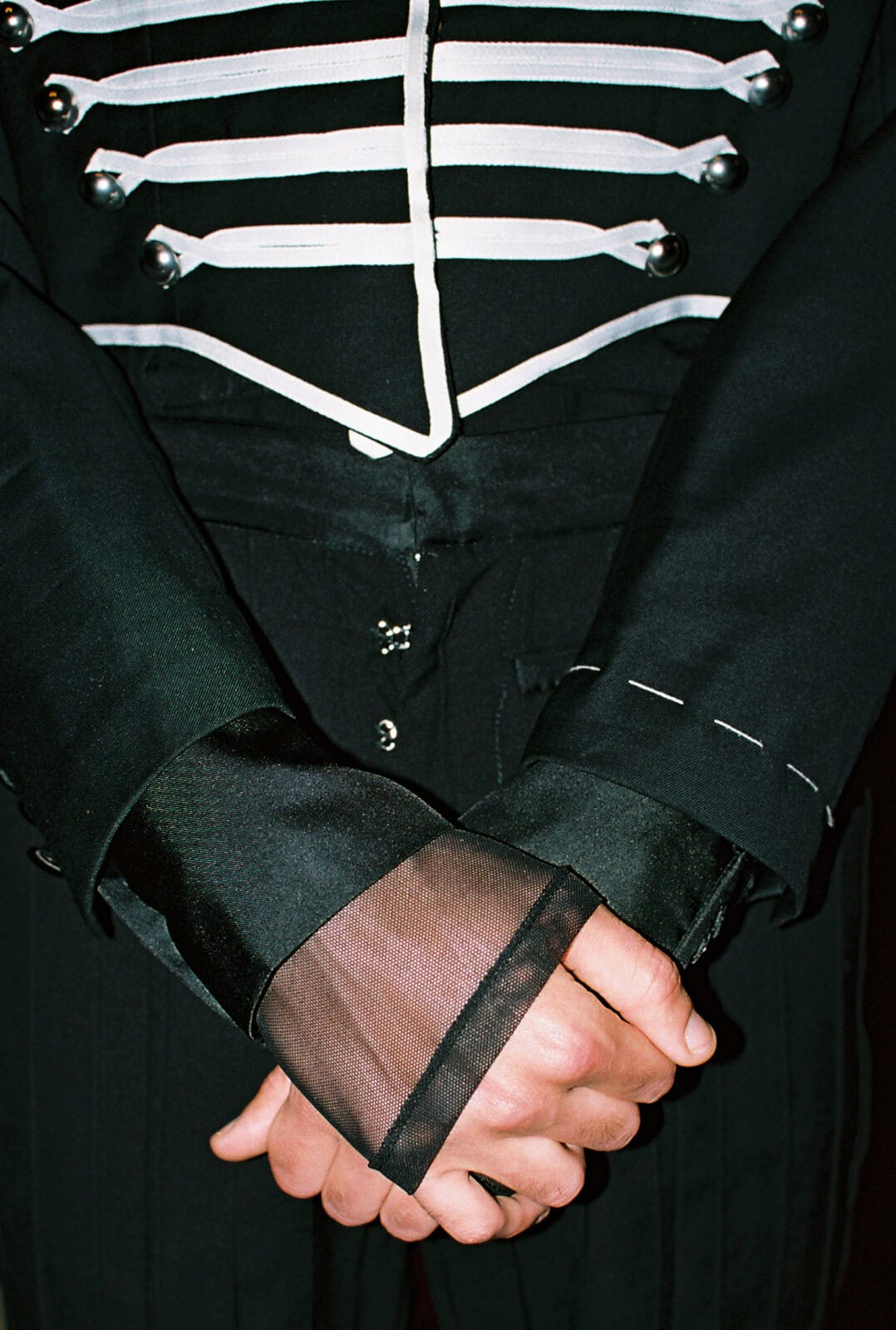
What are you working on right now that genuinely excites you?
Right now I’m working on a presentation for the upcoming Milan Fashion Week in June, which will be included in the official calendar of Camera della Moda Italiana. It’s an important step for ALCHÈTIPO, as it represents not only a new collection but an extension of the project as an experience. Alongside this, I’m continuing to develop the brand as a platform and a community, building connections between fashion, art, cinema, and dance. This cross-disciplinary dialogue is what excites me the most at this stage.
Who would you want to collaborate with — another designer, a brand, an artist, someone completely outside fashion?
I’m interested in collaborating with people who have a strong vision, regardless of their field. Not necessarily within fashion — often, it’s outside of the system that the most interesting connections emerge. Artists, filmmakers, performers — anyone who engages with identity, the body, or storytelling in an authentic way.
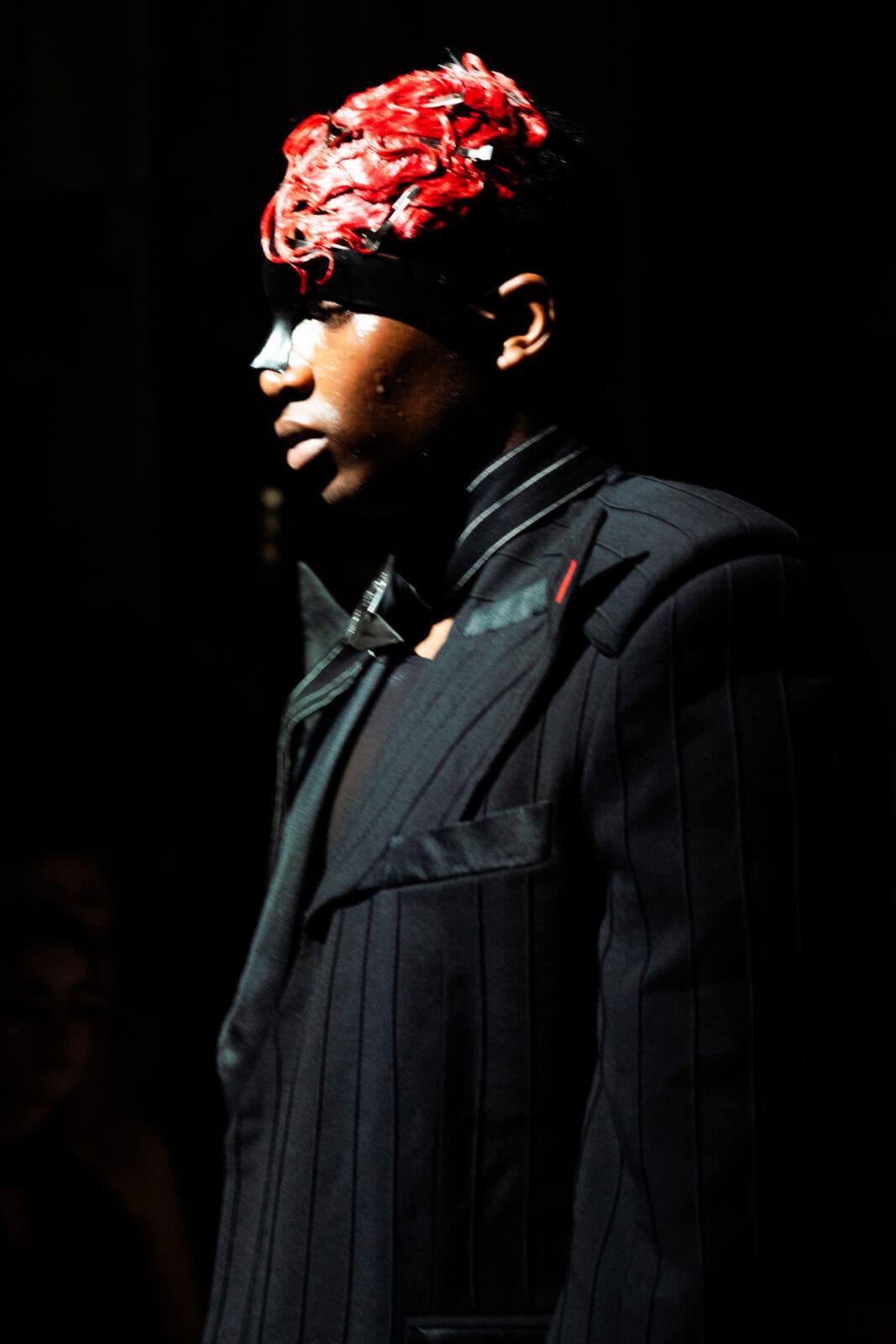
Where do you see your brand in five years: bigger, smaller or more radical?
More radical. For me, growth is not only about scale but about depth. I want ALCHÈTIPO to evolve into a cultural ecosystem, one that goes beyond product and generates experiences, connections, and new languages.
How do you navigate the tension between creative work and financial sustainability?
I approach it by accepting that these are not two separate worlds, but part of the same process. As a designer, you have to learn how to balance creative freedom with the reality of the system you operate in. For me, it means designing with a clear vision, but always within a concrete structure that can support it.
However, it’s not an easy balance, especially for independent designers and emerging brands: you often work with limited resources while still needing to maintain a strong and coherent direction. It’s a condition that requires a lot of awareness, adaptability, and a long-term vision.


