
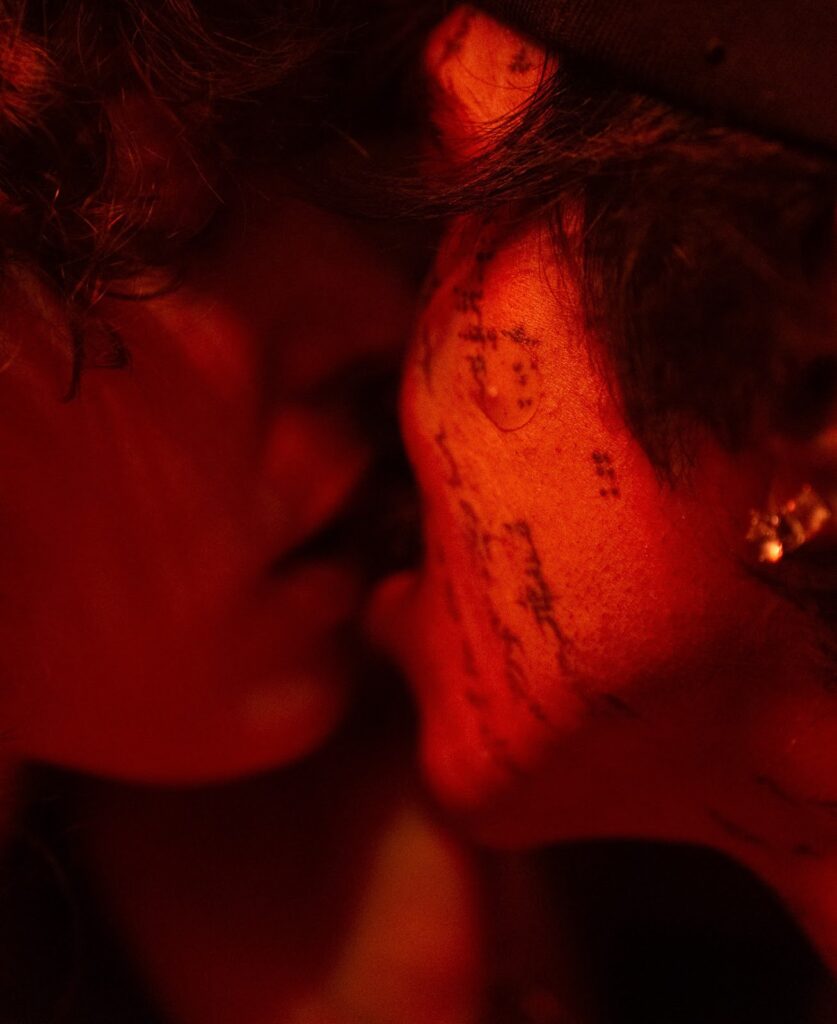
Breathe in. Breathe out. You’ve just performed an exhalation. It is the moment lingering tension leaves the body; the instant after holding, when something internal softens and releases. A subtle shift, not quite absence, not quite action, but a fleeting state of suspension in which something becomes perceptible. It is within this threshold that Alexander Ekholm situates their exhibition: Exhalation.
Presented at Algha’s Plantroom in Hackney Wick, Exhalation marks Ekholm’s first London solo exhibition, situating photography as embodied inquiry. The work centres on “release, intimacy, and emotional suspension”, but what emerges more distinctly is a sustained investigation into how the body mediates identity, perception, and connection within the context of London’s queer social landscape.
The exhibition is structured around a tension between movement and stillness. Ekholm’s images, often drawn from environments of heightened energy, resist spectacle in favour of chaos in a softened form. Rather than asserting narrative, they allow moments to hover in a state of suspension, where gesture, proximity, and atmosphere convey meaning. In this sense, the act of exhaling operates not only as a metaphor for release, but as a methodology: an intentional stepping back that permits subjects to exist without interference. This refusal to over-direct by Ekholm becomes a critical gesture, reinforcing a politics of observation rooted in trust. The result is a body of work presenting the power of the London queer scene, a space where Ekholm feels they have been able to safely albeit critically interrogate their own gender identity.
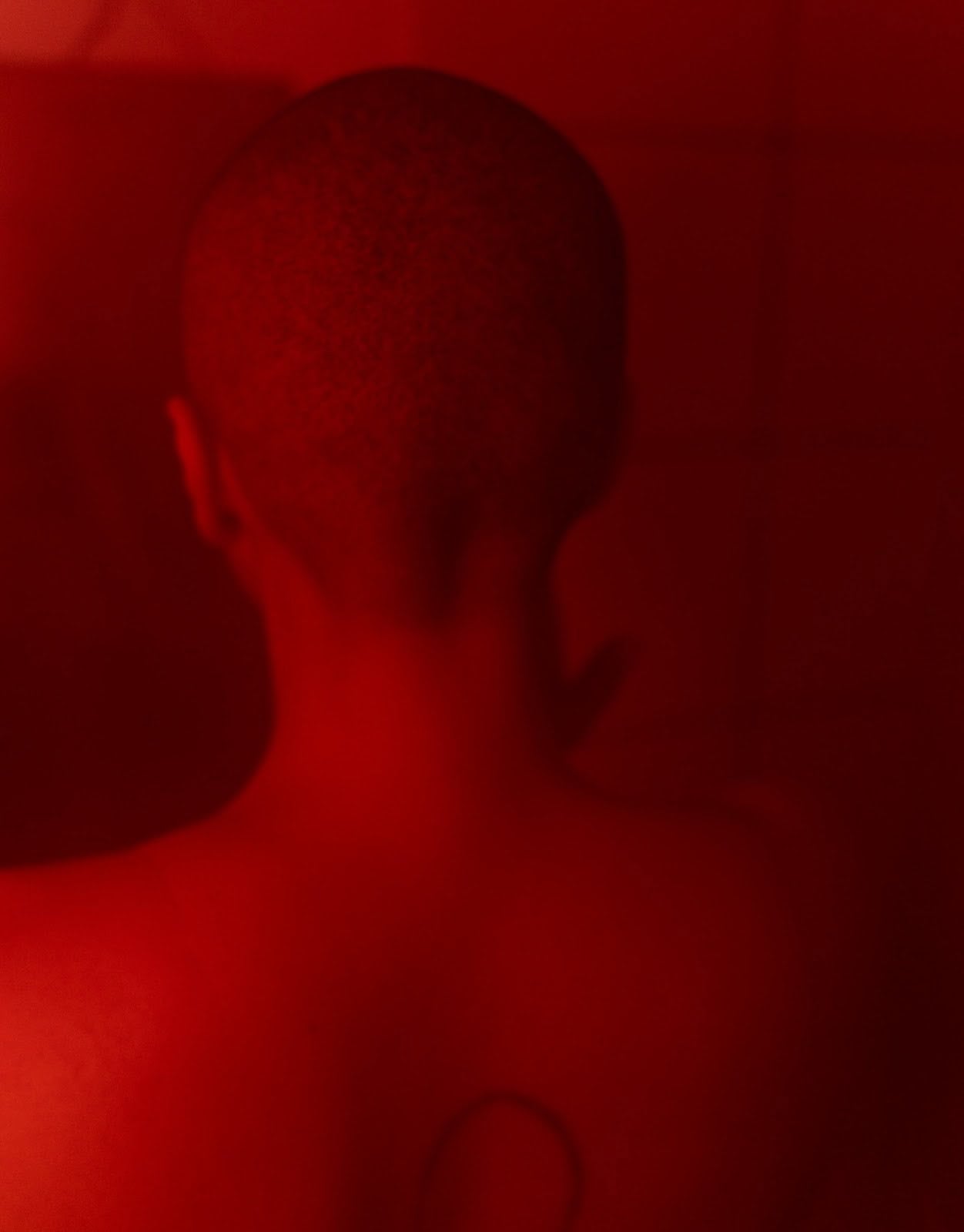
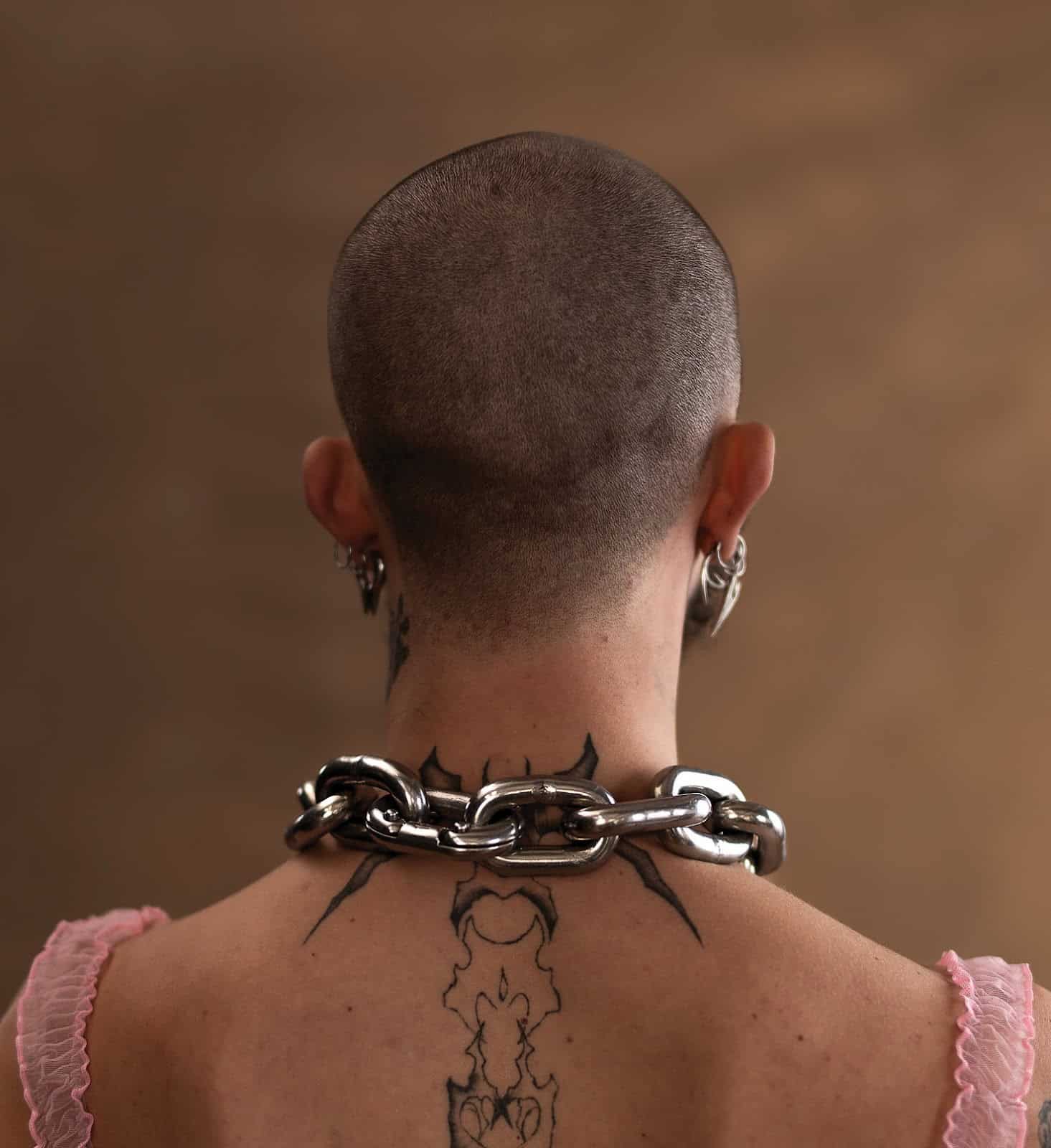
The overall works can be read as a triptych with a decisive flow; the first series being observation, the second self-portrait series as embodiment and the final editorial series as orchestration. This progression is particularly evident in two images that mirror one another across the exhibition: a red-toned photograph from the first series and a later image from the third series, both depicting the back of a subject’s head. In the former, the figure seems to pass through the frame, absorbed into an environment that shares its tonal range, suggesting a kind of anonymity. In the latter, the subject is acutely aware of their presence before the camera, the tension between sheer pink straps and a heavy silver chain showcasing direct contrast between softness and hardness, exposure and control.
Despite these differences, both images retain a sense of vulnerability, unified by the subject’s withdrawal from the viewer’s gaze. Ultimately, either points to a mode of blending within queer spaces, where visibility and concealment operate simultaneously. This sense of camouflage is heightened in the red image through the merging of body and environment, and in the editorial series through a backdrop that echoes the surface of skin, both blurring the boundary between the body and the space it moves through.
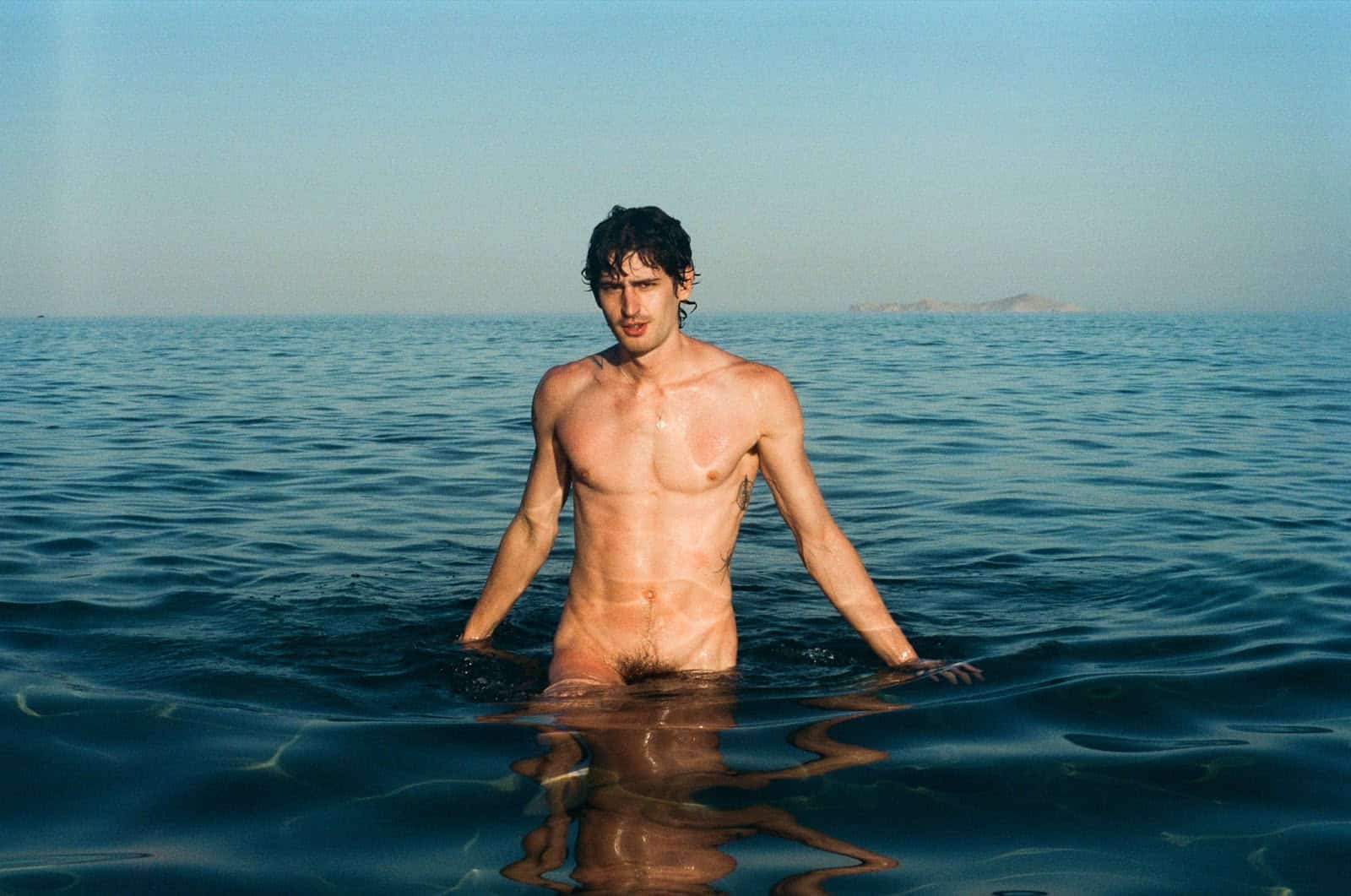
A key thread throughout the exhibition presents the body as both subject and site of knowledge. Ekholm positions movement as a means of understanding emotional states that exceed language. This is particularly resonant in the context of their own trajectory: arriving in London and navigating gender and sexuality through lived, physical experience. This is carried through in the images, where faces are often obscured or only briefly revealed, placing emphasis on the body as the primary site of expression. A singular image disrupts this tendency: a figure emerging from water, their facial expression clearly visible and penetrating. Standing apart from the first series, and notably absent from the red hue that defines it, this moment reads as a point of orientation, preparing the viewer for the more withheld images that follow. Moments of intimacy, whether through bodies leaning toward one another, gestures suspended just before contact, a figure turning in quiet acknowledgment barely revealing their side profile, are held without resolution. This allows emotion to surface through different postures rather than overt facial expressions.


This is further articulated through a contrast in the third series. Here a male-presenting body stands with resolve as it removes a fragile, translucent garment. This scene is set against moments in the first series, in which bodies interlock, soften, and relinquish control through acts of sexual intimacy and exposure (such as urination). Here, the environment and styling introduce questions of visibility, desire, and coded behaviour within queer environments, where glances, gestures, and modes of dress function as quiet signals through which identity and intention are negotiated.
References to cruising culture and the negotiation of identity in public space are suggested through compositional strategies of concealment and exposure using organza and tulle-like materials: for example, a sheer pink brief both conceals and reveals the body, with Ekholm framing the figure from the side to emphasise its translucency and the latent potential for exposure. In this way, Ekholm presents the body in its full range, where strength and vulnerability are not opposing conditions, but coexistent states. There is a resistance to imposing a fixed emotional register, instead creating space for the viewer to recognise the body as something inherently multiple, moving between control and release.
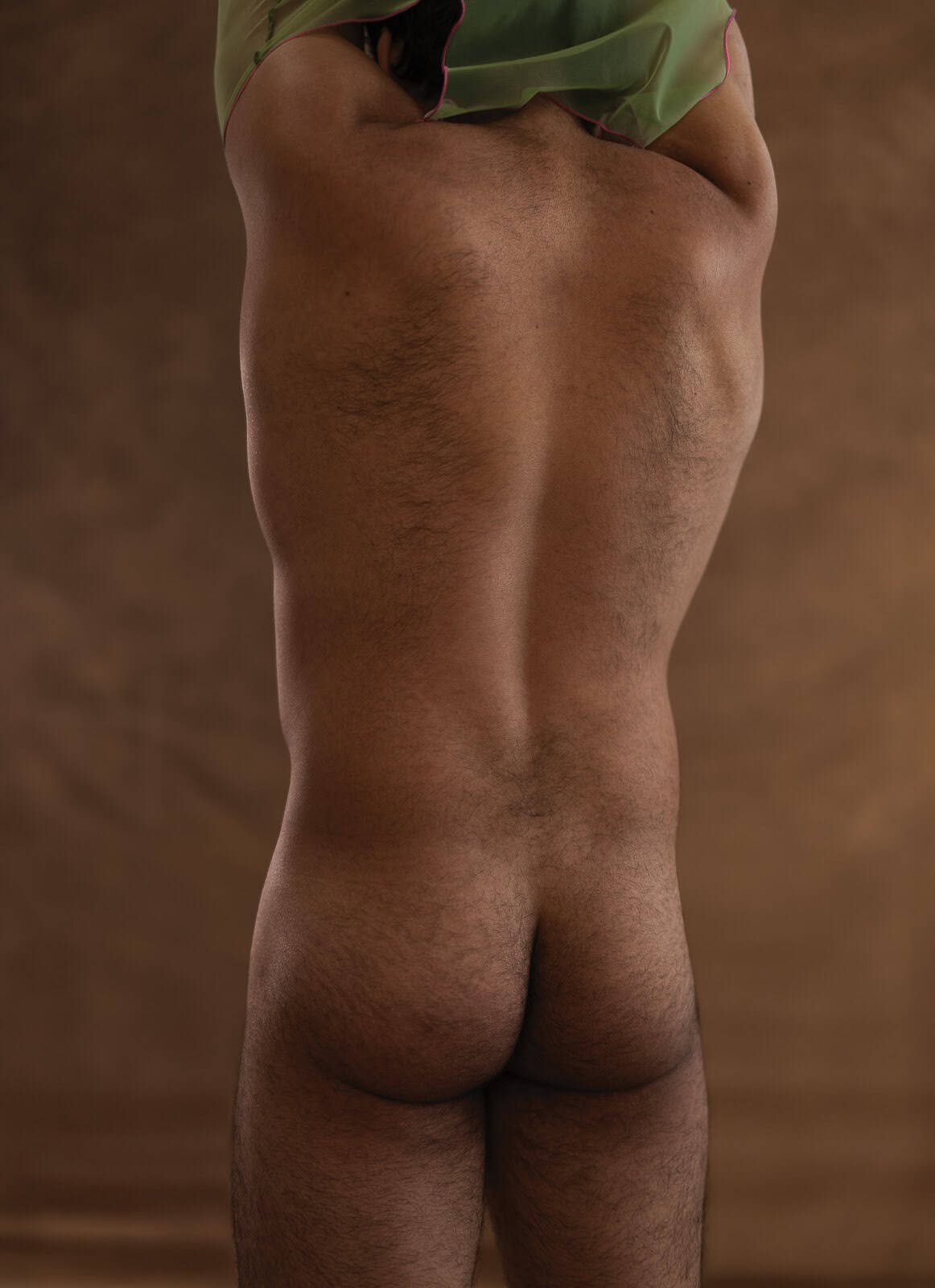
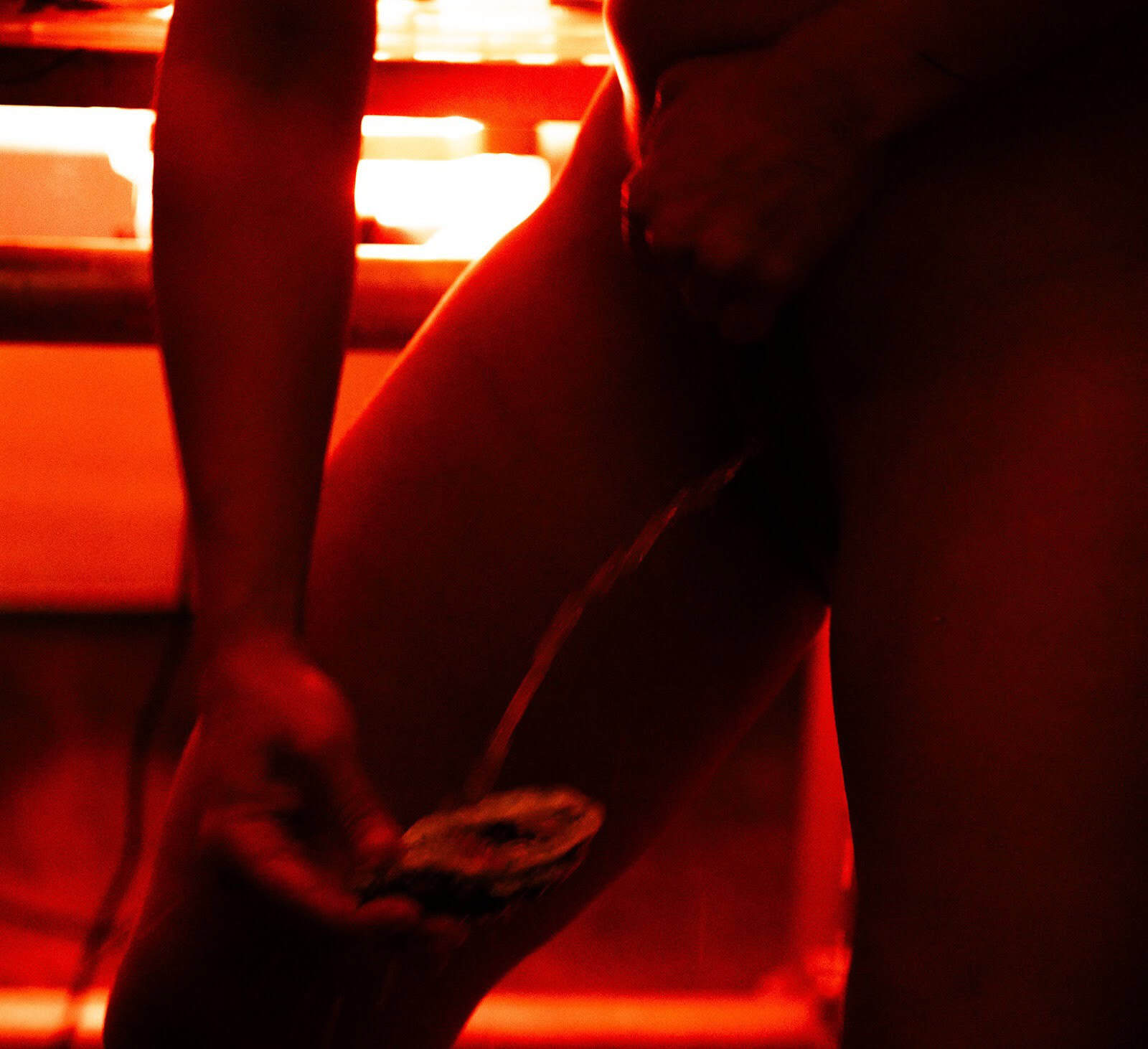
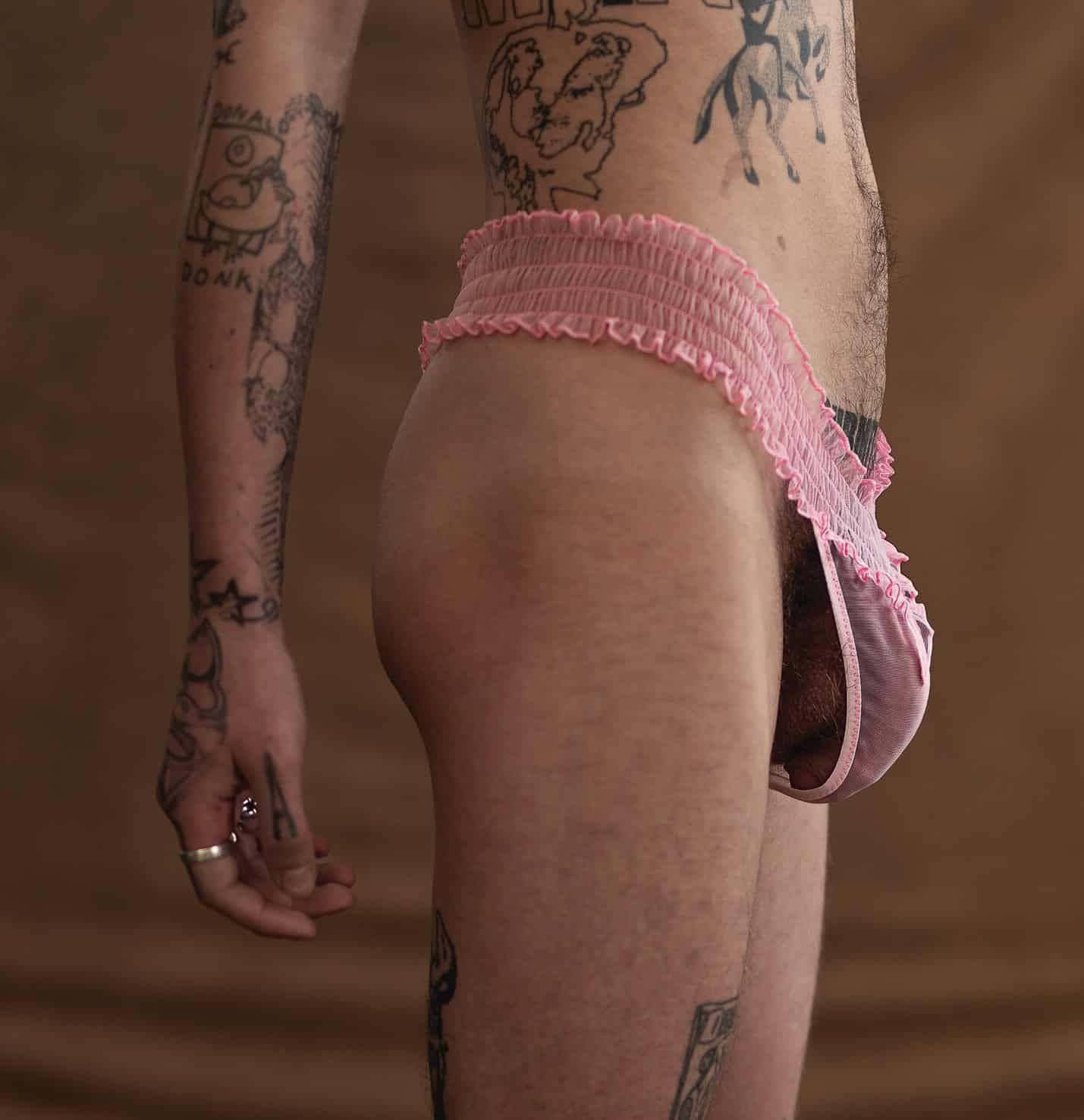
In the self-portrait works, these tensions become the most overt. Positioned between the observational and editorial series, they operate as a hinge within the exhibition, where Ekholm moves from witnessing, to embodying the very dynamics they have previously observed. The body is presented not as an object to be read against external standards, but as an autonomous force, one that determines itself and resists external definition of value. Ekholm’s confrontation with Western ideals of beauty is central here: the images resist the reduction of the body to desirability, instead framing it as a vessel for presence and authenticity. In positioning themselves nude before the camera, Ekholm assumes both the role of observer and subject. Here they relinquish control while maintaining authorship, and in doing so, aligns their own body with those previously encountered.
This is further reinforced through a fragmented visual approach, in which the body is shown in partial views and shifting proximities: a close framing of the space between the genitals and inner thigh, alongside contrasting images of the torso from both front and back. In this way, Ekholm appears to dissect their own body before the camera, mirroring the same attentive, probing gaze previously directed toward others. The recurrence of the same red hue further reinforces this connection, collapsing the distinction between self and ‘the other’ by the artist, and suggesting a shared human condition of exposure and vulnerability. Within this, there is an undercurrent of melancholy, almost a longing, but it is balanced by concurrent acceptance.
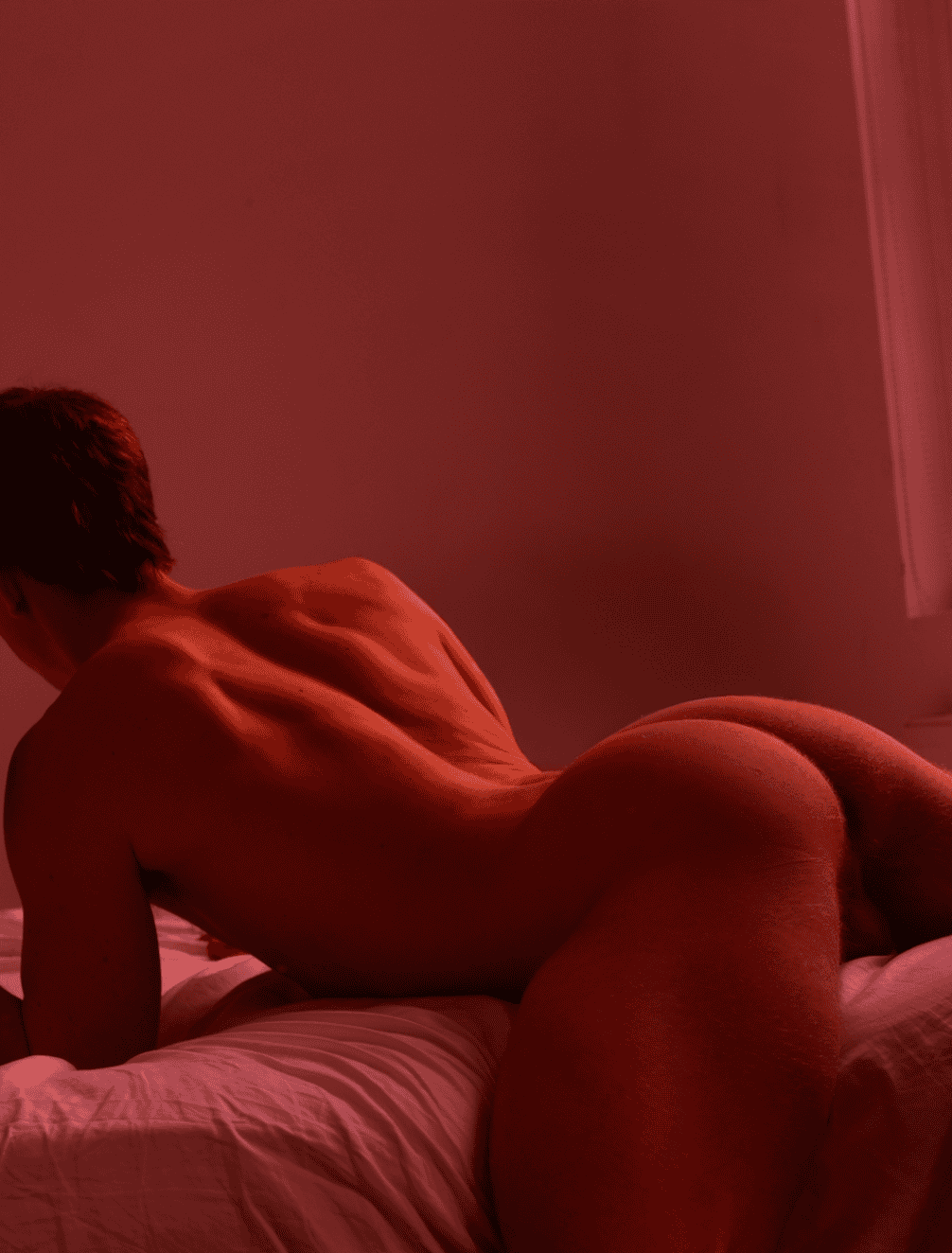
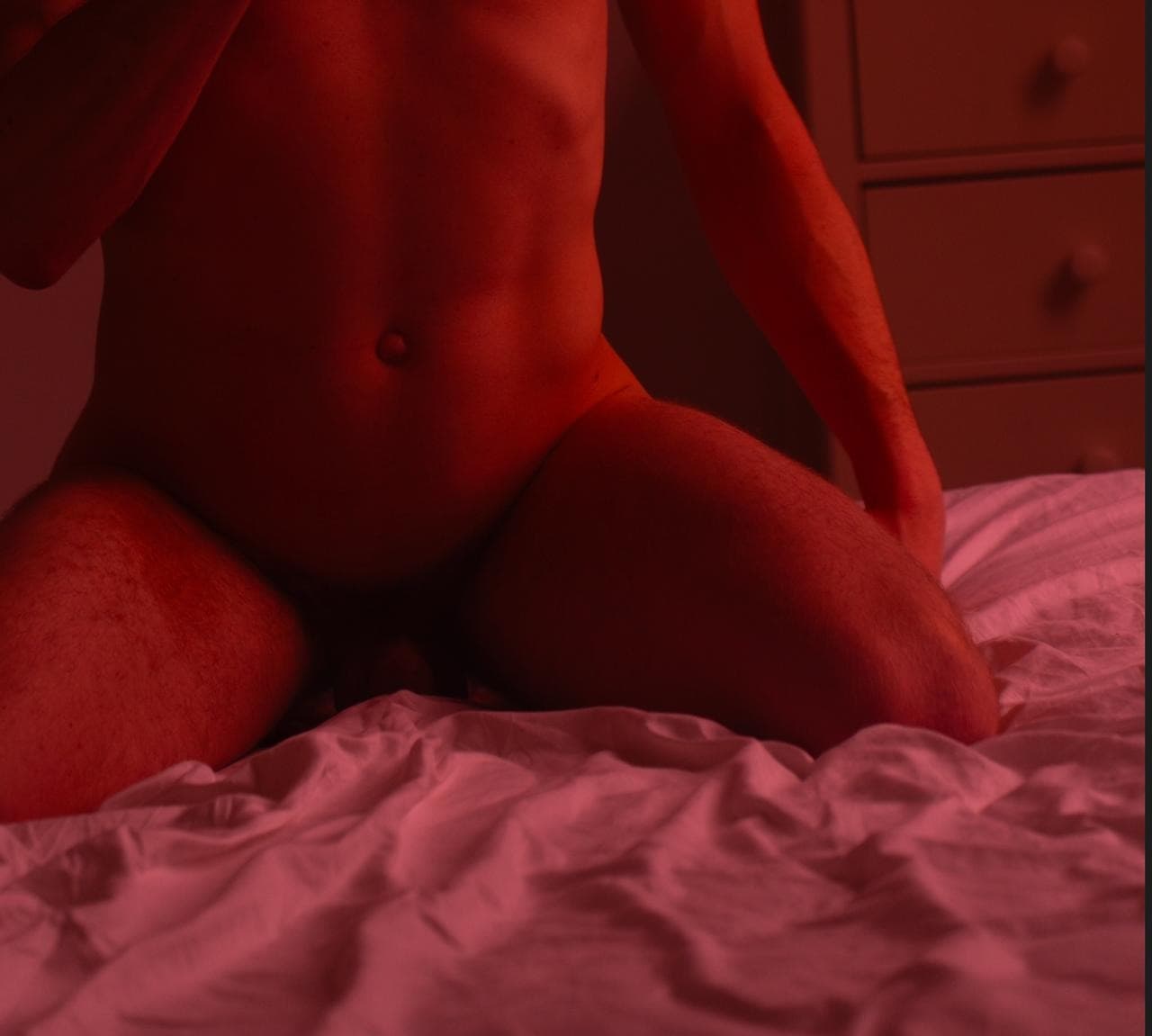
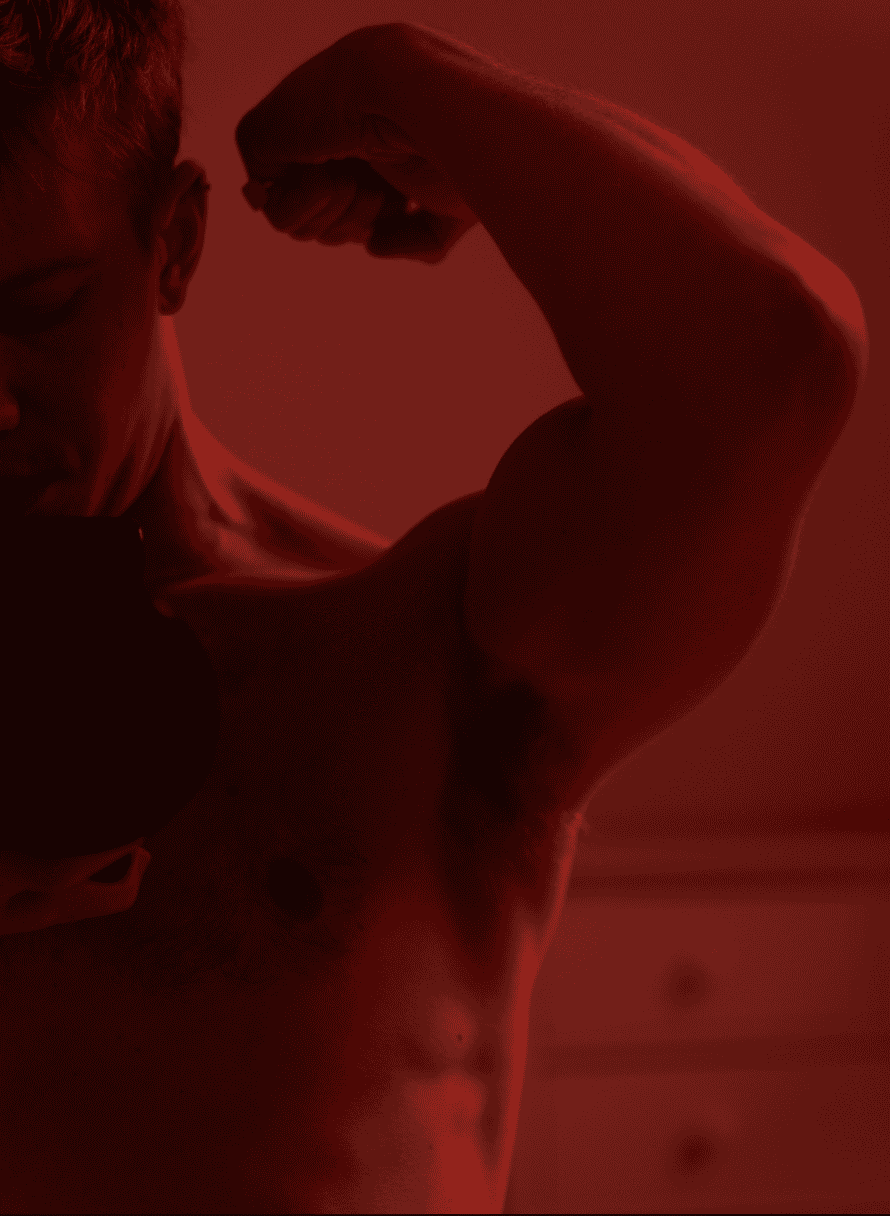
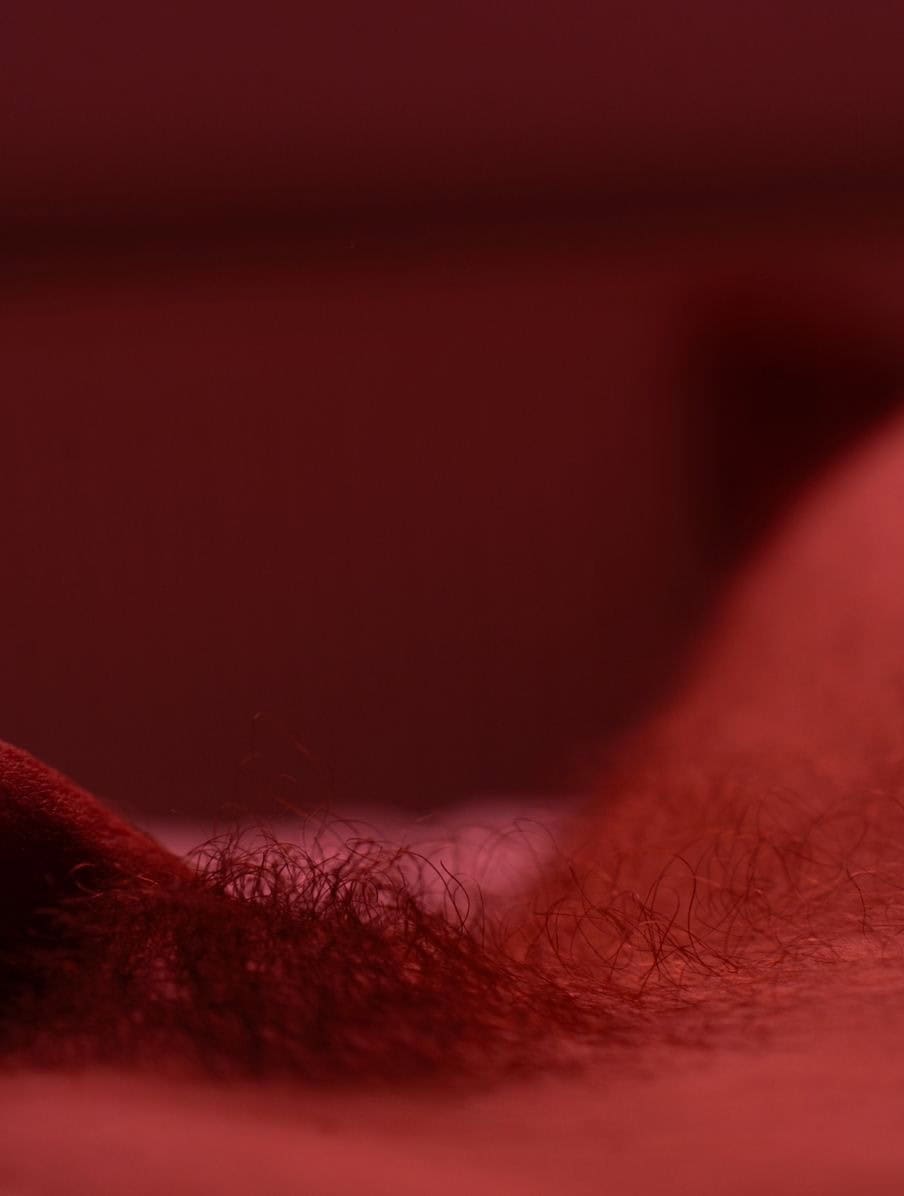
Ekholm acknowledges the body’s capacity to hold contradiction without needing resolution: a deliberate provocation of Western standards that demand coherence, instead positioning the queer body as an ongoing process shaped by flux, uncertainty, and change.
Ultimately, Exhalation positions photography as a space of encounter rather than explanation. It invites viewers not to decode, but to sit within moments of ambiguity and stillness, however briefly, and to recognise the subtle shifts that occur when we allow ourselves, and others, to simply be.