
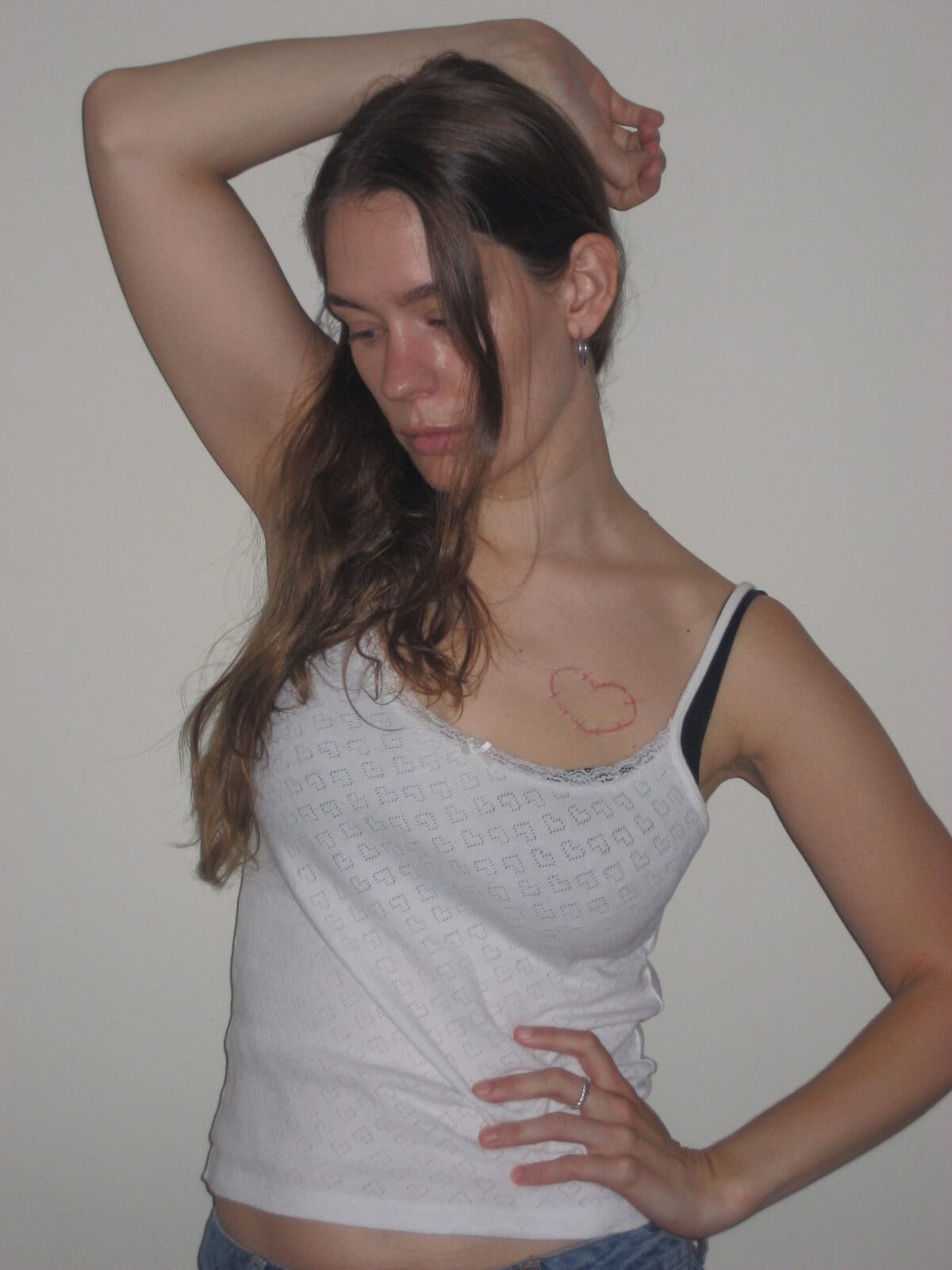
You probably know Anna of the North from Lovers, the 2017 album whose title track recently became a TikTok hit. Or from her ethereal vocals on Tyler, the Creator’s Flower Boy, where she appeared alongside names like Frank Ocean and Steve Lacy.
So, when I call her over Zoom, our chat begins with some reminiscences. I tell her about listening to her songs on a sweltering London bus during last summer’s heatwave, and later, how that same playlist stuck with me through a New York blizzard. She laughs softly. “That’s exactly how it works. Music marks the moment. It becomes a touchstone for where we were, what we felt, who we were.”

Girl in a Bottle, her latest album, explores the complexities of time and memory. Structured in two halves with the second instalment, Please Recycle, arriving later this year, the record negotiates cycles of fleeting love and heartbreak, vocalising the desire for deeper, more enduring connection in a world that feels increasingly disposable. Anna’s stance is understanding, but she’s careful not to romanticise the pain. “This time is so weird, not just politically but also in how we connect with other people. We’re living in such plastic times, so the vision had to be a plastic bottle,” she explains, smiling softly. “Everything is disposable, from fast fashion to our own friendships. Dopamine is just a phone touch away.”
She tells me how her creative process has mirrored these cycles. During the COVID pandemic, she felt “caught and stuck, kind of imprisoned,” and much of the album emerged from that tension. “I’d sit in the studio, try to figure out what I wanted to say, and eventually things would click,” she says. She recalls certain sessions: “I remember trying to convey a whole scene from the series One Day for ‘Waiting For Love’, and we literally watched it on loop until it made sense in music. It sounds silly, but that’s how you get to the feeling you want.”
She references her songs’ roles in films, such as ‘Lovers’, which featured in a key scene of Netflix hit To All the Boys I’ve Loved Before, ‘Dream Girl’ in its sequel, and how those placements amplify her music’s emotional resonance with fans. “It’s surreal sometimes,” she says, “You write a song about something so personal, and then someone else’s moment, their heartbreak or first love, is framed by it. That’s always moving.”

She stresses that whilst collaborations have shaped the textures of the album, they have never diluted her perspective. Starsmith and Sebastian Furrer bring different sonic approaches to the record, but Anna still remains anchored in her own story. She recounts a moment in the studio a few years ago with Tyler, The Creator that still makes her laugh: “He asked me, “Don’t you want to write about something else besides love?” I tried, really I did, but I just couldn’t. Love is everything, romantic, platonic, self-love, even love for music. That’s what I wanted to capture.”
We drift naturally into discussing the complex nature of love itself. I mention the different ancient Greek forms, eros (romantic), philia (friendship), storge (familial), philautia (self-love), as a framework for thinking about her ideas around love. Anna leans into it. “Exactly. It’s not just romantic,” she says. “All those forms exist in these songs. Even heartbreak is part of that. That’s why I wanted the album to feel cyclical”: recurring patterns and different forms of attachment, where moments of joy and loss coalesce.
Her reflections on memory extend beyond abstract ideas. She tells me about the single ‘Lean On Myself’, written in LA, and how hearing its first demo on a plane back to Norway became a personal anchor. “It captured being totally lost, not knowing where to go or who you are,” she says. “When I perform it live, it makes me feel powerful.” Even the lighter moments reveal her humanity. She talks about ‘Shituation’, a new word she’s drawn creative inspiration from, describing it as “being in a shit situation”. “I like the idea, I just need to get it right,” she says, shaking her head.
The album also explores the dopamine-charged highs of new relationships and the tragic nature of their impermanence. Anna observes how the same technologies that connect us, such as social media and streaming platforms, encourage disposability. “We’re always looking for the next hit, the next person, the next song,” she says. “I wanted to slow that down and create something that invites you to sit with the feeling, to feel it fully, to revisit it.” Girl in a Bottle is a meditation on the complications of love and the fleeting moments that shape all of our lives. Listening to the record feels like stepping into a conversation with Anna herself, as vulnerability sits side by side with humor and warmth. In a world of instant gratification, Anna insists on something more permanent, providing a manifesto for how to feel more deeply and hold on a little longer.


