
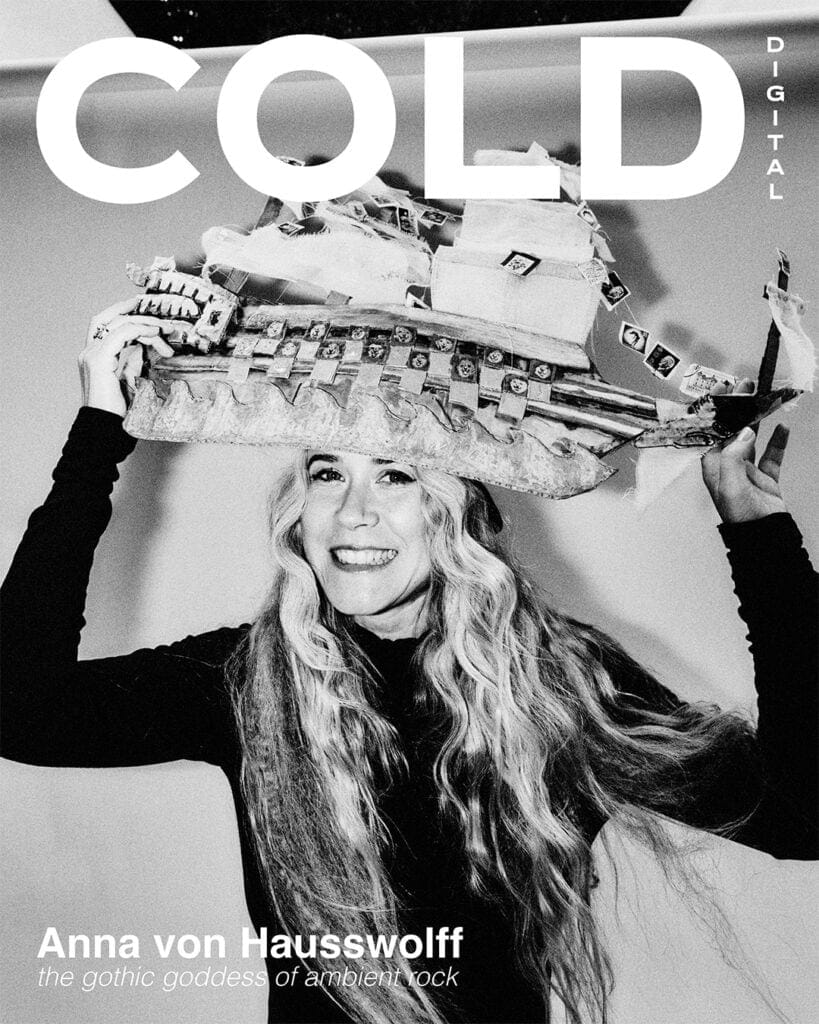
Scrambling to call Anna von Hausswolff – the genre-pushing experimentalist whose oeuvre has implicated church organs and warbling shrieks, whose sound transcends music to occupy that sonic third space where one may find the likes of Ethel Cain’s Perverts and Diamanda Galás – I mention in passing that I’d studied History as an undergraduate. Medieval History, that is, that abject and disarticulated world of Babel-esque churches and convulsing mystics, of Marian visions, bleeding wounds, and ritualised rite. A world to which, I sense, Anna somehow belongs.
Eventually finding a quiet library off-room where I could take her call and think, Anna flipped the interview script, circled things back to me and my brief academic career. “So, you studied medieval culture?” she asked.
“Medieval history,” I corrected.
“That sounds fascinating,” she replied. “”I’ve just bought a really cool old instrument… I think it’s medieval… it’s called a portative pipe organ, musicians would travel around with it and sing…” (after we chatted, I fact-checked and found that it is, in fact, medieval: miniature illuminations of the instrument appear in manuscripts from the 13th century; a late Gothic masterpiece by an unnamed painter depicts Saint Cecilia, the martyred patron of sacred music and organ makers, fingering one alongside a tiny, russet-faced cherub). Anna tells me that she’s going to bring the portatif on tour, that she can’t wait to play it live.
CM: The sacrifice of being a public figure, that’s something you’ve experienced. I’m thinking about your show in 2021, when Catholic devotees protested your show at the Notre-Dame de Port Cathedral in Nantes because they found your music “Satanic”. Can you tell me more about that? What was your reaction?
AH: Yes. I tried not to get scared. In fact, I was trying to understand what they were feeling because I understood not wanting your sacred space tainted by popular culture. But what I lacked in situations like that was a conversation. I couldn’t find the bridge and it was making me very frustrated. It makes things feel like a battle when it doesn’t really have to be like that.
I value the church as a sacred space. I think it is important to have that place in our society and in the way we think today. Nowadays, we only have individualism, capitalism, imperialism; we have an idea of love for the family, but we need to enforce an idea of love for the human race as a collective force. We need to find our harmony and balance with Nature. And in general, religion is really great at building that bridge between Human and Nature, between the Micro and the Macro.
Sacred spaces work like bridges between the earthly and the heavenly. Churches are something I cherish, that’s why I want to keep the craft of the pipe organ alive. Across Europe, churches are struggling to stay open, church music is struggling, and I want to change that. I want to help churches keep their fantastic cultural heritage alive. I’m not there to destroy anything.
But some groups are really good at turning peoples’ anger and frustration into a form of comradery. Nothing should be to its extreme, I don’t believe in fundamentalism, I don’t believe in fascism, in all this black-and-white thinking. There, it’s like they’re making a deal with the Devil.
CM: Divinity, transcendence, spirituality – these metaphysical themes all really seep into your music and sound, even beyond your use of instruments and spaces like the pipe organ or the church. ICONOCLASTS is an album you’ve described as one of these searches for the divine. Is that something you’ve found now?
AH: For me, the divine is in balance and in harmony. But it’s not so much about finding the divine, it’s about the journey to get there. I want to tell people to not get too comfortable in the idea of who they are, or in the idea of who other people are. This album is an encouragement to stay open – to your surroundings, to yourself. It’s an encouragement to be gentle and generous with yourself. You can be so much more than one thing.
I wanted the album to feel like a battle cry before going into the war, into the world.
CM: I love this idea of a battle cry and a step beyond the self. This even comes through in the simple fabrics of the album, the fact that it’s seamed by collaborations with all these wonderful names: Iggy Pop, Ethel Cain, even your own sister…
AH: It’s very different. A couple of years ago, I wouldn’t have ever had the courage to ask big artists like Ethel Cain and Iggy Pop to work with me. I mean, Iggy is a legend…
CM: What was it like working with Iggy?
AH: Oh, he’s gorgeous! He’s very easy-going, he doesn’t do things half-way. He’s an artist, so passionate about music. He basically did this collaboration for free, out of love. It’s very rare to find that passion in older musicians, who can become so jaded and numb. There’s an endless amount of creativity in him that he pours into the world. I find that so inspiring.
CM: Tell me how that collaboration came about, I can tell he’s someone you really admire.
AH: I met Iggy a couple of years ago at Way Out West Festival. I knew that he listened to my music and that he played my music on his BBC Radio 6 show, so I built up the bravery to ask to meet him. That meeting was just beautiful. He felt like I already knew him. He felt like my dad.
Shortly after that meeting, I asked if he wanted to sing with me on a song and he said yes. But I got so nervous that I wrote all these songs but never ended up sending any of them to him. Eventually, his manager wrote to me and said: “Iggy’s waiting for the song, he’s wondering when he’s going to get it.” And I got so nervous again that I didn’t answer until a year later when I replied saying it’s coming. One year after that, I finally sent him something.
CM: So this collaboration on “The Whole Woman” has been three or four years in the making?
AH: Well, the album has been seven years in the making, at least. It’s not like my previous albums which, except from my first album, were all very concentrated to a particular period of my life. This one has been in the works for seven years.
CM: You can feel that labour, that level of concentration. It feels like a real evolution of your sound.
AH: Thank you.
CM: What about Ethel Cain? How did you get in touch? That collaboration seems like such a natural fit; when I saw her name on the track-list I was like, this is just perfect.
AH: It started with my sister Maria sending me her music, but I was so busy at the time that I never really got around to listen to it properly. Then I saw that Ethel started following me on Instagram, and I took a screenshot and sent it to my sister and she was like, you have to message her. At that time me and Maria were searching for a person to play the main character in my sister’s debut film and her look and personality seemed to fit the bill. We felt very intrigued by her and thought about asking if she’d be interested to do some acting, but shortly after the film audition had opened Maria and the production team found their actress. I, however, got hooked on Ethel Caie and I could feel the artistic connection. Her music and lyrics really resonated with me.
CM: Resonated how?
AH: She just has this integrity, she stays so true to who she is as an artist and to the way she’s trying to make something new out of something old, out of tradition. She’s not scared to turn towards this darkness and that resonates with me a lot. It gives her work a complexity, a nuance that I find fascinating, and it’s something I admire in all the women artists I love.
So me and Ethel wrote to each other. I’d been listening to her music intensively while I was going through a breakup and I was writing so much music at the time, so the healing of the heart happened through writing and listening to music . It was beautiful.
I wrote “Aging Young Woman” [the song featuring Ethel Cain] and I could just hear her voice on it. I felt it wouldn’t feel fair not to ask her to join me on vocals when she had been so present with me throughout writing it. The song is really a celebration of her artistry. And a celebration of all struggling women who feel like time is slipping away.
CM: ICONOCLASTS comes out on October 31st. What’s the main thing you want to come out of it?
AH: Because this album has been so long in the making, I’m so excited to finally play live again. I’m excited to see how the songs evolve, because they usually change so much when I bring them to the stage. I’m curious to see where it’s going to lead. And to meet my audience, who I haven’t really seen in so long. I hope the process of playing live will bring out new sides in me, that it will drive me forwards – this is my ambition.
The Cold Magazine (CM): ICONOCLASTS is such an interesting name for an album. As a word, its etymology comes from ancient Greek, combining the noun eikōn, or “image”, and the verb kláō, or “to break”. Meaning, an iconoclast is a breaker of images, an image destroyer. With this album, so many years into your musical career, what’s the image that you’re trying to break?
Anna von Hausswolff (AH): In general, my whole artistry has been about building something up then breaking it apart. I’m intuitively scared of being pigeonholed so I’m good at questioning myself. But I have an urge to let myself transform, to let my art transform and to question my way of working and my way of working with other people.
I ask myself, What is it that I’m trying to understand?, and the way I understand is through art. ICONOCLASTS is me questioning myself, questioning my surroundings. The album is an encouragement for change.
CM: What change do you want to encourage? You’ve said that the ancient Greek myth of Atlas – the titan who, like Lucifer in Paradise Lost, rebelled against the gods then was forced to carry the weight of the cosmos – was a source of inspiration and identification for the album. What kind of change does that represent for you?
AH: Atlas represents something that I strive to be. He’s somebody who sacrifices himself for a greater cause, a symbol of acting for the sake of others and not just yourself. He shows how the rebel’s act is an act of love. This is something I’m looking for. Through Atlas, I want to motivate selfless behaviour in my way of being.
CM: So, he represents something you feel like you lack?
AH: Almost, but I do also feel that he’s in me. Everybody has that character inside them. When people become parents, for example, they sacrifice themselves for their kids. That’s an Atlas. If you know unconditional love, I bet your inner Atlas is in there ready to be sacrificed if needed. You can be that character in so many ways, you just have to know when to put a boundary on your sacrifice.
CM: What did you sacrifice to make this album?
AH: I didn’t necessarily sacrifice anything, but I think that so many people working in the public eye do have to sacrifice something to be there. If you’re a public figure, there will always be a sacrifice to some degree, your integrity for example.
And to achieve change, you have to sacrifice. If you know that your life isn’t working the way it’s supposed to, you’re going to have to give up something to change it. You have to give up the calmness of your everyday life and let the storm have its turn.
CM: The sacrifice of being a public figure, that’s something you’ve experienced. I’m thinking about your show in 2021, when Catholic devotees protested your show at the Notre-Dame de Port Cathedral in Nantes because they found your music “Satanic”. Can you tell me more about that? What was your reaction?
AH: Yes. I tried not to get scared. In fact, I was trying to understand what they were feeling because I understood not wanting your sacred space tainted by popular culture. But what I lacked in situations like that was a conversation. I couldn’t find the bridge and it was making me very frustrated. It makes things feel like a battle when it doesn’t really have to be like that.
I value the church as a sacred space. I think it is important to have that place in our society and in the way we think today. Nowadays, we only have individualism, capitalism, imperialism; we have an idea of love for the family, but we need to enforce an idea of love for the human race as a collective force. We need to find our harmony and balance with Nature. And in general, religion is really great at building that bridge between Human and Nature, between the Micro and the Macro.
Sacred spaces work like bridges between the earthly and the heavenly. Churches are something I cherish, that’s why I want to keep the craft of the pipe organ alive. Across Europe, churches are struggling to stay open, church music is struggling, and I want to change that. I want to help churches keep their fantastic cultural heritage alive. I’m not there to destroy anything.
But some groups are really good at turning peoples’ anger and frustration into a form of comradery. Nothing should be to its extreme, I don’t believe in fundamentalism, I don’t believe in fascism, in all this black-and-white thinking. There, it’s like they’re making a deal with the Devil.
CM: Divinity, transcendence, spirituality – these metaphysical themes all really seep into your music and sound, even beyond your use of instruments and spaces like the pipe organ or the church. ICONOCLASTS is an album you’ve described as one of these searches for the divine. Is that something you’ve found now?
AH: For me, the divine is in balance and in harmony. But it’s not so much about finding the divine, it’s about the journey to get there. I want to tell people to not get too comfortable in the idea of who they are, or in the idea of who other people are. This album is an encouragement to stay open – to your surroundings, to yourself. It’s an encouragement to be gentle and generous with yourself. You can be so much more than one thing.
I wanted the album to feel like a battle cry before going into the war, into the world.
CM: I love this idea of a battle cry and a step beyond the self. This even comes through in the simple fabrics of the album, the fact that it’s seamed by collaborations with all these wonderful names: Iggy Pop, Ethel Cain, even your own sister…
AH: It’s very different. A couple of years ago, I wouldn’t have ever had the courage to ask big artists like Ethel Cain and Iggy Pop to work with me. I mean, Iggy is a legend…
CM: What was it like working with Iggy?
AH: Oh, he’s gorgeous! He’s very easy-going, he doesn’t do things half-way. He’s an artist, so passionate about music. He basically did this collaboration for free, out of love. It’s very rare to find that passion in older musicians, who can become so jaded and numb. There’s an endless amount of creativity in him that he pours into the world. I find that so inspiring.
CM: Tell me how that collaboration came about, I can tell he’s someone you really admire.
AH: I met Iggy a couple of years ago at Way Out West Festival. I knew that he listened to my music and that he played my music on his BBC Radio 6 show, so I built up the bravery to ask to meet him. That meeting was just beautiful. He felt like I already knew him. He felt like my dad.
Shortly after that meeting, I asked if he wanted to sing with me on a song and he said yes. But I got so nervous that I wrote all these songs but never ended up sending any of them to him. Eventually, his manager wrote to me and said: “Iggy’s waiting for the song, he’s wondering when he’s going to get it.” And I got so nervous again that I didn’t answer until a year later when I replied saying it’s coming. One year after that, I finally sent him something.
CM: So this collaboration on “The Whole Woman” has been three or four years in the making?
AH: Well, the album has been seven years in the making, at least. It’s not like my previous albums which, except from my first album, were all very concentrated to a particular period of my life. This one has been in the works for seven years.
CM: You can feel that labour, that level of concentration. It feels like a real evolution of your sound.
AH: Thank you.
CM: What about Ethel Cain? How did you get in touch? That collaboration seems like such a natural fit; when I saw her name on the track-list I was like, this is just perfect.
AH: It started with my sister Maria sending me her music, but I was so busy at the time that I never really got around to listen to it properly. Then I saw that Ethel started following me on Instagram, and I took a screenshot and sent it to my sister and she was like, you have to message her. At that time me and Maria were searching for a person to play the main character in my sister’s debut film and her look and personality seemed to fit the bill. We felt very intrigued by her and thought about asking if she’d be interested to do some acting, but shortly after the film audition had opened Maria and the production team found their actress. I, however, got hooked on Ethel Caie and I could feel the artistic connection. Her music and lyrics really resonated with me.
CM: Resonated how?
AH: She just has this integrity, she stays so true to who she is as an artist and to the way she’s trying to make something new out of something old, out of tradition. She’s not scared to turn towards this darkness and that resonates with me a lot. It gives her work a complexity, a nuance that I find fascinating, and it’s something I admire in all the women artists I love.
So me and Ethel wrote to each other. I’d been listening to her music intensively while I was going through a breakup and I was writing so much music at the time, so the healing of the heart happened through writing and listening to music . It was beautiful.
I wrote “Aging Young Woman” [the song featuring Ethel Cain] and I could just hear her voice on it. I felt it wouldn’t feel fair not to ask her to join me on vocals when she had been so present with me throughout writing it. The song is really a celebration of her artistry. And a celebration of all struggling women who feel like time is slipping away.
CM: ICONOCLASTS comes out on October 31st. What’s the main thing you want to come out of it?
AH: Because this album has been so long in the making, I’m so excited to finally play live again. I’m excited to see how the songs evolve, because they usually change so much when I bring them to the stage. I’m curious to see where it’s going to lead. And to meet my audience, who I haven’t really seen in so long. I hope the process of playing live will bring out new sides in me, that it will drive me forwards – this is my ambition.
PHOTO CREDITS
Stylist : Sofie Krunegård
Stylist assistant: Ellen Kowka
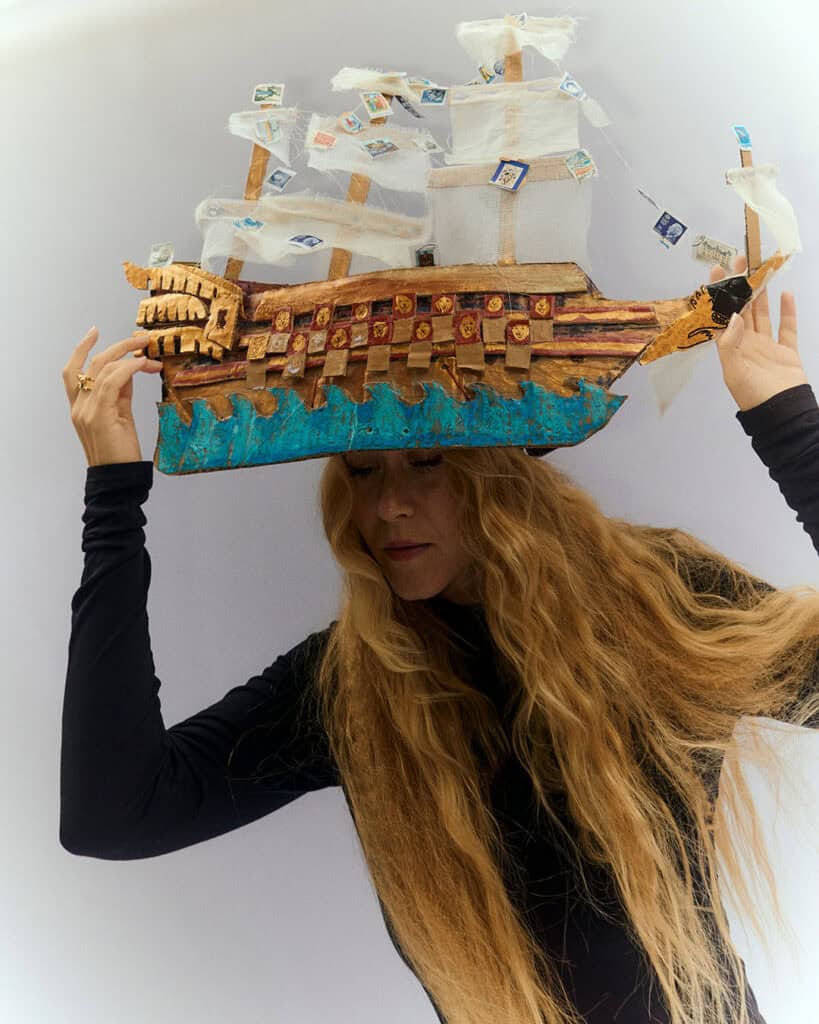
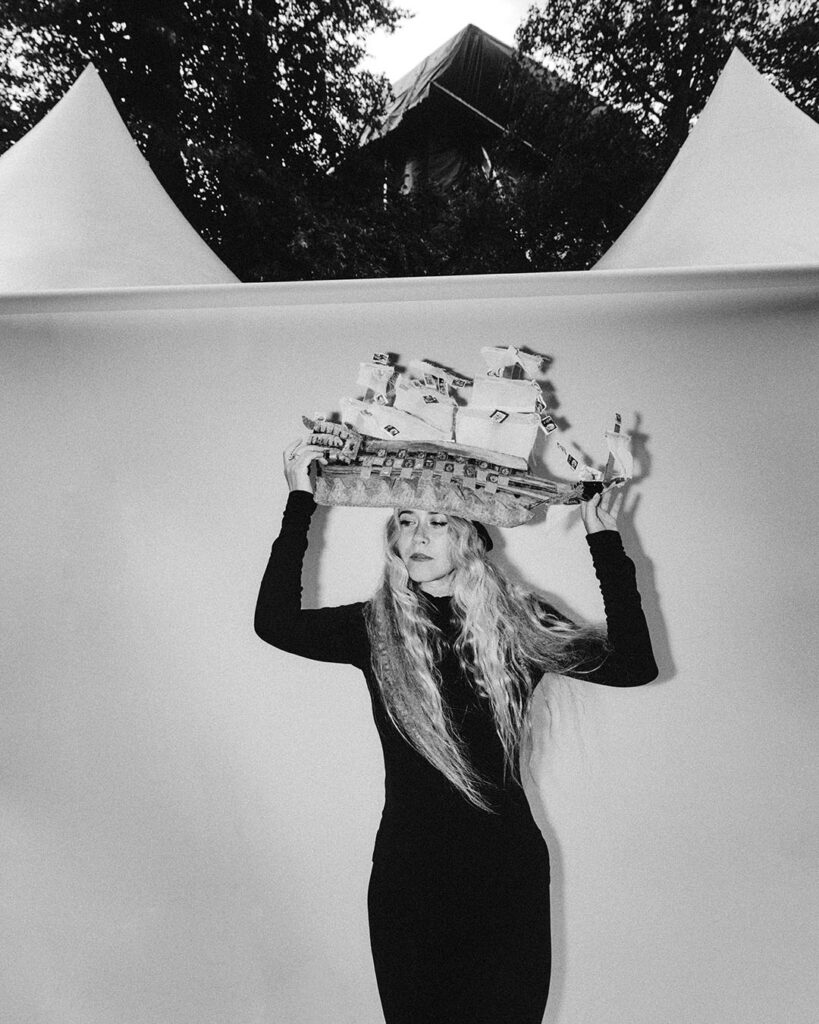
Hat by : Lundbacklindgrenleff
Hair & Make Up : Daniela Mengarelli