
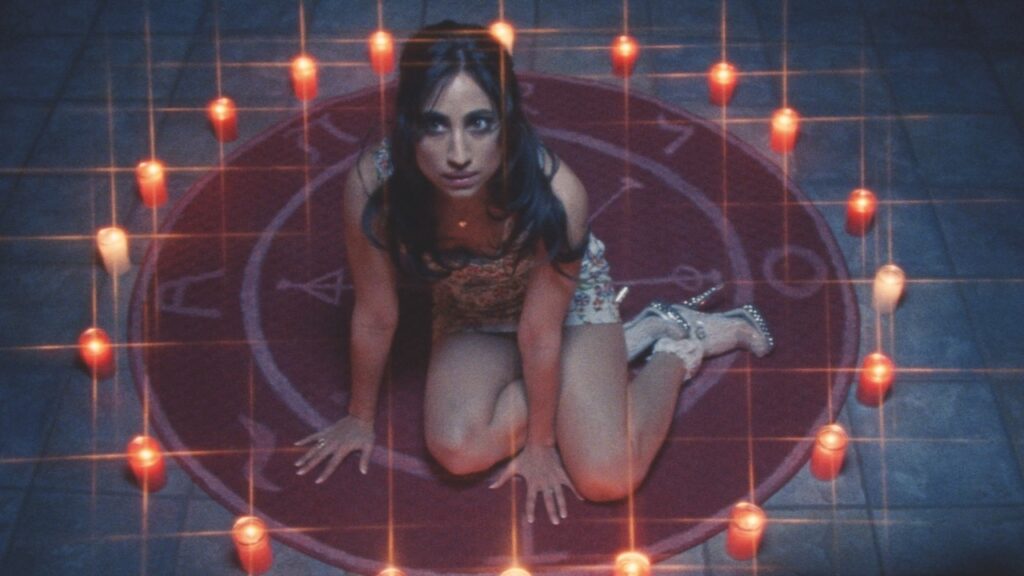
Annapurna Sriram’s Fucktoys came onto the scene at South by Southwest earlier this year and just sold out its three day London Film Festival run. The film invites viewers into the surreal, neon- lit chaos of TrashTown, the town’s fictional setting, following a fearless sex worker grappling with a mysterious curse that turns her world upside down.
Growing up in Nashville, Sriram is no stranger to the spotlight, having previously starred in projects spanning across stage, TV, and indie cinema. Now, she is exploding onto the scene as a triple threat: writer, director, and star of Fucktoys.
We caught up with Sriram to dive deep into the origins of Fucktoys, uncover the most unforgettable moments from the creative journey, and get the inside scoop on what has placed this film on so many must-watch lists.
The Cold Magazine (CM): What first inspired the story for Fucktoys?
Annapurna Sriram (AS): I was a struggling actor in New York and couldn’t find roles that reflected who I am – my playfulness, my humour, that girl-pop sensibility. Too often the parts were dull or steeped in lazy and racist stereotypes. I started asking myself, where are the fun, art-house films for girls? Because somewhere along the way, American art-house lost its spark. I was also heartbroken at the time, and I’ve always believed the best art is born from heartbreak. Making this film was my catharsis – that was the genesis of it all.

CM: How did it feel to take the director’s chair for the first time?
AS: At first, I was self-conscious stepping into that role. As a female director, there are still so many people who just don’t trust you. But I’ve learned that being firm about what you want is essential, I refuse to be pushed. In a way, the biggest performance for me was being the director. It felt like wearing a mask, a kind of armour. I had to learn how to lead – to make people feel comfortable, but
also to speak up when things weren’t working. But with women under so much scrutiny, it was definitely a challenging role.
CM: Can you talk about how you brought the film’s dreamy, feminine aesthetic to life?
AS: I loved the lenses we used. Cory Fraiman-Lott [the director of photography] completely understood my vision and pitched exactly what was needed to create this utterly dreamy, almost magical aesthetic. I wanted the film to feel unapologetically feminine – a celebration of the female gaze, of how women are naturally brilliant at style, design, and creating beauty. That girly, luxurious, hyper-feminine world… that was exactly what I needed, and seeing it come to life on screen was breathtaking.
CM: Was your upbringing in Nashville incorporated into the movie in any way?
AS: We filmed in Louisiana, known for its lush and humid landscapes. The world of Trashtown was inspired by my teenage years growing up in Nashville – all those abandoned industries and old oil refineries, yet surrounded by incredible greenery. I wanted the film to carry a nostalgic feel, capturing how I remember growing up there, even though much of it is hardly recognizable now. Trashtown leans into this whimsical vision of the South, creating a backdrop that’s both rough and beautiful, and perfectly reflecting its spirit.

CM: Looking back on the shoot, are there any moments that felt particularly special?
AS: One of the most magical moments was during one of the big, wide mob head shots. In the script, I’d written about this cotton-candy sky, but you never really know what you’re going to get on the day. I was up on the mop head, totally terrified, but when I looked up, there it was: the most beautiful cotton candy sky, exactly as I’d imagined it. It felt so special. No amount of money could have made that moment. And of course, working with my actors Sadie and François – there were times on set watching the two of them when I was totally blown away, just thinking wow, what talented people.
CM: What’s the next step for you?
AS: Honestly, I just want to sell this movie, but I’m not letting it go for anything less than it’s worth. This film has the power to change lives. For women, for South Asians, for trans people – it’s about creating a real sense of community. America’s slipping into something dark, and this feels like an empathetic little revolution for everyone who’s at risk. I just want it out there, being seen by the people it was made for.
And my next one? It’s a country music film, a love letter and a callout to the industry I grew up around in Nashville. It’s a dark comedy, it’s messy, and yeah… it’s definitely gay. That will always be my style to the core.