“It feels like institutions built after the world war, meant to prevent catastrophe, suddenly feel fragile. And for minorities, trans people, queer people, the climate is changing in frightening ways,” says Anne Sofie Madsen, founder and designer of her namesake label, alongside co-creative director Caroline Clante, as we speak over Google Meet about the brand’s upcoming AW26 collection.
After stepping away from collection-making for 14 seasons, the Danish designer returned last year with her SS26 collection from her eponymous label, quickly gaining attention for its unexpected impact online. The collection made waves across social media thanks to the now-iconic rat bag, a playful accessory that captured widespread fascination. Despite the reaction, the designers admitted they were caught off guard by its popularity, explaining that it was created largely for fun, intended as a prop for the models to walk with, before audiences unexpectedly ran with it.
After showing collections at Paris Fashion Week, New York, and Tokyo, and then taking a back seat, one of Copenhagen’s creative forces is back with a bang for AW26. And this season is no exception.
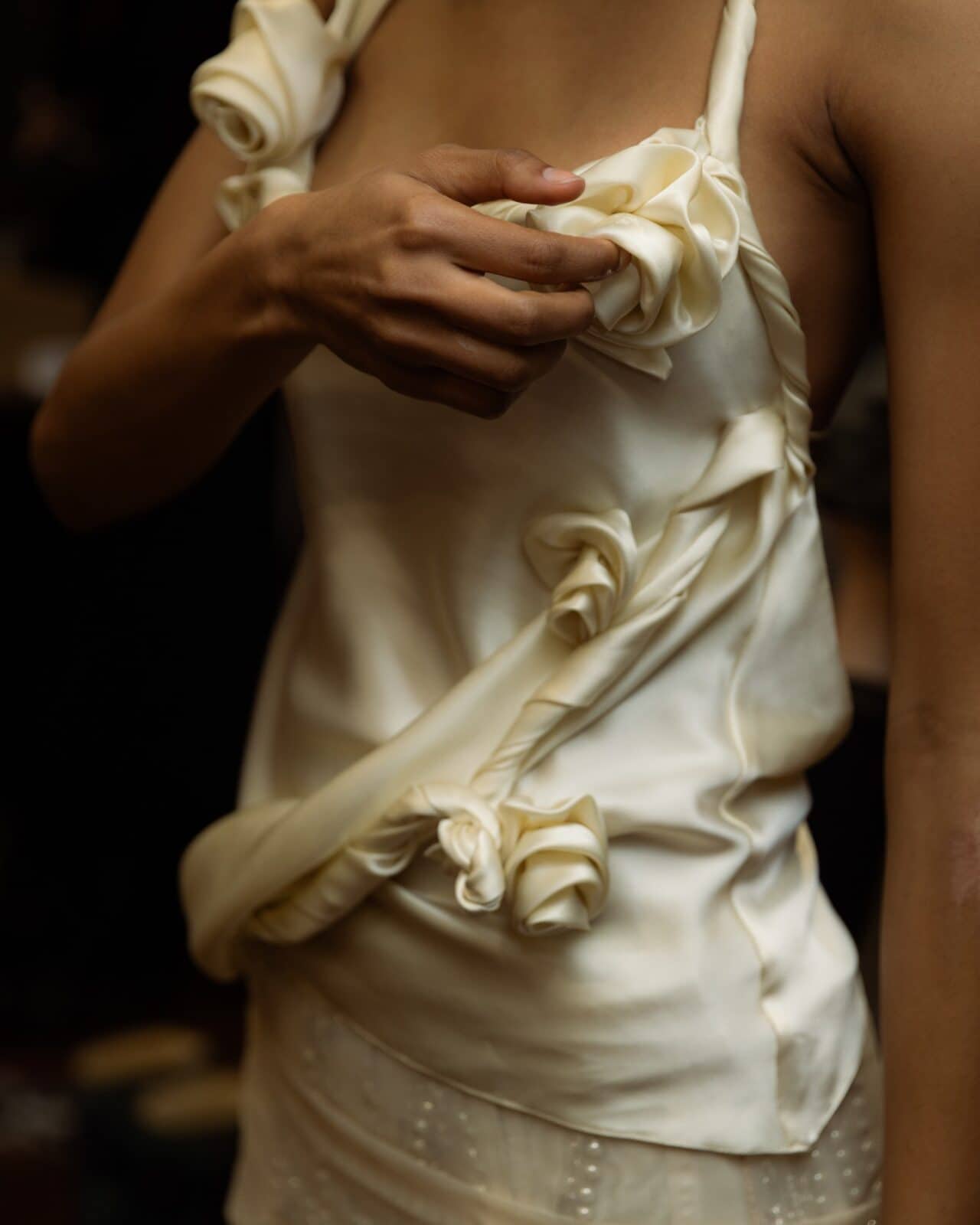
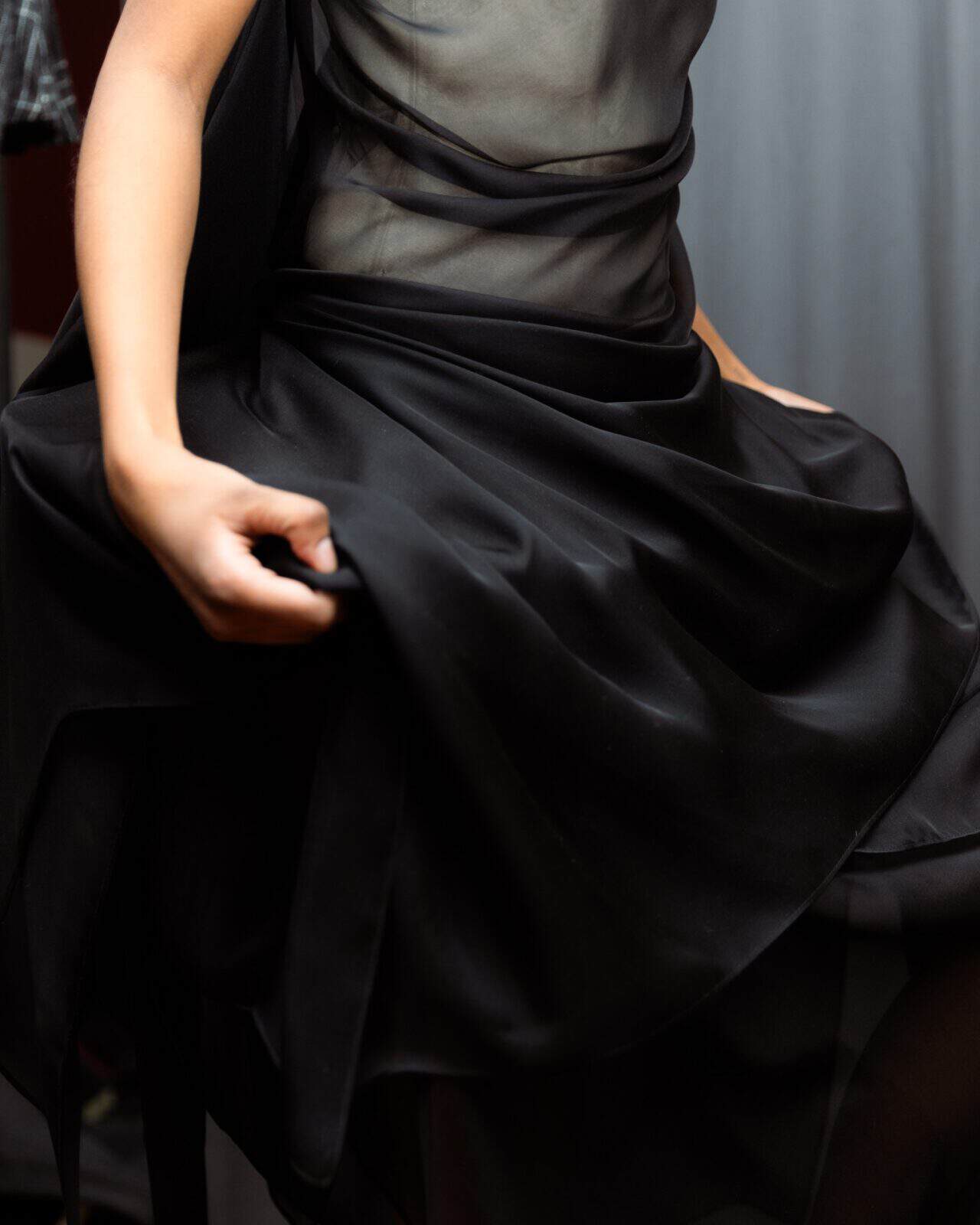
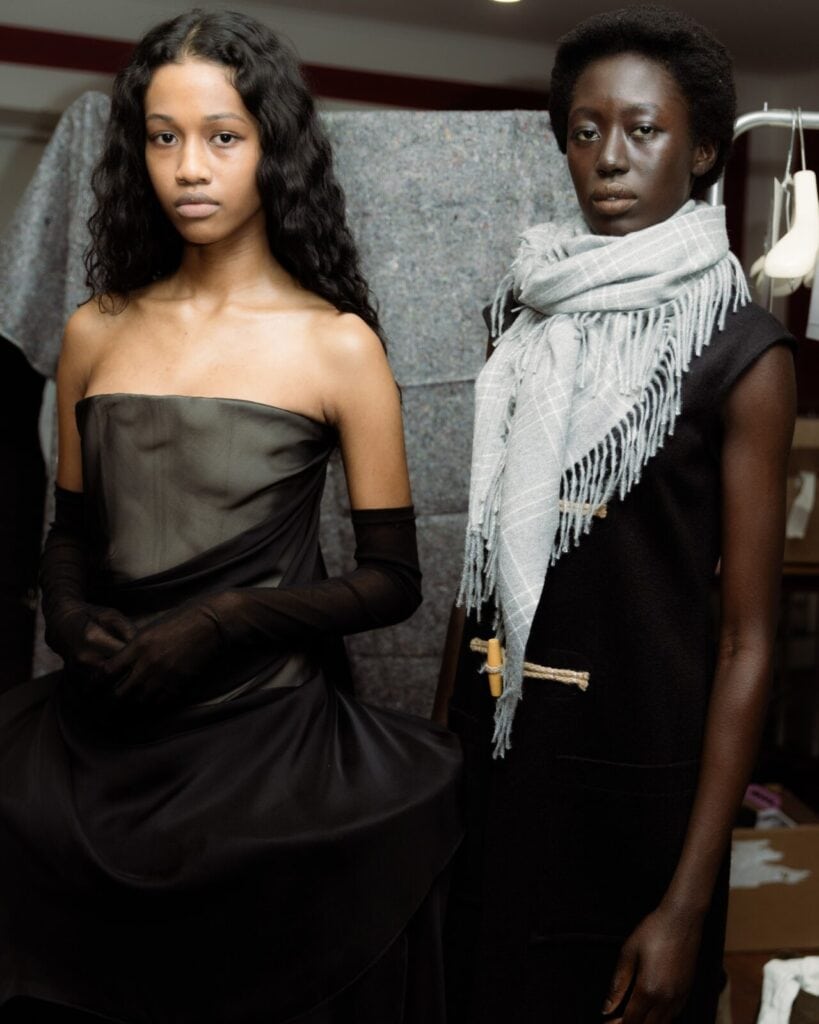
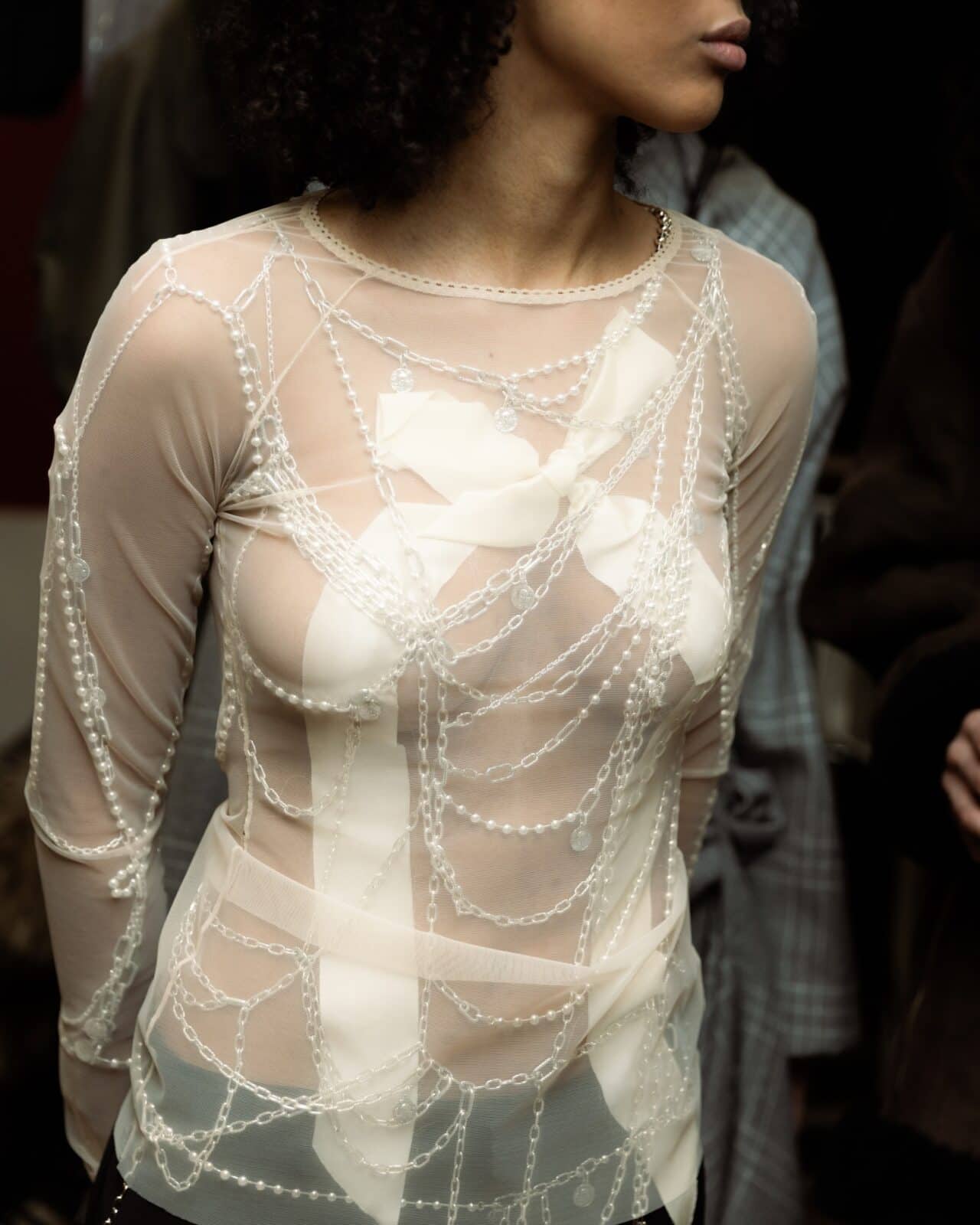
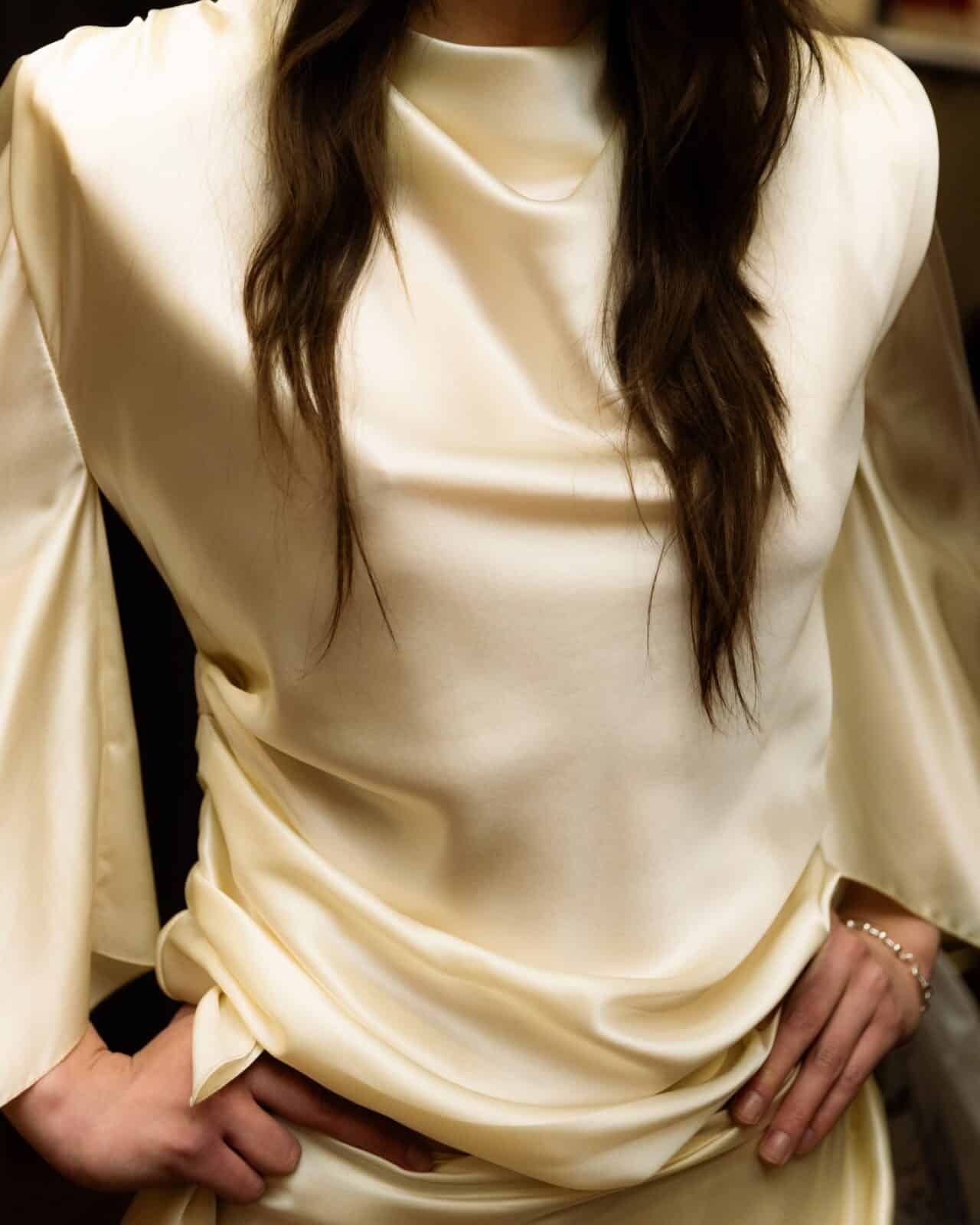
For AW26, presented as part of the official Copenhagen Fashion Week calendar, “we’ve been looking at ghosts,” Anne Sofie Madsen says. As a run of garments, the show was cohesive and served as a statement addressing the current happenings across the globe. “The idea is that our present is haunted by futures that never became possible, like the ghost of a future that never arrived. That connects to what we said earlier about why creativity felt hard this season. We met so many times trying to figure out what we wanted to say. It felt confusing, even hopeless, with everything going on. And this collection is, in a way, like an exorcism: trying to get rid of that ‘ghost,’ and move into a future again,” the creatives explained.
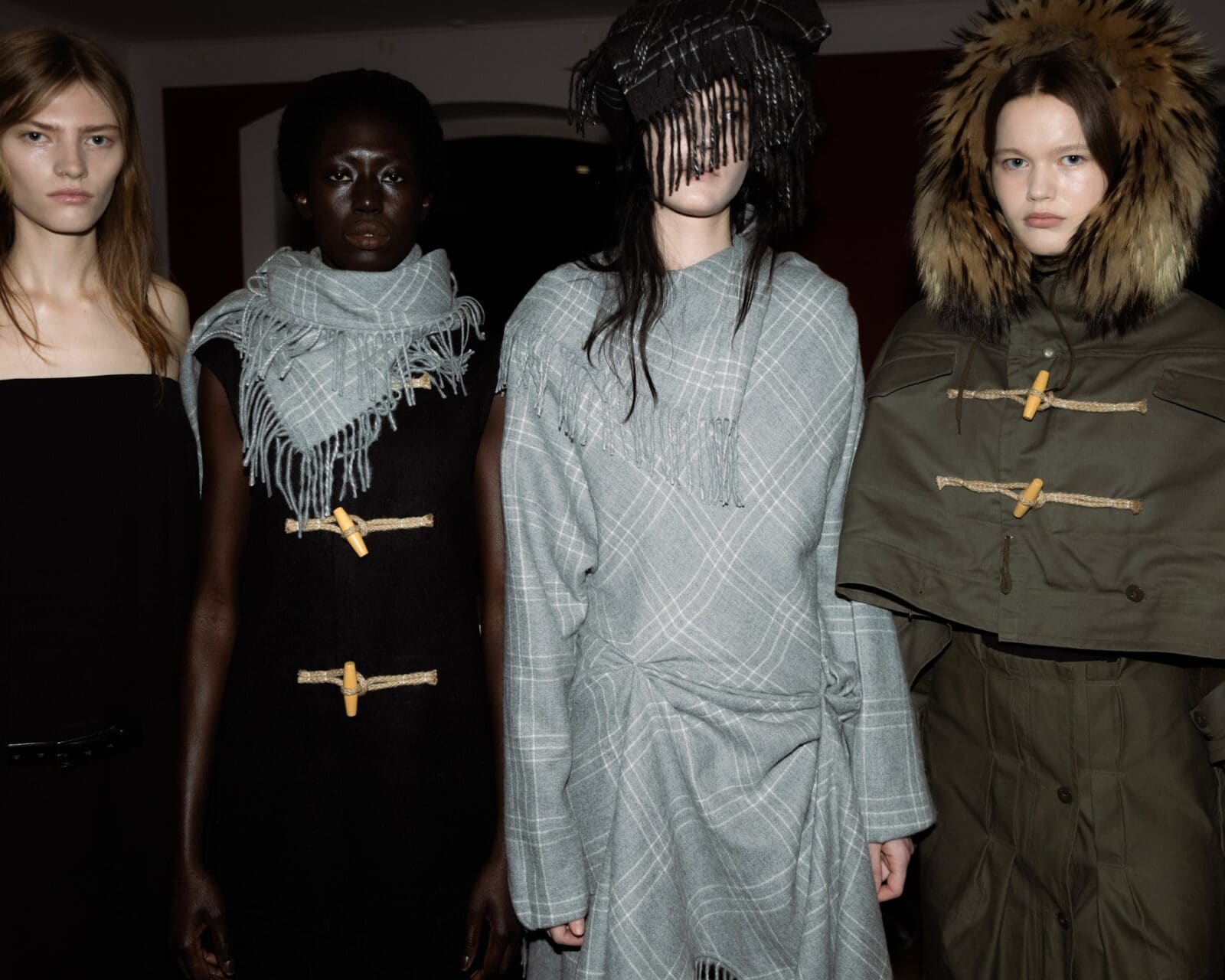
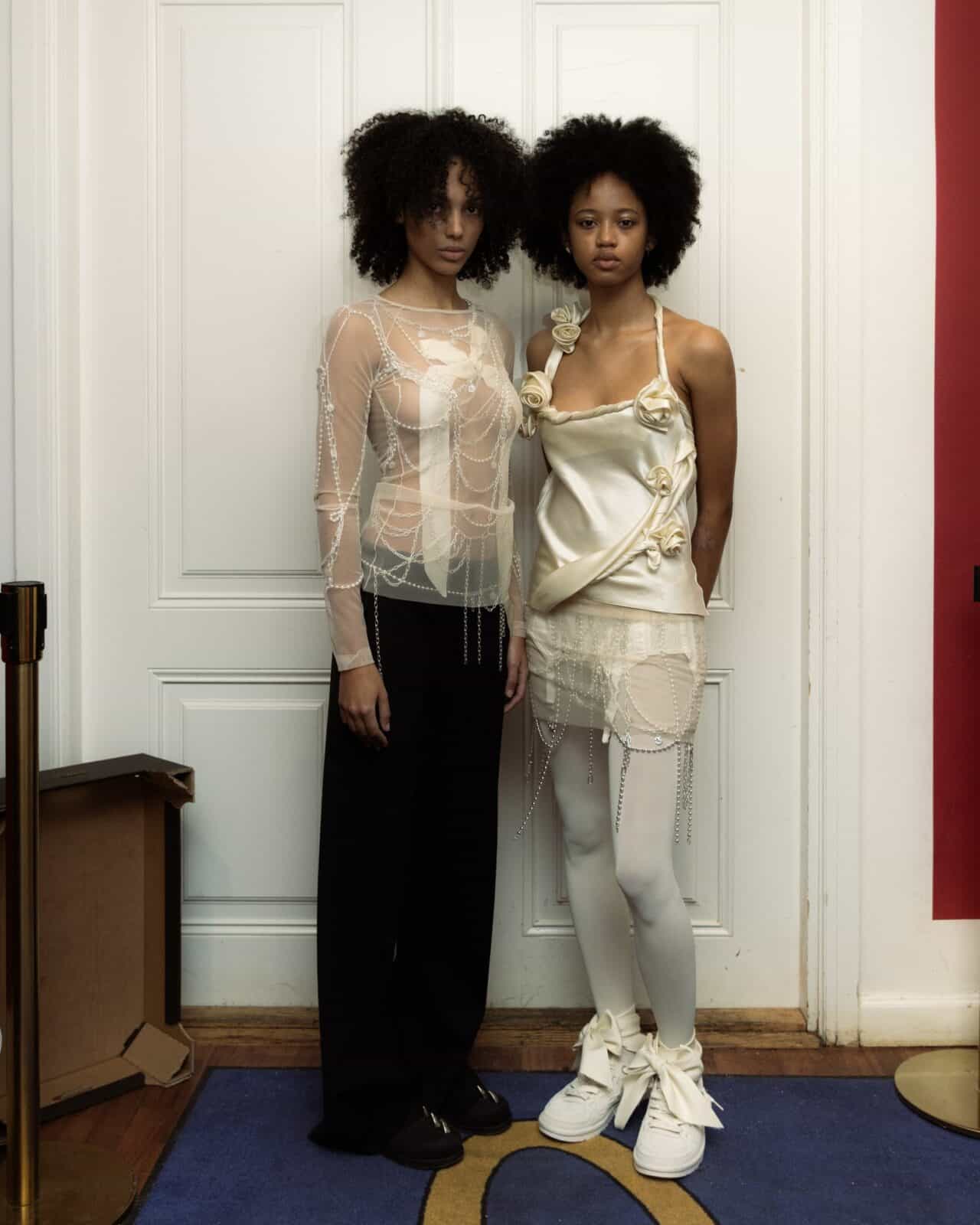
The inspiration for the duo’s latest collection came from revisiting the past. “We were thinking about older collections we love, very different styles, but they all had one thing in common,” they said. “The range within each collection was wide: jeans and a tank top, then something upside down or made from an unexpected material, and then an extravagant princess dress with stones, feathers, and silk.”
“It feels hard to believe in utopia right now,” expressed Clante, sighing, as the conversation turned to the wider political climate, amid rising tension and uncertainty surrounding renewed pressure and rhetoric from the Trump administration over the threatened annexation of Greenland. “It’s strange to be sitting in a studio making clothes while all this is happening,” they admitted. “That contrast is intense.”
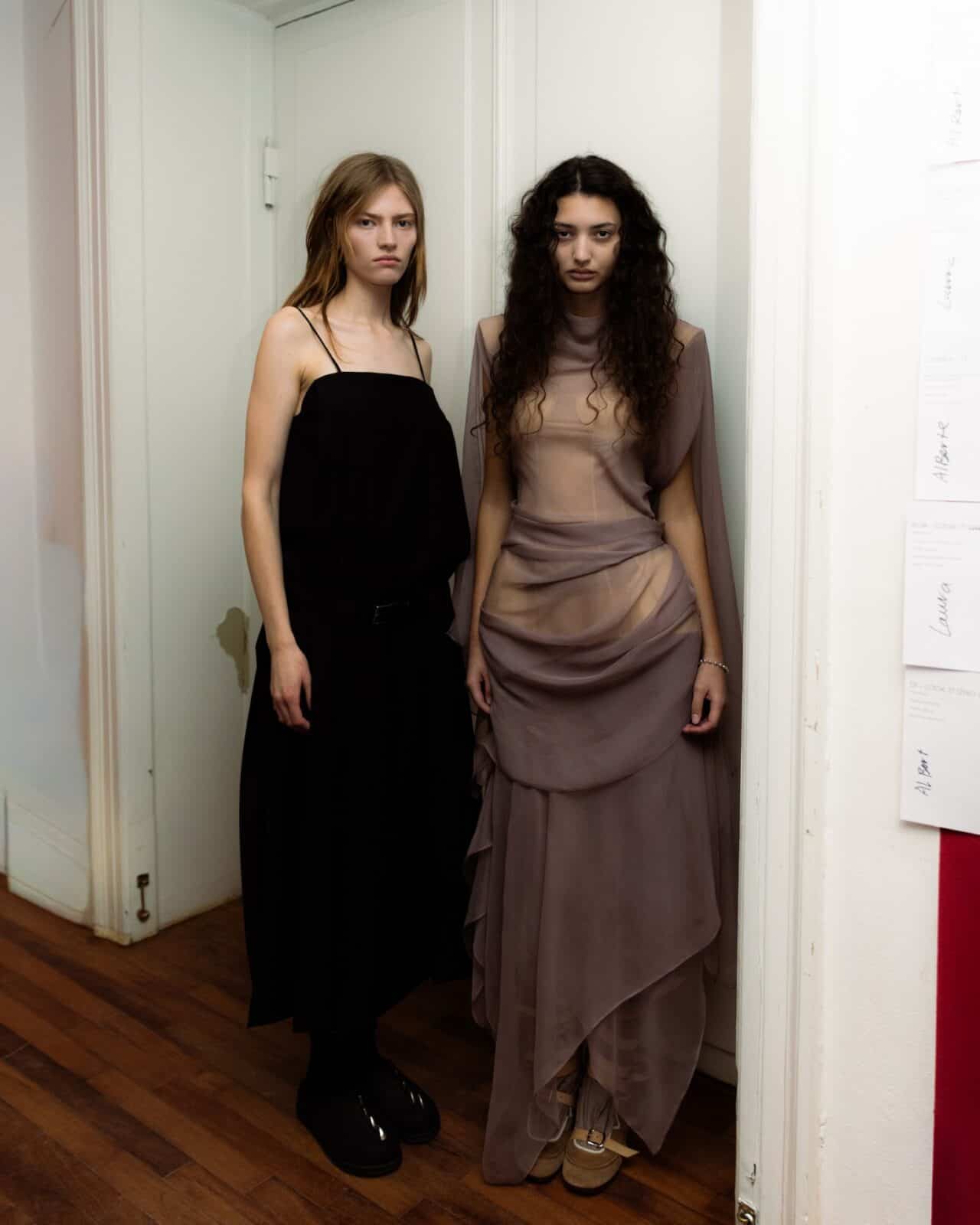
“We didn’t want to create a post-apocalyptic collection, nobody wants that,” Clante said, explaining that while the work isn’t overtly bleak, utopia currently feels out of reach. “But utopia feels distant. The collection isn’t depressing, yet there’s a sadness to it. It’s… gloomy.”
Madsen then followed, her concern unmistakable: “I worry a lot about the people in Greenland. Friends are out demonstrating. And globally, there’s Gaza; there’s so much happening.”
Over the years, Anne Sofie Madsen trained under Alexander McQueen and John Galliano before launching her namesake. Drawing unequivocal inspiration from both houses, she channels that foundation into her own designs. Alongside her practice, Madsen also teaches at the Swedish School of Textiles (SAFD), passing on the same emphasis on craft, experimentation, and conceptual thinking to a new generation of designers. Now, with Clante on board, the creative force is hard to ignore.
“We both come from backgrounds with designers who were unapologetic, people who did exactly what they wanted,” she said.
It was at this point in the interview that things began to click. For the Danish creatives, the brand isn’t driven solely by commerciality, but by the freedom to apply their artisanal skills to pieces that push beyond convention. Referencing McQueen again, Madsen was quick to clarify: “I don’t want this to sound like a critique of what McQueen became later. It’s about my love for those earlier collections, the guts to mix wearable garments with non-consumable showpieces, like a dress made from cardboard puzzle pieces.”
The message was clear: Madsen has no interest in conforming to what fashion should or shouldn’t be. She’ll do exactly what she wants.