
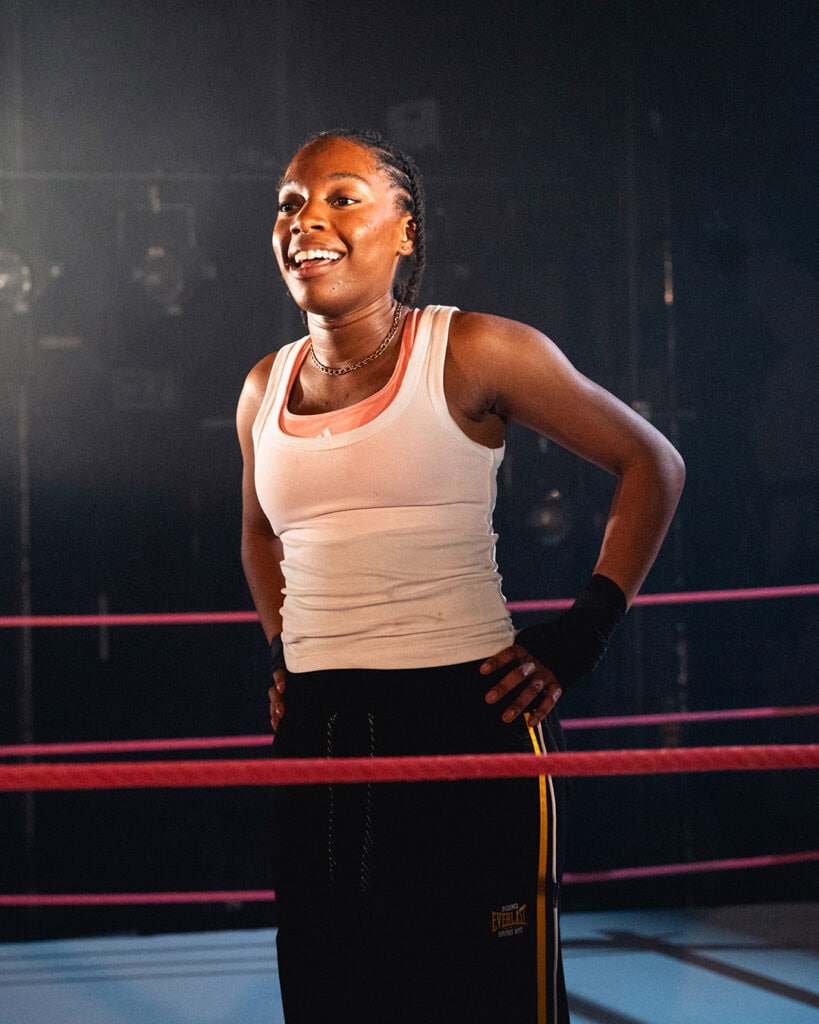
Hearing the title Bitch Boxer, my first thought was linguistic rather than theatrical – what a satisfying pair of plosives. Bitch. Boxer. Both words land with a punch, which feels appropriate for a play about a boxer. My second thought, perhaps unfairly, was that I had already guessed the show’s angle. The title seemed to promise a familiar contemporary narrative: a reclamation of the word “bitch”, perhaps something about female rage being reframed as power. In other words, I thought I knew what I was walking into.
Theatre, of course, delights in proving you wrong.
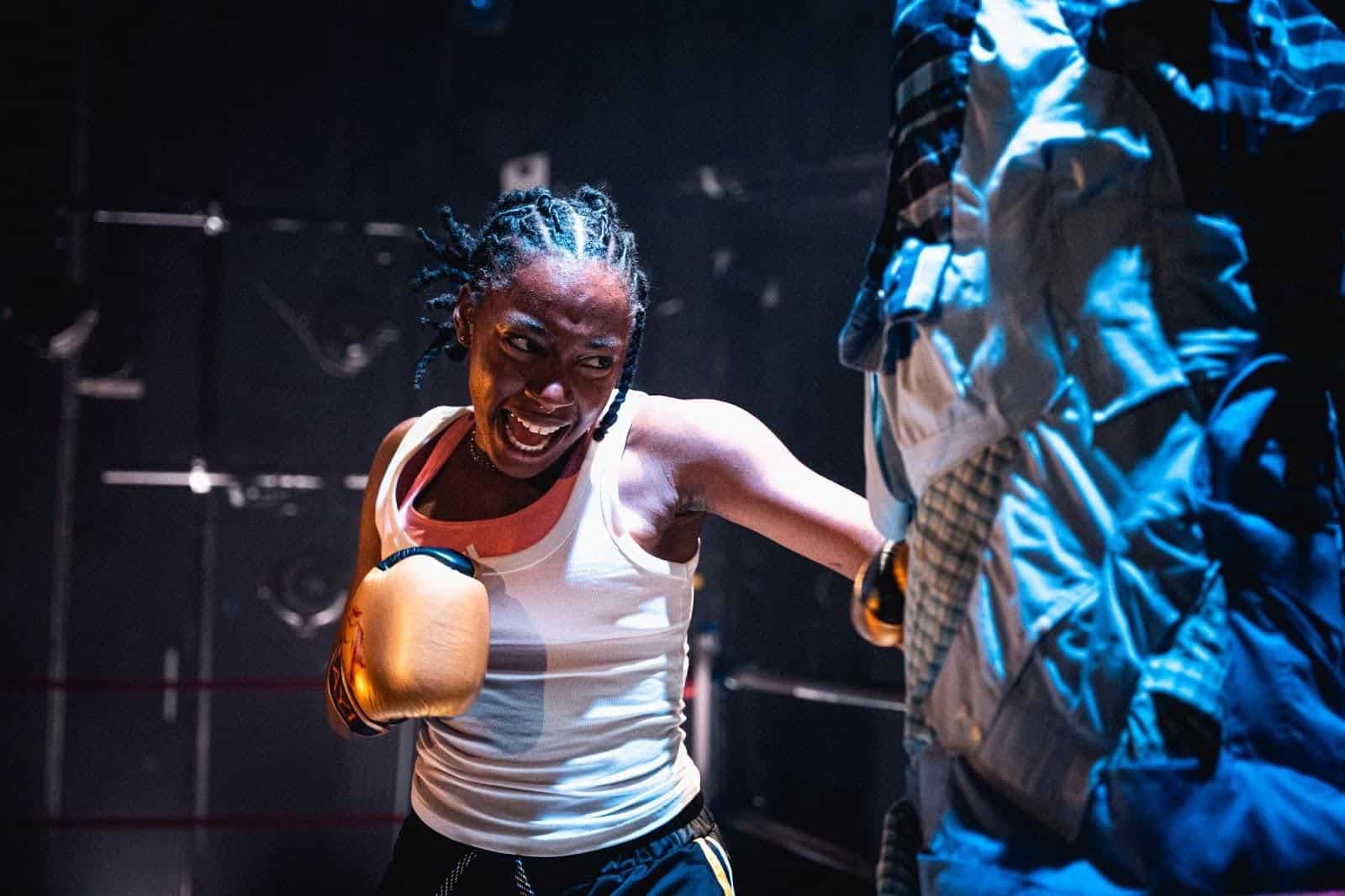
At the Arcola Theatre, the set is spare with a single punching bag hanging close to the audience in a space lightly fogged, as if we’ve stepped into a half-lit gym at the end of a long day. The bag itself is curious, stitched from layers of men’s dress shirts in washed-out blues. Initially it reads as a blunt symbol where a woman is quite literally punching through masculinity. As the play unfolds, however, the bag feels much heavier. The layers of fabric start to resemble grief, memory, and the complicated inheritance of a father-daughter relationship stitched together through boxing.
For sixty minutes, Jodie Campbell’s Chloe Jackson occupies the stage entirely alone. In many ways that feels harder than stepping into any ring. At least in boxing you have an opponent, someone to push against, someone to catch the audience’s focus for a moment while you gather yourself. Here there is no such relief. Campbell must hold the space by herself, and she does so with astonishing stamina, both physically and emotionally.
The show opens to the steady rhythm of a skipping rope. Under a tight spotlight, Chloe works the rope with fierce concentration, it snapping against the floor. There is something exhilarating about witnessing real exertion in a theatre, with sweat, breath, and tiny missteps corrected mid-flow. When the audience whoops at a particularly blistering burst of footwork, the room briefly becomes a ringside crowd.
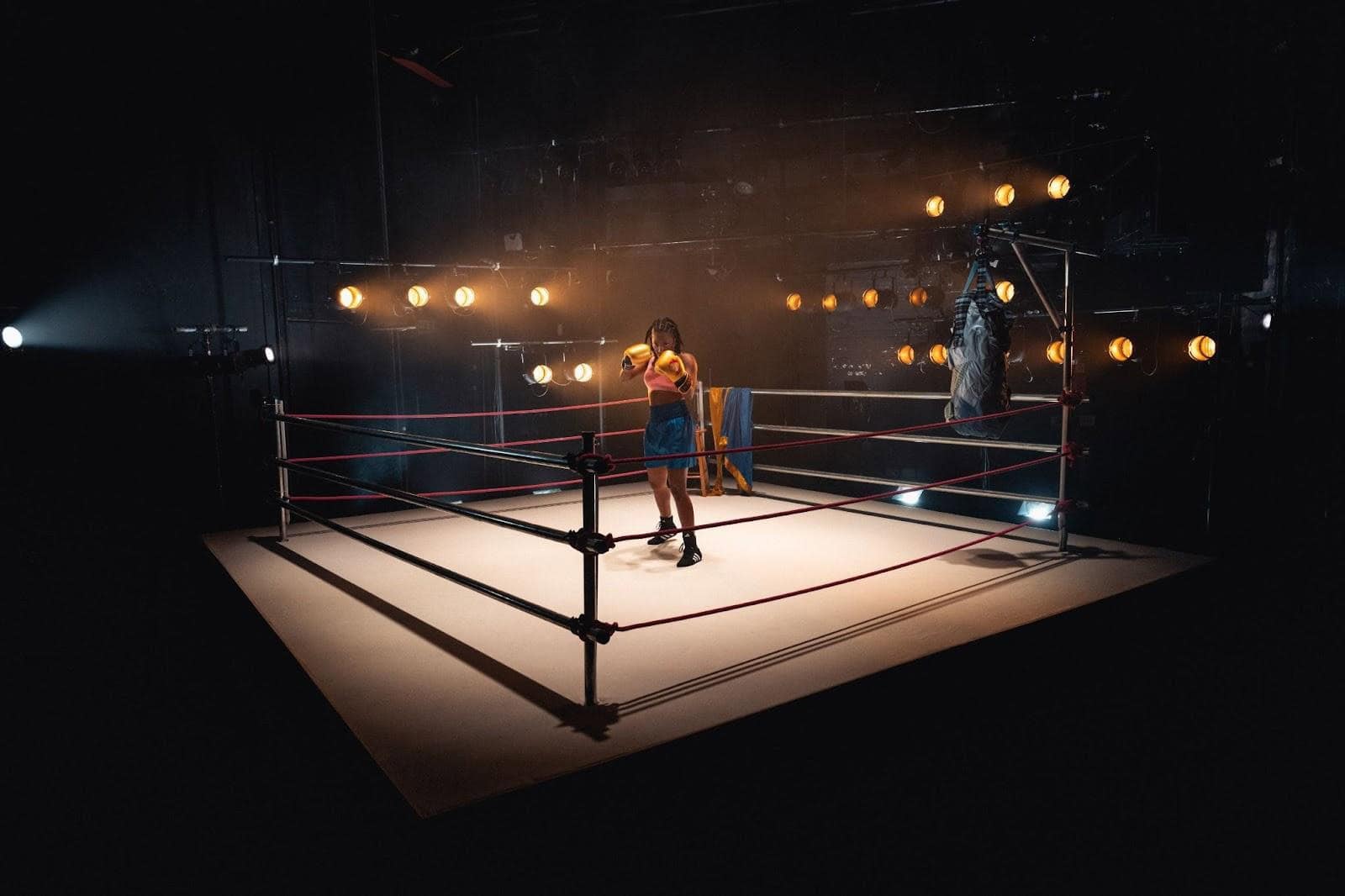
Then the phone rings. Chloe learns her father has died, and the shift in energy is almost imperceptible yet absolute. What looked like disciplined athleticism begins to read as deflection. She returns to shadow boxing with renewed ferocity, as though grief is something that can be physically exhausted.
Campbell is especially impressive in the way she conjures the absent figures orbiting Chloe’s life without ever leaving the ring. With subtle shifts in voice and posture she sketches her coach Lenny, her girlfriend Jamie, and most powerfully her father. At times the lines blur, when Chloe repeats his words, it almost feels as though he’s speaking through her.
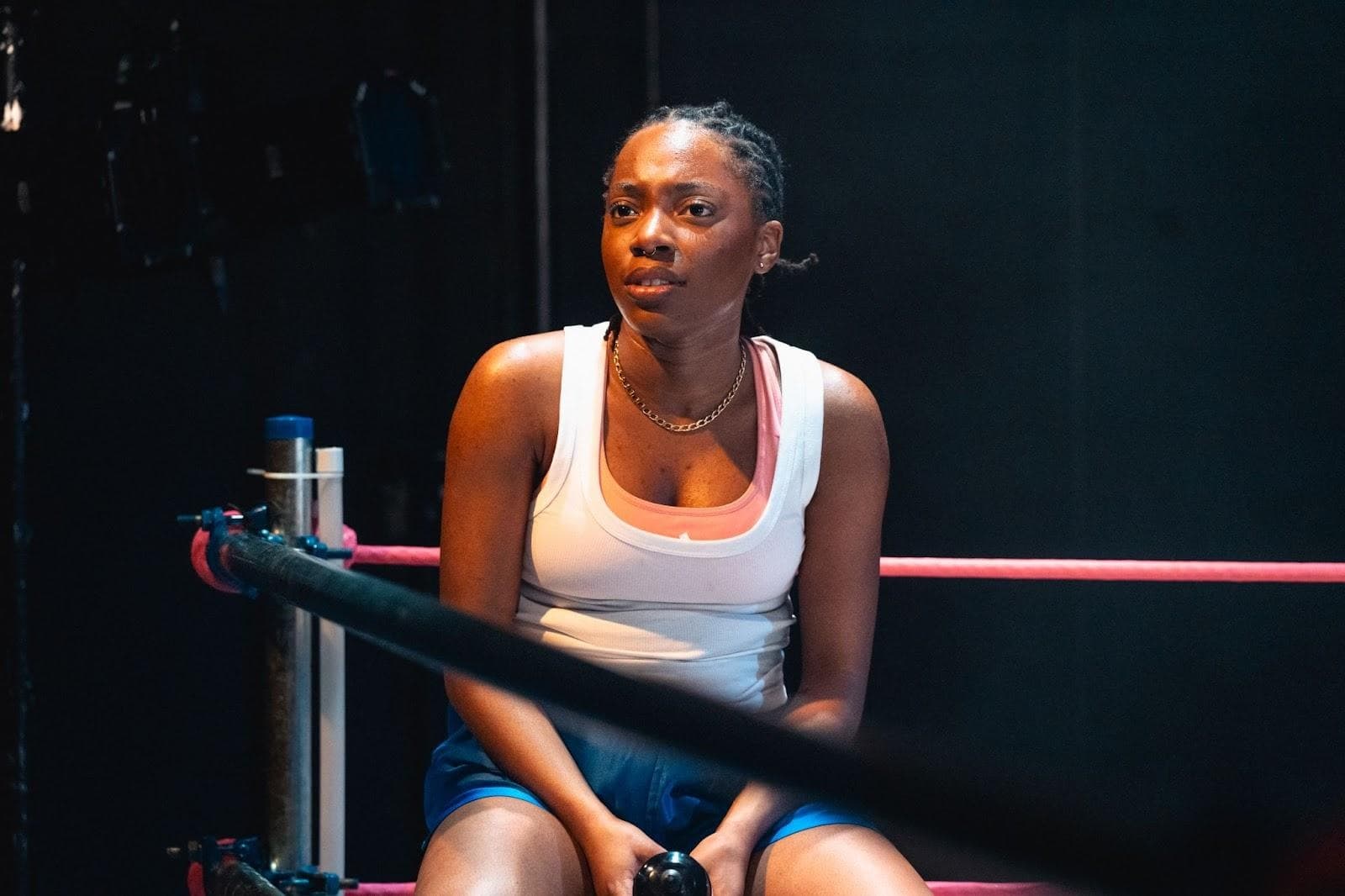
Director Prime Isaac keeps the staging fluid. The boxing ring is a training space in one moment and a dancefloor in the next, pulsing with music as Chloe escapes into the dizzy spontaneity of a night out. These transitions keep the hour moving at the same pace as her own restless energy.
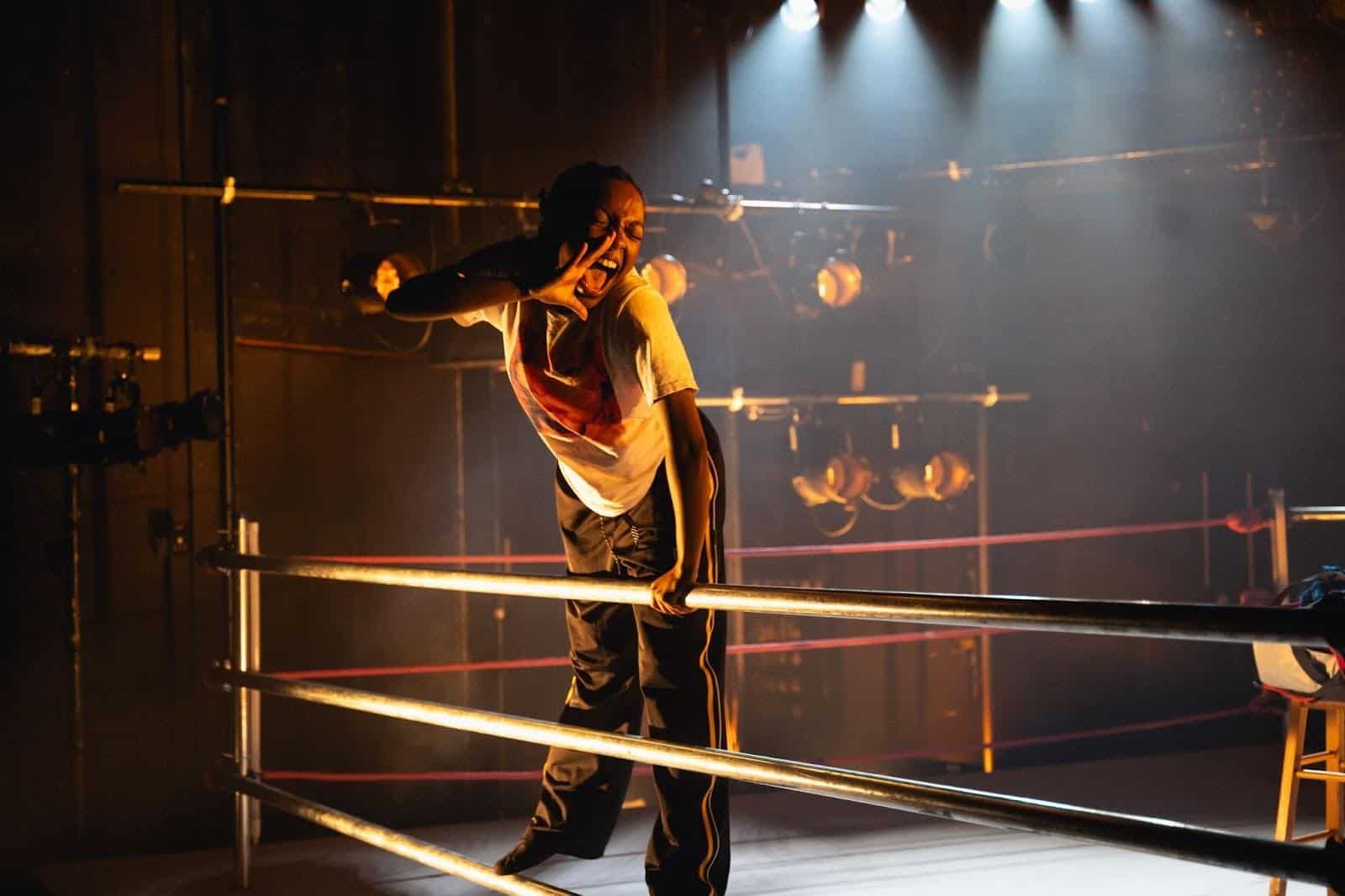
The play understands the strange stubbornness of grief well. Chloe refuses to cry, mocking the emotional displays around her and throwing herself harder into training instead. Campbell lets the audience see the cracks only gradually, particularly in a recollection of holding her father’s hand as a child and the teenage instinct to pull away from that closeness too soon.
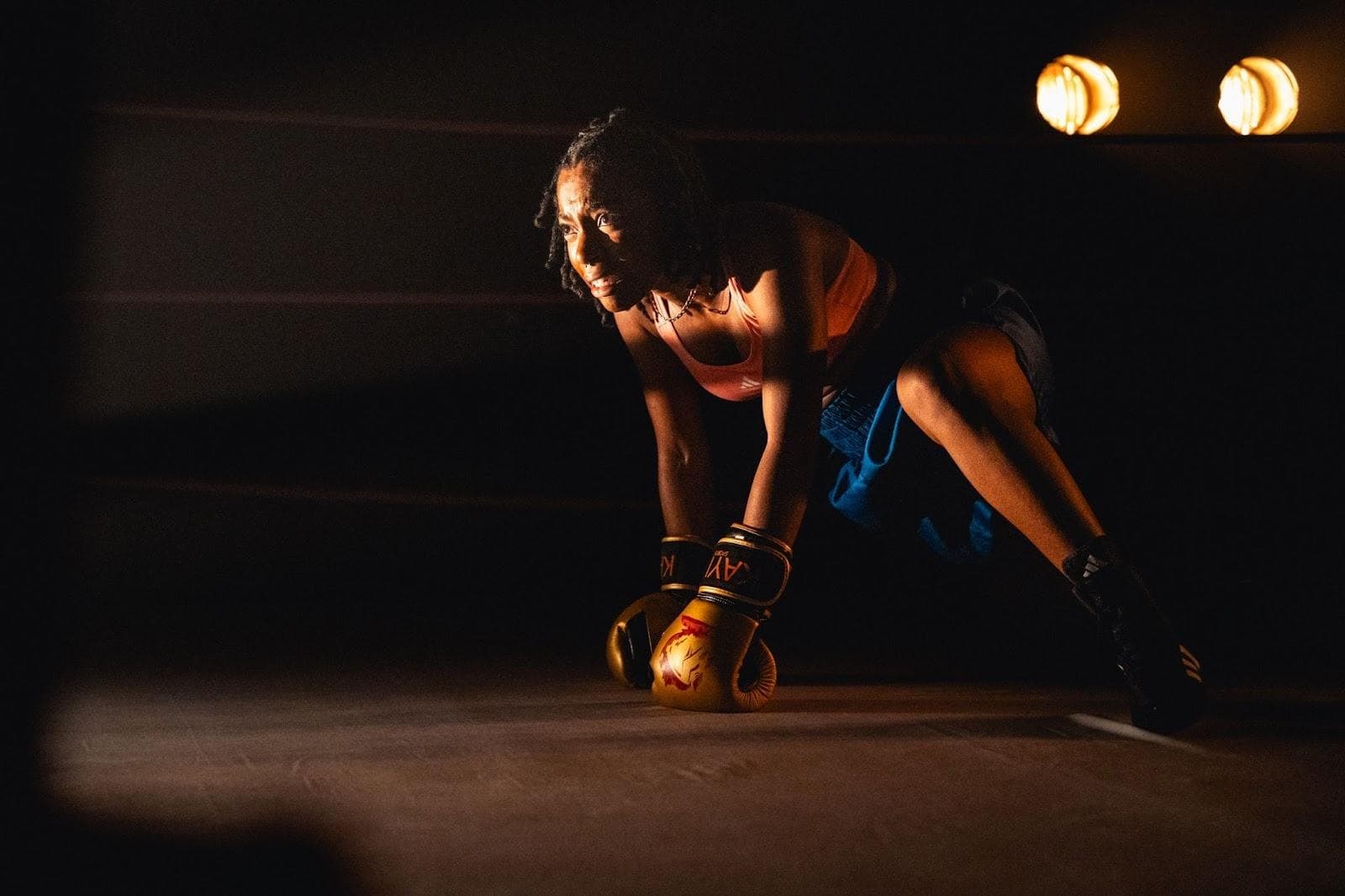
By the time Chloe steps into the Olympic ring, with 2012 marking the first year women were allowed to compete in Olympic boxing, the story has shifted away from the expectations suggested by the title. The final fight matters, but not simply as a sporting victory. What’s really at stake is something more personal, the way her father’s voice, his lessons, and their shared language of boxing she chooses to carry forward into her future.
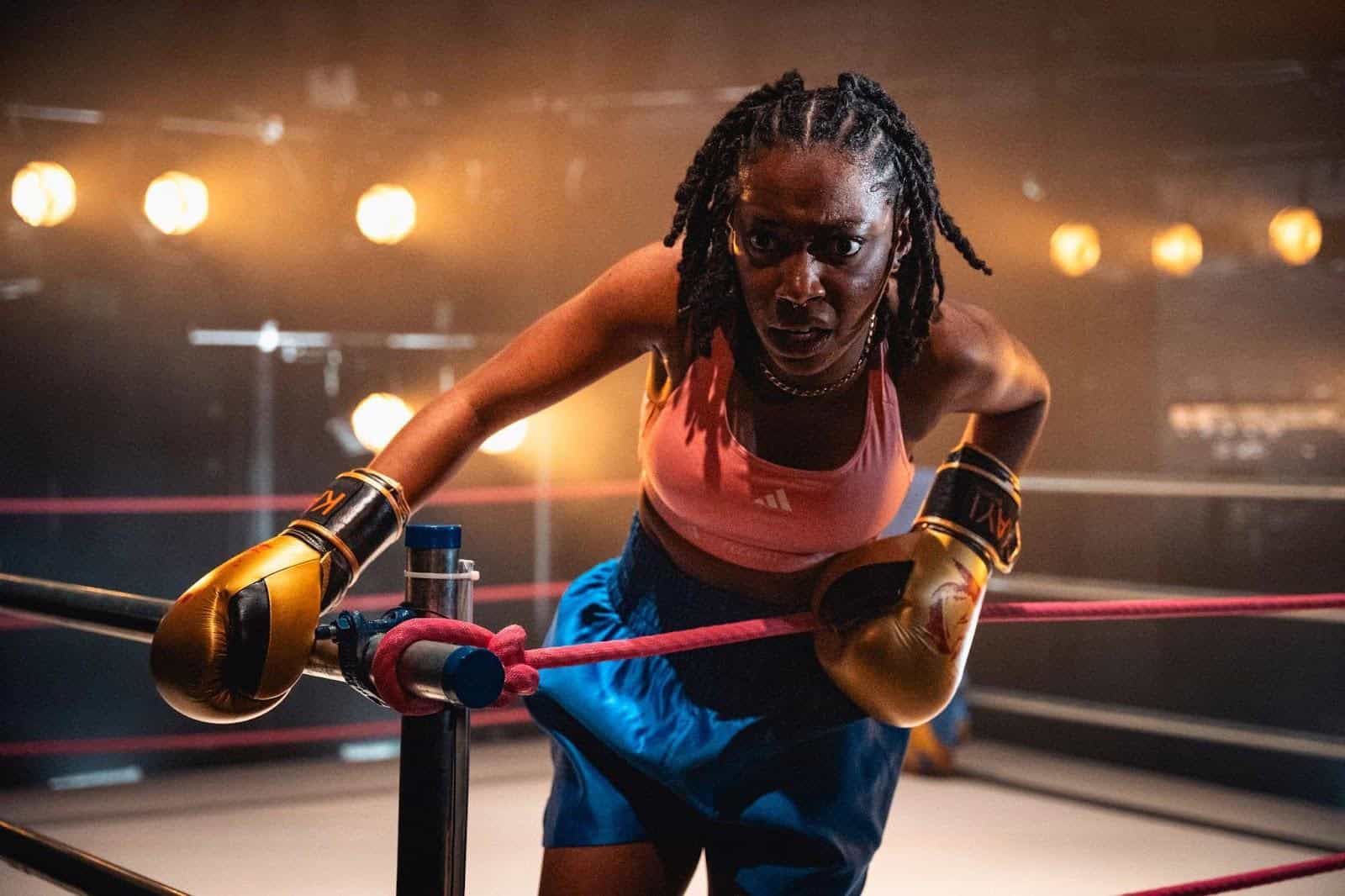
Campbell is funny, fierce, and entirely in command of the room, yet the real test of a solo show is endurance. An hour alone on stage offers nowhere to hide, there’s no opponent, no corner, no chance to pass the energy elsewhere. Campbell carries all the blows, the humour, the grief, keeping the audience with her to the final bell.