
After Matthieu Blazy’s departure from the eponymous Italian label in December of last year, the fashion industry had been waiting on the edge of its seat for the appointment of Bottega Veneta’s newest creative director. Then, after a while, we were greeted by the news that Louise Trotter would take the helm. We breathed a sigh of relief. We knew it would be in good hands.
For context, Trotter began her career at Whistles before moving across the Atlantic to New York, taking on the position of Creative Director for Calvin Klein’s womenswear division. Today, she debuted her first collection as Creative Director of Bottega Veneta.
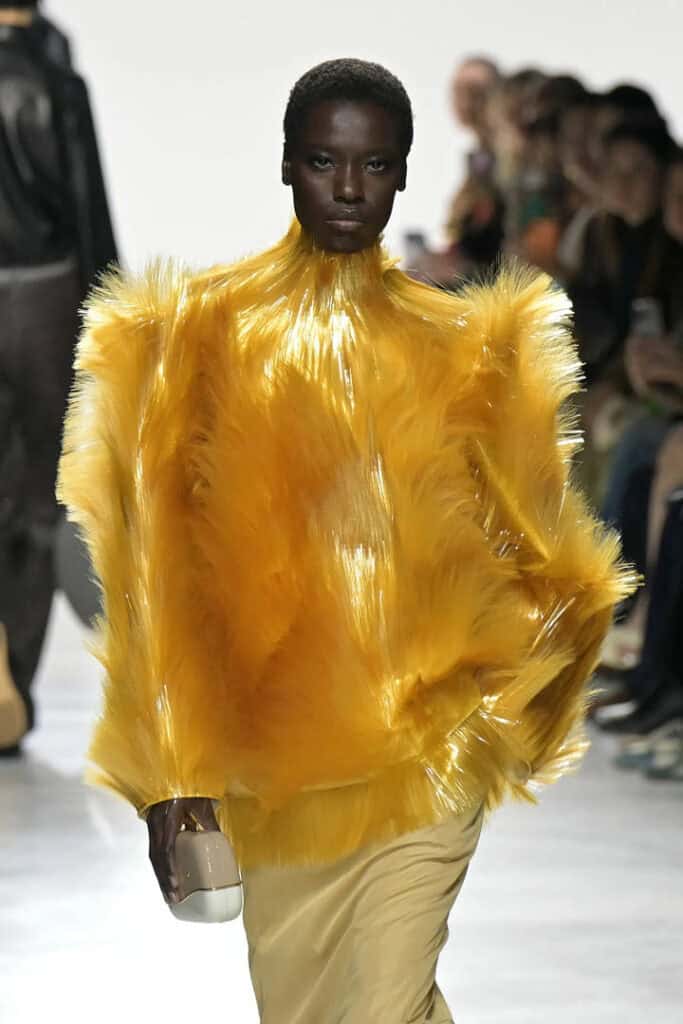
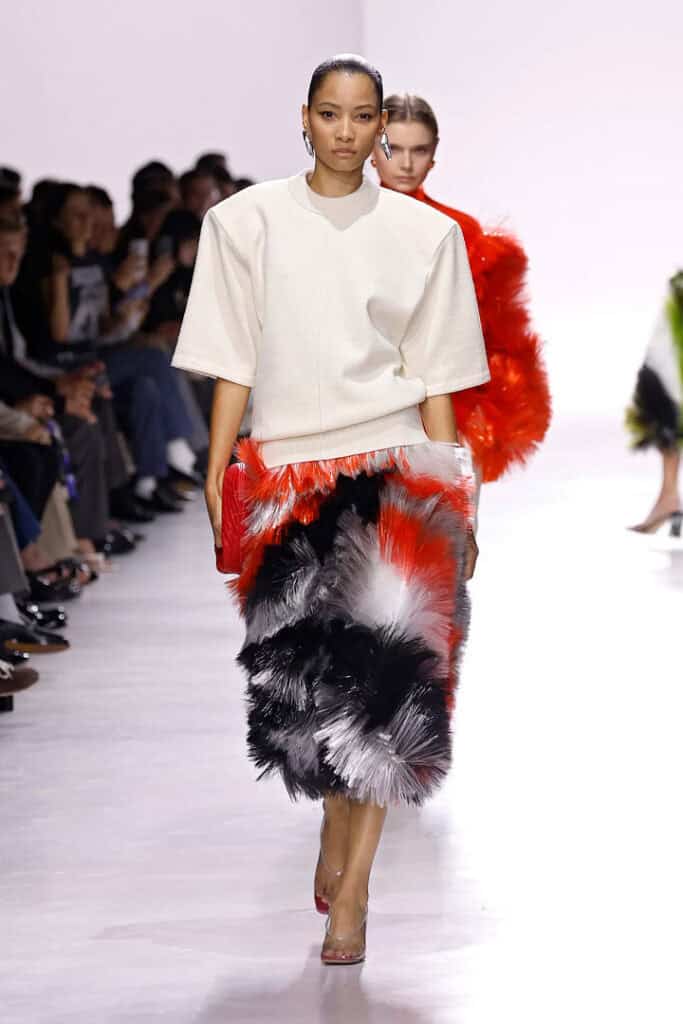
After moving with her family to Italy’s fashion capital this summer, Trotter fell in love with Bottega Veneta’s signature Intrecciato leather, a hallmark of the brand’s identity in recent years under Matthieu Blazy. We saw the technique infused into a handful of looks. Bags and two piece co-ords made up of the staple weave walked the runway. Her line-up included leathers, sharply cut double-breasted blazers with extended buttonery, gold, refined two-piece sets, and a tassel-laden, draping poncho that stretched from neck to floor. Two of such numbers were made of fibreglass strands, dazzling in gold and bronze colourways. These looks gave the collection a definitive depth and gave us a taste of what’s to come down the line at Bottega. With these pieces, Trotter seemed to signal that she has tested the waters and is not afraid to push further, setting the stage for a bold new chapter at the esteemed label. It was a collection of breadth as well as focus, a debut that demonstrated she is more than capable of carrying the house forward in her own voice.
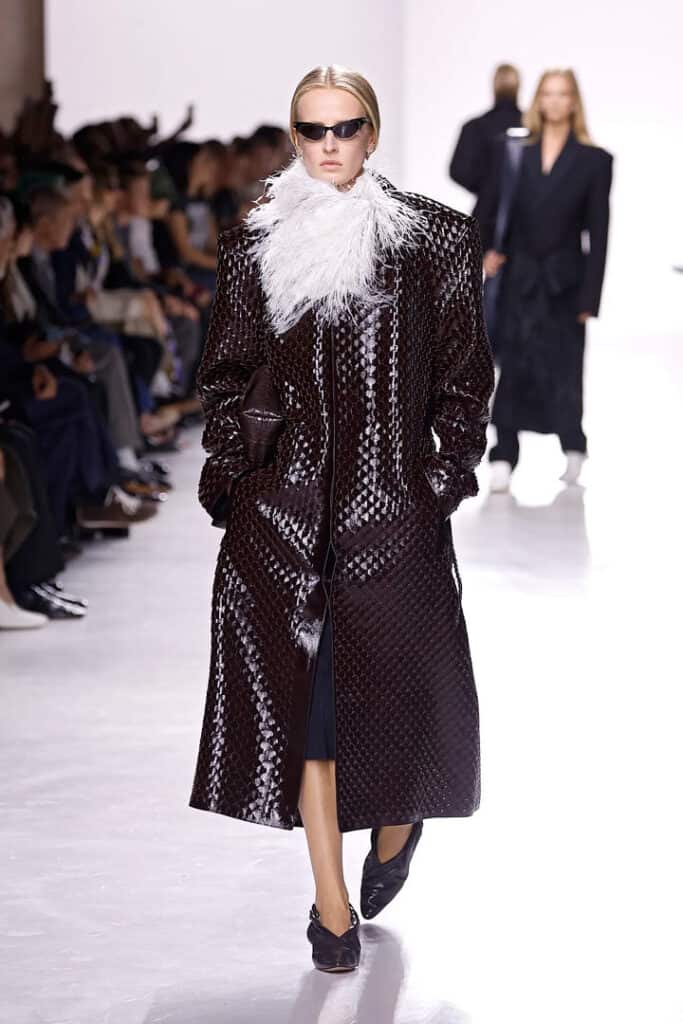
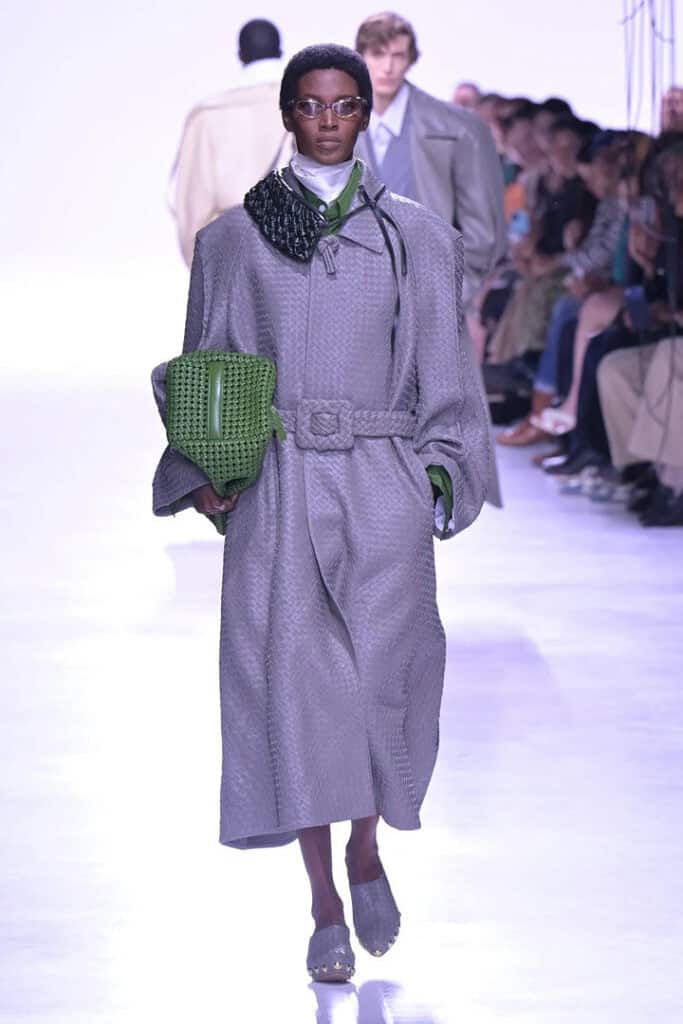
When comparing Trotter’s debut collection to Blazy’s past shows, one might notice a certain absence of novelty, though, of course, that has always been Matthieu’s way. Under his direction, Bottega Veneta thrived not only on beautifully made clothes but also on the clever little trinkets, charms, and knick-knacks that seemed designed to go viral for all the right reasons. Those playful touches gave the brand an instantly recognisable cultural currency. Trotter, by contrast, appears less concerned — at least for now — with that kind of marketable whimsy. This is not to suggest she won’t eventually come to embrace it, but this first outing was deliberately focused on the garments themselves rather than accessories engineered for buzz. The result was a collection that underscored her command of tailoring and materials, showcasing the kind of purity and seriousness that signals confidence in her craft. And the clothes were indeed exceptional. Despite the absence of gimmicks, the luxury market for Bottega’s ready-to- wear remains strong, even with its notoriously hefty price tag, and Trotter seems determined to strengthen it further.
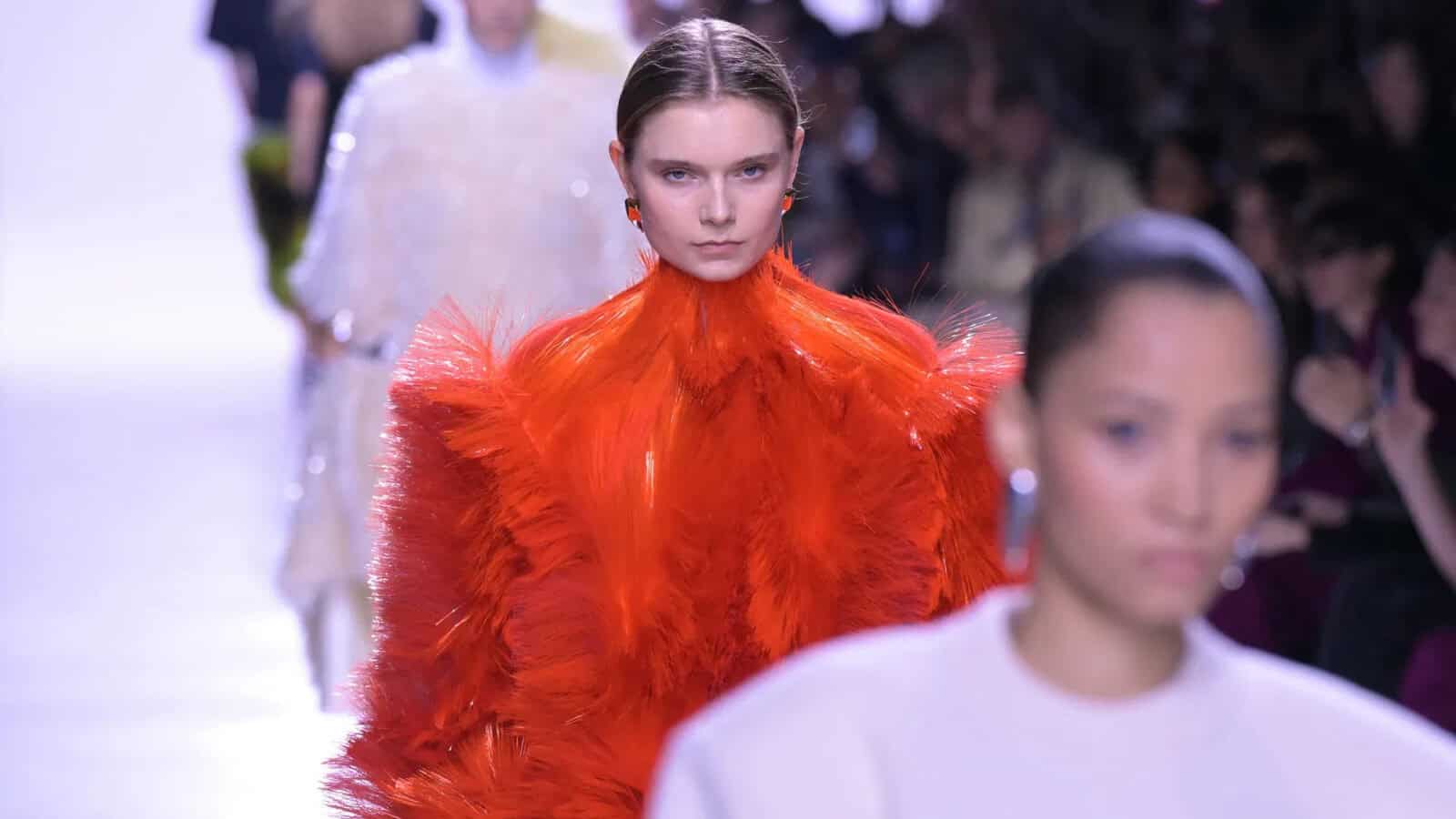
The garments themselves didn’t read as a traditional summer collection. Instead, they felt more like a clear showcase of Trotter’s definitive talent for fashion design. Her approach combined austerity with playfulness, resulting in pieces that balanced restraint with wit. More than following seasonal expectations, the collection seemed to offer a deeply personal interpretation of Bottega Veneta’s image; one that reimagined the house’s codes through her own lens, highlighting both her precision and her willingness to push boundaries. Trotter’s debut at Bottega Veneta marked a shift in energy for the house; one less about spectacle and more about substance. Trotter has chosen to build her foundation on silhouette while establishing herself as its latest creative director, rightfully so. It’s a bold opening statement, not because it shouts, but because it refuses to. In a moment when much of luxury is defined by hype, her insistence on the primacy of the garment feels refreshing. If this collection is any indication, Bottega’s future will be assured and unapologetically her own.