
British theatre is deeply entangled in a cultural ecosystem that prizes heritage above innovation. Nowhere is this more evident than in the persistent revival and adaptation of classic plays, which act as artistic vessels for tradition, nostalgia, and the preservation of national identity.
In 2022, Arts Council England (ACE) revealed that 65% of new productions at National Portfolio Organisations were either adaptations or revivals. That figure speaks volumes. Across the on- and off-West End, the trend holds: another Shakespeare, another Chekhov, another Greek tragedy dressed up in modern-day aesthetics.

This isn’t just a programming quirk – it’s an industry-wide reinforcement of the idea that “high-art” and “real” theatre is something from the past, Eurocentric and, preferably, English.
Cultural theorist Mark Fisher has explained this cultural occurrence as a product of our refusal to accept the culture of the present, resulting in a clutching at nostalgia and an overrating of the artistic past. We are witnessing this phenomenon in theatre, with revival adaptations acting as an industry copying mechanism; they fulfil a sense of nostalgia of a time when British theatre’s literary pedigree and period authenticity was perceived as “elite” and “sophisticated”. The result is a semi-conscious – or perhaps entirely conscious – choking of the medium’s willingness to innovate, diversify, or reflect the world we actually live in – transgressing from the nostalgic image of British theatre. This hesitancy is suppressing new theatre-makers, stories, themes, and emotions that could otherwise flourish and be celebrated in the industry.
Yet, the motivations that underpins this revival domination do not solely stem from British theatre’s demand to be considered “highbrow.” For theatre-makers, restaging the classics is a shortcut to critical acclaim – a way to be labelled “visionary” without undertaking the more demanding process of creating something original.
In much of British theatre today, boldness is often awarded not to those who write new work, but to those who restyle existing texts with just enough visual or conceptual flair to suggest relevance. Revivals offer a sense of built-in legitimacy: The material already has cultural weight, critical approval, and audience familiarity. The result is a system where creative input is low, but professional reward remains high. We are witnessing creative anomie disguised as prestige.
This season alone brings Oedipus (Dir. Robert Icke), Richard II (Dir. Nicholas Hytner), and Henry V (Dir. Max Webster). These high-profile reimaginings are framed as bold new work, yet in reality they reveal theatre’s continued glorification of Britain’s cultural and artistic past. We are witnessing the recycling of stories, with acclaimed theatre-makers receiving critical and creative praise while dismissing the opportunity to embrace truly original voices, instead returning to the same handful of classical texts endlessly reimagined with only subtle differences.
The go-to justification – or defence – from theatre creatives is always the same: relevancy. Theatre creatives consistently praise the writing of Shakespeare, Euripides, and their peers for their themes, stories, and messaging as being “relevant” and “reflective” of the current-day social climate.

For instance, the political ambition of Henry V (starring Kit Harington) at the Donmar was supposedly commentary on today’s power-hungry leaders. But here’s the problem: if a play from the 16th century or 5th century BC is perpetually branded “applicable,” we are simultaneously flattening its original context whilst side-stepping the present.
That kind of backward-looking validation doesn’t honour the work – it dilutes it. Essentially, Britain’s theatre landscape of classical adaptations is becoming a cultural Rorschach test: blank enough to mean anything – endlessly interpretable and conveniently absolving creators from engaging with the social commentary of today.
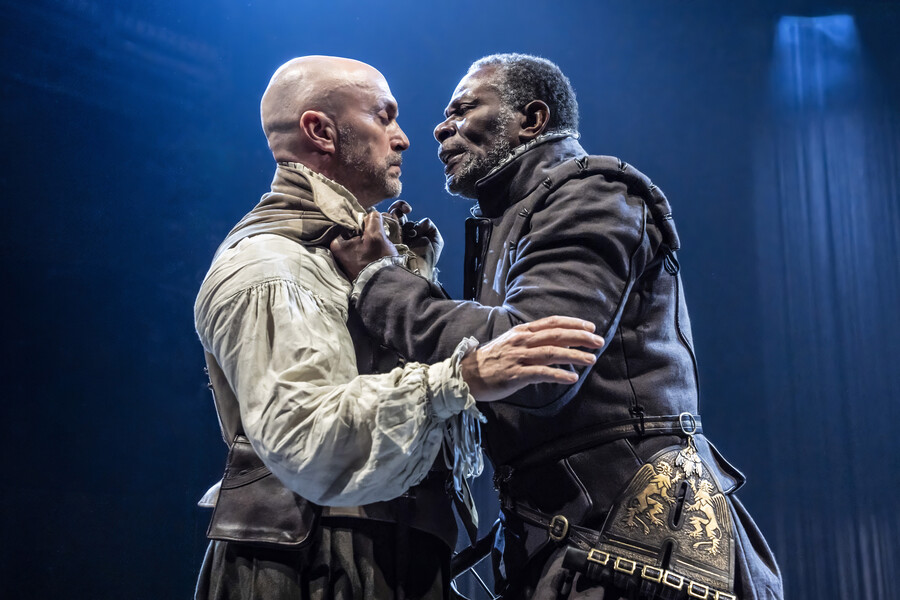
Take Othello, for instance – possibly the most performed play in Britain’s history. Tom Morris’s upcoming production promises a fresh take on race and power. But that “fresh take” has been re-heated to its limits. From the National Theatre’s 2013 version with Adrian Lester, to the Royal Shakespeare Company’s 2015 and 2022 runs, and National Theatre production again in 2022, Othello has become a safe placeholder for exploring Blackness on stage – without commissioning new Black writers.

And the consequences go beyond creative stagnation – there is also infrastructural gatekeeping built within this strict and unwavering definition of what “British” theatre means. Prioritising classic revivals sidelines living writers – especially those from marginalised communities – to studio theatres and short runs with small marketing budgets.
This is apparent, with Benedict Lombe in 2024 becoming the third Black British woman to have a play staged in the West End’s 350-year history, following Natasha Gordon (Nine Night, 2018) and Yasmin Joseph (J’Ouvert, 2021). As Lombe said in The Guardian, “I’m hoping this moment in the West End is an opportunity to shift the canon and change the idea of who gets to tell these stories on these stages.” Behind the curtain, the numbers are no better. The theatre still carries the scent of its aristocratic origins through its demographic.

ACE revealed a stark imbalance, in London, where people of colour make up more than 40% of the population, they hold 5% of theatre jobs. Meanwhile, a 2019 Sutton Trust report revealed 44% of leading British actors were privately educated, nearly seven times the national average.
If theatre wants to serve the present, it must start trusting it. New voices don’t need to echo or re-model tradition – they deserve the chance to replace it. Original stories aren’t just about diversity; they’re about truth, creativity, and urgency. To restage the same text with a different cast is not reinvention – it’s repetition. As the West End lifts the curtain on yet another revival, we have to ask: What are we refusing to see?