
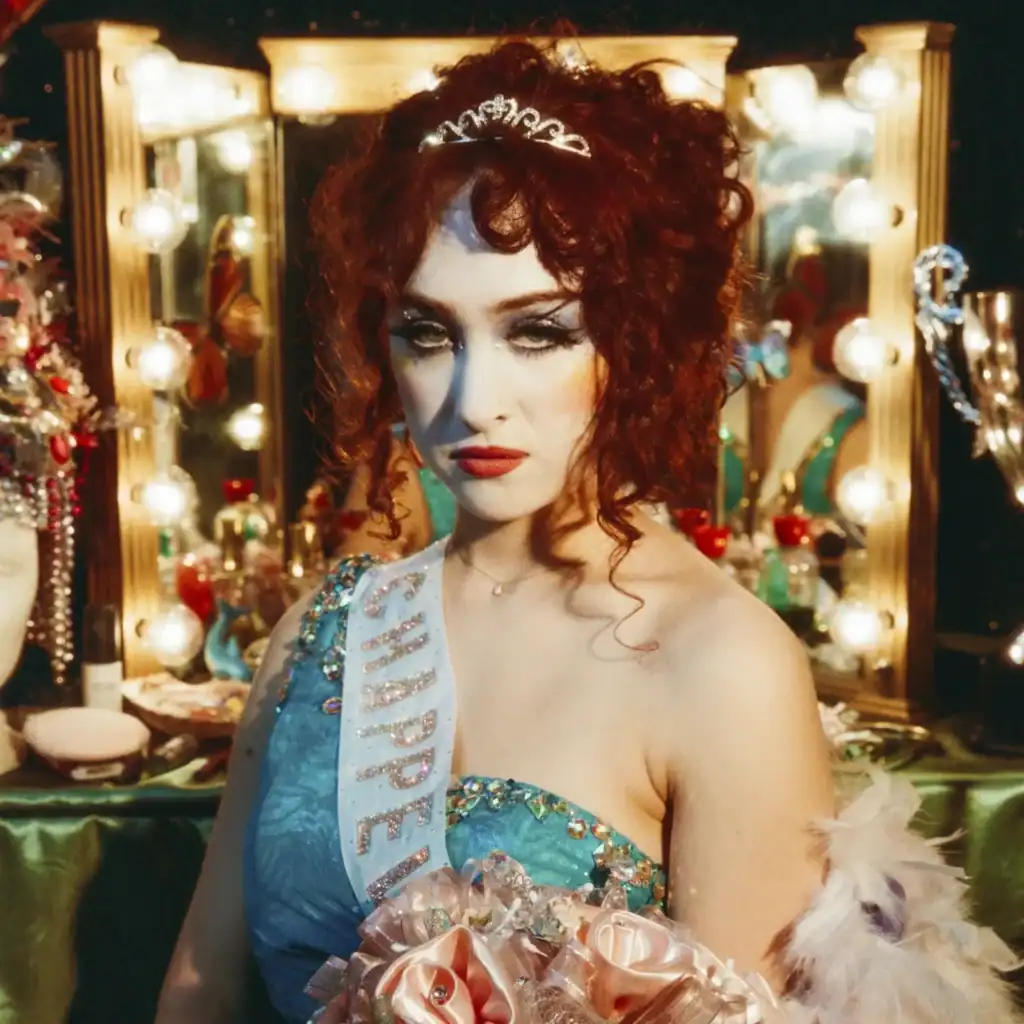
At some point last week, the internet accepted that Chappell Roan had made an 11-year-old girl cry.
The story travelled quickly, as these things tend to do. A hotel breakfast, an overzealous security guard and a version of events that people were quick to believe, set in motion by a post from the child’s stepfather and former Chelsea footballer Jorginho, – not someone entirely new to the mechanics of celebrity and attention. From there, very little else was needed. Chappell Roan had officially been cancelled.
As a lesbian who has been following Chappell since the release of the single of ‘Casual’ in late 2022, before she became something closer to a discourse object than a person, I’ve been watching her latest ‘cancellation’ with a certain sense of inevitability.
There was briefly a period after’ Good Luck, Babe!’ in 2024 where people seemed content to enjoy her without qualification. It didn’t last, as is often the way with female fame. What followed was less a single moment than a steady accumulation of minor offences, the beginnings of a familiar kind of dogpile. A comment taken badly, a tone deemed off and a clip that didn’t quite land. Nothing especially remarkable, but enough to eventually be arranged into something that looked like a pattern. She is rude. She is ungrateful. She is not very ‘nice’. And once that kind of pattern takes hold, it tends to move quickly.
It’s consolidated before it is really examined. We don’t seem especially interested in forming opinions anymore, only in recognising them once they’ve already taken shape. And that failure lands most heavily on queer women who refuse to make themselves palatable to straight audiences.
It is difficult not to notice how much weight a word like ‘nice’ carries. In this context, it functions less as a meaningful moral category and more as a measure of palatability. It tells you very little about a person beyond their willingness to be agreeable and consumable to as many people as possible. It is a performance of ease and one of which women are expected to deliver with remarkable consistency. And what makes Chappell slightly more interesting is that she has never seemed especially committed to performing such ‘niceness’.
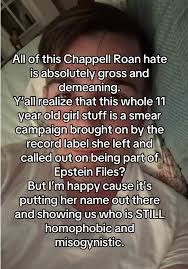
Her work is rooted specifically in a queer and often explicitly lesbian perspective. She has not made any particularly visible effort to dilute that or translate it into something more universally accommodating. There is a heightened quality to her presence, something knowingly excessive, that reads easily within queer spaces and far less comfortably outside of them. The problem, or perhaps the inevitability, is that once that sensibility is exposed to a broader audience, it is no longer received as style but as personality. The ‘performance’ collapses and what plays as camp in one context is, in another, flattened into something far less generous: she’s just a bit of a bitch.
What tends to get lost is that Chappell Roan’s persona isn’t simply exaggerated – it is shaped through drag. The theatricality and occasional abrasion isn’t really about being liked. At the same time, she has been fairly explicit about her discomfort with the more invasive expectations of fame. The paparazzi, the overfamiliarity and the assumption that private access is part of the job. She has pushed back against it and not always gently. The problem is that those two things don’t stay separate for very long, they get folded together and begin to read as one. What is performance becomes personality and the boundary starts to look like further proof. She is no longer someone to be understood but someone to be assessed.
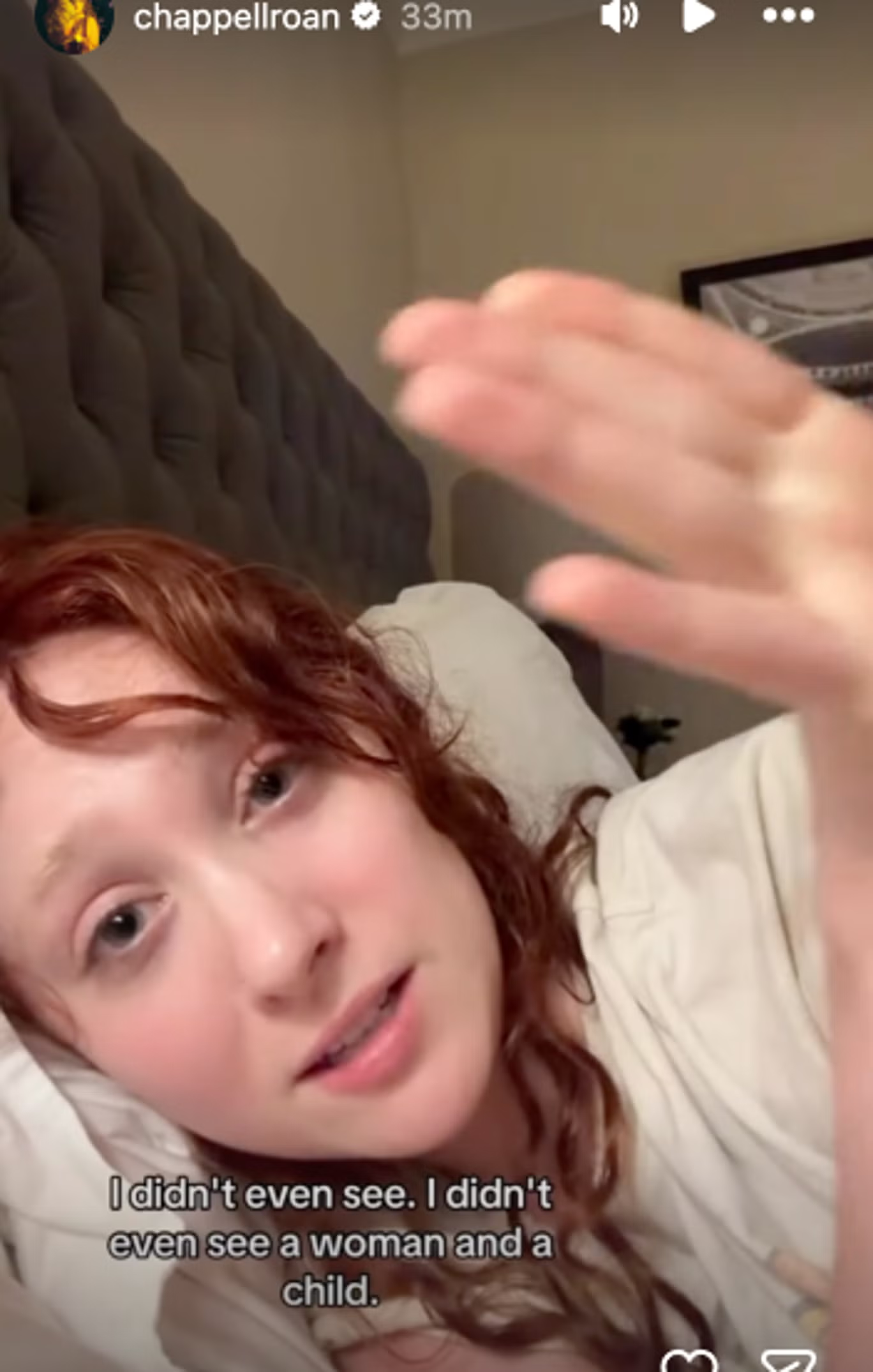
What sits underneath this is a question of literacy, or the lack of it. The kind of camp performance Chappell Roan is drawing on does not travel especially well outside of the contexts it comes from. Within queer spaces, it reads as theatrical, sarcastic or even affectionate. Outside of them, it is far more likely to be taken at face value or simply taken the wrong way. And that misreading isn’t neutral. It lands differently when the person in question is a Lesbian who has no real interest in being broadly liked. There is still very clearly an expectation that she should soften and pander to an audience that does not understand her, but expects to be accommodated anyway.
You can see a softer version of this dynamic in the reception of Reneé Rapp, who, to my mind, is being criticised less for anything she’s actually done than for a general refusal to be particularly digestible. The complaints are familiar: too blunt, too loud, insufficiently managed, famously ‘un-media-trained’. Again, the issue is not behaviour but presentation and the ease with which people adopt that framing suggests they’re not so much deciding they dislike her as recognising that they’re supposed to.
Set against this, the continued success of Chris Brown introduces a complication that is difficult to ignore. His history is neither ambiguous nor obscure. It includes the assault of Rihanna, the details of which involved repeated threats to kill her, alongside a long trail of further allegations, arrests and legal issues that have followed him throughout his career. This is not a singular incident, nor a misunderstanding, but a pattern. And yet it remains entirely compatible with a functioning and profitable one. Which suggests that what we find culturally intolerable is not fixed, but elastic, shaped less by the severity of an action than by who is performing it. Not just a man, but a man audiences are still willing to desire, consume and forgive.
What interests me, more than the double standard itself, is how easily it holds. How quickly a narrative forms and how little resistance it seems to meet. It appears, circulates and immediately settles. And I don’t think that’s accidental. It suggests a culture that is increasingly comfortable outsourcing its opinions, one in which certain judgements arrive already shaped.
Because it is not only that women like Chappell Roan are found unlikable. It is how readily that unlikability is produced, how easily it is agreed upon and how rarely it is interrogated. A queer woman becomes widely visible without softening herself for general consumption and almost immediately she is positioned as a problem.
At a certain point, it stops looking like coincidence. It starts to look like something else. Misogynistic, homophobic, even lesbophobic ideas, planted in your algorithm and repeated back to you until they feel like your own. You pick them up, run with them and rarely stop to ask where they came from. Which does make you wonder whether we are actually forming opinions anymore or just repeating the ones TikTok gave us and calling it thinking.