
“To everyone else it might be a new sound – but to me, it’s the most me I’ve been in a few years.”
So begins my conversation with Charlotte Plank, the Australian-born, British-based musician who won her first BRIT award for Song of the Year in 2024 with massive drum’n’bass hit “Dancing is Healing” with Rudimental and Vibe Chemistry. With her own sold-out headline tour Clubliminal one year past and a fresh sound on the horizon, she’s ready to step into her own light and leave the features as a footnote. The only way is up.
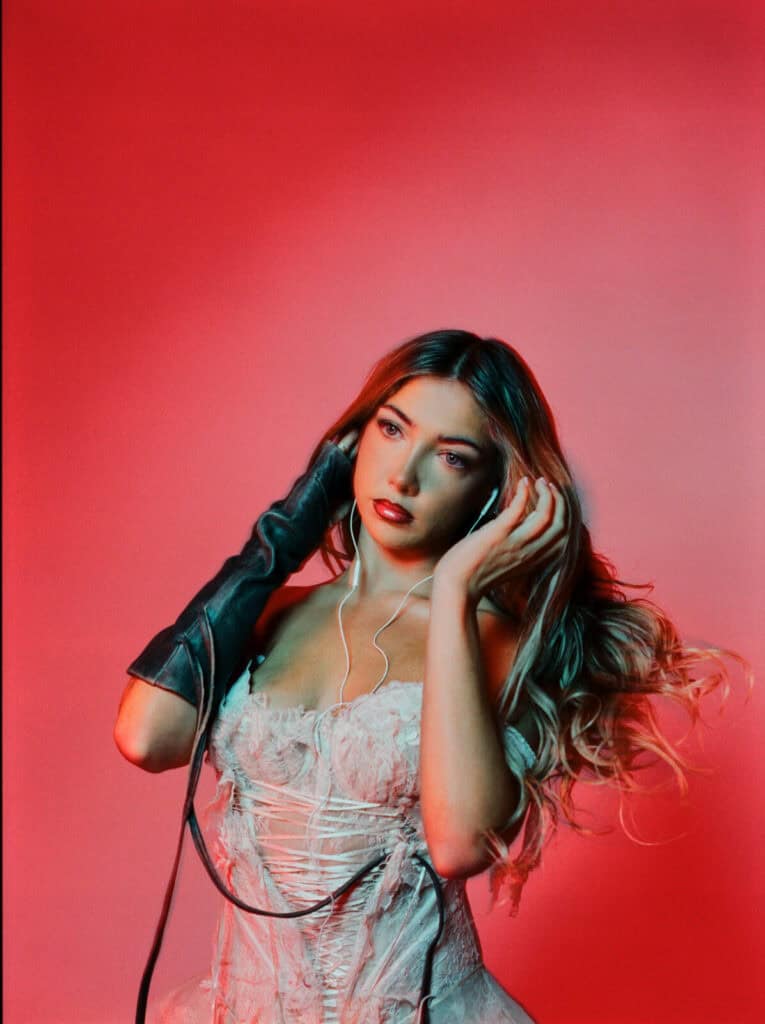
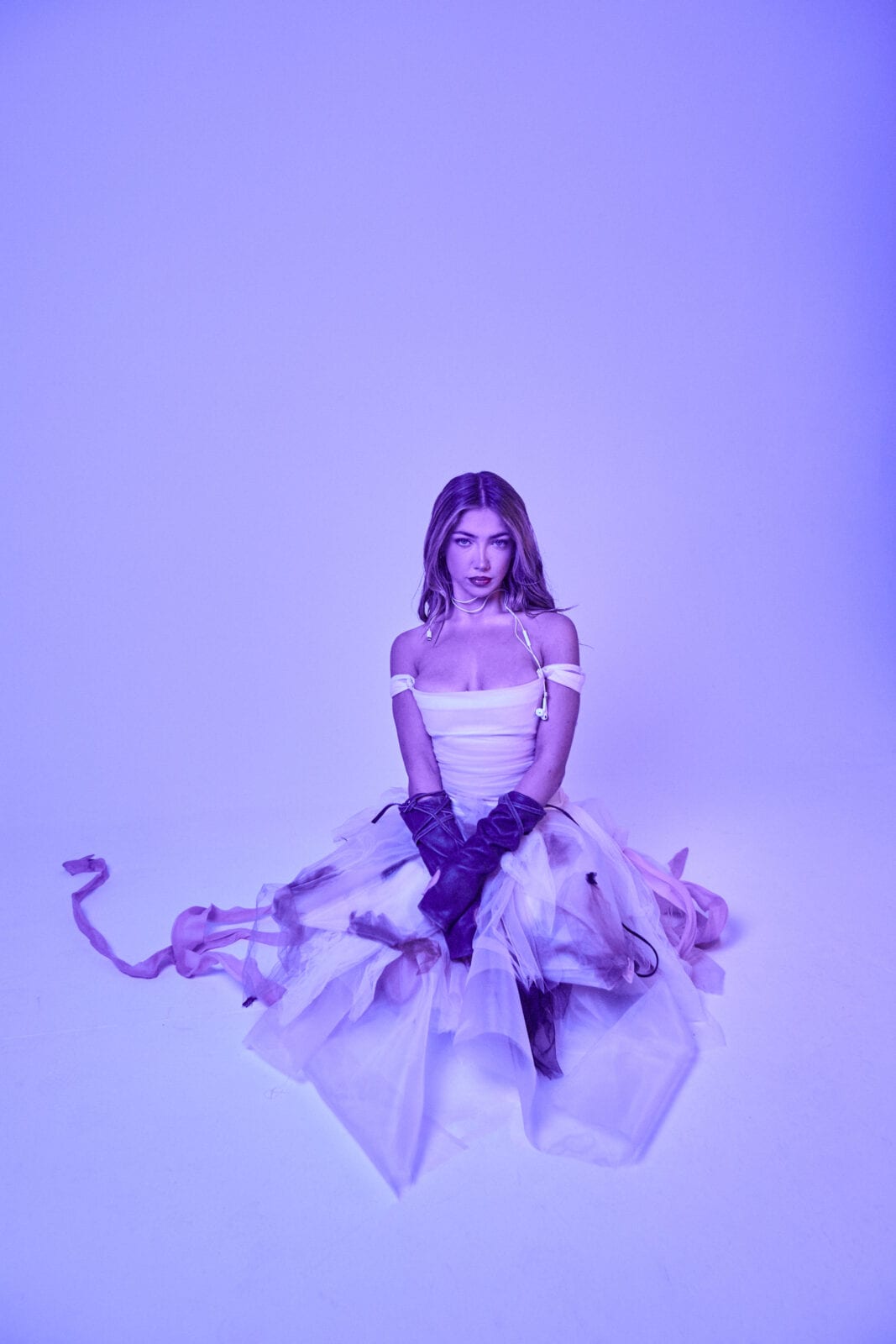
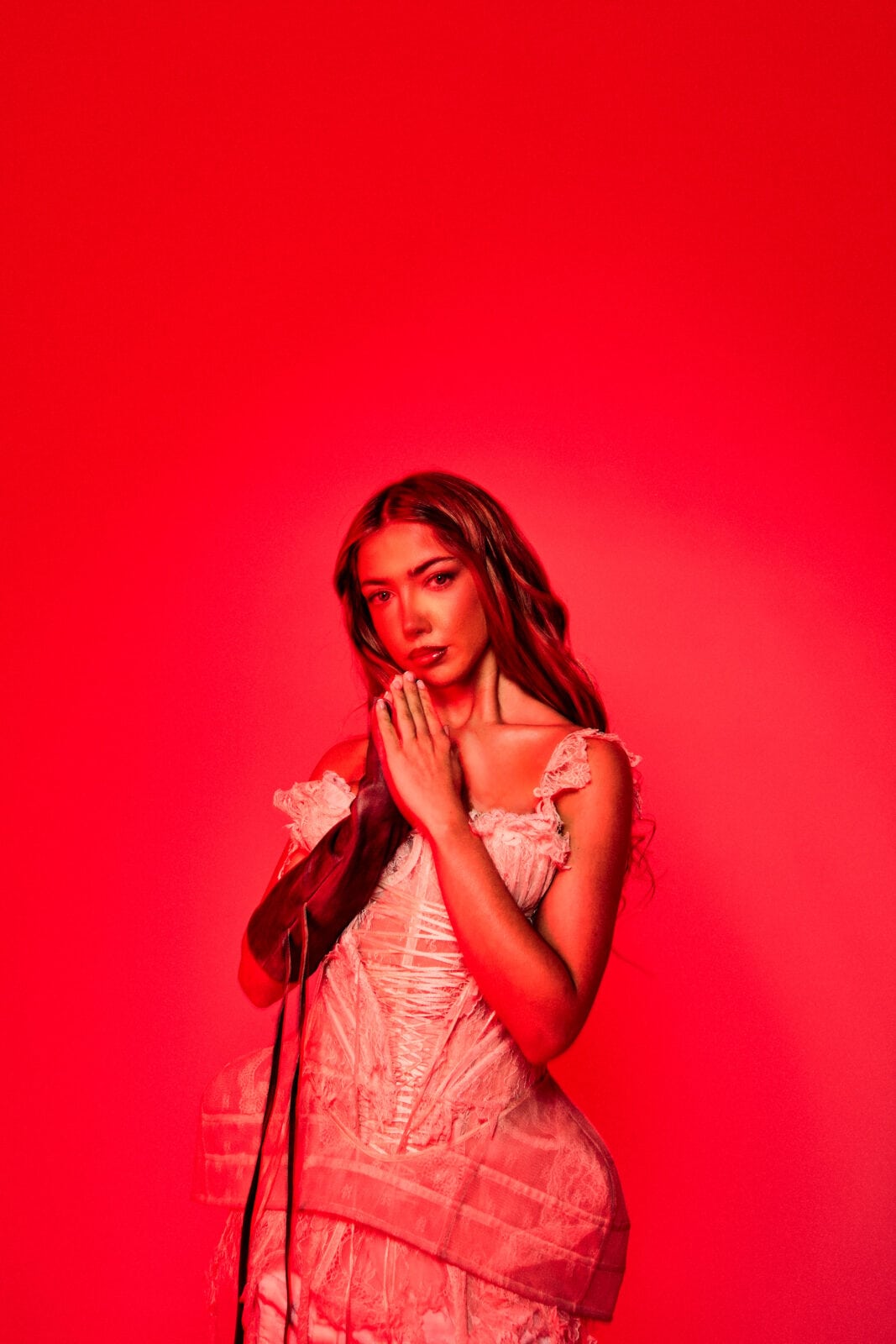
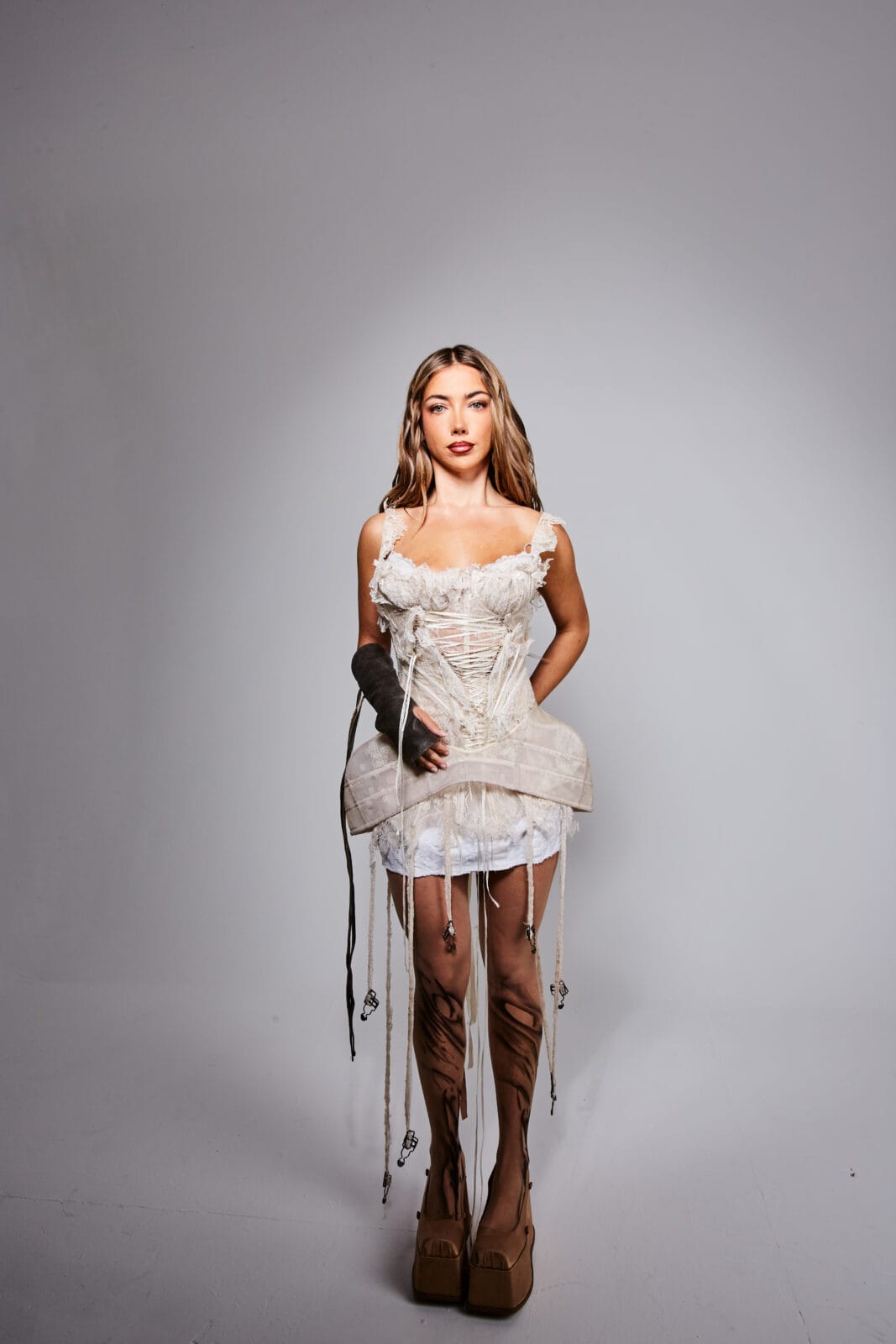
We’re sitting on the floor at Sony Music studios, cosy chairs abandoned for the bracing comfort of carpet. She’s in a white corset, with a pair of white corded headphones wrapped around her neck into a twisted, techy lavalier. I’m in a discount Poster Girl bodysuit and the same vintage-shop rave pants I wore out last night. Mondays, amirite?
“Finally,” she says, musing on the positive response her solo music is garnering online. “The internet is on my side”.
Which is as good a starting point as any for our interview:
The Cold Magazine (CM): Do you think being hot makes critics take electronic music less seriously, or does it just make Reddit angry?
Charlotte Plank: Oh! That’s a shout! I mean, maybe. The electronic space has always been really male-dominated. Some of these lineups are still so male-heavy.
Even in the UK, was it last year, All Points East? The Chase & Status Day. Nia Archives was like one of the only female headliners, and it’s just crazy because there’s such a plethora of females in the electronic alt space that are working away and getting recognition, but then not at that level. It needs to be worked on. You think it’s changing, and then you see a festival lineup. You see a female artist going viral online, and then the comments are like ‘oh, she’s just trying to get attention.’ There’s always going to be that side of the internet – that side of the public – you’re never going to please them.
CM: You’ve described your music as emotionally vulnerable, but your aesthetic says “I would survive a cyberpunk apocalypse.” Which is the lie?
CP: Hah! Neither, really. My music is almost like my armour, I guess. There’s this character we have to play with being a popstar – well, as any kind of musician – because you’ve got this vulnerable artist behind you that people only see in the studio, and you’re outletting all these emotions and stories, and trying to be as real and relatable as possible. And then you go on stage and try to give it to people without – well, grumbling, I guess! It’s a bit of a Hannah Montana situation.
CM: So say more about you being Hannah Montana. Say more about your two sides.
CP: You’re one person in the studio, and then a character on stage. And I feel like that’s very much me as two sides to the story. There’s the one in the studio, and then the cyberpunk-apocalypse lady. But that’s just me in general, very tough skin, and then kind of a fairy that doesn’t want to be hurt and just write about her feelings. Same with the music, it’s a bit ‘contrast’. Crossing genres, being quite industrial but then with very pretty atmospherics. Vulnerable fairy lady. And then the one everyone sees on stage. I guess it comes from a young age.
CM: Is there a way you switch from you-you to stage-you?
CP: It’s all the difference in outfit and moves on stage to be honest. The person in the studio is a lot more vulnerable.
CM: You went from making lo-fi demos in your bedroom during lockdown to performing with Rudimental and getting BRIT recognition in a very short span of time.
CP: Yeah! It’s been a whirlwind!
CM: Yeah! You’ve also spoken openly about imposter syndrome. Did the speed of that transition affect your sense of artistic identity?
CP: I think so. When I was growing up and had no boundaries and was working on music at home, I had no outside influences; I was just working on it. And then I got signed quite quickly, and you start working with collaborators, which is so key. Because you don’t grow and you don’t evolve without collaborating. And through other people, I have definitely evolved and found more parts out about myself that I didn’t know before, because you work out what you’re bringing to the table, and what someone else is bringing to the table, and being inspired by other producers and other artists. It’s been a really great journey.
But some of those first features, I wouldn’t say they ‘skewed’ my artistic vision, but the features obviously did way better numbers-wise than my solo stuff. So it can get a bit confusing. Are you going to chase the numbers and what the masses are liking at that point? It doesn’t mean my solo stuff wasn’t ‘right’, but it hadn’t reached the masses of, like, a Rudimental fan base. And so I’ve been really wanting to hone in on my stuff, and my world-building. Otherwise, you can get overshadowed if you sit in the feature lane. You’re just clamping your name onto someone else’s world. I’ve got so much to give in my space and my sound, and those fans that have really bought into that. I feel I really owe it to them.
CM: She’s evolving!
CP: She’s rambling! Sorry. It’s Monday. I’m delirious.
CM: You’ve spoken before about classic jungle being a big inspiration for you, being inspired by the likes of LTJ Bukem and blends of ambient jazz and breaks –
CP: You’ve got me!
CM: – do you remember your first big ‘aha’ moment with music – that is, which song or album, in any genre, was the first to truly ever ‘stick’ with you?
CP: Well this could have been that it was the only CD that worked in my car. It was a really old car, a Ford that cost me like 500 quid, but it had a CD player! And no other hope. And I had “Nevermind” by Nirvana. It’s just one of the best. And Nirvana Unplugged, the MTV unplugged album. But then also Fleetwood Mac, Rumours. Those albums I could just listen to back-to-back at any point in my life. They’re timeless. I just like Stevie Knicks. She’s an icon.
CM:You’ve spoken about how Rudimental’s 2013 debut, “Home”, was a flashpoint for you –
CP: Yes.
CM: – showing how the genre could translate the emotional depth of DIY raves to massive main stages. Do you think current festival electronic dance music still prioritises that humanity?
CP: Well there’s a lot of DJ-heavy stuff these days. I’ve got a DJ setup which I use for certain shows, like if I’m going to a different country. Bringing a band is so expensive. But I try to bring my all-female band everywhere. Guitarist, drummer, we do live cello as well. Because my music mixes genres and different worlds, it translates better with a live band. I also just love being with my girls on the road. I want the experience of going to my shows to be like going to your favourite club and seeing your favourite band simultaneously. It’s my two favourite elements of music.
Seeing Pendulum and Prodigy live, they’ve got their live bands and it’s insane. I don’t think there’s enough of it. There are also amazing DJs. I wish I was a better DJ, but I’m not. So, I do try to bring more humanity to my electronic music.
CM: Your music references rave nostalgia, but emotionally feels very contemporary: emotionally literate, self-analytical, and very online. Do you think Gen Z is romanticising rave culture or reinventing it?
CP: It’s difficult, you know. There’s a real lack of kids that are actually going out these days. But maybe that’s the new generation. Maybe that’s because of lockdown. A lot of them don’t actually go out and experience the club. Look at the state of nightlife culture. People can’t afford tickets. So they romanticise it online, they’re just doing it online. So many amazing, iconic clubs are closing down. It’s devastating. I thought after lockdown people were really craving that real-real experience: being sweaty in a club with your best mates, hearing music live and everything that comes with going out. But I guess because some people never really got a chance to experience it so they don’t crave it? I don’t know. It’s a shame. Hopefully, we’ll have a full-circle moment.
CM: So a lot of artists say they “accidentally blew up online.” But how many drafts does an “accidental” viral video actually take?
CP: Hah! Girl – it’s taken me like four years to go viral. When you don’t try, those are the ones. For “crybby blue”, I was on a shoot for a different song, and we were at the end and I was like “can we just get one video with this new song? I want to start teasing it.” Fuck it. The label won’t, but I want to put it out. Which is the beauty of the internet. We have the freedom to tease and post whatever, and if it goes it goes. It was a one-take thing, just before Christmas, and it started moving, and I was able to put the song out and it’s got loads of great feedback. And that song has been really important for the world to see, because now people are like “I get what you’re doing.” It feels fresh and exciting.
CM: If you weren’t a musician, what would you do instead?
CP: When I think about not being able to do music… It’s a sad thought. It’s my life, really. I’d probably be in fashion or something, writing my songs in my diary and crying myself to sleep.
CM: How would you explain electronic dance music to a Victorian child?
CP: Okay. Victorian Child. Chimney Sweep. For youth who wish to cry, dance, and experience industrial machinery simultaneously. Electronic music is what occurs when electricity becomes emotionally overwhelmed. Something like that!
CM: There’s a long lineage of women vocalists in UK drum’n’bass music who became famous voices within the context of being a vocal instrument, not being fully recognised as auteurs in their own right. Did you consciously try to avoid that lane?
CP: Yeah. But I think it’s also happened naturally because I very much know my world. That’s not to say other artists don’t have a sense of who they are as artists, but that takes a long time to find and mine has always been very clear. I think Pink Pantheress said it: “you can be the most talented vocalist or writer in the world. But if you don’t know what your brand is, if you don’t know your world, then it’s very easy to get strapped to one.” And you either end up in something that you don’t want to be in, or you’re confused, and the world will find it harder to buy into you.
If you look at Pink Pantheress, Zara Larsson, Charli [XCX], Lorde, they’ve all got such clear worlds around them visually, sonically, and brand-wise. Me, being a songwriter first and foremost, it’s not just for other people. But I know my artistic voice, what I want to say, who I’m writing for, who my fans are and what my demographic is. I think that’s really important and what sets me aside from some other people. I’ve broken out of the scene I started in. Not broken away, but blossomed. Those were amazing opportunities and an amazing platform, but I’m very conscious to only do features that give me the creative freedom to continue doing what I’m doing.
CM: Why do you think so much “high energy” music now feels emotionally dissociated?
CP: I think maybe a lack of artists writing from the heart, coming from an honest place. In dance music, there are a lot of pitch sessions, which is where writers are writing hypothetically. Like, “what would Diplo want?”, and they project it. A lot of DJs take outside songs. So I think that’s it, trying to be in an artist’s head, but it’s not actually coming from there, puts you on the back foot. Without real feeling, people can’t fully resonate.
CM: There’s a recurring criticism that TikTok and streaming prioritise immediate emotional payoff over tension-building or sound-system dynamics. Has that affected how you structure tracks?
CP: I try not to get too caught up in that. I’m rooting for fans that will listen to the whole song. Hear a snippet, then listen to the whole thing from start to finish and enjoy the whole journey that the artist spent time putting together. Every good song will have a point of tension and release that people will like. I try to ensure, from a lyrical aspect, that there will be something people can connect with from all walks of life, all areas of the world.
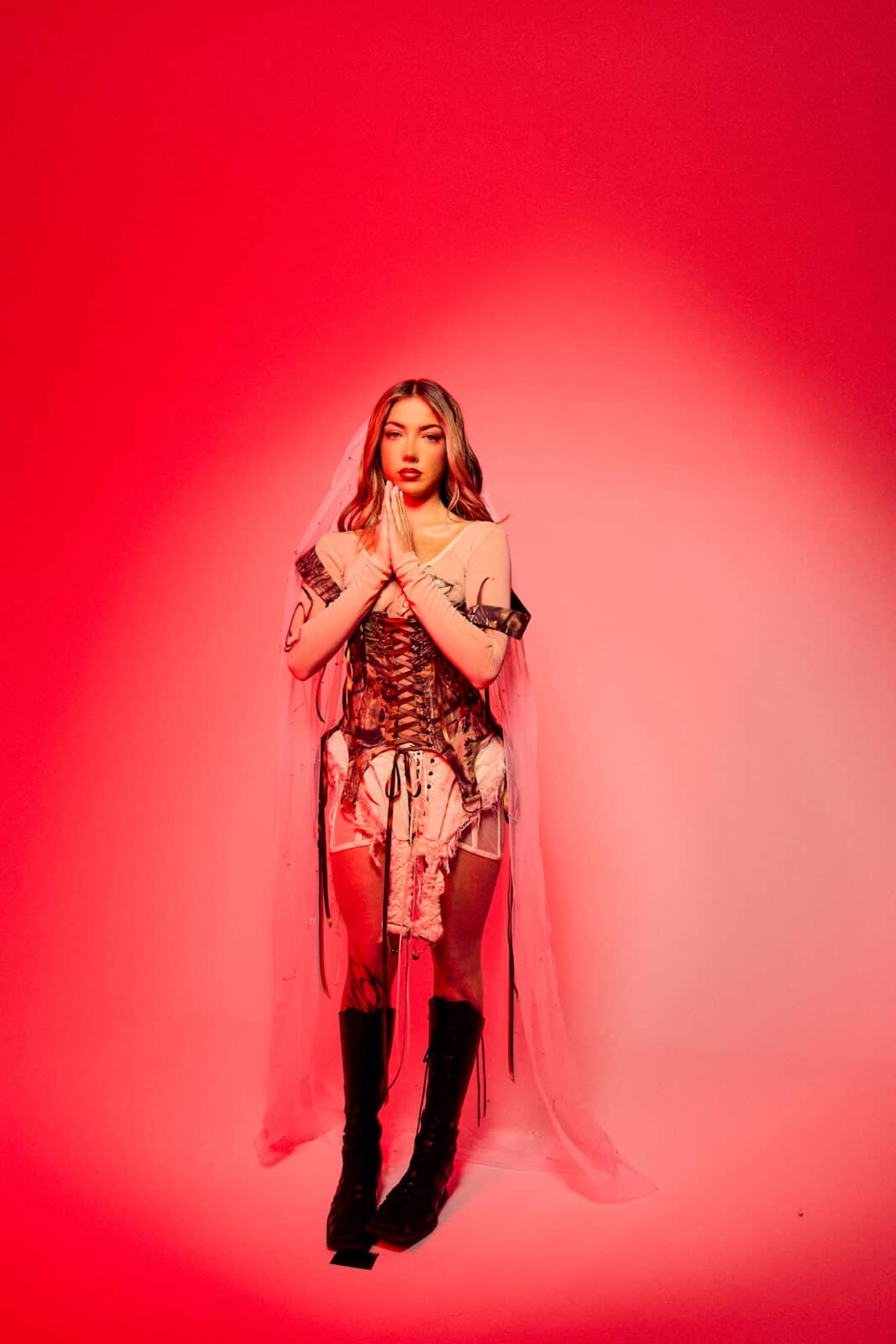
CM: So it’s the one-year anniversary of your first headlining tour, Clubliminal. Congratulations!
CP: I know! That’s actually insane. It’s really weird.
CM: With that year to reflect, what’s the biggest change you’ve seen going from supporting act to legends like Rudimental to headlining your own sold-out shows?
CP: In the audience, there’s definitely been growth in people that are interested in my music, and understand. When “crybby” was moving online, people were commenting like, “Oh my god, this is like Grimes, this is like SOPHIE,” all these references that I haven’t had before but I have been referencing in my own music for the past few years. But maybe that’s because I haven’t been putting out the right kind of music, the right song to fully connect with people.
So more audiences, more fans coming from different spaces. Which is really exciting.
Change-wise, I’m just more secure with where I’m sitting as an artist. More sure of my lane. With Clubliminal, a lot of that music was really old, I’d been sat on it for a while. I needed to get it out to move on to the next era. A lot of the music that’s still not even out was already written when that project came out. I feel like I’m always on to the next step before the last step is finished. And not so UK-centric, it feels like other parts of the world are starting to wake up to the sound.
CP: The sound of…?
CM: Alt-electronic music. I think with electronic in general. The US has had their own idea of it. Straight EDM. Whereas now, they’re more open to pushing boundaries. It’s been interesting to see them wake up to my music for the first time, where some of the more straight UK-centric stuff seems to not quite translate as well over there. I went to New York in December and worked with this guy, Aire Atlantica, who does a lot across different genres. That was really helpful. It’s an exciting time over there that I would like my music to be a part of, them understanding UK electronic music.
CM: Final question: if somebody in 15 years used your music to explain what British youth culture felt like in the 2020s, what would you hope they understood?
CP: For a lot of people in the UK, it’s pretty tough at the minute. Remember to romanticise the little things. A lot of people in music, people that make it, they come from wealthy backgrounds, and you think you don’t have a shot if you come from nothing. I feel like my music could soundtrack a coming-of-age film. I want to be some kind of voice for the turbulent years of growing up in the UK. All the trials and tribulations that come with that. A friend at all hours, whether that’s coming back from the club or being alone in your room crying about something.
Musically as well, being heavily rooted in UK electronic music and UK club culture. That’s really key. Some parts feel really nostalgic. The people coming to my gigs, there are older ravers, but also younger girls who have never been to the club. Hitting multiple generations but all at the same point in their life, you know what I mean? Taking them all back to the same place. My music should be a haven to take you out of the everyday, a fairytale nostalgic place, but you can’t put your finger on where…
I’d want them to understand that it was electronic music that made it okay to cry. To be emotionally vulnerable on the dancefloor. To step out, zoom out, and romanticise every day. To bridge reality with fantasy, and underground with the mainstream. It’s intimacy with chaos.
[interview has been condensed for brevity]
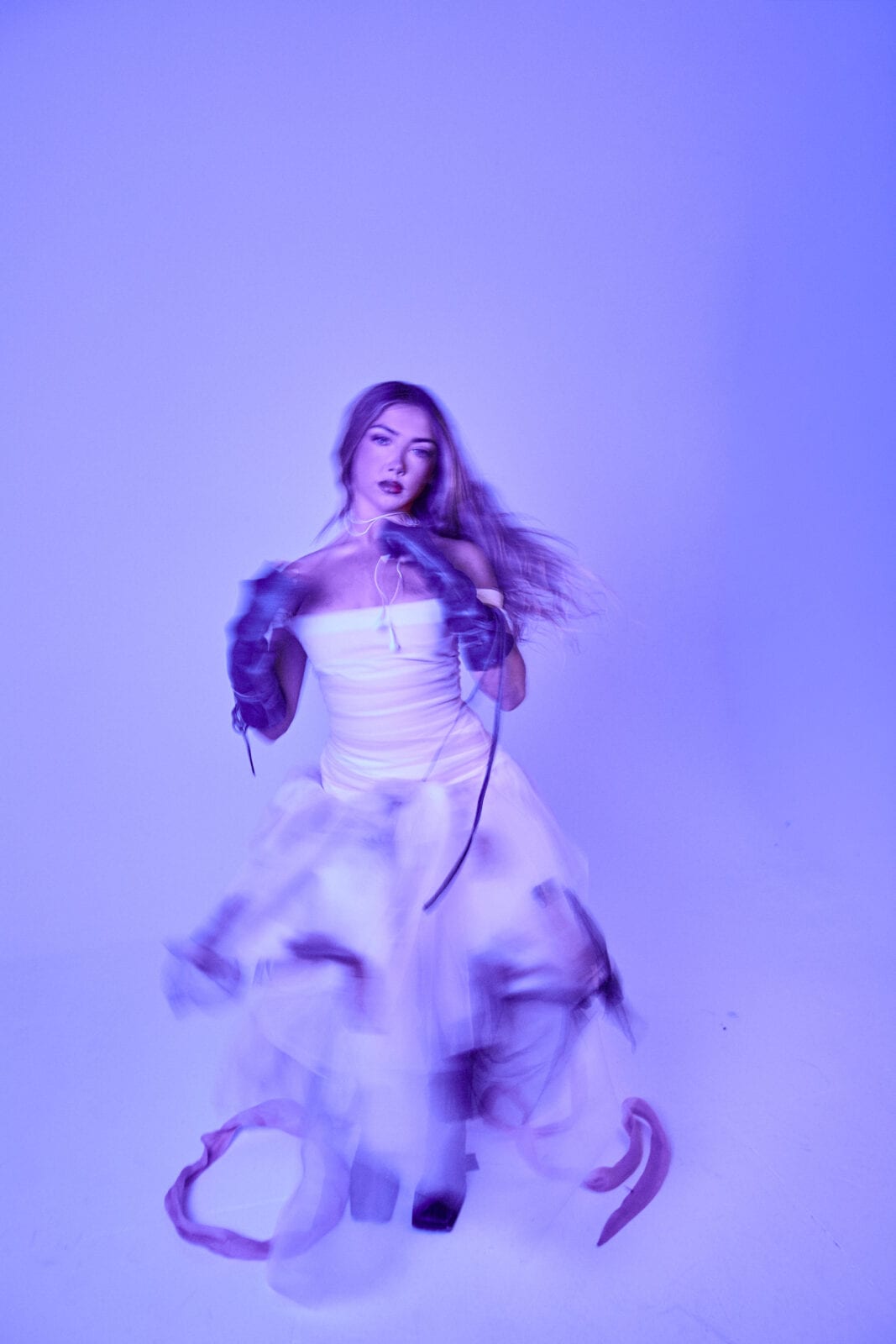
Talent: Charlotte Plank – @charlotteplankmusic
Photographer: Tristan Benhamou – @tristan_bnhm
Stylist: Emilia Batory – @emilia_batory
Hair & Makeup Artist: Shani Mushington – @shanimushington
Photo/Light Assistant: Lucy Copeland-Tucker – @lucycopelandtucker
Stylist Assistant: Olivia Whitfield – @oliviawfield
Producer: Penelope Bianchi – @penelope.bianchi
Art Direction: Anastasiia Zabuha – @anastasiiazabuha
Wardrobe:
Look 1: @dreaming_eli @dilarafindikoglu @azuraarchive @ness_project_
Look 2: @lay.al @miista @azuraarchive @ness_project_
Look 3: @miista @dreaming_eli @ness_project_ @thecoolgirlnyc