
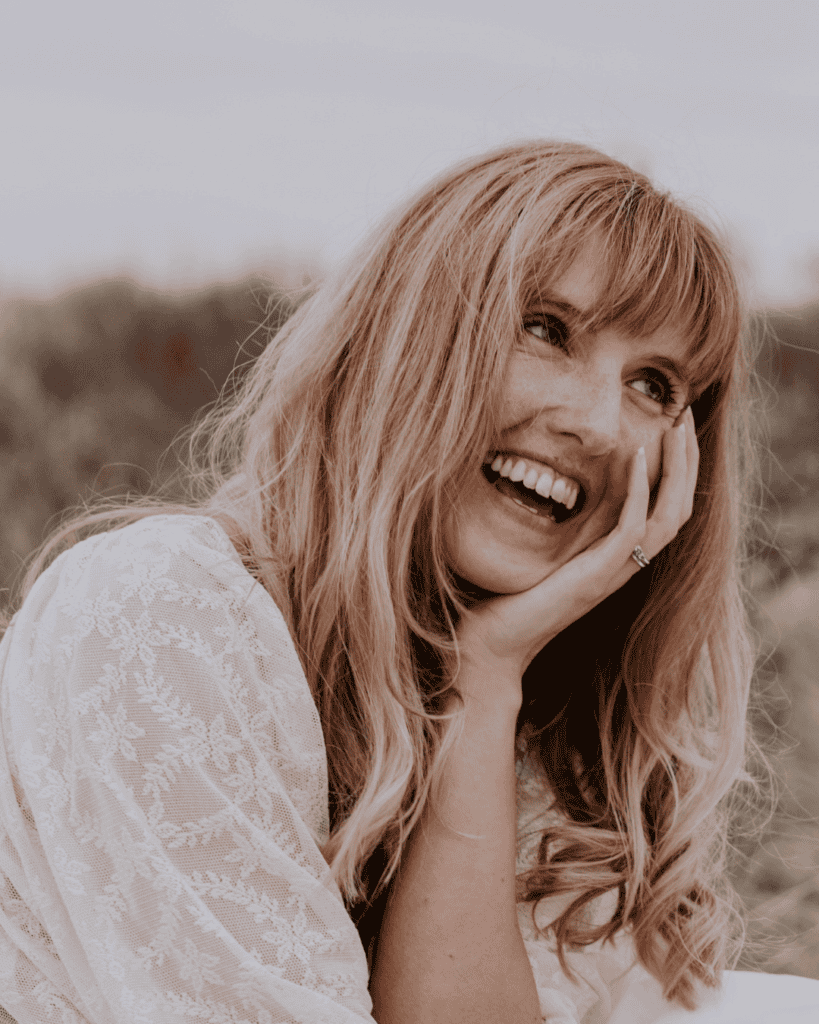
Claire appears on my laptop screen in front of a wall-sized bookshelf, looking out over a Scottish loch. This quaint and intimate setting mirrors the tender and familiar world in which her new novel, People in Love, takes place.
People in Love is, unsurprisingly, a novel about love. Except, this isn’t your typical love story. It follows the intertwined relationships of Nora, Bren, and Robin, and asks both characters and readers to question what it really means to be human, living and loving in a world full of what ifs, miscommunication, and chain reactions.
The Cold Magazine (CM): Your previous novel, Talking at Night, was incredibly successful and is adored by so many readers. How did you feel going into the writing process for People in Love given your past success?
Claire Daverley (CD): So, there was a lot of pressure, which surprised me. I wasn’t betting on the self-consciousness that comes with writing not only under contract, but writing now you have a wonderful readership, who want to see more from you and have expectations, alongside having the door open to a team of people, like your agent and your editors, that made the process for People in Love a bit clunkier.
I really wanted to challenge myself as a writer this time as well, to make sure that all of the things that I’m interested in and that I think readers loved in Talking at Night – the human heart, complex relationships, mental health, and the emotional landscape – were preserved whilst raising the bar on a technical level.
CM: Did anything influence your writing process whilst trying to raise the bar?
CD: I think influences and ideas come from so many different places, don’t they? Talking at Night very much came up organically from the voices of Will and Rosie. But with People in Love, it was more of a concept, an idea, that I feel is universal: we all have someone from our past who is a near-miss or a question mark.
Even though we can be living a life full of healthy, good choices, if they showed up on our doorstep, they could send shockwaves through our adult life.
CM: What did an average day writing People in Love look like?
CD: That’s a great question, because I could really geek out about the writing process for hours! I’m not sure there were average days. I think they were all very different, not least because I was writing under contract and it was suddenly my full-time job, but because I’d also made the move to Scotland. My whole routine, my whole life, was looking very different.
I do always like to write early in the morning though, that hasn’t changed. I would get up and I would write really early, around 5:30-6:00 in the morning, while my husband and my dog are still in bed. Writing then, it gives you that private time before the day gets in, before the doubt and the worries creep in. Just you, the novel and the characters. I’d sort of spend maybe two hours in the morning writing, and while I used to look out onto the street in Hertfordshire, I look out onto a beautiful Scottish loch now!

Claire’s writing desk
CM: It sounds so beautiful where you are. Thinking about nature and settings, I know that gorgeous scenery and nature play a part in both of your novels. I noticed birds coming up a lot throughout People in Love. Are settings and the use of nature something you think about deliberately whilst writing?
CD: You’re right, setting for me is always key. When you’re starting, getting the setting nailed down for the cinematic sense of a story is really important to me. I personally find atmosphere and tone to be so important, not only to the books I’m writing, but the books I love reading.
Rather than sitting down and actively thinking, “where am I going to set this book?”, whether it was Talking at Night or People in Love, it happens organically. Will and Rosie were having conversations in my head on these vast, empty beaches that felt like Norfolk to me, and the ebb and flow of the sea was reflective of their relationship. I never thought, “I’m going to set this novel by the sea”. It just happened and it worked.

Claire paddleboarding in Scotland
Similarly, People in Love ended up being a love letter to the home counties, because I’d lived there most of my life and I’d left it to come to Scotland. I think there was this nostalgia of having grown up there myself and the idea that I would walk aimlessly around country fields because there was nothing else to do. And then when I was older, commuting into London, getting stuck on trains and feeling caught between lives. There was something about the possibility and the claustrophobia of suburbia that was drip fed into this novel, although I wasn’t conscious of it.
It’s really fascinating that you picked up on the birds, because I find that a lot in my writing. It’s the pull of the wild. I’ve moved somewhere where I can see seals outside my window! But when I was in the head space of being in Hertfordshire, so many of my memories of living there are related to the garden birds in the hedgerows, or the call of the pigeon you can hear in the garden that wakes you up in the morning. Of course they symbolise freedom – the freedom to follow your own flight path as it is for Bren especially in the novel. But it always comes back to texture for me. It’s almost a little thing I do for myself when I’m writing, to conjure up a world you’re inhabiting.
CM: That’s really interesting, and it leads me into thinking about how vivid and real People in Love feels. It was so easy to picture myself inside the story, and I think part of that is because it felt like I was going on a real emotional journey with the characters with each new chapter. Did you plan your characters’ journey from the beginning?
CD: I’m so glad that it read like that. To say that was intentional might be misleading, because I had no idea if I could pull that off, but I wanted this book to be a journey for the reader as well as the characters. It’s set up in a classic love story way that you might be familiar with, and I wanted to very gradually turn the readers head along the way, as a reminder that in fiction and real life, life can be surprising and unpredictable. But to do that in a way that was believable on the page was like walking a tightrope, and I think that’s why it took so many drafts for me to get the balance right.
My first draft actually ended the story in a different way that didn’t feel right. I knew I had to change it. The characters and their story dictated a change, and I love that about writing. It’s like real-life magic, and you just have to trust it.
CM: Wow, that’s a lovely idea. Let’s talk about these wonderful characters that dictated their own story. How did you find writing from the perspective of three main characters: Nora, Bren, and Robin?
CD: It was far more of a technical challenge. This book was meant to be purely from Nora’s perspective, but Robin and Bren insisted on being heard! There were other generational relationships involved, with Freya, Josie, and the absent John, too. Fitting them all together with their own thoughts, knowledge and understanding of situations was complex.
There are some really big secrets in the novel that different characters know about at different times, and that all impacts the conversations and their motivations in every scene. I think it was my writing tutor at Faber who said that great dialogue is achieved by people having their own agendas in any one conversation, and this book is just filled with scenes like that.
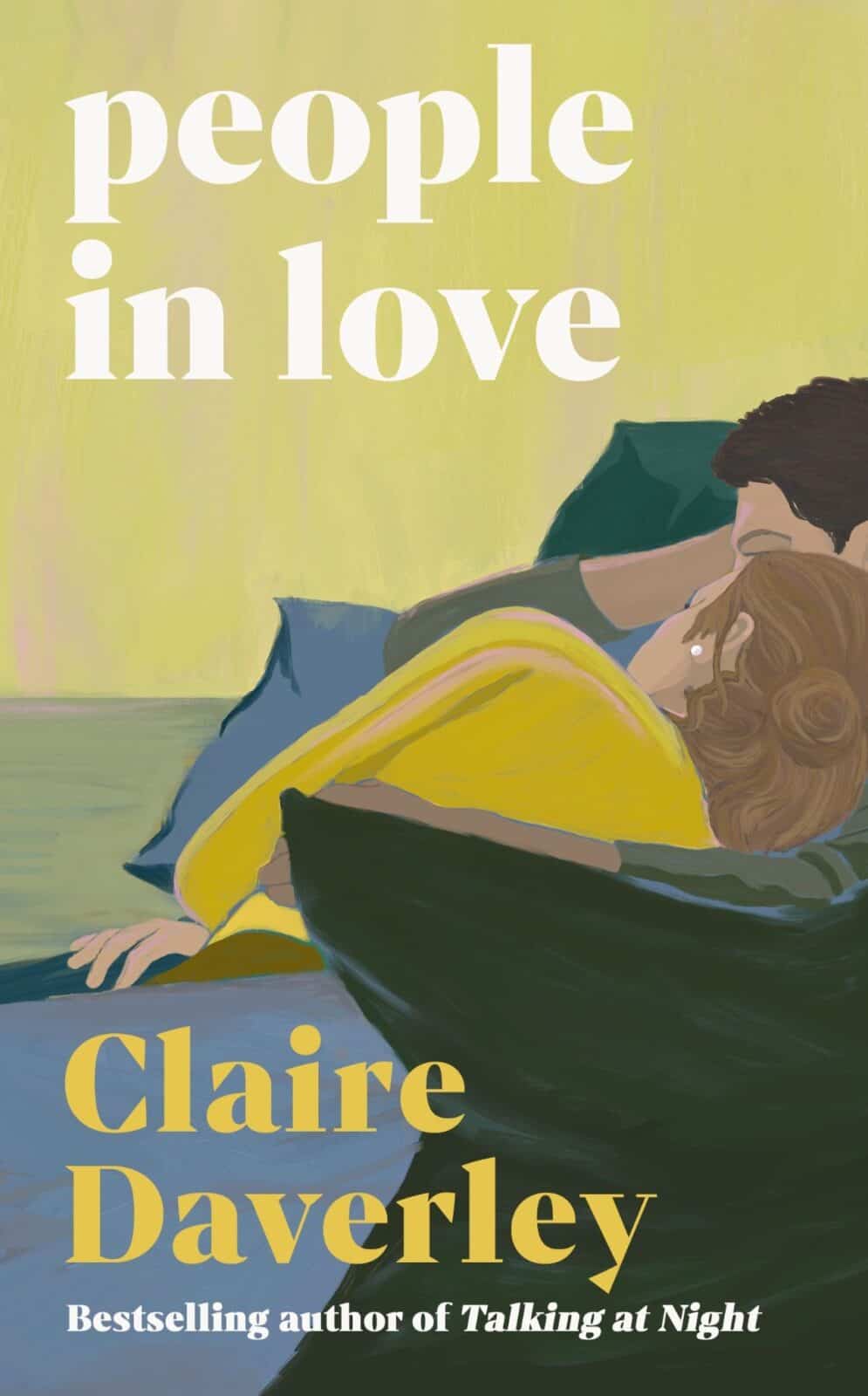
CM: It was so interesting to go on that journey with these characters as a reader. One thing I wanted to ask about was your choice to write from Robin’s perspective in second-person narrative?
CD: I really wanted someone to ask this, so thank you! Robin’s voice ended up being so core to this novel. The setup of the romance seems to be that he’s a nice enough, but perhaps forgettable, character. It was really intentional for me stylistically to have his sections in bold because I wanted his chapters to be impossible to ignore.
And then second-person for him separated his perspective from that of Nora and Bren’s. This made sense for him because he is so often thinking about other people or living life in colour and with generosity. He was a really unique character, and a unique part of the story, that you as the reader only come to appreciate as the arc develops.
CM: It’s not often as a reader you get to read something in that style, and it really pulled me further into the emotion of the story. Which character was your favourite perspective to write from?
CD: I found Robin’s passages really liberating to write because he is such a bold and honest character. But I found Bren’s arc really tender and felt like I was his guardian. He goes on such a journey, he almost grows up on the page. He has to mature and not just focus on his relationship with Nora, but with his mother too. I really love unpeeling my characters, which I loved doing when writing Josie, too. She became a much more complex character on the page.
I haven’t given you a single person, but I think that’s because they all work together. There was no one character who I loved writing more than the others, and if there had been, then maybe it would’ve been written just from their perspective. But People in Love works because all the voices are integral to the story.
CM: There’s a powerful quote used in the book by Robin, from photographer Elliot Erwitt, about “finding something interesting in an ordinary place”. This idea feels like it encapsulates the novel perfectly, but what is something that you’d really love your readers to take away from People in Love?
CD: I love that quote as well, because it’s kind of the perfect summary. I would really love people to take time or take stock to appreciate the everyday moments or joys a lot more. We’re told to strive for more, reach for more, improve ourselves or our lives in some way.
And that’s not to say we should just settle or just be happy with what we’ve got or swallow our true feelings. I hope this book, shows we spend a lot of our time worrying about very normal, very human, but very pointless things, and that the real tragedies of life are these larger overarching events that we don’t expect or give any attention. So, it’s a book about appreciating what you have when you have it, because in reality that’s really hard to do.
Another thing I would like people to take away as well is something I learned while writing People in Love: real love is like real life. TV, books, and other media can often present love as clear-cut and black and white, like there’s a right and a wrong choice. And I think the takeaway from the novel is that actually you can love in so many different ways, and there’s no one great love in life. If you’re lucky, there are so many. That’s what I hope people realise by reading it.
Claire Daverley’s People in Love, published by Penguin, was released in the UK on 4 June 2026.


