

It’s a busy year for claymation. 2026 marks 50 years of Aardman, the Academy Award-winning stop motion studio, and celebrations will ensue. They’ve been filling up the press recently with news of their Wallace and Gromit exhibition at Young V&A (on until November 2026), a new Shaun The Sheep film release The Beast of Mossy Bottom (coming out on Halloween – which I have personally marked in my calendar), and a celebratory immersive exhibition in Bristol (at M Shed, 20 June—13 September 2026). On the other hand, the award-winning animation studio Laika is set to release their next film Wildwood in October.
I’ve always seen claymation in my mind’s eye through a lens of nostalgic reverence.
Recently watching Vengeance Most Fowl (2024), the latest in Wallace and Gromit’s adventures, I found myself basking in the specific warmth it seems to emanate, and sensed I was not alone in this. In fact, so endeared was I that I splashed out on Feathers McGraw keyrings for my entire family – it ranks highly in the decisions I’ve taken throughout my life.
Amongst the most magical are the frames in which I spot fingerprints in the figurines. These grooves are physical manifestations of what makes claymation so beloved, and ultimately where its potential lies as a creative antithesis to the anxieties many of us face. Shortcuts, quick fixes and life hacks congest our algorithms as we whir through shortform content and ‘second screen’ TV shows. This is a rumoured form of programming designed for viewers to consume series while simultaneously using a second device (hence the name), typically a smartphone, tablet, or laptop. They subsequently feature simplified plotlines, heavy exposition and incredibly explicit dialogue. Effectively, it’s entertainment designed to spoonfeed viewers, requiring minimal concentration. Claymation, on the other hand, is deceptively simplistic – stories like Wallace and Gromit actually rewards viewers’ attention through detail, rather than encouraging them to squander it on multiple activities at once.
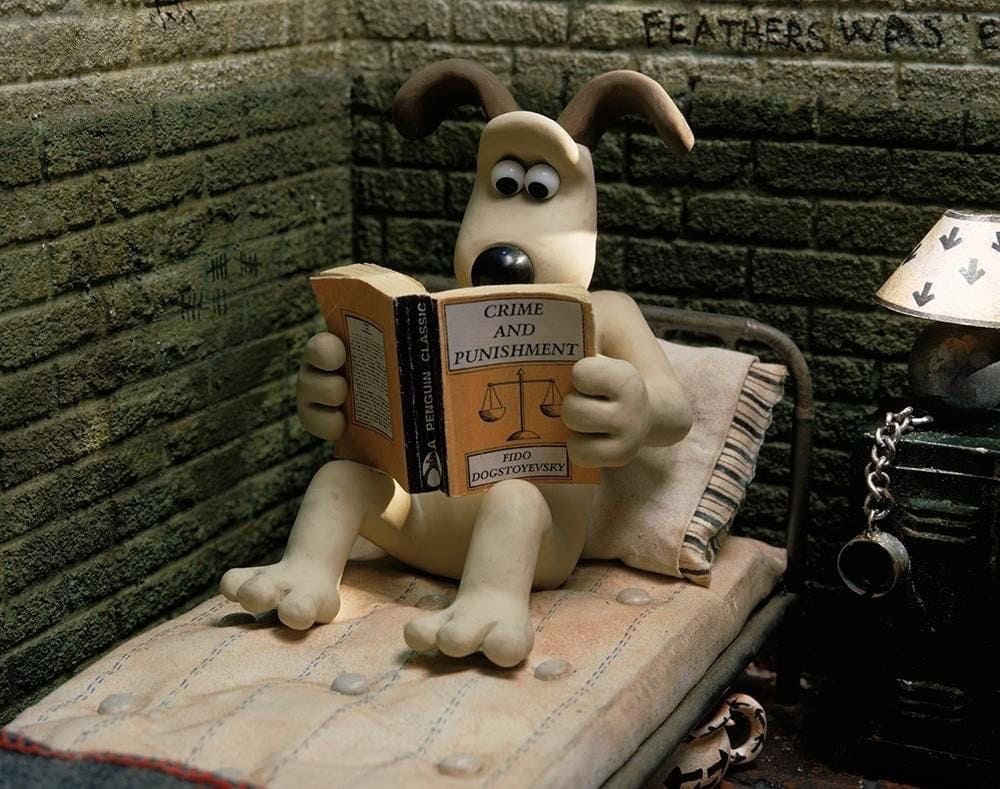
The deeper one digs, the more details one discovers, the more enjoyable the show – the whimsical visual world these characters occupy is the gift that keeps on giving.
In Vengeance Most Fowl alone, you may notice witty hand-painted book titles (Gromit’s reading of A Room of One’s Own by Virginia Woof, for example), or the ‘Gnome Improvements’ maintenance van.
As I get older I discover newfound awe at the sheer number of painstaking hours that must go into each frame, each scene, let alone an entire feature. If anything is a labour of love, I believe claymation might just take the cracker, so to speak. It’s incredibly admirable, almost radical today to give oneself over to a craft built upon delayed gratification; a concept that capitalism would rather us forget. It’s an artform whose beauty is rooted in its relative inefficiency, in its lack of corner cutting; its inherent toil. No opportunity is missed, because the filmmakers have and use time.
The average number of individual frames per second of footage is 24, meaning animators often manage to create just one to three seconds of footage per day of production. Thus it comes as no surprise that each feature film takes years to make.
In a society defined by conspicuous hyperproductivity, hyperconsumption, and where efficiency is prized above experience, this is a powerful and vital industry that turns these principles on their heads.
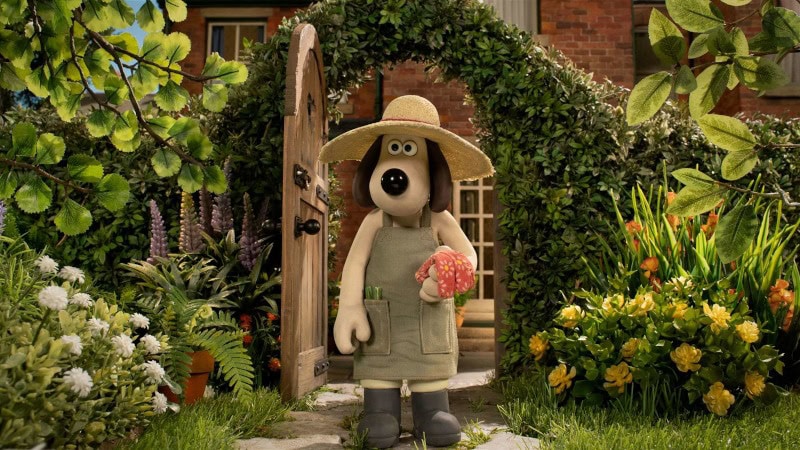
The attraction of such care, tactility and human connection must only be growing in the collective mind at a time where it might seem like the threads of humanity are wearing thin; between AI chatbot girlfriends, weightloss injections and poor excuses for human beings running countries, claymation occupies a defiant innocence; its uncapped joy and whimsy are fearless and lack self-consciousness. This holds universal appeal to adults and children alike – rewatching these films as an adult, I giggle at borderline puns I’d missed as a child, and pick up on cultural references that 10-year-old me wasn’t expected to know.
It’s not just the aesthetic but the moral worlds these iconic characters inhabit;
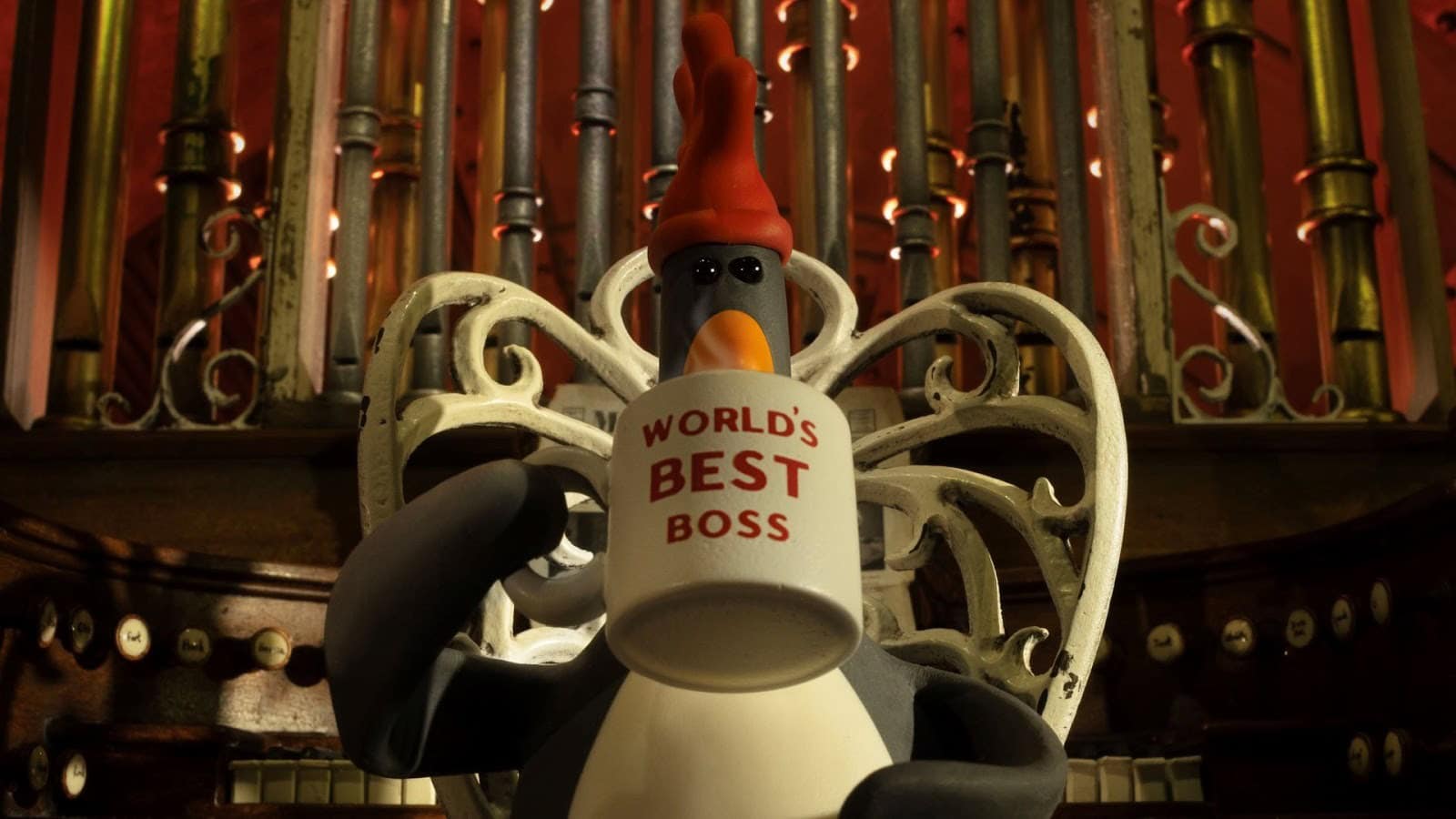
simpler, where the fights between good versus evil is a physical one; evil embodied in a small penguin, justice upheld when he’s locked up. It is safe, and it is certain; a morality play in clay. The terms ‘comfort’ show or ‘comfort’ movie are thrown around, and whilst the films do occupy these roles, they are more than escapism. Or at least feel that way to me. It’s a noble, or more respectable, fulfilling kind of escapism; it’s not so empty. Perhaps my bias towards claymation is rooted in the dumbfounded respect I have for the artists behind the work. Not to mention their sense of humour and knack for pun-making.
Whilst the illusion of the claymation industry is that of occupying some distant untouched prelapsarian (sorry) sphere of entertainment, its critical acclaim does and has translated into economic success and proven itself worthy of continuous investment. The recent partnership between Aardman and Netflix is proving profitable, and is cementing long term benefits for both the claymation industry and the UK’s South West; they have joined together to fund training schemes and jobs, giving Netflix exclusive streaming rights to some of their newer releases.
Contrary to much arts and entertainment discourse that dwells on the death of artistic integrity, claymation doesn’t seem to be going anywhere, and I’m sitting tight in that knowledge. It’s reassuring that there is still a celebrated place at the table for delayed gratification, imagination, for silliness, for whimsy, and art for art’s sake. It gives me faith in humanity yet.