When did you know this was what you were going to do? Was there a specific
moment?
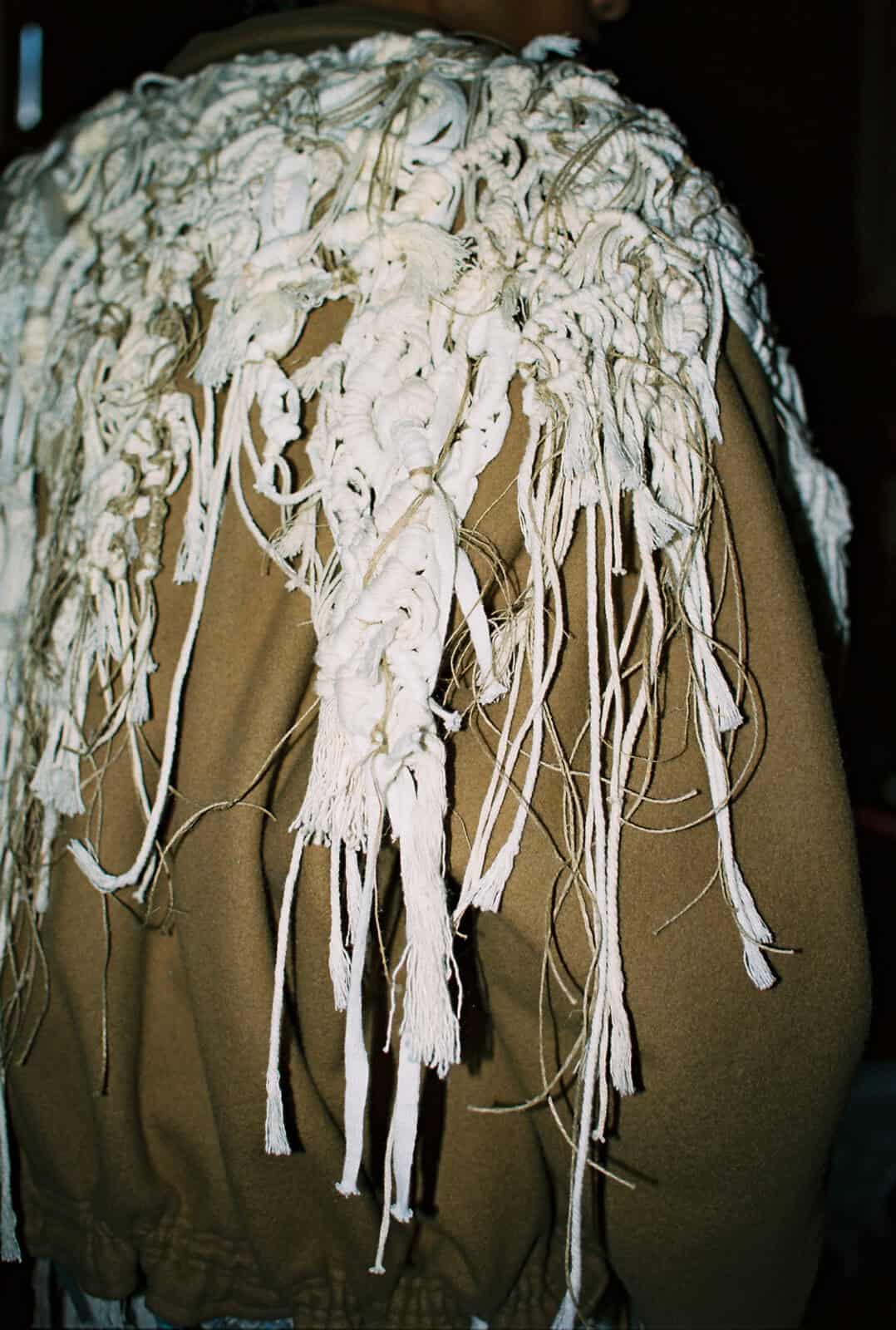
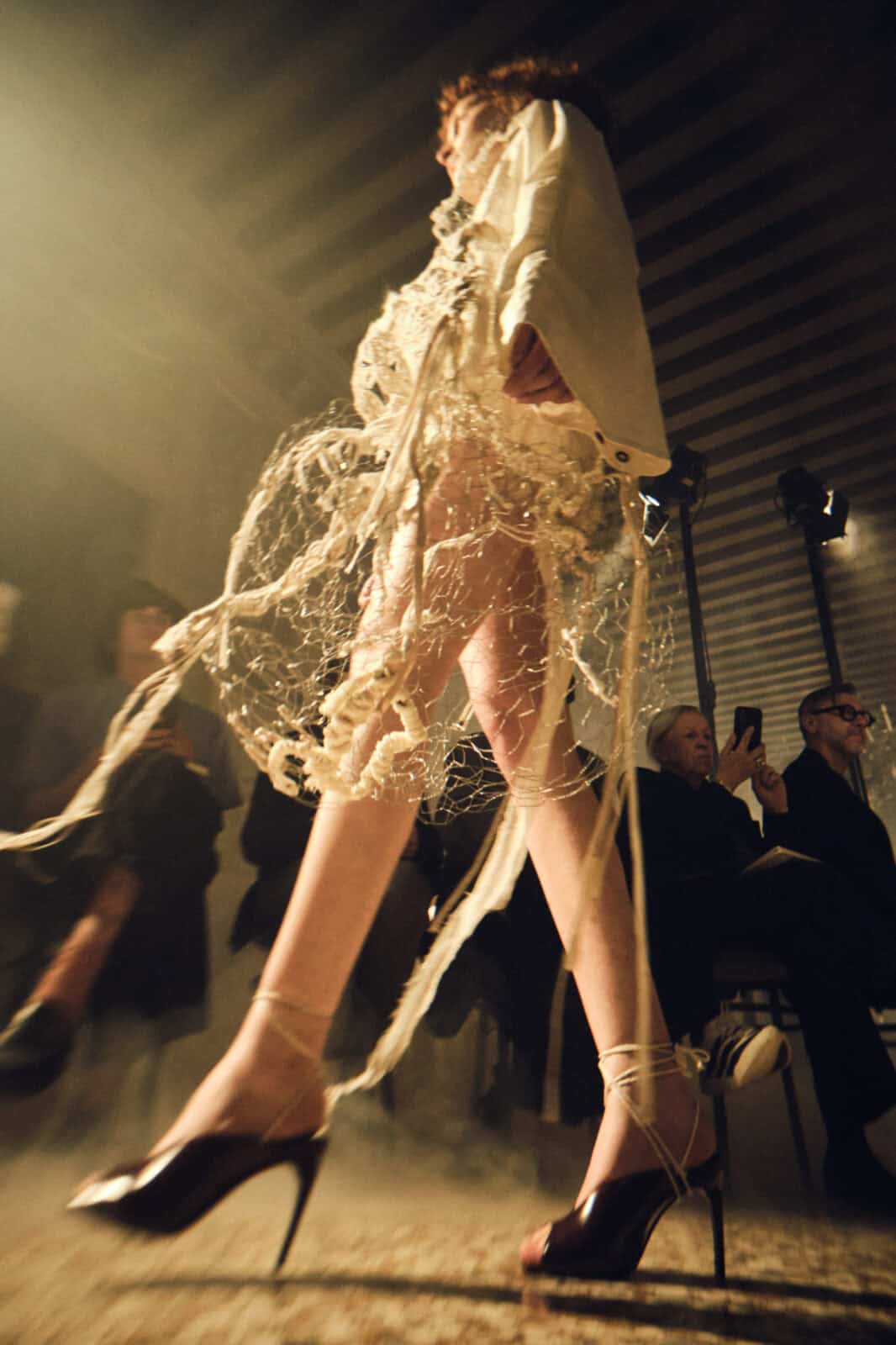
The moment I truly understood this was what I wanted to do was when I saw my first collection on the runway. Watching the garments come to life on bodies- becoming movement, breath and presence- felt deeply cathartic. After that experience, I founded Dicotomia Studio, a personal project through which I continue to design and create.
What is the first thing you created that you are still proud of today?
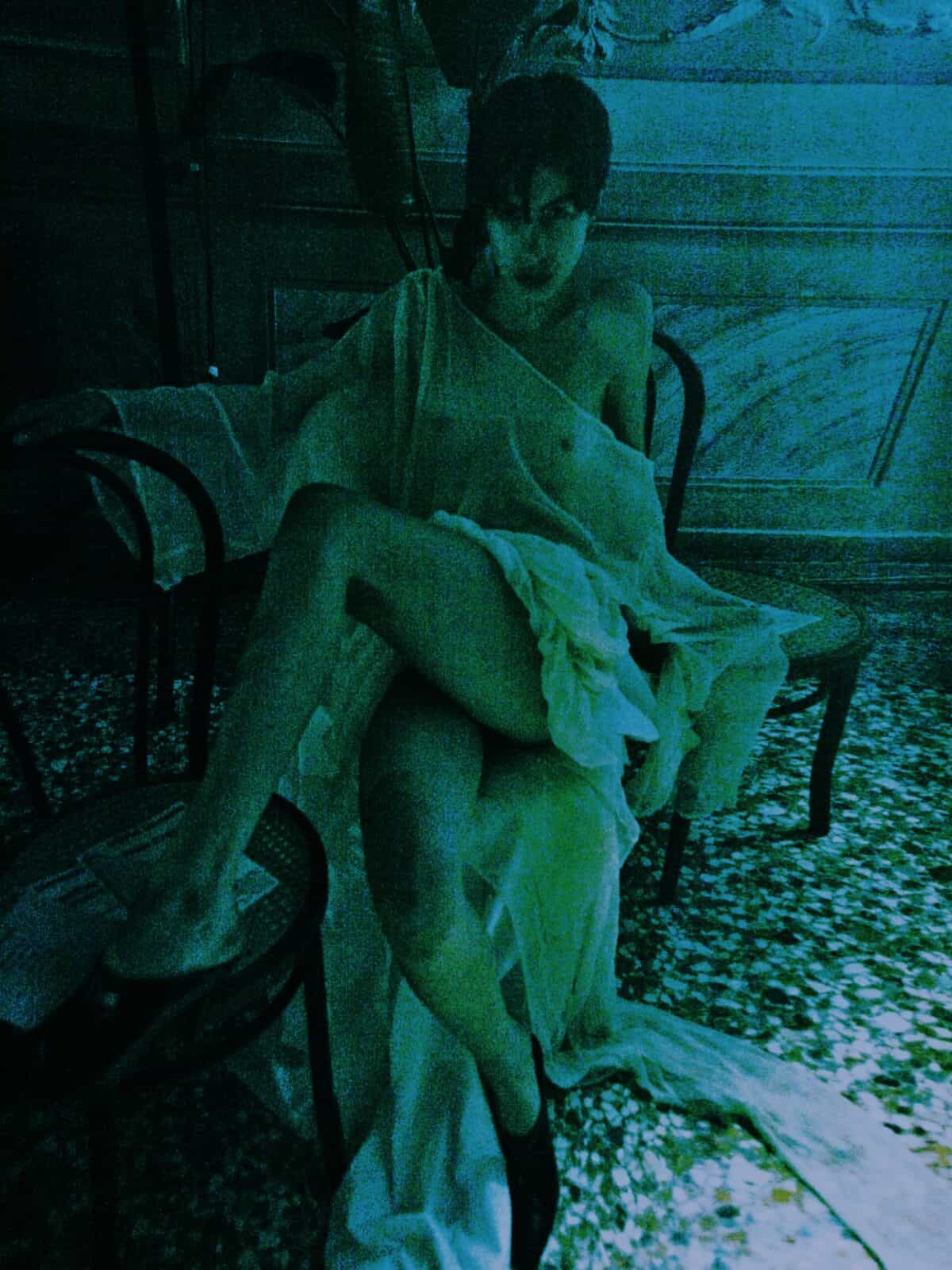
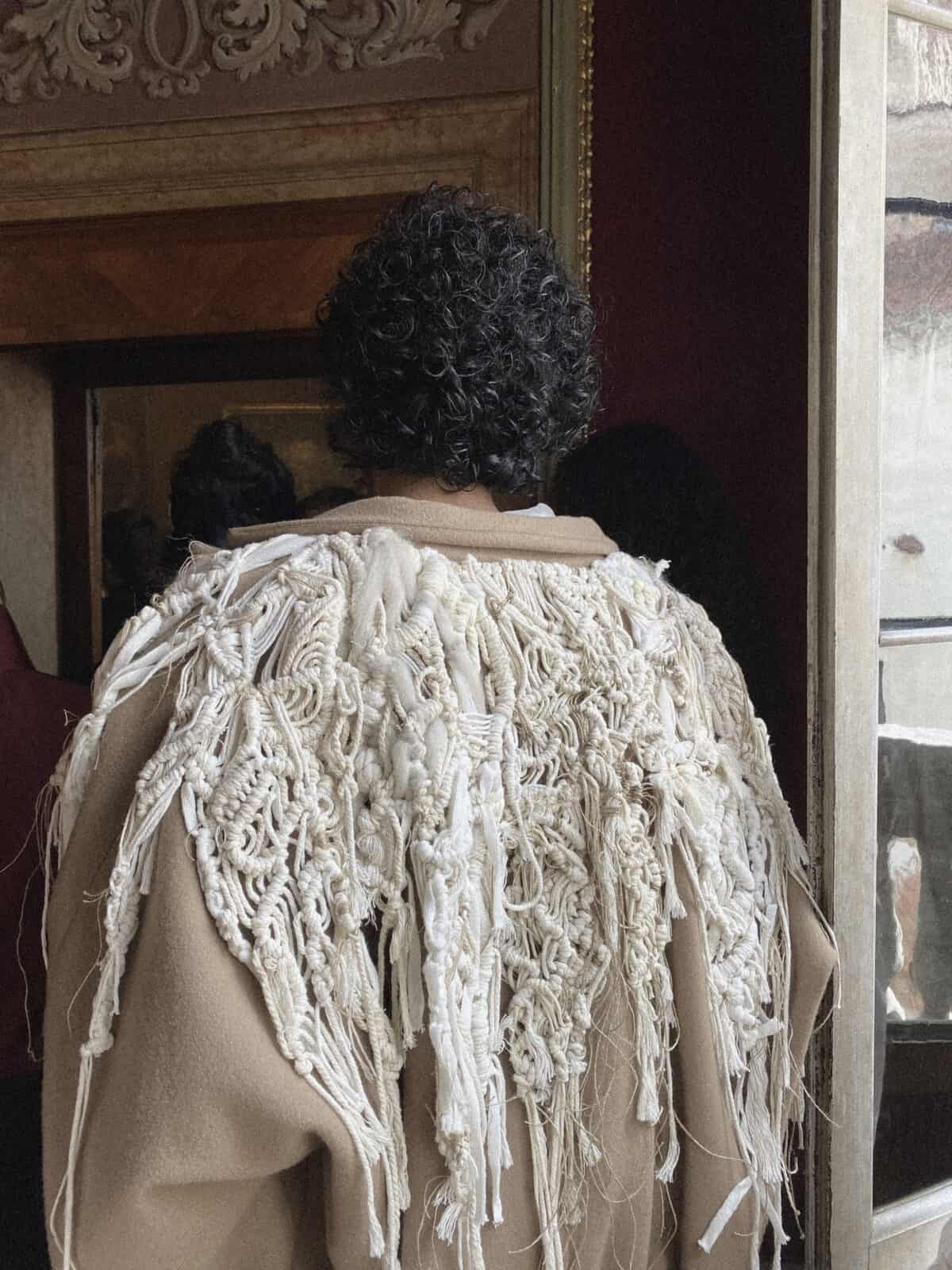
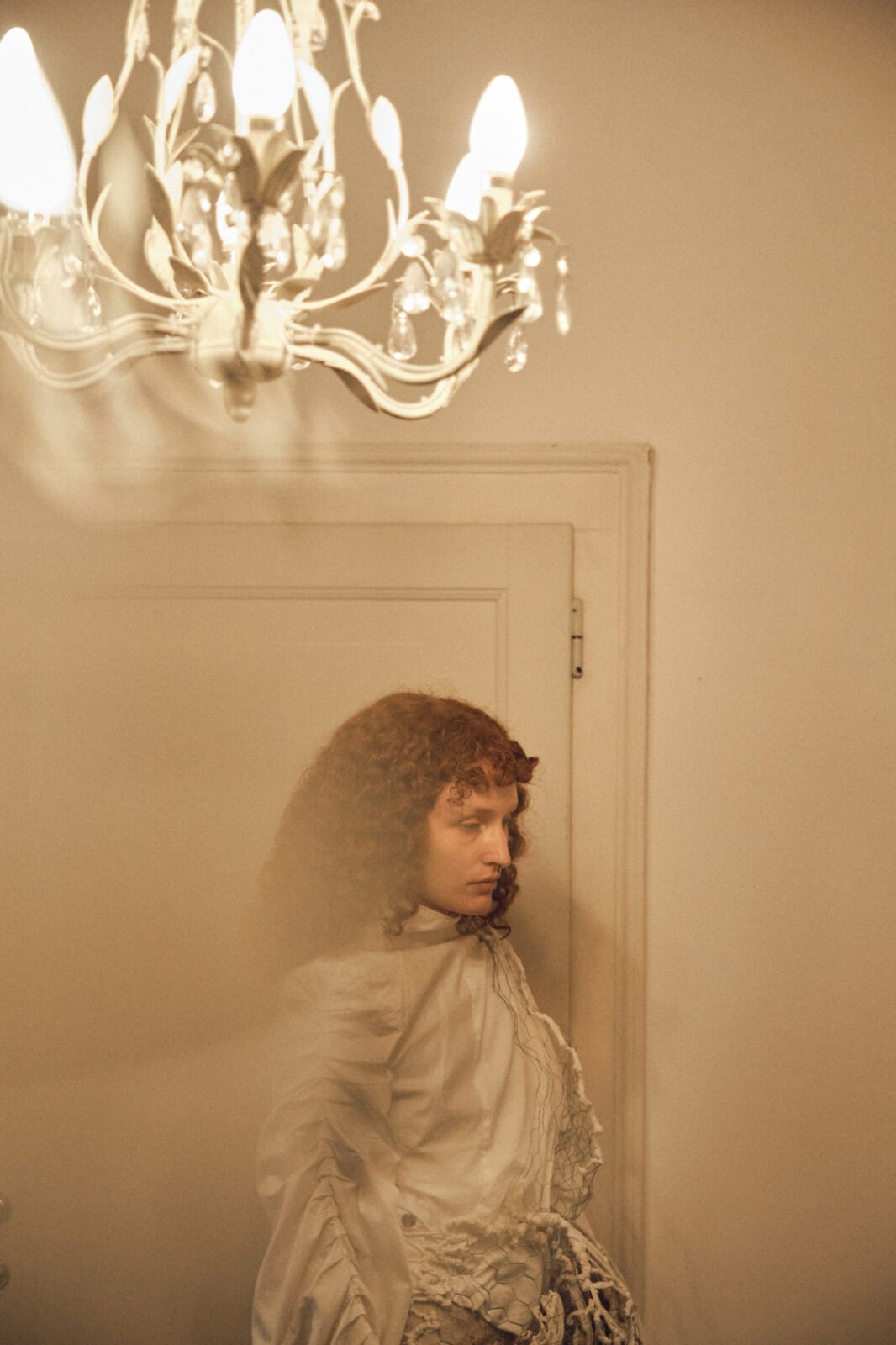
The first thing I created that I’m still proud of today is a piece from the opening look of my graduation collection Essere per Sé: a two-piece gilet entirely handwoven from ropes and scrap materials.
It represents my creative vision because the garment only takes shape once worn – the two panels are intertwined directly on the body- creating a visceral relationship between body and garment. It’s also a unique, non-replicable piece, made through a slow and meticulous handmade process that emphasizes the value of craftsmanship and human gesture.
Where are you from, and how much does that place live in what you make?
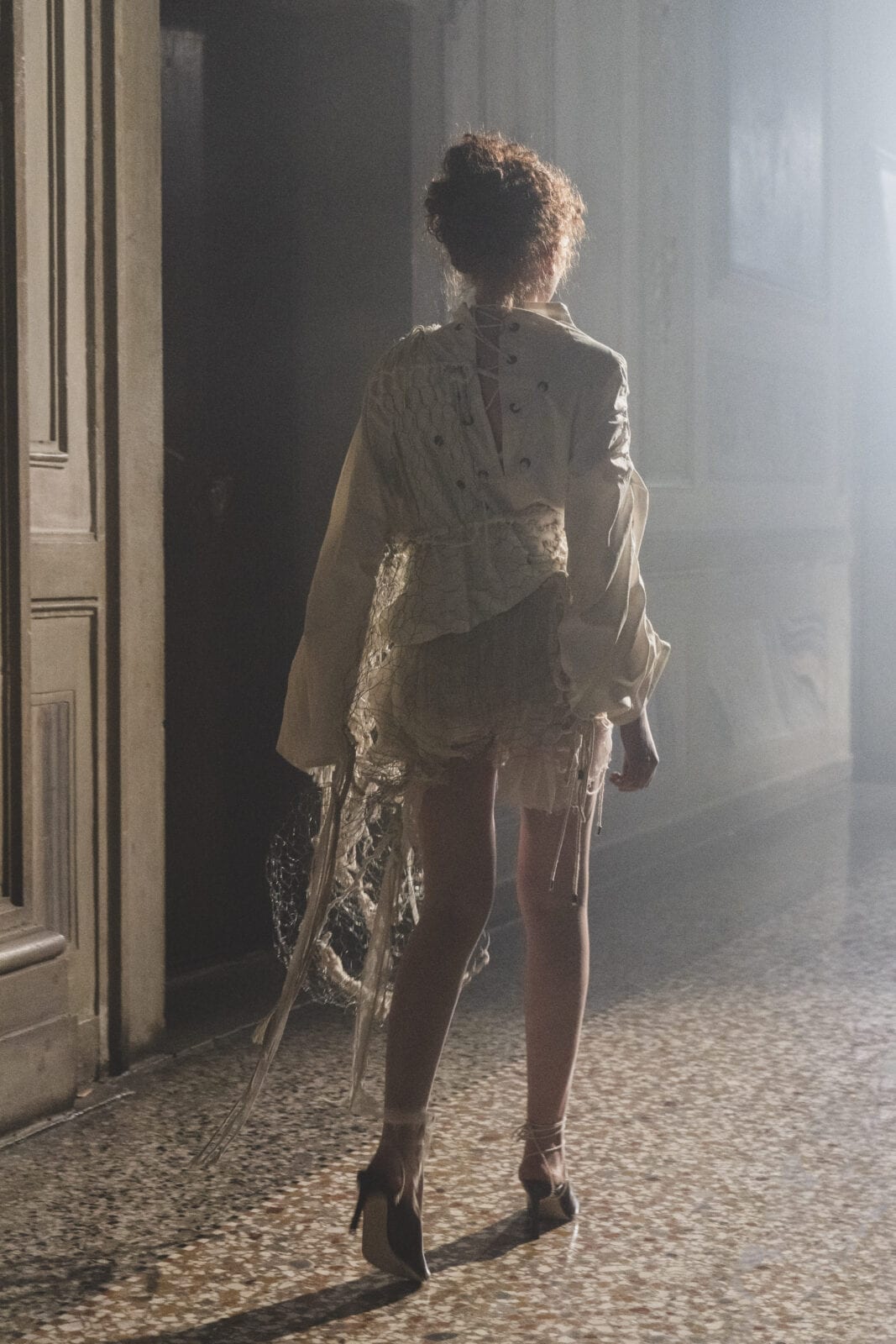
I’m originally from Southern Italy, from a small town in Salento, where textile tradition is deeply rooted and it strongly influences my work.
I use natural, aged fabrics often found in old family homes, materials marked by time and memory. Through traditional techniques such as handloom weaving and hand-knotted macramé, I reinterpret local craftsmanship in a contemporary way, transforming waste materials into imperfect material surfaces that reflect my aesthetic vision.
Who would you want to collaborate with – another designer, a brand, an artist,
someone completely outside fashion?
What thrills me the most about collaboration is the possibility of creating connections and sharing visions through different expressive languages. In the future, I would love to bring Dicotomia Studio into contexts such as performances, installations, and exhibitions, collaborating not only with designers but also with other artists to create immersive and cross-disciplinary experiences.
Where do you see your brand in five years, bigger, smaller or more radical?
Definitely more radical. Dicotomia Studio was born as a spontaneous and instinctive expressive space, and I want it to evolve while staying true to that identity. In the future, I hope to build a community of people who connect with the brand’s values and become an active source of inspiration and exchange for new projects.
How do you navigate the tension between creative work and financial sustainability?
Balancing creative ambition with financial sustainability is one of the biggest challenges in this field. In my practice, I try to approach both creativity and production in a sustainable way, avoiding material waste and reusing leftover fabrics and scraps within textile manipulations, handloom weaving, and garment details.
Reinvention is an essential part of my creative process: I often let the materials themselves guide the development of the work, transforming limitations into new interesting possibilities.
What does the fashion and design industry need to change, urgently, in your view?
The fashion industry urgently needs to reconnect with authenticity. Trends and market logic often overpower creative freedom, pushing designers toward products driven more by profit and competition than by identity and research.
At the same time, I’m optimistic about the future: more initiatives are giving visibility to emerging designers and encouraging a more ethical, sustainable, and independent approach to fashion.