
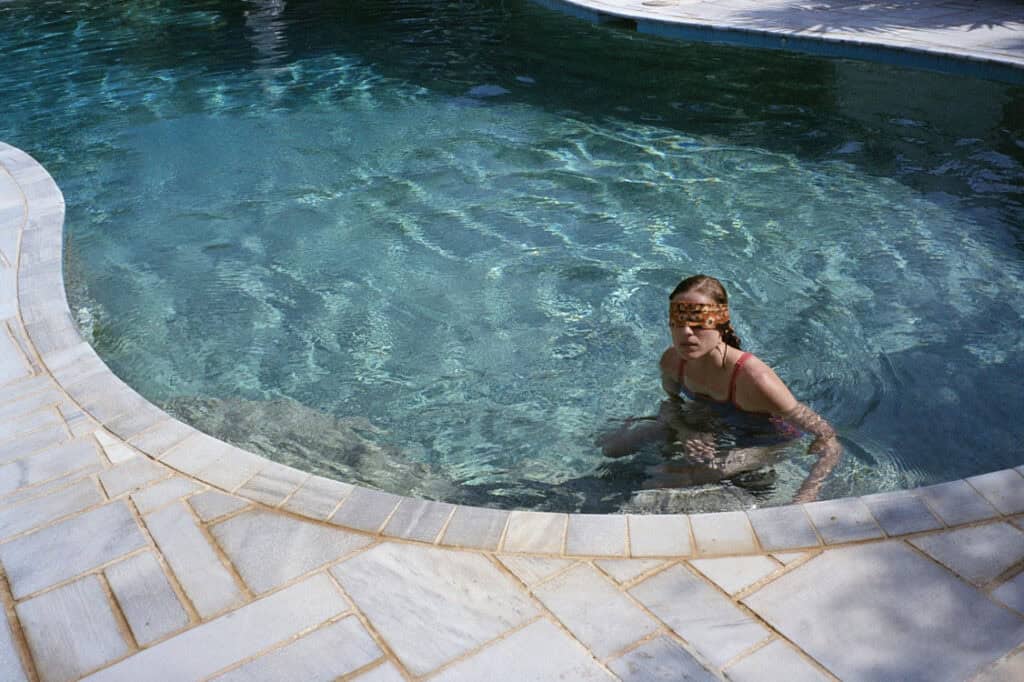
15 years after its UK release, Yorgos Lanthimos’ Dogtooth (2009) is back on our radar. With its upcoming 4K restored US re-issue, we thought a rewatch of the psychological thriller was well overdue. It’s at least killed some time while we wait for his next film, Bugonia (2005) to be released later in the year.
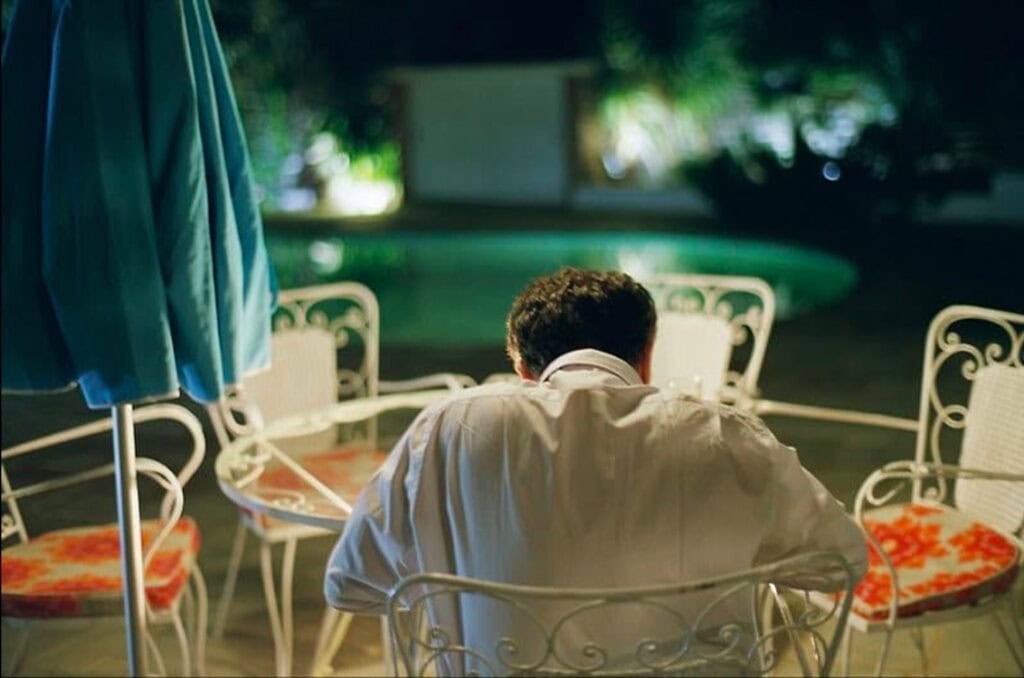
Dogtooth provides us with the same worrying and twisted humour as Lanthimos’ other darlings The Favourite (2018), and Poor Things (2023), but on a smaller scale. The film takes place in an unidentified part of Greece, mainly within the well-maintained and aesthetically pleasing confines of a family home that appears the definition of idyllic. Featuring a large turquoise pool to cool off in, a spacious home full of quality family time and… an imaginary pariah of an older brother living over the fence. We learn early on that this picture is exactly that, an image and a falsehood. Looking at the sidelines of this fragment we find that things are very, very wrong.
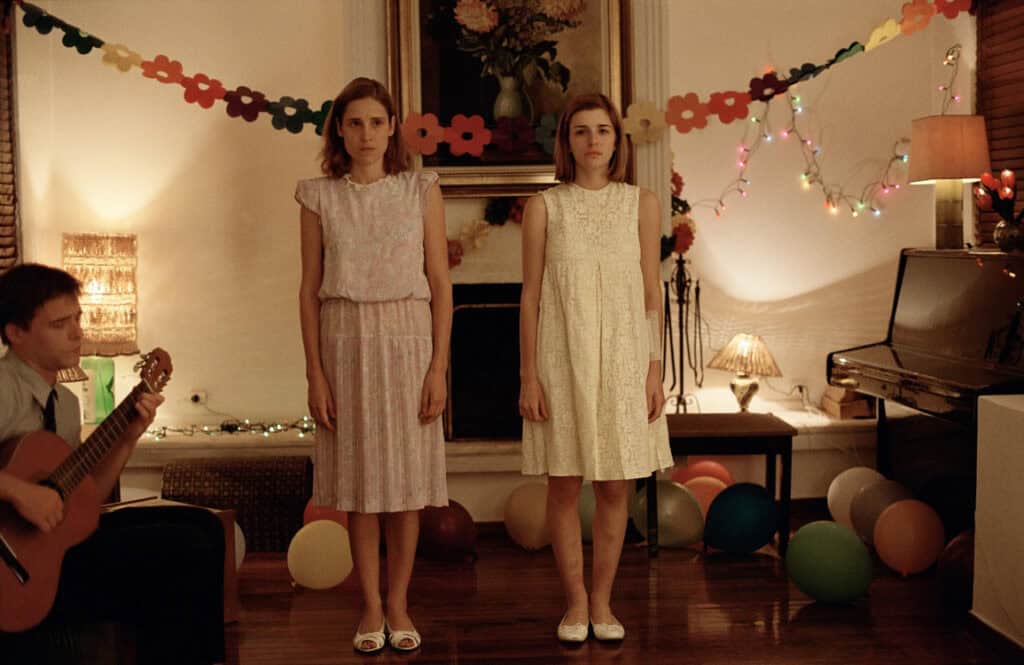
Dogtooth opens with a shot of three siblings learning the incorrect meaning of words from a tape in their bathroom. It’s a suitably strange introduction to the warped miniature universe ruled by an overbearing father (Christos Stergioglou) who appears to have the power to make planes fall from the sky. He tells his children lies to protect them, as most parents do, and will do just about anything to keep them safe.
The problem? These quasi-children are in their 20s, living the sheltered existence of most five-year-olds (albeit a lot darker). Whilst shielding them from the outside world, he also enforces violent punishments, mental deception, and acts of incest between them. He encourages the healthy competition felt amongst most siblings but fuels it with brutal punishments.

One of the most striking moments of the film is the inclusion of Sinatra’s Fly Me To The Moon, disguised as a song by the children’s grandfather about warped family values. This is one of the only songs used in the film which otherwise lacks the addition of an eerie score or other emotional indicators. Seldom telling us how to feel, Lanthimos shows the audience acts of extreme violence, disturbing incest, and verbal abuse. In the silent vacuum left behind, we are confronted with the real brutality of these acts sound-tracked only by our own thoughts and reactions. This lets the sinister nature of the film crawl below the skin whilst we are taunted by the film’s macabre humour luring us into a false sense of security, only to horrify us once more.
Watching this film with English subtitles only emphasises the lack of prompting from the soundtrack. Hearing music from ‘our world’ in the strange constructed reality of a dictating father is made even stranger by the rest of the film’s relative silence. We have only heard the sounds of the family until this point – so being confronted with Sinatra’s classic song as it’s being shouted over by the father’s incorrect and misguiding translations is a gut punch of a message. Any outer interference will be destroyed. It is a harbinger of the daughter’s fate that’ll be reached by the film’s conclusion.
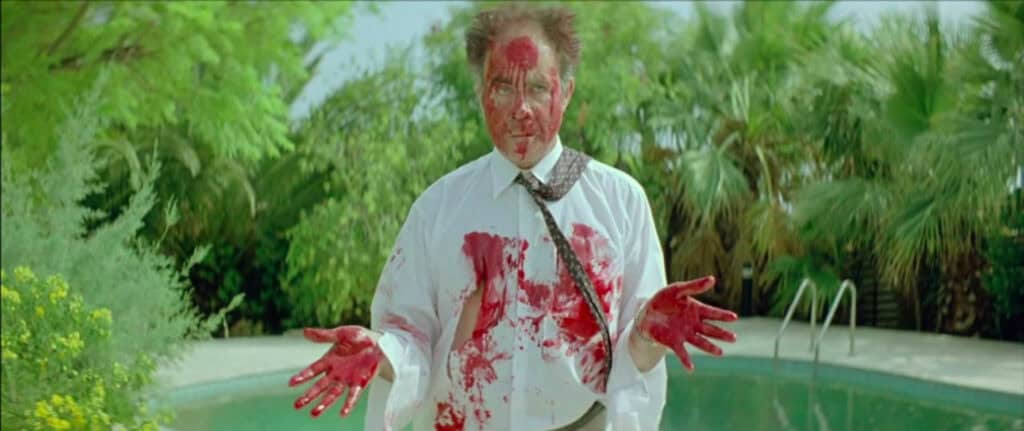
Lanthimos’ theme of a seemingly safe haven shrouded in darkness reminded me of Jonathan Glazer’s The Zone of Interest (2023), with its well-kept surface disguising a disturbing underbelly. I found this comparison uncomfortable whilst watching and felt like it spoke to the delusion of the authority parenthood provides. The films are united in the fragility of the belief that parents are always doing what is best for their children. Even when that includes subjecting them to, and protecting them from, their own wicked morals and actions. Both of the father figures in these films step out of the domestic bubble to commit atrocities fuelled by a warped and horrific belief that their acts protect their family unit.
In Dogtooth, the father figure’s most violent act is what we as viewers can interpret as the murder of Christina (Anna Kalaitzidou) in her flat. Hired by the father to visit the insular home and have sex with his son, Christina is our only conduit to the outside world in the film. She brings films like Rocky and Jaws into the father’s family enclosure, corrupting one of his daughters with quotes and violent acts from the outside world. She in turn recites them to herself, taking the monologues as gospel, much like her father’s mistranslated Sinatra. In her naïveté, she doesn’t know the difference between the falsehoods of film and real life, so the ‘truths’ she sees in these classic films drive her into a state of near-mania.
Christina’s intervention in the film as a figure from the outside validates the father’s paranoia about his children leaving the confines of the home, with her murder sending a message to us as viewers that the dogmas of this father are not to be reckoned with. Christina, and we as viewers along with her, don’t belong in this home. Our eyes don’t belong in the father’s domestic scene.
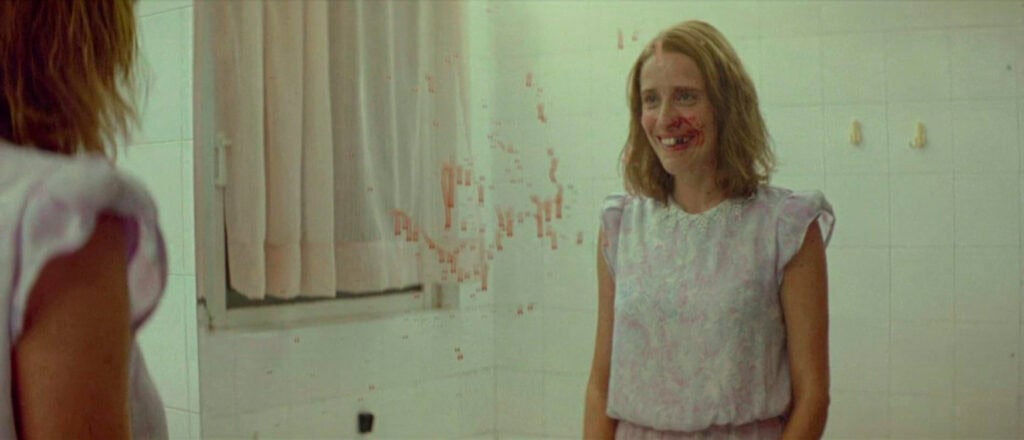
Ultimately, Dogtooth is a film that marries the construct of the family unit with the construction of cinema in a deranged critique of the extreme lengths parenthood can go to. Lanthimos shows us an undisturbed pool surface and pushes us in, drowning us in depths that have us glad when we see a young woman whacking her own skull to loosen her tooth in a bid for freedom. We share her bloodied smile of pure joy in complete faith that this film’s final act of horror will set her free.

It shares themes with Lanthimos’ Poor Things which serves as a warning to those wishing to shape their own humans too, with these parallel cautionary tales of development lending themselves to an allegory for the right-wing shift in politics we are seeing around the world. But that’s troublingly obvious. Let’s leave the dictatorial beliefs of Dogtooth’s father on the screen.