
Jailbait, Lolita, nymphette, tease: a young girl who is thought to be sexually alluring to men, often to a dangerous degree.
What was once a popular trope in literature has since been turned inside out, thanks to the MeToo movement and the wide cultural reckoning that followed. In the past six years, women writers, like Jeanette McCurdy with Half His Age (2026), Kate Elizabeth Russell with My Dark Vanessa (2020), and Sheena Patel with I’m a Fan (2022), have been revisiting this well-worn track, only this time to ask, what did it feel like for her?
These are powerful stories, no doubt. But, in 2026, the Lolita-bites-back narrative has been told with such rapidity, you might be asking, “is there anything more to say”?
With her debut novel, Bait, Uruguayan author Eugenia Ladra loudly says, “yes”.
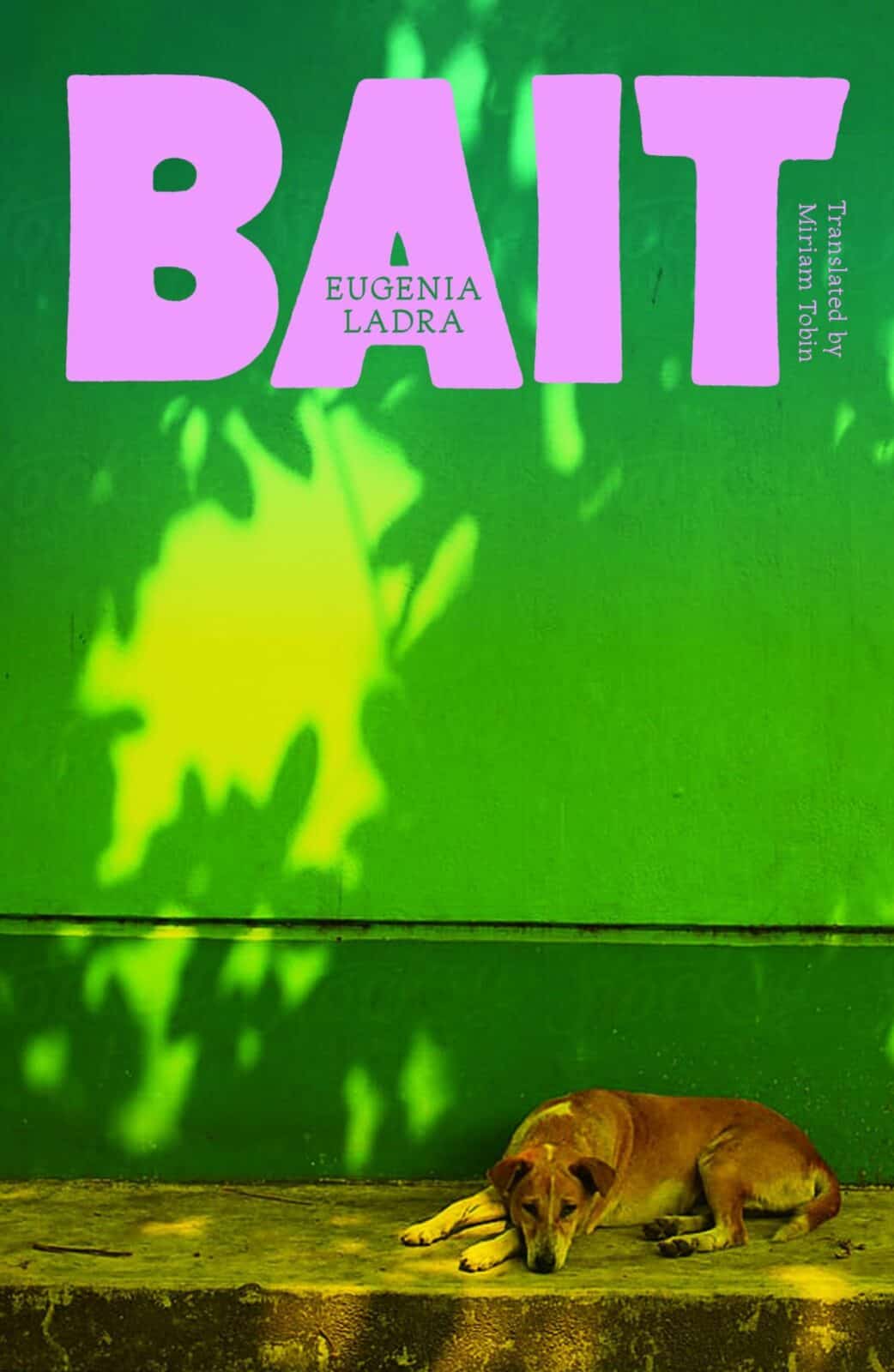
Set in the muggy, fisherman’s village of Paso Chico in the author’s home country of Uruguay, Bait follows 13-year-old Marga as her tedious summer of watching soap operas is interrupted by the arrival of Recio, an older man who soon becomes not only her boyfriend, but her roommate – squeezed into the home that she and her grandmother share. Sex, lions, and street dogs all feature heavily.
Ahead of the release of Bait in English, translated from Spanish by Miriam Tobin, we spoke with Eugenia Ladra about writing desire, boredom, and violence through the eyes of a 13-year-old girl.
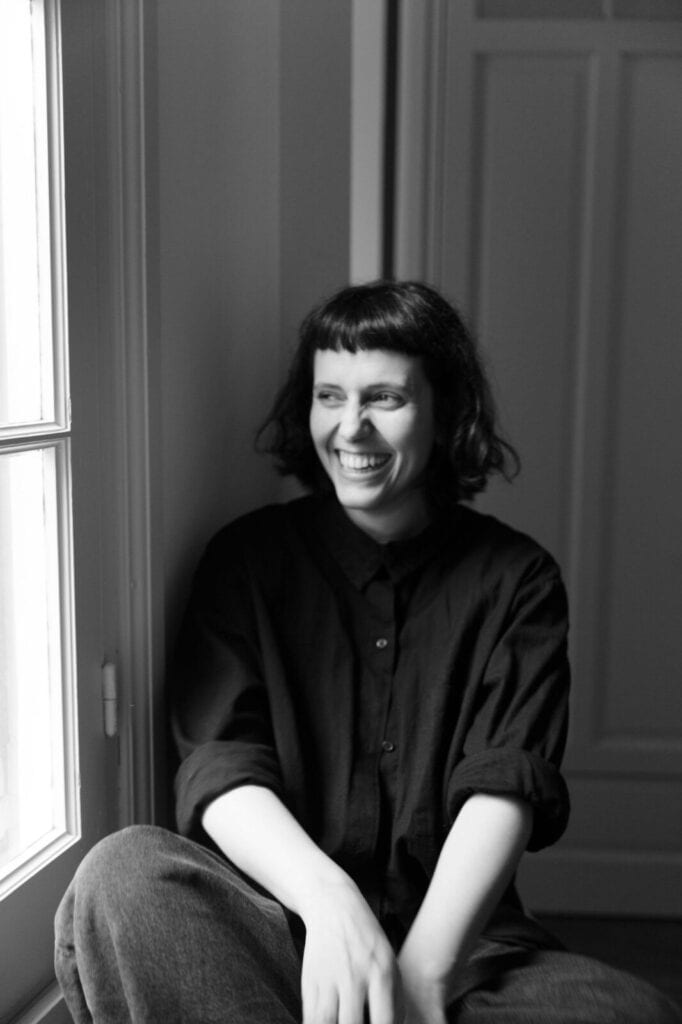
The Cold Magazine (CM): I want to start by saying that my favourite character from the novel was Paso Chico itself. The village was pulsing, alive, always watching. How did the village come into being for you? Was it inspired by a real place?
Eugenia Ladra (EL): I was born in Montevideo, but I grew up in a town in the northwest of the country. A place full of ravines and beaches inhabited by fishermen. It was a unique landscape where you could see canoes floating in the water, dogs resting lying down in the shade, crabs, mud, clay, and the infinite river on the horizon.
This geography was the seed of Paso Chico: this humid environment that was engraved in my body, and which I intended to reconstruct in my writing. Working with these recollections is one of the things I enjoyed the most about the novel’s writing process. I had to think about this small universe as something bigger than just a stage for the story to take place.
I had to conceive of it as a centre of gravity, a force capable of affecting the characters without them necessarily realising it. The constant heat, the suffocating humidity, the endless sound of insects, or the presence of street dogs, are at once a threat and a source of company. They make the town a protagonist, but also an unreliable territory where you have to tread carefully; you can’t trust it too much.
CM: Your novel will be many readers’ first encounter with contemporary Uruguayan fiction, particularly in the UK and the US. How conscious are you of that international readership, and do you imagine the story resonating differently across cultural contexts?
EL: While I was writing Bait (Carnada in the original Spanish) I was thinking mainly about Latin American readers. I didn’t think the possibility of a translation could be real. That idea didn’t exist for me at the time.
Even now, with the finished translation by Miriam Tobin and the forthcoming edition with Daunt Books Publishing, I struggle to visualise what’s coming up for the book in English. I wonder: what images will readers in other countries construct in their minds? What will the novel trigger in their imagination? I feel that not knowing how to answer this question keeps me in the present. And that’s always a good thing.
I think that, had I written Bait with UK readers in mind, I would’ve conditioned myself. I would’ve had to explain more, soften certain aspects of the language or the world being narrated. I believe that novels have to trust their readers, regardless of who they are, where they are, and what their first language may be.
CM: Your first scene introduces us to Recio and Marga through a startling act of violence. What does that opening allow you to signal about the novel’s emotional terrain?
EL: The first chapter introduces the reader to the novel whilst the action is already ongoing. It’s like the reader is being pushed right into the deep end. All of a sudden, the reader is in Paso Chico, things are happening, and they are trying to make sense of this strange act of violence, one that seems natural to those nearby.
In this way, the beginning works as a warning. It points out from the start that the novel contains violence, discomfort and darkness. I think of it as a billboard that welcomes the reader but also displays what’s to come. I was aware it could put readers off.
At the same time, I hoped it would bring me closer to those who decided to stay and keep reading. In that sense, it’s a first chapter that invites a close bond between writer and reader – as long as the reader is able to trust the language and the story, and has the patience to wait and discover the world yet to be revealed.
CM: In Bait, it seems that boredom is Marga’s inciting force. Was that intentional?
EL: Boredom was frequent in my childhood. After lunch, my grandmother forced me to nap during the siesta, but I could never fall asleep in the middle of the day. So, during those hours of rest, I stared at the ceiling and waited for time to pass.
Then I started sneaking out. Perhaps it was during those moments, experiencing a strange guilty excitement, that I learned about the enormous power of boredom. In a small town, where each day seems to repeat itself over and over again, and the extraordinary is rare, boredom can become an active force.
In Bait, boredom is a fertile situation that allows the characters to take action and look for something, even if it’s something they can’t name. Marga, in particular, becomes attuned to the odd, and pushes herself in order to have new experiences. I think this is a good place to be, at least in fiction.
CM: Recio is an adult man involved with a 13-year-old girl. How did you approach writing a character like him? How much empathy did you want the reader to feel – if any?
EL: Developing Recio’s character was challenging. I have never worked with a male character for such a long time, and his profile brought a lot of complexities. I wanted to create a character who embodied certain types of violence and with whom, at the same time, the reader could feel empathy and even some kind of closeness.
The truth is, I’m not interested in characters that could easily be stereotyped. I’m much more inclined to work with contradictions and with the darker side of human nature. This, it has to be said, doesn’t mean that I justify Recio’s actions, it just makes the reader’s gaze much more complex. I wanted to display this uncomfortable relationship we have with violence.
CM: Marga is a stoic, steadfast 13-year-old girl. She knows what she wants, and she’s not afraid to go for it. How did you construct her personality, balancing her more adult characteristics with her childlike desires?
EL: Marga was the first character that came to be. But also the one that took the longest to define. I had the starting point and shared experience, if you like, of living in a small town during my childhood and adolescence, just like her.
However, her character was a mystery to me. I started constructing Marga, mainly, from the links with the people around her: her grandmother, the auntie figure in Olga, her relationship with Recio, and the absence of both her parents. Those are the links that shape her relationship with desire, superstition and religion, as well as the violence she experiences and cannot name.
Marga is a complex character, capable of violence without really understanding the roots of her behaviour or being able to name those feelings. It was within that context that Marga, as a character, became clearer to me. A big girl, a small adolescent, who has walked the same streets since childhood, but has now found a new way to inhabit her own body.
CM: The river near Paso Chico seems to hold multiple meanings at once. It’s the economic lifeblood of the community, but it also represents stagnation, tradition, a kind of corrosive secrecy. Why have Marga’s story unfold here?
EL: The river works as a circular road. It’s what connects Paso Chico with the outside world: the boats, trade and the promise of development. But, at the same time, that river is a body of thick, slow, almost static water that accumulates secrets and rumours.
There is something about this stagnation that speaks to the logic of the town: what’s left unsaid and what rots without making it to the surface. I wanted the river to work as a deformed mirror reflecting what happens in this place: the relationships and the violence, as well as the silences.
Nothing flows easily, nothing is clean. And thinking about Marga, the river depicts a kind of threshold. It’s a border between childhood and a passage harder to name; one that runs between fascination and danger. This is a place that attracts and threatens at the same time, just like the experiences that start to open up that summer.
CM: Do you think of Bait primarily as an intimate portrait of Marga, or as a novel in conversation with broader social realities? It’s difficult not to read it against current global discussions around the exploitation of women and girls.
EL: I think Bait can be both things or none. I’m interested in working, mainly, with the idea of creating a universe: a small town with its own rules, environment and silences. But, this universe is able to have a dialogue with reality as well. And it’s here, in this dialogue where certain kinds of normalised violence appear, especially those that thrive in isolated places, like Paso Chico.
The novel can be read as an intimate portrait of Marga – her perception of the world, the way she looks at it and engages with it – but also as part of a wider conversation on social dynamics that go beyond this particular town.
At the same time, I’m interested in it being able to stand on its own as a story, without needing to be fully anchored to a social‑reading framework. The tension between what’s intimate and structural; between the singular and the recognisable; it’s a space that I’m more interested in inhabiting than resolving.

CM: Alongside Marga and Recio’s story, another, more melodramatic romance is playing out between the characters of Marga’s favourite soap opera. What does the soap opera allow you to explore that the “real” story cannot?
EL: The soap that Marga is watching, Pasión de Gavilanes, was a Colombian show that was very popular in Latin America. Like all soaps, it’s a love story. But the relevant aspect is not the plot, but how the characters relate to each other through normalising psychological violence as a form of love.
In Bait, this soap provides Marga’s emotional education as there are no grown-ups or institutions looking after her or giving her any advice. The soap’s story normalises violence and, even more, romanticizes it. Using episodes of the soap as bookmarks in the novel allowed me to delve deeper into Marga’s character, and to show that watching television is her way of learning about the world.
Her life halts when each episode is about to start, and something similar happens in Bait. The main plot pauses to give space to this other story; a secondary story perhaps, but one that is profoundly linked to Marga’s key experiences.
CM: There’s a part in the novel where we briefly leave Marga and enter La Paraíso, the village’s only bar. Here, you step into the perspective of the men who gather there and we watch as the rigid codes of heteronormativity start to loosen. Why go there? What does that detour add to the story?
EL: This was one of the last chapters I wrote and one of the most enjoyable. I’m interested in scenes that don’t necessarily make the plot move forward, but instead allow the reader to go into a deeper layer of the story.
In this case, to tune into the narrator’s point of view. Bait’s narrator is ambiguous, you could even say it’s omniscient. But this insight lies only within the limits of the village. There’s the interest to follow Marga around but at the same time, she doesn’t need to be a constant presence.
This chapter is a way to explore this detour: to walk away from Marga in order to enter a world that’s beyond her limits but part of the same universe. La Paraíso – a bar where women are banned and where the routine of drinking becomes almost a ritual – reveals a kind of desire that, until then, remained unseen. This shift allows us to see more clearly the real tensions in the town: what’s shown and what’s suppressed, what is named and what’s not.
CM: Talk to me about the title – Bait. There’s an obvious reference here to the trend of calling young girls “jailbait”. How did you decide on the title?
EL: In general, I’m fond of long titles but in this case I wanted something short. The word came to me during the writing process. It appeared in a short monologue where Marga describes how she feels when she’s standing before a barking, growling and snarling pack of dogs. In that moment, Marga describes feeling like bait. That’s when the word appears for the first time in the manuscript.
At the same time, “bait” allowed me to condense something bigger: the town’s dynamic, one where human and animal bodies work like lure to attract another type of meat. A bait, literally. I found that this word – so natural, so close to the characters’ lexicon – managed to express with great precision an essential way of being in the town.
CM: Bait is your debut. When you finished it, did you feel you had exorcised something, a memory, a place, a character or did writing it open further questions for you?
EL: When I finished the novel, I had a feeling of closure. I spent almost three years in the process of writing and editing, so it felt like closing a chapter. Perhaps, even closing a way of being in the world to move on to another in which the book no longer belonged to me.
The text had to be circulated in order to become accessible to other people. What I really felt was that I was at the end of a very intimate writing period – one where you’re writing without the world being aware of it. I think that changes after a first novel. Before that, I had published short stories without the expectation of ‘what’s next’. Now, that question comes up and keeping quiet about what I’ll be writing about in the future seems harder.
CM: Well now I have to ask: What’s next for your writing life?
EL: There are topics that persist through time and I’m now addressing them in a much more conscious way. One of them is my closeness to nature, which has always been present in my writing and in my imagination.
I think that to be conscious of something that used to be intuitive will have an impact on the way I write about it. It’s a process that I’m looking forward to but also one that I’m focused on. I do hope that this stage is a long lasting one.
CM: And finally: It’s common for interviewers to ask their interviewees what their last meal would be, but I think literature feeds us just as much. What would your last read be?
EL: I believe I should choose something completely new that I haven’t seen before. And if possible, I’d choose the full experience: from going to a bookshop and feeling the book calling me; to reading the first page only to realise later on that I can’t come out of its spell.
Eugenia Ladra’s Bait, published by Daunt Books, will be released in the UK on 18 June 2026.
This interview has been translated from Spanish by Jimena Gorraez.


