
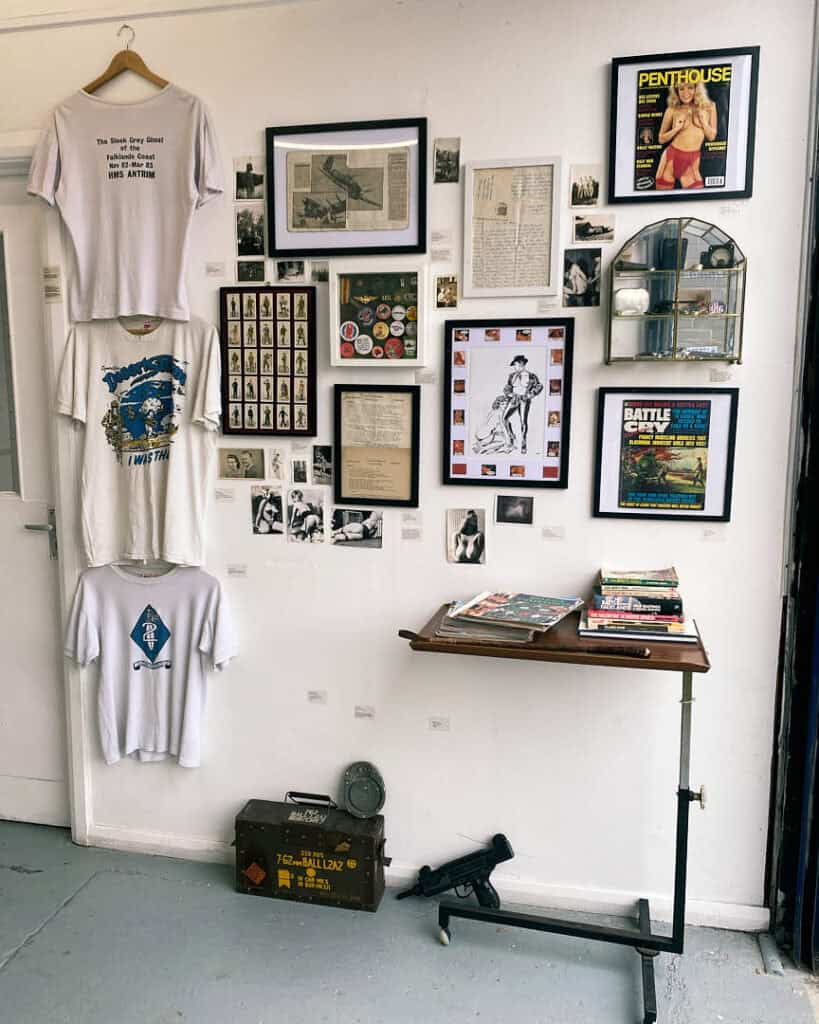
Emma Sielaff is the founder of the market-series-turned-exhibition, Finders Keepers. The project is dedicated to bringing unassuming relics of human existence into spaces reserved for fine art (exclusively). Sielaff’s work offers a series of questions that beget wider discussions about what it is that makes us distinctly individual – as well as how we simultaneously find ourselves enmeshed in a collective net of memory.
Sielaff is an interdisciplinary artist, all-round creative, and community builder, hosting events across London and beyond. Her work presents the notion that connectivity can materialize via objects imbued with our collective past. Art can indeed capture and feed into shared moments, creating a deeper understanding about the ways our memories inform one another. Often in lieu of words, or physical touch.
These experiences that form our identities are often intrinsically tied to overlooked artefacts of daily life. Sielaff draws our eye to pinpoints of connectivity by way of ordinary and mundane, turned substantial. These objects transform into altars of sorts — established in our bedrooms, living rooms, and wider homes. Sometimes they appear as part of our garments, in jacket pockets, and on walls in shadow boxes.

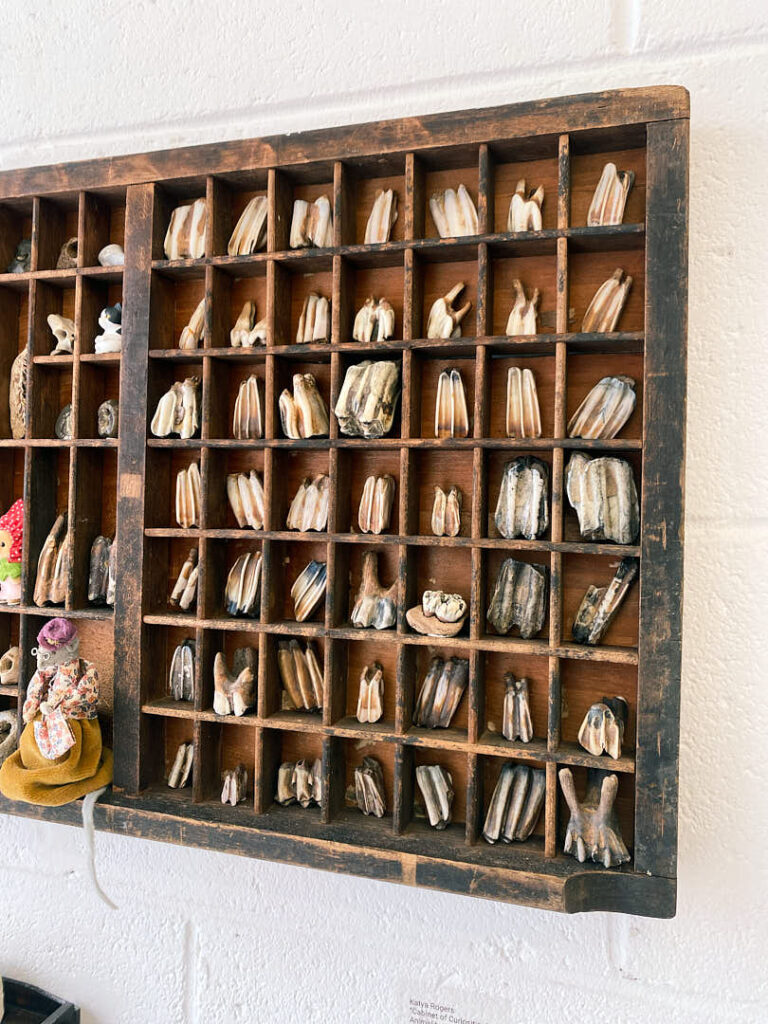
Finders Keepers takes this sentiment further, unearthing belongings that find themselves in our pockets on walks into the city, the items that often don’t belong to us to begin with. Everyday items were presented as if facets of fine art, to be defined by passing onlookers. A hand me down shirt, a partial piece of driftwood battered by the incoming tide, a page torn from a book — forgotten in a cafe. Maybe even a ring left on a sink at a house party. Playing into this sentiment, the exhibition centered on Sielaff’s words: “When something is unowned or abandoned, whoever finds it first may claim it for themselves…”
Attendees were inspired to become collectors of physical memory in their own lives. Misplaced items dropped by strangers – insignificant in their passing stride, are reclaimed. And suddenly upon discovery, they’re irreplaceable. The exhibition was presented as a shrine of its own, showcasing a collection of miniature, momentary worlds.
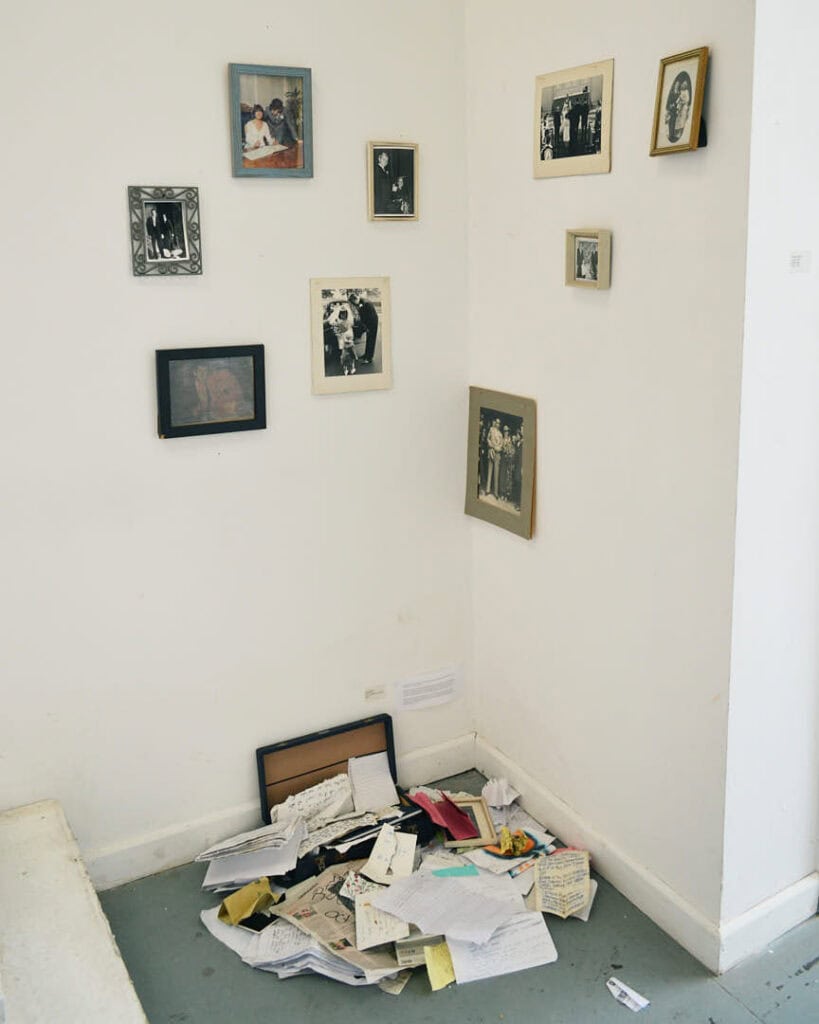
Considering that the format of a weekend exhibition such as this is inherently short-term (as opposed to an installation), these works only further confirmed the messaging that Sielaff aimed to highlight. The collection was significantly singular, yet remained communal. Due to the sheer number of artists on display and the collaborative effort this exhibition took, this exact experience would never be repeated again. Much like that of our collective pasts, inevitably careening toward an undeniable, fleeting future.
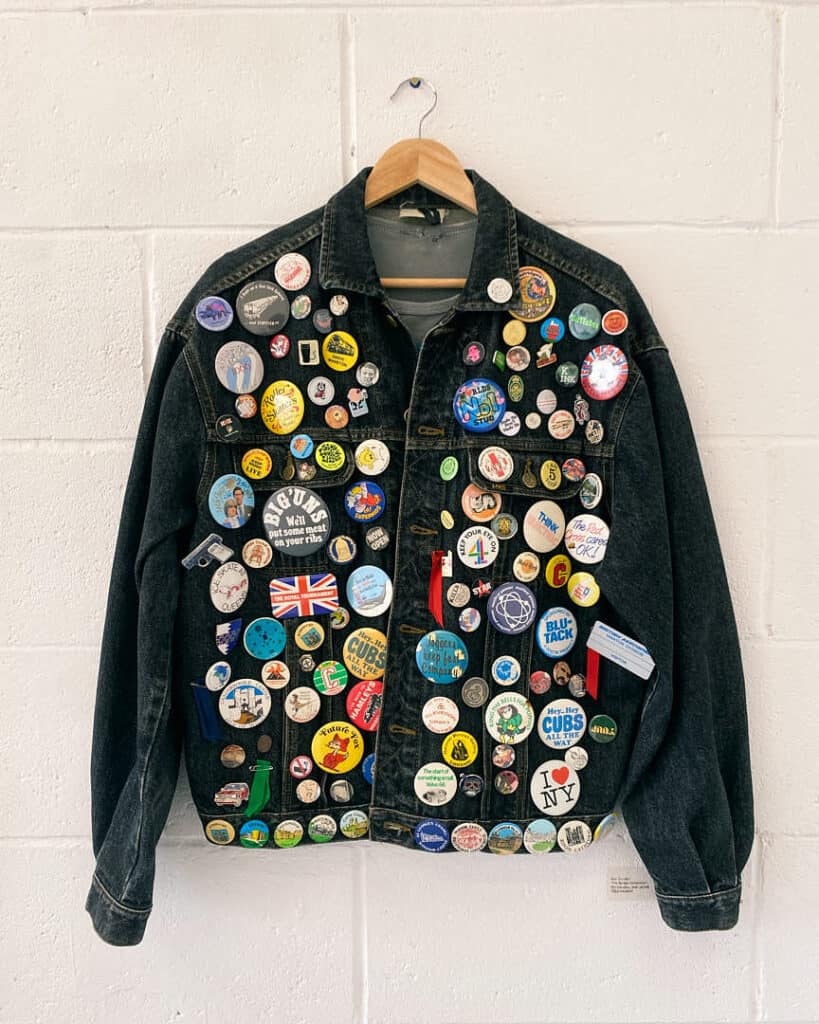
As time lurches forward, unremorseful for our lost moments, these items become memory as humans slowly fade into obscurity. Where the intangible becomes tactile, Sielaff allows a version of home to form. We are physical and metaphysical simultaneously… And yet so much of our existence is left undefined. Like dreams experienced, details ragged on the edges, we disintegrate into tactile relics of our collective consciousness. A misplaced lighter becomes a gift, an oyster shell — a tribute to a meal never tasted, a pin-studded jacket — a collection akin to that of an overfilled camera roll.
Amidst the memories understood in the form of various objects, viewers could witness “a tooth, a four leaf clover, a die, a naughty photograph, a miniature bible, a badge, a piece of glass…” For many, a slew of these objects could be considered ‘bin-worthy’. But what we find is that ‘junk’— which does not need to belong to anyone — is transformed into an art form. Instead of overlooking these items, Sielaff presented a plinth, a hook to hang, a wire to withstand. For, in Finders Keepers, each became part of a wider conversation.
The expertly curated “exhibition of unique collections” was previously on display at the Orion Business Centre in South London. The group show format showcased works by Emma Sielaff, Benjamin Gordon, Katy Rogers, Lily Lepage, Charlie Calvey, Hope Blaising, and Clem Coles.