
In April of 1476, a young artist by the name of Leonardo da Vinci was arrested by Florence’s vice squad, the scarily-named Office of the Night, on charges of sodomy. He was one of four men accused of having sex with a 17-year-old male model and sex worker, Jacopo Saltarelli.
In an anonymous note dropped in a mailbox, the accuser writes that Leonardo was guilty of “evil pleasures”. The charges were ultimately dropped, but historians still debate Leonardo’s sexuality to this day. Was he gay, bi, asexual? If we look hard enough, will we see hints of forbidden desire in his art?
Published on 2 July, a new novel takes up the task of reimagining Leonardo’s life as a young, gay man in rollicking Renaissance Florence. Phil Melanson’s Florenzer weaves together Leonardo’s life with two other luminaries: Francesco Salviati, an ambitious priest, and Lorenzo de’ Medici, the heir to a great banking fortune. Together, Phil uses the lives of these men to paint a sharp and sensuous portrait of 15th century Florence – a place where bronze statues glisten in the sun, blood trickles from the slaughterhouses through the streets, and legends are made.
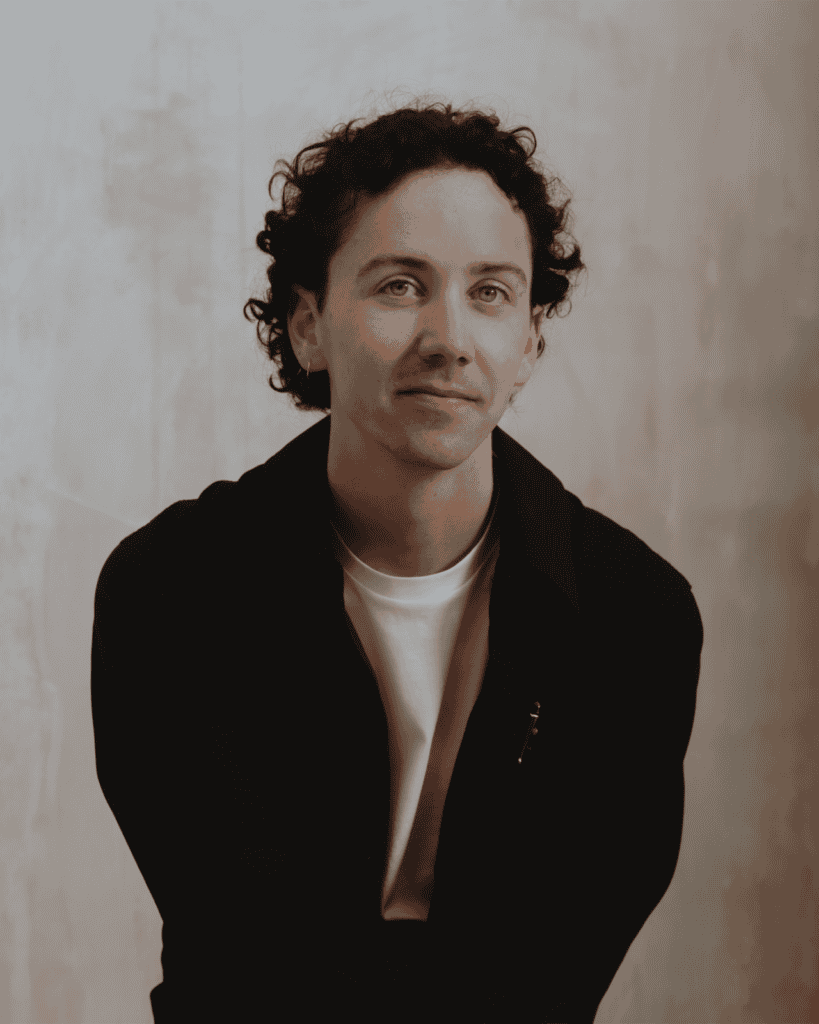
The Cold Magazine sat down with Phil to find out more about the hidden queer history of Renaissance Florence and how it felt to reclaim Leonardo as a queer figure.
The Cold Magazine (CM): Talk to me about the story of Florenzer. What was the first spark that inspired the novel?
Phil Melanson (PM): I’ve been interested in the Renaissance since I was young. I had a French teacher, Madame de Pizzi, who talked a lot about the Pazzi family (a powerful banking family in Florence), and that was really the initial spark of my interest in Florence.
I always loved the idea of writing something set in that period, but, obviously, it’s a big subject. I think I was somewhat reluctant to approach it. For my undergrad I actually went to film school, so I was writing, but not from a traditional fiction background.
There was even an early version of Florenzer that I wrote as a script. It was very different. But eventually I realised I really did want to focus on writing in any form, so I went back to it and thought: I think I need to write this as a novel.
But even still, I think the moment it came together for me was when I put Leonardo at the center. I was very reluctant to make Leonardo the central character. He’s such a towering figure. It’s one of the benefits of the book that people immediately recognise him, but it’s also daunting.
What unlocked it was researching his personal life, his lack of career “success” at certain points, and then coming across surviving evidence of his sodomy accusation. That’s when everything clicked into place.
CM: That’s so interesting that Leonardo came later in the process. I would’ve assumed he was the starting point.
PM: Yeah. I have huge respect for him, of course. But not coming from an art history background shaped my approach. Ultimately, I wanted to write a novel about Florence as a city in this pivotal moment about the interplay between art and commerce and power.
I knew I needed a painter, and it was actually quite reluctantly that that painter became Leonardo. But the book would be so different if it was someone else.
CM: We’ve talked a lot about Leonardo, but there are two other central characters in Florenzer. How were they born?
PM: In the same way that you can’t tell a story about Renaissance Florence without talking about one of its artists, you can’t tell a story about the city without talking about the idea of banking and the Medici dynasty.
Lorenzo de’ Medici is a very well-documented figure and I found him to be very nuanced and complicated. I thought using fiction would be a lovely way to explore the grayer areas of his rule over Florence and his wealth.
You can’t talk about this time period without talking about the church as well, and the third point of view character, Francesco Salviati, allowed me to present that perspective as well. He is a real historical figure, but the one that is the least well-documented, so this was an exciting opportunity for me.
CM: I feel like this trio opens the door to modern themes too – the difference between art and commerce, ambition, masculinity. Renaissance Florence might seem like this distant world, but when you look closer, these dynamics are very relevant to 2026.
PM: That’s exactly it. I started thinking seriously about the book again after the political events of 2016, both here in the UK and in the US.
The more I looked at the time period, the more parallels I saw; we have wealth inequality, we have certain autocratic tendencies. But, also, we have artists whose careers often depend on the endorsement of these powerful figures. I think that’s a really complicated but quite interesting interplay.
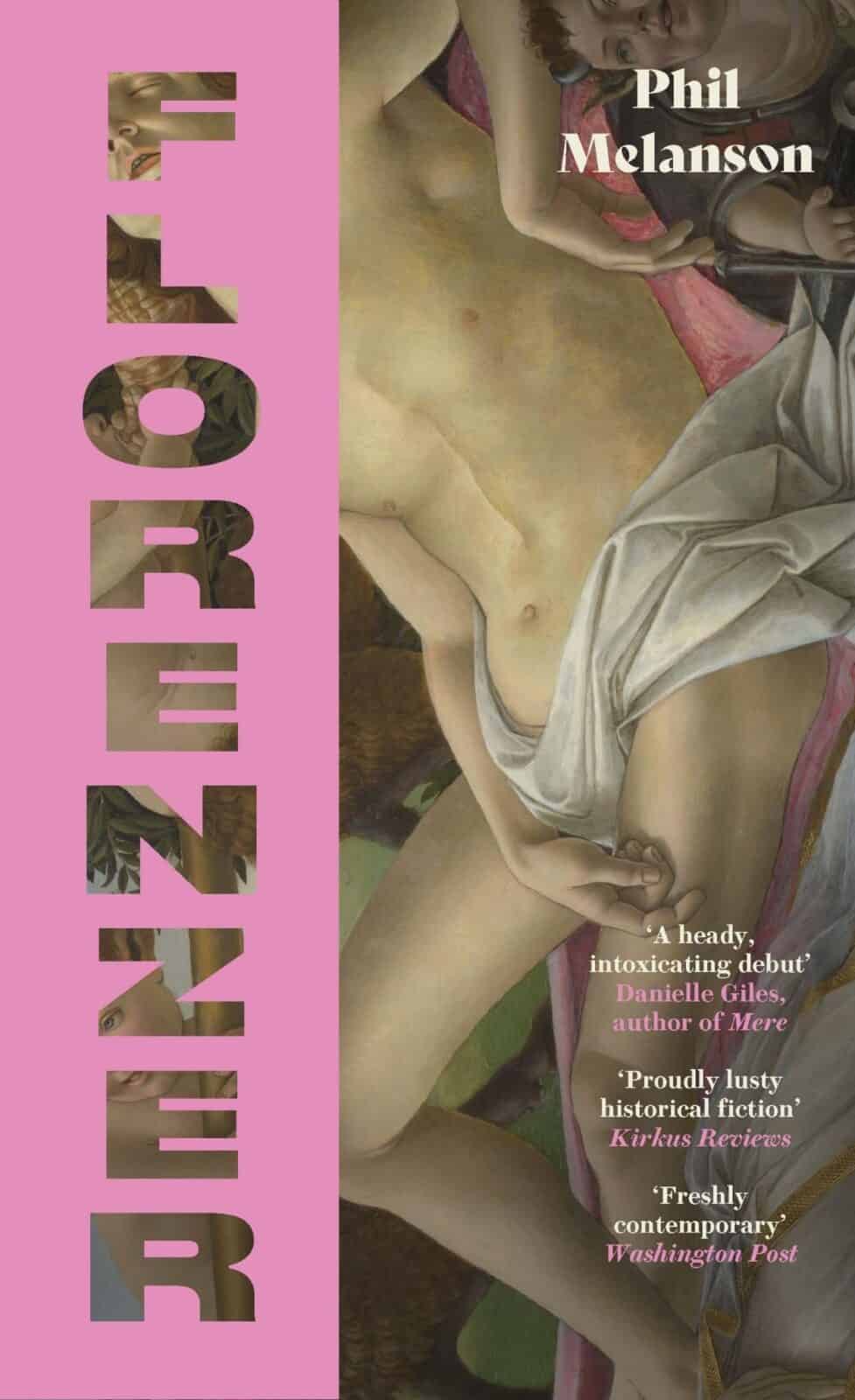
CM: Why title the book Florenzer?
PM: Florenzer was not the original title of the book. I had a very difficult time with the title, and it changed many times over the course of writing the book.
Oddly enough, I have to thank the late Pope Francis for this one. At the time I was writing, there were several news reports about how he used the word “frociaggine,” which is a slur for queer men.
People who understand Italian much better than I do explained that his use of this word was interesting because it is so specific. I was fascinated by that. “Florenzer” was a slur used by people outside of Italy to refer not only to someone from Florence, but also, in a pejorative sense, to a man who has sex with men.
I liked the idea of the title carrying that tension, much like the word “queer” itself, which has been reclaimed.
CM: Writing this book feels like a reclamation of Leonardo as a queer historical figure as well.
PM: I think so, yes. But I also think it’s about resisting the idea that we can only speak about historical queerness when it’s explicitly self-declared.
If you look at Leonardo’s notebooks, it’s quite crass, but he has these hilarious cartoons of penises and incredibly homoerotic imagery in there. He writes about his infatuations with some of his apprentices and his reluctance to have sex with women. What more do you need at that point?
CM: Did you encounter any pushback about characterising Leonardo as an explicitly queer figure?
PM: I wouldn’t say I felt pushback. I think it’s where I felt the opportunity that being a fiction writer presents.
I’m not an art historian or a historian, and so I think what worked for me, frankly, was the ability for fiction to fill in the gaps. All my favorite historical novels all do this – they offer a different point of view.
Florenzer is not the definitive, factually correct version of events, although I did everything I could to make sure it fit with our contemporary understanding of Leonardo and his work and the political events that happened.
The sodomy accusation really surprised me when I first found it. It also made me question why so many biographies exclude or minimise that aspect of his life. There simply isn’t much surviving documentation about Leonardo’s sexuality, so fiction becomes a way of treating those gaps.
CM: That feels like one of the things historical fiction does best. It lets you explore “what if” without being locked into a single version of history.
PM: Exactly. I like the words “play” and “fun” because writing the novel was fun. It was playful.
And I’m lucky that even though queer history is quite fragmented, cities like Florence have chosen to preserve the sodomy accusations and other important documents in their state archives.
Like, you can go to Florence and they will hand you a ledger where Leonardo’s name is written in 1474. And that’s absolutely mad to me!
CM: Talk to me about your relationship with Florence as a city. Were you writing in Florence, or was it more preparatory research trips?
PM: Many research trips. It became easier after I moved from Los Angeles to London because I was much closer.
Before I started drafting properly, I did an initial research trip while I was still working in film marketing in LA. I was essentially writing in secret. I told colleagues I was just going on holiday to Rome and Florence, which I think my coworkers all found quite strange. Several years later, they came to understand why I did that!
There was about a year of research before I wrote a single word. And then I realised writing isn’t a linear process – you keep going back to research even as you draft.
Later, I spent a long stretch in Florence in 2021, finishing the book in an Airbnb in Oltrarno as we were coming out of the pandemic. Tourism had slowed down, so it felt like a rare chance to really experience the city – to walk the steps of the characters and just be able to wander and understand what the city looks, feels, smells like.
CM: It’s interesting that you were writing in secret for so long, especially since ambition is such a theme in the book.
PM: I feel like so many writers can really relate to that as well. Writing a book is a big statement of ambition, isn’t it?
I don’t want to over-identify with Leonardo, but I do think there’s something about ambition and imposter syndrome that runs through the book.
Choosing to label yourself as an artist, a painter, or a writer requires a kind of suspension of rationality to a degree. One does not embark on this career path because it is a surefire path to success. You pursue it almost compulsively.
Some of the strongest parts of the book, for me, came when Leonardo’s struggle to define himself echoed my own experience of writing it.
CM: There’s that moment where Leonardo is asked if he’s a “master painter” and he hesitates. It feels so human.
PM: That’s the only way I could do it. You know, he’s one of the greatest artists of all time. I could only dare write about him if it’s at this moment in his life where he is not a celebrity yet. He is unsure. He doesn’t even know if he wants to be a painter or an engineer.
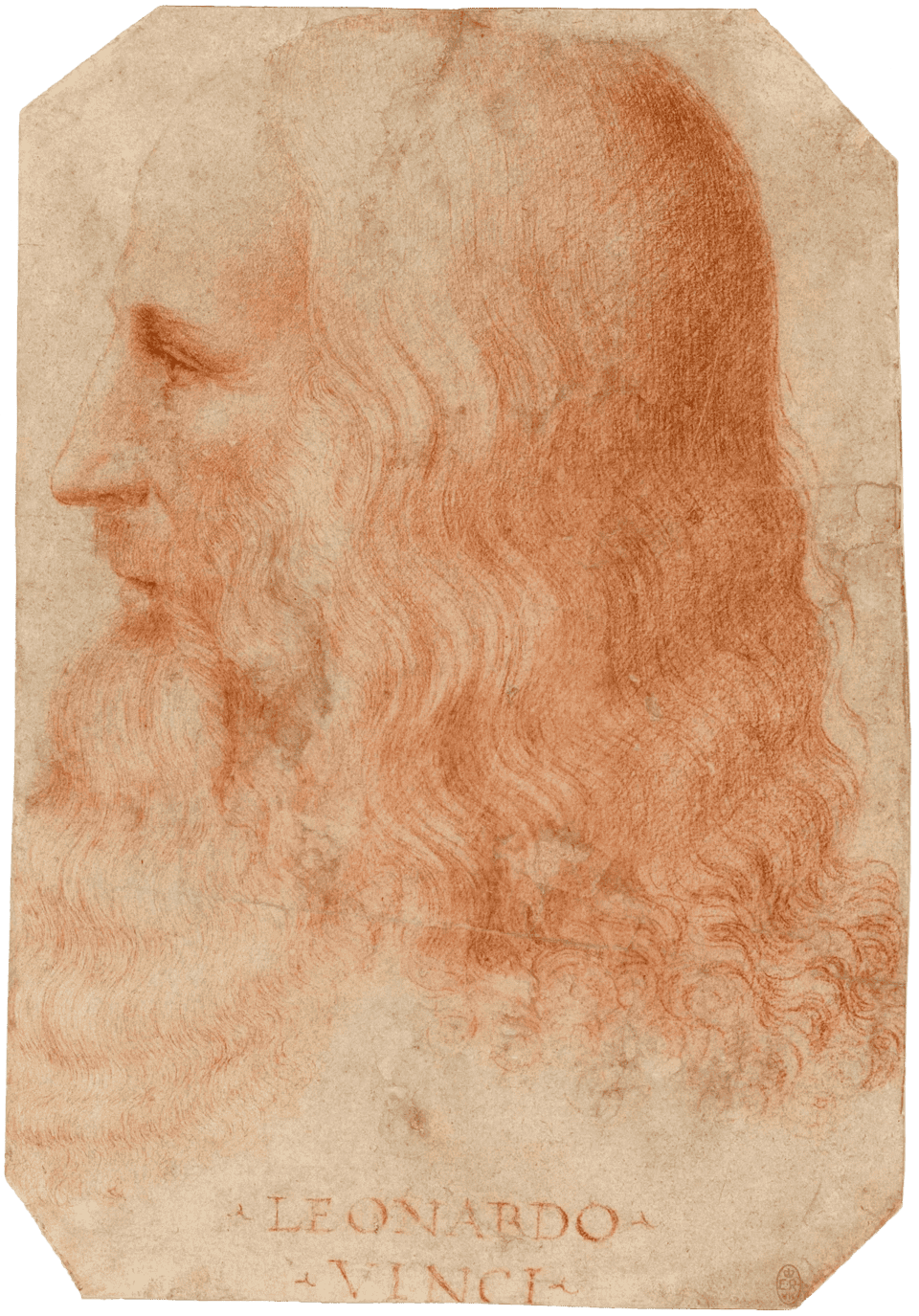
Portrait of Leonardo da Vinci (c. 1515–1518), attributed to Francesco Melzi. Royal Collection, United Kingdom
CM: Was there anything in your research that really surprised you or changed the direction of the book?
PM: The sodomy accusation was the moment that the book unlocked itself for me. That’s the axis on which everything moves and really, I think, explains the novel.
Beyond that, I was surprised to learn what homosexuality looked like in Florence in the 1400s. There is a shocking amount or surviving reports on how men – to put it bluntly – were fucking in the alleys, in the trenches, up the river, in public squares.
It is absolutely wild to imagine that versus the Florence of today, which frankly, I think has really lost a lot of that queerness.
CM: Why do you think Florence has lost its queer edge?
PM: That’s a great question. I think it has to do with the appeal to tourism.
Florence still has queer history, even in modern times, but many queer people I met there said they often leave for cities like Rome or Milan where the scene is more active.
CM: This might be a difficult question to answer then, but, if someone visits Florence today, especially a queer visitor, what spots would you recommend?
PM: Don’t go expecting nightlife, but lean into the art.
The Bargello Museum is extraordinary, especially for sculpture. Donatello in particular is fascinating if you’re thinking about queer readings of form.
Stay in the Oltrarno if you can. It gives you breathing space away from the historic centre. And, also, just wander. Even street names preserve fragments of queer history if you know how to read them.
Phil Melanson’s Florenzer, published by Pushkin Press, was released in the UK on 2 July 2026.


