
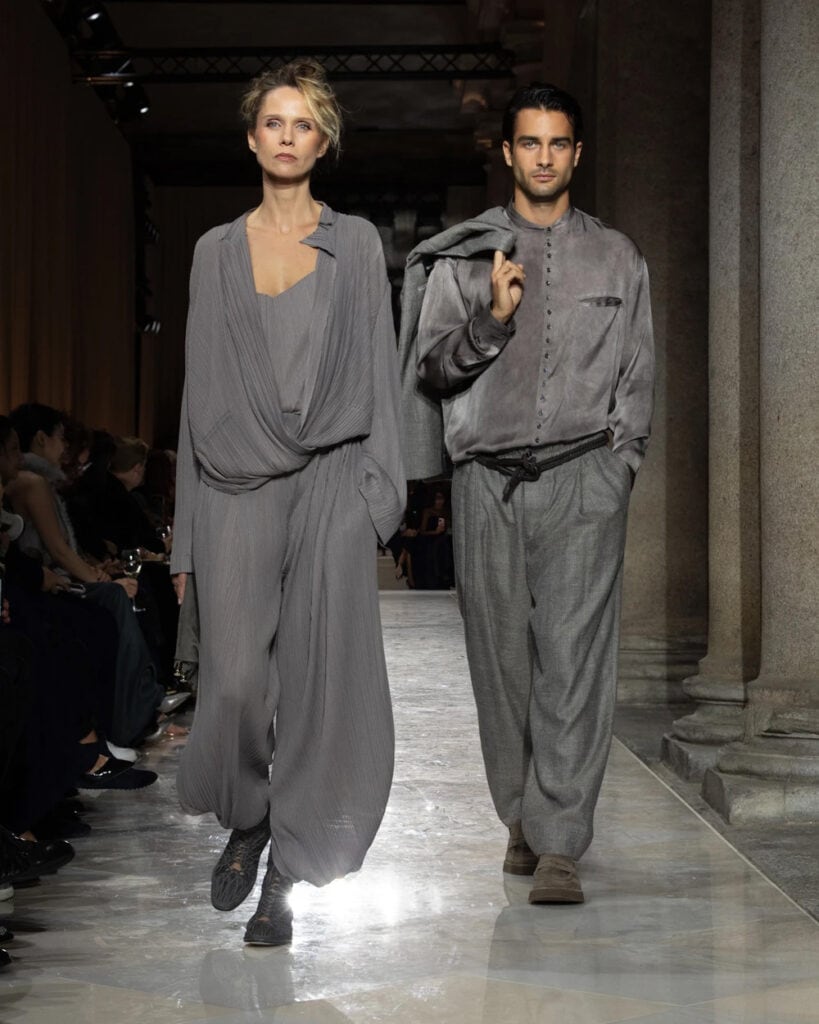
It was a brisk Sunday evening, lightened by a crescent moon, when the court of the Pinacoteca di Brera became the metaphysical host to Giorgio Armani’s last Spring/Summer collection. Under the piercing eyes of Mars the Peacemaker, white lanterns were lit, and a black lacquered grand piano in the corner started playing. Sat in the dim light of the palazzo, facing the Tuscan columns, Ludovico Einaudi played Nuvole Bianche, an ode to divine transcendence, when the soul becomes as light as a cloud, wandering across the firmament, dotted by twinkling stars, just like Armani’s collection.
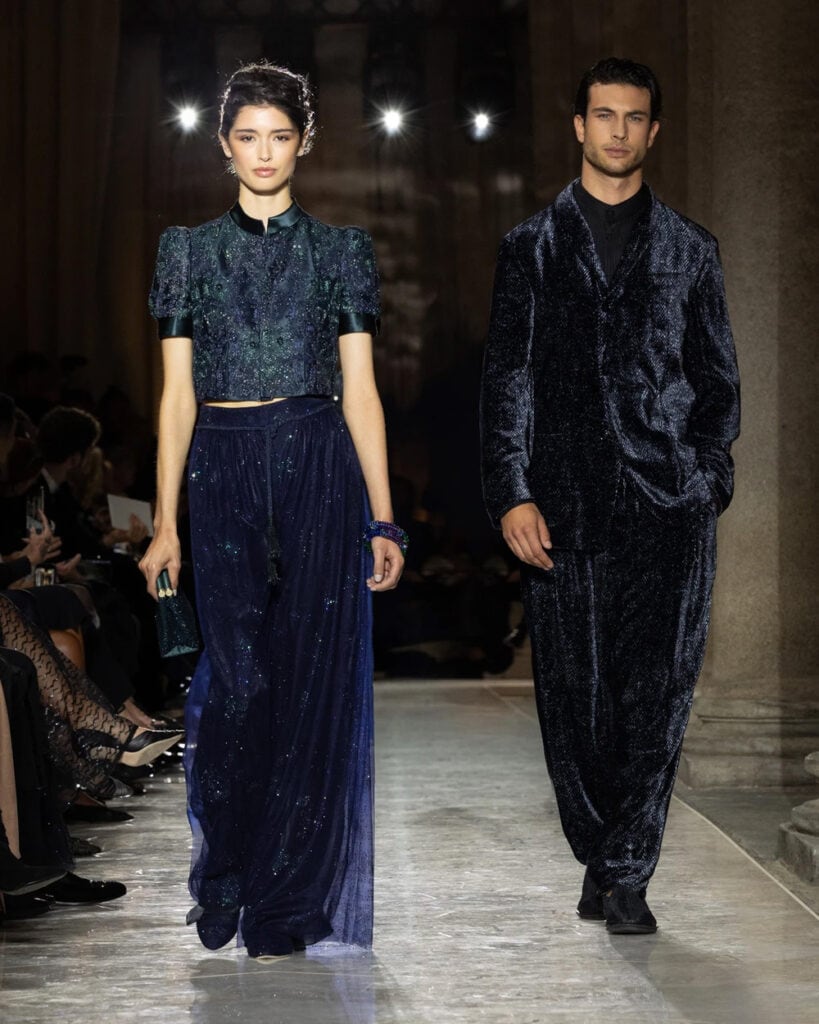
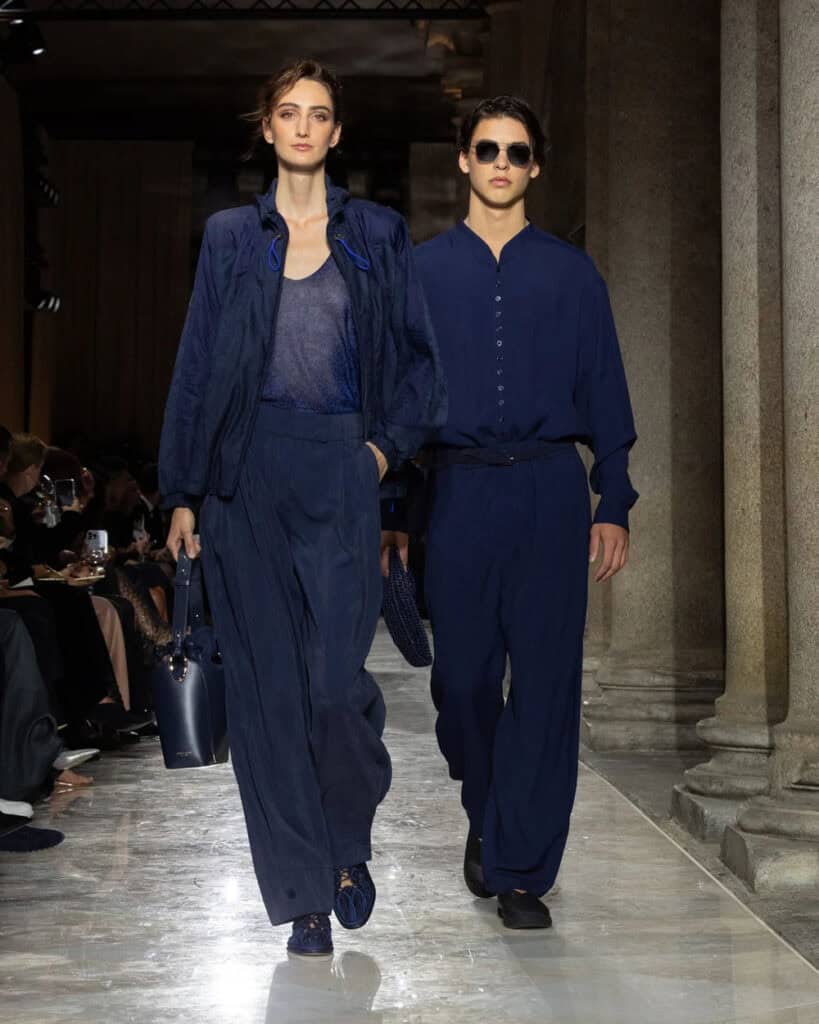
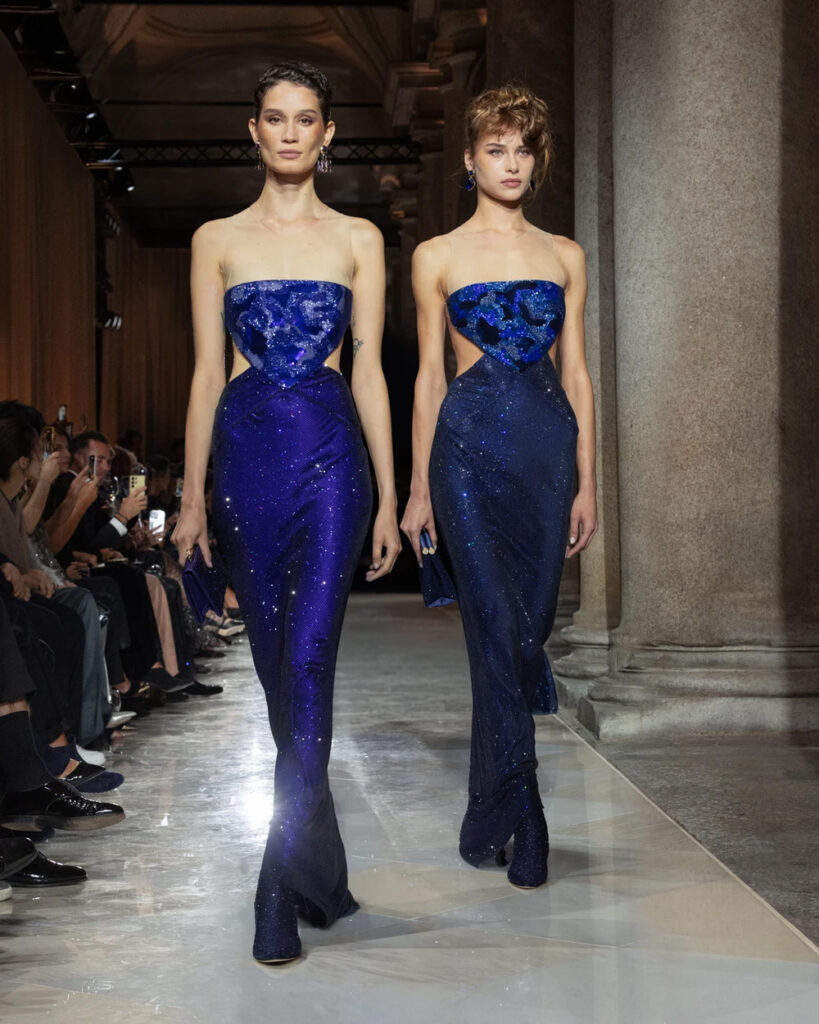
And as the sky turned dark, the first looks suddenly appeared like white doves, a beacon of light and hope, almost mimicking the overcast Milanese clime. The collection proceeded with charcoal grey hues, which started to become tinged with a distinct bluish brush stroke, ablaze with crystals. Almost like an Impressionist painting, Giorgio Armani’s last collection captures the everlasting cycle of morning, noon, and night, from the shadows of Milan, home to Armani’s work, to the deep waters of Pantelleria, the Sicilian island where his heart found its peace.
It was 1973 when Giorgio Armani first opened his studio in Milan, with the late Sergio Galeotti, who then became the cofounder of the fashion house when it first came into existence in 1975. Since his earliest collections, he experimented with materials and fabrics, juxtaposing leather and chiffon, and he created the most peculiar colour combinations, using a consistent scheme of grey, beige, and earthy tones.
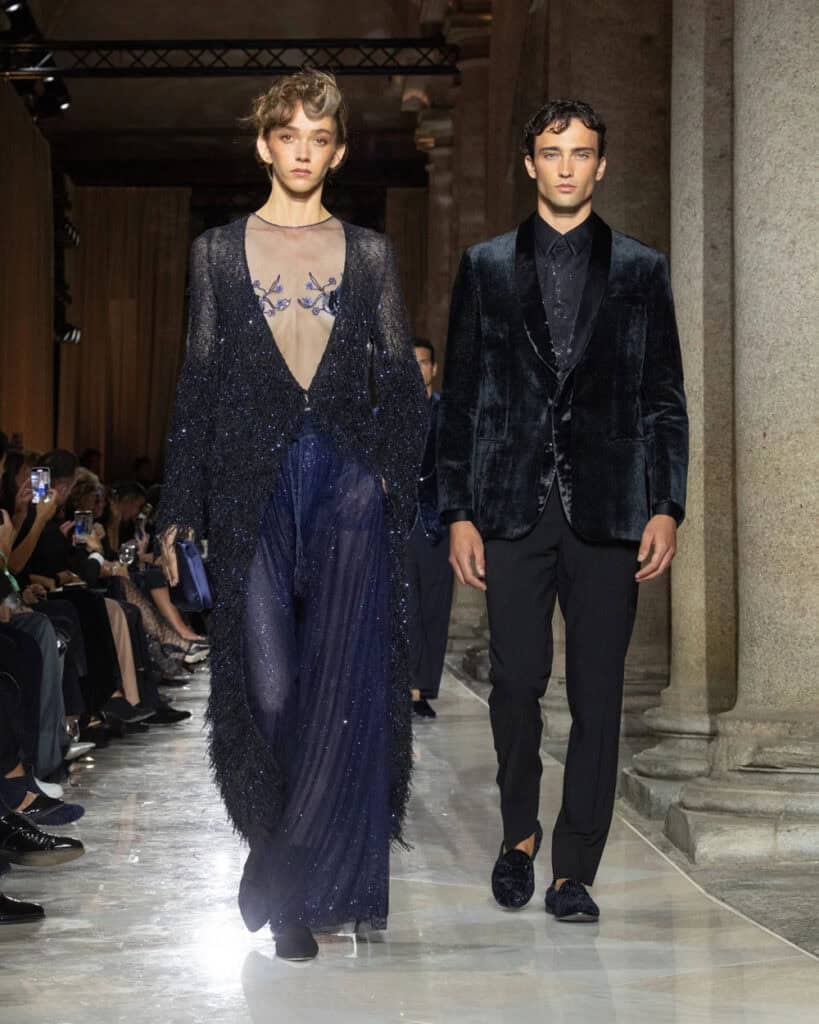
The jacket, which had been opulently embroidered in the 1930s by Elsa Schiaparelli, inspired by the phytomorphic Art Nouveau decorations, has always been at the very epicentre of the fashion hemisphere. Therefore, when it was Giorgio Armani’s turn to add his personal contribution to this chameleonic piece, he made it relaxed, sensuous, and his utter fixation.
In 1980, American Gigolo hit the theatres, establishing Armani’s international recognition, and his deconstructed jackets became the epitome of elegance and the representation of the long gone ‘Milano da bere’, where Milan was the pulsing, rampant city of fashion, luxury, and home to the new late-century haute bourgeoisie. After only two years, Time magazine gave him the cover of the April issue, titled “Giorgio’s Gorgeous Style”.
While Milan had been his creative headquarters, where the magic beyond the curtains happened, Pantelleria had in time become his retreat. Since the 1970s when he first set foot on the island, volcanic and alive, but at the same time quiet and paradisiac. It was almost as if the Garden of Eden had opened its gates once again, spellbinding a young Giorgio Armani, who in 1981 decided to buy a house, which has since become a symbol of evasion and exoticism. The industrious city, where solid realities and hard work are the foundation of modern society, and the wild, mythical island where Ulysses met the nymph Calypso, according to the legend, both coexist in Giorgio Armani’s body of work.
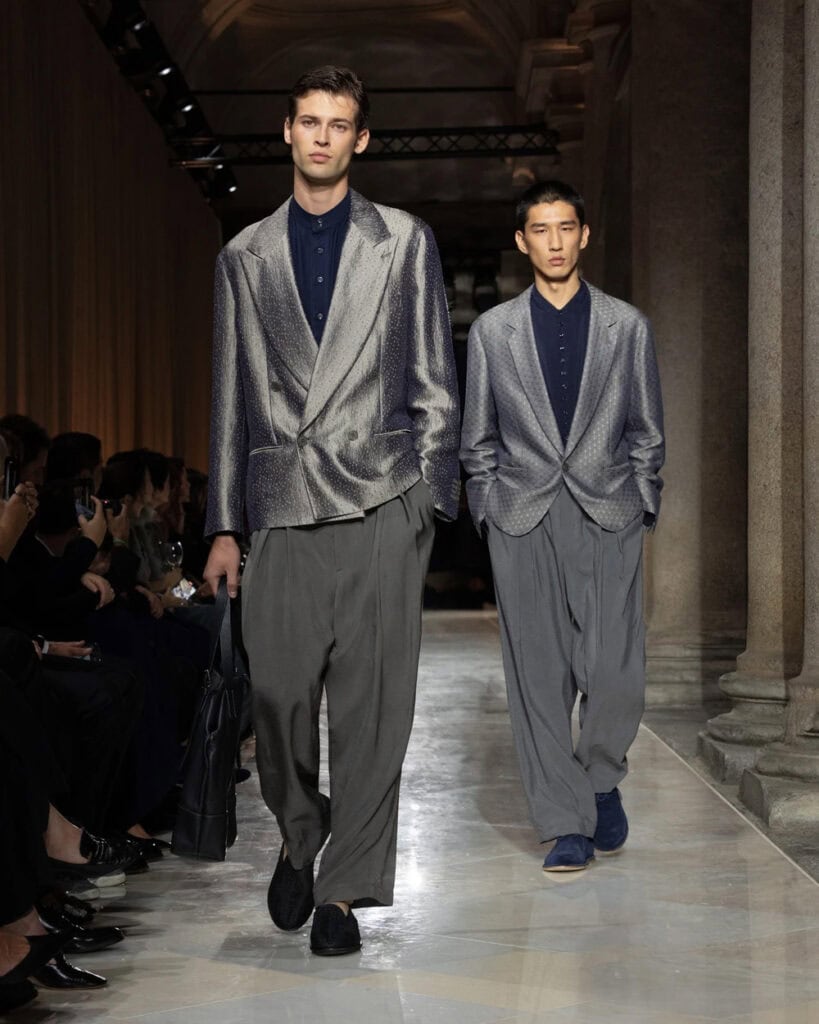
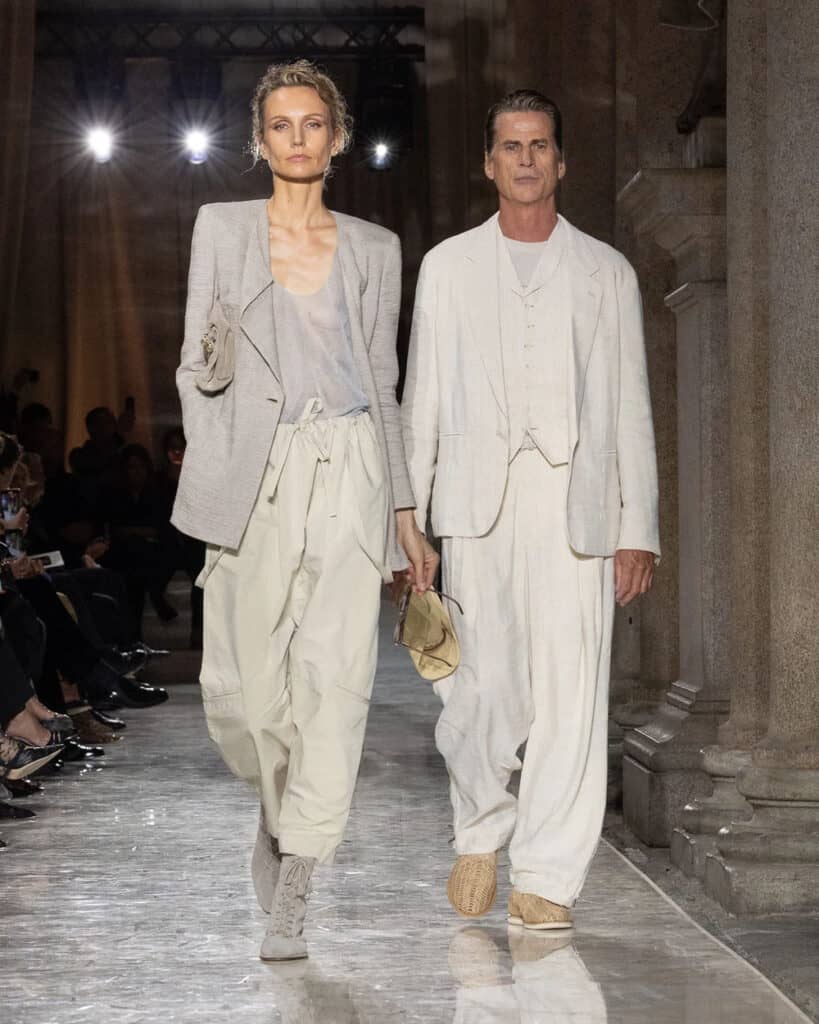
Greige and ultramarine blue, metropolis and island, the Richard Gere jackets and the dazzling evening gowns: these are the translation of Armani’s most intimate aesthetic grammar, his final touch to the masterpiece he has been meticulously curating since the beginning of his career.
And now that the cycle has been broken, the stars beam one final time; as Lord Byron might have described it in one of his poems, the gowns walk in beauty, like the night, under the sky of Milan, coloured with Pantelleria’s blue.
To celebrate Armani’s fifty years of work, the Pinacoteca di Brera is hosting an exhibition entitled Giorgio Armani. Milano, per amore, from September 24 to January 11, dedicated to his stylistic journey, showcasing over 120 creations among the frescos and Canova’s sculptures, allowing the sartorial virtuosity of Armani’s work to enter the sacred space of the museum, surrounded by Italian chef d’oeuvres, which now have a new golden star in their Olympus.