
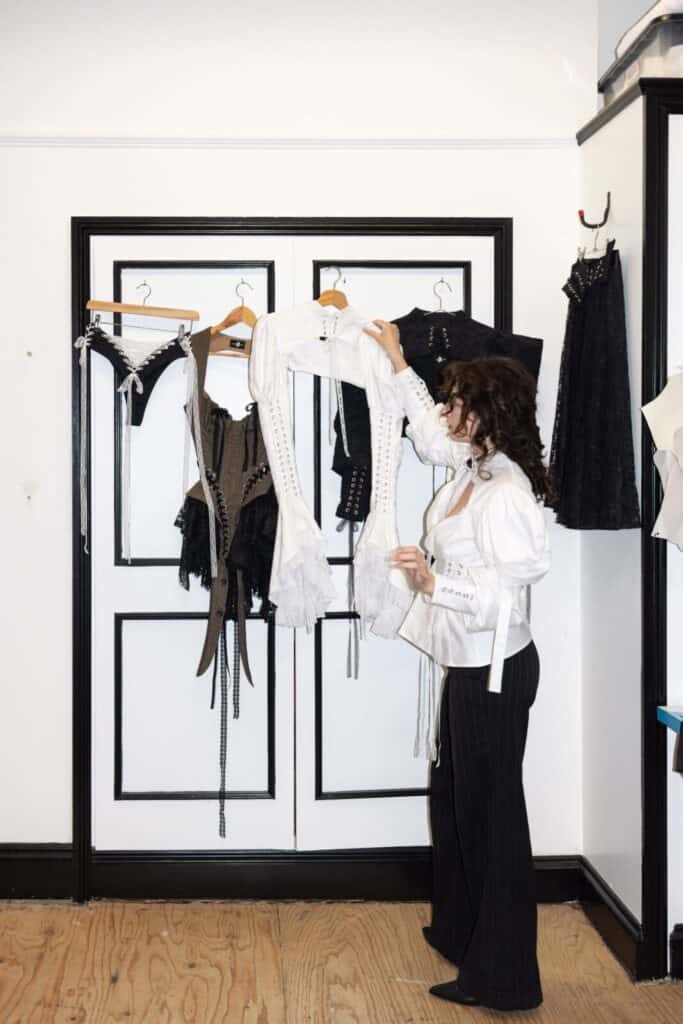
When you think about the act of putting on a corset, it’s different to the daily ritual of throwing on a T-shirt. It’s deliberate, slow and forces you to take steps. Dressing in corsetry is embodied, involving all the senses in the process. The wearer feels the tightening of the fabric, hears the tension of the lacing and watches the sculpting silhouette of their body. It’s a tale as old as time, a ritual that is centuries old. Through this, slipping into a corset becomes an intimate performance and fuels the garment with mystique. The corset remains quintessential in fashion and has been frequently adopted by designers such as Vivienne Westwood, Schiaparelli and Jean Paul Gautier. With its feminine and powerful allure, it is no wonder that it is continually returned to.
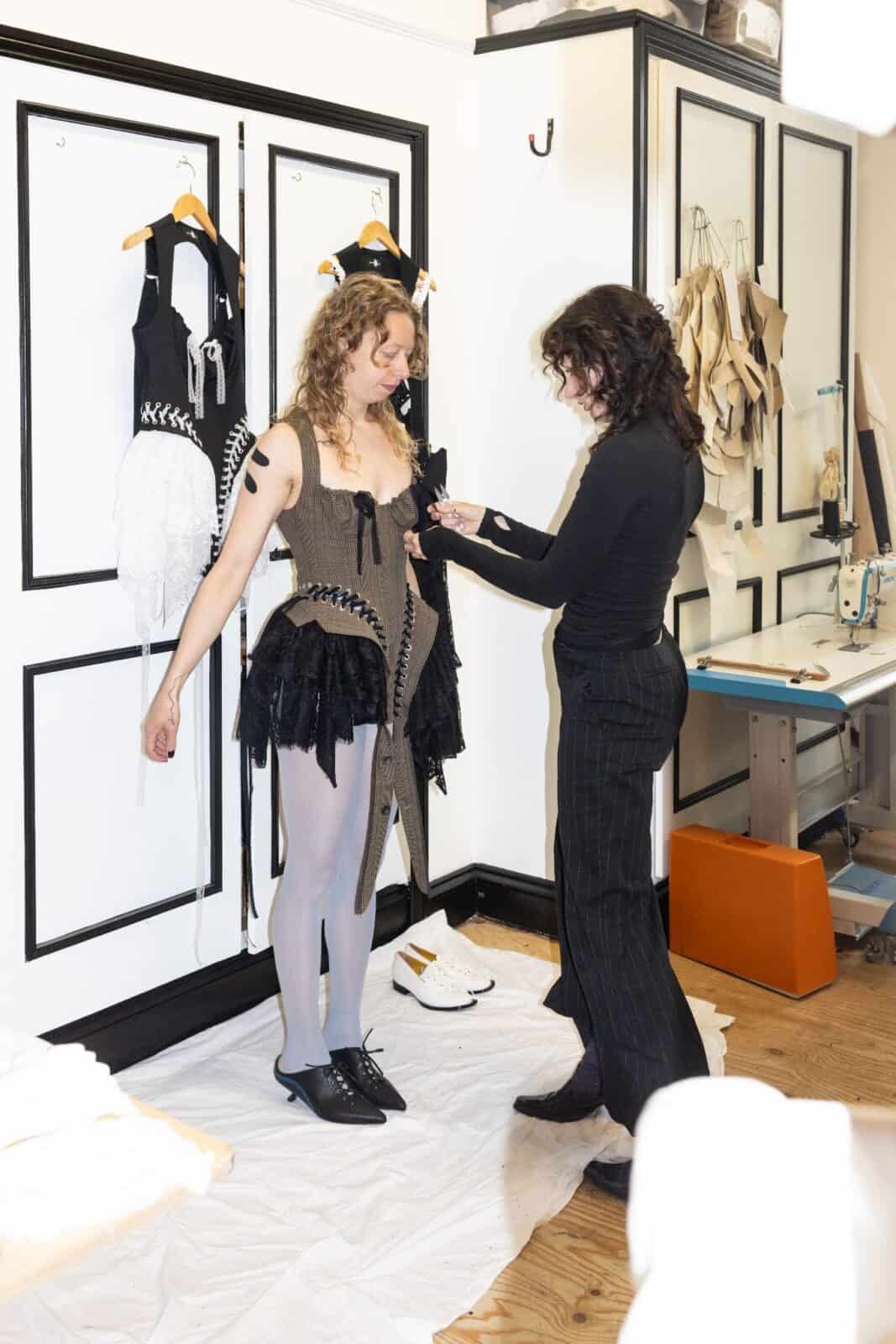
One up-and-coming designer that embeds corsetry techniques into their work is Gloria Jane Royer. With her studio situated in the coastal town of Margate, Gloria specialises in couture and custom pieces. The overall “look” is hyper-fem but with a sprinkle of theatrics. Whilst sitting down with Gloria to discuss her brand, she laughs whilst proclaiming “I always describe my brand as being for the hopeless romantics, I feel like that’s the kind of person that would wear it, someone like me basically”. Her gothic-romanticism brings a performative element that suits the endless list of celebrity clients Gloria has dressed in recent years: Julia Fox, Abigail Morris (The Last Dinner Party), Princess Julia, Amy Taylor (Amyl and the Sniffers). Basically the It girls and the party girls – that seems to be Gloria’s clientele. This dramatised element to her pieces echoes from her youth, Gloria explains to me “from childhood I have always made myself costumes for parties, we had a huge dressing up box at my parents home, it’s something me and my friends still do now, it never stopped”.
“I’m very inspired by Victorian corsetry and the way women would have maids to help them get into the clothes and the conversation and relationships that developed around dressing.”
Gloria confesses that her interest in corsetry started rather unconventionally. “Corsetry initially started because I’m a self taught seamstress and pattern cutter and I didn’t know how to do fastenings. A lot of my silhouettes developed from me not knowing how to make things which is interesting in its own way really”. The brand itself uses recycled lingerie and bridal wear to create garments such as dresses and tops. When looking at Gloria’s work, I felt this intimacy in her collections and custom pieces. I wondered whether this stemmed from the affection of working with garments that had a previous life. “They [the garments] kind of just have their own personas, because they have parts of different women sewn into them. Which I love! I hope that does shine through and I hope it means people treasure them for longer as well” Gloria tells me. Contrastingly, recycled office wear and suits are interwoven into the range giving it a rawness. “I started using lapels on the collars and the hips to add that exaggeration on the female figure. That’s really where my aesthetic started to develop, a sort of hyper juxtaposition of masc and fem that I fell in love with. They’re lingerie made from workwear materials like twills and pinstripes.” In disrupting the aesthetic this way, Gloria’s pieces are more femme-fatale than ultra girly.
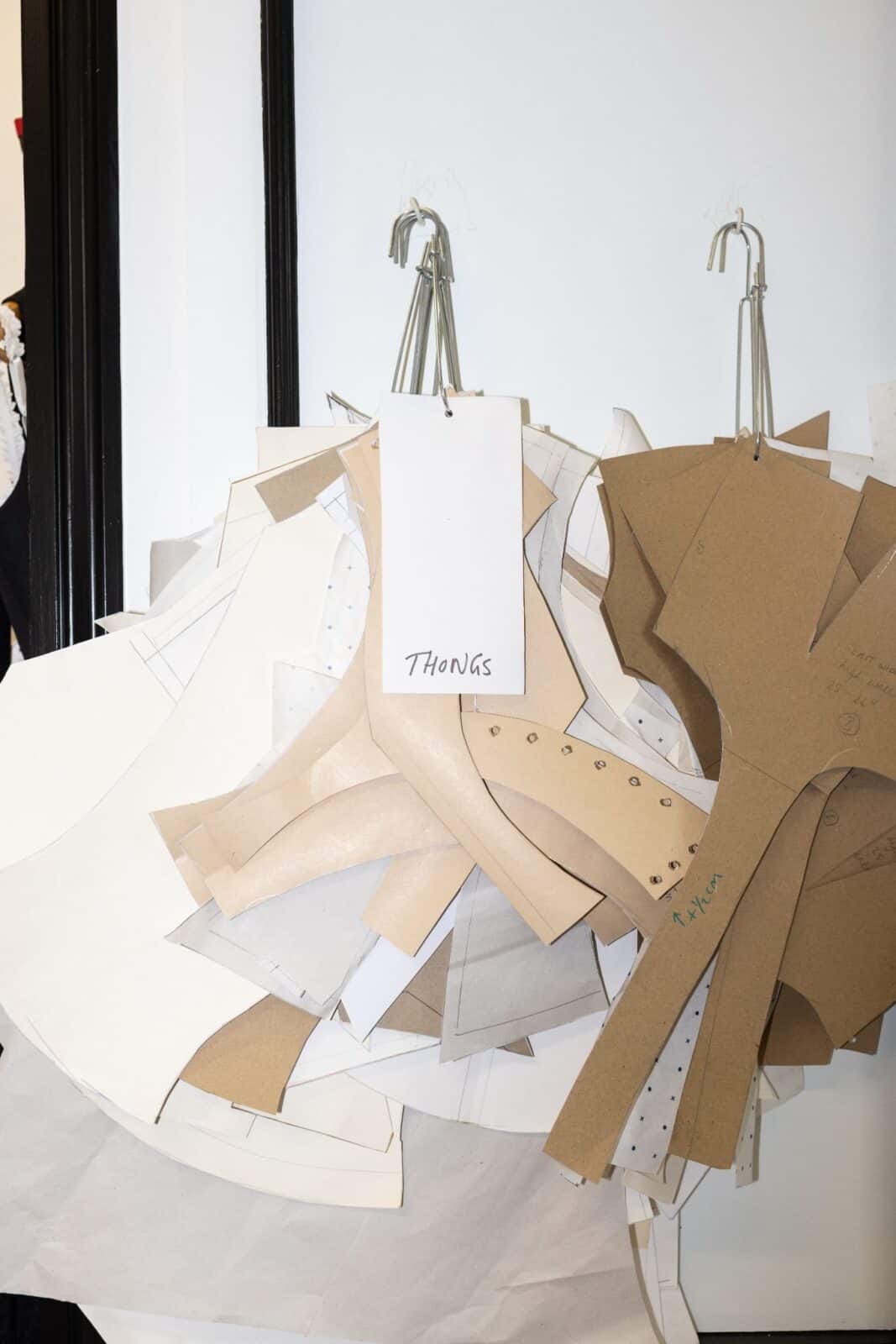
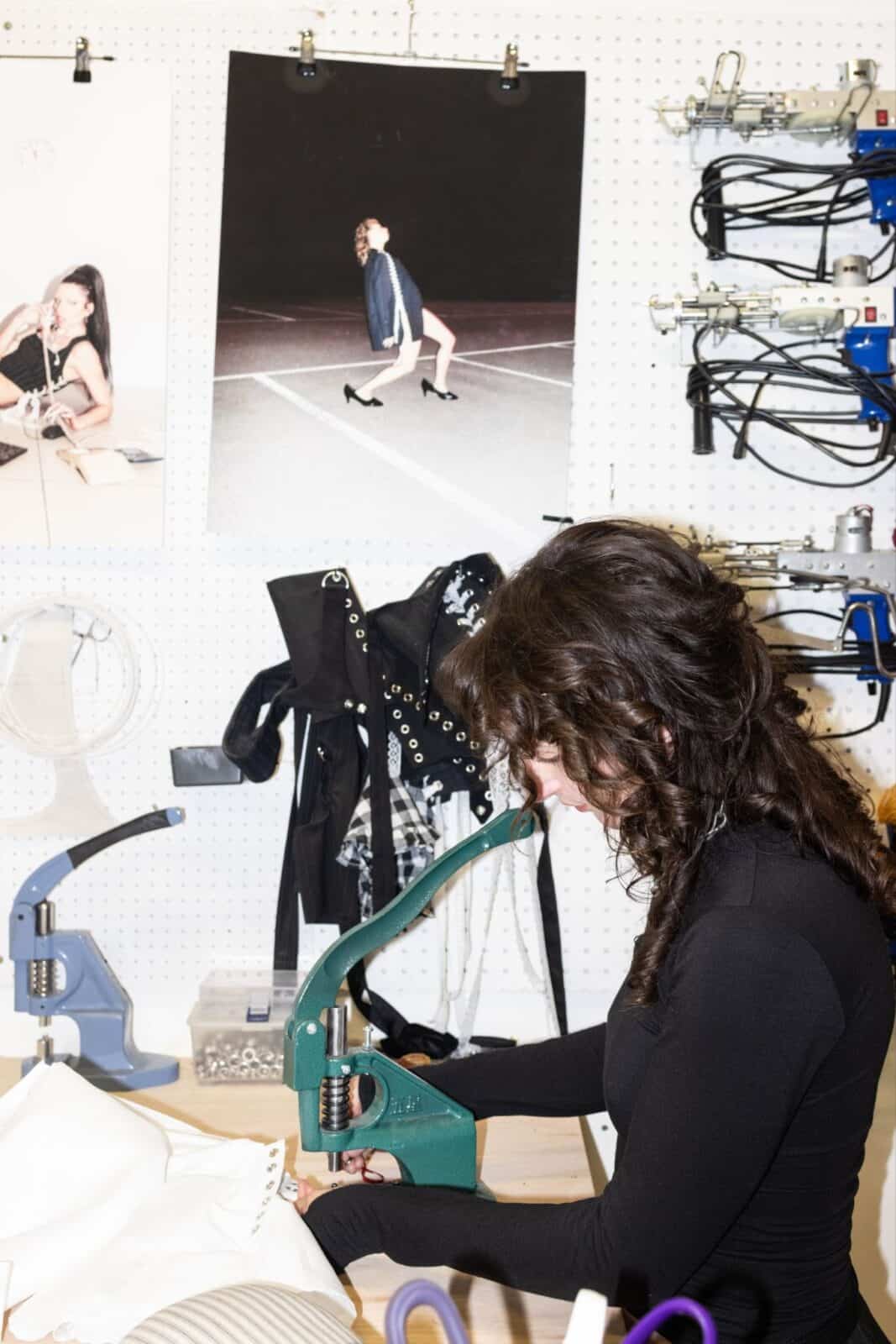
“I use these old aesthetics of not knowing how to make clothes in my designs now because they’re really beautiful features.”
Emotional durability sits at the center of the Gloria Jane Royer world, which she herself describes as “feeling such an emotional attachment to the garments I make and the desire to hold onto it”. This is nurtured through prioritising bespoke detailing and savoir-faire. The brand collects vintage lingerie and shapewear as a starting point for their upcycling, embedding sustainability into the practice. Through craft, the designs themselves are shaped by donated textiles and fabrics collected from charity shops. “When I’m feeling inspired I just get it all out and make a total mountain of mess in my studio and start draping onto my mannequin. It’s kind of like doing a 3D collage with parts of preexisting garments and underwear. It sort of comes from nowhere, I sit with the mannequin and pin and shape until it forms a dress or something”.
Previously, Gloria’s work has explored narratives surrounding the wedding dress and recycling this for fashion. Gloria exclaims to me that she feels as though her designs come alive from this initial concept and the emotional meaning embedded within it. This emotionality correlates with Gloria’s romantic aesthetic. “I got really obsessed with this concept of it [the wedding dress] being this transformative garment that women wear on the ‘best day of their life’ supposedly, as they enter a new era of their life” Gloria shares. There is a nostalgic narrative threaded throughout the collections, they are patterned with biography and infused with melancholy – they become sites of story telling. The previous lives of garments are seldom discussed, but upcycling reveals clothing’s unique ability to bear traces of memory in the contemporary, no matter how fragmented these might be.
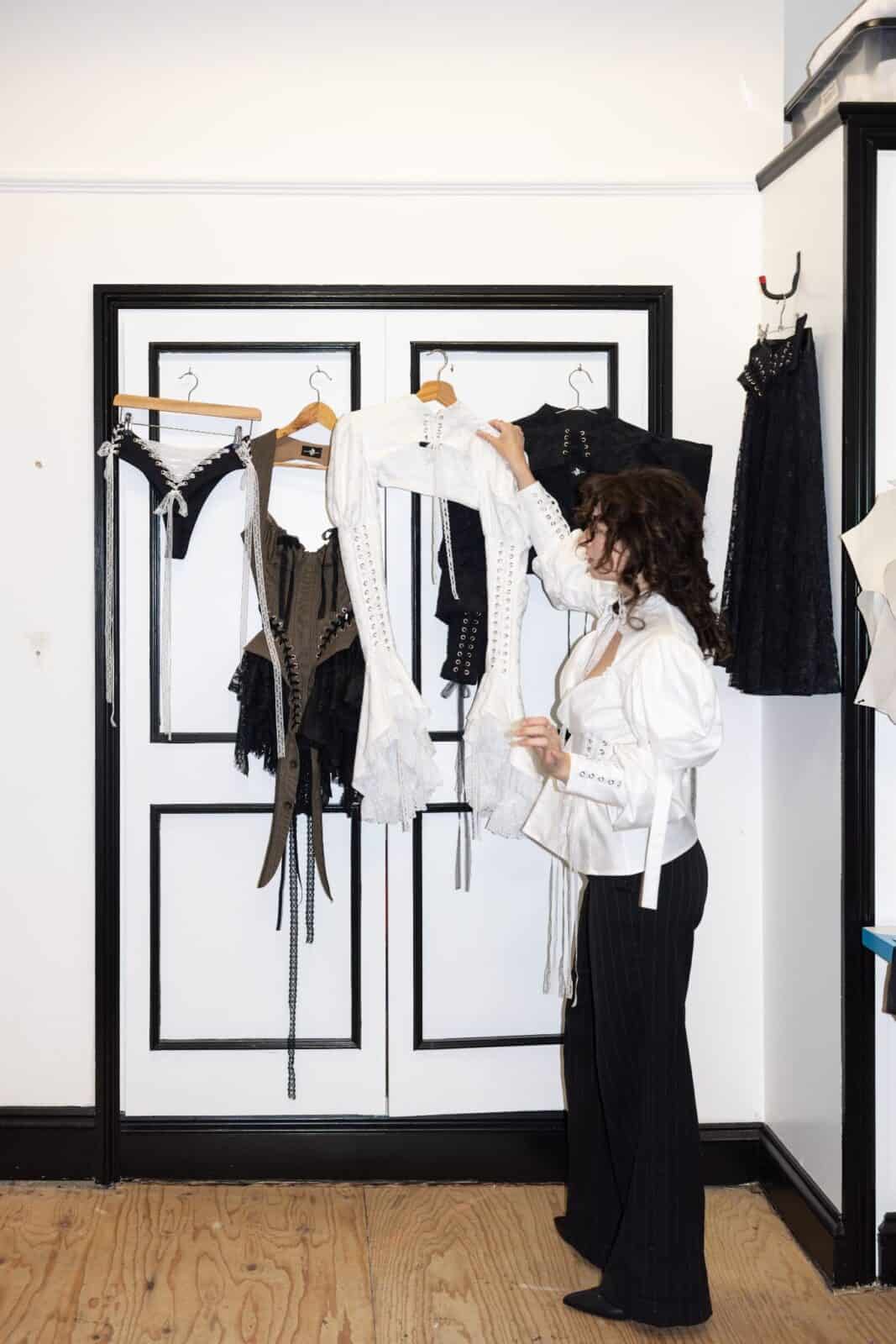
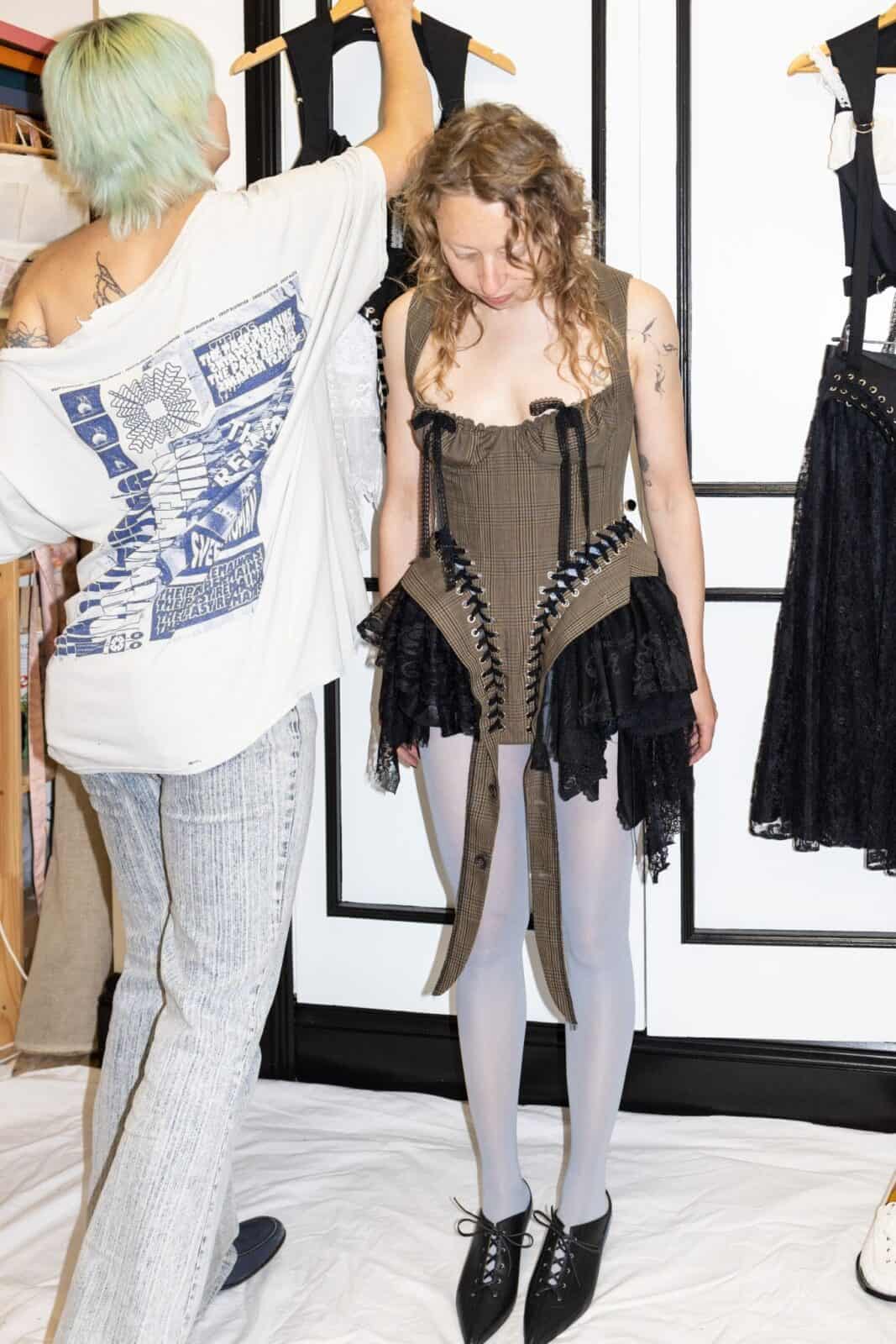
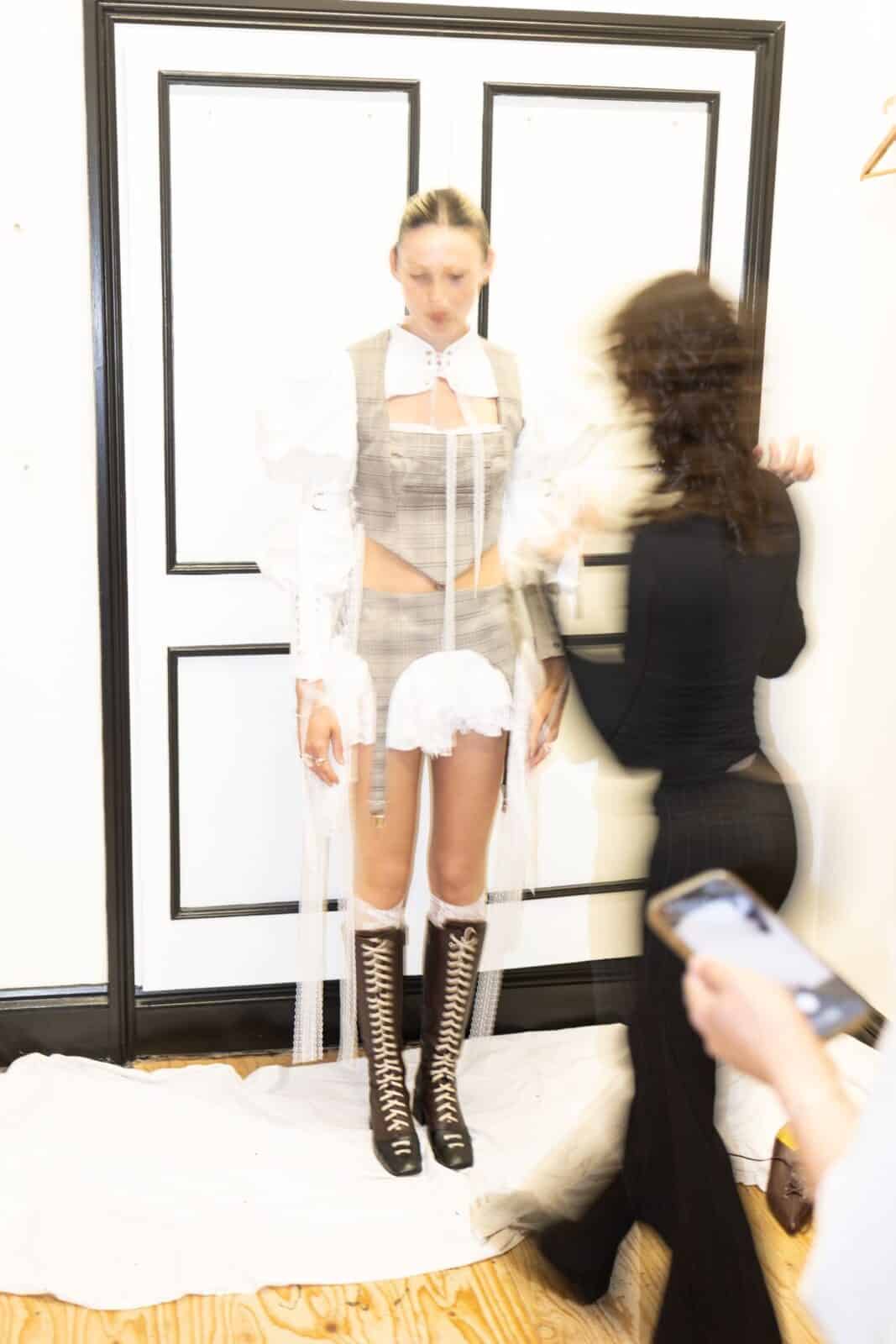
I wanted to know a little bit more about what inspires Gloria’s vision. She shares with me that she loves how women are depicted in popular culture and film. “I love the movie Barbarella, the 60s sci-fi film. It’s kinda hated these days because it’s so hyper sexualised but I just love it, every scene features a different costume by Paco Rabanne. And pictures of old dancers from the Moulin Rouge, I absolutely LOVE that kind of thing!”. When you picture the Moulin Rouge, images of bohemia come to mind, whilst Barbarella is shrouded in the feminine. In a collection embellished with tulle, lace and gatherings, you can see how these romanticised points of interest translate into the collection and give it a magnetic quality.
“I didn’t think I’d be where I am now this time last year. In this industry, so much can happen that can change everything.”
What stands out most about Gloria Jane Royer, is that despite the ongoing success of the brand, they continue to remain somewhat distanced from the fashion ‘industry’. “I love making my work but I don’t want to feel too much fashion pressure or to compare myself to others too much.” Gloria does things on her own terms because of her sheer love of craftsmanship.
Gloria Jane Royer has a new collection launching in June 2026, bringing fresh ideas and new designs to an already growing brand. “I have books and books of designs that I feel need to see the light of day!”.


