

Labels make Grace Ives uneasy. “I’m a writer,” she says, and then immediately dismantles the certainty of it. “You don’t write one day and suddenly it’s like, fuck. I guess I’m not a writer.” She laughs, recognising the absurdity of it all. The same logic applies everywhere: girlfriend, musician, daughter, artist – roles that are expected to be tied up neatly, like a bow in your hair.
Talking to Ives means the conversation can pivot quickly from the mundane to the philosophical. Mid-interview she apologises for boiling eggs – “you have to forgive me, I picked a really strange time to do this” – and moments later she’s describing the way we reduce people to roles. We build them up in our heads, she says. “Mom comes to mean care and responsibility, even though she’s also just a human being.” After a moment she shrugs at the whole idea. “It’s everybody’s first time doing everything.”

That tension between the neatness of roles and the mess of actually inhabiting them is all over her latest album, Girlfriend. The record follows three singles released late last year: ‘Avalanche’, ‘My Mans’ and ‘Dance With Me’. “Usually in the past I’m a little more insecure,” she says. “I don’t go around like, you should really check it out, it’s dope.” This time she’s blunt: “You have to listen to it. I think it’s so good.”
For Ives, the album has been an evolution, lyrically pushing her harder than before. “I want to be able to say what I’m feeling and reflect on these things that have happened to me.”
So, reading became part of the work. She describes going to libraries in Los Angeles, sitting with books, highlighting lines, transcribing passages and using them as prompts. “I’m a big highlighter when I read,” she says. “I underline things that make you stop.” Later, she would copy those fragments into a sprawling document of references, “like little nuggets,” as she puts it, using them to unlock new ways of expressing a feeling.
The Bell Jar by Sylvia Plath was a major touchstone. “I had never read it before,” she says, still sounding slightly awed by the discovery. “I literally just got chills.” What moves her is not simply the darkness, but the beauty and brutality of Plath’s self-description and how the novel manifests emotional states as tactile, visual, and inescapably real. “The way she talks about herself is so mean and beautiful and relatable,” Ives says. “She just has a way of painting these really simple, beautiful pictures.”
Musically, Ives wants the opposite of rust, she wants motion. “I want to feel it in my body,” she says. “I want to make a groove.” Her songs feel bright enough to move to and heavy enough to hurt. She often finds herself asking a single question: “How did I lose myself?” She laughs, catching how bleak it sounds. “I have one song that’s happy on the record,” she says. “The rest are very blue.”
Even her listening habits refuse to stay in one lane. Asked what’s been stuck in her head this week, she answers like someone emptying their pockets. “Oh my God, so many.” There’s ‘Internet Girl’ by KATSEYE, which has become, as she puts it, “a vocal tick.” A cover of ‘Heart of Gold’ by the Navajo band The Sundowners, and a Fête D’Adieu track she describes with a grin: “It’s so cute, minimal but upbeat.”
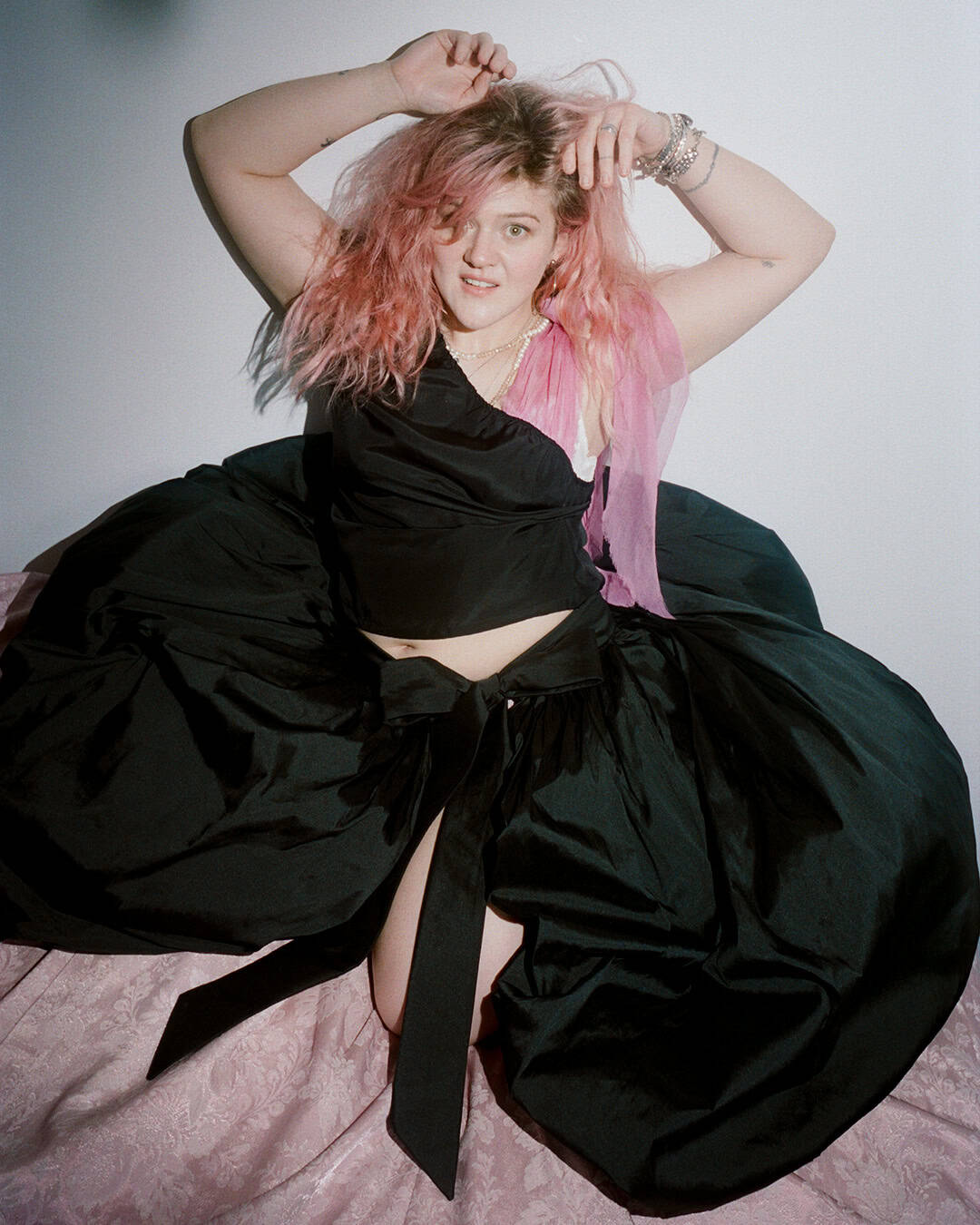
For years, the one thing that did stay in a lane was her process. She was creating almost entirely alone, contained and defensible. “As a girl making music,” she says, “you feel like you have to prove you did everything yourself.” Not just because you can, but because you don’t want anyone to look at the credits and decide you didn’t. “There’s this anxiety that people will be like, ‘Oh. She didn’t really write this, there was like a guy there to do it and she performed it.’”
Girlfriend rewired that fear. The process began in Los Angeles, where Ives went on what she jokingly calls a “producer tour,” meeting different collaborators in search of the right fit. She found it with producer John DeBold.
Across the album, relationships become a way of getting at something larger. “I’m quick to be all or nothing,” she admits. “I was drawing from this period where I was pretty reckless. Selfish … an inclination towards chaos.” Romance is there, but so are the other roles people get trapped inside. “I think we build people up in our heads,” she says. Parents, siblings, partners, all of them are improvising inside roles that look much more stable from the outside than they feel from within.
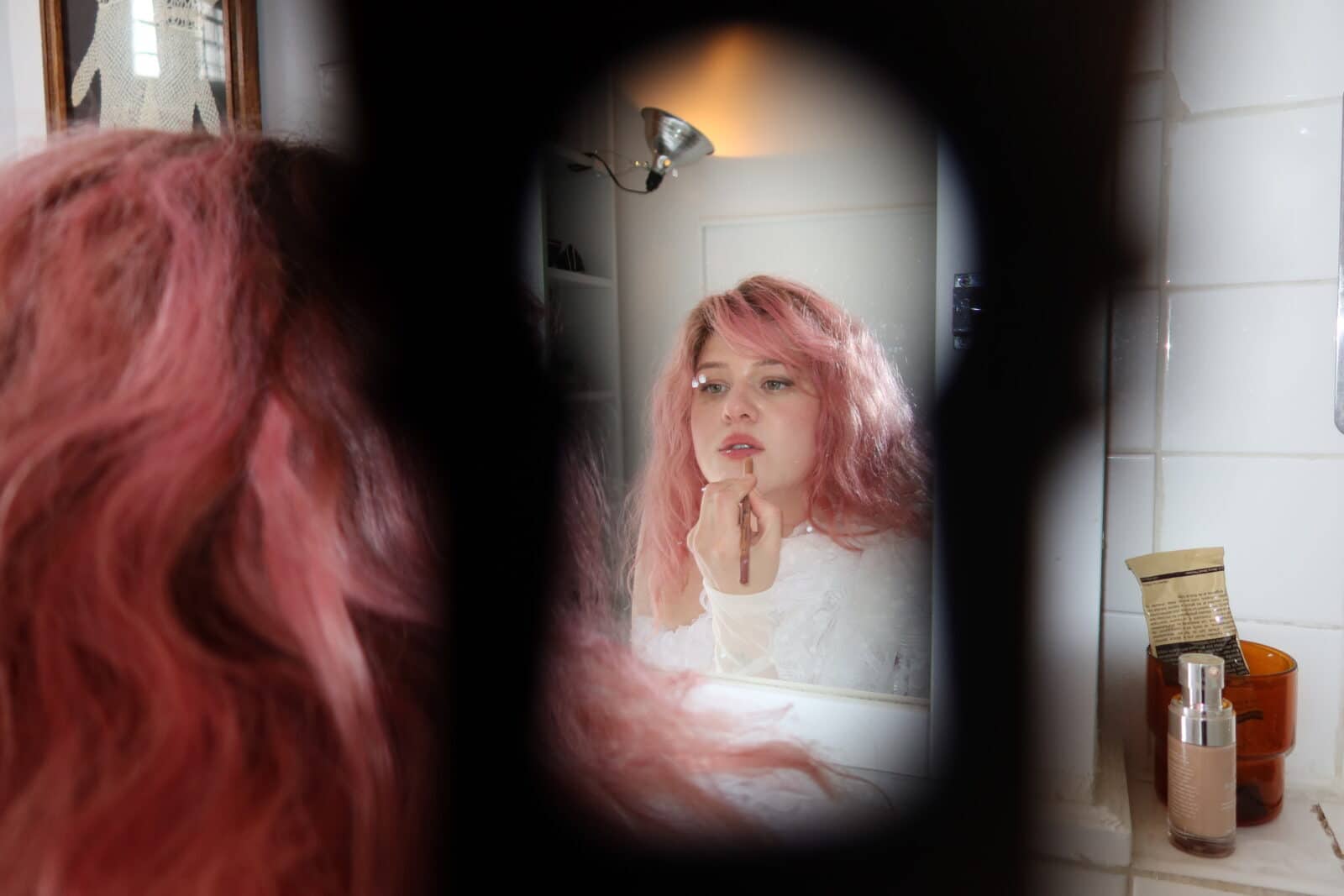
That is what gives Girlfriend its charge. It sounds like someone interested in telling the truth, even when the truth is ugly, embarrassing, funny, or unfinished. Ives and the album lean into the awkwardness of being a person, and all the shame, the longing, the confusion, and the flickers of humour that comes alongside it.
Or, as Ives puts it more simply: you lose yourself, and then you dance through it.


