
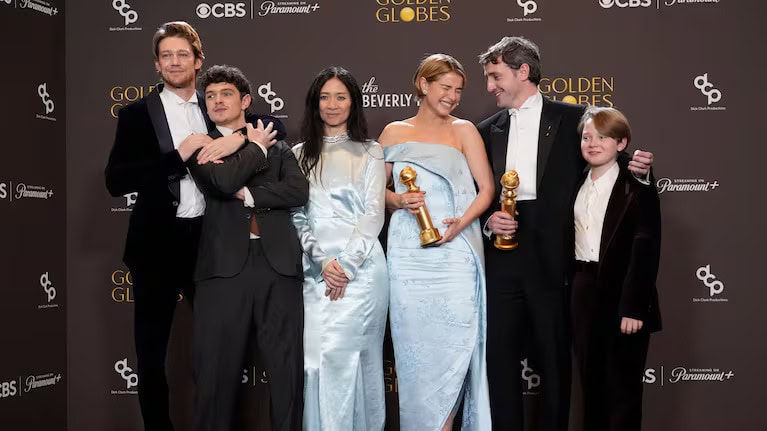
A forest witch takes the gold. On Monday, Irish-born actress Jessie Buckley won the Golden Globe for Best Actress in a Drama for her role as William Shakespeare’s wife Agnes Hathaway – historically known as Anne – in the big-screen adaptation of Maggie O’Farrell’s “Hamnet.”
The novel was published in 2020 and quickly became a literary sensation, winning the Women’s Prize for Fiction and the National Book Critics Circle Award for Fiction. And with Buckley winning big in 2025, it seems this tale’s DNA is lined with gold. But why?
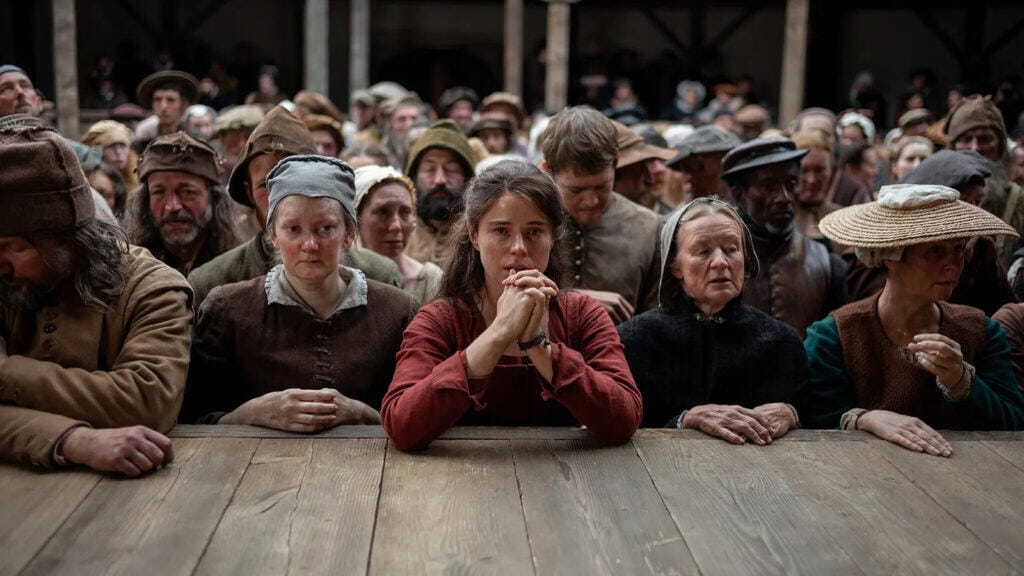
A quiet meditation on grief, the story of how the Shakespeares deal with the death of their 11-year-old son, Hamnet, from the plague in 1596 is not a feel-good film, but it is a cathartic one. A little boy is lost to his family forever, and “Hamnet” doesn’t flinch away from the cruelty and devastation of this death – nor does it become swallowed up by the magnitude of the name William Shakespeare.
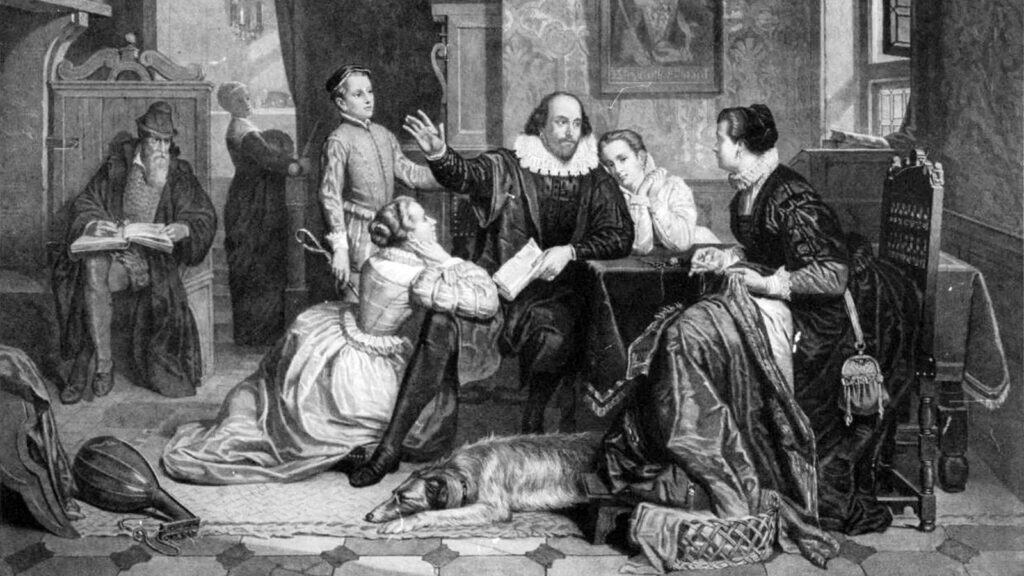
This is Agnes’ story, and that’s the novel’s real power. Wildly earnest, Hamnet recovers the inner world of the woman who was married to the world’s most famous writer. “We’ve only ever really been given one narrative about her,” O’Farrell once said, “and most biographers have just run with it, which is that she was an illiterate peasant who trapped him into marriage, that he hated her, that he ran away to London to get away from her.”
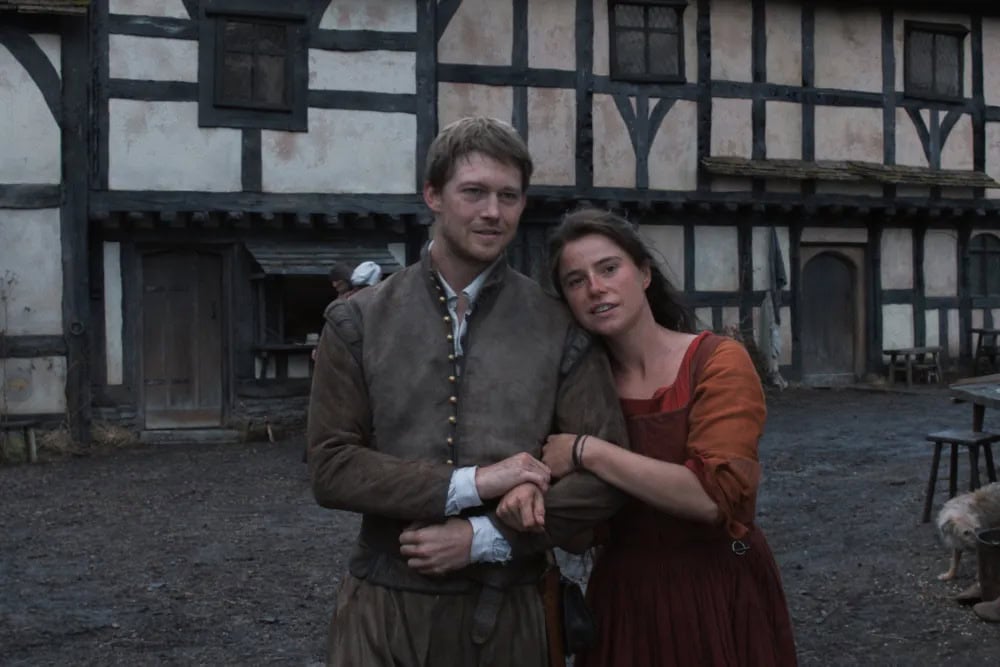
Here, Mrs Shakespeare is more than this thin, misogynistic sketch. Generations of historians couldn’t have imagined a woman as free as O’Farrell’s Agnes. She is a healer, the child of a “forest witch,” an untameable oracle who can see the future and jogs through canopies with twigs in her hair. The greatest strength of Chloe Zhao’s film adaptation is that it has stuck to this female-focused interpretation. Despite the weight of Shakespeare’s name (and Paul Mescal’s), “Hamnet” is undoubtedly Agnes’ – and Buckley’s – moment in the Stratford sun.