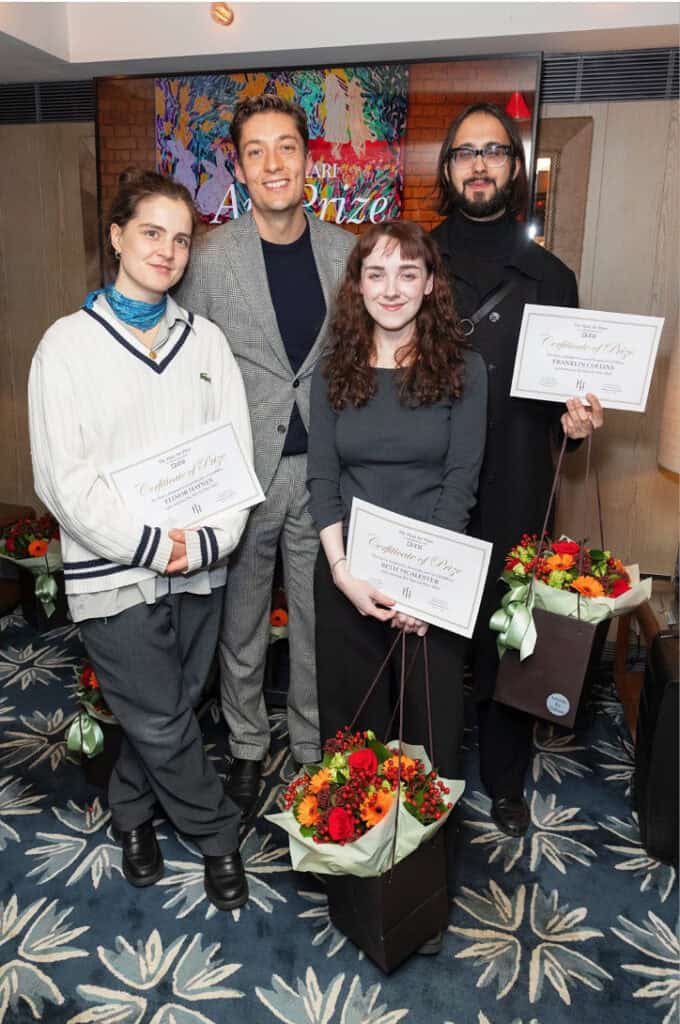
Over the last two years, the Hari Art Prize has become a highlight on emerging artists’ calendars across the UK. In November, in partnership with A Space For Art, the Belgravia hotel once again opened its walls to artists presenting diverse pieces — with works spanning from socio-political portraiture to subconscious landscapes to innovative rewritings of the boundary between material, craft, and architecture.
This year is the Hari Art Prize’s most ambitious yet — with over 1,500 applicants across painting, sculpture, and experimental media. What distinguishes the award is its ethos. In an art world full of financial, institutional and spatial barriers, the prize places accessibility at its core. No application fee, no age limit, no medium restrictions. It is open exclusively to artists who have graduated within the last five years. This much is true for this year’s winners – Beth McAlester, Franklin Collins, and Elinor Haynes. Plus, they each take home awards of £10,000, £3,000, and £1,000, funded by the Hari’s CEO and Chairman, Dr. Aron Harilela.
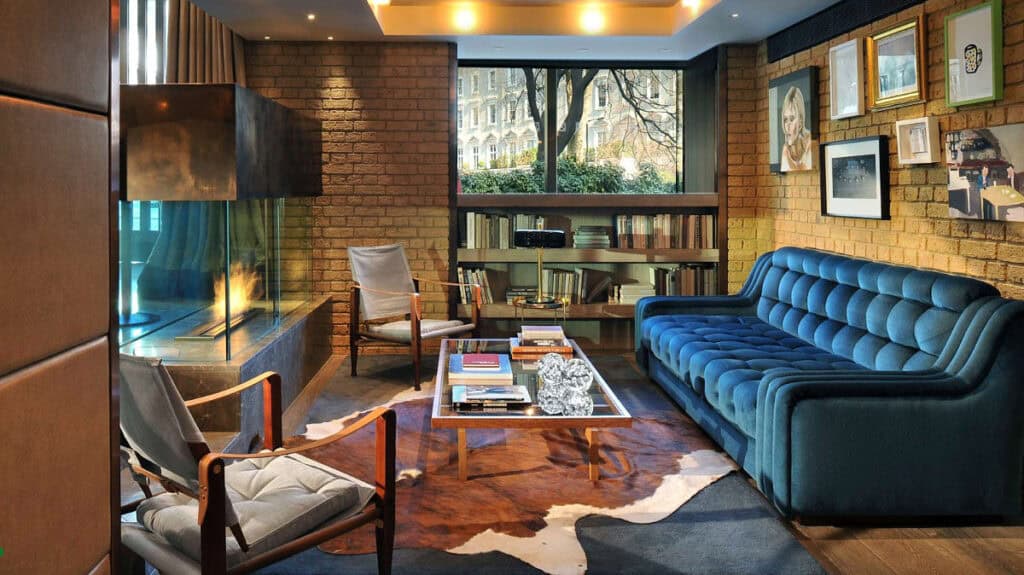
Since 2012, the Hari has exhibited more than five hundred artworks across its spaces. Here, art can be encountered in a domestic, relaxed atmosphere. Contrary to the white-wall pressures of a gallery, a hotel allows for a lived-in, intimate meeting with art. Artists are encouraged to treat the hotel as their space, a place to bring clients, friends and collaborators.
When asked about the Prize’s impact on young artists’ careers, Charlie Smedley — Director of A Space for Art — told the story of a previous winner. At the time, the winner of the London prize was on the brink of giving up his practice. It was COVID – rent and art supply prices were rising, and his passion was declining. The financial reprieve of the Hari Art Prize meant that by the time he exhibited in Frieze London, he had sold all of the artworks he had produced. “The Prize celebrates those who are all in, for nothing in return,” Smedley says.
Below, The COLD Magazine chats with this year’s winners.
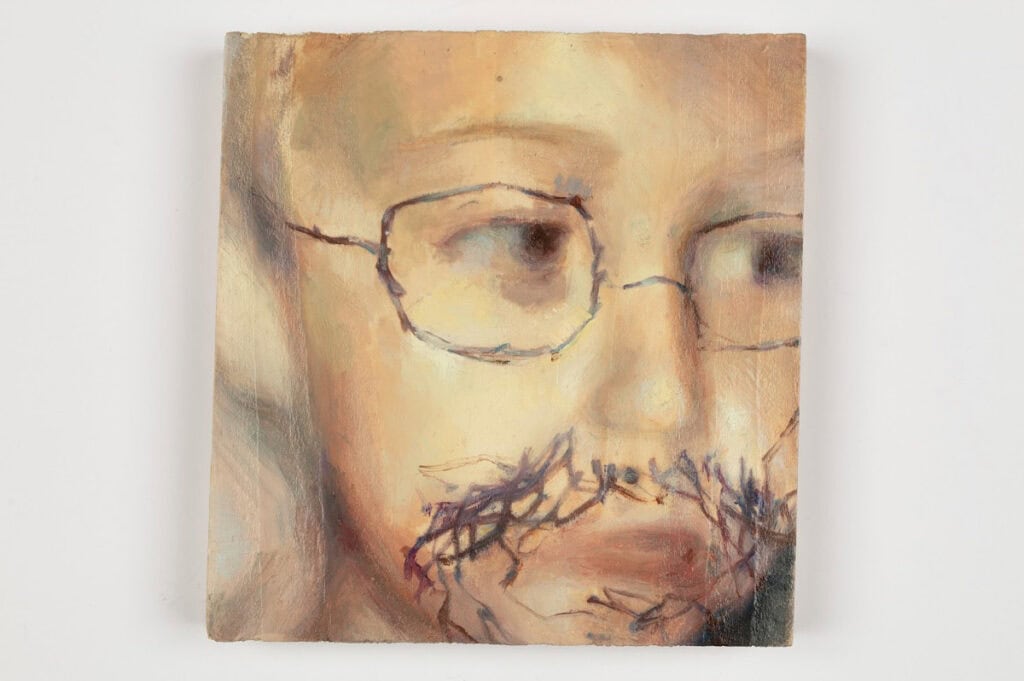
Beth McAlester, ‘f*nian b*astard g*rry ad*ms’ (2025)
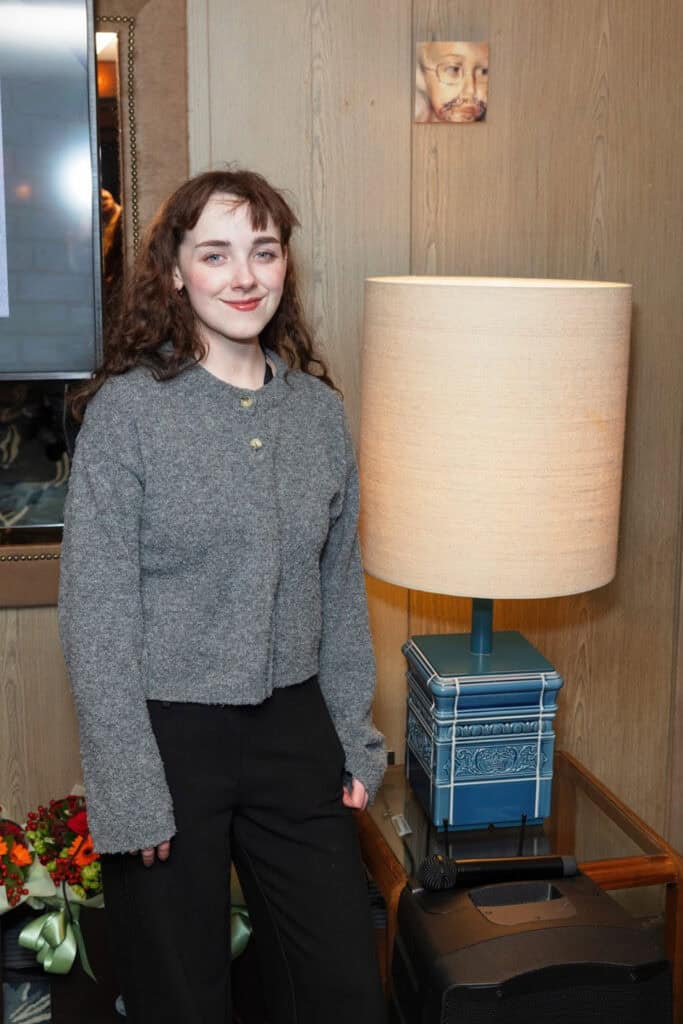
First-place winner Beth McAlester was admired by the jury for the “subtlety with which she weaves history into her practice – finding tenderness and humanity within political and cultural tension”. Her winning work, emerging from a greater project examining how Northern Ireland’s “ceasefire babies” inherit the psychological remnants of conflict, marks a crucial unification of her practice: “Ultimately my aim was to ask what it means to be claimed by a place and what constitutes peace now, and this work was really a solidifying moment, materialising so many of the concerns I’ve carried over the last few years.”
Painted on wood, McAlester’s piece remains raw — rough yet almost playful strokes sitting uncomfortably against a soft portrait. Encountering the work at the Hari, one feels disarmed, confronted. It exemplifies how inherited political residue seeps into private life.
“Imposter syndrome is touched on constantly, but it really can swallow you whole,” McAlester says. “Having my work be recognised by a prize like this cuts through some of that doubt and reinforces that I’m on the right trajectory.” She continues: “Instead of feeling the pressure to maintain a presence, I can step back and disappear into the work.”
Franklin Collins, ‘Gather’ (2025)
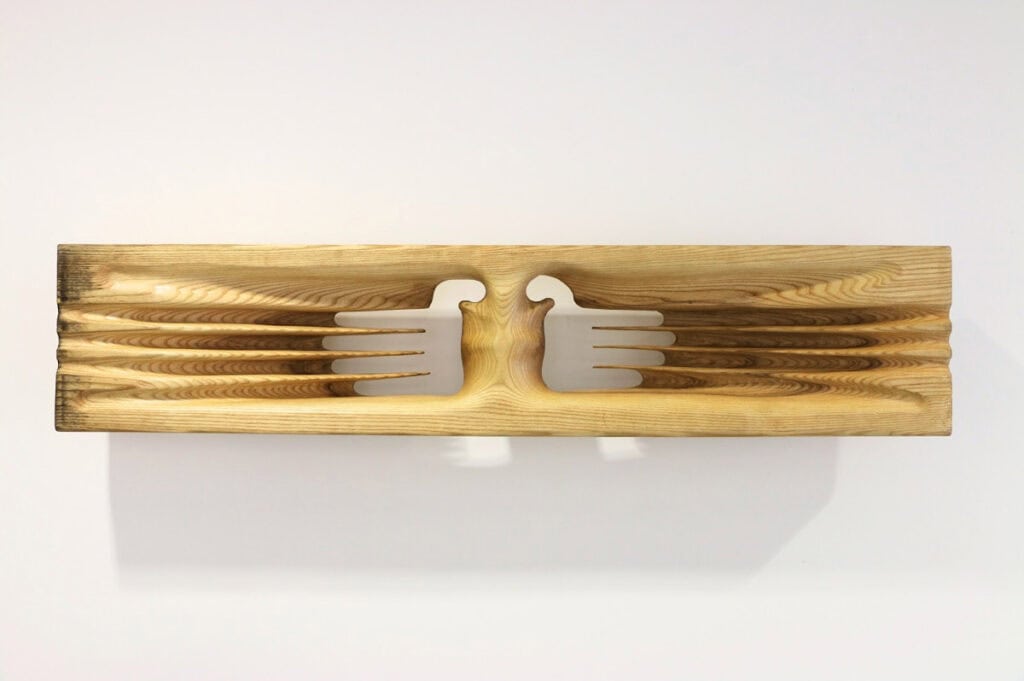
Runner-up Franklin Collins, praised for his “inventive approach to sculpture and material”, echoes this sense of momentum. A fascination with touch is evident in his sculptural work, rooted in tangibility and the tension between bodily impulse and long-lasting materiality. “I wanted to eternalise that moment in something sturdy like wood or stone, pushing me towards these contradictions of long / short, soft / hard, now / never,” he says. ‘Gather’ (2025) is an innately physical object that holds marks of pressure and handling, working directly with resistance. It invites a bodily reading, rather than a far-away observation.
Elinor Haynes, ‘Drowning’ (2024)
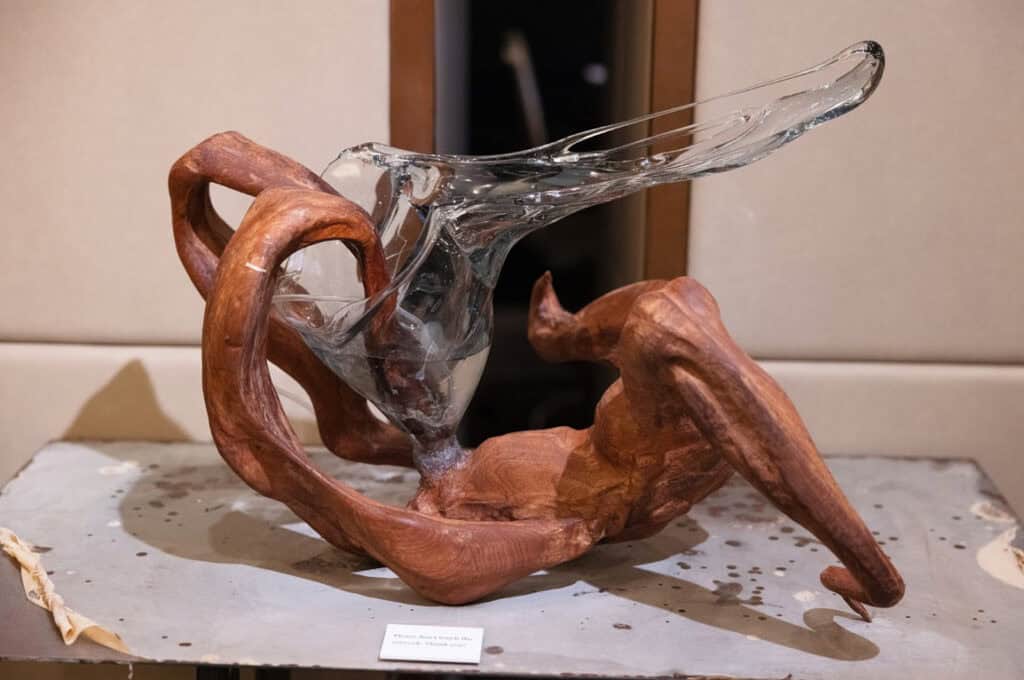
For the other runner-up, Elinor Haynes, “her ability to combine contrasting textures and forms, creating works that are both visually striking and conceptually layered” was what distinguished her to the jury. In Drowning (2024), she experiments with ideas of suffocation and pressure. The juxtaposition of glass and wood produces a tense vision of both harmony and pressure — the sculpture being animated by the relationship between the two still, yet ever-moving materials. To be acknowledged by the panel, she says, is very encouraging: “To feel recognised by such an impressive jury is a much appreciated event.”