
The orange sunset and strong gusts of icy wind felt like paid actors streaking across the Barbican Centre. The damp London hush – the one that makes the city feel like it’s holding its breath – wrapped around the crowd. Then came the low pulse of bass as HARRI unveiled MuseumWear, its first true ready-to-wear collection. It was a deliberate choice for a designer who built his reputation on spectacle and physics-defying latex.
Born in Kerala and trained at the London College of Fashion, Harikrishnan Keezhathil Surendran Pillai emerged in 2020 with a graduation collection of ballooned deadstock-latex trousers that turned bodies into living sculptures. He became widely known for his witty, dramatic, and utterly unforgettable pieces blending performance art into clothing.
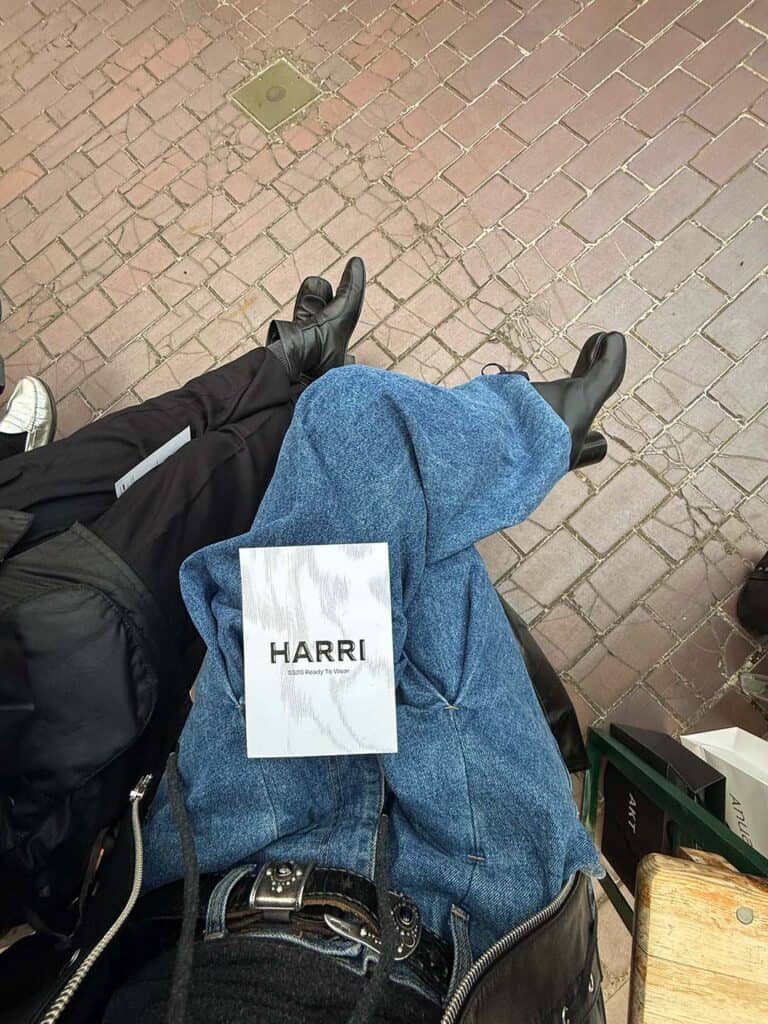
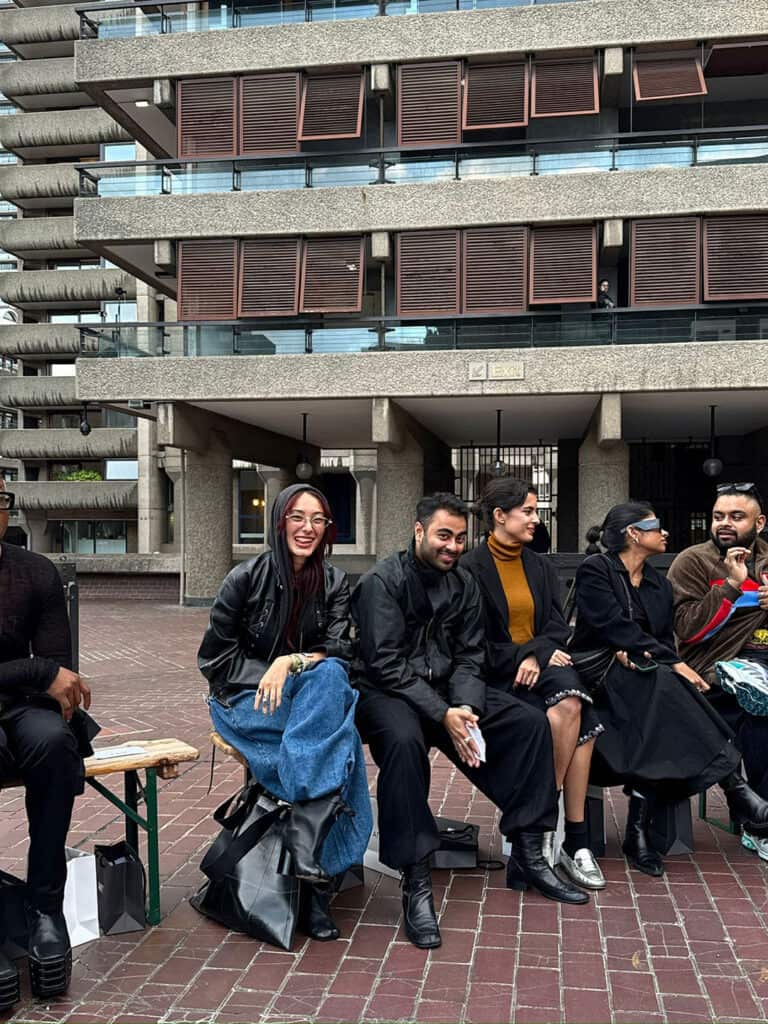
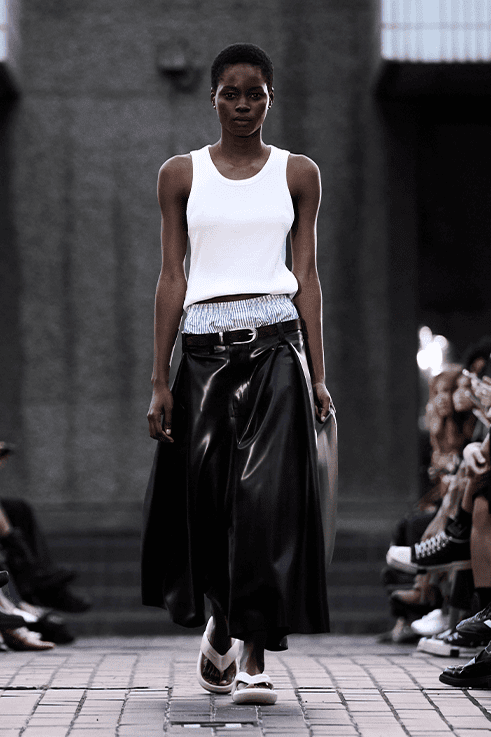
MuseumWear retains that sense of wonder, but re-focuses it. Creative directed and styled by Jordan Kelsey, the collection brought HARRI to the people of London. Baggy trousers with kinetic seams, softly faded denim, mesh jerseys, bomber jackets, cropped gilets: all pieces that belong on city streets, not just in editorials. His signature latex was cleverly reimagined into deflated shirts, floor-length coats with a subtle shine, airy tops that feel breathable, even casual, and puffed sleeves and vests hinting to the ghost of his inflatable past. MuseumWear truly felt like stepping through the museum glass to wear the art instead of merely observing it.
HARRI’s Indian heritage surfaced in beautifully subtle ways. Channapatna wooden toy craftsmanship from Karnataka that was first introduced in his graduate collection returned as glossy beaded vests and tactile tops. Meanwhile, tailored latex jackets in deep espresso and onyx offered structure, and silver sheens injected a futuristic surprise. And of course, no HARRI show is complete without a touch of mischief – micro-bags in bright yellow and pink, no bigger than a clenched fist, bobbed beside square tops like illuminated exclamation points.
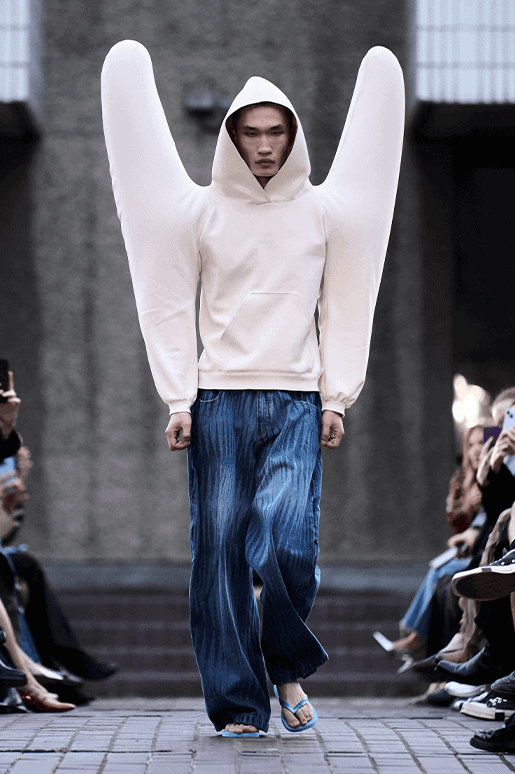
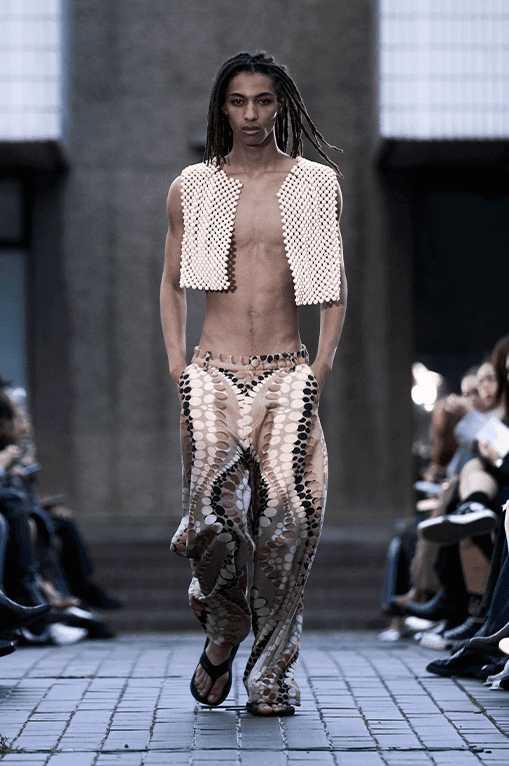
Inflatable shoulder tops, a HARRI signature, appeared in both black and white, a subtle reminder of the designer’s ballooned beginnings. Even the most street-friendly pieces held a sly architectural twist – a seam that curved like a cornice, a gleam that read like sculpture, a piece of geometrically printed denim that flickered between light and darkness.

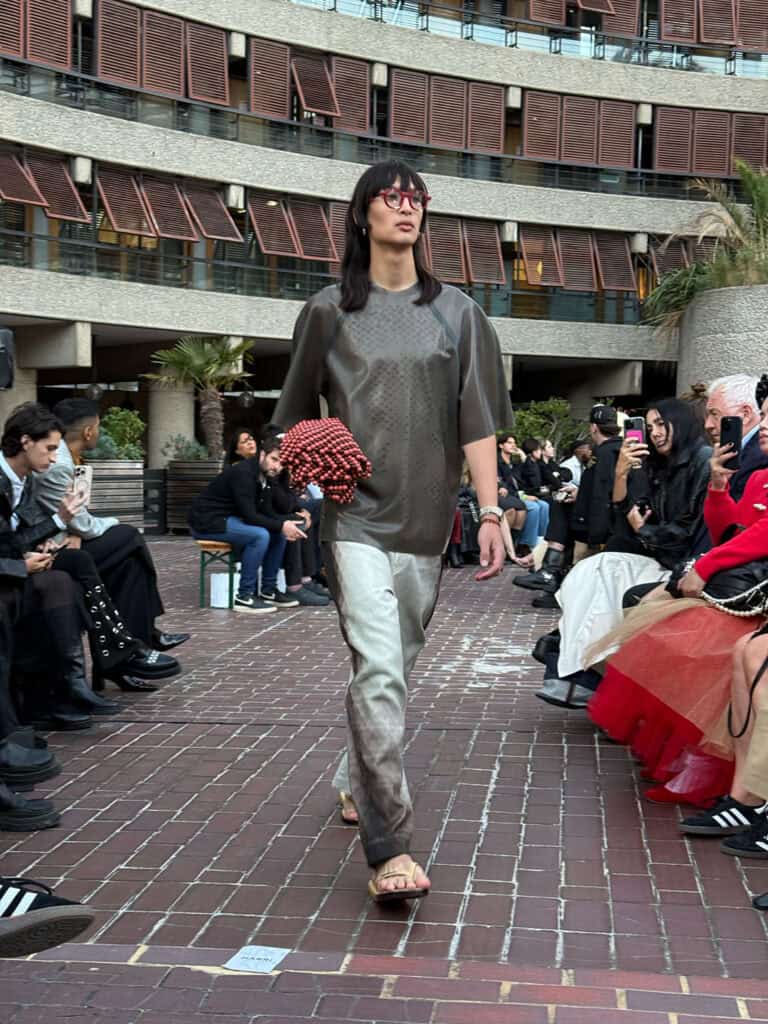
MuseumWear succeeds because it expands HARRI’s world without diluting it. The clothes are still sculptures, but they’re made to move through a city, to brush against strangers on the tube, to be lived in. HARRI has tempered the extremes without dimming the light. Latex is lighter, shapes subtler, but the imagination is as vivid as ever. HARRI has opened the door to a broader audience while keeping the soul of the brand intact. The collection feels like a bridge: between art and life, India and London, fantasy and function. And as the last model disappeared back into the Barbican’s concrete shadows, I felt that rare fashion week tingle, the sense that a designer had just widened their world. HARRI has not abandoned spectacle, he’s simply granted us permission to wear the art.