
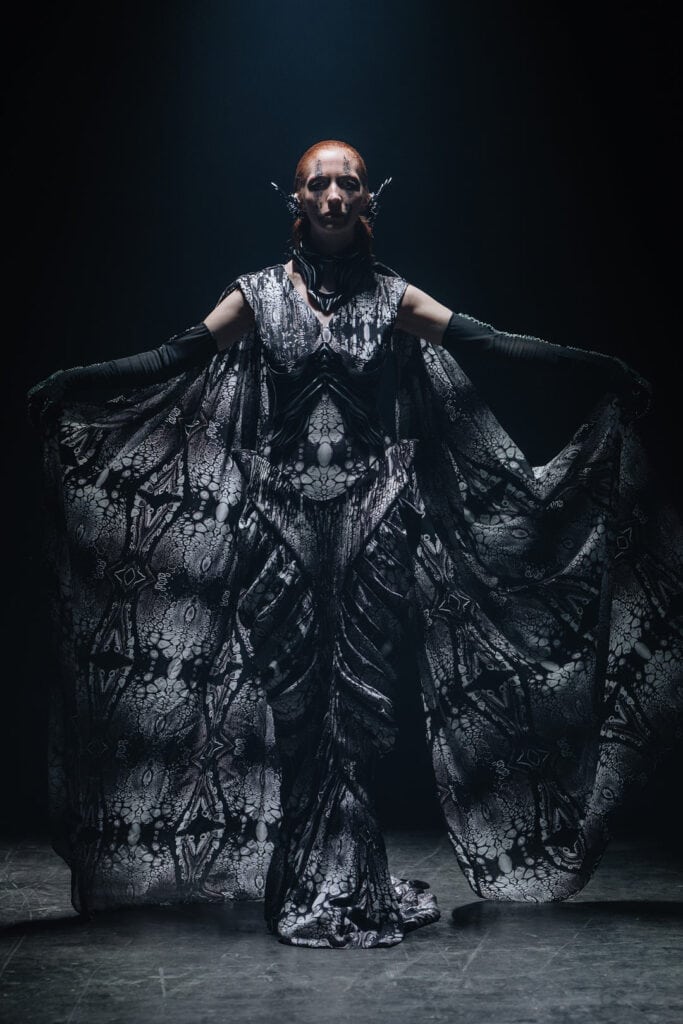
Innovation is fashion’s favourite word, but few designers give it material weight. At Unlocked Shoreditch, Hengdi Wang and the jewellery brand STIM Precious Metals did exactly that. Their SS26 collaboration, EXOGENESIS, introduced pure rhodium jewellery to the runway for the first time. This breakthrough felt both technical and poetic, fusing metallurgy with meaning. Hengdi Wang’s design language has always been about dualities: the tension between myth and machine, fragility and structure, spirit and science. “EXOGENESIS is about rebirth and cosmic energy,” Wang said backstage. “Rhodium embodies that vision in a way no other material can. It reflects starlight within itself.”
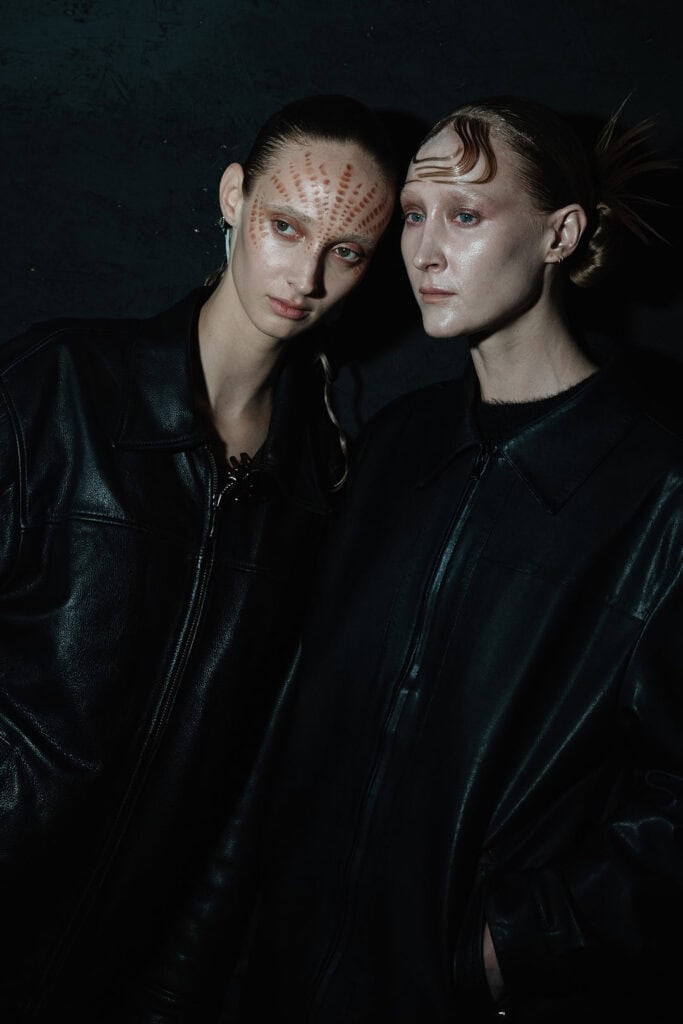
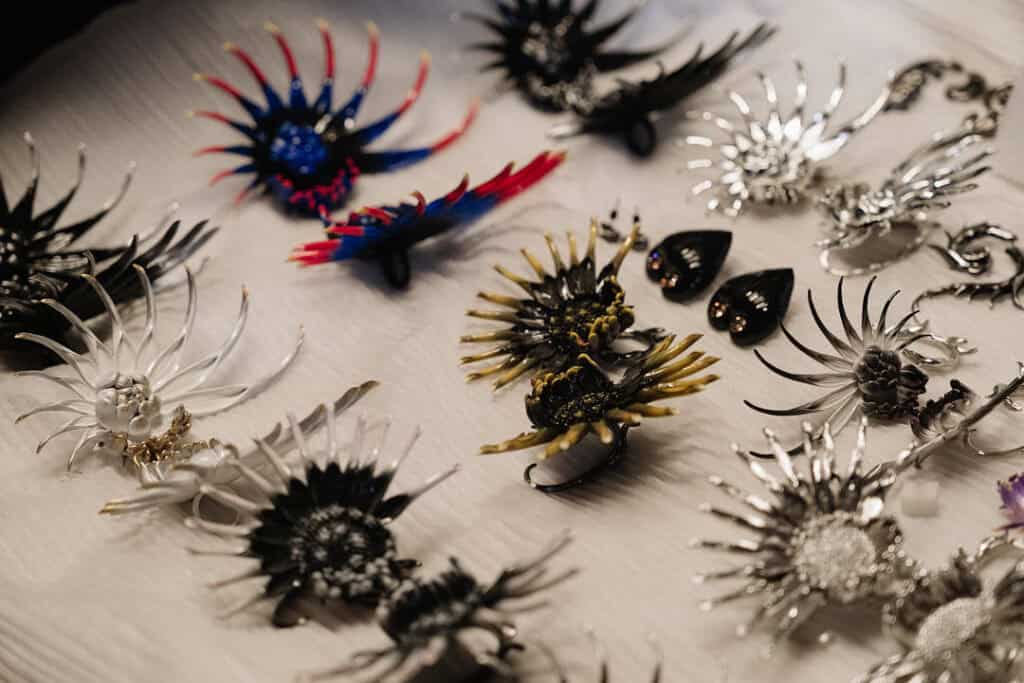
On the runway, that interplay between light and form became its own choreography. Models moved through shadows in bone-toned tailoring, their silhouettes interrupted by flashes of liquid silver-white. The jewellery, minimal but magnetic, wasn’t an accessory so much as a continuation of the garment. Fabric and metal mirrored one another: softness meeting precision, fluidity meeting control. The silhouettes leaned away from gender, favouring structure over category. Garments curved and folded like living organisms, shaped by biomechanics and sacred geometry rather than traditional tailoring. The palette was bone, mercury, and silver – reflective of the jewellery brand’s rhodium tones. Threads of embroidery caught the light like circuitry, blurring handcraft and algorithm, nature and machine.
For both Wang and his collaborators, fashion isn’t just visual; it’s archival. “Jewellery is perhaps the most intimate vessel of memory,” Wang reflected. “It lives on the body and becomes part of our daily rituals. Rhodium resists time; it preserves its brilliance beyond generations.” That idea of permanence ran through the show like a quiet subtext. Wang’s garments, which he describes as “vessels of memory” and “codes of survival,” found their counterpart in the jewellery brand’s craftsmanship. Every rhodium piece felt like an artefact of endurance – designed to outlast trends, to age without ageing. Founder Iraklis Vlachos framed the collaboration as a kind of manifesto: luxury as longevity. Their focus on rhodium – ten times harder than platinum, one hundred times rarer than gold – redefined the relationship between adornment and resilience.
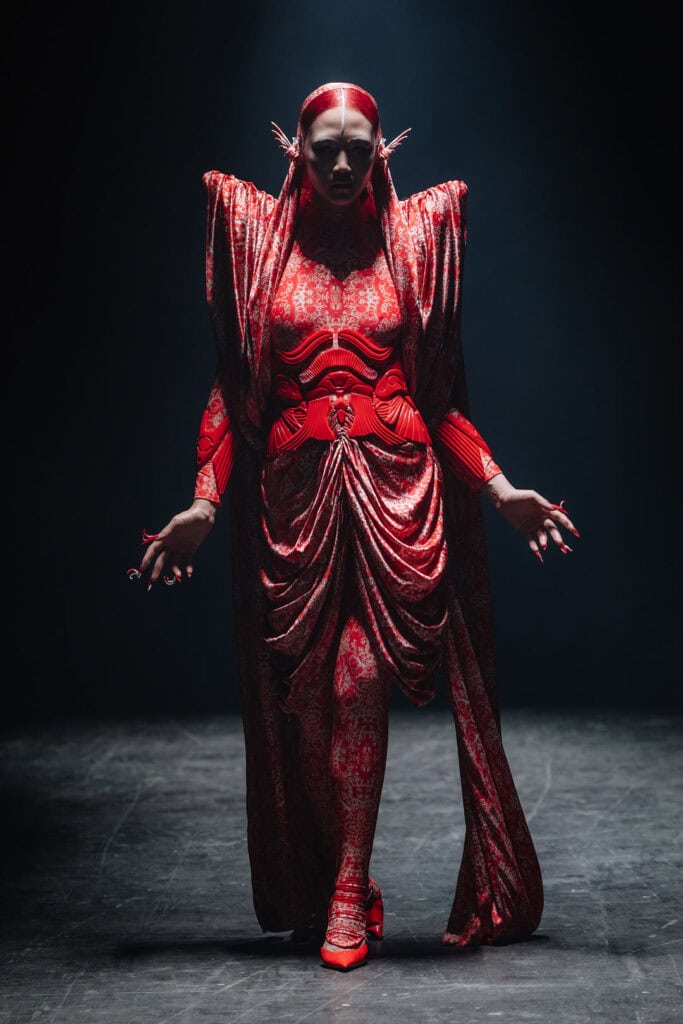
Wang has always balanced cultural heritage with speculative design, and EXOGENESIS took that further, pairing Eastern philosophy with futuristic materiality. “Rhodium feels alien in its rarity,” he said. “Yet mythology grounds it in the collective imagination that’s guided humanity for millennia.” Traces of Wang’s background in jewellery design were everywhere: seams mimicked metalwork, and accessories appeared almost fused into the garments. Each look moved as a single entity – part body, part architecture. It was couture through a post-human lens, one that imagined the wearer as both human and hybrid. That mix of the cosmic and the cultural gave the collection its charge. Rhodium – a metal with almost alien durability – became a symbol of harmony, a modern expression of the Taoist balance between permanence and change.
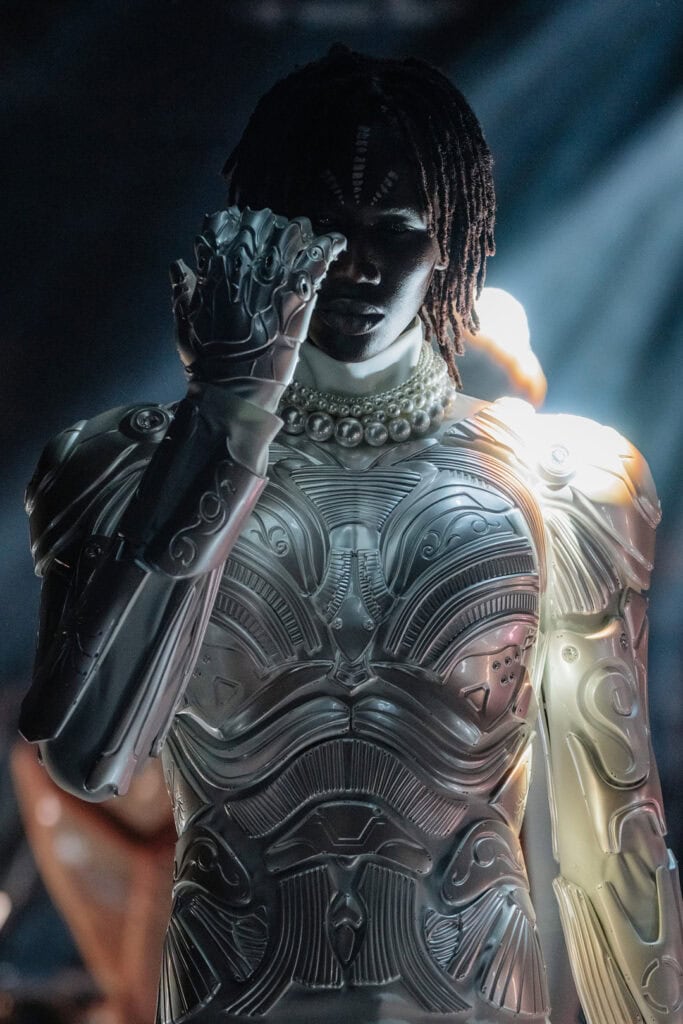
For STIM Precious Metals, innovation isn’t just about newness; it’s about accountability. “Progress doesn’t mean abandoning responsibility,” their team said. “Rhodium allows us to merge futurism with wisdom, to move forward without forgetting where we come from.” If EXOGENESIS had a thesis, it was that fashion and jewellery aren’t separate languages but two parts of the same sentence. “Jewellery acts as punctuation in fashion’s language,” Wang said. “Clothing sets the narrative, but jewellery defines the emphasis.” In that sense, the rhodium pieces didn’t decorate the clothes – they structured them. The jewellery’s hard lines gave the draped silhouettes their rhythm, turning embellishment into architecture. Rhodium became both armour and ornament, protection and projection – exactly the duality Wang’s work thrives on.
Even the name EXOGENESIS, meaning “birth from outside,” spoke to this dialogue between the human and the elemental. It was a story of emergence: of something ancient reborn in a new material. For the jewellery brand, this wasn’t just a collaboration; it was a statement of direction. “To show jewellery crafted entirely from pure rhodium for the first time is historic,” their team said. “It expands the vocabulary of jewellery and challenges the industry to think beyond tradition.”
There was a confidence in how quietly the show made its point. No theatrics, no spectacle – just detail, light, and material intelligence. The message was clear: innovation doesn’t have to shout to be seen. By the end of the evening, the meaning of luxury itself felt subtly rewritten. Wang and his collaborators had proposed a version of it built not on status, but on substance – a luxury of endurance, where rarity is measured not by scarcity but by how long it lasts. “True luxury today isn’t defined by rarity alone,” Wang said as we closed our conversation, “but by how responsibly that rarity is approached.”
If EXOGENESIS is a glimpse of what’s next, the future of fashion is rhodium: brilliant, resilient, and reflective of something deeper than surface shine. Wang called the show “a beginning rather than a finale.” It felt exactly that way – a merging of worlds: metal and mind, fabric and light, mythology and machinery. Each shaping the other into something neither could be alone. Together, Hengdi Wang and the jewellery brand have reminded us that in the right hands, innovation can still look timeless.