
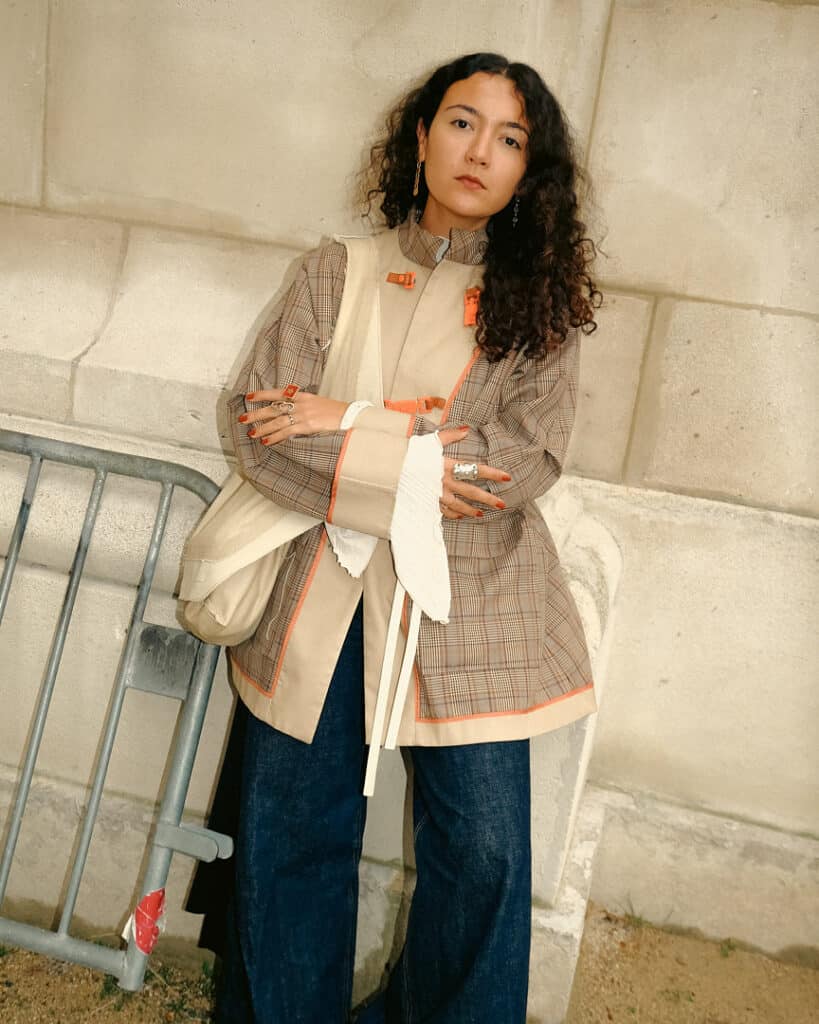
Hiba Baddou grew up in a home where creativity was a constant. Born in Rabat, Morocco to a loving couple. Her father was an architect and visual artist. She was introduced very early to the soft power of art, storytelling, and photos. By 11, she had begun using her camera, photographing her surroundings, and discovering, on her own, how light, composition, and framing play a part in revealing depth in documentation. This allowed her to report on what is behind and beyond reality. “I have always felt the need, before photographing someone, to engage in a conversation, to understand their story, and then capture what in them moved or intrigued me.” The result is a body of work that lives in that intimate, sometimes unsettling, space.
Between fact and fiction, her images invite speculation and suspicion as it settles in the viewer’s mind. At Paris Photo last November, where Baddou was exhibited at the Loft Gallery booth, she observed visitors debate and even doubt her photographs, questioning their origins. The questions don’t bother her. Hiba Baddou welcomes the tension that exists between what is seen and what is imagined. This liminal space is the very thing that gives her work its unique charge. A spectacular display of the power of photography – in how it somehow always manages to open up new ways of seeing. That’s exactly where her work comes alive.
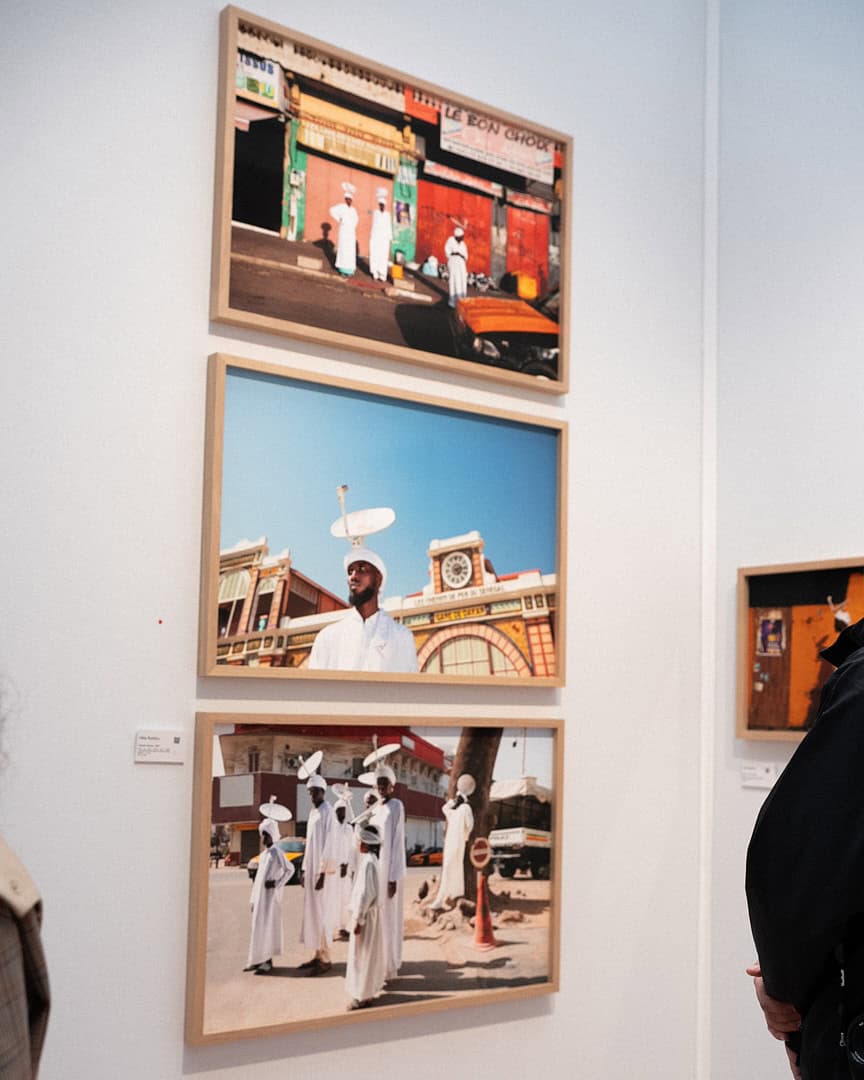
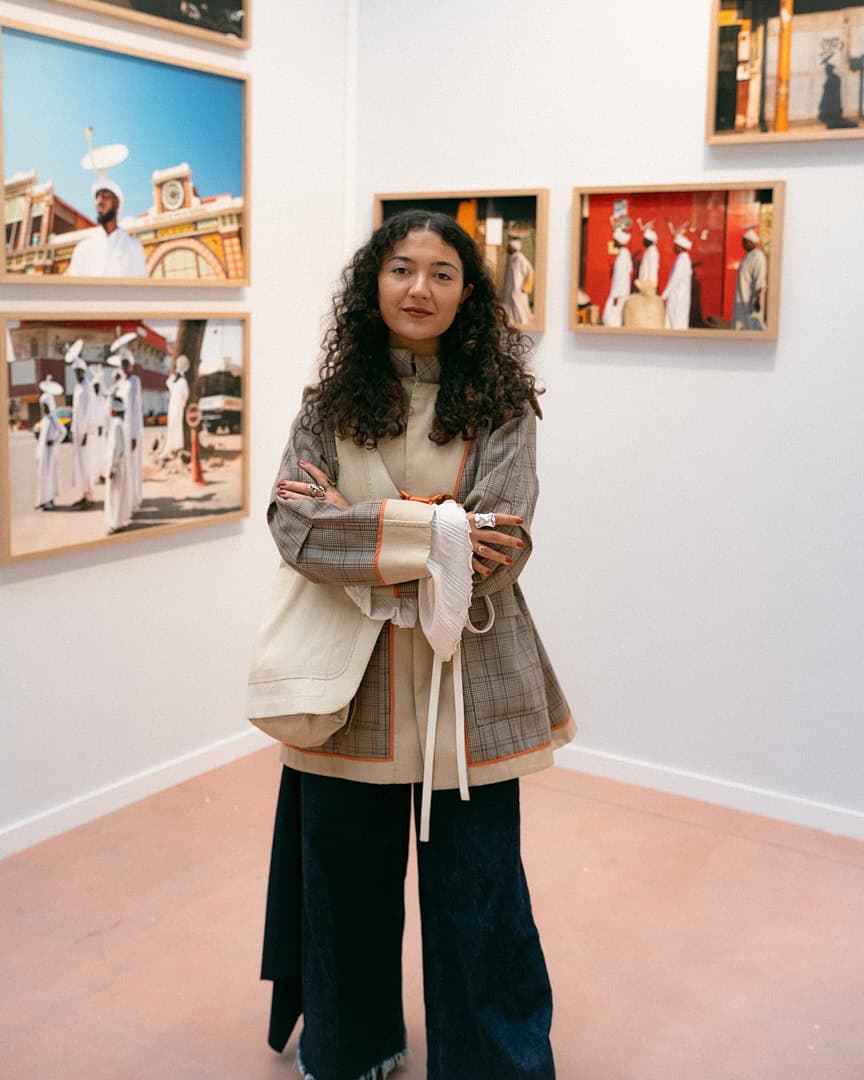
The COLD Magazine (CM): Paraboles delves deeply into the emotional and cultural dimensions of the North African diaspora. How has this project affected your own understanding of identity, displacement, and home?
Hiba Baddou (HB): While working on Paraboles, I met around a hundred people who shared with me their relationship to images, to elsewhere, to dreams, and to longing. By reinventing this iconography, I ultimately reconnected with my own story: that of a country looking to the sky to access other narratives, and that of a generation constantly navigating multiple realities, multiple belongings, and multiple possible futures.
This project made me realise that free will is essential to avoid overlooking what truly shapes us. It made me aware of the power of images, of their profound impact on our identities, imaginations, and ways of inhabiting the world. Paraboles also reminded me that it is vital to seek connection with others on one’s own terms, through dialogue, listening, and experience, rather than through the filter of dominant narratives.
Ultimately, this work taught me that the notion of “home” is not fixed: it is constructed, deconstructed, and reinvented, sometimes from a distance, and always through the stories we choose to embrace or transform.

CM: With the rise of AI-generated and AI-assisted imagery in contemporary photography, how do you see its impact on the medium? Do you think it opens new creative possibilities for artists, or does it risk diluting the very essence of what photography is actually about?
HB: For me, photography and AI-generated imagery do not stem from the same gesture. Photography emerges from an encounter with reality, a moment, a light, a presence and establishes a direct relationship with the world. AI-generated images, on the other hand, arise from an algorithmic construction, an assembly of preexisting data and references.
I do not see these two practices as opposites, but as different languages. AI can open up new creative possibilities, expanding the realms of fiction, symbolism, or speculation. But it does not replace photography: it lacks the weight of lived experience and the sensitive depth of a shared encounter with a subject or a place.
To me, the challenge is to preserve this distinction, not to establish a hierarchy, but to remain aware of what each tool allows us to convey, what it reveals or conceals about reality.
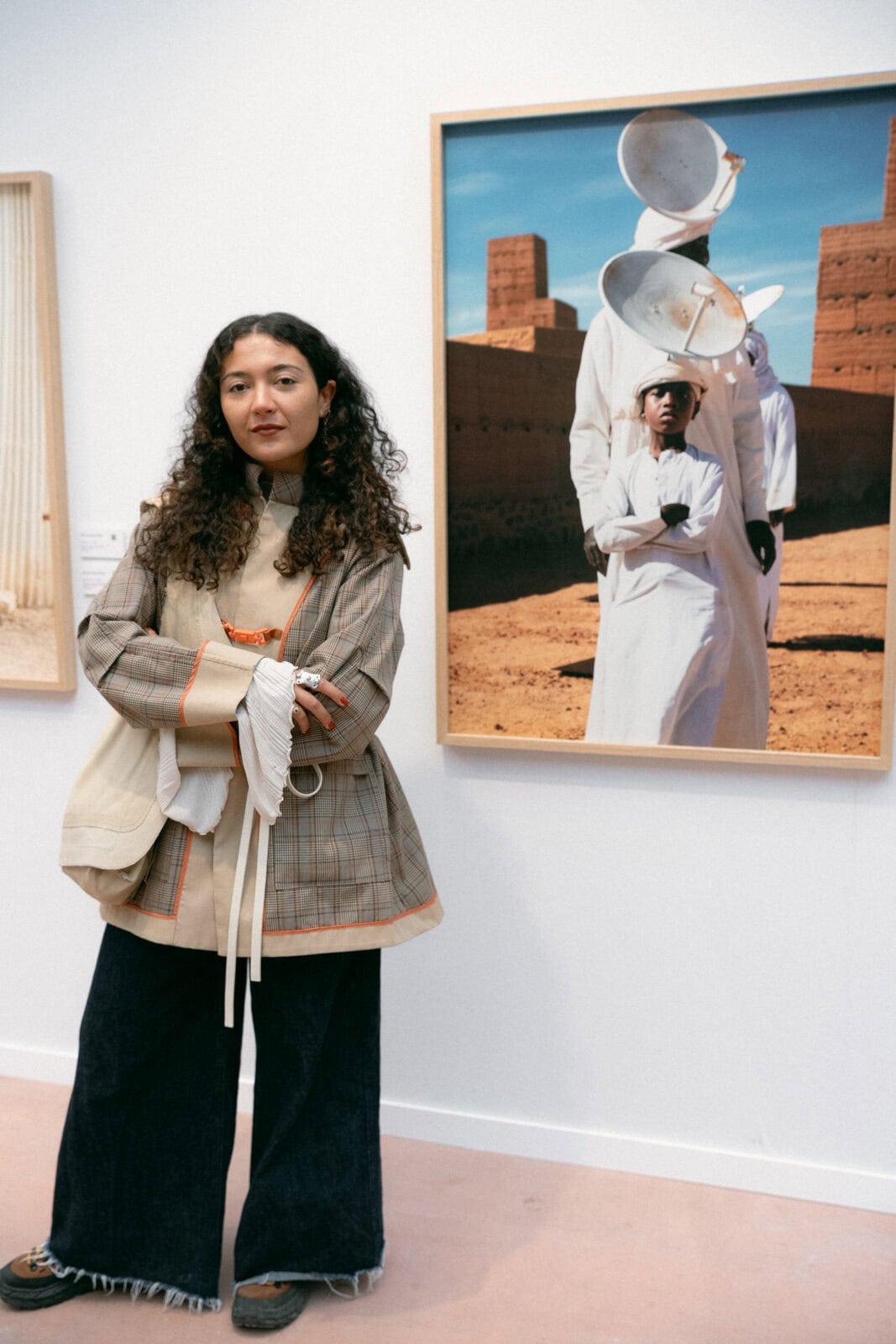
CM: Can you imagine integrating AI tools into your own practice, or do they conflict with the way you approach narrative, culture, and memory?
HB: No, I do not plan to integrate AI tools into my photographic practice, because my work is deeply rooted in contact with “the real”. It is this direct relationship with the world; bodies, gazes, places, temporalities ; that allows me to understand what a generated image could never offer.
Human interaction, physical presence, unexpected encounters, the temporal and spatial dimension, these are all part of a metaphysical experience that shapes us. It is from this living material that I draw my narratives. For me, this immersion in reality is irreplaceable and essential for creating images that carry memory, history, and an authentic human resonance.
CM: As a Moroccan and African artist navigating multiple cultural worlds, how does your identity shape the way you create and frame your images?
HB: My Moroccan and African identity expresses itself as a kind of double anchoring: one foot rooted in what intimately shapes me, the other in spaces I explore, sometimes by choice, sometimes by necessity. This creates a constant oscillation that is reflected in my images.
This in-between position allows me to see the world from thresholds, from zones of passage. I often work from this liminal space, where boundaries become porous and new narrative forms emerge. My perspective is shaped by this plurality: roots, language, beliefs, but also movement, exile, and projection toward elsewhere.
Being Moroccan and African in a global landscape pushes me to create images that question how our stories are represented, how they are perceived, and how they can be reinvented. I am deeply interested in contemporary mythologies, in the construction of imaginaries, and in how an image can contain memory, a fragment of the future, or a symbolic space.
I believe my identity acts as a lens through which I compose: it drives me to weave worlds where reality and fiction interpenetrate, where territories become metaphors, and where bodies carry both their roots and their projections. Ultimately, my work is a way of translating this multiplicity ; not smoothing it over, but rather embracing its tensions, folds, and shadowed zones.

CM: Do you feel that artists from North Africa and the African continent receive adequate representation at major fairs? Where do you see progress, and where do you notice limitations?
HB: There has clearly been progress: African voices, whether from the North or other parts of the continent, now occupy a more visible place in spaces like Paris Photo. There is a genuine curiosity, a desire for openness, and above all, a recognition of the richness of the narratives, aesthetics, and archives these artists carry. This was not as evident just a few years ago. Yet this representation remains fragile.
Too often, it depends on trends, “moments,” or the sporadic interest of institutions that discover our work as if it were a “new scene.” There is sometimes a lack of continuity, sustainable structures, or deep contextualization. What I still see as a limitation is the risk of simplifying complex identities to fit into reassuring or expected categories. The continent’s diversity, cultural, linguistic, political, aesthetic is immense, and it is far from being fully reflected in all its nuance.
Progress exists, and it is invaluable. But the challenge today is to go beyond symbolic representation and build a real, structural presence that allows African artists to be seen not as exceptions or trends, but as essential voices in contemporary creation.
CM: Your work often explores themes of heritage, memory, and belonging. How have these themes evolved for you over time, especially as your career expands across borders?
HB: These themes have evolved with me, in step with my movements, encounters, and the contexts in which my work has taken place. At first, heritage and memory were deeply personal for me: my family, my childhood in Morocco, the places that shaped me. Then, as I crossed other territories, I realized that these notions are fluid and that they can be reinvented, fragmented or recomposed elsewhere.
Today, belonging is no longer a question to resolve, but a territory to explore. I am increasingly interested in how bodies, objects, and images carry layers of stories ; personal, collective, and imaginary. Memory is not just a return to the past; it is a living material that allows for the creation of new mythologies, fictions that extend or transform reality.
Working across continents has broadened my perception: it has allowed me to see heritage as a circulating energy, a space of invention. This constant movement has strengthened my desire to build hybrid worlds, like the Republic of Hertz, where memory does not merely preserve, but opens doors to what does not yet exist.
CM: How did your experience in Paris influence the way you see your work within the wider landscape of contemporary photography?
HB: I realized how much the visual field is evolving, and how certain narratives ; long considered peripheral or “other” are finally beginning to find a legitimate place within these spaces of visibility. Seeing these imaginaries emerge, interact, and sometimes challenge established frameworks was very encouraging. It confirmed for me that very different worlds can coexist, and that this coexistence enriches the photographic language. There is something deeply universal about photography: its ability to traverse geographies, cultures, and sensibilities.
The diversity of perspectives present at Paris Photo reminded me of humanity’s infinite capacity to tell stories, whether real or imagined, and to give form to the world. Being part of this movement motivates me to continue my research, to further assert narratives that navigate between documentary, fiction, and the creation of new symbolic territories. It gave me the sense that my work is not marginal, but actively participating in an expanding conversation.
CM: After moving through the fair, what questions about representation, authorship, or cultural storytelling stayed with you?
HB: I left with several objectives: to create images that resist simplistic readings; to reinvent cultural narratives without reproducing existing visibility structures; and to maintain genuine artistic authenticity in a space where market expectations so heavily influence the reception of works. Paris Photo reminded me that representation is never neutral: it is a balance between what is shown, what is suggested, and what is deliberately left unexplained. It inspired me to delve even further into zones of ambiguity, spaces where narratives are neither fully revealed nor entirely codified, where an image can become an experience.
