
The horse girl was once confined to the pastures of tween cliché and internet punchline – obsessive, awkward and painfully posh. Which means it was only a matter of time until she was absorbed into the fashion mainstream.
In 2025, the horse girl cantered into her own. Across fashion capitals, equestrian codes shifted to the mainstream, evoking pastoral discipline and romantic blue-bloodedness. Daniel Lee’s Burberry reimagined aristocratic countryside dress through barn-chic outerwear and heritage silhouettes. Gucci’s A/W 2025 show in Milan leaned hard into horsebit hardware and plush furs. In London, Bora Aksu yoked Empress Sisi nostalgia to Schiele-esque expressionism, conjuring a whimsical fragility. And in Paris, Post Malone staged a knowingly theatrical – and unexpectedly well-executed – moment at his fashion week debut with a Western-inspired brand, Austin Poet, that sent a live horse strutting down the runway.
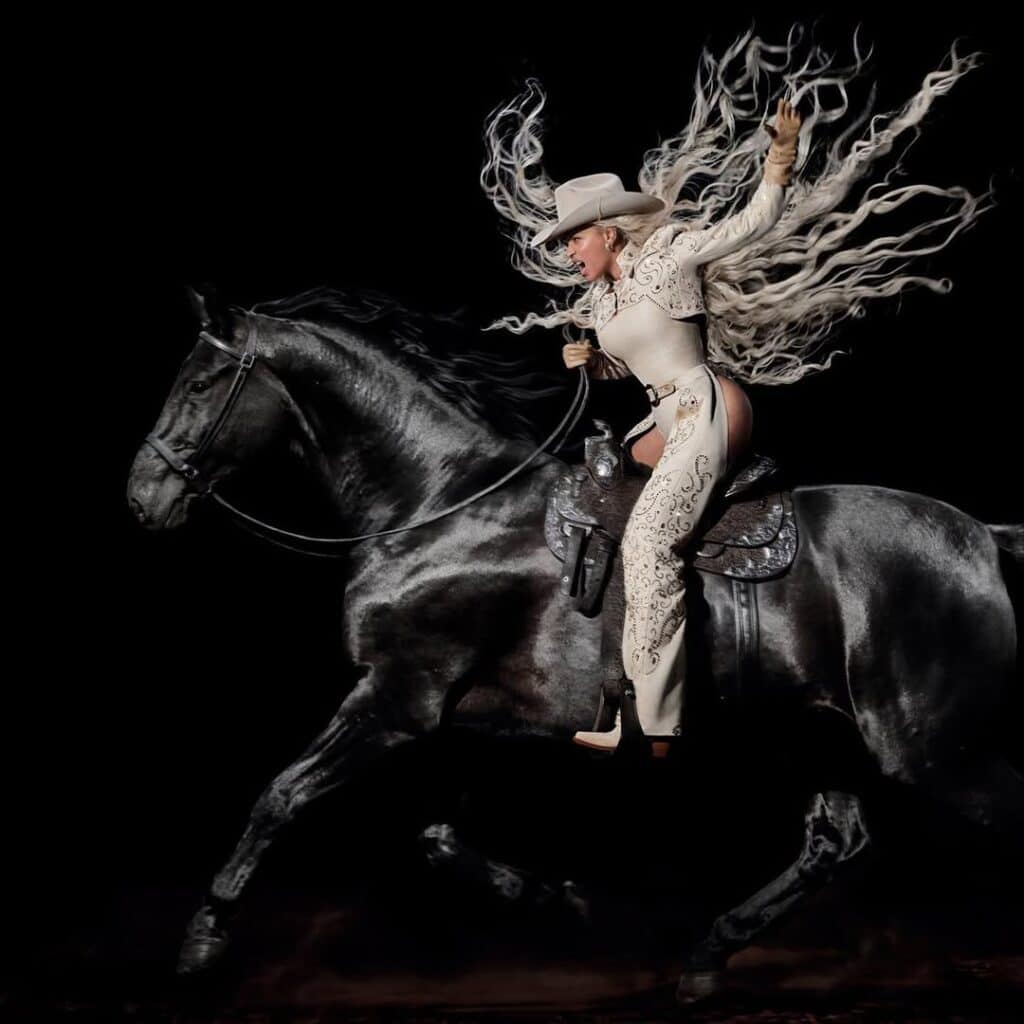
The broader cultural revival of the Western has bled into this niche zero-ing in on the horse girl’s cultural capital. The global fixation on Americana cowboy glamour – supercharged by Beyoncé’s Cowboy Carter tour and Chappell Roan’s country turn – pushed equestrian-adjacent wilderness aesthetics firmly into the mainstream. Even animal print obeyed the mood shift, with cow spots quietly dethroning leopard as the pattern of the season at shows like Bottega Venetta Resort 2024.
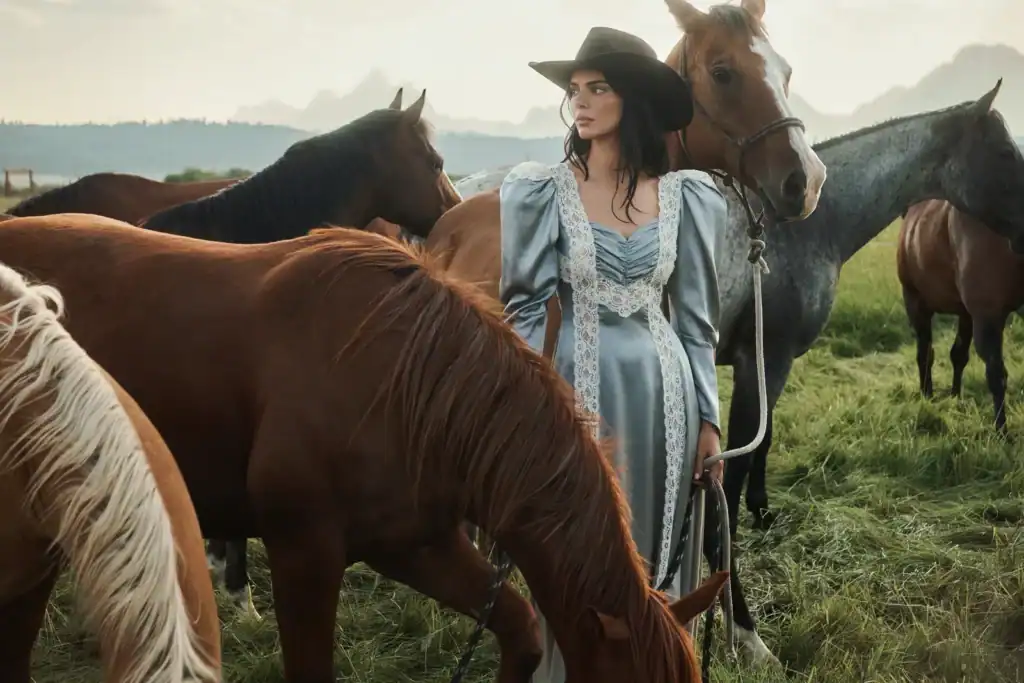
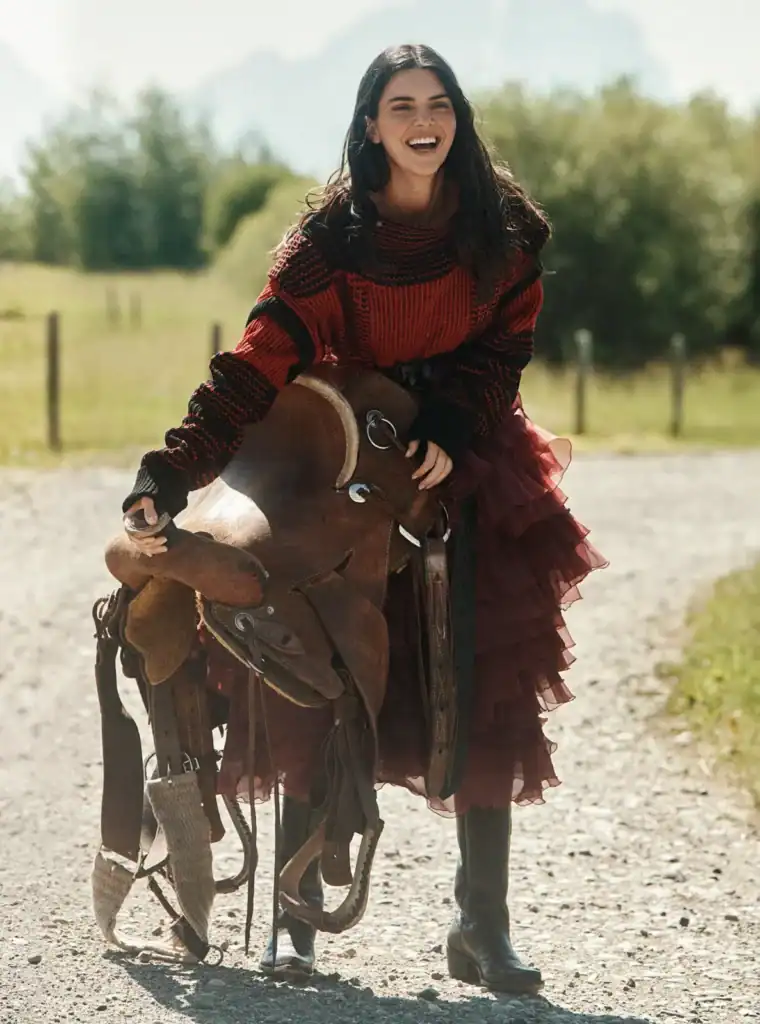
The windchange was strong enough for Vogue to notice. Its September 2025 cover story, “Horsing Around With Kendall and Gigi”, recast Kendall Jenner and Gigi Hadid as equestrian icons, riding at full gallop through the wild grandeur of Wyoming’s Grand Tetons in flowing McQueen gowns. The shoot positioned the horse girl as both timeless and unkillable – romantic, powerful and self-directed. “I fully believe that I was a cowgirl in a past life,” Jenner mused. Of course she was. You can’t kill a horse girl.
But while fashion and media mythologised the horse girl, riders themselves watched the moment unfold with a mix of amusement, pride and suspicion. For professionals like Amanda Papeo, whose TikTok account @mandymoney420 boasts thousands of followers, the sudden ubiquity of equestrian aesthetics felt both affirming and incomplete. A Canadian showjumper who moves fluidly between muddy paddocks, elite competition circuits and Hermès Chevauchée invitations, Amanda is the horse girl the trend is trying to catch up to.
“Honestly, I think equestrians get misunderstood a lot,” she says. “People outside the sport see the fancy clothes, the shiny saddles, or some dramatic clip online and think that’s the whole story, but it’s not even close.” What the aesthetic flattens, she explains, is the labor: “There’s so much behind the scenes: hours of training, thinking about every little detail, making sure your horse is comfortable, happy and actually enjoying what they’re doing. It’s not just about ‘looking good on a horse,’ it’s a full-on partnership.”
That tension – between devotion and display – sits at the heart of the horse girl’s 2025 moment. Her sudden cultural prominence didn’t materialise in a vacuum, but within a longer evolution of how status has been displayed and re-coded over the past two decades. In the early 2000s, conspicuous consumption ruled: MTV Cribs, rhinestone-encrusted saddles, Louis Vuitton trunks for the tack room. Luxury was loud, ornamental and aspirational in the most literal sense. After the 2008 financial crash, the mood shifted sharply. By the 2010s, overt displays of wealth felt tone-deaf, giving rise to the era of “stealth wealth” – logo-less Loro Piana, unmarked Goyard totes, artisanal heirlooms signaling taste through restraint rather than excess.
Social media compressed and accelerated this shift. Platforms blurred confession and performance, turning every post into a micro-calculation of legitimacy. The wrong flex could be ratioed into oblivion. What survived was coded affluence: wealth disguised as ritual, hobby or lifestyle that implied time and expertise rather than money alone.
In this environment, equestrian culture proved uniquely adaptable. Early mornings, weathered boots and the visible routines of care became signifiers of authenticity. As Papeo puts it, pop culture tends to glamorise the aesthetics of beautiful horses, tailored outfits, while glossing over the hours of training, care and responsibility that riders put into their horses every single day. The sport can be vulnerable to misrepresentation. People outside the community may not fully understand the standards of care and regulations already in place, and when missteps happen, it can feel like the whole industry is painted with the same brush.
She emphasises: “For me being an equestrian is about respect for the horse, for the tradition, and for doing right by these amazing animals. I think that’s the story people really need to see.”
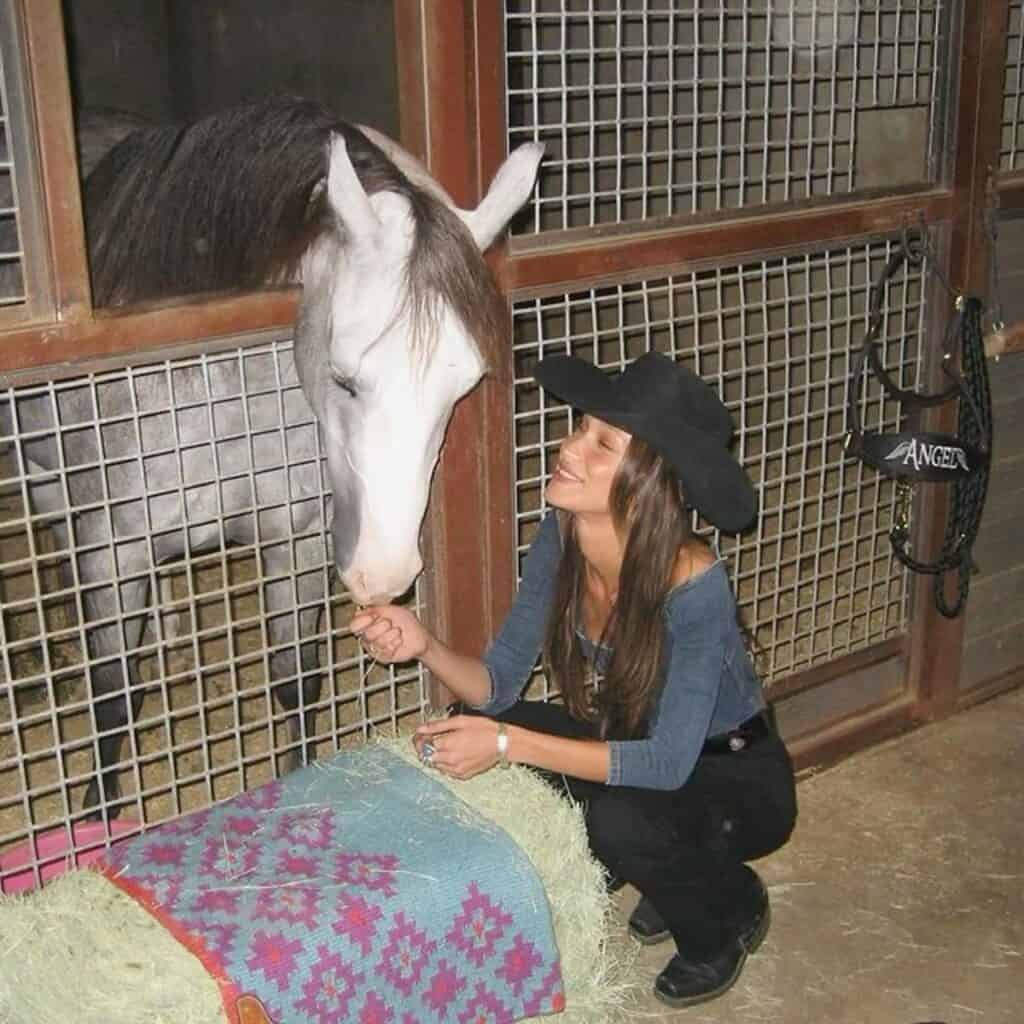
Visibility, however, comes with scrutiny. “Having a platform in this sport means opening yourself up to all kinds of opinions,” Papeo explains, “but I’m truly grateful for the positivity and support I’ve received. We’ve built such a strong, modern equestrian community that genuinely lifts each other up, and that far outweighs any negativity. I try to use any criticism as fuel to keep improving and growing.”
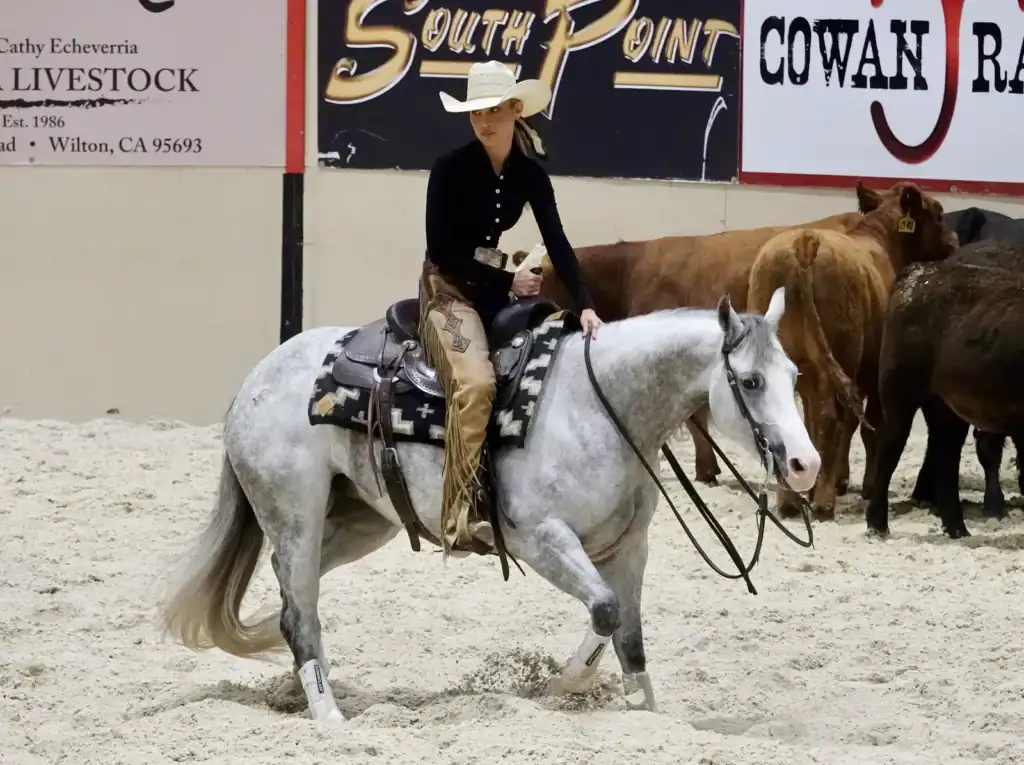
As the codes loosened, equestrian style spilled beyond arenas and estates into the mainstream. ASOS reported a 260% year-on-year rise in riding-boot searches, launching a “Stable Girl” edit that translated function into trend. Stella McCartney reworked tack details into handbags. Off-duty street style embraced countryside-coded boots and quilted layers. Irina Shayk stepped out in riding silhouettes, while Bella Hadid entered bona fide cutting-horse competitions, further blurring the line between aesthetic adoption and lived practice.
Hadid in particular complicates the narrative. She, alongside sister Gigi, grew up riding and since dating actual cowboy Adan Banuelos, Bella’s immersion in rodeo culture has only deepened. These days, the pair can even be found competing together. Her involvement resists easy dismissal as a fashion phase – she rides, she trains, she competes. And yet, the supermodel effect remains unavoidable. The boots look sharper, the denim more intentional, the dust faintly editorial. What might read as utilitarian on another body becomes aspirational by proximity to celebrity, reminding us how quickly labor can be reframed as lifestyle.
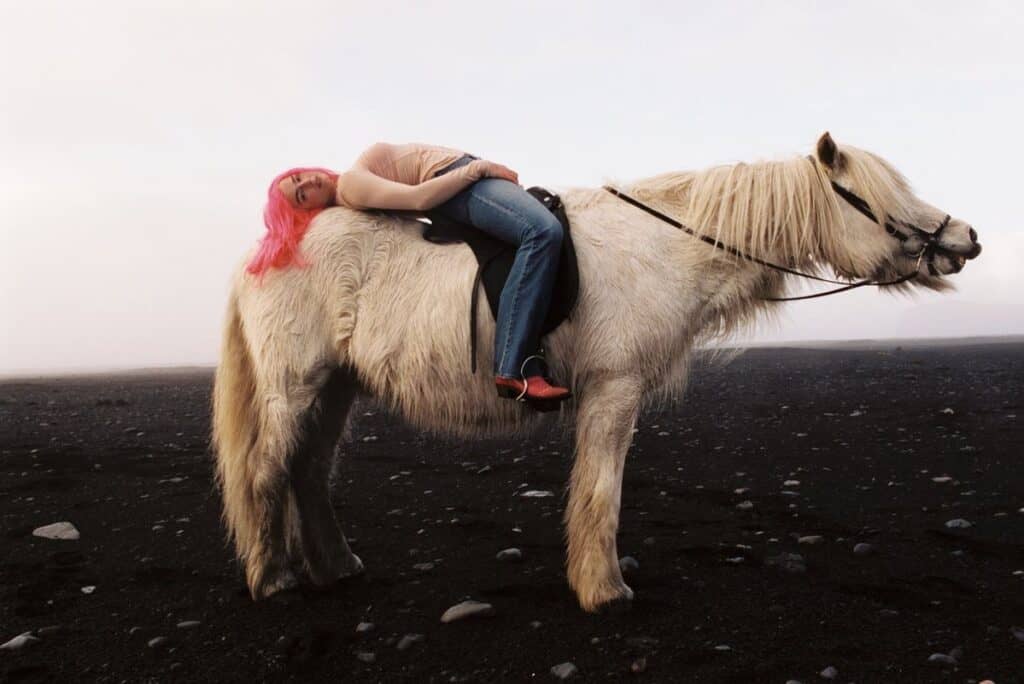
Elsewhere, pop culture pushed the horse girl into outright myth. In her Headphones On music video, Addison Rae rides an Icelandic horse across black sand beaches and lava fields, pink hair blazing against a white mane. The imagery is untethered from realism – less about riding than about world-building – but it draws from the same symbolic reservoir: freedom and control with something larger than oneself.
More uncanny in the auditory realm is the Berlin-based DJ HorsegiirL, who proclaims to fans “I’m not a DJ, I’m a horse” and has gained a following around absurdist happy-hardcore hits with titles like “My Barn, My Rules” and “Harvest Heartbreak”, all performed in her signature horse mask. Her insular universe turns equestrian culture into a posthuman allegory, simultaneously satire and sincerity. It is here that the horse girl crosses fully into internet myth: a cultural symbol that embraces irony without forfeiting passion.
The late Welsh cultural theorist Raymond Williams might seem an unlikely guide to the horse girl, but his idea of a “structure of feeling” offers a useful lens for explaining her strange return. Culture, Williams argued, is where emotions and institutions meet. And right now, the horse girl lives precisely at that intersection: half-meme, half-myth, galloping between sincerity and irony, ritual and spectacle. His concept describes those shared yet inarticulate moods that define a generation before they crystallise into language.
This mainstreaming inevitably blurs authenticity and pursuit. For some, it democratises an aesthetic once gated by class, land and access. For others, it risks flattening deeply practical codes into surface-level signifiers. Yet in every iteration – runway spectacle, celebrity lifestyle or professional sport – the horse girl circulates as both luxury and parody, perfectly calibrated to a cultural moment obsessed with irony but quietly craving sincerity.