
Aged 28, I bought Pokémon HeartGold.
It was one of those periods where everything looked fine, but nothing felt settled. I was paying too much rent to constantly be out in London. I was moving through a carousel of engagement parties while my own love life felt slightly dishevelled. I had recently left my job after seven years in corporate with the loose aim of “figuring myself out”. Instead of engaging with any of that, I ordered a Nintendo DS game from 2010.

It arrived in a small plastic case that looked exactly how I remembered. I chose Chikorita, a grass-type Pokémon, and within a few evenings my routine had shifted. Less scrolling, less overthinking, more quiet, repetitive progression. I had forgotten that becoming an elite Pokémon trainer was, in some ways, more rewarding than a corporate job.
That private return to old comforts is also, clearly, not just mine. A 2025 report by Mental Health UK – a mental health charity – found that 91 per cent of UK adults had experienced high or extreme levels of pressure or stress in the previous year, with younger workers among the most affected. A survey from the same year by Deloitte found that 40 per cent of Gen-Z respondents said they felt stressed or anxious all or most of the time.
In that context, buying an old game starts to look less like regression and more like a coping mechanism. Psychologists have spent years arguing that nostalgia is not just indulgent or sentimental. A study led by University of Southampton researchers Constantine Sedikides and Tim Wildschut has found that nostalgia can strengthen self-continuity: that is, the sense that your past and present selves still belong to one another. Other studies suggest that nostalgia can support wellbeing by increasing feelings of authenticity and connectedness. In other words, looking backwards can sometimes be a way of holding yourself together.
HeartGold, which sold at standard DS prices when it launched, now circulates as a collector’s object. Recent sales show complete copies regularly selling for well over £140, with some listings going closer to £220. I’m not the only one returning to nostalgia, it seems.

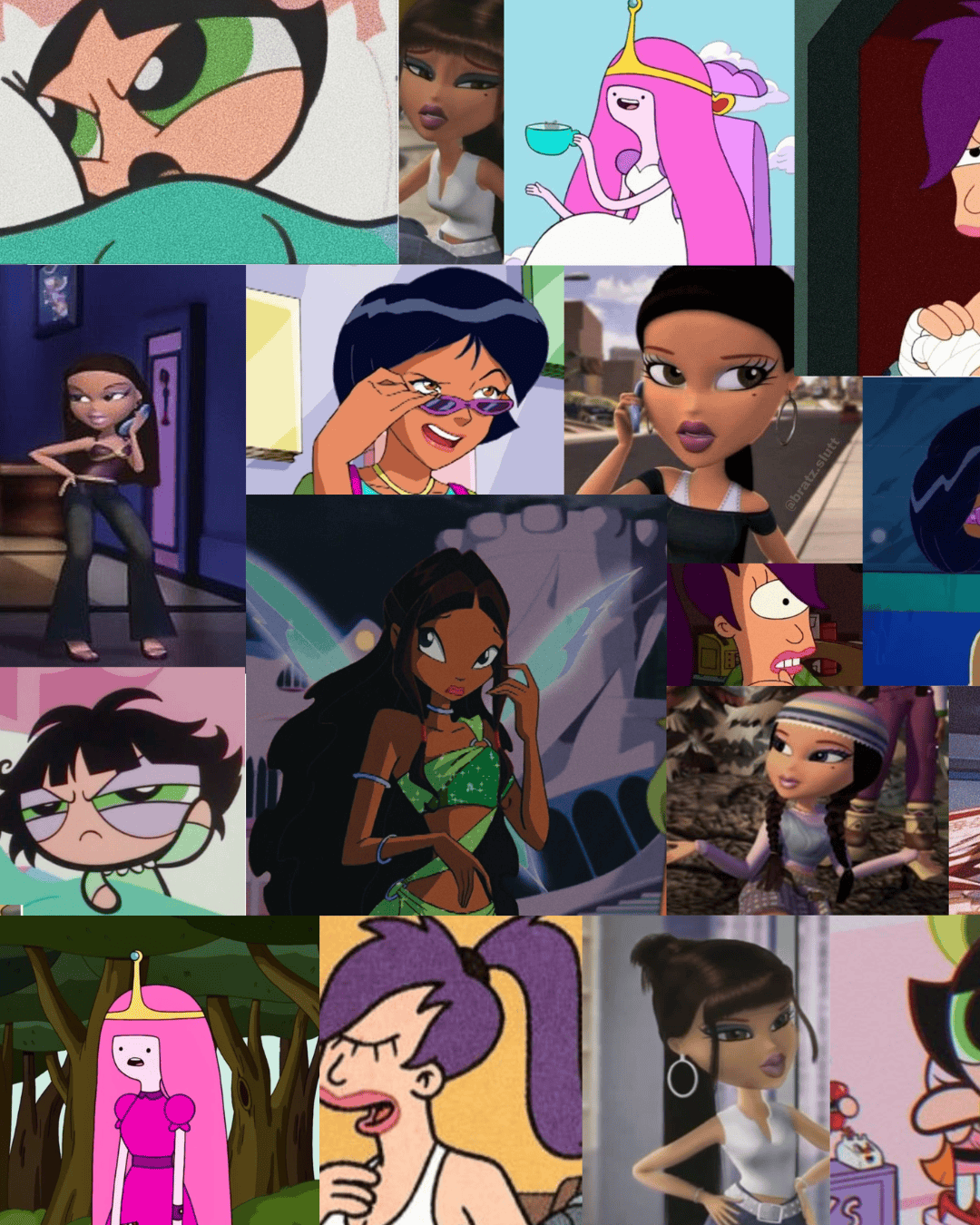
Around the same time, I started rewatching old animations. Adventure Time was one of them. I found myself drawn back to Princess Bubblegum, who I remembered loving without fully knowing why. Then I got curious about my childhood watching habits and realised it was not just her. It was Aisha from Winx Club, Yasmin from Bratz, Buttercup from The Powerpuff Girls, Leela from Futurama
At first, it was aesthetic. I wanted a new desktop background, something that felt more like me than whatever default image I had been staring at, so I started pulling images from Pinterest and building a collage. Partway through, something shifted. They no longer felt like random favourites, not when they were all looking back at me on Canva. They shared a very specific energy.
Looking at them together, what stood out was not just how they looked, but how they held themselves. The expressions were similar: slightly unimpressed, emotionally self-contained, rarely performing for approval. They were not the obvious centre. They existed just to the side of it, composed, difficult to fully read, not particularly concerned with being liked.

Growing up, the main girls were often softer. Blonder, bubblier, easier to understand on sight. It was not that they felt wrong. They just did not feel legible to me. As a brown girl in the UK, I was not directly reflected in what was positioned as the default. So, I think I did what a lot of us did and found the closest thing: the adjacent girl.
She was not always explicitly a girl of colour, but she was rarely the obvious choice. There was something sharper about her, something slightly removed. A distance that felt more familiar than the central, more universally appealing characters ever did.
And this is where nostalgia starts to look different if you grew up slightly outside the cultural centre. It is one thing to revisit childhood favourites because they remind you of simpler times. It is another to realise, years later, that those favourites were doing representational work for you.
That matters because the actual list of brown girls in children’s media has historically been thin. A study of British children’s television found that less than one in 50 (1.8 per cent) female characters in its sample were South Asian. It says something useful about how sparse direct identification could feel.
Representation has shifted since then, at least more obviously in live action. We have had brown female leads in Never Have I Ever, The Mindy Project and Bridgerton. But those are mostly aimed at older audiences, and they often still fall into familiar frames: hyper-articulate, studious, high achieving, narratively explained. Cartoons come earlier than all that and often shape your sense of taste before you can verbalise it.
The pull of the adjacent girl starts to make more sense.
She sat just to the side of the centre, but she still gave off a charge. She was often cooler, harder, less eager to reassure. For girls who felt a little outside the frame themselves, she was their way in.
Speaking to other women about this, especially brown women, the recognition is often immediate. We name the same characters. We laugh at how specific the type is. But the feeling is not exclusive to us.
That is partly why these returns can feel so powerful in your late twenties. Adult life has a way of nudging you toward clarity, stability and timelines that make sense to other people. It asks you to become more readable. Nostalgia interrupts that a bit. It hands you back versions of yourself that existed before your taste became curated, before everything needed a personal brand explanation.
Looking at the collage now, it feels less like a mood board and more like a record. A record of what I recognised early and kept returning to, even when I did not realise I was doing it.


