
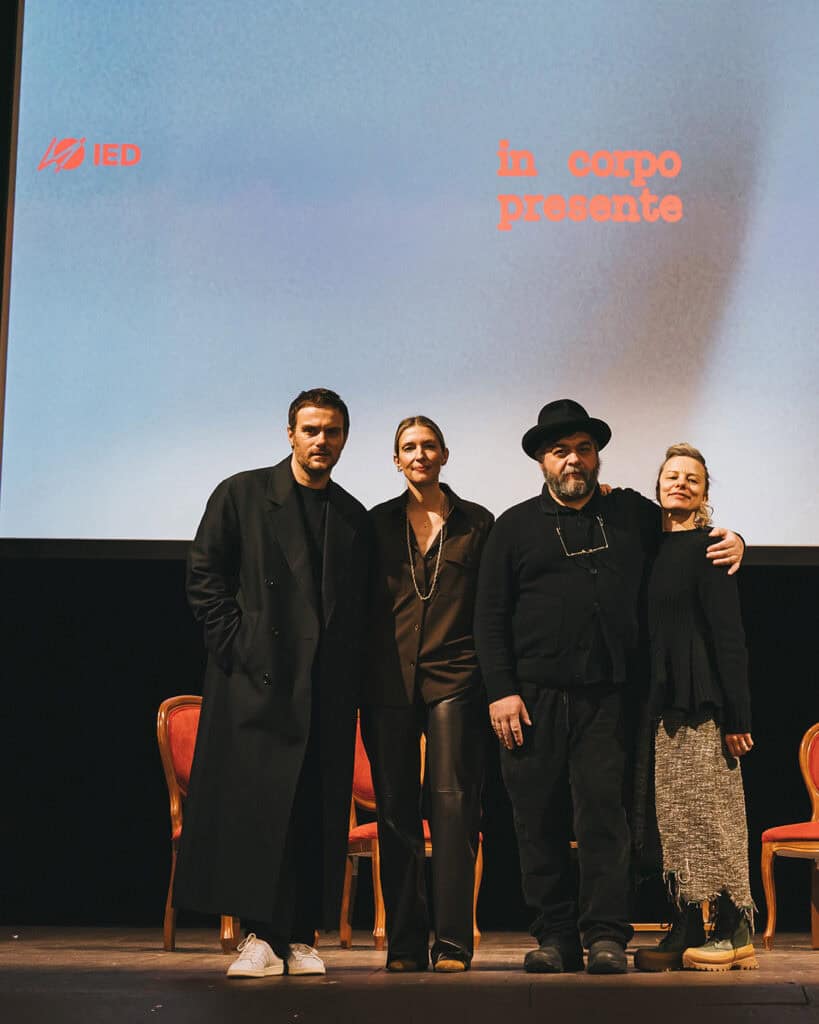
In corpo presente, literally translating to “in the present body” is the new collective educational project developed at IED Florence, the Florentine campus of one of Europe’s leading design institutions.
Conceived as a pedagogical and artistic platform centred on physical presence, embodiment and lived experience in creative practice, the project was presented by director Benedetta Lenzi alongside a group of artists and creatives whose work spans photography, performance and contemporary fashion: Jacopo Benassi, known for his raw, visceral photographic language; Sabato De Sarno, whose approach to fashion is grounded in emotional realism and intimacy; and SISSI, whose performative practice explores the body as both subject and medium.
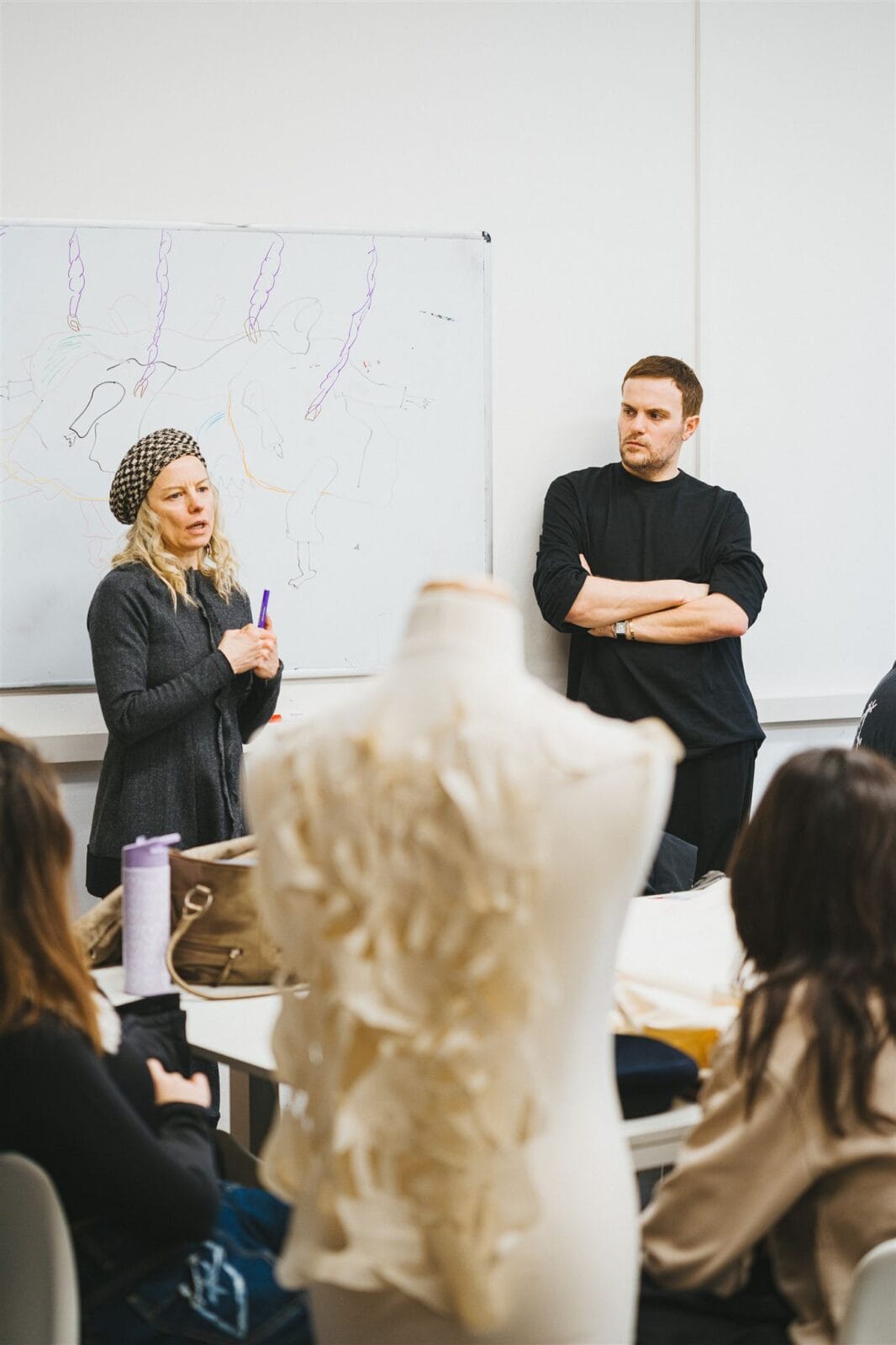
In corpo presente is a collaborative educational project developed at IED Florence, bringing together students from fashion, photography, design and visual arts in hands-on workshops where the body becomes the central tool of creative research. Through movement, textile experimentation, sound and image-making, participants turn physical experience into artistic and performative projects, guided by Benassi, De Sarno and SISSI. The focus is on process, collaboration and learning through practice.
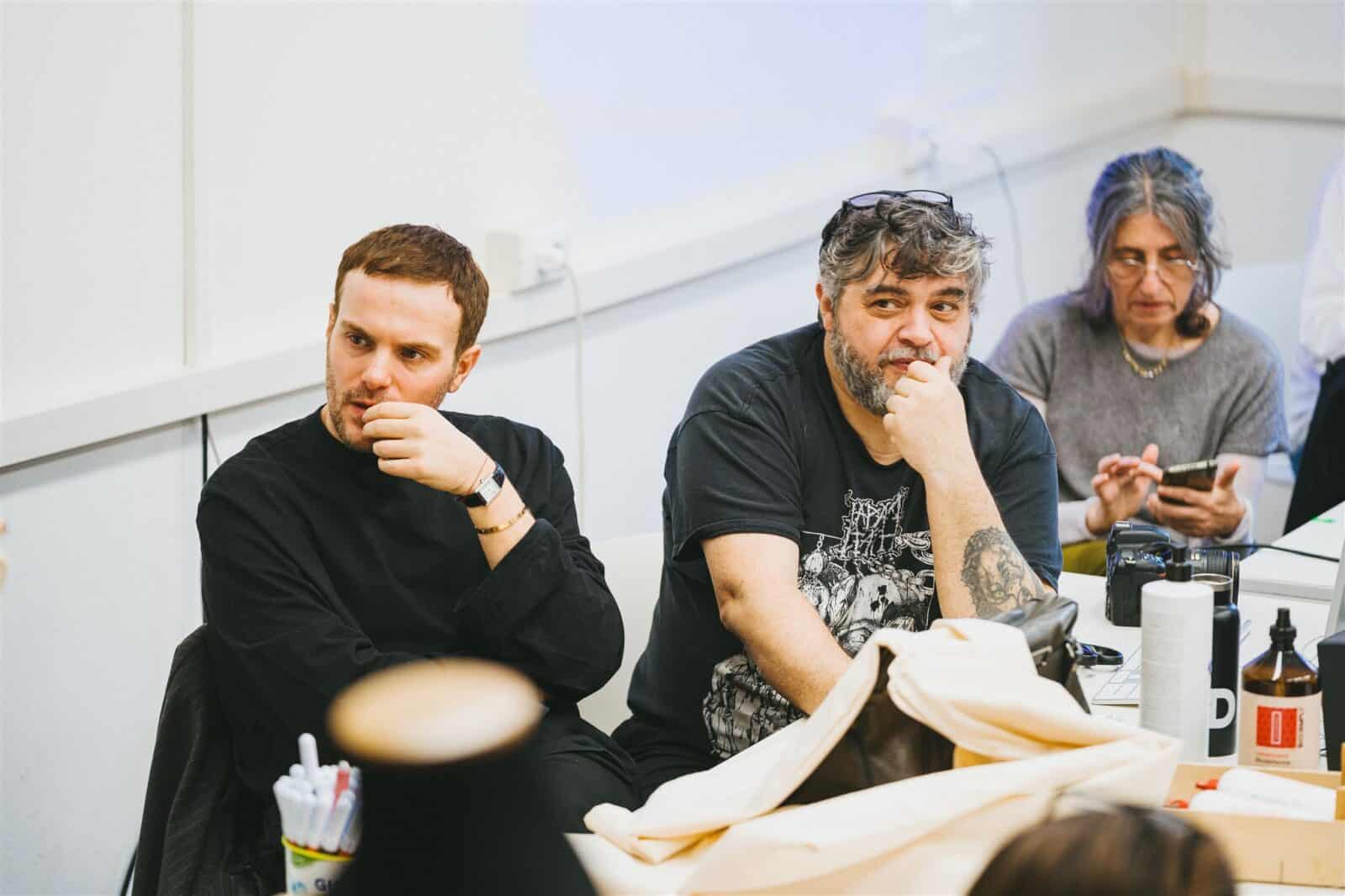
SISSI: Today, being in corpo presente means acknowledging that presence is not a given, but a practice—something that must be continuously exercised. We are composed of experiences, and the body is a living archive built through relationships: through interaction with others, it accumulates traces and memories. The body is matter, and for me it is urgent to bring knowledge back into matter and into real time, into the friction between bodies and contexts—returning to manual work, to gesture, to what cannot be delegated.
My practice operates on the threshold between inside and outside, between skin and space, between action and matter, because presence is never individual: it is always co-produced. It occurs when someone enters, comes close, stops, listens. I like to describe it as “to feel and to feel oneself.” Presence, then, is not a pose but a reaction: the body responding to what passes through it.
Sabato De Sarno (SDS): For me, being in corpo presente means being there without mediation. The body is the primary working tool—before the idea, before form. In my path, presence is never individual; it always emerges from a relationship. Fragility should not be concealed: it is what enables a real connection with others.
Jacopo Benassi (JB): We inhabit the body constantly; a human being speaks about the body at every moment. In my case, it is a political matter. It is a body that steps outside norms, that does not conform to established canons. My body generates discomfort and tenderness at the same time—I love it and I hate it.
Benedetta Lenzi (BL): Being in corpo presente means refusing a purely symbolic or mediated participation: it means truly being there, with time, attention, and the vulnerability that any real process requires. In my role, this translates into imagining the school not as a device that produces perfectly aligned outcomes, but as a place where a margin of unpredictability is allowed—and actively sought.
In corpo presente originates from the idea that presence is fragile, negotiated, and never guaranteed once and for all, and that it must be practiced collectively—by those who coordinate, those who guide, and those who take part—rather than simply stated.
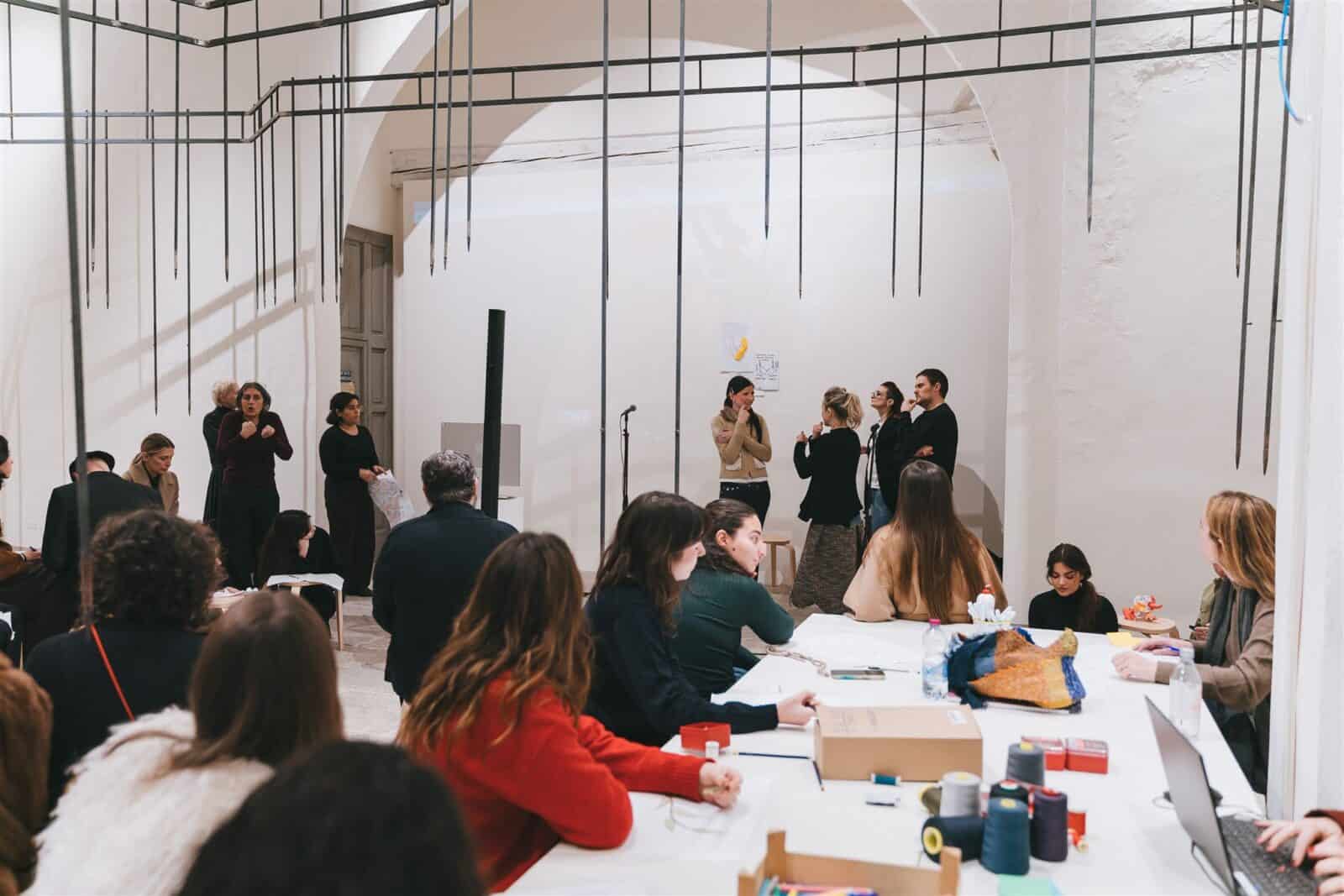
In corpo presente was conceived as a space of encounter and friction between different disciplines. What role does interdisciplinarity play in your creative process? What can emerge from the confrontation of different languages and sensibilities?
SISSI: Practice opens a space in which the other can enter, and in which I, too, can change. This is how the hybridization of languages and practices comes into being. In the creative process, short circuits inevitably occur—fundamental shifts for growth: gesture becomes rhythm, voice becomes gesture, textile becomes space. Even sculpture dresses itself and dresses us, carrying on its surface the world we inhabit.
I imagine two bodies dancing: one step moves forward while the other steps back, and then they exchange. It is a continuous balancing act, a way of sustaining one another within the beauty of movement.
SDS: Interdisciplinarity is, for me, a tool of rupture. I come from fashion, a highly structured system built on precise codes. Bringing these codes into dialogue with other languages means placing them in crisis. Friction between disciplines generates a productive tension: forms shift, roles blur, hierarchies collapse. It is within this disequilibrium that the process becomes compelling.
JB: I’ve never really asked myself that, and I’m not asking now either. I always try to be honest—that’s all. Hopefully, others are too.
BL: I am not interested in interdisciplinarity as a label to be applied to projects, but as a reality that can be uncomfortable. When we speak of “different disciplines,” we often imagine a harmonious sum; in truth, when an encounter is authentic, its first effect is frequently difficulty. For IED Florence, In corpo presente is an attempt to create a context in which this friction is not neutralized too quickly. The confrontation between different languages forces everyone to reformulate, to explain themselves more clearly, to relinquish certain automatisms. It can generate zones of misunderstanding, but also intuitions that would be impossible to reach alone.
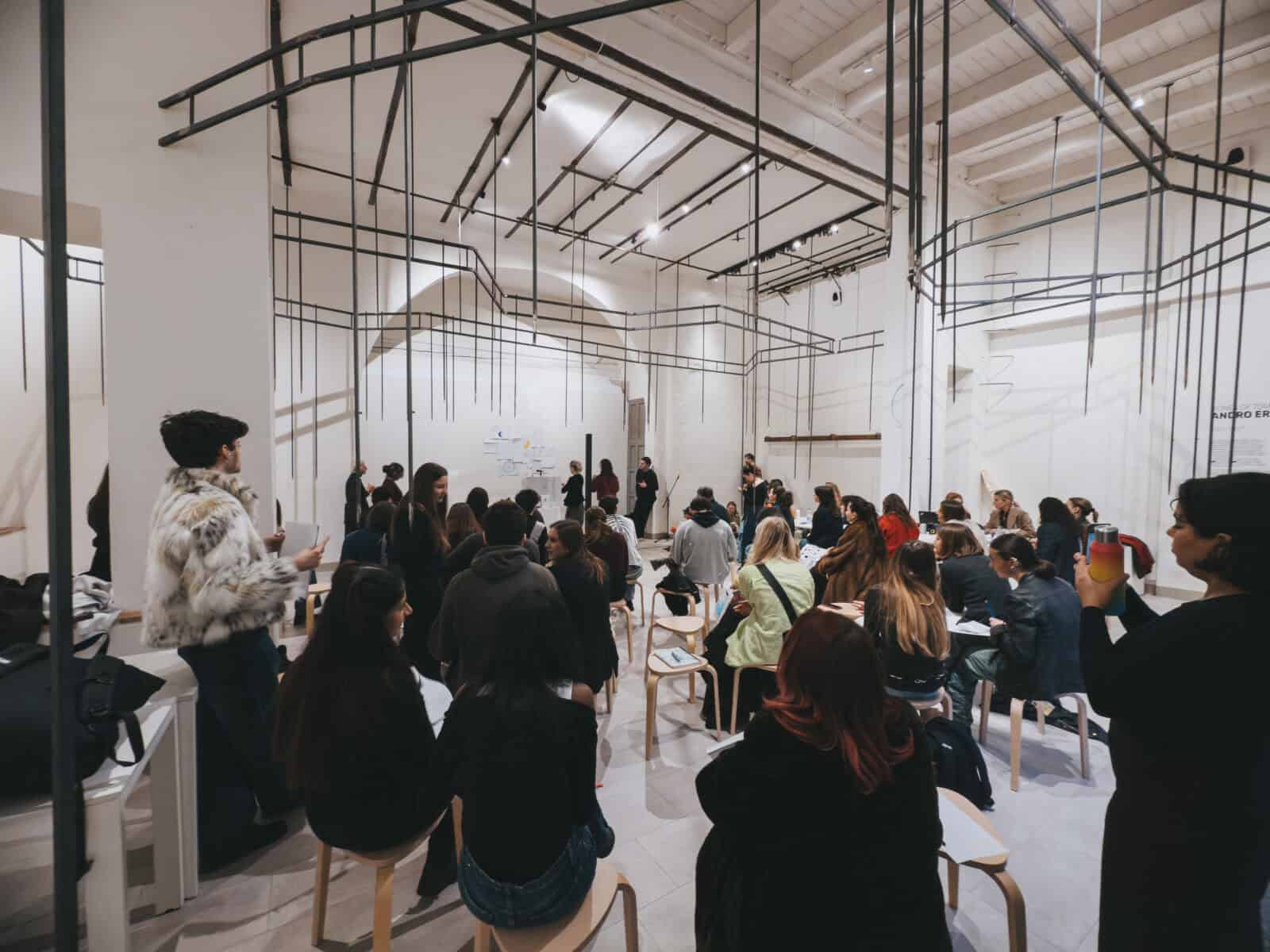
What value does engaging with other artists have for you when it takes place outside your usual perimeter? And what role do you assign to the young participants involved in this constantly evolving collective process?
Jacopo, Sabato, and I bring into play a form of knowledge developed over time, which we hybridize together with them, not as a model to be replicated but as a starting point to be transformed. In a collective process in continuous becoming, their role is essential: they keep possibilities open and generate short circuits that force us to find new solutions. I enjoy teaching because it teaches me how to be myself while changing.
SDS: Working outside my habitual perimeter forces me to reconsider how I make decisions. Engaging with other artists means accepting that my language is not always sufficient.
Young participants are not spectators but active agents in the process. I am not interested in them reproducing an aesthetic; I want them to bring a clear, even uncomfortable, point of view. The project grows precisely through this instability.
JB: I experience art the way Vincent van Gogh did: through strong friendships with other artists. With the students it is the same—there is no professor, only a collaborator working with them, and them with me.
Young participants are not an audience but part of the project’s engine. They bring unaligned questions, resistance, enthusiasm, impatience. In a collective process in constant transformation, their role is double: they learn, and at the same time they prevent us from settling into what we already know how to do.
SISSI: When bodies, mass and force are involved, disorientation becomes necessary. It compels me to abandon automatisms and to relinquish control. In that gap, something alive emerges: instinct.
Sharing something as intangible as emotion is difficult; one can only traverse its effects on the body, in space, in relation. This is why performance is central to my practice.
JBi: A collective process must find its own path—if it doesn’t, it will never exist. It requires the willingness of everyone to truly engage. I am very chameleonic, but in crucial moments I am lucid: I know what needs to be said.
BL: When a process becomes collective, linearity dissolves. There is no single intention, but a constellation of necessities. Responsibility lies not only in the outcome, but in the way one inhabits the process. Relinquishing control means accepting that the final gesture belongs to no one exclusively.
What idea of freedom runs through In corpo presente? Is it a freedom to be negotiated, exercised together, or imagined collectively?
SISSI: Freedom is not about dissolving all constraints, but about expanding through sharing. Interdisciplinarity is a bond that generates entanglements and possibilities—a complex fabric of relationships.
JB: Everyone brings their own freedom into this body. There is no freedom that is the same for all; there are only unfreedoms. Even simply sharing, touching, acting together can allow it to emerge.
BL: It is a freedom that takes shape within concrete constraints and is measured by the ability to move within them. It is not individualistic, but a collective work of imagination, built step by step.