
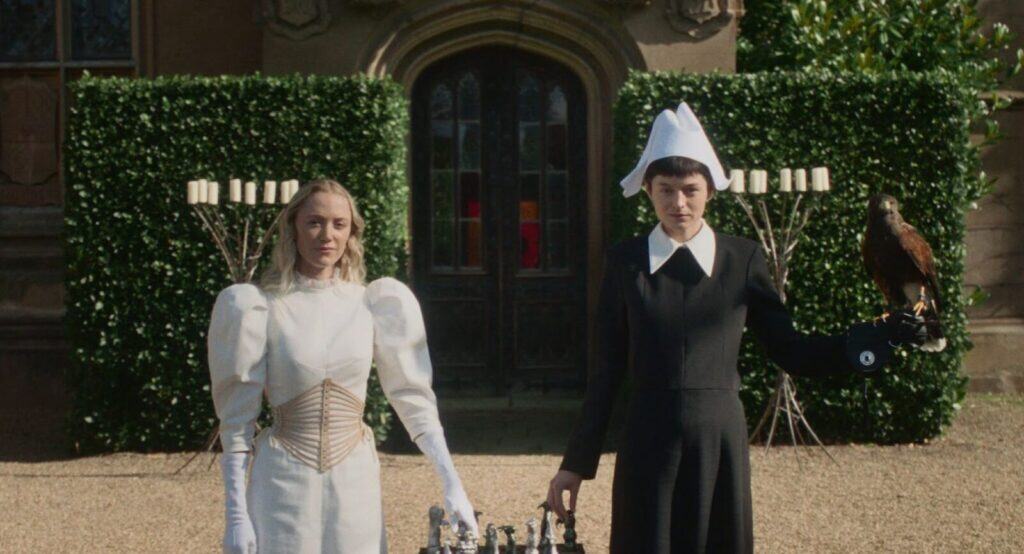
In the fantastical, medieval-styled world of Julia Jackman’s 100 Nights of Hero, a beautiful lady named Cherry (Maika Monroe) faces imminent execution for failing to become pregnant by her new husband, Jerome (Amir El-Masry). The couple are given 101 nights to conceive a child, lest it cost Cherry dearly.
But Jerome is not so interested in conceiving. It seems he’s not so interested in Cherry at all. Instead, the cocksure Manfred (Nicholas Galitzine) is enlisted to seduce her over that same amount of time. How to defend herself from Manfred’s attention? Her beloved maidservant Hero (Emma Corrin) must step in with the only tool at her disposal: storytelling.
An adaptation of Isabel Greenberg’s graphic novel of the same name – itself inspired by the One Thousand and One Nights – 100 Nights of Hero is a story about stories. Or rather, it’s about the power storytelling has to connect us, to combat repressive structures, and, often, to pass the time. In this interview with The Cold Magazine, Jackman delves into the making of her sophomore feature, an idea that has been in development since 2016, when she first read Greenberg’s novel. But much has changed since 2016, and this adaptation morphed along with our world.
The Cold Magazine (CM): 100 Nights of Hero is adapted from Isabel Greenberg’s graphic novel. How did you feel when you first came across the work, and did you immediately know you wanted to adapt it into a film?
Julia Jackman (JJ): I immediately knew that I wanted to see the movie. As for making it myself, that took root a little bit later, because I wouldn’t have necessarily considered myself a filmmaker at that time. I’d started trying it out, but it would have been a very big leap and very ambitious.
What really struck me was the wit and warmth of Isabel’s world, and how rare it was to explore another world while also having this great queer love story at its centre. Beyond the fun and absurdity, what kept feeling more and more relevant to me over time was that the book is a love letter to storytelling itself. It places itself in this oral storytelling tradition – fairy tales, fables – and that really resonated with me.
The visuals obviously helped too. Even though the film ended up looking like its own thing, the graphic novel format made it much easier to imagine as something filmic.
CM: I read that you had the idea for the adaptation, started working on it, and then made another film in between. It’s been a long-term project. Did your relationship to it change over time?
JJ: Oh, absolutely. Just having the experience of physically making a film – which is such a collective, physical act – was really important before tackling something so ambitious on an indie budget. When something lives purely in your imagination, anything feels possible, and that’s part of the beauty of books and graphic novels: you’re not constrained by the realities of production.
We also lived through a pandemic at that time. I know it’s still a strange thing to talk about because it was so seismic and so recent, but I lost loved ones, as many of us did, and we went through a lot collectively. That feeling of confinement really changed how the story resonated with me when I revisited it. I felt like I’d lived a whole lifetime in between, and many aspects started to hit differently.
Isabel felt similarly. She was very free and generous about the adaptation, because so much had changed for both of us between 2016 and 2025.
We also talked a lot about the graphic novel’s cartoonish elements, especially Manfred’s almost pantomime-villain quality, and how real life can feel quite cartoonish now too. These outlandish but tragic things happening in the world felt disturbingly familiar. The idea of people trapped in a castle, passing the time by telling stories, suddenly felt incredibly resonant, especially thinking about how much we relied on stories and films during lockdown.
CM: The film’s satire really strikes a chord. You’d hope men in power wouldn’t go around saying women shouldn’t be educated, but…
JJ: Yeah, they would say that. It’s an absurd world, but maybe closer to reality than we’d like to think.
CM: I’m really drawn to stories that are aware of themselves, so I loved that the film opens with the narrator saying, “Let’s begin.” What were your thoughts on creating a film that acknowledges itself as a story being told?
JJ: That’s a tricky tone to strike. My first short had no dialogue at all, so making something so chatty was a really interesting challenge. Film is such a visual medium, and this was so much about people talking and listening to one another, the wordiness was kind of the point.
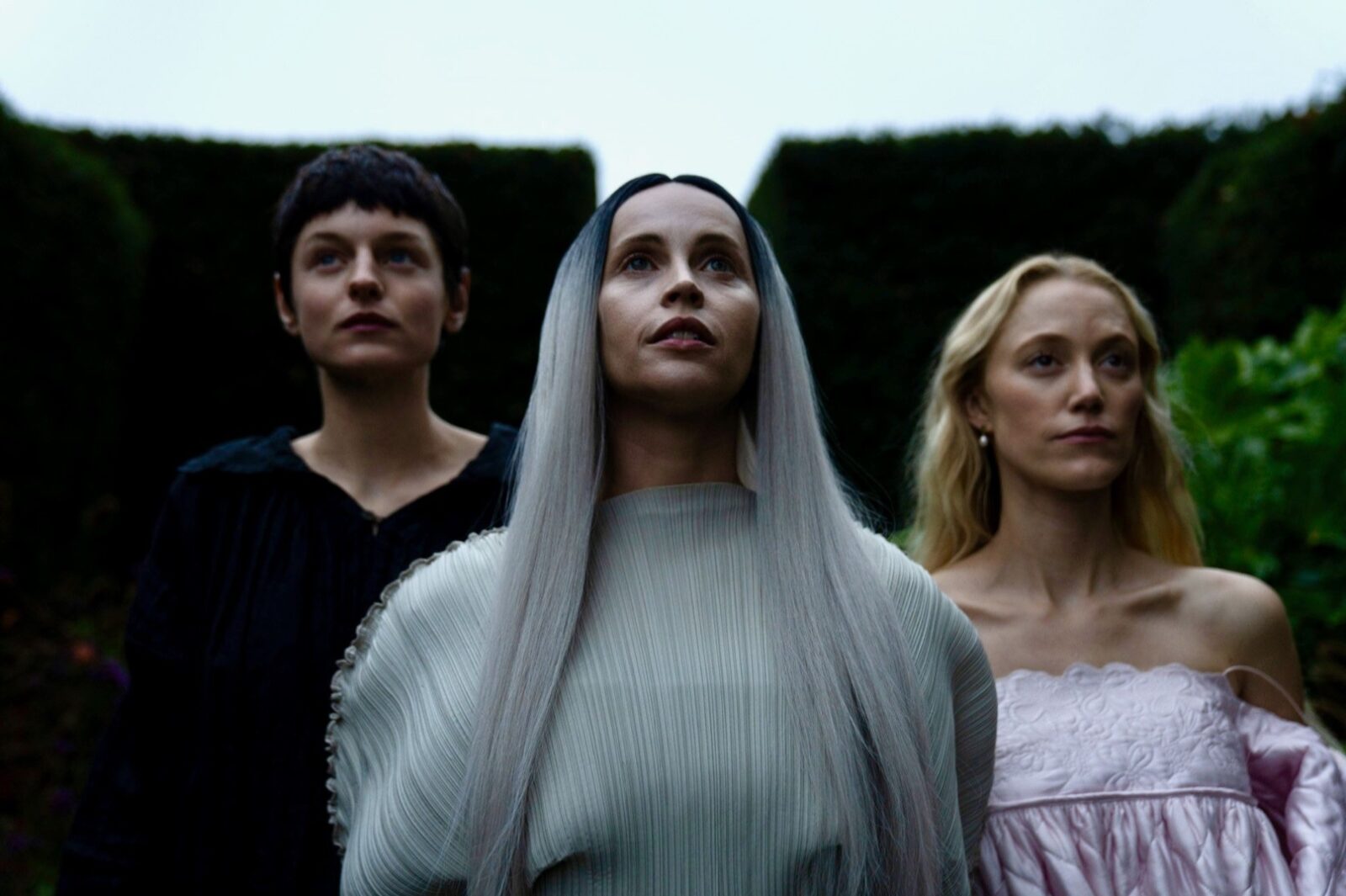
I was incredibly lucky to have Felicity Jones as our narrator. The narration evolved throughout the edit – I was the placeholder voice for a long time because, you know, my time cost nothing. That became quite meta, having to dissociate from my own voice while recording bits on my phone and reshaping the story.
There’s this idea of nesting stories, which is hard to articulate. Here, the transgressive act was the speaking itself. These characters talking as much as they do is the point, being heard is the point. I found that really beautiful, fun, and also challenging, because you’re building a world that has to wash over the audience. It’s a lot to take in.
CM: The film inherits so much from storytelling traditions – the graphic novel itself draws on One Thousand and One Nights – then there’s fairy tales, and I was also reminded of The Decameron, which has that funny Covid parallel.
JJ: Yes, definitely.
CM: What was it like reshaping those oral traditions through a queer and feminist lens?
JJ: In a way, it was already baked in, both in the source material and in how I see the world. But it felt like a wonderful opportunity, especially because there’s so much silliness and goofiness to it.
There’s something escapist about being transported to another world. I always think of The Princess Bride (1987). I’m not pretending to claim that throne, but having an epic that also contains this intimate queer love story was incredibly exciting to me. I hadn’t seen many projects that offered that combination.
At its heart, it’s a love letter to storytelling and to self-discovery – learning to name what you want, to say what you feel, to fight back against repression and oppression. That’s a rite of passage for everyone, regardless of sexuality.
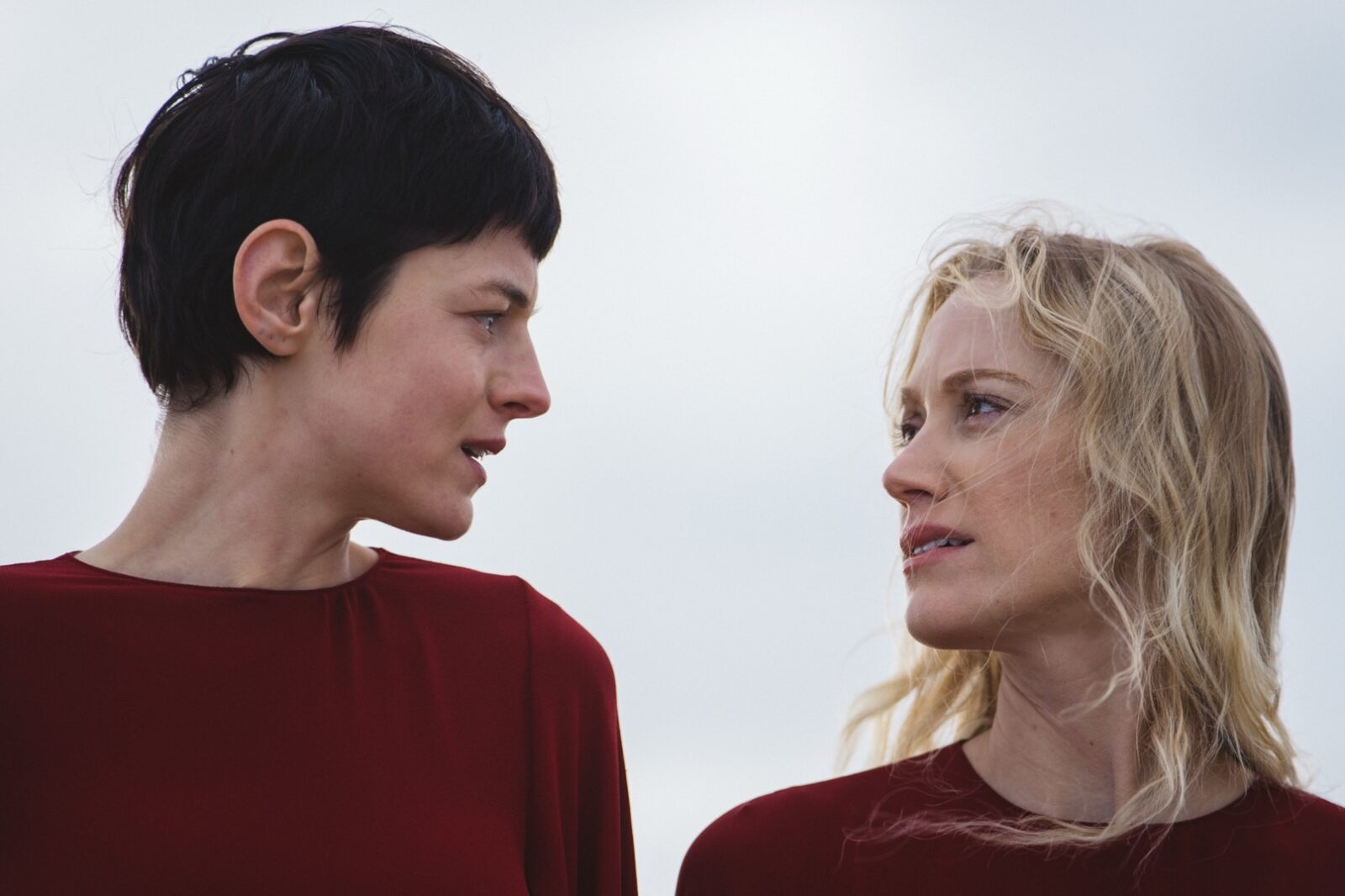
It was also just a joy watching Emma and Maika’s chemistry unfold on screen. I loved combining world-building with the simplicity and intimacy of what the film is really about: women refusing to stop talking to each other, and desire existing beyond control. Forbidden love is one of the oldest stories there is, and it was so fun to breathe new life into that with these actors.
CM: They were incredible. The whole cast was so fun, especially the core three. Nicholas was hilariously smug. What was it like working with such a large ensemble?
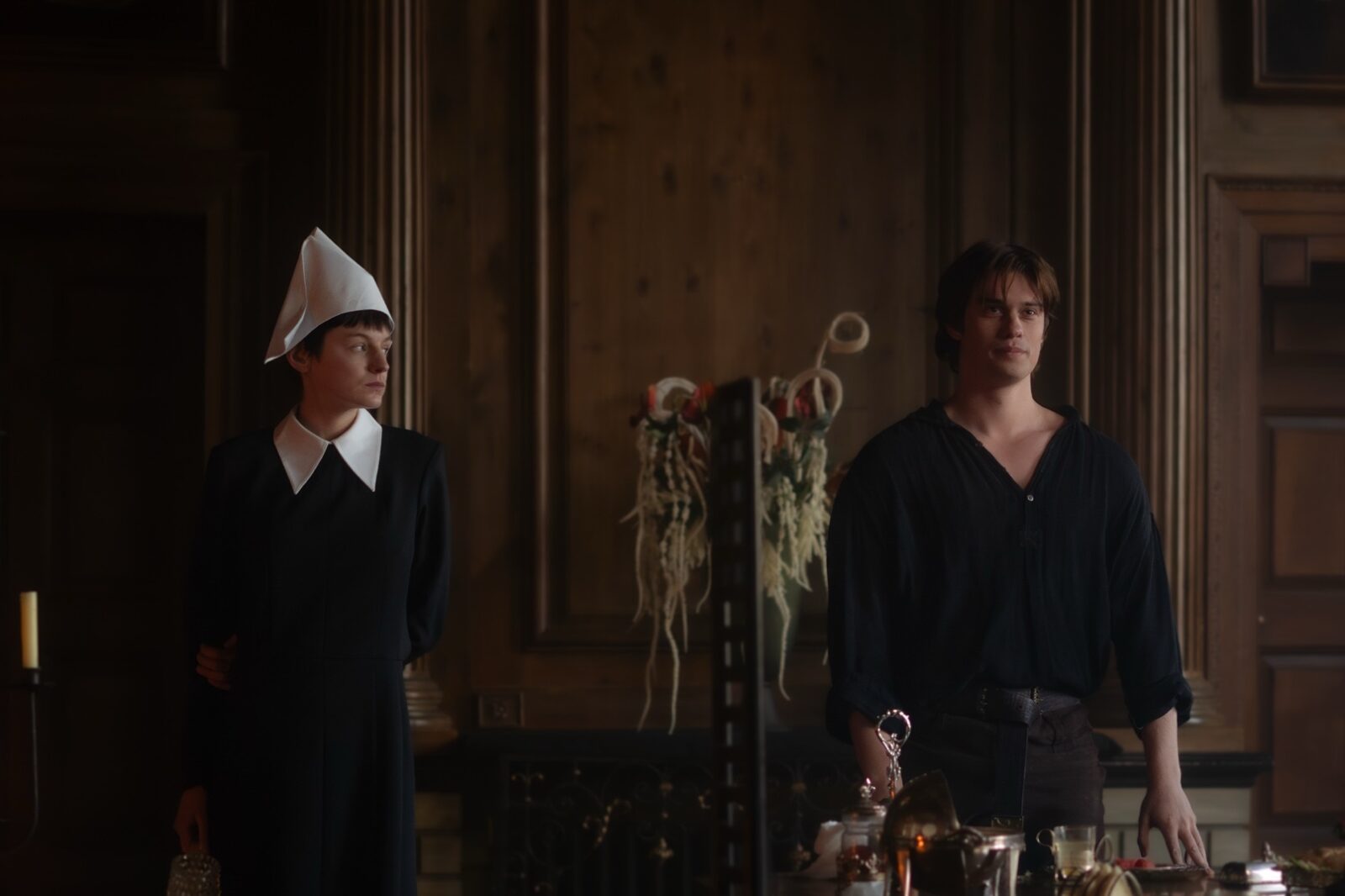
JJ: It was amazing. The core trio was so important, and they got along incredibly well. Nick is one of the sweetest, funniest people, and Emma and Maika adored him. It was fun playing that contrast: this mortifying man who can’t read the room, but still has a strange charm, despite being a villain in many ways.
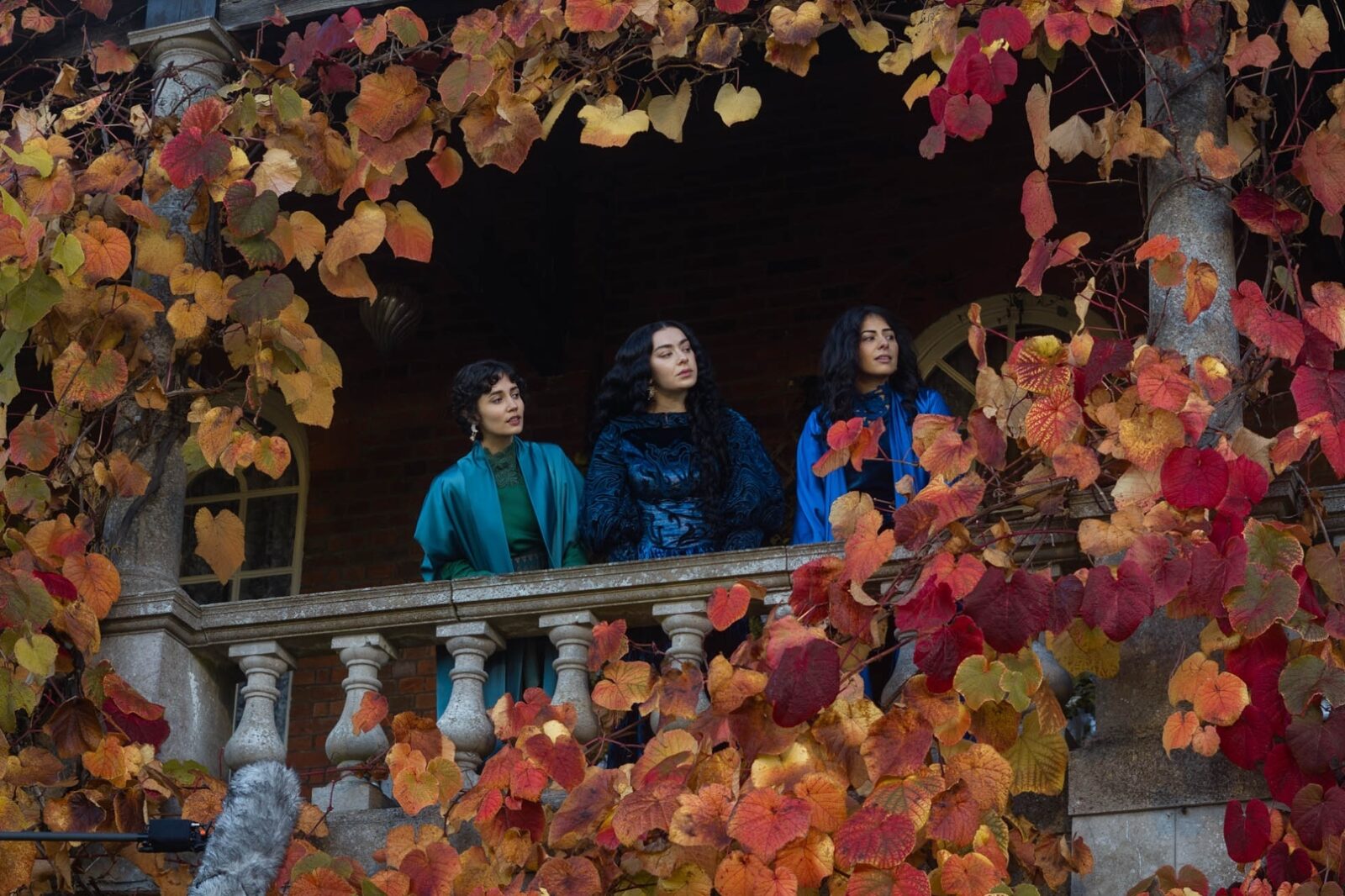
Then there’s Charli [XCX] as Rosa, Olivia [D’Lima] and Kerena [Jagpal] as the sisters, Tom Stourton, Richard E. Grant, Amir El-Masry – it really was an ensemble piece. Seeing everyone realise how their individual puzzle pieces fit together when they finally saw the film was such a joy.
CM: Do you have anything coming up next?
JJ: I do – a couple of things that are still early days. I’m adapting something, and I’m also working on an original idea that I’m writing. So watch this space.
CM: Finally, how important has storytelling been in your own life?
JJ: Very important. It’s a funny question to answer, because you don’t always notice all the invisible ways it shapes you. I love hearing my friends’ stories, my grandmother’s stories. Some of my favourite memories are watching films with my cousins or my family. I’ve always loved reading, and as a kid I was a daydreamer, constantly going off into little story worlds and side quests.
But I’ve also become really aware of how stories are wielded, especially now with social media, constant narratives coming at us, and questions of truth and accuracy. It’s such a noisy world.
Some of the most impactful stories for me were the ones where the scales fell from my eyes, hearing about things I didn’t know existed, or when the women in your life tell you how things really work. Or revisiting something you thought was simple or lovely and realising, as an adult, how much more complicated it is. Stories take so many forms, and they really do shape us. Honestly, the most impactful ones have been the stories from my loved ones.